International

Burkina Faso drops visa fees for African travellers

By Maryam Ahmad

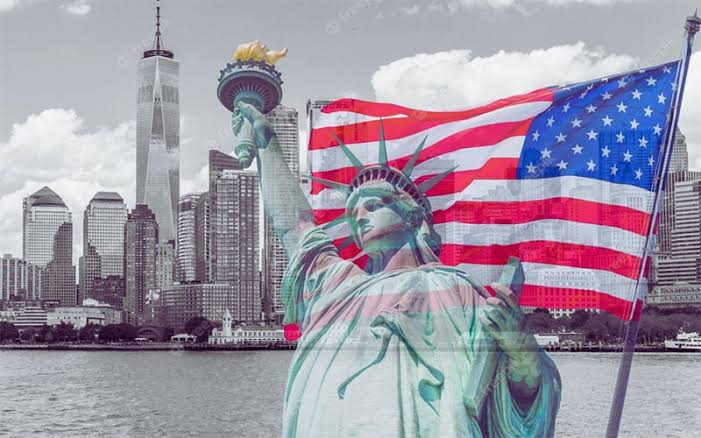
In a major step towards promoting regional integration and easing movement across borders, Burkina Faso has announced the removal of visa fees for all African travellers.

The decision, which took effect this week, is aimed at strengthening ties within the continent and encouraging trade, tourism, and cultural exchange. Authorities in Ouagadougou said the policy reflects Burkina Faso’s commitment to the ideals of African unity and cooperation.

Observers believe the move will boost economic activities, attract more visitors to the country, and set an example for other African states to follow.

The announcement comes at a time when regional organizations such as the African Union continue to push for free movement of people and greater continental integration.

Ghana agrees to accept West Africans deported from US

By Muhammad Abubakar

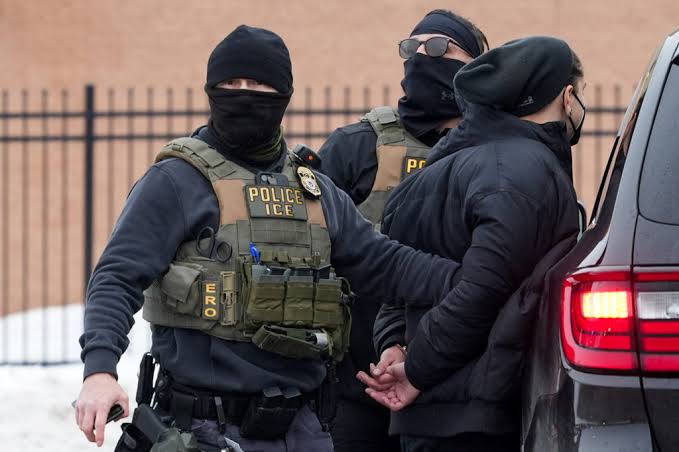
The government of Ghana has announced that it will accept West African nationals deported from the United States under a new repatriation arrangement.

The agreement, reached after weeks of diplomatic consultations, is expected to cover citizens from Ghana and neighbouring West African countries who have overstayed their visas or entered the US illegally. Officials say the move is aimed at strengthening bilateral ties and ensuring orderly migration management.

In a statement, Ghana’s Ministry of Foreign Affairs emphasised that the government is working closely with the US to ensure the rights and dignity of returnees are respected. 

“We are committed to upholding humanitarian standards while cooperating on international migration policies,” the ministry said.

The decision has drawn mixed reactions locally, with some civil society groups raising concerns about the country’s preparedness to reintegrate deportees. Others see it as an opportunity for returnees to contribute to national development.

US officials welcomed Ghana’s stance, describing it as a positive step toward addressing migration challenges in the region.

Spain withdraws ambassador from Israel after genocide accusation

By Muhammad Sulaiman

Spain has pulled its ambassador from Israel in a dramatic escalation of tensions. Foreign Minister José Manuel Albares said the move came after “false and calumnious” accusations from Israel against Madrid.

The step follows Prime Minister Pedro Sánchez’s hard line on Gaza, including a permanent arms embargo and bans on Israeli-linked ships and aircraft. He has accused Israel of committing genocide, sparking Israeli claims of antisemitism and entry bans on Spanish ministers.

Madrid insists its stance is rooted in human rights and international law, marking its toughest diplomatic challenge to Israel yet.

Egypt arrests teenage TikTokkers over indecency and money laundering

By Hadiza Abdulkadir

Egyptian police have arrested dozens of teenage TikTok creators on charges ranging from indecency to money laundering, in what critics say is a crackdown on free expression.

Authorities have confiscated the influencers’ devices, frozen their assets, and imposed travel bans. Among those detained is 19-year-old Mariam Ayman, known online as “Suzy El Ordonia,” who has more than nine million followers. She is accused of posting indecent content and laundering millions of pounds.

Rights groups warn that vague morality provisions in Egypt’s cybercrime law are being used to silence young voices online, while traditional media remains tightly controlled by the state.

So far, none of the detained creators have been released, and the government has not indicated any change in its approach.

Authorities ordered TikTok to delete content it described as inappropriate or face a ban.

According to reports, TikTok had removed more than 2.9 million videos, some of them even before being reported or flagged by users.

Burkina Faso criminalises homosexuality

By Muhammad Sulaiman

Burkina Faso’s military junta has unanimously passed a law criminalising homosexuality, imposing prison terms of up to five years in what rights groups describe as a major setback for civil liberties.

The legislation, part of sweeping reforms to family and citizenship laws, overturns decades of legal tolerance for same-sex relations. Until the junta seized power following two coups in 2022, homosexuality was not a crime in the West African nation.

The move places Burkina Faso among more than 30 African countries that outlaw same-sex relations. Neighbouring Mali enacted a comparable law in 2024, while Ghana and Uganda have also tightened restrictions in recent years, drawing sharp criticism from global human rights organisations.

Advocates warn the law risks fueling stigma and violence against LGBTQ+ communities already facing marginalisation. Critics say the measure reflects the junta’s growing authoritarianism and its willingness to curtail individual freedoms under the guise of traditional values.

Israel is committing genocide in Gaza, scholars say

By Muhammad Abubakar

The world’s foremost body of genocide experts has declared that Israel’s military campaign in Gaza meets the legal definition of genocide.

In a resolution issued this week, the International Association of Genocide Scholars (IAGS) urged Israel to “immediately cease all acts that constitute genocide, war crimes and crimes against humanity against Palestinians in Gaza.”

The association cited starvation, the blocking of humanitarian aid, and forced displacement among the practices that, in its view, fulfill the criteria set out under international law.

The resolution adds to growing international pressure as civilian casualties and a deepening humanitarian crisis continue to draw condemnation from human rights groups and global leaders.

More than 60% of Gen Z in US back Hamas over Israel, survey finds

By Muhammad Abubakar

A new survey published by The New York Post has revealed that more than 60 per cent of Generation Z in the United States sympathise with Hamas over Israel in the ongoing conflict.

The findings highlight a significant generational divide in perspectives on the Middle East, with younger Americans expressing stronger support for Palestinians compared to older demographics who largely align with Israel.

Analysts suggest that Gen Z’s views may be shaped by social media narratives, human rights advocacy, and growing criticism of U.S. foreign policy in the region. The data underscores shifting attitudes that could have long-term implications for American politics and international relations.

The survey has sparked debate across the political spectrum, with some commentators arguing that the results reflect rising awareness of Palestinian suffering, while others warn of increasing radicalisation among youth.

US Congress demands Wikipedia reveal editors in Israel content probe; Wikimedia vows to fight

By Muhammad Abubakar

A U.S. congressional committee is investigating the Wikimedia Foundation, demanding it hand over data on contributors who edited articles critical of Israel, a move the nonprofit is calling an “act of government overreach.”

The House Committee on Oversight and Accountability claims the probe is necessary to examine “potential misinformation and anti-Israel bias” on the online encyclopedia. 

In a letter to the foundation, lawmakers requested internal communications and, crucially, the identifying information of volunteer editors.

The Wikimedia Foundation has vowed to reject the request for user data. “We will not comply,” a foundation spokesperson stated, arguing the demand jeopardises free speech, privacy, and the project’s neutral model. 

Digital rights groups have also condemned the investigation, calling it an attempt to intimidate and identify anonymous critics.

The standoff sets the stage for a significant legal battle over congressional power, free speech, and the independence of digital platforms.

BBC suspends Hausa Service editor Aliyu Tanko, rejects his resignation amid probe

By Muhammad Abubakar

The BBC has suspended Aliyu Tanko, the editor of its Hausa Service, due to bullying allegations, and has refused his resignation attempt.

Tanko, who took charge of the service in 2020, was handed a three-month suspension after former staffer Halima Umar Saleh accused him of mistreatment. The BBC has now launched a full investigation, with a team flown in from London to Abuja.

Sources say Tanko tried to resign a day after his suspension, but the corporation refused, insisting he must follow due process — either serve a two-month notice period or pay in lieu.

In an interview with Daily Nigerian, Tanko confirmed that he had resigned but declined to comment on the allegations. Attempts to reach him directly were unsuccessful.

Halima Umar, now a Senior Digital Editor at TRT Africa, had earlier spoken out in an interview with Arewa24, alleging Tanko maltreated her during her BBC days. The clip was later pulled down, sparking debate on social media.

BBC Hausa, with more than 40 staff across Nigeria and beyond, is the corporation’s biggest African language service. It reaches over 23 million weekly radio listeners and drives 10 million website visits. 

Under Tanko’s leadership, the service rolled out hit shows like Daga Bakin Mai ItaKu San Malamanku, and Mahangar Zamani.

MAKIA: Route to the Saudi sword

Mohammad Qaddam Sidq Isa (Daddy) 

The recent revelation that three Nigerians, recently detained by Saudi authorities on allegations of drug trafficking, had been framed by an international drug trafficking syndicate operating at Malam Aminu Kano International Airport (MAKIA) further confirms the persistence of such nefarious activities, bringing to mind a similar scandal in 2019 that nearly cost an innocent woman her life in the Kingdom. 

The syndicate’s modus operandi begins by targeting unsuspecting travellers at MAKIA who appear to have little or no experience in international air travel protocols. 

Exploiting the fact that such travellers rarely turn up at the airport check-in counter with enough luggage to take up their full luggage allowance, if they are even aware of it, the syndicate members covertly tag and check in drug-containing luggage under the travellers’ names.

On arrival in Jeddah or Madinah, the syndicate’s Saudi-based Nigerian accomplices monitor the luggage processing. If the bags make it through undetected, they somehow manage to claim them, sometimes with, and other times without, the traveller’s knowledge or involvement.

However, if the bags are flagged, the accomplices vanish, leaving the unsuspecting travellers to be apprehended and subjected to the Kingdom’s strict judicial system, where drug trafficking can carry the ultimate punishment: public beheading.

Despite Nigerian authorities’ assurances since the 2019 scandal that all structural and operational loopholes exploited by the syndicate had been addressed, the latest incident demonstrates that these measures were insufficient. It also underscores the growing notoriety of the otherwise reputable MAKIA as a hub for international drug trafficking syndicates specialising in framing unsuspecting travellers. 

If organised crime of this sophistication can occur at the relatively less corruption-prone MAKIA, one can only imagine what might be happening at Murtala Muhammed International Airport in Lagos or Nnamdi Azikiwe International Airport in Abuja. 

Only Allah knows how many innocent people, framed in this way and too unlucky for their ordeals to be publicised or their innocence to be proven, ended up publicly beheaded in Saudi Arabia. 

Although the Nigerian government has assured that it will leave no stone unturned to secure the exoneration of these innocent Nigerians currently facing drug trafficking charges in Saudi Arabia, it should not take the situation for granted. 

Meanwhile, it should also take decisive action to address this menace at MAKIA and other airports across the country. After all, the few individuals apprehended may represent only a fraction of the culprits, with many others likely still out there.

Mohammad Qaddam Sidq Isa (Daddy) wrote via mohammadsidq@gmail.com.