International

World Bank funded project to renovate 614 schools, give token to 38,000 girls in Kano

By Muhammad Aminu

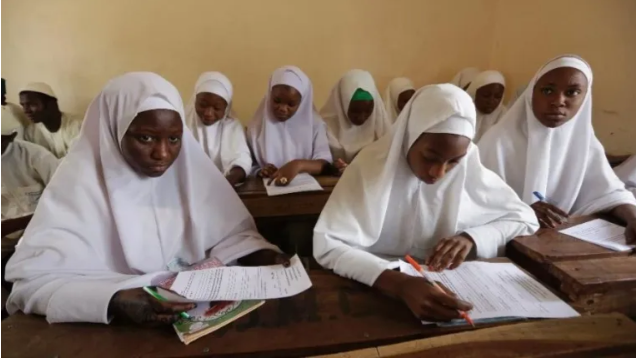
At least 614 public secondary schools in Kano State will be renovated through the World Bank funded project called ‘Adolescent Girls Initiative for Learning and Empowerment (AGILE).

The project which will be implemented by the Schools-Based Management Committees (SBMCs) of the benefiting schools has budgetted N1.8 billion naira so far.

The Deputy Project Coordinator of the programme, Nasiru Abdullahi, stated this during a courtesy visit to the Emir of Bichi, Nasiru Bayero, alongside other staff of the project on Thursday, 11th August, 2022 in Bichi.

“The SBMC committee has community and religious leaders, representation from self-help organization, and students, among others.

“The Principal is the secretary of the committee who knows the problems of the school better,” he said.

He said that the funds had already been credited into the bank accounts of the Schools-Based Management Committees, SBMCs, of the participating schools in the State.

According to him, the SBMCs members had been trained on the key priorities of their schools for the attainment of the desired objective.

He noted that each school received an amount of money based on the nature of project it will undertake.

“Close to N1.8 billion has been granted to the schools, which is half of what the schools will get, in order to ensure effective utilisation of the funds.

“Any school that finished its project will get the balance for the remaining project.

“The money is in the account of each of the benefiting schools. A school will come to AGILE to get clearance, which it will take to bank and withdraw the money,” he said

The deputy coordinator further revealed that the project is targeting close to 38,000 girls from vulnerable households for Conditional Cash Transfer which will be followed by training on digital skills.

He said that the girls would be trained on skills that would assist them to become self reliant in their maritall homes.

He, therefore, solicited for the support of the traditional ruler for the success of the project.

On his part, the Emir vowed to support the project wholeheartedly and urged all other relevant stakeholders to intensify efforts in improving the capacity of teachers.

“We are not saying construction is not good, but the teachers who will impart the knowledge to the students need to be improved.

“More teachers should also be recruited, and trained regularly to acquaint them with modern teaching techniques,” he advised.

He called on parents to desist from withdrawing girls from schools for marriage, counselling that girls should proceed to higher education after secondary schools.

Man in tears after walking from UK to Makkah for Hajj

By Ahmad Deedat Zakari

Adam Muhammad, who lives in the UK, said he cried when he first arrived at Makkah for the 2022 pilgrimage. 

“I cried when I first arrived,” He told reporters. 

According to a report by Islamic Channel, the 53-year-old electrical engineer from the UK travelled around 4000 miles on foot to reach Saudi Arabia. 

He thanked the Saudi government for granting him and his family Hajj permits.

“The Saudi government granted my family and me Hajj permits when it knew I was travelling from the UK to Makkah on foot. I met with my family in Madinah after they arrived from the UK and walked together to Makkah. I feel grateful to them,” Adam said. 

While commenting on the journey, Adam said it was difficult, and he made it solely for Allah’s sake. 

“I would feel mentally exhausted, unable to eat or drink too. But then something inside me would tell me that what are you afraid of? You have Allah by your side, and you can make it. I have lived for 52 or 53 years for myself. Why can’t I dedicate 10 or 11 months to Allah?” He said. 

According to reports, Adam reached Ayesha Mosque in Makkah on June 26, where a huge crowd received him. 

Adam had documented the progress of his journey on TikTok, where he is very active with over 2.8 million likes.

Users will start exiting WhatsApp groups unnoticed—Mark Zuckerberg

By Muhammad Sabiu

Users of WhatsApp, a famous messaging application, will start enjoying a feature that will allow them to exit from a group unnoticed.

This was announced by Mr Zuckerberg, the Chief Executive Officer of Meta (the parent company of Facebook, WhatsApp and Instagram), via his verified Facebook handle.

Another feature that will be available on the application is that users will enjoy disallowing their contacts from taking screenshots of their messages on view.

He said, “New privacy features coming to WhatsApp: exit group chats without notifying everyone, control who can see when you’re online, and prevent screenshots on view once messages.”

Assuring the company’s commitment to privacy, he said his company would keep building new ways to protect users’ messages and keep them as private and secure as one-on-one conversations.

On International Youth Day

By Tajuddeen Ahmad Tijjani

International days and weeks are occasions to educate the public on issues of concern, mobilize political will and resources to address global problems, and celebrate and reinforce the achievements of humanity. The existence of international days predates the establishment of the United Nations, but the UN has embraced them as a powerful advocacy tool. 

August 12 of every year marks International Youth Day. This year 2022, is to amplify the message that action is needed across all generations to achieve sustainable development Goals, especially for youth, without leaving anyone behind. It’s expected that youth should champion participation in developmental programs across all facets of human development.

As Nigeria approaches the 2023 elections, it’s a clarion call to all our youth not to allow politicians to use their brains to promote violence. Instead, they should champion the cause for a better country that we will all be proud of. Get involved and define your priorities through meaningful debate. Bargain for better welfare, and promote peace, growth and stability.  

Nigeria’s youth make up a substantial portion of the population, and if they can fully realize their potential, Nigeria and the rest of the globe will thrive. Undoubtedly, the youth are behind in every aspect of human life. Therefore, they must have ‘a fair shake’ in the Nigerian context. They should take up the challenges and use their God-given talents to advance the nation.

Perhaps, you can ask yourself, why are the youth left behind, even though they are the majority? There is no enabling environment to showcase their potential, but should we continue like this? No, we have to wake up in the sense that we should pursue education. Indeed, with education, we can fight poverty, know our rights, stand firm and fight for the future of the living and the unborn generations.

Reports show that half of the people on our planet are 30 or younger, which is expected to reach 57% by the end of 2030. However, this indicates that youth can take control of their future and provide solutions to the problems bedevilling society. For instance, Nigeria is battling insecurity from all corners of its existence. Boko Haram in the Northeast; banditry; kidnapping in the Northwest and some parts of the North Central; IPOB in the South-east; etc. Unfortunately, the youth are the ones who not only encourage but partake in a vicious cycle of violence.

Perhaps we need reorientation to be reasonable ambassadors of society. Let’s teach the habit of productivity through education and change the world to make it a better place to live. Research and development can make us innovative with new ideas and creative in health care reform, Engineering etc. 

Therefore, at this juncture, I make a humble appeal for our youth to rise and take their rightful position. I’m optimistic that when the youth unite and pursue positive goals, it’s achievable to change the narratives to develop the country.

Tajuddeen Ahmad Tijjani writes from Galadima Mahmoud Street, Kasuwar-Kaji Azare, Bauchi State.

Five reasons why you should apply for the online Indian Gov’t Scholarship 

By Muhammadu Sabiu

Looking at the reality and how uncertain the future of education is in this country, you, as a Nigerian, should get a solution for yourself. But unfortunately, even though education is a right, not a privilege, the biggest stakeholders (read: government) are not ready to facilitate smooth learning for the sons and daughters of the “common people.”

In Nigeria, public university teachers, otherwise known as ASUU members, have been on strike for over half a year, thanks to the government’s failure to listen to their demands. Don’t you think this could make some students forget the names of their respective departments after someday the industrial action is suspended?

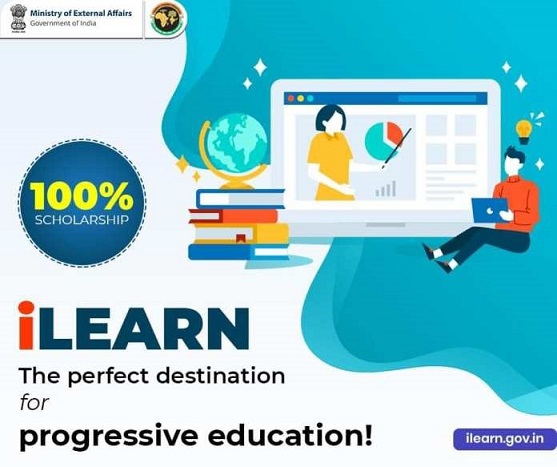
In light of these, I honestly feel the urge to share the Indian Government online scholarship with every serious-minded Nigerian who studies—or wishes to study—at any of our strike-ravaged public universities here. The last date for the application for the scholarship is August 15.

Here are five quick reasons why you should apply for the scholarship as follows:

1. Unlike other scholarship schemes, this scholarship—which you can apply for via https://www.ilearn.gov.in/—is fully-funded. This means you do not have to pay even a dime as tuition or a part of it. In addition, you don’t have to know anyone to apply or get it.

2. You only need a good mobile device (preferably a computer) with a good Internet connection to study. This indicates that you do not have to undergo the stress of boarding a flight from Nigeria to India, although it would be a pleasure to go overseas for your study.

3. The word “strike” might not exist in the dictionary of Indian universities. Therefore, one will have hitch-free academic sessions and most likely graduate on time. Moreover, the duration of some bachelor’s degree programs, as indicated on the application portal, is three years.

4. If you are one of the successful applicants, you will get the opportunity to study at some of the best universities in India, like Lovely Professional University, the Indira Gandhi National Open University and so on. The certificates to be obtained will be widely recognised. So, don’t panic over the recognisability of your results after graduation.

5. Unlike here in Nigeria, where you cannot apply for two or more different courses in one university when registering for the Unified Tertiary Matriculation Examination (UTME), there are universities on the list of eligible institutions for the scholarship that okay an applicant to apply for more than one course. An example of such a university is the Indira Gandhi National Open University.

Please hurry up and apply before the deadline, as this is an opportunity that should never escape your notice.

Muhammad Sabiu is a reporter for The Daily Reality and lives in Bauchi State. He can be reached via sabiucnd@gmail.com.

Kenya becomes the first African country to teach coding as subject in schools

By Damilare Dosunmu

Last Friday at the State House in Nairobi, the president of Kenya, Uhuru Kenyatta, announced the addition of coding as a subject into its primary and secondary schools curricula. This new development makes Kenya the first country in Africa to approve coding as a subject of study in the two early schools.

 “I applaud the Kenya Institute of Curriculum Development for leading our nation to this landmark achievement, by implementing coding as a critical skill within our new Competency Based Curriculum,”  President Kenyatta said at the event.

The President also launched the National Cybersecurity Strategy 2022, which provides strategic interventions in addressing national cybersecurity challenges in Kenya. The Kenya National Digital Master Plan, which will run till 2032, was also inaugurated.

With all these digital roll-outs, the president, whose tenure comes to an end in a few weeks, is optimistic about the impact the National Digital Master Plan would have on the country. He believes the plan will establish the country’s leadership in ICT by fostering the growth of ICT-related businesses and creating an enabling policy, legal and regulatory environment for the greater adoption of e-governance.

“This, no doubt, will enhance employment creation, enable and scale up ICT innovation and the development of a dynamic and robust ICT sector that will enhance the growth of all sectors of our economy. The master plan also guides investors while planning their investment priorities,” President Kenyatta said.

The digital master plan’s target of establishing over 20,000 village digital hubs across the country will enable the government to employ an additional 40,000 youth directly to run the centres and train interested citizens.

Kenya continues to maintain its place as one of the hotbeds for digital innovation on the continent. This new initiative reflects an ambition to reimagine education and a solid dedication to building the future. And as it seems, both the private and public sectors are aligned with this vision. Just this year alone, Microsoft, Visa, and Google opened their first development centres in the country’s capital.

Source: www.techcabal.com

On the need to amend NDLEA Act and criminalize some OTC drugs

By Ibrahim Ahmad Kala, LL.M

“NDLEA seizes 48,000 Tramadol tabs, 22 UK, France, Portugal passports” – Punch, January, Monday 31st, 2022;

“NDLEA arrests Indian businessman for ‘smuggling 134,700 bottles of codeine”- The Cable of February 13, 2022;

“NDLEA Nabs Suspected Drug Baron Behind N3bn Tramadol Linked To Abba Kyari’s Team” – Channel news, Monday, April 25, 2022.

“NDLEA seizes 1.1 tonnes of Tramadol, 396 kg of codeine syrup in Kaduna” – NewsDirect -April 28, 20220;

“NDLEA uncovers N22bn worth of Tramadol after arrest of Abba Kyari’s accomplice” – Daily Nigeria May 3, 2022; and

“NDLEA Seizes 34,950 Tramadol, Diazepam Capsules Enroute To Boko Haram” – Daily trust, Saturday 5th June, 2021.

The above are some of the recent striking headlines that often hit the news stands in both the online and mainstream media in respect of the Federal Government effort to arrest the rampant abuse of what are termed as “controlled” or “restricted” over-the- Counter (OTC) drugs in the country.

According to Wikipedia, OTC drugs are medicines sold directly to a consumer without a requirement for a prescription from a healthcare professional, as opposed to prescription drugs, which may be supplied only to consumers possessing a valid prescription.

Such OTC drugs include Codeine, Tramadol, Diazepam and all other Analgesics within their genre. The 2020 Nigeria Essential Medicines List, 7th Edition issued by the Hon. Minister of Health, Dr. Ehanire Osagie, restricts the usage of such Narcotic analgesics.

Their restrictions is no doubt connected with their common abuse nowadays in various ways that range from abortion ro sexual enhancement, from halluscination to crimes aiding tranquilizers.

It is therefore, evident that these OTC drugs have outlived their usefulness because of the growing number of Nigerians involved in the production, distribution, its use and abuse, and its consequencal effects such as increase in the likelihood of violent behavior and crime, stroke, mental disorder and brain damage.

However, the drugs control laws and policy have not produced the desired result of curbing the production, trafficking and abuse of these dangerous drugs and substances. To be specific, all these OTC drugs which are mostly Narcotic analgesics being usually prescribed by medical officers for the treatment of mild and severe pain to patients across the country, but now abused by unscrupulous few in the society, have not been clearly proscribed, criminalized, banned, and or outlawed.

The Minister, via his administrative fiat or directive, merely restrict and controlled its sale and usage. The ineffectiveness of the country’s drug laws and policy may be attributed to several factors one of which is that the drug policy and laws are formulated and implemented without the benefit of rigorous knowledge, research and review on them, and their effective enforcement.

For instance, the highbrow grains of Section 19 of the NDLEA Act, Cap. N30, LFN, 2004 – the principal drugs legislation where most drugs charges in courts basically drive its validity and vitality provides as follows: “Any person who, without lawful authority, knowingly possesses the drugs popularly known as cocaine, LSD, heroine or any other similar drugs shall be guilty of an offence under this Act and liable on conviction to be sentenced to imprisonment for a term not less than fifteen years and not exceeding 25 year”.

This section, as faulty and inadequate as it is, has been X-rayed by Nigerian Courts in plethora of cases, exposing the futile attempt by the NDLEA to bring within its fold, such Narcotic analgesics in the category of Tramadol, Diazepam and Codeine that do not fall within the category of negative drugs popularly known as cocaine, LSD, heroine within the ejesdem rule of “or any other similar drugs” stated in section 19 of the NDLEA Act.

This indeed, serves as escape route for drugs cartels to go unpunished in the aftermath of their trial in such drugs related cases. That is why whenever I see these headlines that a person is arrested in possession of these so called “controlled” or “restricted” drugs, I shrug in disapproval, having known very well that such person(s) would never be found guilty of what has never been criminalized in the country.

That section 19 of the Act seems to have created micro elements of the drugs offence, apart from the basic criminal elements of actus reus and mens rea. Namely: i. being knowingly in possession; ii. Without lawful authority; and iii. The drug being confirmed a prohibited or controlled drug. See Ugochukwu v. FRN (2016) LPELR – 40785 (CA).

These micro essential elements of the offence were later held in Eze v. FRN (2018) LPELR – 46112 (CA) to be four, namely; 1. The Defendant was found in possession; 2. The Defendant possess the drugs without lawful authority; 3. The Defendant has the knowledge of the substance in possession to be drugs; and 4. The drugs are proved to be cocaine, LSD, heroin or any similar drugs. See also Ugwanyi V. FRN (2013) All FWLR (Pt. 662) 1655 @ p. 1664.

However, such bifurcation of the ingredients from 3 to 4 is understandably for more elaboration, which does not wear away the substance and efficacy of the section under the Act. These ingredients have to be proved conjunctively to sustain a charge against the Defendant under the Act.

The one that is vital to my point among these micro elements, is “the drug being confirmed a prohibited or controlled drug” or “the drugs are proved to be cocaine, LSD, heroin or any similar drugs.”

This particular element embedded in section 19 of the Act was espoused in the case of Emeka Eze v. FRN (supra). Here the Appellant had made his way to Jimeta Modern Market to collect a consignment of goods comprising of 4 cartons of Tramadol. In the process of evacuating the goods, he was confronted by the officers of NDLEA, who, acting on information, arrested him and seized the cartons.

He was later charged under section 19 of NDLEA Act, but he argued that Tramadol has not been criminalized in Nigeria. While agreeing with the Appellant, the court held that Tramadol does not fall within the ejusdim genre classes of “any other similar drugs” negative to the ones such as cocaine, heroine and LSD listed under section 19 of the NDLEA Act, and the fact that it’s been abused by unscrupulous few people in the society does make its possession and usage illegal.

A drug being merely controlled or restricted without more is not illegal. Consequently, the Appellant was discharged and acquitted.

All I am saying is that category of narcotic analgesics such as Tramadol, Diazepam and Codeine that bring more harm than relief to our youths should be specifically banned and criminalized in the country having outlived their usefulness. New alternatives may be offered that have little or no narcotic effects on the health and well-being of the citizens.

Indeed, the essence of this piece is to celebrate the International Day against Drug Abuse and Illicit Trafficking, or World Drug Day, though belated, which was marked on 26th June every year, to strengthen action and cooperation in achieving the goal of a world free of drug abuse.

Ibrahim Ahmad Kala, LL.M can be reached via Ibrokalaesq@gmail.com
Russia-Ukraine War: British PM honours Ukraine’s President

By Ahmad Deedat Zakari

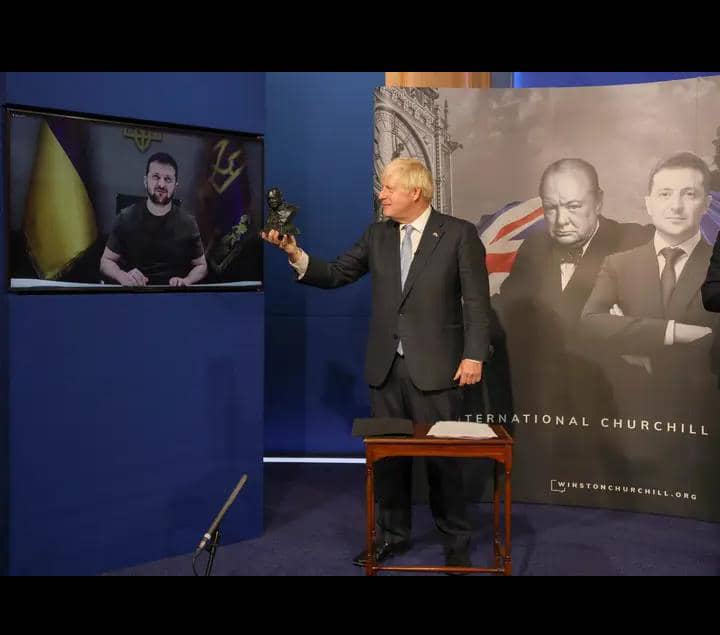
British Prime Minister, Boris Johnson, has honoured Ukraine’s President, Volodymr Zelnesky, with the Winston Churchill Leadership Award.

This was disclosed in the UK Prime Minister’s verified Facebook page on Tuesday, July 26, 2022.

“Today Prime Minister Boris Johnson presented President Zelenskyy with the Winston Churchill Leadership Award for incredible courage, defiance and dignity in the face of Putin’s barbaric invasion. ” The post reads.

The Prime Minister also said the UK would always stand with Ukraine.

On February 24, the world woke up to Russia’s invasion of Ukraine, which has thrown the two countries into war.

The “Umar Model”: A solution to the recurrent failure of leadership

By Ubaidullah Alhassan

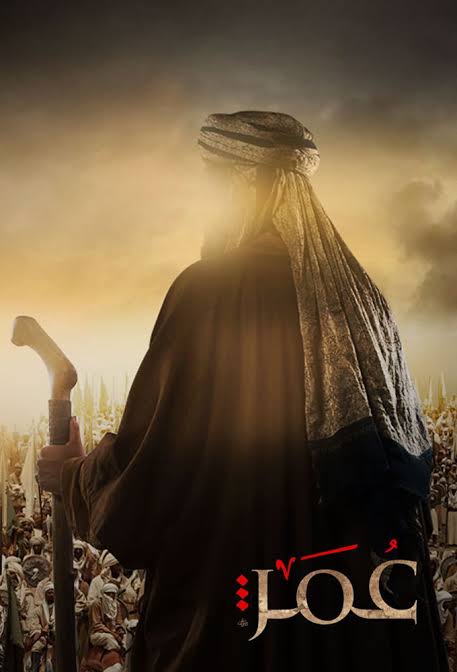
In this modern era, we mostly complain about the failure and inefficiency of our leaders. This is true as most of them have failed to measure up to our standards and expectations. It has become worse to a point that our ideologies and perception of leadership have been influenced; we feel that all things are the same and the recurrent pattern of failure will remain forever. It is sad enough that little or nothing has been done to make us feel better. Whenever I reflect on the present state of our leadership system, I compare everything to a great man who lived many centuries ago. He is the Muslim hero, Umar ‘Al-Faruq’ the son of Al-Khattab, and also the second successor (Caliph) of the holy prophet Muhammad (peace be upon him). I always say to myself: “If only our leaders possess one percent of the character of Umar, we would all feel safe and happy.” Our focus should not be on the religion, class, race or tribe of our leaders, but we need to make sure they are able to follow a praiseworthy example which is clearly evident in the beautiful model of the renowned great Caliph Umar.

Before embracing Islam, Umar was a typical figure during the age of ignorance, with a ruthless and savage character. After being blessed with faith, he became altruistic, self-controlled, and meticulous about the law. His harsh and brutal nature metamorphosed  into a merciful and tender one. This even increased when he was appointed as the leader of the Muslims. He became more God-fearing, conscious and affectionate towards his affairs, people and jurisdiction.

As caliph, he was a highly responsible person who always maintained the peace of his community. He would say, “I fear that Allah may ask me about if a sheep is lost by the Euphrates river.” This is such a wonderful statement that shows how much a compassionate leader he was. It is interesting to note that the distance between the river and the Muslim headquarters in Madinah is over 1600 kilometers.

In the evenings, he used to go around the neighborhoods of the city carrying supplies on his shoulders to help the orphans and the needy. He was never satisfied in spirit until he consoles broken hearts, wipes tears from eyes, and makes the downcast to smile. He was much aware of what he had been entrusted with that he worked hard, day and night, to fulfill his task. Yet he was never contented with the services he rendered. He was never at ease. He followed the noble footsteps of his predecessors and he forever remains renowned as a just and praiseworthy leader, for he was in awe of his responsibility.

The basic goal of this venerable man was to ensure the wellbeing of his community. He forgot his own problems and he took on the community’s problems, turning them into his constant concern. He strictly followed the examples set by the Prophet who led before him. He never forgot how much the Prophet suffered and struggled to succeed, and he followed in the Prophet’s sacred track and managed to find the right way.

The most notable of Umar’s caliphate was the vast expansion of Islam. Along with the Arabian Peninsula to Egypt, Iraq, Palestine, and what is today Iran also came under the protection of his government. The wealth of the Byzantine and Persian empires began to flow into Madinah, and the standard of living of the Muslim community began to improve. Yet Umar maintained the same lifestyle that he had followed before. Though his state grew in splendor and its treasuries were overflowing, he kept on giving the Friday sermon in patched clothes. He lived a humble life to protect himself from the seduction of his lower self.

In a famous incident, when Umar traveled to Damascus to put the new Islamic government on a firm footing after the conquest of Syria, he was accompanied by only a single attendant, and rode only a single camel. He suggested to his attendant that the two of them ride the camel by turns. The attendant rejected the offer, saying that the people would be confused. Yet Umar insisted, and made the man get on the camel. As the turns fell out, when the two of them entered Damascus, the servant was riding and the ruler was walking.

He was also known as “Al-Faruq” which means the distinguisher between truth and falsehood. He served as a staunch advocate for justice. He kept all measures in place to avoid any form of corruption, nepotism or mismanagement.

Though he governed an empire, he kept its public funds separate from his private funds. He personally fall into debts and faced difficulties in life. He accepted only a small allowance from the treasury, and living on that amount, led a hand-to-mouth existence. He lived so humble a life that many visitors did not grasp that he was, indeed, the great Caliph Umar. When the people insisted that he increased his allowances, Umar beautifully said: “My two friends and I are like three travelers. The first (the Prophet) reached his place. The second (Abu Bakr, the immediate leader after the Prophet) reunited with the first by following the same path. And I, as the third, wants to join them. If I go over-laden, I won’t be able to catch them! Don’t you want me to be the third traveler on this path?”

The following are beautiful statements made by the great Caliph Umar:

“The one I love most is the one who tells me my faults.”

“Among people whom I do not know, the most beloved to me is the one who has a good name. Among people whom I do know, the most beloved to me is the one who has a good manner. Among people who I am examining, the most beloved to me is the one who speaks the truth.”

“Once a task is postponed, it is difficult to move it forward again.”

“If you do not live what you believe, you will begin to believe what you live.”

“The hidden witness of an evil act is our conscience.”

Indeed there are countless lessons left for us to derive from the exemplary leadership and character of the great Caliph Umar. He is not only an example for all Muslims but also for every leader in the world. If only our leaders could follow the “Umar Model,” we would move from a society filled with selfish, incompetent, irresponsible and inefficient leaders to a one mainly characterised with overall growth and development in every sector.

Ubaidullah Alhassan is from Kogi State, Nigeria. He is a student of Ahmadu Bello University, Zaria.

My Journey to Kassel (Documenta Fifteen): Lessons for Nigeria’s waste management

By Ibrahim Uba Yusuf

Since I arrived in Germany to complete the last lap of my PhD studies, I intended to start a travelogue on cultural shock. Unfortunately, my quest suffered a setback for two reasons. Firstly, I have a tight working schedule for writing my thesis on the Culture Industry (Hausa home videos) and their contribution to peacebuilding in northern Nigeria. Therefore, dealing with various raw data, literature, doctoral colloquium, and conferences was overwhelming. Secondly and sadly, I lost my stepmother Hajja Aishatu (may Allah have mercy on her soul), who has cared for us, including our aged father, since my mother died in 2002. Her death threw me into a state of confusion and thus compelled me to suspend it.

Now to the issue: the journey to Kassel. It was Eid-el Adha globally. Since it is not the first time I am experiencing Sallah outside Nigeria, I envisaged it would be dry. So, after observing the two voluntary Eid Prayers at about 6:10 am (German time), I proceeded to Hauptbahnhof (the central train station). The journey is about an hour on the ICE train (the fastest train in Germany) and about three hours on regional trains (which are slow but relatively cheaper) from Hildesheim. The journey to Kassel marks the end of a week-long UNESCO Symposium on Artistic Interventions in educational and social contexts organised by the UNESCO Chair, Professor Julius, who doubles as my German Supervisor.  

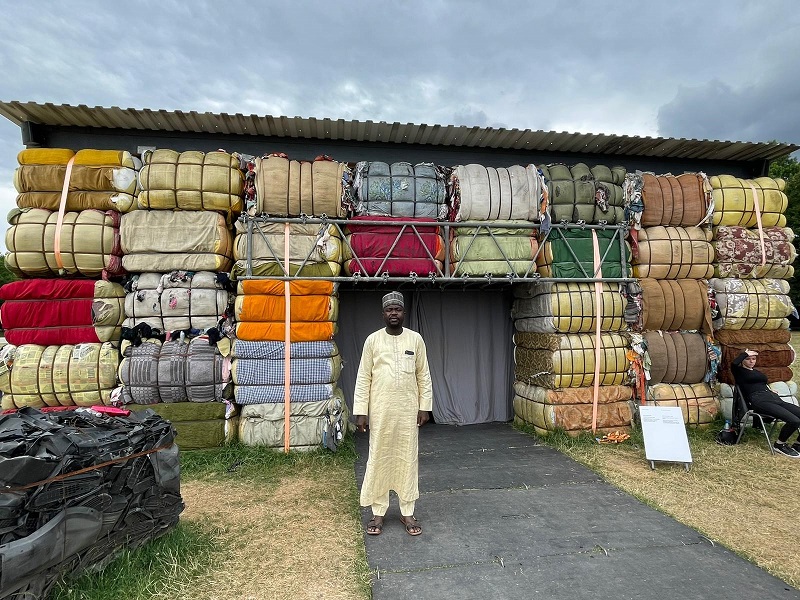
Documenta is one of the largest art exhibitions in Germany, which started in Kassel in 1955 with the sole aim of displaying a variety of contemporary artworks such as sculpture, film, photography and painting, among others. Held every five years, this is the fifteenth edition of the International engagement for arts. During the walk to various exhibition stands, I became interested in the open cinema in Karlswiese. This is due to my bias in broadcasting and film studies. The open cinema, a work by The Nest Collective, is tagged ‘Return to Sender—Delivery Details 2022’. It was locally constructed from dystopian waste to mimic the Global North. The dystopian waste was carefully packaged to serve as acoustic panels for the cinema walls to control external noise and echo.

In all honesty, this is my first time seeing such an amazing innovation. Scraps of electronic devices imported to the Global South were packaged and displayed for exhibition. The message embedded in this tag, ‘Return to Sender’, of course, suggests the frustration by the Global North and the radical position taken to mitigate not only importation but waste management. This dystopian waste introduces a new alternative to the existing acoustic panels in our television and radio studios, which is economical and easy to construct. In contrast to other acoustic panels, the installations offer a better aesthetic and sound control. I strongly recommend this innovation to our local cinemas (viewing centres), public and private broadcast stations, and Departments of Mass Communication and Performing Arts. I am not unmindful of the digitisation drive. While we continue the digitisation plan, I believe this can serve as an alternative that may be attuned to the sustainability discourse.

Unfortunately, Nigeria is among the countries with poor waste management. The Environment Performance Index (EPI) 2022 ranked Nigeria 168 out of 180 countries. Also, a United Nations Industrial Development Organization report shows that Nigeria produces 32 million tonnes of waste annually. With this record, Nigeria stands a chance of changing the negative discourse on environmental health, hygiene and sustainability.

Nigerians must change their nonchalant attitude toward indiscriminate waste disposal. As I write this article, one of my greatest challenges living in Germany is separating the waste into the appropriate trash cans. In Germany, paper, plastic and organic bio-waste are separated. Waste separation is comprehensive and taken seriously by both Germans and the government.

 While there is no Recycling Plant in the country, all those Baban Bola (scavengers) can be utilised and strengthened to ensure a clean environment. The services rendered by those people deserve special recognition. We must begin this campaign from our homes, schools, worship places, media and markets. Nigeria deserves to be clean.

Ibrahim Uba Yusuf wrote from Germany and can be reached at itsibrahimsite@gmail.com.