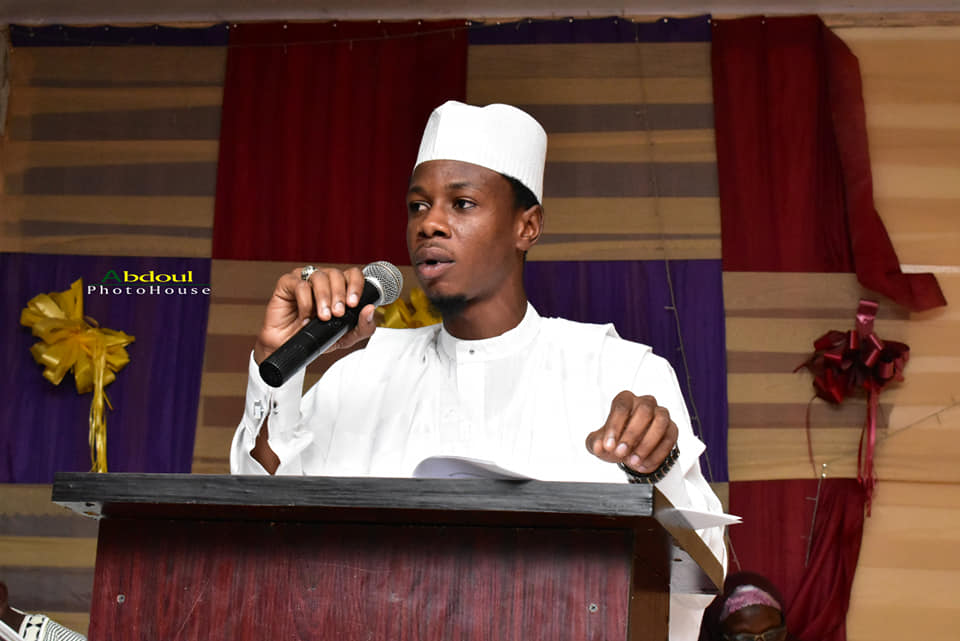
By Abubakar Aminu Ibrahim
Qatar is a peninsular Arab country whose terrain comprises an arid desert, and a long Persian (Arab) submerse shoreline of tantalising sceneries. It is also an industrial country with ultramodern architecture, dawning from its ancient Islamic infrastructure.
Doha, Qatar’s capital city, is well known for its elfin skyscrapers and alluring shores. It is a world-class capital city, home to the limestone Museum of Islamic Art. Thanks to the World Cup tournament, the oil-producing country is ready to spread its dominance by hosting the global spectacle this year.
However, this write-up is not purposely to eulogise Qatar or its capital city, nor attempt to lay statistical predictions of the World Cup tournament. No! But if you are an intending immigrant, if you have started giving a deposit to an agent that will take you to Qatar as a worker, if your dream is to get to Qatar and share all the pictures on WhatsApp, Facebook and Instagram, then fasten your seat belt. The ride is yours.
First of all, let me clarify one thing for you, my friend. Having a dream is not wrong at all; it is, in fact, something inherent in all of us. On the contrary, having the vision of migrating to any country is not wrong. So, chase your dream and work for it. However, you must be careful enough not to be fooled, enslaved and handcuffed by projections and assumptions. If you go anywhere, ensure you hold yourself tied to your honour and integrity. Make sure that your personality as a human is assured.
I write this piece to enlighten some of my people who intend to migrate, especially to Qatar. Qatar is a veiled bride if you are a third-class groom! This write-up shall unveil the bride.
This is an output of research that dip into the plight of migrants in Qatar. Perhaps, emigrants suffer in different places worldwide for specific reasons, but Qatar is uniquely infamous for its treatment of migrants.
I watched a series of documentaries that taped agonising stories of how blacks and Asians are maltreated in Qatar. Usually, our people cooperate with agents and pay a lot of money to process their migration to countries like Qatar. Contracts are signed with promises, such as shelter, food and a monthly salary. Such deals are always mouth-watering to suffering Nigerians and others across developing countries. But they always come with unbearable prices.
If you refer to how this write-up described Qatar in the opening lines, the least you should expect from such a country is having almost zero judicial systems that will handle civil charges in courts. But not until 2018 did the city of Doha get a labour court parlour with only six judges to address complaints of its migrant workers. It is even more baffling to hear that the labour court in Doha admitted that out of over two thousand complaints, only sixty-nine were processed (wow!).
These complaints are, in most cases, against host companies of these migrant workers whose salaries are withheld for months. Ibrahim (a Kenyan migrant in Qatar) laments in a France 24 documentary that he and his co-workers received no pay for over three months, and this practice is regular. He added that they were promised good living conditions, food and timely salaries in the contract they signed, but none of these was ever honoured. Worse still, their passports were seized, meaning they could not return home at will.
In another interview with some Philippinos working under a Qatari lady, they said that day was their first day off in their three years of work. Another one cried that he would not want his people to see his condition, and he sometimes goes out at night to snap some happy pictures, even though the police sometimes chase him!
It is disheartening that even in airports, Qatari security agents embarrass travellers and deny them basic provisions, especially if their visitor holds passports from an African country, especially a Nigerian one.
An undersecretary for the Minister of Labour admitted that despite having a tribunal now, some business leaders are opposed to them. Therefore some of the policies are purely and only theoretical. Some migrants taped in court waiting rooms appear visibly hopeless and helpless.
All these are only some of the realities in Qatar, only the victims of this ancient way of thinking can tell you how it feels to be denied your fundamental rights as a human just because of your skin colour or social status. The Doha News proclaimed how migrants build almost all the infrastructures in the country. Yet, when workers die at construction sites, the only tribute they get is having their pictures pasted on a wall. Thanks to the mobile stadium constructed for the World Cup, hundreds of people sacrificed their lives to win bread for their families.
In the final analysis, I aim to make you pause and pose a question for yourself: in what capacity are you migrating? Who are you going to work for? What type of job are you looking for? How are you planning to return home if things do not work out? But, on the other hand, what is your reward at the end if things are working?
Think twice. It is said in Hausa, “tsalle daya a ke a fada rijiya, amma sai an yi dubu ba a fito ba“, which means it takes a single jump into a well, but one will jump a thousand times without getting out.
Abubakar Aminu Ibrahim wrote from Katsina via matazu247@gmail.com.