Entertainment

You can add some category description here.

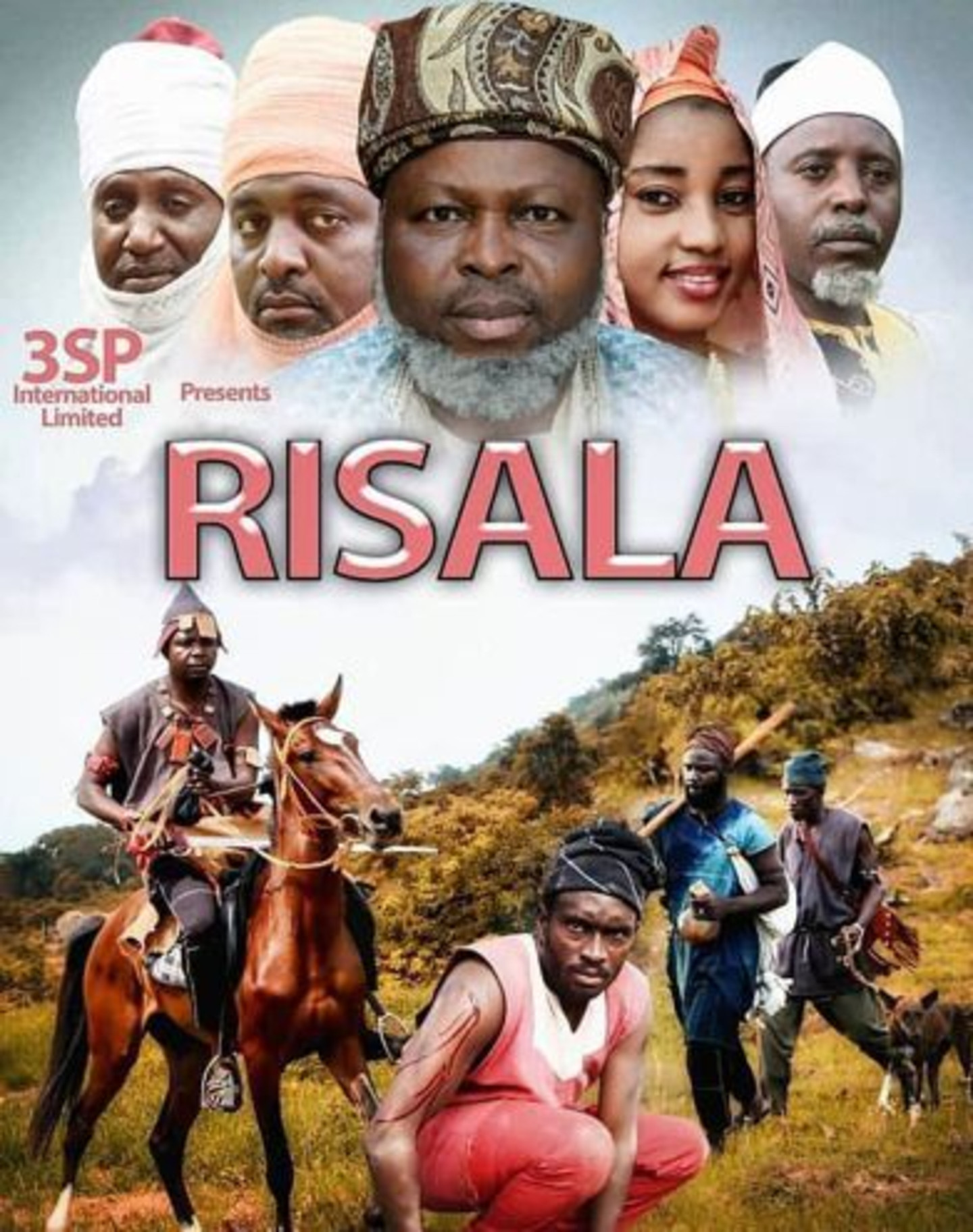
Film Review: Risala

By India Biró

How far would you go in order to be forgiven? Would you send a text message? A letter? Flowers, or a gift? Would you track down the person you hurt and beg them to forgive you, even if it required a two-month journey?

For Zakariyya, the hero of Abubakar Shehu’s Hausa-language film Risala, his desire to be forgiven for eating fruit from a stranger’s farm sends him on a week-long journey on foot to the village of Baihan to ask the farm’s owner to absolve him of his sin. Throughout this journey, he encounters unsavoury characters, is repeatedly beaten up, almost dies of thirst, finds a fortune and loses it, and ultimately meets the love of his life.

Zakariyya is the perfect hero: modest, handsome, determined, faithful, never straying from his morals. Even when he is accused of being a robber, beaten, and insulted by the village’s men, he remains calm and only defends himself by explaining the misunderstanding. When they realize their mistake, he simply forgives them and moves on without holding a grudge. His character seems so genuinely good; it makes you wonder if you would admire him or be annoyed by his constant perfection if you knew him in real life. Surely there must be something that makes him angry or tempts him to sin? However, his strength of character throughout the movie is reminiscent of noble mythical or legendary characters known to Western audiences, such as Robin Hood. This is further reinforced by the pre-colonial setting when modern amenities were not yet present in Nigeria.

When Zakariyya finally encounters the farm’s owner, he appears unwilling to forgive him at first. Yet, because Zakariyya is such a noble person, he senses the opportunity to marry off his daughter to a worthy man. So he proposes to Zakariyya that he marry his ugly, deformed daughter Ummulkhair (sometimes also referred to as Ummu Salma). Zakariya, being the modest man he is, immediately accepts Ummulkhair and promises to treat her well. However, when we see her, she turns out to be exceptionally beautiful.

We learn that the farm’s owner in Baihan has been looking for a suitable husband for his lovely daughter for quite some time, yet every man he has encountered was too enamoured with her beauty, which he considers superficial. Thus, to test Zakariyya’s good faith, he tells him his potential wife is horrendously ugly. The fact that Zakariyya still vows to marry her proves he is not a superficial man and that he is truly worthy of marrying her. In the end, he is rewarded for all his troubles with a beautiful wife. Zakariyya questioning his wife’s integrity by asking her about her relationship with her parents proves he is still not superficial and really is interested in marrying a righteous woman, not just an attractive one.

The fact that Ummulkhair’s beauty is treated as a detriment to her father, resulting in her spending most of her life indoors, as well as her treatment as a prize or commodity for a man (especially her virginity), is unsettling to feminist viewers, yet reminiscent of Western fairy-tales such as Sleeping Beauty, Rapunzel, Snow White, etc., as well as being very fitting for a story set several centuries ago. While Zakariyya’s “test” of his wife before accepting her reeks of sexism, it is probably a very realistic portrayal of the treatment women faced (and continue to face) in many societies.

Another theory about Ummulkhair with regards to the many fairy-tale and magic-like elements in Risala is that she is, in fact, not conventionally attractive and that it is Zakariyya’s reward for being a good man that she appears beautiful to him. This theory can be discounted because, after revealing herself to him, Ummulkhair tells Zakariyya she was barred from leaving the house because of her beauty, so apparently, she really is beautiful and not ugly. However, disregarding this, one could come up with a hypothesis:

Before unveiling her to see her for the first time, Zakariyya says, “everything created by God is beautiful. Only people make distinctions between the good and the ugly.” Perhaps, Ummulkhair is somehow cursed with an ugly outer appearance, and Zakariyya’s words acted as a spell that lifted the curse and made her appear beautiful to only him. So, because his heart is pure and he has good intentions, he sees a beautiful face instead of an “odd-looking” one and instead of a hunchback, he sees a striking woman. Because he is deserving, he sees the beauty in her while others do not. Had he approached the situation differently, perhaps thinking, “poor me, to be stuck with an unattractive bride”, she would have appeared ugly to him.

Ultimately, regardless of the specifics of Zakariyya’s marriage, the message is clear: Those who are good-hearted and seek forgiveness for their sins will be rewarded for it. As such, Risala is a very wholesome film worth watching for its retro charm reminiscent of fairy tale films or Bible stories and its interesting storyline. In addition, the acting and editing manage to steadily capture the viewer’s attention, something unfortunately not always a given in Kannywood cinema as it is still a developing industry and production quality is often low.

While I consider Risala to be one of the better Hausa films I have seen, do not expect a lot of character development since Zakariyya is a perfect hero right from the start and other, more sinister characters like the robber Gambo die before they get a proper chance at reform. There is also some slightly unnecessary bloodshed coupled with overly dramatic and unrealistic special effects reminiscent of low-budget Japanese anime. On the other hand, the music may not be to everyone’s taste (especially Western audiences), but I found it rather pleasant and meshed well with the action rather than distracting the viewer. Subtitles for the final song would have been helpful for non-Hausa speakers, but the song was still fascinating and enjoyable, especially the dancing and colourful Hausa clothing. Overall, while the film could have easily been condensed into one part instead of two, the storyline is gripping, and the acting is done well. I would recommend this film to anyone new to Kannywood cinema.

India Biró is a student at the Institute of African Studies and Egyptology, University of Cologne. She can be reached via ibiro@smail.uni-koeln.de.

Italy Conquers Europe

By Muhammad Muzdaleefa


The Euro 2020 Cup ended in Italian hands after the Azzurri defeated England at Wembley Stadium. What a journey it has been. The winning team has shown us that it is not what happens to you but rather how you react to it that matters. Some fall and stay down there; others fall and dust themselves off and rebuild. 


No doubt, it was a hotly contested final. Southgate’s team had got off to an impressive start with Luke Shaw’s goal after just two minutes. But the Italians equalised in the 67th minute through Leonardo Bonucci. After much anticipation, England’s dream was shattered as Italy won the match in penalty kicks. One thing is for sure; this loss will be seared into the national consciousness of English people for generations to come. It was simply nothing like it as a nation that treasures soccer fell in one of the most crucial matches in its football history.


The performance of both sides from the beginning of the tournament to the end was quite impressive. However, the defeat will remain a footnote. Few will remember that England played well, but many will recall that Italy won the final at the Wembley Stadium. The final was a great feat for Italian team manager Roberto Mancini. A man who attracted a lot of scepticism when he took over the reins of a team in a state of utter disrepair is the one who has masterminded its return to the top of European football and possibly world football. He did it silently and always with the smile and assured confidence of a stoic.


The coaching philosophy of both Mancini and Southgate must be saluted. The philosophy is that excellence can be achieved through hard work, which explains why they gave chances to their players as long as they are willing to put in the work and the stamina—everybody in their squad matters. As a result, many great players will surely emerge from both sides.


For now, Italy has conquered Europe and a big congratulations to the Azzurris for this important milestone.

Muhammad Muzdaleefa wrote from Kaduna. He can be reached via mohammedadamu736@gmail.com.

Congrats, Lionel Messi and the long-suffering Argentina fans

By Aliyu Yakubu Yusuf

Ask any casual football fans what the biggest mystery in recent football history is. One of the possible answers would surely be Argentina not winning a senior international trophy for 28 years. Not since Gabriel Batistuta led the Albiceleste to the 1993 Copa America triumph has the country tested victory in any men’s senior football tournament. For the record, I began supporting Argentina in 1998 courtesy of my support for Serie A side, SS Lazio. During those years when the Italian league was at the apex of the European football ladder, Lazio had an Argentine contingent of Juan Sebastian Veron, Diego Simeone, Matias Almeyda, Jose Chamot and Nestor Sensini. Over the subsequent seasons, Hernan Crespo, Claudio Lopez and Lucas Castroman soon joined their compatriots at Lazio.

For 25 long, agonising years, I have witnessed all the inexplicable near-misses, heartbreaks and sheer bad luck of being a fan of Albiceleste. We have played no fewer than six consecutive major finals and lost all, often by the slimmest of margins: Copa America finals (2004, 2007, 2015, 2016), Confederations Cup final (2005) and World Cup final (2014). Of course, there many intermittent triumphs in the youth football tournaments such as the FIFA U21 World Cup (2001, 2005, 2007) and the Olympics (2004, 2008), but those serve to add to the frustration as to why a country with so much footballing history and so much footballing talent can’t get over the finish line in a major tournament.

It’s scarcely believable that Argentina failed to win a single trophy despite boosting elite players such as Veron, Riquelme, Saviola, Ayala, Heinze, Aimar, Pocchettino, Sorin, Zanetti, Samuel, Cambiasso, Crespo, Tevez, Zabaleta, Banega and Higuain. But, beyond all these players, I believe that if anybody deserves to win a senior trophy with the Albiceleste, it is Javier Mascherano. In my more than two decades of watching the team, no player epitomises the essence of the team better. His last-ditch tackle to deny Arjen Robben in the semifinal of the 2014 World Cup is a stuff of footballing legend.

Literally speaking, I have waited my entire life as an Argentine fan for this moment. And now that the agonising wait is over, I would like to congratulate the long-suffering fans of Argentina football team and the captain fantastic, Lionel Messi. In a way, Messi appears to transcend football boundaries of rivalries. It was reported that many Brazilians rooted for him to win the trophy against their own country, in their own country. For his detractors, the criterion for being the GOAT is nothing but an international trophy. And now that he’s laid his hands on one, we are waiting for them to bring another criterion.

Aliyu is a lecturer at the Department of English and Literary Studies, Bayero University, Kano. He can be reached via aliyuyy@gmail.com.

Top 10 Kannywood films of 2020

By Muhsin Ibrahim

The year 2020 is unlike any other in recent history. The COVID-19 pandemic has changed the world. We now have lockdown in countries; we have to keep social distancing, wear a facemask, among other protocols. The virus batters the entertainment industries from Los Angeles to Lagos, Mumbai to Mombasa, Cairo to Kano, forcing several cinemas to shut down. Thus, shooting and showing film had to stop. Nevertheless, that boosts TV and video on demand (VoD) contents and opens a gate for new ‘genres’ of YouTube series and serials. In northern Nigeria, these include Kwana Casa’in, Gidan Badamasi, Labarina, Izzar So, A Duniya, Na Ladidi, among many others.

Kannywood began the year auspiciously with a box-office hit, Mati A Zazzau. Therefore, the audience expected to see many more similar or better films. Although producers made only a few (movies) eventually, these include the excellent, the good, the bad and the ugly. Evidently, the pandemic disrupted or ruined several plans in Kannywood, too. Anyway, the following are some I consider above their peers. Please note that the numbering is, in no way, hierarchical.

  1. Wutar Kara
    The film, shown briefly in cinemas in 2019 and released in 2020, deals with a thorny yet unexplored topic of inheritance in Hausa land. Alhaji (Ibrahim Mandawari) is a wealthy family man with multiple wives and several children. As is often the case in such a house, there is disunity among the family members, some of whom are wayward. He unexpectedly dies in a car crash. Serious rancour ensues over the wealth he left behind. Finally, everyone gets their share. Unfortunately, most of them embezzle the inheritance, worth several millions of naira in cash and property, so quickly. Yaseen Auwal directed the movie while Bashir Maishadda is the producer. The performance of Ali Nuhu, Sadiq Sani Sadiq, Aminu Sharif Momoh, Maryam Yahaya, among others, is notable and praiseworthy. Dare I say the film is one of the best to have ever been made in Kannywood.
  2. Mati a Zazzau
    As a sequel to Mati da Lado, the film starts from where Mati (Sadiq Sani Sadiq) wanders in an unknown village following his escape from Rimau. He and his brother-accomplice, Lado (Tahir I. Tahir) duped Rimau village people for years by pretending to be Islamic scholars. The townspeople chased them away when they discovered their identity. Mati finds himself in Zazzau, where, coincidentally, his late, rich father had lived and left a substantial treasure in the hands of a confidant. The rest of the story mainly revolves around Mati’s effort, if not trickery, to get the wealth. Yaseen Auwal directed it while Rahama Sadau & Sadiq Sani Sadiq take the credit for its production. The film is doubtlessly successful as per Kannywood’s box-office record. Thanks to well-calibrated publicity and promotion by Rahama Sadau and her team, it reportedly pulled out a record audience. Fans of the Mati franchise love the film.
  3. Matar Mutum
    The film, also shown in cinemas in late 2019 and released to the broader public in 2020, exposes indiscriminate marriages among Hausa people. Malam Idi (Rabi’u Rikadawa) is a guardsman who marries and divorces women at will. As a result, he has lost count of his children, whose mothers are mostly no longer living with them. Two of his oldest children are thieves and drug addicts; another is married to a stingy husband while the other wed her heartthrob, who, quite weirdly, maltreats her after the marriage. Despite all this, Idi uses his daughter’s bride price to marry a widower, Ladidi (Halima Atete). He eventually gets sick, thanks to his countless marriages, after which everyone abandons him. Yaseen Auwal directed and produced this movie. The topic and the action stand out. Daddy Hikima’s role is outstanding. Besides, Idi’s daughters deserve better treatment from their husbands, for, after all, their father’s fault is not theirs.
  4. Dafin So
    Bashir (Adam A. Zango) is raised by an overprotective mother who spoils him, leading him to drug addiction. He runs away from home and, eventually, becomes somewhat insane. One day, a posh Nabila (Aisha Tsamiya) brings her car for repair close to the refuse site Bashir and his friends live on the heap to smoke and consume drugs. He comes to the garage to beg the mechanics for food, as he usually does. When they chase him away to protect their customer, she feels sorry – or more – for him. Against the odds, she follows him until she finally gets him fully rehabilitated. Typical of such a film, she falls in love with him and asks him to marry her, a choice her father furiously rejects. Her betrothed dumps her after an accident left her wheelchair-bound. Then, the father realises that only a true lover can marry his daughter, and Bashir is one. Though the story is not very novel, its execution is laudable. It’s directed by Sadiq N. Mafia and produced by Abdul Amart. The Zango vs Tsamiya chemistry is indisputable; likewise, their acting flair.
  1. Kazamin Shiri
    Alhaji Sammani (Rabi’u Rikadawa) is a wealthy man with a beautiful, happy family. He weirdly falls in love with a married woman, Karima (Bilkisu Shema), who is contented with her low- income husband, Badamasi (Ali Nuhu). She rejects Sammani’s absurd love overture. After a series of pressure coming from her bosom friend, mother and eventually her husband, she recapitulates. The film is full of intrigue and is also well directed and acted. Nonetheless, the ending may encourage such behaviour in a society known for its cherished socio-moral and religious values. It’s directed and produced by Sunusi Oscar 442 and Alhaji Sheshe, respectively. Aminu Sharif and Fati Washa did very well. Mr Rikadawa displays his exceptional talent in this drama.
  2. Fati
    This film, supposedly, comes with a difference in storytelling in Kannywood. It tells the story of a bipolar Umar (Umar M. Sharif) on a psychiatric medical trial. The film’s first frame shows him in a relationship with Fati (Fatima Kinal), who eventually dies. Heartbroken, he struggles to forget her and forge ahead with his life. He continues schooling until he graduates. As an NYSC corps member in Jigawa, he sees the same Fati who, however, like everyone there, have no earthly clue of his identity. He does all he could to remind her of their past life, and so on. Many audiences criticise the plot concept; showing two separate, yet connected, stories from Umar’s psychotic state is, at best, ambiguous and, at worst, incredible. Part of the story also resembles another film, Hafeez, which is also by the same producer and similar casts. Kamal S. Alkali is the director, while Bashir Maishadda is the producer.
  3. Voiceless
    Voiceless is one of the emergent Boko Haram-inspired movies set on the dreadful insurgents’ abduction of Chibok schoolgirls. The romantic thriller tells the story of Goni (Adam Garba) and Salma (Asabe Madaki) – two victims kidnapped by “Sojojin Aljanna” [The Army of Paradise]. Although that moves the plot, their love life is not the main focus. It’s, instead, the insurgency and its attendant consequences. The movie receives critical acclaim from Muslim and Christian viewers for its ‘fair’ treatment of the sensitive topic. Even though the title is in English, the film’s dialogue track is in the Hausa language. Moreover, while the actors are primarily ethnic Hausa, the filmmakers are not. Robert O. Peters directed it while Rogers Ofime is the producer. Overall, the film is a big challenge to the mainstream Kannywood folks who rely mostly on Bollywood-esque themes at the expense of abundant others in their immediate surroundings.
  4. The Milkmaid
    The Milkmaid was also inspired by Boko Haram and the iconic photo of Fulani milkmaids on the back of Nigeria’s 10 naira note. Nigeria submitted it as its entry for the 2021 Oscars in the Best International Feature Film category. The film is the second to have reached that height after Genevieve Nnaji’s Lionheart, which was, quite sadly, rejected in 2019. As the title suggests, set in Taraba state, the movie tells the story of a milkmaid (Maryam Booth) whose sister is abducted by Boko Haram terrorists. Though I have yet to watch it, that nomination is a testimony that it more than qualifies to be here. Although non-Hausa filmmakers made it, its dialogue track is in the language (Hausa). From the trailer, the film’s cinematography is impeccable. It is yet another, perhaps more significant, challenge to the mainstream Kannywood film practitioners.
    It’s written, directed and produced by Desmond Ovbiagele.
  5. Jalil
    The eponymous movie tells the story of a couple, Yusuf (Yakubu Mohammed) and Zahra (Maryam Booth), whose only child, Jalil, gets sick, and the hospital demands 33 million nairas for his operation. The couple does not have that much money even after an online fundraising campaign. Yusuf also refuses to procure the funds via any illegal means, a decision that angers his mother. Zahra is a TV host and has a friend, Jazzy (Sadi Sawaba), who is desperately looking for money to pay a debt. Therefore, Jazzy, his friend and Zahra’s mother-in-law, fake abduction of the latter to extort money from the couple and Yusuf’s wealthy brother, who earlier refused to assist them due to a family feud. The film has some issues, such as an implausible friendship between Zahra and Jazzy, an unexplained motive for Jazzy’s desperation for money, and a lack of continuity in some scenes. It’s, nonetheless, a good film. It’s yet another movie made by non-Hausa producers in the Hausa language, which also features the majority of Hausa actors. It’s directed by Leslie Dapwatda and produced by Kelly D. Lenka
  1. Gidan Kashe Ahu
    Yaseen Auwal and Umar S. K/Mazugal as director and producer, came with another very topical social drama titled Gidan Kashe Ahu. It exposes the consequences of poor parenting through the stories of Hafsat (Maryam Yahaya) and Indo (Amal Umar). Both belong to low-income families where the former suffers at the hands of a cruel stepmother while the latter faces a forced marriage to an elderly, harsh man who divorces women at will. They eventually flee and end up in a brothel. The movie is one of the best in the history of Kannywood for several reasons, such as the subject matter, the almost-accurate depiction of its 1980s setting, directorial work, performance, among others. It also contains many lessons for parents, girls, prostitutes and the rest. I highly recommend it.