Entertainment

You can add some category description here.

Five reasons why northerners are not ‘well represented’ in Super Eagles

By Aliyu Yakubu Yusuf

In the not too distant past, there was a widespread belief that footballers of northern Nigerian (read: Hausa-Muslims) extraction are serially marginalised when it comes to a call-up to the Super Eagles. Due to the proliferation of viewing centres in the North that has brought a relative exposure to European football and the easy access to internet-powered mobile phones, most northerners have realised that there was a plot against players from the region. The ongoing African Cup of Nations in Cameroon has somehow brought the debate about whether the North, with its vast landmass and way larger population, is criminally under-represented in the Super Eagles. I don’t believe in any conspiracy theory as far as this argument is concerned. Here is why.

1. Unlike in the South, football is regarded as, first and foremost, a hobby in the North and not a trade or a career. As a result, many talented northern players lack the ambition to push themselves to the limit, to build football as their way of living. For example, some of his close friends testified that former Kano Pillars player, Ahmed Garba Yaro-Yaro, failed to settle at the German Club, Borussia Dortmund, because he couldn’t withstand the cold weather in the European city, among other reasons. That was a player who had the chance not only to make millions but also make a name for himself at the Super Eagles set up. Instead, he blew the opportunity and shortly returned to Kano Pillars via a Tunisian Club, Esperance. Imagine an Igbo or a Yoruba getting this once-in-a-lifetime opportunity.

2. Culture and religion also discourage our football players. In most quarters in the North, top-level European football, the utmost dream of all footballers worldwide, is seen as a strictly Euro-Christian tradition. Most parents would rather have their children become petty traders in Kano, Kaduna or Abuja than millionaire footballers in London so as not to have their culture and religion contaminated by the infidel westerners. In fact, the few football players that take the game seriously and attempt to reach the highest level of local football (the Nigerian Premier League) are often seen as wayward, low-IQ fellows who couldn’t make it in school and therefore resort to football.

3. Historical factors also play against the North. Just like western education, football was brought here by the Europeans and has taken a firm root in the South before the North. Because of their connection to their former European clubs, some Nigerian ex-footballers convince the clubs to establish football academies. The location of these academies is, more often than not, the South. Chelsea, Arsenal, Bayern Munich, Barcelona and Real Madrid all have football academies in Abuja, Lagos and a few southern cities but none in the North. The ex-Super Eagles’ golden boy, Nwankwo Kanu, has an academy in his native Owerri. I wonder whether we can say the same about the likes of Garba Lawal and Tijjani Babangida. Lagos alone has more than ten football academies, while the whole 13 states of the ‘core’ north have zero, with Kwara state as the only northern state with a football academy. If we genuinely want to compete with the South, we need football academies in the North. These academies employ agents that look for young players, recruit them, train them and open doors for them to pursue a career in top-level football. And because of historical factors, most football agents and scouts of European clubs seem to look for talents in the South rather than the North.

4. All around the South are former footballers who succeeded in the game and, therefore, serve as mentors and role models for aspiring young players. You quickly draw inspiration when you have a practical example right in front of you. A player from Delta state, for example, would look no further than Okocha, Keshi and Oruma, to know that he, too, can follow their enviable footsteps. Some of these ex-players use their networks of relationships to send young players for trial in some European clubs. However, the story is entirely different here.

5. All countries, including Argentina, Brazil and Uruguay, essentially select players who ply their trade in European football. Apart from the economic aspects, Europe is where football is played at its most competitive level. If you select Nigerian-based players primarily, they would be schooled by the likes of Salah, Aubameyang and Mane, who are more experienced in the game. Now, compared to the South, how many northern players can we mention who play football in Europe? I challenge everyone here to mention just ten prominent northerners in European football.

For these reasons, I don’t believe the Nigerian national team is rigged against us. As it stands, we are not doing enough to be selected for the national team. If our young players give it a better go, we have the potential to equal the South in that regard. I find it amusing that while most things are done on a quota system basis, football players are chosen purely on merit. Perhaps that is why it is the single most crucial thing that unifies Nigerians across diverse ethnic, religious and regional leanings. If we can begin to choose our leaders on merit (not quota system), I believe the country stands a better chance to progress.

Aliyu is a lecturer at the Department of English and Literary Studies, Bayero University, Kano. He can be reached via aliyuyy@gmail.com.

AFCON: The gigantic tournament

By Abdulrazak Iliyasu Sansani 


I had initially not titled this article “AFCON: The gigantic tournament” not because I had less respect for it hitherto. “I’ve heard that so often, that there’s no international break until March,” Jurgen Klopp said. “In January, there’s a little tournament in Africa, I just want to say, and I think Asia is playing games, too – South America as well. Great, can’t wait!” But I have done so now primarily to respond to the purported disregard, misinformation, or rather outright disrespect directed at the most prestigious football tournament in Africa, which Jurgen Klopp’s comment on the African Cup of Nations seems to convey, as less relevant.  I have tremendous respect for Klopp, one of the finest tacticians in football. I can’t certainly say he meant to disrespect the AFCON, though, this doesn’t stop me from tackling what is gradually gaining credence in Europe whether glaringly or subtly: the scanty regard for AFCON. 

I had once written an article titled the Pinnacle of African football and the quest for glory. It would have been published ahead of the last edition of AFCON in Egypt. However, it was never published. The said title aptly captured how I view African football. I believe this is how the vast majority of African football fanatics regard it. And no amount of disrespect, misunderstanding, red herrings, or disinformation could alter that. 

The biggest event in African football commences on 9th January,  with five times Champions Cameroon taking on Burkina Faso in Olembe Stadium in Yaounde. It is the curtain-raiser for the most important tournament in African football. The 2021 Africa Cup of Nations, known as the Total 2021 Africa Cup of Nations, is the 33rd edition of the Africa Cup of Nations, the tournament will be hosted by Cameroon, the Champions of the 31st edition. The competition was held in June/July in the previous edition, which Algeria won. 

But this edition has been moved back to January/February. Cameroon were to host the last edition, only for them to be stripped of the hosting right in  November 2018 mainly for three reasons: Anglophone crisis, delays in the delivery of critical infrastructure, and the Boko Haram crisis. This edition of the AFCON has come with numerous challenges even before it starts. Strong opposition has come from many angles centred on the timing of the AFCON. Confederation of African Football (CAF) has reverted back to AFCON’s traditional calendar, as against the normal Summer calendar used in major international competitions like the World Cup and European Football competition, though the former is set to be played in November this year, unlike the prior editions. 

The bulk of the opposition to the timing of the AFCON has understandably come from European clubs, who have a lot to lose by having some of their key players miss some features for the duration of the AFCON. These have made many clubs to devise means to keep their players against the wishes of the players or in collaboration with the players. This has allegedly seen some of the clubs going out of their ways to engage in unethical practices in order to keep their players from playing for their countries. We heard former Super Eagles player, John Ogu made startling revelations about his manager asking him to fake injuries in order to prevent him from playing for the Nigerian national team, ‘not even surprised at the situation of the foreign managers or clubs not wanting their players to go represent their country in tournaments,’ Ogu tweeted.

‘One certain manager in Portugal asked [that] I tell the coach of Eagles then that I was injured so as not to go for a friendly game.

‘After I left, went back to the club, he stopped playing me, and this was prior to the World Cup coming that year. I made mentioned it here and many out here said I was lying and so on. Una don see how them be now?’

Ogu, who eventually missed out on the 2014 tournament, has been without a club in 2020, as reported by Goal.com Africa.

‘I missed out on that World Cup list,’ he continued. “The evil part of it was when the list came out and he found out I wasn’t invited, man, walk up to me and asked I call the manager to list me and that if he wants, he can start me in the last game in the league.” ‘I was shocked how evil one can be.’  You could see the length some of these clubs could go. It is absurd, gratuitous, unacceptable, and a blatant disregard for African football and Africa in general. 

European Club Association wrote FIFA, stating why they might not release players for AFCON: health, the welfare of players, and the timing of the AFCON. The ECA further accused African football affiliated associations of failing to “properly implement protocols with worrying degrees of negligence.” The ECA said they would release African players for the forthcoming 2021 African Cup of Nations only when national football associations in Africa meet certain stringent conditions. At its meeting of December 2, 2021, the ECA in an official letter to FIFA Deputy Secretary-General Matthias Grafstrom and the Confederation of African Football (CAF), made their position known, especially with the raging Omicron variant of Covid_19. The ECA mandated FIFA and CAF to ensure necessary precautions are in place to protect players and club interests ahead of the tournament.

I have to concede that there are vital issues to iron out in the timing of the AFCON and the ECA are entitled to protect their interests. So also are CAF and its member associations. CAF will be unfair to its affiliated associations if it remains adamant on the current calendar merely to prove a point that it has sufficient grounds. However, all these don’t give the ECA the impetus let alone the justification to insult African football. Going forward there should be a clearly defined means, concessions, and major decisions must be made by all stakeholders for a mutually beneficial solution.

I know certainly that if it were the other way round: The backlash from the European press, clubs, and fans would have been deafening. A Series of sanctions would have been in place on those clubs from FIFA. CAF, FIFA, and all stakeholders should treat this matter thoroughly with a view to finding a lasting solution that has the players, the fans, and everyone in mind. Above all, a workable remedy that upholds the dignity of Africans and aids the development of the beautiful game should be rigorously pursued. 


Abdulrazak Iliyasu Sansani Writes from Turaki B, Jalingo, Taraba State and can be contacted via abdulrazaksansani93@gmail.com.

Finally, the Super Eagles joined the party

By Aliyu Yakubu Yusuf

Compared to its more illustrious continental equivalents, the African Cup of Nations (AFCON) receives far little media fanfare. With its scheduling in the winter when European football is well underway, the AFCON has been a pain in the ass for many a European club. And the actions on the pitch so far have elicited little excitement among watching fans. Goals have been at a premium, with just nine goals scored in the opening eight games in the tournament, making it a ratio of just over a goal a game.

The Super Eagles of Nigeria took on the Pharaohs of Egypt in a much-anticipated clash of African football titans. With Mohamed Salah at his mesmerizing best for his club, Liverpool and Nigeria having to play without two of its most in-form forwards, Victor Osimhen and Emmanuel Dennis, who are unavailable for various reasons, many pundits and bookmakers earmarked Egypt as the favourite. However, the Eagles didn’t read the script. As soon as the match kicked off, the Nigerians asserted themselves and dominated the early exchanges. However, they were made to wait until the 30th minute of the game before they got the deserved breakthrough.

Moses Simon, who was a menace for the Egyptian defence all first-half long, left the Egyptian full-back, Tawfik, for dead before putting in a teasing cross that Hegazy partly cleared. The ball fell nicely to Joe Aribo, who directed the ball to Kelechi Iheanacho, who fired an unstoppable missile into the Egyptian net to send thousand Nigerians who crossed the border to Garoua to watch the game into rapture. That was to prove the game’s only goal that turned into a topsy-turvy affair in the second half.

If the Super Eagles were great in the first half, they were effective in the second. The Pharaohs improved massively in the second half. However, the Nigerians fashioned many gilt-edged chances on the break. With a little more composure in front of the goal, the Super Eagles would have won by at least three clear goals. But, assisted by the evergreen Wilfred Ndidi and the silky Joe Aribo at the middle of the park, the Nigerian defence line comprised Ola Aina, Troos-Ekong, Kenneth Omeruo and Zaidu Sunusi successfully managed the unenviable task of keeping Mohamed Salah at bay.

Credit must go to the coach Agustin Eguavon who made his debut today. The Super Eagles had been a shamble for long stretches at the end of Gernot Rohr’s tenure. If this match is anything to go by, the future looks promising for the Super Eagles. Of course, as a traditional footballing powerhouse in the continent, Nigeria goes to any AFCON tournament as one of the favourites. However, it is still early days, and there are better teams in this tournament than the Pharaohs. So, I think Nigeria has an outside chance to go over the finish line.  

Aliyu is a lecturer at the Department of English and Literary Studies, Bayero University, Kano. He can be reached via aliyuyy@gmail.com.

AFCON 2021: Nigeria at home in Garoua – Residents

By our Reporter who is in Garoua


Hours ahead of Nigeria’s Group D opener against the Pharaohs of Egypt, many residents of Garoua have expressed their support for the Super Eagles and vowed to cheer the Nigerian national team to victory. 


After a grand opening ceremony, the twice-postponed Africa Cup of Nations finally kicked off on Sunday in Yaounde. The opening match ended with the hosts, Cameroon, beating Burkina Faso 2:1 to lead Group A.


Nigeria, playing in Group D alongside Egypt, Sudan and Guinea-Bissau, will get into action Tuesday evening against the Mohamed Salah-led Egyptians. All Group D matches will be played at the Roumde Adjia Stadium in Garoua.


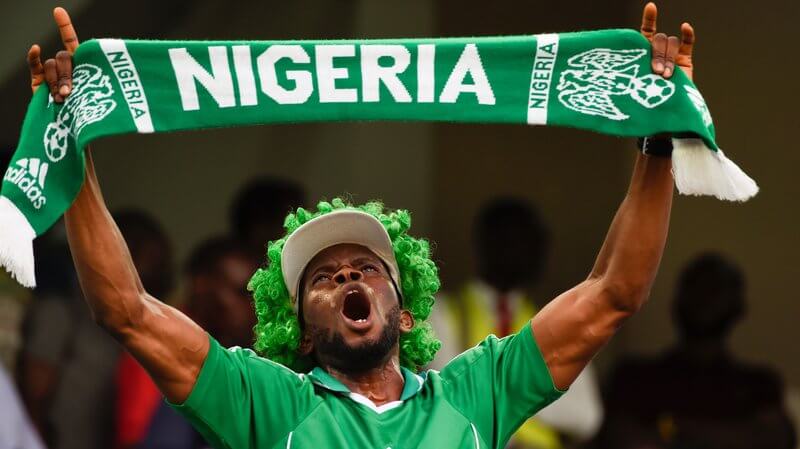
Thousands of Super Eagles fans have stormed the Northern Cameroon town “to offer their maximum support” for Nigeria’s national team “to emerge victorious”. While many arrived by air, fans mostly from northern Nigerian states crossed the land and water borders between Nigeria and Cameroon through Adamawa state.


Garoua, a predominantly Fulani Muslim town, is wearing a new look with all major roads and streets adorned in Cameroon flags alongside flags of other participating countries. Nigerian flags can be sighted in many different locations, including on cars and motorbikes, signalling the level of support the Super Eagles have among Cameroonians as well as Nigerians residing in the country.


Many residents interviewed by TDR throw their weight behind the Super Eagles in the promising encounter against the North African opponents “in the spirit of good neighbourliness”, they said. 


“Though I like Salah (Liverpool star who is expected to lead the Egyptian onslaught against Nigeria), I will support Nigeria. When they play against Cameroon, I will support my country”, said a uniformed Cameroonian man who chose to remain anonymous. His position was echoed by Adamu (27) and Usman, a Cameroon-based Chadian.


This reporter caught up Tuesday morning with a group of vuvuzela blowing Cameroonian youths along one of the busiest roads in Garoua. “Nigeria is at home”, the over-excited youths told TDR as they chanted and waved Nigeria’s flag.


Meanwhile, the sale of tickets is ongoing at various locations in Garoua ahead of the crucial Group D tie expected to record a massive attendance.

Kannywood Movie Review: Gari Guda

Director: Sufyan Lawal Kabo

Language: Hausa

Release date: 26-11-2021

Company: Islamic Film Empire

Cast: Musa Lawal, Ibrahim Hassan, Mahmoud Mukhtar, Fatima Lawal, Binta Miko, etc.

Most of the criticisms around Kannywood are rooted in its personnels’ attitude towards filmmaking. They seem to focus on irrelevant, modern love stories, neglecting serious topics. Their films are therefore accused of cultural aberration and promoting moral decadence. However, as the criticisms became louder, a production company, Islamic Film Empire, came to change the narrative with its movie titled Gari Guda.

Set in Northwestern Nigeria, Gari Guda explores social vices like banditry and kidnappings that bedevil the region. It commences with a scene of a bandit attack on a village, where they kidnap many people, including its Chief Imam, and take them to their hideout in Dunguru Forest.

There is Abdul (played by Musa Lawal) on another side. He is a family man who, after losing his job, becomes bankrupt and cannot cater for them. His fruitless search for another job gets him increasingly frustrated with life, and he decides to end it all. He goes far away to Dunguru for the execution but eventually finds himself in the bandits’ camp. However, after hearing his story, their kingpin, Jalo (played by Ibrahim Hassan), asks him to work as their cyber-man.

Would Abdul accept the offer or turn it down? Find out in the cinemas!

Gari Guda is, indeed, a powerful film, not only for dealing with a pressing issue but for doing that effectively. It is shot in suitable locations that perfectly capture Northern Nigeria’s ecology. This makes it a realistic portrayal of the region and its current condition.

The film is a socio-political critique of the Northern political elites. It depicts their abuse of power as the posits that as the primary cause of the terrible mess the region faces. This is suggested when Jalo tells Abdul that he holds an LL.B degree, and his inability to afford “Law School” makes him resort to kidnapping. The intention of Abdul to commit suicide also reiterates the misconducts unemployed citizens could engage in.

The film is, in addition, overtly didactic. Its portrayal of Abdul, who encounters troubles for throwing his parents away, clearly symbolizes the consequence of parental disobedience. There are also many instances where the director incorporates moral teaching into the dialogue. I salute him for the job well done, together with all the cast and crew members.

Nonetheless, the film’s plot progresses too slowly. And while some scenes are lengthy with unnecessary details, some important points are missed. For example, what transpired with the people kidnapped at the beginning remains unknown. The director also fails to strike a balance between education and entertainment. Except for Abdul’s comical father character, there is no comic relief – something to allow the audience to recover from the tensions and excessive gunshots – in the film.

In conclusion, Gari Guda enlightens and educates. It is typical of what you would expect from the “Islamic Film Empire”. Therefore, I recommend it for the serious-minded—rating 3/5.


Reviewer:

Habib Ma’aruf

habibumaaruf11@gmail.com

Kannywood Movie Review: AVENGER

When an action movie has “Revenge” as its theme, the main focus is the “Avenger”. He is, at times, a lone survivor whose parents are brutally murdered, and his efforts to avenge their death often make the intriguing action scenes in such movies. As its title suggests, Avenger, the Kannywood English action film, is also not different. It’s a story of an avenger who vows revenge against the assassins of his family.

Jamal (M.M Haruna) is the last survivor of Alhaji Baffa Yaro’s family. He was in boarding school when his father, a gubernatorial candidate, was assassinated alongside his family members. His deceased father’s friend, Sani Mu’azu, provides refuge for him. Years later, Jamal grew into an Avenger, and Sani Mu’azu (his saviour who also trained him to be one) begins to give him the pictures of those who, according to him, are responsible for the assassination.

However, when the Avenger launches serial killings on them, he learns that they are innocent. Sani Mu’azu is the real antagonist but mischievously pulls the strings behind him. He is even the mastermind of the actual group behind the murder of the Avenger’s family. Avenger, therefore, shifts his target to the real perpetrators.

Having noticed the exposé of his true identity and that he is now the Avenger’s target, Sani Mu’azu hires professional hitmen to haunt the Avenger down and eliminate him. The Avenger’s encounter with them is conveyed in highly dramatic chases and choreographed action sequences. However, everything is not resolved when the film ends, and the phrase “to be continued” pops up on the screen.

Though a rehash of foreign films, Avenger opens on an engaging note. It begins with Sani Mu’azu, Abba El-Mustapha and Tijjani Faraga conspiring to kill the gubernatorial candidate. It then shifts to where the police are investigating the serial killings on prominent personalities by an unknown person, who is later found to be an Avenger, as he leaves similar transcription after each murder. But as the film expands, it slackens. The story proves contradictory. The narrative gets incoherent and somewhat confusing. Some unconnected scenes seem complementary as they are not serially arranged, and there are no proper techniques, not even intertitles, to clarify.

As an action film, its setting is also not fitting. So is the use of costumes and props, which is too poor. The cinematography is generally nothing to write home about. The action sequences are poorly crafted, and the editing is flawed. There are instances where dialogue is repeated, among other defects.

Compared with Kannywood’s previous attempts at action genre, like Aduniya (Dir. G. Galadima, 2014) and Gwaska (Dir. Falalu Dorayi, 2015), Avenger is much impoverished. It copies the storyline of Aduniya, while Gwaska has better production quality and a more effective setting than it has. Moreover, the English dialogue rendition is weaker than Jammaje’sThere is a way (2016)” and co.

Additionally, the portrayal of M.M Haruna as Avenger is unfit. He lacks the charisma of action heroes. The same goes with Ali Nuhu, who is portrayed as the boss of Ishaq Sidi Ishaq. The latter plays the role of the police officer in charge of the murder investigations. However, the reverse could have been better since Ali Nuhu is more agile and popular to make the required impact.

The ending is also outrageous. It shouldn’t have been inconclusive. Movies meant for the big screen shouldn’t be fragmented. But they are in Kannywood. The film in question and the previously released Sarki Goma Zamani Goma are typical examples. The filmmakers should either change or end up losing a large audience.

Finally, with all its negatives that clearly outweigh the positives, Avenger is still a watchable film for the suspense in its first few moments and Ali Nuhu and Sani Mu’azu’s eloquence in delivering English dialogue. I rate it 2/5.


Habibu Maaruf Abdu wrote from Kano. He can be reached via habibumaaruf11@gmail.com.

Kannywood producer apes Davido, appeals for donation on social media

By Muhammad Sabiu

In style similar to that of the popular Nigerian musician Davido, a Kannywood producer Lawal Ahmad also took to his Instagram and Facebook pages to announce his appeal for donations from his fans.

He said, “Today, I also want to be honoured by my fans courtesy of Prophet Muhammad (SAW),” He afterwards stated his account details, comprising the account number, account name and bank.

You may recall that Davido on Monday was able to raise more than one hundred million naira in less than 24 hours after asking, jovially, those whom he had given a “hit song” to send him money. As of the time of filing this report, money still hits his account.

The famous musician has been sharing his bank account dashboard screenshots, displaying his name and account balance, which significantly increases whenever he uploads a new screenshot.

This has become a new trend as many other social media users follow suit to appeal for money—though sometimes jokingly.

Lawan Ahmad could be the first person to have made such an appeal in the Kano-based Hausa film industry history.

Checks on the timeline of the producer carried out by the Daily Reality show that he has started receiving money, albeit much smaller amounts compared to Davido’s.

Kannywood star laments rejection of Hausa films by southern cinemas

By Muhammad Sabiu

A famous Kannywood producer and former actress, Mansurah Isah, took to her social media accounts to lament how some southern Nigerian cinemas rejected the Hausa films.

She further complained about the government’s reluctance to support the films produced by the Kano-based Hausa film industry, Kannywood, and the inability to make the films as popular as those produced in other film industries in Nigeria.

Speaking in a 56-second video, she strongly questioned why Hausa movies are not popular all over Nigeria, except in just a section of the country, which, according to her, should not be like this.

“What did we Hausa producers do in Nigeria that our Hausa movies cannot be shown in cinemas all over Nigeria? But Yoruba movies will be all over; Igbo movies all over. Nigerian movies, too, are all over. So why is that we Hausa producers all left behind,” she questioned.

Though she didn’t mention anybody’s or agency’s name, Mansurah further solicited assistance, which she said should be by patronising films produced by the Kannywood film industry.

“Let us be assisted. You should make regulations. Display your language. Display your culture. You should love us. Make our films to be watched all over Nigeria. An English movie would be brought and shown in Kano, but a Hausa film wouldn’t be taken to Lagos and be displayed there. What is the reason?

Tacitly addressing people in power, she said, “We are the ones who support you. We neither insult nor defame you but we are still not developed. So what do you want us to do?

“I beg you in the name of God to help us and come up with regulations that will make Hausa films to be consumed everywhere in Nigeria.”

Kannywood is embattled with many tough challenges relating to cultural and religious issues, clichéd film content, monopoly of megastars, internal crises, among other problems critics and experts point out.

Masurah produced Fanan, a film whose songs have been trending on social media for several months. It recently showed in cinemas in Kano.

Kannywood Movie Review: FANAN

In recent months, no romantic Hausa song has captured the public attention as FANAN. However, the song’s movie was premiered on Friday, October 29, 2021, in Platinum Cinema (a newly inaugurated multiplex cinema in Kano).

The film opened to full halls across the new cinema and grossed approximately ₦1.25 million on its opening day, setting the record of being the first Hausa film to get this in one cinema. This remarkable success can undoubtedly be attributed to the popularity of the Fanan song and the distinctive marketing strategy adopted by its executive producer, Mansurah Isah, in promoting the film. But does it, on itself, merit this immense success? I watched it on Sunday, and here is my review.

Plot:

Fanan is a family drama that tells the story of an obedient wife, Fanan (Sabeera), and her husband, Kamilu (Yakubu Muhammad), a private company employee. The couple lives peacefully together with their only daughter Amira (Iman Sani Danja).

Later, their life is disrupted when Kamilu begins to maltreat Fanan and eventually divorces her after starting an affair with a wealthy woman, Madam Jessica (Rahama M.K). Jessica promises to marry him and facilitate his promotion to the rank of manager in another big company. However, she ditches him afterwards without fulfilling any of her promises.

Kamilu then tries to restore his marriage with Fanan, but his attempt proves in vain. Fanan is beyond his reach as she is now married to a business mogul, Alhaji Sammani (Sani Danja), whom she meets through his son, Fahad (Khalifa Sani Danja), a schoolmate of her daughter. Therefore, the jealous Kamilu filed a lawsuit against Fanan, seeking the return of his daughter (Amira) to him. However, he eventually drops the case after the girl narrates the insult he inflicted upon her and her mother while they were together during the court hearing.

Critique:

The film doesn’t entirely disappoint, but it’s not unique in any way. Both its artistic and technical aspects are only average. The story is predictable, and there are many gaps in the screenplay. For example, when Kamilu leaves his job, Madam Jessica doesn’t facilitate his new job application. Yet, he’s shown to have a connection with the company where she works. Again, Alhaji Sammani’s family background and how he ends up being single remains a mystery.

The interspersing of the title song also throws a spanner in the film. Fanan and Alhaji Sammani performed it before their marriage. Considering its lyrics, however, it would’ve had a better impact if performed after the wedding.

Regarding the cast, Yakubu Muhammad is the life of the movie because his performance stands out. Next to him are Rahama Mk and Sabeera. The latter is, particularly, for her good look. But while Sani Danja’s role deserves notice, his children, Iman and Khalifa, need to hone their skills as actors.

Finally, the fact that Fanan is a huge success doesn’t mean it succeeded on its own merits. It rides only on the popularity of its song and the hype around it. I rate it 2/5.


Habibu Maaruf Abdu wrote from Kano, Nigeria. He can be contacted via habibumaaruf11@gmail.com.

Another cinema for Kannywood is a welcome development

By Habibu Maaruf Abdu

Since its inception, the Hausa film industry, aka Kannywood, has not been cinema-oriented. This is primarily due to the filmmakers’ lack of technology to make cinema-compliant productions and the negative perceptions of the cinemas by the industry’s immediate/target audience (the Muslim Hausa populace). Therefore, video film media (i.e. cassettes and CDs) became the cinema equivalent in Kannywood and remained its sole market. However, the industry later crashed after the scourge of piracy and the emergence of online video-viewing platforms, like Youtube, forced those video film media out of business.

Subsequently, many reputable production companies had to close shop or remain practically inactive. In contrast, some low-class and Chamama (comedy) producers kept on as their films are mostly cheaply made and targeted the masses who are less conscious of modern viewing facilities. It was until the establishment of Filmhouse Cinema at the Kano Shoprite that the film business starts sprouting up again. Big budgeted Kannywood movies, made with state-of-the-art technology, began to overflow the only multiplex cinema.

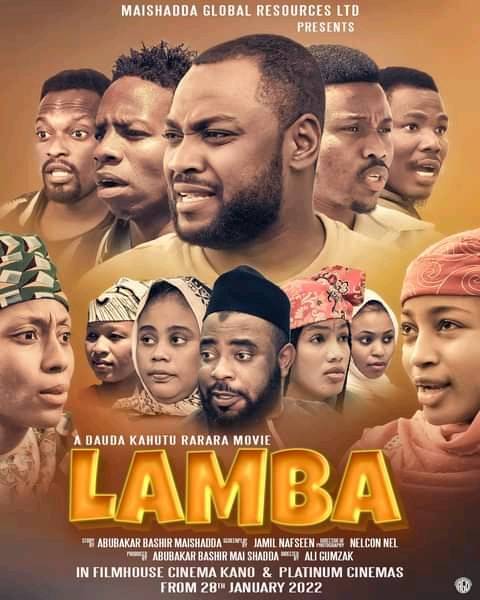
Also, as people accept and patronise the cinema more, comes a realisation of the need to enhance film shows. Thus, the industry signed a deal with some cinema owners in Kano to show some selected films during the 2018 Eid festival. However, there is a more profound development recently. Platinum, another multiplex cinema for screening Kannywood movies, was opened in Kano.

The emergence of these multiplex cinemas is a welcome development for Kannywood. We all know that it’s on the cinemas that film industries stand. If the mighty Hollywood and Bollywood, for instance, still retain cinemas as the prime platforms for releasing their films, there is no other way for the embattled yet up-and-coming film industry. TV stations and online platforms (Netflix, Amazon Prime, iRokoTV, Northflix, etc.) should be more beneficial for the audience in Diaspora, as proposed by a Kannywood scholar, Muhsin Ibrahim.

In addition, it’s high time we disregarded our anachronistic views against cinemas. These newly opened cinemas are, after all, modern and standard for all and sundry. Nor is it for thugs and whores. There is no smoking and drugs. They are multiplex, with each room having stylishly arranged rows of comfortable padded seats. They are peaceful places to get entertained and have fun in a completely different way from the open-air, single-screens we had before.

Our religious clerics should stop denouncing these cinemas. They should, instead, promote Kannywood in general for more decent and educated people to join the industry. Their bashings, often based on unfounded rumours, will never help matters. Kannywood has come to stay, and it’s better to have them in Kano, a more Islamic state, for the government to regulate their activities than elsewhere.

Finally, I emphasise what Muhsin Ibrahim suggests to our big men: instead of building a state of the art filling stations all around Kano, why don’t they construct cinema(s)? The market is there. They should conduct some feasibility research and invest in this business.

Habibu Maaruf Abdu writes from Kano, Nigeria. He can be reached at habibumaaruf11@gmail.com.