Entertainment

You can add some category description here.

Monstrous Madrid face Liverpool in UCL final after eliminating Man City

By Muhammad Sabiu

Real Madrid have secured a place in the Champions League final. They will play against the English Premier League Giants, Liverpool, after crashing Manchester City out of the competition today, Wednesday.

City had their opener through Mahrez in the 73rd minute, while Madrid had their goals thanks to Rodrygo’s brace—the first one in the 90th minute and the second one in the 91st minute—and Benzema’s third penalty goal in the 95th minute. That made the match end 3-1.

The goal aggregate emerged 6-5 as Madrid made it to the final even after being beaten 4-3 by the City last week.

Transition of Tashe

By Sumayya I. Ja’eh

Chorus/children: ‘Ka yi rawa kai mallam ka yi rawa.’

You’ve danced, oh! Mallam, you’ve danced

Mallam: ‘Ban yi ba’,

I didn’t

Chorus: ‘tsoho mai gemun banza.’

Old man with a useless beard

The call-and-response dialogue, accompanied by the beating of a drum, propped open my six-year-old eyes in my grandfather’s compound in a village in Katsina. It was one of those fuzzy moments when you wake up and don’t know where you are for a minute. I had slept off in the car, only to find myself in a dim room lit by a kerosene lamp. There was no electricity, and the young moon illuminated the compound. The young boys that woke me were beating a locally made drum from tins, nylon, and sticks. They looked like characters from the famous tale by moonlight series produced and aired by the national television station NTA, which I was obsessed with then. The main character, Mallam, had a costume: a babban riga, an old cap placed haphazardly, a white beard, attained by putting white cotton on a boy’s face, and his mimicry of an old Mallam thrilled me. It made me and their audience laugh. That was my first conscious experience of Tashe and one of the reasons I look forward to spending my fasting period with my grandparents in Katsina or Kaduna.

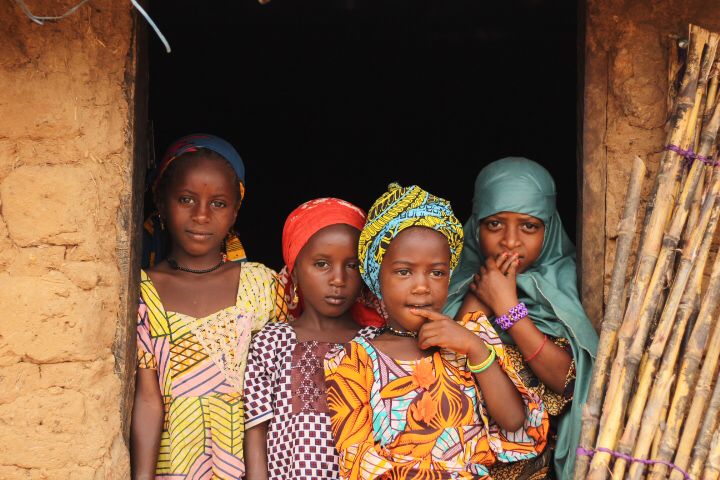
Tashe is an old-age traditional mimetic performance performed by children between 6 to 14. It is an annual cultural performance that takes place in the 9th month of the Islamic calendar and is performed in the early hours of the morning or the evening before the pre-dawn meal or after the break of the fast. Tashe is a short play that challenges a social issue, accompanied by songs, dance, and mimicry.

Tashe can be traced as far back as the contact of the Hausawa with Islam. The word is derived from ‘tashi’, a Hausa word for wake up. Muslims are expected during the month of Ramadan (9th) of the Islamic calendar to fast, and they are highly recommended to take the pre-dawn meal. So, some people feel the need to wake others up for Sahur, to replenish their empty stomachs and energy to see them through the rigours of the day’s work without much difficulty. So, a few community members took it upon themselves to wake people, to prepare and eat just before dawn. To lighten the frustration of struggling to keep awake with no alarms, these volunteers enact the games named wasannin Tashe. While the adults prepare the meals, children with nothing to do occupy themselves with games to help while away time. Another factor is the essence of Tashe, which is aimed at luring people away from un-Islamic leisure pastimes since the beginning of Ramadan.

Tashe is performed mainly by young children, who imitate adults. It is often satirical and full of humour but laden with moral lessons and socio-religious ethics of the Hausa community. Tashe is usually passed down orally from generation to generation. The characters fill the roles with costumes, makeup, and dialogues in call-and-response songs. It is social criticism and a mirror/lens to view the socio-religious ways of life in most Hausa communities.

The Almajirai also are volunteers that perform Tashe. The Almajiri’s source for their food, move from house to house, seeking food or alms. During Ramadan, the Almajiri sing a dirge in the late night hours, songs calling out to anyone with an extra plate to give them. Some musicians and drummers, along with young children, also began to imitate the activities engaged in by the adults. In time, these plays shifted to the early hours of the night. They sing, dance, dialogue, improvise and wear costumes. It is a comedy, but like all comedy, it is the presentation of serious matters in unserious ways.

One striking characteristic of Tashe is its didacticism; it doesn’t only entertain but emphasizes the Hausa cultural belief and tradition—Tashe projects social ethics. Therefore, many performances aim to ridicule those who deviate from correct social norms merrily.

One well-known Tashe passed down from generation to generation is that of naci na kasa tashi, meaning‘I’m so full, I can’t stand.” One of the young boys dressed as an older man puts cotton on his chin that looks like a beard and puts on some clothes to show his protruding stomach. When they are ready, they go from house to house. The lead character sings, and the other children chorus/reply.

Baba: na ci na kasa tashi!

Children: Baba zare gareka!

Baba: Tuwon da dadi yake!

Children: Baba zare gare ka!

Baba: kuma har da nama!

The above can be roughly translated as ‘I’m so full, I can’t stand’, and the children reply with ‘Baba, you’re greedy,’ while the Baba tries to justify his gluttony by saying the tuwo is sweet and there is meat.

For instance, Ga Mariama Ga Daudu, another Tashe, gives us a socio-historic glimpse of the Hausa laden with humour. It is a mimetic performance of the communal responsibilities/expectation of husband and wife, the type of staple food eaten by Hausas. Although a comic, the play is social criticism of the institute of marriage, which several people from both genders are desecrating. Girls stage the play. One of the girls puts on a costume, a long kaftan and a beard and tries to deepen her voice to sound like a man. It is a telltale that enlightens young women about what society expects from a married woman.

Due to the Hausa tradition that does not allow the two genders to mix freely, the girls and boys don’t mix to perform Tashe. Instead, each gender play switches roles with its unique performance type.

A very well-known Tashe is of Gwauro. It is a mime that consists of 5/6 boys. One of them is dressed in nothing but bante (a short nicker) Hausa traditional pants, a rope tied to his waist, a bundle of clothes with kitchen utensils like used tins, old, discarded radio, an old dirty kettle can be found in the bundle carried by the main character. The others hold on to the rope while the lead character tries to run and is being pulled by the rope, while they sing ‘gwauro gwaurogwauro nuna mana yadda kake tsanawa’? Gwauro can be translated to as Divorcee or an old bachelor. ‘Show us how you cook?’ He goes on to put a tin can, wedged it between two stones, and mimics blowing air into the woods.

This is aimed at ridiculing the bachelor, and lessons deducted from this drama border on the irresponsible nature of the bachelor for trying to play the role of a woman, who in most Hausa communities is the one who cooks. Tying the rope around the waist of the lead actor is symbolic. The rope restraining the bachelor also portrays the image of someone in bondage. This shows that in Hausa society, marriage is given such importance that the bachelor/divorcee is considered a lesser being than the other community members.

One Tashe that has gone viral and is available on YouTube is the 2021 Ramadan Tashe ridiculing the state governor of Kano, who asked for 15 billion naira to tackle the issue of Covid 19, as well as a scandal video of him collecting kickback. The short clip shows a boy lying on the floor with a babban riga (an overflowing gown), a red cap, and a white beard. His friends, the crew call out, ‘Ganduje tashi,’ ‘Ganduje stand up,’ to which he replies, ‘sai an ba ni dollar Corona’ ‘not until I am giving dollars to fight Corona.’ The clip is a short comedy skit that not only cracks people up but also has an undertone that challenges corruption by government officials.

Though Tashe is basically performed to provide merriment, the reverse may occur. Sometimes, Tashe meant to ridicule certain personalities, which may not be acceptable to the person concerned. Here the object of ridicule will not find the performance funny, and it is pretty common to see the performers running helter-skelter, being chased by the target of the performance. At other times, the performance itself may be acceptable, but the attitude of the performers may be irritating to the target audience. To cap it up, these performers would taunt any house owner who refused to donate anything. Upon exiting, the actor would often sing, “mun taka tutu, maigidan nan ya yi shi.” “We have stepped on a heap of shit; the owner of this house must have excreted it”.  

Tashe emphasizes communal performance. My grandparents or parents always give out some loose change to the performers. This is the norm that the adults expected to give alms to the performers. These donations can be money or food items, primarily grains like millet and sorghum, the staple foods in any Hausa community. There is no fixed amount for alms, but donation largely depends on the social and financial status of the audience, as well as the extent of enjoyment of a performance.

The audience, primarily adults, also participates by correcting any misrepresentation in the texts, disguise, or dramatization. With globalization and urbanization happening worldwide, Tashe, as I used to know it, is fast becoming a relic of the past. The face of Tashe has evolved in urban cities. Few children or Almajirai go from house to house, entertaining people while seeking alms.

This long-old tradition of performance entertains and highlights the life of the Hausa folks and brings the fore societal expectation of a man/woman in Hausa society. Although it is a series of plays that comes only once a year as entertainment, it is full of dramatic content that reflects contemporary events. This mimetic performance encompasses most characteristics of a drama; costume, dialogue, improvisation, storyline, and purpose. These earliest Tashe performances are the precursor of modern Hausa drama.

Tashe tries to divert the community’s attention from the economic and political predicament. Tashe, like Macukule, which explores the Hausa stereotype of the Gwari man, is still dominant in contemporary Hausa movies. A renowned character Dan Gwari is not new to anyone familiar with Hausa movies.

Today, if you google Tashe on YouTube, a few children and young adults pop up on your white screen. The TV channel, Arewa24, created a short series of Tashe that they stream. While this is another means of preserving this long tradition, the thrill and euphoria experienced by the audience are reduced by the limited screen. Unfortunately, my children would most likely never experience this long communal tradition of Tashe as I did.

Sumayya I. Ja’eh wrote from Abuja via sumyjaeh@gmail.com.

Ronaldo could leave Man United this Summer—Danny Mills

By Muhammad Sabiu

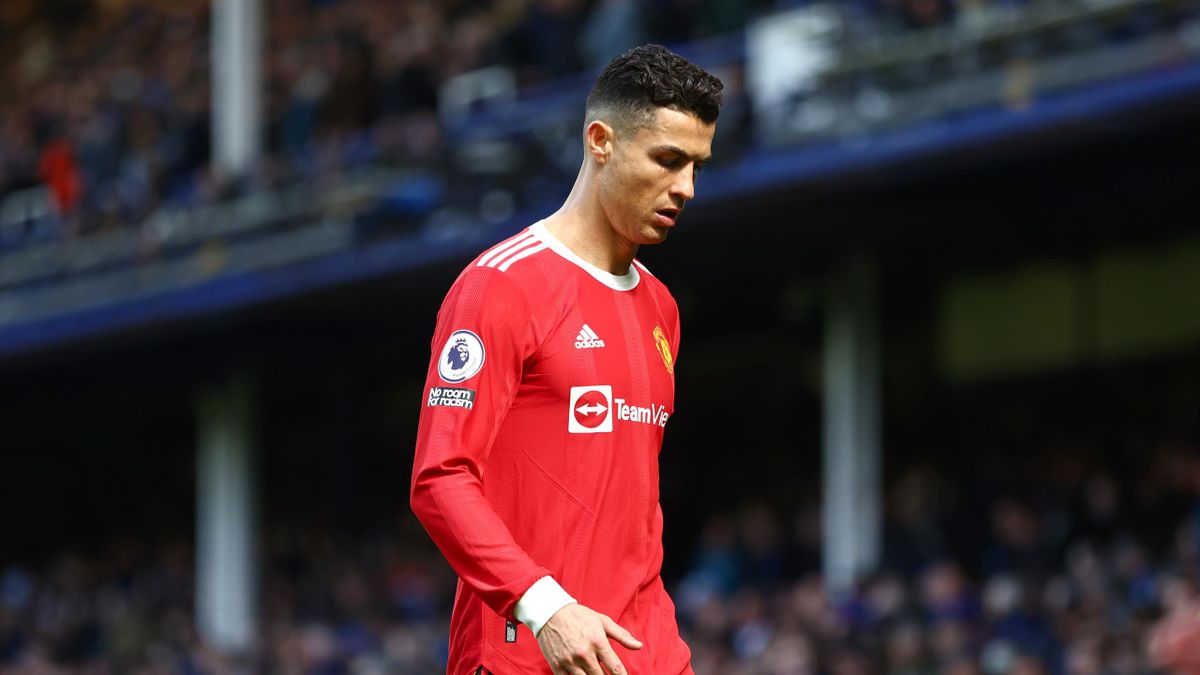
Cristiano Ronaldo is one of eight Manchester United stars who could depart this summer, Danny Mills, a former Manchester City right-back, claimed.

According to Mills, Ronaldo, Paul Pogba, Eric Bailly, Victor Lindelof, Phil Jones, Jesse Lingard, Juan Mata, and Nemanja Matic might depart United at the end of the season.

Ronaldo has struggled since joining Manchester United from Juventus last summer, despite scoring 22 goals in all competitions for the Premier League giants.

Mills told Football Insider that making Ronaldo a part of the rebuilding process at Man United is pointless because Erik Ten Hag will take over from Ralf Rangnick.

“Ronaldo might be a difficult one, but I am sure somebody would take him. Remember, they didn’t pay too much for him. It’s not like they are going to take a huge hit in terms of a transfer fee.”

“Ronaldo still has something to offer, but if you are talking about a rebuilding process, and he’s only going to be there for one season, what’s the point? He becomes more of a hindrance than a help. Every time you lose, it is ‘Why is Ronaldo not playing?’ That is the difficulty that you have. If you’re going to start afresh, give yourself that opportunity to start fresh,” Mills was quoted as saying.

‘RRR’ Review: A visually stunning, exhilarating epic

To borrow from Aditya Chopra in his short review of Hum Aapke Hain Koun (1994), “It’s a mind-blowing film, a complete entertainer [which] deserves all the success it gets”. This description is apt for the latest Indian Tollywood epic titled RRR.

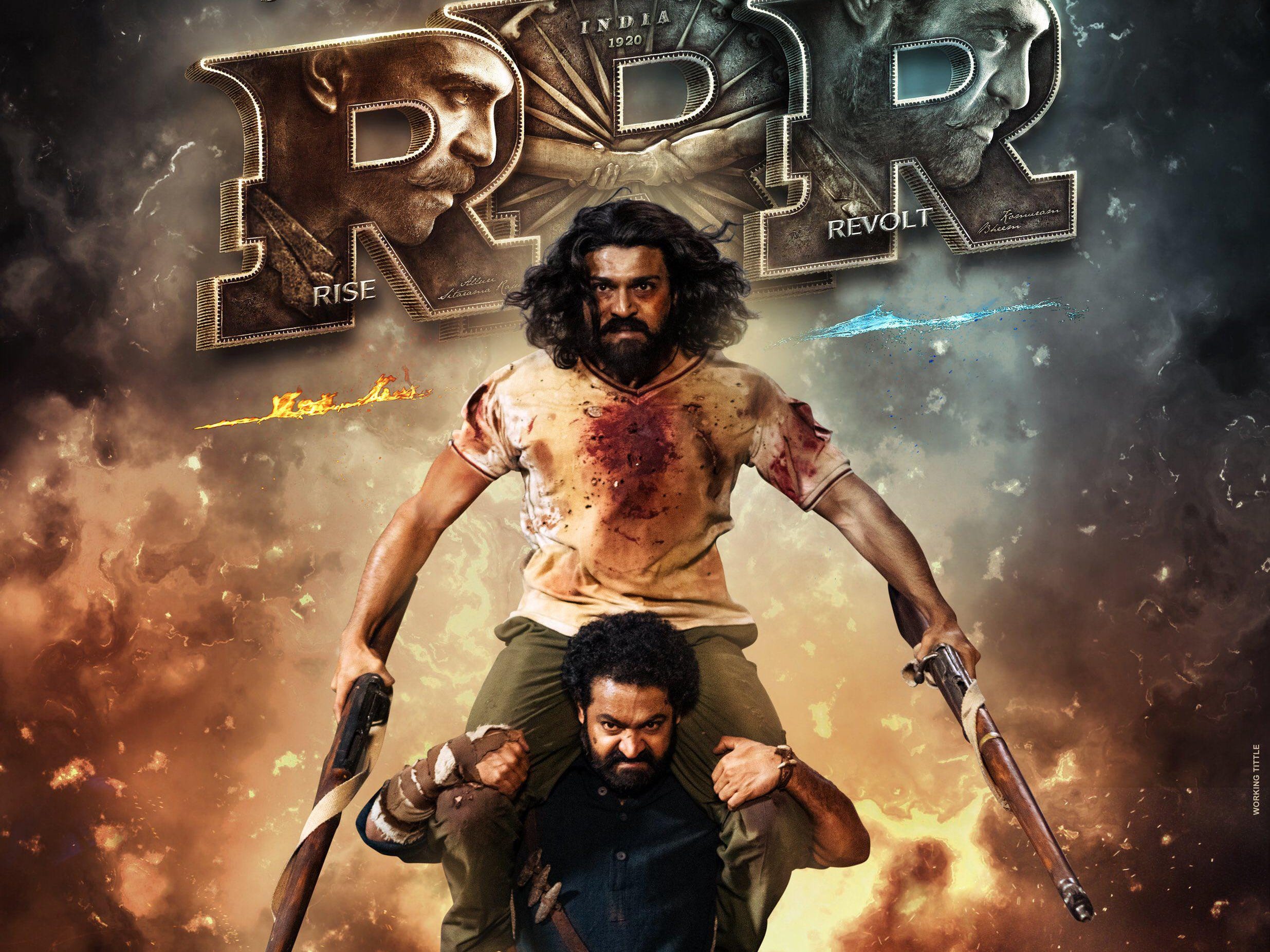
Directed by S.S Rajamouli, the film is a large scale period action drama that outshines even his record-breaking Baahubali. Its seemingly strange title, RRR, originates from the director’s initials (Rajamouli) and the two protagonists (RamCharan and RamaRao). The three-letter title also stands for Roudram Ranam Rudhiram (Rage war Blood) and Rise Roar Revolt in the film’s Telugu and Hindi versions, respectively.

Firmly placed in Rajamouli’s style of high fantasy, elaborate set design and spectacular CGI, the film is visually stunning and exhilarating. The story is a historical fiction set in the 1920s British India, with Alluri Sitarama Raju (Played by Ram Charan) and Komaram Bheem (Played by N.T Rama Rao Jr.) as the leading characters. Two Indian revolutionary leaders who fought against the British colonial rule at the time inspired these characters.

Plot:

Sitarama Raju (Ram Charan) is an anti-British rebel leader disguised as a loyal police officer of the Crown. Komaram Bheem (N.T. Rama Rao Jr.), on another side, is a freedom fighter from the Gond tribe on a mission to attack the British colonial rulers and rescue a girl, Malli, who they enslave. Unfortunately, the British authorities get information about his mission, and their fearless cop, Raju, takes up the challenge to search and arrest him to get a promotion. However, Raju and Bheem become friends as they are unaware of each other’s true identities.

Later on, Bheem reveals his mission to Raju and goes on to attack the British. Raju chases him and succeeds in arresting him after a fierce face-off. Therefore, the British government promotes him to a senior officer, not knowing that he, too, is plotting against them. The story continues…

The film is indeed an exciting movie full of breathtaking adventures. It proves enthralling right from the beginning when it introduces Ram Charan in a crowd scene, where he bravely manhandles thousands of protesters to catch one of them. It then continues with the equally rousing NTR’s introduction scene showing his encounter with wild beasts. It keeps the magic with another thrilling sequence in which the two heroes team up to save a boy from a ghastly train accident. All these, even before the climax! Indeed, director S.S Rajamouli has shown his unrivalled directorial talent in this movie.

The efficient, exciting performance of the two musclebound leading actors (Ram Charan and Rama Rao) makes this film a huge success. They effortlessly excel in the skillfully choreographed action sequences throughout the action-packed movie.

Without mincing words, RRR is a fascinating, thoroughly entertaining movie that keeps the viewer hooked throughout. You will immensely enjoy it. Don’t miss out! Rating 4/5.

Reviewed by:

Habibu Maaruf Abdu

(Kano, Nigeria)

habibumaaruf11@gmail.com

Singer, Rema, begs ASUU to call off strike

By Ahmad Deedat Zakari

Popularly known as Rema, Nigerian singer, Devine Ikubor, has appealed to the Academic Staff Union of Universities, ASUU, to call off its two-month-old strike. 

The 21 years old Afrobeats singer made the appeal on Monday,  April 18, 2022, on Twitter. 

“ASUU, since dem give me admission I neva start school o, e don do nau “, Rema tweeted. 

Rema was reportedly admitted to the University of Lagos in January and has not been able to assume school before the strike’s commencement.

ASUU has been on strike since February 14, 2022. The Federal Government’s failure to implement the 2009 agreement and not accepting the University Transparency and Accountability Solution, UTAS, as a payment platform are among the main reasons cited by ASUU for the industrial action.

World Cup Qualifier: Federal civil servants close from work at 1 pm ahead of Nigeria vs Ghana clash

By MMuhammad Sabiu

Office of the Head of Service of the Federation has announced to civil servants that work would Tuesday be closed at 1:00 am so as “to mobilise support for the Nigerian Team [Super Eagles]” ahead of its World Cup Qualifier against Ghana.

This is contained in a circular signed by Dr. Ngozi Onwudiwe, Permanent Secretary (Service Welfare Office), on behalf of the Head of the Civil Service of the Federation.

The circular reads, “As you are aware, the Super Eagles of Nigeria will be meeting the Black Stars of Ghana in continuation of the 2022 FIFA World-Cup Qualifier, Playoff, (Return Leg).

“Consequently, I am directed to inform you that all offices will be closed at 1:00 pm on Tuesday, 29th March 2022.”

Dr. Ngozi also urged Permanent Secretaries to disseminate the information contained in the circular more widely.

Angel Di Maria vacates PSG this season

By Muhammad Sabiu

Angel Di Maria, a winger for Paris-Saint-Germain, is scheduled to depart the French Ligue 1 club at the end of the season.

PSG will not give Di Maria a new contract in the summer, according to L’Equipe (as relayed by AS), allowing the Argentine to depart for free.

PSG’s current contract with Di Maria will expire at the end of the season.

PSG is yet to offer the former Manchester United player a new deal.

The 34-year-old moved to PSG from Manchester United in 2015 for a reported £56.7 million.

Di Maria’s playing time has been severely curtailed as his current manager, Mauricio Pochettino, continues to favour players like Neymar.

Ronaldo, Osaka and Us: Between grit and rethinking

By Muhsin Ibrahim

Cristiano Ronaldo is unquestionably one of the greatest footballers in the world. Needless to say, he has lifted almost all trophies, except the World Cup. Notwithstanding, his recent performance at Manchester United is anything but superb. I am not a football pundit, but I am old enough to understand if someone is no longer in their prime or the odds do not favour them anymore.

Naomi Osaka is a much younger athlete than Ronaldo. She had a winning streak, including defeating her role model, the undisputable tennis GOAT, Sareena Williams. However, the lady luck stopped smiling at her after that remarkable performances and victories. Much unlike her much older athlete colleague (i.e. Ronaldo), she didn’t summon her grit at that time. Instead, she had a rethink. Thus, she tried the fashion industry and, well, succeeded.

In his book, Think Again: The Power of Knowing What You Don’t Know, Adam Grant subtly criticises Angela Duckworth’s argument on grit in her famous book, Grit: Why passion and resilience are the secrets to success. He says we should avoid “escalation of commitment”. What’s that?

Grant defines escalation of commitment as “When we dedicate ourselves to a plan, and it isn’t going as we hoped, our first instinct isn’t usually to rethink it. Instead, we tend to double down and sink more resources in the path.” Isn’t it what many of us do?

Of course, Osaka goes back to tennis. And, yes, Ronaldo may come back. However, if I were him, I would rethink my commitment to professional football. Grant (2021:229) points out that “gritty people are more likely to overplay their hands in roulette and more willing to stay the course in tasks at which they’re failing, and success is impossible”. In other words, gritty people go into foreclosure.

Honestly, I side with Grant’s argument more than Duckworth’s. We may be passionate about several things. Nevertheless, we may not succeed even after trying our best possible. For instance, how many relationships have had to let go? That doesn’t mean they aren’t our calling. Instead, it tells us that we aren’t cut for it. Hence, instead of pushing and pushing, rethinking and reversing may be our best way out – and, of course, way forward.

Being on social media for nearly two decades, many young people (I am also young, by the way) have talked to me about their passion for writing or doing postgrad programmes abroad, among other things. So naturally, I do my best to advise many, if not all of them. But, frankly, some of them should rethink their dreams. It’s glaring that some do not have what it takes to be writers or secure foreign scholarships.

I am also experimenting with a profession outside academia. Bluntly, I am beginning to rethink. I am not under duress to foray into any field. I am deeply grateful to God that my take-home salary pays my bills and more. While I may still pursue the – or another – profession in addition to teaching and research, I will not foreclose my thoughts.

Finally, try and try harder. Suppose you fail ad infinitum, please, stop and have a rethink. Rethinking should not necessarily come after a series of failures. It could or should come almost at any time. Moreover, that doesn’t mean grit is unimportant. I think without it, both Ronaldo and Osaka would not have gone that far. Even yours faithfully had to apply grit to be where he is – Alhamdulillah.

Muhsin Ibrahim wrote from Cologne, Germany. He can be reached via muhsin2008@gmail.com.

Foreign coaches or indigenous coaches, what way Africa?

By Abdulrazak Iliyasu Sansani

It is no longer news that another African coach has won the African Cup of Nations, bringing it to six out of the last nine editions won by African coaches. Coach Aliou Cisse of Senegal joined the illustrious list of African coaches that have won it in the period under review:  Hassan Shehata of Egypt, three times, Steven Keshi of Nigeria, Djamel Belmadi of Algeria,  all once.

While I don’t know have anything personal against expatriate coaches, I have everything against the perception that our African coaches are not technically sound to manage our national teams. This is absurd. There are good coaches all over the world.

There are brilliant football managers all across mother Africa who should not be disapproved merely because of what can be referred to as our syndrome of not valuing our own. It shouldn’t be so. 

Of course, Nigeria’s best coach in history is a Dutchman, Clemens Westerhof, who coached Nigeria from 1989 to 1994: winning silver in Algeria 1990, bronze in Senegal 1992, and winning gold in Tunisia 1994.

Westerhof Qualified Nigeria to her maiden World Cup, played some of the most entertaining football ever in Africa and achieved the highest ranking by an African national team, 5th in April 1994 FIFA rankings.

Thus, there isn’t any way I would despise foreign coaches. It isn’t logical. However, I advocate that they be given fairgrounds to compete with our local coaches, and when appointed, all should be supported sufficiently to succeed. 

It is still fresh in my mind how Nigeria Football Federation got itself trapped in a web it is still striving to overcome. They sacked Gernot Rohr at the eleventh hour, which I still think is debatable. Yet, they went ahead to ‘appoint’ a new manager while an interim manager was in place. Who does that before a major tournament and the World Cup playoff around the corner? 

I had thought they should have waited for the AFCON to conclude before appointing any manager, especially with an interim manager already appointed. And all those who shared my views have been proven right with the latest development of allowing the interim manager, Austin Eguavoen, to continue until after the World Cup playoff against Ghana.

I think we would have been saved all this rigmarole if the NFF had at least trusted him enough to be the interim manager and not gone ahead to supposedly have an agreement with someone to succeed him regardless of his performances. 

Until, the Nigerian football fanatics reigned and rallied around the interim manager after some spectacular displays at the group stage of the AFCON, which seemed to have been adequate to make NFF take this recent decision, despite our shock elimination at the last 16 by Tunisia.  May we learn to give our best any job, support, and trust them to deliver. God bless Nigeria. 

Abdulrazak Iliyasu Sansani wrote from Turaki B, Jalingo, Taraba State via abdulrazaksansani93@gmail.com.

Kurt Zouma and the challenge of being a black footballer in Europe

By Aliyu Yakubu Yusuf

Unless you don’t follow European football, you might have seen a viral video of a man of black ancestry kicking and slapping a cat inside what appears to be an apartment. That man is a French, West Ham footballer, Kurt Zouma. Since that video came to public consciousness, Zouma has been in the eye of the storm. When writing this article, more than 250,000 people have signed a petition calling for Zouma’s prosecution on account of animal abuse. And if that were to happen, he may be facing up to a 4-year prison sentence.

Again, Adidas, the famous German multinational sportswear conglomerate, have terminated their contract with him. And to add insult to injury, his club has fined him his two weeks’ wages. Of course, what Zouma did is indefensible in its entirety. As vulnerable as they are, animals, too, need to be protected from our cruelty. However, I believe that the whole incidence is being blown out of proportion.

When I first read the news, I assumed it was just another mundane story that would naturally wane away in a matter of days. But seeing how the story was trending on all news platforms, I quickly visited YouTube to watch the video. My impression at the time was of Zouma being overly aggressive towards the animal. This is largely down to the sensational headlines across several media outlets. After viewing the video carefully, I observed that the player was not violent towards the pet cat. His kick was just a mild one, attempting to chase the animal away. But is this the first time the Western media maltreat Blacks? No.

In 2013, the then Liverpool striker, Luis Suarez, was accused of racially insulting former Manchester United captain Patrice Evra. Suarez unequivocally admitted to using the word ‘negro’ (a term with a racist undertone) to refer to Evra. At that time, no one launched any petitions against Suarez. On the contrary, his Liverpool teammates even donned a commemorative shirt to support him, alleging that his remarks against Evra were taken out of context. And coincidentally, Suarez was also an Adidas player. However, Adidas felt no need to terminate Suarez’s sponsorship deal. Instead, they sent him a toothless warning, asking him to watch his future behaviour.

Similarly, Eden Hazard once kicked a ball boy and was only fined a paltry £250,000 and never lost his sponsorship. Harry Maguire was convicted for human assault and bribery in Greece but received only a suspended prison sentence. He neither lost his Manchester United captaincy nor any of his sponsorship deals as a result. These incidents beg the question, ‘is animal abuse more serious in Europe than human rights abuse’? Have all these events transpired the way they did because Suarez, Hazard and Maguire are all white, while both Evra and Zouma are blacks?

From Samuel Eto’o, Emile Heskey and Peter Odemwingie to Daniel Alves, Franck Kessie, and Raheem Sterling, the list of Europe-based black players subjected to monkey chants is endless. Ironically, sometimes the racist abuses were done by supporters of the very clubs for whom the players ply their trade. However, no clubs were ever punished by points deduction or even a severe fine to make the mean-spirited fans behave appropriately. No arrests, no stadium bans for the culprit and nothing. Compare this to another event late last year involving West Ham fans who were filmed on a plane chanting anti-Semitic songs at a Jewish man as he was boarding the plane. That incident generated wide condemnation. All the fans involved were promptly arrested. West Ham issued a public statement that squarely condemns all the perpetrators. A similar incident happened to a Chelsea fan who posted anti-Semitic tweets directed at a Tottenham player. He, too, was promptly arrested and prosecuted.

I am happy about how fans on Twitter quickly pointed out the hypocrisy of Adidas. This is a corporation that specialises in producing shoes from animals’ hides. Which animal has ever granted anyone permission to kill it and use its hide to make shoes? Who draws a line between right and wrong as far as animals are concerned? And where are the animal rights agitators when riders use canes (made from animal skin) to whip animals during horse racing? Besides, who has ever sought approval from any animal before he rides on it?

Look, I am not out to defend Zouma. He undoubtedly made a mistake, and that is beyond doubt. I only want to point out the double standard that has trailed this incident. Black players in Europe are adjudged on a different set of criteria. When they are racially insulted, they expect to look the other way and not be overdramatic or create an unnecessary scene. They are always expected to exhibit good behavioural conduct or risk facing social stigma. The mantra of ‘what is good for the goose is good for the gander’ does not apply to footballers of the black race.

Aliyu is a lecturer at the Department of English and Literary Studies, Bayero University, Kano. He can be reached via aliyuyy@gmail.com.