Education

ASUU Strike: Students protest in Kano, other cities

By Uzair Adam Imam

The National Association of Nigerian Students (NANS) has stormed Kano State roads to protest against the ongoing nationwide strike by the Academic Staff Union of Universities (ASUU).

The association that has frowned upon the incessant strike in the country is protesting to tell the world the situation they are facing in the country regarding their education.

The students who converged on the Kofar Nassarawa bridge in Kano City decried over delays in academics.

Singing solidarity songs against ASUU’s action with their hands clinking placards, the students said the menacing issue of the strike should by now be put to an end.

They also called on the federal government to intervene and call off the strike.

Recall that the Vice President of the Union, Comrade Yazid Tanko Muhammad, disclosed their intention to protest on Monday.

Comrade Yazid added, “So, it is a protest which, if we start, will not stop until the issues are resolved, and the lecturers resume work.

Musings on the solution to university education in Nigeria

By Ahmadu Shehu, PhD

Once again, there is a total blackout in Nigerian public universities. Last week, the Academic Staff Union of Universities (ASUU), the umbrella Union of academics working in Nigerian public universities, declared a one-month warning strike to remind the government of their promises signed just a year or two ago. 

It has been decades since the rift between ASUU and the Federal Government of Nigeria took the lives and progress of Nigerian students to ransom without a foreseeable end to the debacle.

ASUU was a child of necessity born out of the precarious situation Nigerian lecturers found themselves in the 70s under the various military juntas bent on killing the tertiary education in Nigeria as they did basic education. 

Thanks to radical scholars and the rise of socialism as an alternative economic and political ideology to capitalism the government prefers, ASUU got a deep ideological rooting. It also gets a wide acceptance among diverse social domains of the Nigerian society, who, like ASUU, were disenfranchised by and dissatisfied with the tyranny of successive regimes. 

The confrontations between ASUU and the military junta of Ibrahim Babangida and Sani Abacha made the association a front-wheel of social activism in Africa and gave it a legitimate voice that is believed to stand for the masses not just on education but also human rights and socioeconomic advancement. 

Over the decades, ASUU became very wealthy and stubbornly anti-establishment, which had assisted in its success against the government and lost popularity among Nigerians. But, these are topics for another day. 

While there are physical successes credited to ASUU struggles, the incessant strikes have killed many, delayed millions and subverted trillions of aspirations, destinies and successes of millions of Nigerians. Thus, one of the emergencies facing Nigerian university education today is this endless and worthless rift between ASUU and the Federal Government. 

A serious-minded government in Nigeria should have education as a priority. Any education policy that does not consider the solution to this rift is not comprehensive enough and may not solve the quagmire of education in Nigeria. 

How do we end this decades-old problem that has defied most solutions? Some people have advocated for the privatisation of Nigerian universities to have a purely money-driven university system reminiscent of the US-style, where citizens have to pay through their noses to acquire tertiary education. 

An opposite idea is one the one ASUU pursues. It is a totally free, accessible, and one hundred per cent public university education where all willing and qualified citizens can enrol and acquire tertiary education in fields of their choices and mental capabilities. 

ASUU’s idea is noble and ideal of a functional socialist society where education is an inalienable right of citizens. However, the situation in Nigeria and our economic ideology doesn’t allow for either of these ideas to work. It is why ASUU and the government have been going around the same hole of self-deceit and conscious pretence. 

To provide a lasting solution to this endless crisis that have killed our education and our economy,  I believe that privatisation is not the right solution, just as a costless education is not. We’re not America that the insensitive capitalists admire without reason nor the defunct Soviet Union that ASUU loves to imitate. These approaches do not fit our realities.

The alternative is for the government to collect and allocate special taxes to fund education. Again, we can see the models in Western and Central Europe, even in Asia, where citizens pay special taxes to fund education. In this regime, a specific percentage of all taxations will be allocated to education, and citizens will access this service which has been paid for in a different way, supposedly free of charge. 

Then, all federal universities shall submit and defend their budgets at the national assembly, effectively giving universities financial autonomy and removing them from the shackles of the ministry of education and, by extension, the cumbersome nature of mainstream Nigerian civil service. 

That means that each university will be an independent government entity responsible for 100% of its affairs without recourse to other government agencies. This equally requires that we abolish bottlenecks such as Tetfund or limit their capacity to specific funds. The ministry of education will only be a regulatory body in collaboration with the National Universities Commission (NUC). 

That way, the university management can be charged with the responsibilities of funds generation and management to the extent that lecturers no longer need ASUU as an association as all employees of a given university are totally within the purview of the university that employs them. The Federal Government doesn’t need to deal with the basic needs of university academics, such as salary and allowances.

In this model, academics take up their jobs knowing that their remuneration and social welfare are subject to their immediate employers, which is the university management. In turn, they submit their budgets yearly to the national budget and planning office, which will be debated and approved by the national assembly. Whatever they get is their own cup of tea. 

That effectively means that ASUU as an association will cease to exist because each of its members will be totally and absolutely under the purview of their immediate employers  – their home universities. There won’t be the federal government to fight. The common enemy will be gone, and there won’t be the basis for a national strike because each is on their own. 

This, as simple as it is in words, is a herculean task that cannot be easy to achieve. It requires a huge political will, legislative and administrative changes. 

No matter how long it takes, making universities entirely independent and autonomous while subjecting them to the same accountability measures prevalent on other government agencies is the surest, if not the only way to achieve a stable, qualitative and functional university system.

That way, there won’t be ASUU talk more of strikes, and the quality and quantity of education will be solely a responsibility of the universities and, therefore, the academics. 

Dr Ahmadu Shehu writes from Kaduna and can be reached via ahmadsheehu@gmail.com.

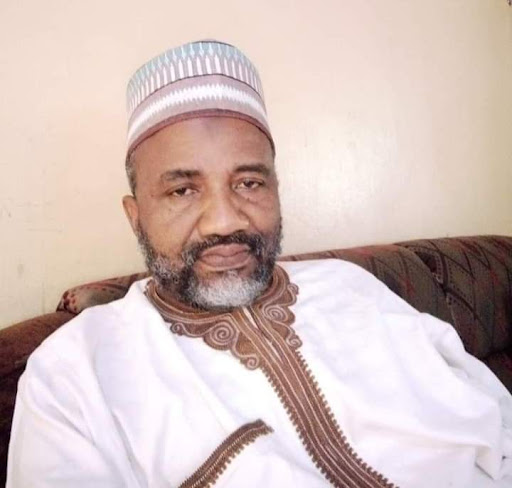
Alhaji Musa, Khadija University Majia founder, and philanthropy per excellence

By Salihu Sulaiman

Hard work and appreciation are part of human existence at the individual or government level. Appreciations for deeds that are more than worthy of commendation is a form of motivation to spur the individual that is so much appreciated to do even more. And as I will demonstrate it today in this little tribute, I will celebrate this epitome of hope with this accolade. He’s someone whose humanity transcends his friends, families, community members, and even adversaries. 

Alhaji Musa Majia is the subject of my glowing tribute. A seasoned-cum philanthropist born in poverty in the slums of Majia town of Taura local government in Jigawa state but strived and succeeded in business by venturing into his productive money-making schemes. Alhaji Musa, while transiting into that rigorous walks of life and reaching his Eldorado, he has since become a renowned public philanthropist in his unmatched quest to help children born with wooden spoons with whom he shares the same circumstances. 

He’s the modest wealthiest man I know.  He lives a simple life and completely loathes ostentation. Yet, he’s warm around people and always wears his heart on his sleeve. The most self-effacing, in words and action. Someone who always stands through thick and thin, always well-meaning that it always takes him long to lose in anybody. 

Alhaji Musa’s footprints will forever remain in the sand of time and indelible in his hometown of Majia and Jigawa state at large. A man not known to have acquired any conventional tertiary education in any chosen endeavours, by providence, he established the first conventional, integrated, subsidised, well-equipped, highly strategised private University in Jigawa. He named it Khadija University Majia, after his beloved mother. This is a deliberate philanthropic gesture worth commendation. 

However, Alhaji Musa Majia demonstrated the potency of his patriotic favour when he offered automatic scholarships to indigenous Majia candidates who obtained the minimum requirements to gain admission to the university. 50% waiver to Jigawa state indigenous students and 30% waiver to others from Kano state. This commendable initiative will surely encourage and pave the way for willing and determined students who have a passion for furthering their studies but couldn’t afford the tuition due to their various financial constraints. 

Alhaji Musa’s clean-hearted, grass rooted, and inexhaustible philanthropic gestures are too numerous to enumerate extensively. However, he has distinguished life of service to God and humanity in the cause of his life. He continues to reverberate this, especially in his impeccable character, thoroughbred humanity records, and enviable stature.

In all this heroic precedence he has set, he has proved that character, generosity and purpose are the ingredients he needs to deploy in helping back and lending his helping hands to his community. Thus, he provides them with a first-class private institution at their doorsteps to assist the masses in furthering their education and achieving their full potentials in their various life endeavours. Moreover, he displays courage and integrity in contrast to the willingness and opportunism that other equally wealthy people haven’t shown given the similar circumstance. 

An instructive insight on some of his inexhaustible philanthropic gestures would reveal a man who has a consistent and unmatched commitment towards improving the life and well-being of the members of his community. Little wonder how he has distantly distinguished himself from the general culture of the wealthy. On different occasions, he kept his word on the transitions of helping the needy and carried out with utmost transparency with complete blindness to any family lineage or any discrimination. 

Alhaji Musa Majia has overseen the construction and distribution of over 120 houses to people in his community who have no shelter and have sponsored over 40 students to further their studies abroad from 2011 to date. Alhaji Musa has also facilitated the construction of arguably one of Jigawa’s best secondary schools with the tahfiz section known as Adams Science and Tahfizul Quran academy Majia in 2020. It is situated in his hometown of Majia to also aid in realising the full potentials of the willing and talented students of Majia town. 

In job creation, he has facilitated the employment of indigenous youths of Majia town in various professions, especially the bureau de change professions. Many young graduates and non-graduates who have benefitted from his benevolence have excelled in that endeavour and created manpower for other equal contemporaries to curb unemployment in the community. Alhaji Musa has also facilitated the situation of the FRSC division and police division in Majia town to curb the menace of security in the community. 

Additionally, in his generosity, Alhaji Musa has also provided white-collar jobs to numerous Majia youths in the Central Bank of Nigeria (CBN). Over a hundred youths were provided with police offers, FRSC civil defence, and other para-military agencies across the country. With also a large farm settlement and a multi-millionaire plaza that employs over 500 workforces.  

This exceptional gesture of establishing a world-class private institution in his hometown of Jigawa earned the commendation of Vice-President Yemi Osinbajo and the Minister of Education, Mallam Adamu Adamu. They both describe his efforts as motive born out of patriotism and commend his potency of inherent  Ingenuity, which will be invaluable to the people of Majia, Jigawa and Nigeria. 

From the ongoing and his burgeoning philanthropic trajectories, it is evidently clear that Alhaji Musa Adamu Majia is a man of history. He has left a permanent mark in the annals of his community. He is also a worthy role model and inspiration for many aspiring philanthropists.

Salihu Sulaiman wrote from Dutse. He can be reached via salihusulaiman6540@gmail.com.

Hope, destiny and dilemma: letter to a former student

By A. A. Bukar

Dear Iroro,
It still touches my heart that you feel entrapped by frustration and desperation as a banker. And hope you will find solace in the fact that this is not your making. Life has an inexplicable way of fixing us where it pleases. That’s what we call destiny, isn’t it? A mysterious power beyond the freedom of our choices.

In the vicissitudes affecting your life and career, I am sure you’ve wondered: what on earth has Chemistry got to do with Banking? I have also thought about it when another mentee recently joined the apex bank of the country with a degree in Linguistics. But remember it wasn’t either your dream to be a chemist, nor of your teachers and mentors. Here’s an exposè on the initial agenda:

Fresh from College, we were entrusted with your intellectual upbringing as freshers in that private secondary school. Unbeknownst to you and our teachers that brought us there, we were equally at a point of self-discovery; with youthful exuberance, spurred by desire and desperation to make impact on our immediate society. Our immediate concern was the state of the general hospital, dearth of health personnel and what to do about it – big as it was and the multitude it supposed to serve, the hospital could not boast of having 3 medical officers whether resident or itinerant then. We were worried by how, for example, when a family member fell sick, we had to rely on a chemist or a ‘family doctor’ who probably had only a certificate in Community Health. For all type of ailments – from malaria, typhoid to child delivery.

So what to do? We started brainstorming with your other teacher – Audu Bulama. Initially we agreed to abandon our NCE certificates and return to a science secondary school, obtain another SSCE and gun for Medicine. This was in spite of my numero-phobia. Upon further discussions, we decided to maintain our charted course but encourage you to pick up the battle on our behalf; on behalf of all. This largely motivated the extraordinary devotion given to your generation. You’d no Saturdays of your weekends. Extracurricular activities, lab practicals and whatnot. The teachers, on the other hand, made the school their second home, passing the night when duty forced. We were gladdened when, after the career talks in which late Dr Gishiwa was involved, many of the finest brains opted for science class. But in no time destiny began to take toll.

First, your headgirl and her friend got married. That was the end. Travails of UME transposed you and the other boys to B.Eds. Now, one of the two Bashirs that graduated with first class in Mathematics is in airforce. You’re in a bank instead of laboratory. Your close friend, Tijjani, a thoroughbred from art class wanted to study Law but ended up with B. A. in Hausa Language. You can always feel how he struggles to suppress his dissatisfaction ever after. Zarah, your overall best in the first session, found her “destiny” in the kitchen! Only your headboy went nearer to fulfilling the dream with a degree in Pharmacy. My sisters, who I similarly encouraged thus, followed the same pattern of career trajectory – Mathematics, Pharmacy, Medical Imaging Technology and so on.

Dear Iroro, you’re not alone. We were all at this crossroads of dilemma and indecision in the process of evolution. Sometimes due to lack of choice or due to multiplicity of choices. In 2007 I got two admission offers to study B. Sc Mass Communication (100 level) or B. Ed English (200 level) at Bayero University. For obvious reasons I registered for Mass Communication. But before lectures could start, my friend Musa Lawan Kaku , who was doing his double honors in English and Islamic Studies, began to take me to the exciting classes of Prof. Saleh Abdu, IBK and Mustapha Muhammad. I instantly found home and wanted to switch over. We even went to the admin. block with Usman Abdullahi making inquiries on how my registration in Mass Communication could be converted to English. When they said the ink had dried, we, in desperation, asked further whether new registration was possible – that meant a forfeiture of the former. When, along the way, I placed a call on your proprietor (who was my teacher and mentor), Dr AbdulRahman, with regards to this I found consolation and wisdom in his advice. His argument was our community had teachers in excess, dividend of the CoE in the locality but not so journalists. Thus I remained. Happy thereafter, grateful for ever.

Enthused by my editorship of our departmental newspapers and magazines, I kept an eye on practice after graduation. But destiny took me elsewhere. NYSC posting took me closer home – where I was to teach Hausa (another irony) in a Jigawa state village school. Dissatisfied; without any prodding from anyone; without knowing anyone, I ventured into a nearby College of Legal/Islamic Studies requesting to be given a part time job in Mass Communication to kill the idleness precipitated by my posting. After brief perusal of my CV, the provost, Sheikh (now Dr.) Muhammad Al-khamis looked up and said: “Abubakar, we will give you a full time job. We are looking for people like you…” In the voice of Wajahat Ali, “That’s how they (read: destiny) pulled me back to classroom”. Grateful for ever.

But let me be very blunt here. Nurtured to be one, I know I will remain a teacher. But a decade or more in my life was intended for journalism practice before reverting to the classroom. That reminds one of Peter Nazareth or some other literary critics who said Ngugi wa Thion’go, the Kenyan writer, was a village writer. By that he meant Ngugi’s setting has always been village. Even if he starts his story in the city, rest assured he will end up in a village. That’s me with teaching. My friend, Barr. Maidugu Abubakar, once said teaching is just like cultism – obsessing. Axiomatic.

In May 2018, just few months after my Master’s degree, I met with the bureau chief of a leading national daily at a function. We struck a discussion wherein I revealed to him my itching for practice and even told him that I was currently earning a little above hundred thousand in my lecturing job; if they could give me the equivalent I would join them. He looked up in suprise, telling me how he’s on the other hand eager and lobbying to be a lecturer. Note: months earlier than this ABU Zaria had began beckoning. Details some other day. Such an irony.

More ironic about journalism is that while those who have university degrees in it often find themselves elsewhere, those who studied other things find themselves in it. When we reflected over this with my final year students recently, one of them retorted that “It’s because there is no money in practice. That’s why we prefer marketing aspect of it – Advertising or Public Relations”. In recent times Political PR, probably, to be singing “Napoleon is always right.” Remembered Squealer? This in itself is the end target of many veterans in the field; which affects the overall quality of journalistic output currently, sadly.

Now back to you once again. Was your inability to study Medicine an intransmutable destiny? I doubt. Increasingly I see things more from the prism of political economy nowadays. Suppose we liased with a sympathetic powerful politician or a certain influential rich man in the community – since it’s said with anything from 500k such admission offers could be obtained. This is Nigeria! Achebe’s aphorism in “A Man of the People is starker than ever!” The issue is that most of us brought up in this tradition (of knowledge generation and dissemination) were conditioned to see politicians as dirty filthy selfish do-no-gooders. Again, don’t ask me whether it’s right or wrong to bribe for admission offers in this regard. It is a matter of intense debate and disagreement between teleologists and deontologists in Ethics philosophy.

It might have stunned you either that my generation in the community can boast of only a medical laboratory scientist – the cerebral Alwali. Well, ours was largely a victim of educational policy somersaults that excised Sciences during our days and left the Arts students with no option but be boarders once interested in it. And with apathetic parents that were like “just go to this your Boko school and come back to write receipts in the shop”, the outcome is apparent. They were partly so for you will be shocked if you’re told what the take home of a graduate civil servant (read: teacher) was in the ’90s. It was a point in time also when the whole locality had no a single private school that could provide the alternative. You think Boko Haram found ground for nothing? Much a commingle of cultural, economic and doctrinal factors. In the Jigawa village school where I did my “service”, pupils disappeared to farm and never returned for after-break-fast classes. Reason? Parental inducement and priority. So much to talk about which makes this a roller coaster of some sort.

I have intended intimating you on the WHEN question on marriage at this stage. A character in Leo Tolstoy’s War & Peace would tell you after accomplishing all goals – an AOB in the agenda of your life. How reasonable and practicable this is, we discuss later inter alia.

With the proliferation of degree awarding institutions in the locality, we will soon start grappling with how to contend with graduates bulge. I hope one day someone will fish out your likes with strong science background and place them on scholarship for a second first degree in where the community has the most pressing need. Meanwhile keep your eye on a foreign one – especially for a post graduate degrees. That opens windows for unimaginable opportunities. Sorry for writing you this: So Long a Letter. It is coming while completing Anne Frank’s Diary on transit, and made open perchance your type herein will stumble, benefit, or relate. At least.

A. A. Bukar writes from ABU Zaria, Department of Mass Communication.

FG is ready to meet with ASUU on all issues they’ve raised – Education Minister

By Uzair Adam Imam

 The Minister of Education, Malam Adamu Adamu, has said that the federal government is ready to meet with the Academic Staff Union of Universities (ASUU) on all issues they have raised.

Adamu said that he was surprised by the decision of the union to embark on a four-week strike. 

He added that the decision of the university lecturers came abruptly amidst ongoing meetings that aimed at resolving the menace.

The minister stated this on Wednesday while fielding questions from State House reporters after the Federal Executive Council (FEC) meeting in Abuja. 

However, despite several negotiations, the minister also cleared the government of any fault over failure to reach an agreement with ASUU. 

According to him, “ASUU, unfortunately, they have gone on strike, and I am looking for them because all the issues are being addressed. The last thing that happened was that our committee looked at their demands, but there are renegotiations going on. They submitted a draft agreement which the ministry is looking at.”

Speaking on ASUU’s draft agreement, Adamu said, “A committee is looking at it. Immediately it finishes, the government is meant to announce what it had accepted. Then suddenly, I heard them going on strike.”

Clearing his name over allegations from ASUU about his absence from meetings, the minister said, “ASUU will never say that. I always call the meeting myself. The meetings I didn’t attend were those that happened when I was in hospital in Germany.

“We want a peaceful resolution. The federal government is ready to meet them on all issues they have raised, and if there are so many meetings and the gap is not closing, then I think it’s not the fault of the government.

Asked about the possibilities of reconciliation between the FG and ASUU  before the end of the 30-day strike, he said, “I can’t give you time. I am ready to reach an agreement with ASUU now, but since I’m not the only one, I can’t give you time, but certainly, we are going to reach an agreement very soon.”

How to make the month-long ASUU strike a win-win situation – Don

By Uzair Adam Imam

A senior lecturer with the Department of Mass Communication, Bayero University, Kano (BUK), Dr Ibrahim Siraj, has described the four-week strike of the Academic Staff Union of Universities (ASUU) as a necessary evil Nigerians must learn to live with.

Siraj said that as we could not stop the strike, we could do whatever we could to minimize the ‘losses’ that come with it while anticipating the benefit.

The academic who disclosed this on his social media platform stated that if only we could use some formulas, we are all winners – driving many benefits from the strike.

The writing he titled, “How to Make the Month-Long ASUU Strike a Win-Win Situation”, provided some formulas which he married them up with the benefits worth driving if put into practice.

Dr Siraj wrote, “Federal Government is given an ample opportunity to study ASUU demands, engage in serious and sincere negotiation and finally seal a deal. This will save the system from further disruption and damage.

“And with the countdown to 2023 general elections just starting and political activities expected to reach their peak later in the year, no better time than now to do it. They can resolve this one and concentrate on their politicking. Win.”

He added that “for lecturers, this is a time to sort out all issues relating to continuous assessment (CA), have some rest, finish writing that paper, gain some renewed energy and hope for the best from the struggle. In-sha-Allah it will usher into a better university system: better teaching and learning conditions, better remuneration, and more productive scholarship. Win.”

Moreover, Siraj stated that this is also an opportunity for the students to prepare for the coming exams “eat up the notes, ‘cram’ the handouts and do additional reading and consultation on the topics. This could translate into better performance and ultimately higher grades. Win”.

“Final year students could use the window to invest more time in writing their projects. So, in addition to aiding timely completion, it could also enhance the quality of the output. Win,” he stated.

The lecturer stated that the adjustment in the calendar means that BUK students will spend a better part of the blessed month of Ramadan at home. Thus, he said, “this means students and teachers will have more time to devote to seeking Allah’s pleasure in the holy month. Win.”

I make a lot of discoveries in teaching profession

By Ibrahim Musa (BK)

While on teaching service, there are a lot of discoveries I make in the noble profession. In fact, I have seen some reasons why many students cannot do well academically in many schools despite all the efforts and sacrifices teachers make to ensure students’ academic accomplishments that will help them (students) and prepare them for future life.

Teachers are there to make necessary sacrifices in helping students attain quality education that will help them meet their potentials in life and establish a foundation to build their future upon.

However, many teachers have different reasons for being in the classrooms. Some take the teaching job to satisfy their needs with their salary. Some are there just because they cannot get a well-paid job and due to the blow of unemployment. They reluctantly take teaching jobs without the intention of helping students, while some (reasonably few) are there to make sacrifices in assisting students in attaining a good education. Every reason of each teacher will determine whether or not students will get a good education.

I discovered that many teachers are doing one thing very well, which is teaching students in the classrooms but abandoning one other vital thing: research. Thus, All teachers in primary and secondary schools need to teach and engage in research that will help them formulate effective teaching methodologies because students have different needs that require different teaching methodologies that will enable students to meet their educational needs in the classrooms.

Suppose all teachers engage in both teaching and research together. In that case, they will encounter individual differences exhibited by students. With this discovery, they will be able to formulate effective teaching methodologies to help the students to understand the contents of the lessons very well and meet their educational needs.

It is vitally important to note that research is the adequate foundation upon which teaching methodologies are formulated. Therefore, every teacher should not overlook or neglect research because it is beneficial to both students, teachers themselves, and society.

Life is dynamic, and research will help teachers understand the nature, scope, and prospect of every dynamism to determine and design effective teaching methods that match students’ learning paces.

RESEARCH EXPANDS OUR TEACHING PROFESSIONALISM. Therefore, keep on teaching and researching.

Ibrahim Musa BK is an English Language teacher at Government School For the Deaf Malumfashi, Katsina State. He sent this article via musaibrahimbk@gmail.com.

Leading with power and influence: The role of a teacher in a changing world

By Aminu Rabiu Kano

If there is one vexing question that has continuously engaged the attention of stakeholders worldwide, it is certainly about the future of a classroom teacher in the ever-changing global world. No doubt, the role of a teacher is critical in building and sustaining a healthy and responsible society. Indeed, the future of any thriving community rests in the teacher’s pivotal role to progressively impart valuable lessons and skills to children. But then the world is fast evolving, from one era to another, thereby altering the modus operandi of several human activities, teaching and learning inclusive.

In the 21st century, the world has witnessed so much transformation in virtually every aspect of human life, with technology leading the way into a more digital world. The change brought upon by the technological revolution has had a tremendous impact on every facet of human interaction. Recently, the Covid-19 pandemic has shocked the entire world as physical human interactions were curtailed, thereby bringing a paradigm shift in man’s understanding of his environment.

Specifically, the education sector is affected by the changes constantly happening in and around the world. Naturally, this raises serious questions about the role of a teacher. As globally recognized, a teacher everywhere possesses some latitude of power and influence, which earns him respect in society. But since the world is witnessing tremendous changes that have never been seen before, some urgent questions arise that are pertinent to a teacher’s continued relevance.

On the one hand, a teacher is expected to help students learn by imparting knowledge and setting up a situation in which students can and will learn effectively. While on the other hand, he (teacher) is faced with the daunting task of introducing a novel, pragmatic approach to learning to be at par with changes in the world. While the task is enormous, it is still humanly possible for a teacher to deliver his primary functions while at the same time leading with power and influence.

Research by Kappa Delta Pi (2015) discovered that little value occurs in any classroom without excellent teacher preparation to lead students. This implies that the leadership skills possessed by a particular teacher have a tremendous impact on learning outcomes. A teacher, in this context, is equated with a senior policymaker whose ability to lead the way for progressive policies and handle complex issues has a direct impact on the happiness of a vast number of people.

A teacher is thus not seen as a leader with limited influence and power but a leader of all students, of people large and small. Therefore, teacher leadership is an inescapable reality. In essence, I am saying that in a bid to maintain and even augment their relevance in a changing world, teachers must possess some leadership skills to meet students’ demands.

Secondly, for teachers to remain relevant and influential in a fast-changing world, they must be an agent of change. But in order not to misunderstand change with fashion, a teacher must do some research to be able to glean the source, nature, character, prospects, and challenges of any change mantra. This means understanding the politics of change and collaborating with like minds in pushing for a progressive change in all aspects of human life. By so doing, the teacher extends the reach of his leadership empire beyond the four walls of a classroom.

Thirdly, for a teacher to continue wielding enormous power and influence, he must do all he can to produce students who not only keenly observe but clearly understand what is happening around them. Therefore, the onus is on the teacher to train his students and imbue them with the mindset of identifying problems in their immediate society and investing their efforts towards solving them. In this light, skills such as critical thinking and problem-solving are pivotal.

Finally,  a teacher can only lead with power and influence in a changing world if he is adaptable. Adaptability in this context implies the readiness and ability of the teacher to receive, internalize, support, and promote positive changes. Therefore, as the world moves to a digital era, the teacher must embrace technology to deliver lessons. For instance, the Covid-19 pandemic has resulted in the closure of schools and other institutions of learning, thereby disrupting academic activities. This notwithstanding, in some climes, teachers resorted to using technology for lessons delivery. By way of advice, a teacher must leverage technological gadgets to produce students with a digital mindset.

Aminu Rabiu Kano is a political and public affairs commentator. He can be reached via arabiukano@gmail.com.

English Tenses (concluded)

PAST PERFECT CONTINUOUS TENSE

 Subject+ had been + verb in progressive

Past perfect continuous tense represents an ongoing action that started and continued for some time in the past.

Example:

1. Yar’adua had been seeing his doctor for two years before he died in 2009.

2. The students had been waiting for two hours when their lecturer arrived.

3. Muhammad had been teaching for four years when he resigned and joined politics

SIMPLE FUTURE TENSE

subject+ will/shall + verb (base form)

Functions of the simple future tense

The simple future refers to a time later than now and expresses facts or certainty. In this case, there is no ‘attitude’.

The simple future is used:

  • To predict a future event:
    It will rain tomorrow.
  • With I or We, to express a spontaneous decision:
    I will pay for the tickets by credit card.
  • To express willingness:
    I will do the washing-up.
    He will carry your bag for you.
  • In the negative form, to express unwillingness:
    The baby won’t eat his soup.
    won’t leave until I’ve seen the manager!
  • With I in the interrogative form using “shall” to make an offer:
    Shall I open the window?
  • With We in the interrogative form using “shall”, to make a suggestion:
    Shall we go to the cinema tonight?
  • With I in the interrogative form using “shall” to ask for advice or instructions:
    What shall I tell the boss about this money?
  •  
  • FUTURE CONTINUOUS TENSE

subject+ will be + verb in -ing

The Future Continuous tense is a verb tense that indicates that something will occur in the future and continue for an expected length of time.

Example

1. I will be travelling to Kano tomorrow this time 

2. We will be watching the football match 

3. The students will be sitting for their final exams in June.

FUTURE PERFECT

subject+ will have + verb in past participle

Example

1. I will have returned from Kano tomorrow by this time

2. I will have finished my project by next week.

3. I will have written the letter by breakfast time.

FUTURE PERFECT CONTINUOUS

subject+ will have been + verb in – ing 

– To show that something will continue up until a particular event or time in the future

Example:

1. I will have been teaching for six years by September 2022

2. The students will have been waiting for two hours by 10.00 am

3. We will have been playing for one hour by 10:30

In summary

1. simple present: I drive.

2. present cont: I’m driving.

3. present perfect: I have driven.

4. Present perfect continuous I have been driving.

5. simple past: I drove.

6. past cont: I was driving.

7. past perfect: I had driven.

8. past perfect cont: I had been driving.

9. simple future: I will drive.

10. future cont: I will be driving.

11. future perfect: I will have driven.

12. future perfect continuous: I will have been driving.

Concluded

Nuru Aliyu Bauchi wrote from Bauchi via nurubh2015@gmail.com.

Parents, students plead to FG as ASUU mulls over fresh strike

By Uzair Adam Imam

Students and their parents are worried as the Academic Staff Union of Universities (ASUU) threatens to embark on a fresh indefinite strike.

Recall that ASUU suspended its nine-month-long strike in 2020 after reaching an agreement with the Federal Government. Still, after a year, the government is yet to fulfil its promises to the union.

The ASUU’s strike has been described as one of the most lingering issues that has been paralysing Nigerian universities, leading to the delay in students’ graduation and the deterioration of the education system in the country.

Not only that, many people argue that the strike has destroyed the future of many promising youths.

In a statement on Thursday, the Chairperson of ASUU Kano State Branch, Comrade Haruna Musa, and the Union’s Secretary, Comrade Yusuf U. Madugu, declared Monday, February 7, 2022, as a lecture-free day.

Its essence is for ASUU to use the day to sensitise university students, parents and other stakeholders on the brewing crisis arising from the Federal Government’s failure to implement the existing agreements with the union judiciously.

Educational sector at the receiving end

A lecturer at the Department of Nigerian Languages, Bayero University, Kano, Dr Muhammad Sulaiman Abdullahi, said that the strike was killing the country’s educational sector and the economy.

Dr Abdullahi cried: “It is a sad development. It looks childish and an endless menace, especially to the Nigerian educational system. Strike has become a thorn in the flesh of Nigeria’s general development. No nation can prosper morally in such a nasty situation. It is, indeed, unfortunate.”

He added that the situation “generally makes people, teachers, students and their parents to become very dull and uncertain of their future. You can take it to the banks that crime rate will somersault, and new bad things will manifest within the wider community”.

Students at risk

The president of the Mass Communication Students Association (MACOSA), Bayero University, Kano chapter, Comrade Sadisu Sada, decried that industrial action in Nigerian universities had been there for quite a long time.

He said, “It is worrying. The issue affects students directly. And for me, the government is to blame.

“ASUU is doing her best to give the educational system all that it requires. If not, education would have died.”

Umar Isah Dandago, an undergraduate of the Department of Mass Communication in the university, also voiced his grievance, saying this would delay his graduation.

Dandago said: “We would have graduated if not for the 2020 strike. This is a serious problem. A lot of people want to do something, like setting up a new business after university, but because of the strike, it’s becoming almost impossible.”

He, therefore, urged the Federal Government to give ASUU what it demanded, saying, “I believe it’s not even half of what’s being squandered in some things that are not important to us. So let’s get the education we deserve as Nigerians so that we’ll be proud of our leaders and our country.”

Also speaking, Comrade Ibrahim Mukhtar Sulaiman, a level 300 student, said: “Sadly, students taking a four-year course will graduate in five, six or seven years. And this affects not only their academic careers but also their personal life.”

Parents raise alarm

As the strike looks imminent, some parents lamented that the brewing crisis between the government and ASUU jeopardises their children’s future.

A parent, Malam Adamu Kolo, who looked disturbed by the imminent strike, said that his son would have graduated if not for ASUU incessant strike.

Malam Adamu Kolo said, “My son would have graduated this year if not because of ASUU incessant strike. You can see that I am poor. I am hopeless. Our hope is on this boy.”