Education

FG/ASUU to resume negotiations as strike enters seventh month

By Muhammad Sabiu

The Academic Staff Union of Universities (ASUU) will resume talks today, over their protracted strike, with representatives of the Federal Government.

The meeting, according to the organization’s president, Professor Emmanuel Osodeke, is meant to discuss on one of the seven topics that ASUU is protesting about and “That’s the issue of renegotiation,” Osodeke said.

The chairman stated this in a Channels Television’s Politics Today yesterday Monday.

It is about “the renegotiation of the 2009 agreement. It’s not just about wages. It has to do with the system. The structure, the autonomy and other issues and how to fund universities.

“The government has reduced it to just salaries alone. But if they had looked at the whole agreement and implemented it, we would not be talking about funding.” Osodeke added

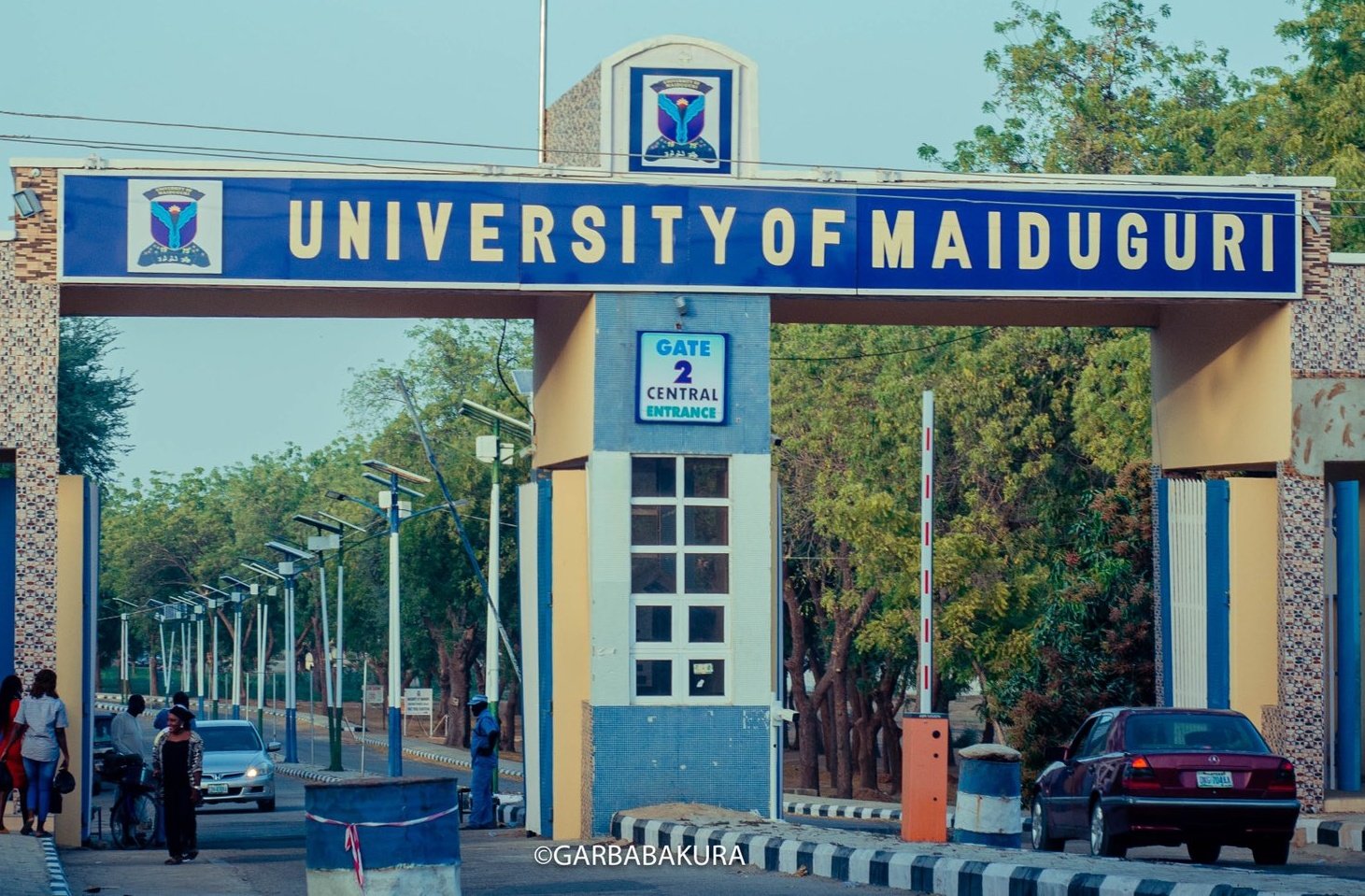
It can be recalled that on February 14, ASUU shut down public universities citing as their reason the Federal Government inability to respect prior agreements that both sides had made in their previous face-offs.

The issues of contention include funding for the revitalization of public institutions, earned academic allowances, the University Transparency Accountability Solution, promotion backlogs, among other grievances.

KASU Acting VC charges students on hardwork, good behaviour

By Sumayyah Auwal Usman

The acting Vice-Chancellor of Kaduna State University (KASU), Kaduna, Professor Abdullahi Musa Ashafa, has advised students of the university to be focused, hardworking and law-abiding in order to graduate in record time and with good grades and character.

Prof. Ashafa gave the advice yesterday while addressing the beneficiaries of the Need-Based and Merit Scholarship Award of Kaduna State Government. He said that though the university had quality academic and non-academic workforce to train them, they must play their part by studying hard, be disciplined and law abiding.

While thanking the Kaduna State Scholarship and Loan Board and the Government of Kaduna State for their consistent support to KASU students, he said students must not only read widely to learn, grow, understand and apply what they have learnt, but must also be prepared to take full advantage of opportunities that might come their way to succeed in every aspect of life.

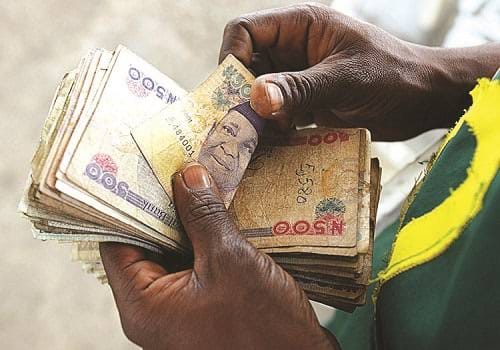
Recently, the Kaduna State Government under Governor Nasir Ahmad El-Rufa’i awarded the sum of one hundred and fifty eight million five hundred and thirty thousand naira scholarship to best performing students of the university.

The forgotten victims of ASUU strikes

By Dikko Muhammad, PhD

I read the justifiable frustration of many people affected by ASUU strikes, most of them undergraduates with a few months to graduate but were stalled by the strike. Some have already missed the chance to attend law school this year. This is quite unfortunate. It is a waste that saddens every sensible person.

However, there are other victims of the strike who are mainly forgotten. Many people talk as if the strike does not harm ASUU members. They say that ASUU members will get their withheld salaries back at the end of the strike. That’s largely true. But there are other implications for many of these members.

First, the younger ones in the profession — Graduate Assistants and Assistant Lecturers, their progress is truncated by strikes. These are people enrolled in our universities for their master’s and PhDs, respectively. A few of them get the chance to study abroad. Majority study at home. Every strike means an indefinite pause to their studies, careers, promotions etc.

Before you say that the strike is their choice, please understand how ASUU goes to strike: each chapter (or university) will hold a meeting to decide whether to embark on strike or not. Every member present has one vote, whether a Professor or Graduate Assistant. A simple majority carries the day. That means a Graduate Assistant may vote against the strike, but those in favour could win by a single vote. At the national level, the results from the chapters are collated and studied. If there are 100 chapters, the decision of a simple majority will be the final verdict. So if 51 universities vote for the strike against 49, that’s the end.

These strikes inevitably affect the professional development of every academic staff. Some couldn’t start and/or finish masters and PhDs on time. That delay will manifest up to their retirement. Strike halts promotion exercises of many universities. People who aspire to be professors in their forties might be delayed into their fifties despite their conferences, publications, etc.

Thus, the strike is not as viable an action as many people seem to think. The lecturer you insult for being an ASUU member might have voted against the strike from the beginning. They might have been equally affected by the strike in terms of studies or promotion.

And these are people who don’t even talk about their predicament. Instead, they simply suffer in silence.

Dikko Muhammad wrote from Umaru Musa Yar’adua University, Katsina. He can be reached via dikko.muhammad@umyu.edu.ng.

Atiku pledges to end lingering ASUU strike

By Ahmad Deedat Zakari

The presidential candidate of the Peoples Democratic Party ( PDP), Atiku Abubakar, has promised to resolve the lingering strike of the Academic Staff Union of Universities (ASUU).

Atiku spoke at the youths programme on “Intergenerational Synergy on Government”, organized by PDP to mark the 2022 International Youth Day celebration in Abuja on Friday, August 12, 2022. 

The former vice president argued that education is a fundamental right which every youth needs for their growth, and he would do the needful when elected president 

“This is because education is fundamental to your growth. It doesn’t matter whether you are in politics, business or any sector. The fundamental right of every youth or every citizen is to be educated.” He said

Atiku criticized the government and boasted that he had invested in education for three decades. He then pledged to work with university authorities to end the strike. 

“I take very strong exception to the strike by ASUU and the government’s inability to resolve the crisis. I have been investing in education for the past thirty years. I pledge I will work with university authorities to end these incessant strikes that are causing unacceptable harm to the ability of our children to get an education.”

ASUU has been on strike since February 14, consequent of which most public universities have been shut down.

21st Century ASUU with no website, social media handles

By Prof. Abdelghaffar Abdelmalik Amoka

Is ASUU aiding misinformation and blackmail? Sometimes in 2020, I tried to get a copy of the 2009 ASUU/FG agreement to refresh my brain on the issue. After searching my ASUU file and could not find a copy, I remembered that I was not in the country in 2009 and, as such, had no copy of the document. I searched the net but could not get comprehensive information on the agreement except the summary published by newspapers. I then had two options left. It is either I get hold of a colleague who was at the congress meeting when copies of the agreement were shared or walk to the branch secretariat to request a copy.

This is the point. If the copy of the agreement is not readily accessible to me because I was away on a study fellowship, how will non-ASUU members, students, and other stakeholders have access to it? You keep getting the question: what do ASUU really want? And you keep explaining it over and over again if you have the patience since we do not have a platform to direct them to.

In a genuine concern, my favourite Human rights activist, Ahmed Isah, popularly known as the ‘Ordinary President’ of the Brekete family, wanted to intervene in the ASUU/FG crisis. Somewhere along the line, he got information that all that is required to end the ASUU strike is N18bn. He took a bold step and initiated a crowdfunding exercise to raise the “N18bn for ASUU to go back to class”. An invitation of the ASUU president to his radio program clarified the issue at stake and that it’s way behind an N18bn issue and that it’s about ” funding the public universities” and “not ASUU”. Atiku’s tweet “let’s fund ASUU” generated serious reactions from ASUU members, including myself.

The other day, Festus Keyamo was talking about N1.2trn on Channels TV that none of us seems to be aware of. I hope the educationist will still educate us on the said N1.2trn. There is also this trending news that a lawyer in Abuja is begging Alhaji Aliko Dangote, Femi Otedola, and the banks’ CEOs to raise N1.1trn to end the ASUU strike. This is how different figures will keep coming out if there is no accessible platform to educate the public.

But why the misinformation? Who is responsible for the misinformation? Is it deliberate? Are we aiding the spread of misinformation as a union?

Universities in the UK were on strike sometime last year and this year, and I wanted to find out about the strike action. I google it, and the webpage of the UK University and College Union (UCU) came up. I got comprehensive information on the strike from the website within a very short time.

Unfortunately, there is no space to get information on ASUU struggles. If you are lucky to be at home while the ASUU president is on Channels TV’s Politics Today or any other TV station, you will get some information on the strike. If you are lucky to be following a passionate ASUU member on Facebook, you may get some information on ASUU struggles from him. Personal efforts.

But if you missed all these and you want to know about ASUU struggles, there is no central information system. You may have to look for an ASUU member to talk to. If the ASUU member is not regular at ASUU meetings, he may not be able to help you as he may not be in possession of copies of the agreements and information on the strike. Our communications are in hard copies.

The last option is to go to the nearest university and visit the ASUU branch office for information. Whoever cannot do that will rely on the information he finds on the street and work with it. Such information may be half true or outright lies. But how do they verify it? New Media is the fastest route to share information, but we have no presence on the net: the union has no website and no official social media handles.

While I was able to get UCU online, in the 21st century, information on ASUU struggles, the agreements with FGN, the MoUs and MoAs signed with Buhari’s government, and the extent of their implementation are not readily available. So, how do we expect the public to follow the trend of events that led to the rollover strike when the information is not readily accessible? Several people have asked how TETFund is the brainchild of ASUU. Even some colleagues don’t know the difference between TETFund and the revitalization (NEEDS Assessment) funds.

Media is very important in any fight. It’s a tool to share the truth and lies. If the truth is not readily accessible, the available lies will be picked. Then, the misinformation will be spread, and people will buy it. Ahmed Isah’s genuine intention is an example of the power of misinformation. ASUU is a union of intellectuals. Among them are journalists, mass communication experts, media consultants, image makers, IT experts, web designers, etc., but the union has no website that anyone can visit and get educated on the history of ASUU struggles and how we got to where we are today.

Dear respected colleagues, If we must win this battle, we need to revisit our communication strategy. The appearance of the President and some chairmen on air and the efforts of some individuals have made some impact, but they are not enough. I recently realized that the union has no position for Publicity Secretary in the executive. We need to have another look at our public engagement strategy. We need to put up a media team and develop a robust and secured webpage that can tell our story without our presence.

To the general public, the strike will be six months by the end of tomorrow. In one news, we were told that President Buhari gave the Minister, Mal. Adamu Adamu, two weeks to solve the problem that has kept students at home for over five months. In another news, they said it was the minister that said he would sort the issue in 2 to 3 weeks. Whichever one is the case, it is over two weeks, and everyone is quiet, and ASUU has rolled over the strike. A government that cares about the education of the people will not be so comfortable keeping university students at home for six months. We hope that the issue is resolved soon so that the lecturers, students, and the university community can get back to their normal life.

The fight for the survival of public education is a collective one. We must save our universities from total collapse. Happy six months anniversary of the 2022 ASUU strike in advance.

©Amoka

Kano poly educates students on entrepreneurial journalism

By Uzair Adam Imam

Department of Mass Communication, Kano State Polytechnic, organised a one-day lecture series to prepare their students about the dynamic nature of 21 century journalism.

The event Thursday had three guest speakers who discussed on the topics; The 21st Century Mass Communication Students by Associate Professor, Mainasara Yakubu Kurfi, Head of Mass Communication Department, Bayero University, Kano.

The remaining two were: Crime and Judicial Reporting by Comrade Abbas Ibrahim, Chairman Nigerian Union of Journalists (NUJ), Kano and Reading: A pathway to Entrepreneurial Journalism by Mal. Badamasi Aliyu.

Speaking after the event, the convener, Malam Aisar Salihu Musa (Aisar Fagge) said, the essence of the event was to prepare students about the new skills of 21st century journalism.

He added that the event would also help the upcoming journalists develop a critical and entrepreneurial mindset which will enable them to excel in their choosen career.

In his words, Aisar stated, “The emergence of new media technologies, the ICT and the user-generated-content have transformed the way news is produced, consumed and distributed. So there is a need for our students to know about these changes in the practice of 21st century journalism.

“Not only that, there is also a need to introduce our students into entrepreneurial journalism, especially in a country where job opportunities are rare; a country with a massive unemployment problem where majority of the youths are roaming the street without job.

“So the students need to know that they can get job for themselves by learning new skills assisted by the internet. Students could be content creaters, content developers, writers, advert practitioners, copywriters, public speakers,” he stated.

In his paper: “Reading: The Pathway to Entrepreneurial Journalism,” Mal. Aliyu said, by reading, you can become whatever you want in life. You can write well, speak good because of reading good books. Knowledge and skills are buried in books. Explore them and be what you want to be. I got 4 million naira as a result of the book I read “How to write a business plan.

The event was graced by the academic and non-academic staff across the Kano Poly schools, lecturers from Bayero University, Kano, Federal University Dutsin-ma, Al-Qalam University, FCE Kano and former students among others.

The Head of Department, Mass Communication, Kano State Polytechnic, Malama Binta Muhammad Lawal, ably represented by one of the lecturers, Malam Salihu Sule Khalid, commended the event.

World Bank funded project to renovate 614 schools, give token to 38,000 girls in Kano

By Muhammad Aminu

At least 614 public secondary schools in Kano State will be renovated through the World Bank funded project called ‘Adolescent Girls Initiative for Learning and Empowerment (AGILE).

The project which will be implemented by the Schools-Based Management Committees (SBMCs) of the benefiting schools has budgetted N1.8 billion naira so far.

The Deputy Project Coordinator of the programme, Nasiru Abdullahi, stated this during a courtesy visit to the Emir of Bichi, Nasiru Bayero, alongside other staff of the project on Thursday, 11th August, 2022 in Bichi.

“The SBMC committee has community and religious leaders, representation from self-help organization, and students, among others.

“The Principal is the secretary of the committee who knows the problems of the school better,” he said.

He said that the funds had already been credited into the bank accounts of the Schools-Based Management Committees, SBMCs, of the participating schools in the State.

According to him, the SBMCs members had been trained on the key priorities of their schools for the attainment of the desired objective.

He noted that each school received an amount of money based on the nature of project it will undertake.

“Close to N1.8 billion has been granted to the schools, which is half of what the schools will get, in order to ensure effective utilisation of the funds.

“Any school that finished its project will get the balance for the remaining project.

“The money is in the account of each of the benefiting schools. A school will come to AGILE to get clearance, which it will take to bank and withdraw the money,” he said

The deputy coordinator further revealed that the project is targeting close to 38,000 girls from vulnerable households for Conditional Cash Transfer which will be followed by training on digital skills.

He said that the girls would be trained on skills that would assist them to become self reliant in their maritall homes.

He, therefore, solicited for the support of the traditional ruler for the success of the project.

On his part, the Emir vowed to support the project wholeheartedly and urged all other relevant stakeholders to intensify efforts in improving the capacity of teachers.

“We are not saying construction is not good, but the teachers who will impart the knowledge to the students need to be improved.

“More teachers should also be recruited, and trained regularly to acquaint them with modern teaching techniques,” he advised.

He called on parents to desist from withdrawing girls from schools for marriage, counselling that girls should proceed to higher education after secondary schools.

Journalism educators charge students on 21st-century skills

By Uzair Adam Imam 

Associate Professor Mainasara Yakubu Kurfi, and other journalism educators, urged Kano State Polytechnic journalism students to imbibe critical thinking in reporting their beats as journalists of the 21st century. 

Kurfi, who is the Head of Department, Mass Communication, Bayero University, Kano, tasked the journalists in the making, reiterating that the students should be jack of all trades and masters of none.

Kurfi stated this Thursday at a One-Day Lecture Series organised by the Department of Mass Communication, Kano State Polytechnic.

Speaking on the topic, The 21st Century Mass Communication Student, the university don added that there were numerous opportunities in the field and that the students should read a lot to upgrade their learning and skills.

In his words, Kurfi stated, “there are numerous opportunities in mass communication because the world is no longer a global village but rather a global room.

“For this reason, you only need to read hard and acquire the necessary skills. If you do that, you’ll be getting money from the comfort of your room.

“Some of the career opportunities for a 21-century mass communication student include; film production, photography, advertising, development communication, public relations, broadcasting, strategic communication, among others.”

Also speaking, the event convener, Malam Aisar Salihu Fagge, stated that the essence of the lectures was to prepare students for the basic need of 21st-century journalism.

He added that the event would also develop help the students develop entrepreneurial mind to enable them to learn the modern skills of the journalism profession. 

Academics from sister institutions, directors from various units, heads of departments, and alumni of the Mass Communication department graced the event.

The Head of Department, Mass Communication, Kano State Polytechnic, Malama Binta Muhammad Lawal, ably represented by one of the department’s lecturers, Malam Salihu Sule Khalid, commended the event.

How did this Keyamo arrive at N1.2 trillion for ASUU?

By Prof. Abdussamad Umar Jibia

It is well known that members of the Academic Union of Universities (ASUU), the umbrella body of academic staff in Nigerian public universities, have been on strike for six months. Specifically, the strike began on February 14, 2022. Typical of the union of academics, it ensured that all means of avoiding the strike were exhausted before declaring the industrial action. Other university unions followed suit to avoid being left out in case ASUU emerged triumphant.

The issues are many, and not all of them have to do with money. And in fact, not all the funds mentioned in the dispute between ASUU and Federal Government will go to the pockets of ASUU members. No money goes to the union except the monthly dues it collects from members. It is not the duty of a trade union like ASUU to collect and disburse funds. That is the duty of university administrations.

Let me explain in plain language. But before I do, specific facts are vital.

Although the Federal Government has given licenses for the establishment of many private universities in Nigeria, only about six per cent of Nigerian university students are currently in private universities. More than 90 per cent of university students are in public universities owned by state and federal governments.

Another important note is that there are currently more supporting staff in public universities than operational (academic) staff. Consequently, there are three other unions in public universities apart from ASUU. People usually do not differentiate between ASUU and others, primarily due to Government propaganda. All of these unions are now on strike.

Nigerians may also wish to note that undergraduate students in federal universities do not pay a Kobo as tuition fees as long as they are Nigerians. The very little they pay as registration fees are for services like ID cards, games, hostel, etc.

The issues for which ASUU members are on strike are the same for which the immediate past government of President Jonathan Goodluck commended the union for being patriotic and selfless. One of them is the proliferation of public universities. Does it make sense that the same government that persistently complains of not having enough funds to run its existing universities is continuously establishing new universities in every nook and cranny of the country?

Revitalization of public universities for which an agreement was reached with Jonathan’s government to release N1.3trn in six instalments is what the FG has been using to misinform the public that ASUU is looking for too much money. Thus, any time the FG releases some paltry sum of N30bn, for example, it tells the world that it has given additional funds to ASUU. I think that is why some patriotic Nigerians once agreed to “donate the sum of N18b to ASUU” to call off its strike. This money does not go to ASUU. It is used to carry out projects by contractors appointed by FG or its appointee governing councils.

The only other thing that involves cash is the renegotiation of the 2009 agreement. In case you do not understand this, it is about the condition of service (SALARY AND ALLOWANCES) of academic staff, which the government promised to review every four years. But unfortunately, the promise has not been fulfilled for 13 years.

In 2020 after an ASUU strike, the Federal Government set up a committee to renegotiate with ASUU and other unions. The committee finished its work and submitted its report in May 2021. Regrettably, the report was dumped and, despite ASUU’s constant reminders and follow-ups, was only dusted when ASUU began its strike in March this year. That is when this government realized that it could not pay what was recommended by the committee. The same government set up another committee on the report it is unwilling to disclose.

As a student or parent, you are aware of all of the above if you have been following the engagement of ASUU with the Federal Government. I am only reminding you if you have forgotten.

I am particularly shocked to hear the Minister of State Labour, Festus Keyamo, calling on parents to appeal to ASUU to end the strike. The reason is that they cannot afford N1.2tr ASUU is asking for. When did ASUU ask for this amount? Is it the revitalization fund Keyamo is talking about which ASUU never requested the FG to pay in bulk? If that is the case, why does it have to take FG six months of ASUU strike to state it? Or is it the result of renegotiation for which the FG never called ASUU and said what it could pay? It just doesn’t make any sense.

What about other issues like the UTAS for which the FG has been meeting with ASUU and claiming to have conducted tests with xy results? Is Keyamo also appealing to parents to beg ASUU on it?

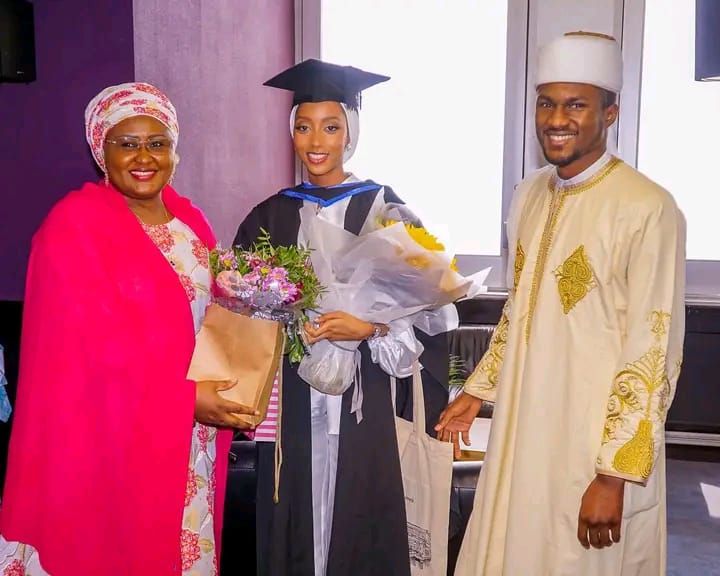
And who are these parents? Please let all the government officials involved in this ASUU/FG negotiation mention the number of children they have in public universities and the programmes they are following. Of course, I know the children of Mr President study in the UK. I wrote to advise him against it when his family celebrated the graduation of one of his daughters in December 2019. Whether or not the advice of nonentities like me matters is a different issue. It is the ordinary us that cast the votes to elect him anyway.

Finally, let me remind Mr President that he has only less than a year to leave office. Unfortunately, nearly all his diehard supporters I know have been disappointed. This is mainly due to the people he entrusts with fundamental issues like Security and Education.

On the particular issue of ASUU and sister unions, Mr President seems to be overconfident in the Labour Minister, a southeast politician who was expecting you to anoint him to take over from you next year. When you refused to do it, one of them, who is also in your cabinet, stood before you in the last convention and accused you and your party of injustice. With that, can you rule out sabotage?

Mr President, please use the little time left to correct your mistakes and avoid making another regrettable blunder. Nigerians did not elect Ngige, Keyamo, Zainab or any of those. If not for you, these names would have long disappeared into obscurity. Please remember that most APC politicians who won the 2015 and 2019 elections, especially in the North, won because of you. So, the expectation is high, and the performance is dismal.

I hope Mr President reads this.

Professor Abdussamad Umar Jibia wrote from Bayero University, Kano. He can be reached via aujibia@gmail.com.

Five reasons why you should apply for the online Indian Gov’t Scholarship 

By Muhammadu Sabiu

Looking at the reality and how uncertain the future of education is in this country, you, as a Nigerian, should get a solution for yourself. But unfortunately, even though education is a right, not a privilege, the biggest stakeholders (read: government) are not ready to facilitate smooth learning for the sons and daughters of the “common people.”

In Nigeria, public university teachers, otherwise known as ASUU members, have been on strike for over half a year, thanks to the government’s failure to listen to their demands. Don’t you think this could make some students forget the names of their respective departments after someday the industrial action is suspended?

In light of these, I honestly feel the urge to share the Indian Government online scholarship with every serious-minded Nigerian who studies—or wishes to study—at any of our strike-ravaged public universities here. The last date for the application for the scholarship is August 15.

Here are five quick reasons why you should apply for the scholarship as follows:

1. Unlike other scholarship schemes, this scholarship—which you can apply for via https://www.ilearn.gov.in/—is fully-funded. This means you do not have to pay even a dime as tuition or a part of it. In addition, you don’t have to know anyone to apply or get it.

2. You only need a good mobile device (preferably a computer) with a good Internet connection to study. This indicates that you do not have to undergo the stress of boarding a flight from Nigeria to India, although it would be a pleasure to go overseas for your study.

3. The word “strike” might not exist in the dictionary of Indian universities. Therefore, one will have hitch-free academic sessions and most likely graduate on time. Moreover, the duration of some bachelor’s degree programs, as indicated on the application portal, is three years.

4. If you are one of the successful applicants, you will get the opportunity to study at some of the best universities in India, like Lovely Professional University, the Indira Gandhi National Open University and so on. The certificates to be obtained will be widely recognised. So, don’t panic over the recognisability of your results after graduation.

5. Unlike here in Nigeria, where you cannot apply for two or more different courses in one university when registering for the Unified Tertiary Matriculation Examination (UTME), there are universities on the list of eligible institutions for the scholarship that okay an applicant to apply for more than one course. An example of such a university is the Indira Gandhi National Open University.

Please hurry up and apply before the deadline, as this is an opportunity that should never escape your notice.

Muhammad Sabiu is a reporter for The Daily Reality and lives in Bauchi State. He can be reached via sabiucnd@gmail.com.