Education

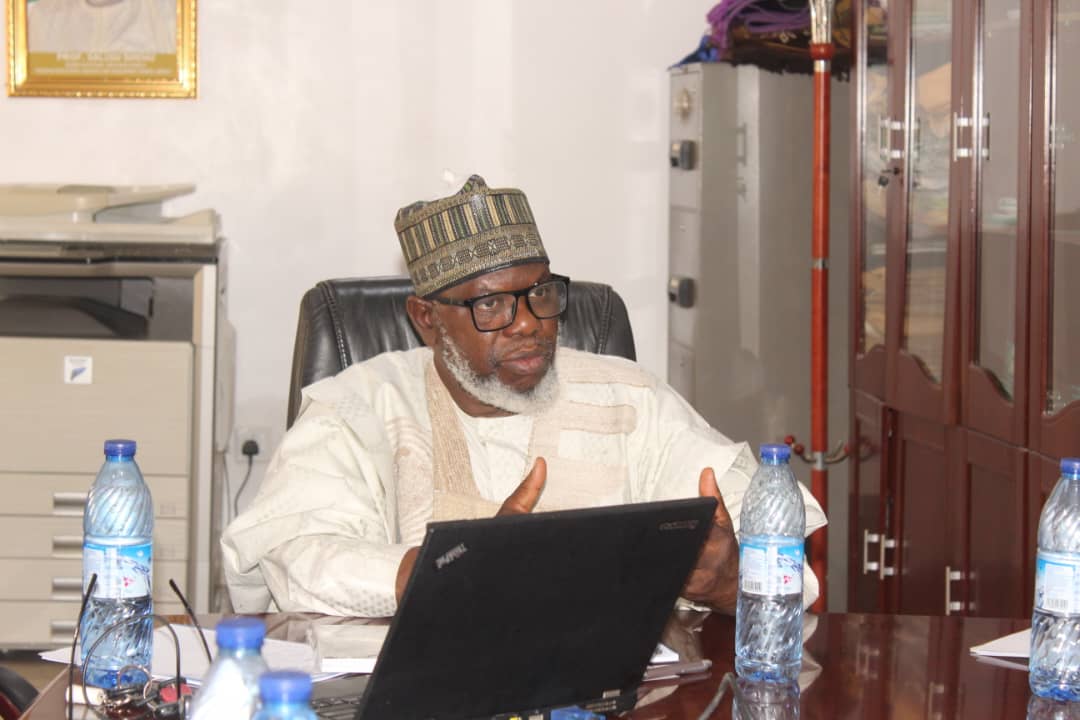
Dele Alake seeks closure of schools charging fees in foreign currencies

By Anas Abbas

The Minister of Solid Minerals Development, Dr. Dele Alake, has called for the closure of schools in Nigeria that charge tuition fees in foreign currencies, describing the practice as a major economic loophole undermining the value of the naira.

Alake made the call on Wednesday in Abuja during the Nigeria Gold Day Celebration, held on the sidelines of the 10th edition of the Nigeria Mining Week with the theme, “Nigeria Mining: From Progress to Global Relevance.”

The minister expressed concern over what he termed “economic contradictions” in the country, arguing that allowing local institutions to charge fees in foreign currencies puts unnecessary pressure on the naira.

“I am still going to make a proposal to the Federal Executive Council that all those schools in Nigeria that are charging in foreign currencies should be closed,” Alake said.

“These are some of the leakages and loopholes in our economy that people don’t take seriously. If your child attends a school in Abuja or Lagos and pays $10,000 or £10,000, you’ll have to exchange naira for dollars, pushing up the value of the foreign currency. You can’t go to the UK and establish a school charging in naira it’s only in this country such contradictions exist.”

Alake said the Federal Government was intensifying efforts to plug financial leakages across the minerals sector through digital mechanisms and stricter oversight, particularly within the gold value chain.

He noted that the government’s National Gold Purchase Programme (NGPP), implemented through the Solid Minerals Development Fund (SMDF), was designed to boost Nigeria’s foreign reserves and strengthen the naira by purchasing gold directly from artisanal miners in local currency.

The minister added that the initiative, a component of the Presidential Artisanal Gold Mining Initiative, would also reduce informal transactions and curb corruption in the sector.

In her remarks, the Executive Secretary of the SMDF, Fatima Shinkafi, said funding for gold exploration in Nigeria was on an upward trajectory, unlike global trends.She encouraged investors to take advantage of the country’s growing opportunities in gold mining.

“We implore everyone here to examine Nigeria’s gold resources and support the minister’s efforts to make Nigeria a premier destination for junior miners,” Shinkafi said.

“By next year’s Gold Day, we should be looking at Nigeria as a turning point in the global gold market.”

The Nigeria Mining Week, which runs from October 13 to 15, is organised by the Miners Association of Nigeria, in partnership with PricewaterhouseCoopers (PwC) and the VUKA Group.

FG removes Mathematics as compulsory subject for Arts students

By Muhammad Abubakar

The Federal Government has announced a major review of admission requirements into Nigeria’s tertiary institutions, declaring that Mathematics will no longer be a compulsory subject for candidates seeking admission into Arts and Humanities programmes.

The new policy, unveiled by the Federal Ministry of Education, forms part of a broader revision of the National Guidelines for Entry Requirements into Tertiary Institutions in Nigeria. According to the guidelines, Mathematics remains mandatory only for Science, Technology, and Social Science courses, while English Language continues to be compulsory for all programmes.

Under the revised rules, candidates seeking university admission must still obtain a minimum of five credit passes in relevant subjects, including English. For polytechnic admission at the National Diploma (ND) level, four credits are required, while five credits, including Mathematics and English, remain mandatory for the Higher National Diploma (HND).

Similarly, in Colleges of Education, English Language is compulsory for Arts and Social Science students, while Mathematics is required for Science, Technical, and Vocational programmes.

The government explained that the reform aims to make tertiary education more inclusive and accessible, reducing unnecessary barriers that have prevented thousands of qualified candidates from securing admission. Officials project that the new policy could enable an additional 250,000 to 300,000 students to gain admission annually.

Education stakeholders have welcomed the move as a progressive step towards aligning Nigeria’s education system with global best practices, though some have called for careful implementation to maintain academic standards.

Isa Mukhtar’s An Introductory Hausa Linguistics: A Tentative Review

By Bashir Uba Ibrahim, PhD.

Book Title: An Introductory Hausa Linguistics

Author: Isa Mukhtar

Pages: 167

Publishers: Bayero University Press

Year: 2024

Two weeks ago, I visited Prof. Isa Mukhtar after we concluded one of the parallel sessions organised for a national conference on the works of Aliyu Kamal, in which I served as a rapporteur. The event was held at the Department of Linguistics and Foreign Languages, which was renamed the Department of Linguistics and Translation following the unbundling and upgrade of the former Faculty of Arts and Islamic Studies to the College of Arts and Islamic Studies.

Prof. Isa Mukhtar is one of the most academically generous teachers I know. After exchanging greetings, he gifted me his newly published book titled An Introductory Hausa Linguistics, which I intend to review here briefly. Unlike previous books on Hausa grammar and linguistics, Mukhtar, in this thirteen-chapter book, attempts to simplify the branches of linguistics by extensively drawing on examples from the Hausa language and redefining some linguistic terms. This review is by no means exhaustive or comprehensive, as it would be difficult to do full justice to the book in this limited space.

Chapter one, which is entitled ‘Views on the Origin of Language’ (Ra’ayoyi a kan Asalin Harshe), dissects some of the speculations regarding the origin of language. He addresses the speculations regarding the origin of language by citing Zarruk’s views on the phenomenon, including divine creation, man’s discovery, man’s invention, and man’s evolution from a human perspective. He thus attempts a glottochronological examination of Hausa and Amharic, the language of Ethiopia, and Hausa and Coptic, the language of Egypt, in his effort to relate the origin of Hausa with its cognate languages in Africa.

Chapter two, titled ‘Introduction to Language’ (Gabatarwa a kan Harshe), discusses various functions of language. Citing relevant examples from doyen linguists like Fowler (1974) and Leech (1974), he nominally examines the general functions of language, buttressing the thesis with examples from Hausa. The chapter also briefly explains numerous linguistic forms (nau’oi a cikin harshe) in which he shows arbitrary and non-arbitrary forms of language.

The third chapter is titled ‘Historical Linguistics and Stylistics’ (Tarihin Nazarin Harshe da Ilimin Salo)Here, the author provides a historical analysis of the origin and development of linguistics as a field of study from antiquity to the present day. Various schools and movements that shaped major linguistics trends and ideas, such as structuralism (bi-tsari) and its subsidiaries like the Copenhagen school (makarantar Copenhagen), American structural linguistics (Bi-tsari a marajtar harshe ta America), French structuralism (Bi-tsarin Faransa), Prague school (makaranyar Prague), rationalism (na tunani), and empiricism (gogayya). The chapter also attempts to link structuralism with stylistics by discussing some of the stylistics scholars influenced by structuralism, such as Charles Bally, Roman Jakobson, and Michael Riffaterre. These scholars developed their theory on the style of communication and contributed to generative stylistics.

Chapter four, ‘Functional Linguistics and Stylistics’ (Harshen Aiwatarwa da Ilimin Salo), builds on the previous chapter by examining stylistics (ilimin salo) from a systemic functional linguistics perspective. In this chapter, the writer attempts to appropriate Halliday’s theory of stylistics and apply it to Hausa data by extensively drawing examples from it. Thus, Halliday’s main conception of the stylistics function of language into ideational, interpersonal and textual was heavily domesticated and linked with Hausa.

The fifth chapter titled ‘Classification of African Languages’ (Rarrabewa Tsakanin Harsunan Afirka). In this chapter, the author bases his classification of African languages on Greenberg (1966), in which he classified African languages into four phyla, namely, Afro-Asiatic, Khoisan, Niger-Congo and Nilo-Saharan. He attempts to trace the Hausa language to the West-Chadic branch of the Afro-Asiatic language family. He establishes its relationship with cognate languages in Nigeria, such as Bole, Kare-Kare, Warji, Ron, and Bade.

Chapter six, which is entitled ‘Syntax and Grammar’ (Ginin Jumla da Nahawu), makes a historical examination of grammar from a Greek grammarian, Dionysius Thrax, traditional grammar (Nahawun gargajiya), structural grammar (nahawun bi-tsari), finite state grammar (nahawun kwakkwafi), phrase structure grammar (tsarin nahawun yankin jumla), generative grammar (nahawun tsirau), transformational grammar (nahawun rikida/taciya), transformational generative grammar (nahawun taciya mai tsira), etc.

The seventh chapter, ‘Advanced Syntax’ (Babban Nazarin Ilimin Harshe) served as a build on its preceding chapter. The chapter makes a deeper examination of the extended standard theory by Chomsky, looking at Government and Binding Theory of Syntax and its application in the Hausa language. While chapter eight, which is titled ‘Issues in Hausa Syntax’ (Muhimman al’amura a tsarin jumla), builds on the previous one by examining extended standard theory and its syntactic operators and how they can be applied in Hausa.

Chapter nine, which is entitled ‘Phonetics and Phonology’ (furuci da sauti), makes an extensive examination into Hausa phonetics and phonology. It looks at articulatory, acoustic, and auditory phonetics, drawing heavily from Sani (2010). It also discusses Hausa phonological inventories and processes as the backbone of generative phonology, such as assimilation, dissimilation, palatalisation, labialisation, nasalisation, metathesis, polarisation, etc. Meanwhile, chapter ten titled ‘Morphology’ (Ilimin Tasarifi) discusses Hausa morphological structure, morphemes, types of morphemes, criteria for identification of morphemes, morphological processes and word formation processes by citing Abubakar (2001) to exemplify his discussion.

 Chapter eleven, ‘Dialectology’ (Ilimin Karin Harshe), explores the relationship between language and society by examining major sociolinguistic aspects and relating them to Hausa languages, including argot, slang, jargon, sociolects, Hausa dialect variety, and language and culture. Chapter twelve, which is entitled ‘Semantics’ (Ilimin Ma’ana), makes a historical examination of the term ‘semantics’ and shows how it is problematic in relation to linguistic analysis. The chapter also examines the relationship between semantics and linguistics, as well as Hausa semantic change, collocations, componential analysis, speech-act, descriptive semantics, theoretical semantics, and general semantic theories. The chapter also delves into the relationship between semantics and other branches of linguistics, such as morphology, phonology, and syntax, in what can be called a ‘linguistic interface’. 

Meanwhile, the thirteenth chapter, which is the final chapter, is titled ‘Sociolinguistics’. It examines the issue of multilingualism in Nigeria, with Hausa as one of the major languages. It examines how sociolects served as social varieties of language that are determined by social factors rather than geography, citing examples with Hausar masu kudi, Hausar sarakai, Hausar malamai, Hausar ‘yan daba, Hausar likitoci, etc.

Overall, this book, intended as an introductory text, aims to acquaint readers with foundational topics in Hausa linguistics. Its straightforward presentation and accessible language make it especially useful for beginners. However, the author’s effort to simplify the content may have been overextended, leading to notable gaps. Crucially, important subfields such as psycholinguistics, neurolinguistics, applied linguistics, forensic linguistics, and computational linguistics are not mentioned at all.

Another significant omission is the absence of Ferguson (1970), particularly given the discussion on dialectology—a field in which Ferguson was a major contributor—as well as the exclusion of key works on Hausa dialectology such as Musa (1992). Similarly, in Chapter Twelve, the focus is limited to structural semantics, with no mention of Hausa cognitive semantics or relevant contributions like Bature (1991) and Almajir (2014).

The book appears to lean heavily towards stylistics and syntax, dedicating two chapters to the former and three to the latter, specifically Chapters Six through Eight. While these topics are undoubtedly important, the focus becomes somewhat disproportionate. For instance, in the discussion of Government and Binding Theory and complementation, the author omits important works such as Yalwa (1994), Issues in Hausa Complementation and Mukhtar (1991), Aspects of Morphosyntax of Hausa Functional Categories, both of which could have enriched the analysis from a Hausa linguistic perspective.

In conclusion, as Ibrahim (2008: 260) aptly states, “There is no perfect text. But as human life itself, the various imperfections of our life provide a constant challenge to us as scholars embroiled in the learning process.” Despite the criticisms above, Mukhtar’s ability to present complex topics clearly and subtly remains commendable. This book stands out as one of the more accessible introductory texts on Hausa linguistics, suitable for both students and newcomers to the field.

Saving a legacy: Urgent call to protect Umaru Musa Yar’adua University

By Dikko Muhammad, PhD

Dear Governor Malam Dikko Radda, PhD., with honour and regards befitting of your office and esteemed personality, the people imploring you to address the urgent matters of Umaru Musa Yar’adua University, Katsina, are your friends, not your foes. They don’t want to see the beautiful pumpkin planted about two decades ago uprooted by your administration. If that calamity, God forbid, would happen, it mustn’t happen under the administration of the most credentialed person in the history of our state. 

Sir, UMYU isn’t just a mere state university. It was an ambition and a dream of our revered Malam Umaru Musa of blessed memory. UMYU is the culmination of the sweat and toil of many prestigious individuals from our dear state, impeccable individuals who embraced Malam Yar’adua’s dream and made it a reality.

Men and women who spent sleepless nights, travelled far and wide, to ensure that UMYU isn’t just a prestige project, but a strategic and need-based initiative that addresses the higher education deficit of our dear state and the Northern region. Many of these important individuals are alive today. Please, Sir, as they inch nearer to their graves, don’t make them feel that their labour is in vain. UMYU alone is a fulfilling mission for many of them.

Sir, forgive my repetition– UMYU isn’t just a mere state university. It’s a solution to our century-old gender gap in access to educational opportunity. It enables thousands of parents to educate their daughters to the level of degree certification at a time when interstate and intercity travel are becoming increasingly dangerous by the day. 

When UMYU collapses, may Allah prevent that, it will sink with the dream of thousands of girls who aspire to become educated mothers, productive members of society, and contributors to the future knowledge-driven economy. You just need to look left and right in your own extended family to see the impact this university has already made. 

Your Excellency, Sir, look into the posterity. It’s very long. And it remembers all. Save this system. The university workers are not asking for the impossible. They simply ask that you respect the law establishing this university. They’re only asking you to give the equivalent of whatever is obtainable in federal universities. This is enshrined in the laws that established UMYU. 

I’m deeply sorry if I sound boring. I want to remind your esteemed person that at the point of inception, no state across the Northern region has invested resources in its university as UMYU. Billions have been spent on the training of staff. I am a product of UMYU. I got my first degree here. My teachers called me to join them and serve UMYU. The university has spent millions training me for my master’s and PhD degrees. The same happened to hundreds of others.

Unfortunately, the tasteless, unmotivated and uninspiring condition of service has frustrated many out of UMYU. Many others are awaiting the bond period to japa or to move to another university. In my faculty (pictured here), I know of more than 10 people who have left this institution with their PhD financed by UMYU. UMYU has failed to retain its most precious investment. It has also fallen short of attracting other people with the highest degrees into its corridors. 

As tens of PhDs are leaving UMYU, the university can only attract people with a first degree or, at most, a master’s degree. In practical terms, UMYU is gradually positioning itself as a training ground while Katsina continues to be short-changed in the process. 

Your Excellency, I may disagree with many of your policies. But I never doubted your resilience in moving our dear state forward. Please look into UMYU. Write your history on the footprints of time. You have all that is required to save the most important legacy of Malam Umaru Musa Yar’adua, a statesman, your political mentor, a person you hold dear and a man related to you in other equally important capacities. 

Dikko Muhammad writes from the Department of English and French, UMYU. He can be reached via dikko.muhammad@umyu.edu.ng.

FG set up another committee to quicken talks with university, poly unions

By Anwar Usman

The Federal Government has reconstituted and inaugurated the Mahmud Yayale Ahmed Federal Government Tertiary Institutions Expanded Negotiation Committee to expedite ongoing discussions with academic and non-academic unions across universities, polytechnics, and colleges of education.

In a statement issued on Tuesday by the spokesperson for the federal ministry of education, Folasade Boriowo, it was stated that the Minister of Education, Dr Tunji Alausa, has set up a new committee to harmonise all negotiation processes under one coordinated framework that reflects institutional memory and sector-wide inclusiveness.

Alausa explained that, unlike previous fragmented negotiations, the expanded committee will engage all unions collectively to achieve a comprehensive and sustainable agreement. “The membership of the committee has been carefully chosen to represent the full spectrum of the education sector, ensuring that no group is left behind,” he said.

The Minister stated that the committee has been given a well-equipped and functional secretariat to enable it to carry out its mandate effectively, adding that, “its inaugural meeting will be held at 2 p.m. Tuesday, 7th of October. He urged all academic and non-academic unions to cooperate fully and respond promptly to the committee’s engagements.”

According to him, President Bola Tinubu has given full political support to the process, with a clear directive that all negotiations be concluded swiftly, fairly, and in a spirit of civility and mutual respect.

Earlier, ASUU, in a bulletin released to its members on Monday, urged them to prepare towards a two-week warning strike set to commence on October 13.

The planned strike follows a two-week ultimatum issued by the union last week, calling on the Federal Government to proffer solutions to its unresolved issues, including the signing and implementation of the renegotiated 2009 ASUU-FGN Agreement.

In the fresh circular, ASUU National President, Prof. Chris Piwuna, complained about the government’s failure to provide any meaningful response to the union’s demands despite the ultimatum.

From comfort to campus: Reality of schooling away from home

By Faiza Aliyu Farouk

Leaving the comfort of home to pursue education elsewhere is a defining moment in the lives of many students. Schooling away from home means stepping into an unfamiliar world, one that is both exciting, exhilarating, yet overwhelming. It’s more than just a physical transition; it’s an emotional and psychological journey that reshapes who we are.

The moment you pack your bags and wave goodbye to the familiar walls of your family home, you begin a journey filled with uncertainty, growth, discomfort, and discovery. It exposes students to diverse cultures, ideas, and ways of life.

One of the most challenging parts of schooling away from home, according to many, is the emotional toll it takes.

Homesickness is a quiet but heavy feeling that settles in your chest in the middle of the night or while eating something bland and unfamiliar.

Research by Yugo, student accommodation provider in the university of Derby found that almost two-thirds (61%) of students aged 19 to 25 were concerned about feeling homesick when it came to moving away for the first time (The Guardian, 2024).

That number felt very real when talking to friends and classmates who admitted to crying in their hostels during the first few weeks. And yet, almost all of them pushed through and eventually found ways to cope.

The first few weeks or months away from home can be particularly tough. The excitement of a fresh start often gives way to the reality of managing day-to-day activities independently.

“I was excited but anxious,” said Fatima, a 400-level Mass Communication student at BUK. She recalls the first time she stepped foot on campus, far from the comfort of her family. “I missed the comfort, care, and familiar routine of home. I had to figure things out on my own, even when I was sick.”

There are many reasons why students leave their homes to study elsewhere. Abdulaziz, a medical student who left his hometown of Minna for Kano, said he left in pursuit of a better academic program.

“The schools back home weren’t offering the course I wanted to study.” Meanwhile, Alhassan, who left Jos for Kano, said he intentionally chose to stay far from home to gain experience.

“I wanted new perspectives and to challenge myself. While some leave for academics, others see distance as a test of independence.

Navigating environmental factors is another challenge of schooling away from home. “Having spent my life in Jos, never traveling for exposure or leisure.

Transitioning to a new setting was quite a challenge,” Alhassan said. As student routines change, so do relationships.

“Sometimes I feel distant from my family due to limited time spent with them, not because of anything else,” he added.

However, others, like Tsadu said they noticed a shift in how they were treated due to being away from home: “They respect me more now.”

Khadija, when asked what studying away from home meant for her, said, “I became my own person. I stopped relying on others to make decisions for me.”

Another student shared, “It was hard, but I needed to be away to find myself.” For others, it was about discovering their voice, taking risks, and failing without shame.

These stories are common, yet each one is uniquely powerful.

Living on campus forces students to grapple with new responsibilities. From cooking, budgeting, building community, and dealing with loneliness.

“Staying away has made me financially independent and more disciplined. I realized five thousand naira doesn’t stretch far,” Zainab admitted.

While describing the daily struggles, she said; “Staying in the hostel isn’t easy, especially when you come back from lectures hungry and there’s no water to cook. You have to fetch it first, sometimes from far away.

The issue of electricity is another challenge, we only get light for three hours at night, which is when we charge our devices and study. It’s not convenient; I just manage.”

Although the emotional impact of living away from home is often associated with students, parents also experience significant changes.

They feel the shift too. The independence is bittersweet. “I feel disturbed and unhappy but the other side of me feels good and happy while I continue to pray for him” Hajiya Hau’wa, whose son studies in Kano while the family lives in Niger said.

Aisha, a mother of a university student, said, “When she calls, complaining about school or being sick and lonely, it breaks my heart that I can’t be there. I’ve had to learn to let her go with prayers and constantly checking up on her.”

Communication becomes a lifeline. Most parents check in daily, not just to monitor progress but to maintain an emotional connection. Yet, not all students appreciate the frequent calls.

Nana, who studies accounting at Nassarawa State University said; ” Constant calls from my parents tend to be stressful. I’m trying to manage their expectations while also focusing on my studies”

Leaving the comfort of home for campus life is more than a transition. It’s a transformation. It’s about stepping into a version of yourself that only distance, responsibility and independence can bring.

It’s where growth happens. You learn to stand on your own, make your own choices and live with the outcome.

There will be days of loneliness, moments of doubt, and nights when home feels like a world away. But there will also be victories. Big and small that will build your confidence.

Faiza Aliyu Farouk is a 400-level Mass Communication student at Bayero University Kano (BUK).

New book explores faith, language and identity in Kannywood

By Hadiza Abdulkadir

A new book examining the cultural and religious forces shaping the Hausa-language film industry, Kannywood, will be released on 5 December 2025 by Springer Nature.

Titled Kannywood: Film, Faith and Identity in Northern Nigeria, the work critically explores how filmmakers navigate religious expectations, cultural norms and language ideologies while appealing to a diverse audience.

The author, Dr Muhammad Muhsin Ibrahim, teaches Hausa Studies at the University of Cologne and is an expert in Hausa media and cultural production.

The study employs audience reception theory and a close analysis of selected films to reveal tensions within the industry, including the dominance of the Kano dialect, the marginalisation of others, such as Sokoto’s, and the commercialisation of “broken” Hausa.

The book also highlights the pressures of global influences and conservative religious forces, presenting Kannywood as a contested space of identity and representation in northern Nigeria.

Scholars converge at BUK to celebrate literary works of Aliyu Kamal

By Fatima Badawi

The Department of English and Literary Studies at Bayero University, Kano (BUK), successfully convened a two-day National Conference to critically examine and celebrate the prolific, well-grounded and giant literary works of the literary guru, Professor Aliyu Kamal, one of the Northern Nigeria’s most influential literary figures.

Held at the University’s Main Campus under the theme “Interdisciplinary perspectives on the works of Aliyu Kamal,” the conference attracted a diverse gathering of academics, writers, students, and family members of the prolific English author.

The event served as a significant platform to re-evaluate Kamal’s contributions to Nigerian literature and his unique portrayal of the socio-cultural dynamics of Northern Nigeria, which some view as Islamic genre.

The opening ceremony was chaired by the Vice-Chancellor of Bayero University, Professor Haruna Musa, who was represented by the Deputy Vice Chancellor Research and Development, Professor Amina Abubakar. In his address, the Vice-Chancellor commended the department for its initiative, stating that “Aliyu Kamal’s works are not merely stories; they are cultural archives that document the complexities, the joys, and the challenges of our society. This conference is a vital step in preserving our intellectual heritage, and it will pave way to getting a Nobel Laureate, starting from home.”

The keynote address was delivered by the renowned literary scholar, Professor Sani Abba Aliyu, mni. In a compelling presentation were he maintained that
Kamal possessed an uncanny ability to weave intricate tales that are simultaneously local and can equally be regarded as universal. His characters grapple with issues of modernity, tradition, governance, religion and personal identity in a way that resonates deeply across the Northern Nigerian landscape. He gave a distinct voice to the Northern Nigerian experience, ensuring it was an integral part of the national literary conversation.

Over the course of the conference, multiple lead papers featured presentations from scholars from various universities across the country. Papers explored diverse aspects of Kamal’s oeuvre, including feminist readings of his female characters, post-colonial interpretations of his narratives, stylistic and metaphorical analyses of his use of language, the Islamic genre and the philosophical underpinnings of his themes.

The Head of the Department of English and Literary Studies, Dr. A’isha Umar, in her remarks, described the conference as a resounding success. “Our objective was to ignite a renewed scholarly interest in Aliyu Kamal and to introduce his rich legacy to a new generation of students. We expect an overwhelming participation and the quality of discussions today and in the remaining days of the conference. This is not an end, but a beginning of a more sustained engagement with his works.”

Some of the participants urged that the papers presented should be compiled and published in an edited volume, ensuring that the critical insights generated would contribute to future scholarship on Nigerian literature. The event firmly re-established Aliyu Kamal’s position as a cornerstone of the nation’s literary canon.

The conference is still ongoing and it is expected to finish next Thursday.

Kano gov’t recruits over 4,000 BESDA teachers, announces new education interventions

By Hadiza Abdulkadir

Kano State Governor, Engr. Abba Kabir Yusuf, has approved the recruitment of 4,315 former Better Education Service Delivery for All (BESDA) volunteer teachers into the state’s permanent and pensionable teaching service.

The governor stated that the move aligns with his administration’s consistent commitment to revitalising and reforming the education sector. 

The governor recalled that the state had earlier recruited 5,500 teachers in 2023, 5,632 in 2024, and 4,000 in May 2025, all of whom were absorbed from the BESDA voluntary teaching scheme.

To further strengthen the system, Yusuf also announced the recruitment of an additional 2,616 teachers. He flagged off a ₦200 million vehicle loan scheme and approved the distribution of 444 motorcycles and 300 computers to enhance school monitoring and evaluation.

In addition, the governor directed the reopening of the Shehu Minjibir Boarding Primary School with 180 pupils and the upgrade of another school in Ungogo Local Government Area into a boarding facility. He further approved the engagement of 17,000 watchmen across schools in the state.

Chinese language added to senior secondary curriculum in Nigeria

By Sabiu Abdullahi

The Chinese language, Mandarin, has been officially introduced into the senior secondary school curriculum in Nigeria, following a recent review of the national curriculum.

The announcement was made in Abuja on Tuesday by the Secretary of Education for the Federal Capital Territory, Dr. Danlami Hayyo, during the commissioning of the 14th Chinese Corner at Government Secondary School, Tudun Wada.

The initiative is supported by the China Civil Engineering Construction Corporation as part of its corporate social responsibility.

“May I inform you that in the recent review of our curriculum, the Chinese language has been selected as one of the international languages to offer in senior secondary schools. That is to say that the FCT has been very visionary in introducing the subject in our schools through the Chinese Corners early enough,” Hayyo said.

He stressed that Mandarin is the most widely spoken language globally and has become vital in commerce, education, and tourism. According to him, embracing Chinese education and culture is “a wise move.”

Hayyo further explained that with the new centre at GSS Tudun Wada, the FCT now has 14 Chinese Corners.

“The bilateral relations have led to the establishment of 13 Chinese Corners, and the commissioning of the 14th Corner at GSS Tudun Wada today.

These centres have greatly enhanced education and cultural exchange between Nigeria and China. It has opened a window for better understanding and appreciation of our various cultures and given our students the opportunity to pursue further education in China,” he added.

He also noted that teachers and staff of the FCT had benefited from training in China.

“Today we are proud to say that it is only the FCT that has Chinese Corners in its schools in the whole federation,” he said.

Speaking on behalf of the FCT Minister, Nyesom Wike, Hayyo thanked the Chinese government and its embassy in Nigeria for their contributions to education and cultural exchange.

He ended his remarks with a Chinese proverb: “Hai nei cun zhiji, tianya ruo bi lin,” meaning, “A bosom friend brings distant lands near.”

The Counsellor at the Chinese Embassy in Nigeria, Yang Jianxing, said the Chinese Corners were born out of China’s commitment to strengthening cultural and educational ties with Nigeria.

“Twelve years ago, out of the cherishment for China-Nigeria friendly relations and the expectation for cultural exchanges between the two countries, the Chinese Embassy in Nigeria and the FCT Secondary Education Board joined hands to establish the Chinese Corner as a unique platform for cultural and educational exchanges,” he said.

He noted that the initiative had grown into “a link connecting Chinese and Nigerian cultures, a bridge narrowing the hearts of young people from the two countries, and one of the most popular cultural check-in spots among teachers and students in Abuja.”

Yang assured that China would continue to promote cooperation in culture and education, adding, “Today, the inauguration of the Chinese Corner is not an end, but a new starting point for cultural exchanges between China and Nigeria.”

Also speaking, the Director/Secretary of the FCT Secondary Education Board, Dr. Muhammed Ladan, said the project was evidence of the strong ties between the two countries.

“The Chinese Corners aim not just to foster people-to-people exchanges, but also to provide resources for learning Mandarin and opportunities for scholarships in China. It is also a means of strengthening diplomatic relations through artistic collaboration,” he said.

Ladan recalled that the first Chinese Corner was set up in 2013 at GSS Garki, with more centres added in later years, including one at GSS Wuse Zone 3 in 2024.

He disclosed that two additional centres were being planned with the backing of Chinese companies in Nigeria.

The inclusion of Mandarin follows the Federal Government’s announcement earlier this month that it had completed a thorough review of the Basic and Senior Secondary Education Curriculum.

In a circular dated September 8, 2025, the Nigerian Educational Research and Development Council confirmed that the revised curriculum would be implemented from the 2025/2026 academic year.

Other international languages listed as optional subjects include French and Arabic.

Meanwhile, as part of its support for Chinese language education, the Chinese Embassy in Nigeria recently donated 15 sets of teaching materials and cultural books to Nigerian secondary schools.