Education

Atiku awards long-term scholarships to students in Adamawa

By Sabiu Abdullahi 

The former presidential candidate under the platform of the PDP, Alhaji Atiku Abubakar, has made a significant effort towards promoting education in Adamawa during the Atiku Week. 

The organisers of Atiku Week commenced the day by visiting all public schools in the Jada metropolis, generously donating essential educational materials such as books, chalk, and other teaching aids. 

This outreach demonstrated a dedication to supporting the foundational elements of education within the community. 

Atiku Abubakar returned to his alma mater, Jada Central Primary School, where he personally presented gifts and prizes to outstanding students. 

According to the chairman of the planning committee for the event, Dr. Ahmad Shehu, these students were carefully selected based on their exemplary performances in various schools and their impressive displays during quizzes and debates organised by the Education Day implementation committee. 

Nine of the best students would receive scholarships for their secondary and tertiary education. 

Looking ahead, the organisers have committed to covering the UTME fees for all graduating students in the 2023–2024 session. 

Furthermore, in a commendable move to support aspiring medical professionals, three medical scholarships were awarded to the most promising students of the session, enabling them to pursue degree programmes at esteemed universities, including the American University of Nigeria. 

The Chairman of the Planning Committee also expressed gratitude to the donors, invoking blessings and success for Atiku Abubakar in his pursuit of realising the vision for accessible and quality education in Nigeria.

Kano secures EU funding for education, empowerment programme

By Sabiu Abdullahi

Kano State has emerged as a primary recipient of a groundbreaking European Union-funded initiative.

The programme, designed to enhance learning and empower youth, is set to make a substantial impact in Kano, Jigawa, and Sokoto states. 

The Ministry of Education’s Director of Public Enlightenment issued a statement on Tuesday, detailing a briefing by a delegation from the United Nations Children’s Fund (UNICEF) led by Mr. Michael Banda.

The initiative aims to bolster education and skills development opportunities for both girls and boys in the selected states. 

Running for four years, from September 2023 to August 2027, the programme will be implemented across 10 Local Government Areas (LGAs) in each of the three states.

Its ambitious scope encompasses approximately 1.2 million learners, 5,000 teachers, 150 education officials, and 5,400 community members, focusing on various educational interventions. 

Mr. Banda outlined the programme’s three primary objectives as strengthening education governance and learning, expanding access to safe and inclusive learning environments, and delivering quality, continuous learning with enhanced competencies. 

Recognising the evolving digital landscape, Mr. Banda emphasised the importance of digital training for both teachers and learners.

He stressed the need for a systematic approach involving teachers, learners, and ministry officials to successfully integrate digital technology into the education sector. 

The programme also places emphasis on empowering education committees, such as the Schools Based Management Committee, to foster community partnerships and elevate the overall standard of education. Addressing potential challenges, Mr. Banda noted that data assessment might be a hurdle in Kano, citing historical inaccuracies in teacher recruitment.

To address this, he advocated for the establishment of a Teachers Management Information data system. Expressing gratitude, Commissioner Umar Doguwa thanked the EU for selecting Kano as a beneficiary state.

He also pledged the administration’s unwavering support to reach the targeted 1.2 million students and 5,000 teachers, highlighting the state government’s approval of funds for a comprehensive census of all teachers.

Unleashing boundless horizons through reading and learning

By Abdurrazak Mukhtar

In a world filled with opportunities and challenges, one guiding principle has always resonated with me: “The more that you read, the more things you will know. The more that you learn, the more places you’ll go.” These wise words from Dr. Seuss have been my constant companion throughout my journey of personal and intellectual growth.

Reading, for me, is not just an activity; it’s a passport to uncharted territories. The more I dive into books, articles, and various forms of literature, the more I am rewarded with knowledge. Each page I turn, each sentence I absorb, opens up a new world of information and insight. It’s like embarking on a new adventure with every book, where I can explore different cultures, understand complex concepts, and experience emotions I might not encounter daily.

However, reading is only half of the equation. Learning is the other key ingredient that fuels the engine of personal development. It’s not enough to absorb facts; we must actively engage with the material, question it, and apply it to our lives. Learning is about making connections, fostering critical thinking, and using the knowledge gained to solve problems and positively impact the world.

As I journeyed through life with the guidance of Dr. Seuss’s words, I realised that knowledge and learning are like a ladder. With each step, we climb closer to the summits of our ambitions. The wisdom we accumulate is a treasure for ourselves and a beacon for others. Sharing knowledge and experiences is a way to pay it forward, to light the way for those who follow in our footsteps.

The beauty of this philosophy is that it’s a never-ending voyage. There’s always something new, more to learn, and countless places to explore. It’s a reminder that the quest for knowledge doesn’t have a final destination. Instead, it’s a lifelong adventure, an expedition into the limitless realms of human understanding.

In conclusion, the words of Dr. Seuss have been a guiding star in my life, reminding me of the profound link between reading, learning, and personal growth. They inspire me to continue on this exciting journey and embrace the endless possibilities of expanding my horizons. The more we read, the more we know; the more we learn, the more places we’ll go. And in this journey, I’ve found a world filled with wonder, wisdom, and the potential to make a difference.

The Daily Reality editor joins Beijing Foreign Language University to teach Hausa

By Sabiu Abdullahi 

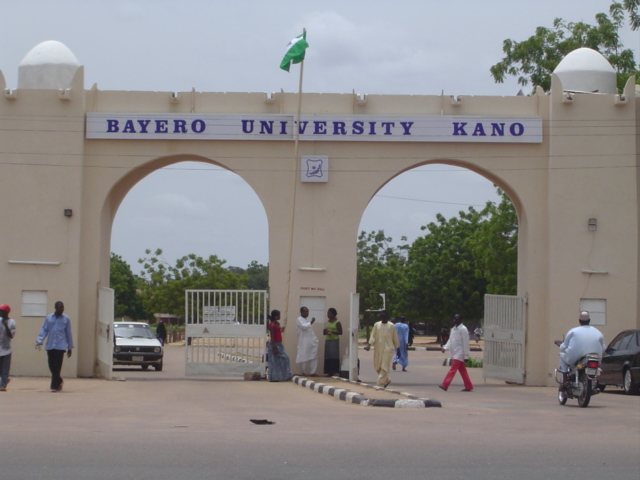
Dr. Muhammad Sulaiman Abdullahi, a lecturer in the Department of Nigerian Languages and Linguistics at Bayero University Kano, has arrived in Beijing with his family, his close associate, Dr. Muhsin Ibrahim, posted on his Facebook handle.

Dr. Abdullahi is set to contribute to the global academic landscape by teaching Hausa to Chinese students at Beijing Foreign Language University (BFSU). 

This collaboration marks a unique opportunity for cultural immersion and linguistic exchange between Nigeria and China. 

Dr. Abdullahi’s expertise in Nigerian languages, particularly Hausa, is expected to enrich the linguistic diversity at BFSU, one of China’s premier institutions for language studies. 

The initiative is part of BFSU’s ongoing efforts to broaden its language curriculum, offering students exposure to languages beyond the traditional offerings. 

Dr. Abdullahi’s presence is anticipated to foster a deeper understanding of Nigerian culture and language among Chinese students, promoting cross-cultural dialogue.

As the academic semester commences, Dr. Muhammad Sulaiman Abdullahi is poised to become a cultural ambassador, bridging the gap between Nigeria and China through the universal language of education.

The “Boko Haramisation” of University Education in Nigeria

By Kabiru Danladi Lawanti, Ph.D.

Since 2018, when Nigeria’s public universities started announcing hikes in school charges or what is popularly known as service charges, the survival of indigent students in these universities has become threatened. Public universities are the last hope for children from poor backgrounds. According to Emmanuel Onwubiko, the National Coordinator of the Human Rights Writers Association of Nigeria, over 70% of youths from poor backgrounds attend these universities. Therefore, denying these institutions funding is a direct declaration of war on Nigerian youths.

While it becomes necessary for public universities to increase the shortfall in government funding, the increase in school fees means millions of youths will be denied the opportunity to acquire a university education. To say that Nigerian public universities are underfunded is an understatement. That our public universities are in serious crisis is a fact. That universities are unable to achieve the goals of contributing to national development is sadly true.

Two schools of thought exist on this issue. On one hand is the Academic Staff Union of Universities (ASUU), which opposed increasing school fees. Their argument is quite simple: increased school fees automatically mean denying the children of the poor the opportunity to acquire a university education. They argue that there is a need for more citizens to have a university education. The logic is simple: more people with university education in the population automatically translate to positive economic growth, social development, and political cohesion.

To show their seriousness in what they believe in, ASUU had to go on strike several times for several years, starving their members to push forward with this idea. However, there are people who believe education should be removed from social services. They argue that since students are the direct beneficiaries, then the funding of universities should be shifted “from society to the students who are the beneficiaries of the higher incomes their degrees will provide.” These are the advocates of “commodification of university education.”

There are broadly three sources of funding for public universities in Nigeria, as identified by Professor Olanrewaju Fagbohun, the former Vice Chancellor of Lagos State University. These are government grants or subsidies, student/parent contributions (charges fees or allied non-instructional fees) and the income derived by the institution from commercial or quasi-commercial ventures or services, investments, donations, and endowments.

With overpopulation, teeming unemployed graduates, falling standard of university education, corruption in the management of university education and the shift from a mixed economy to a neoliberal economic system since 1986, Nigerian universities are left struggling to survive. Also, the attitude of the people’s government towards education since democracy’s return in 1999 has combined to suffocate the system already in the ICU.

However, in 2017, the universities came to grapple with a very hostile regime under President Buhari. The regime not only cut funding to public universities but imposed an embargo on the recruitment of academic staff in the universities. For over six years now, universities have not employed any fresh staff. Where they are employed, they are imposed on Vice Chancellors from Abuja. Departments no longer have the power to recommend to the VC to retain the best-graduating students in the departments. IPPIS was the last straw that broke the camel’s back. Departments are short-staffed, and IPPIS stopped universities from engaging contract staff, visiting and adjunct lectures and sabbatical staff.

These are the issues that Nigerians need to look at holistically. As it is now, most people have realised the mistake of not supporting ASUU to force the government to investigate the crises of the public universities. The reality clearly shows that indigent students or children from poor backgrounds cannot afford university education. While many analysts gave ASUU strikes the Boko Haram Logic interpretation, no one sees the onslaught on public universities by government agents as “bokoharamisation” of the university education. It is a disservice to Nigeria to remain silent about the current crises confronting the Nigerian public universities and find our voices when ASUU declares strike. This is succumbing to Boko Haram’s wishes. Already, our public primary and secondary schools are in ruins, and it will take the grace of God to resuscitate them. We are now confronted with the collapse of the public university system.

What is the way forward?

Addressing the current crises requires all stakeholders in the Nigerian Educational System. This is a matter of saving Nigeria from collapse. Already, parents have taken 60% of the burden of educating their children in the university. Parents now pay from N50,000 to 250,000 a year for service charges for their children. They provide for their upkeep – accommodation, feeding, laundry, clothing and, of course, purchase of textbooks. Added to that, they take the burden of transporting their children to and from the schools every now and then when the need arises, which can be weekly, monthly, or quarterly. Already, they are involved in funding their children’s education at the university.

The government is supporting universities with infrastructure payments of staff salaries (both academic and non-academic). The government also pays a fraction of the running cost to the universities. TETFUND will not be counted as government funding because it comes from 2% education tax contributions. People in government are leveraging on this and using funding as a weapon of control, as we saw in 2022 when ASUU members were starved for eight months for declaring an industrial dispute with their employer.

Industrial disputes should not be seen as confrontations or a narrow material interest of “greedy lecturers” or “Boko haram logic” of denying Nigerians the opportunity to acquire a university education. It should be seen as a patriotic intervention to salvage a collapsed system.

The commodification of university education in developing nations like ours is never a solution to the lingering crises in the public university system. Commodification destroys “the value of intellectual challenge and exploration by reducing knowledge to quantifiable, job-oriented results”. In fact, commodification is what derives the idea of a “skills rather than degree” gang promoted by a former minister.

I deliberately ignored the push by the present regime of education banks that will serve as lending institutions for university students because it is deceptive, unrealistic, and impracticable in a country like ours. What we need is an acceptable cost-sharing formula that is realistic and acceptable to all stakeholders. And this can come only through negotiation and mutual agreements between university unions, parents, and the government. We need to start this conversation to save our public universities.

On Abba Kabir Yusuf and human capital devt

By Anas Abbas

In recent years, there has been a growing emphasis on infrastructure development as a key indicator of progress and development in many countries. Governments often prioritize the construction of bridges, roads, and other physical structures as a means of showcasing their commitment to progress.

However, it is important to recognize that true development goes beyond just the physical infrastructure and involves the development of human capital.

While infrastructure development is undoubtedly important, it is equally crucial to invest in the development of human resources. This includes providing access to quality education, training, and opportunities for personal and professional growth. Human capital development is essential for creating a skilled and knowledgeable workforce that can contribute to the overall development of a nation.

A recent example of the emphasis on human capital development can be seen in the actions of the current Kano state government. Instead of solely focusing on infrastructure development, it also recognized the importance of investing in human capital develop. The administration sponsored numerous students who had graduated with first-class honors to pursue their Master’s degrees in India. This intervention is set to enable the beneficiaries to advance their education and acquire valuable knowledge that can be applied in the development of the state and the nation.

This programme us not new in the state. During Rabiu Kwankwaso second tenure as governor of the state, he sponsored over one thousand students abroad to pursue their Master’s degrees in different countries of the world.Infrastructure is doubtlessly important for the development of a nation, but it is crucial to recognize that human capital development should be the top priority If you critically observe the society today, you will find out that infrastructure can deteriorate over time and require continuous maintenance and investment, human capital development is enduring and can be needed for such maintainance need.

The knowledge and skills acquired by individuals remain with them and can be passed on to future generations, creating a lasting impact on the nation’s development. This initiative highlights the significance of human capital development in driving sustainable development.

By investing in the education and training of individuals, governments can empower their citizens to become active participants in the development process. These individuals can then use their expertise to address local challenges, drive innovation, and contribute to economic growth.

Furthermore, human capital development has a ripple effect on society. When individuals are equipped with knowledge and skills, they are better positioned to create positive change within their communities. They can become leaders, entrepreneurs, and advocates for social and economic progress. This, in turn, can lead to a more inclusive and sustainable development that benefits all members of society.

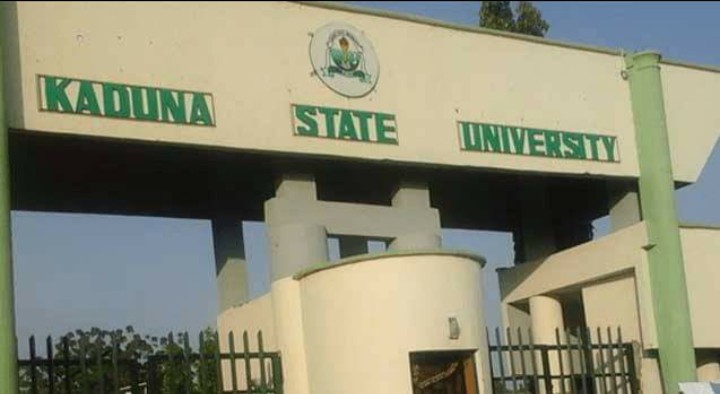
I found it laughable when in the trending Kaduna vs Kano online banter sparked by one Hafsat Paki video in which she talked Kano people down, many commenters paid undue attention to buildings as a way to show that Kaduna is more developed than Kano (Kano has fair share of beautiful buildings if you ask me). For me the ongoing effort in place by the government to better the human capital of the state deserves more attention than anything thing else.

In conclusion, while infrastructure development is important, it is equally crucial to prioritize human capital development as a key component of overall development. The recent initiative by Governor Abba Kabiru Yusuf to send students abroad for further education serves as a powerful example of the value of investing in human capital.

By focusing on human capital development, governments can create a foundation for long-term sustainable development that empowers their citizens and drives progress from within.

Anas Abbas is communication student at Bayero University, Kano . And can be reached via anasabbas2099@gmail.com

Kano gov’t sends 4th batch of 150 first-class graduates to India on scholarship

By Sabiu Abdullahi 

Kano State has dispatched the fourth batch of 150 graduates to India under its foreign scholarship program.

These graduates, part of the 1,001 indigenous students sponsored by the state government, departed from Malam Aminu Kano International Airport at 7:30 a.m. on Friday. 

The Commissioner for Higher Education, Dr Yusuf Kofarmata, and other government officials were present at the airport to witness the departure. The flight is scheduled to land in Lagos before continuing its journey to India. 

Dr. Kofarmata emphasised that the departure of this batch is a continuation of the government’s commitment to implementing the 1,001 postgraduate scholarship programme for 23–2024.

The beneficiaries, all first-class graduates, were selected based on their outstanding performance in undergraduate studies. Upon arrival in India, the students will be enrolled in various universities to pursue their Master’s degree programs.

Dr. Kofarmata highlighted that they will focus on internationally competitive areas of professionalism, contributing to bridging the manpower gap not only in Kano State but across the nation. 

“A total of 550 students make up the first batch, heading to eight reputable universities, aiming to fill the manpower gap in the state and across the nation. The students are also expected to acquire experience, skills, and knowledge to revamp the state’s commercial status and explore other potentials for socio-economic development,” explained the commissioner. 

The initiative, in line with the campaign promises of Governor Abba Kabir Yusuf, aims to revive and strengthen the educational sector.

The first batch of 140 students had already departed for India on October 20, followed by the second batch of 33 graduates heading to the Islamic University in Uganda. 

The beneficiaries expressed their gratitude to Governor Yusuf for fulfilling his campaign promises and reviving the scholarship program, originally introduced by the former governor, Senator Rabi’u Musa Kwankwaso.

The Commissioner noted the joyous celebrations among the beneficiaries, their parents, and well-wishers, reflecting the positive impact of the government’s commitment to educational development in the state.

Public Universities: the FG’s new revenue generation goldmine

By Prof. Abdelghaffar Amoka

The Academic Staff Union of Universities (ASUU) has been in a battle with the Federal Government of Nigeria over the funding of the public universities. The facilities that made our universities to still have a semblance of a university were products of ASUU strike. ASUU was so passionate over public universities funding to the point that the public began to think that such funds, when released, are paid into ASUU’s account. Even some journalists that are supposed to be properly informed shared in the ignorance or misinformation.

You read headlines like “FG releases 2 billion naira to ASUU for university funding”. ASUU pursued funding at the expense of its members’ welfare. The battle has been on funding to an extent that the younger generation of academics began to wonder why their welfare is not at the top of the union’s demands. The consoling words from our veterans have always been: You get true fulfillment when you have an ideal working environment.

The battle took a new dimension last year, during the reign of the ex-president Muhammadu Buhari, who had no agenda for education aside from establishing more universities without funding plans. Yeah! Buhari came to re-write the story of our university system. The number of the underfunded new tertiary institutions were listed as his major achievements. A strike on funding and the renegotiation of conditions of service that should not have lasted for more than four weeks, if sincerely handled, was dragged on for eight months and the lecturers starved. A few died and many survived and are still surviving but not an item on the demands on the needs of the universities was treated.

While ASUU was fighting for adequate funding, the FG had a hidden plan. It publicly declared that the universities will have to generate their money to partly fund themselves. The public couldn’t see the implication of the statement. The statement received support from some Nigerians whose education was funded from primary to PhD with public funds. However, besides this declaration, they are also seeing the universities as revenue generation institutions rather than institutions to be funded. They were wondering why they should keep funding these institutions when they are supposed to be generating revenue for the government.

Having conceived the idea to make federal universities an internally generated revenue (IGR) source for FG, their challenge was how to make these institutions generate revenue for FG without backlash. The only obstacle to the plan is ASUU that is always using strikes to force to unwillingly release some funds for the universities. ASUU was on strike again. They find their trouble annoying and something must be done. They engaged their friends that are former union leaders to develop the strategy to clip ASUU. Hunger strategy was found most effective and that was deployed and the rest was history.

From the experience of the last strike, call for a referendum on strike today and the members will tell you that if they will lose their salary for a one day strike, they won’t join. They are still paying their debt. So, they began starving the universities of funds.

Universities like Ahmadu Bello University (ABU) and Unilag, whose electricity bills are around 120 million naira per month, are given about 150 million naira per annum for operational expenses. How they pay their bills was left as their business. So, to keep up with the bills, the universities began to review the service charges. The universities estimated what can run the universities and appropriate charges were put together as fees for students. There were outcries on the fee increment. Some called it tuition and that got FG worried.

FG had to come out with a press release. They acknowledged the increment but that FG has not introduced tuition. The increase in fees as announced by various universities was to reflect the current economic reality; mission accomplished. However, the FG didn’t see these increased fees as service charges, they saw them as IGR by the universities and hence became interested.

As the universities were busy announcing the revised fees, the Minister of Finance suddenly remembered that there was a circular FMFBNP/OTHERS/IGR/CRF/12/2021 dated December 20, 2021 that said all partially funded FG Agencies should remit 40% of their IGR to FG. Universities are currently expected to remit 40% of the fees collected from the students to FG as revenue generation. These service charges in the universities are referred to as Gross Internally Generated Revenue. The deduction is effective from November 2023.

This means that if a student is charged N2,000 for an ID card, the university will give N800 out of it to the FG. It doesn’t matter to the FG if the cost of the ID card is truly N2,000. If a student is charged N10,000 as laboratory charges for chemicals and consumable, the university will give N4,000 out of it to the FG as revenue. If every student is charged N30,000 for electricity, water and sanitation bills, the FG will enjoy N12,000 out of it as revenue. It doesn’t matter if the remaining amount is not enough to pay those bills. If a student is charged N15,000 for a field trip or SIWES, the FG will take N6,000 out of it. If a student pay N5,000 as examination fee, the FG will take N2,000 from it as IGR for the FG. etc.

The insensitivity of the government to the needs of the people has gotten that bad. Public universities are the government’s new revenue generating agencies. This 40% revenue is expected to be paid by kids whose parents are earning less than N100,000 per month from the same FG. As they are milking the people dry, they have refused to cut off the cost of governance. The NASS members that were supposed to drive a car of 7 – 8 million naira by law got 160 million naira cars as against the law.

The bad thing is that the government will deduct 40% from the money as it is paid. It is auto-deduction. They will take their share before the universities even have access to the money. The announced fees were calculated to barely take care of the basic needs of the universities. So, how will the universities be run without the 40%?

My opinion…

Dear parents, tight your seat belt and the revised fees of your kids in any federal higher institution increased by 40%, thanks to FG quest for IGR. ASUU has done its bit for us Nigerians. It should not be a major discussion at the ongoing NEC. Nigerians should be allowed to fight their fight. The fight should now be left for the students and their parents. If they are willing to fight, ASUU members can join as parents. If they are not ready, we all MILT and move on as usual. After all, we are used to suffering and smiling.

The university managements, Senates, and Councils should find an appropriate way to introduce the 40% FG IGR from the universities into the fees. The universities that are yet to announce their revised fees should add the FG 40% university IGR to their fees. It should be separated from the university charges. It can be called “40% FG IGR charge” as a separate item. So that the students and parents will know what they are paying for. They need to know that rather than FG funding the education of their kids, something ASUU has fought for and prosecuted over, FG is now generating revenue from them as they pay their kids fees.

©Amoka

Bugaje in Gombe, the question of competence

By Musa Kalim Gambo

To start with, it must be easily concluded that Usman Bugaje is an excellent speaker for any gathering that seeks to place Nigeria on a microscopic slide to analyse its minutest of details. Therefore, Gombe State University made the best choice when it invited Bugaje to serve as the keynote speaker for the 10th,11th, 12th, and 13th pre-convocation lectures of the university last week.

Given Bugaje’s multi-disciplinary background, there could have been no doubt about his competence to speak on the theme of the pre-convocation lecture “Education and Development: The Challenge of Content, Competence, and Character in Nigerian Universities”. While a topic of this nature may sound like a cliché-ic abstraction of the troubles in the Nigerian university system, Bugaje’s treatment and perspective of the topic are both fresh and passionate.

Bugaje was out on a journey to establish the nexus between education and development. With the oft-repeated argument that there can be no meaningful progress without education, it is clearly established that Africa has had a flourishing system of knowledge transmission until the coming of the colonials. When they came, they suffocated the existing system in favour of their own.

Among the gathering, mostly the graduating students who listened to Bugaje’s lecture, not many may be aware of Africa’s glorious past and pioneering role in the development of universities around the world. Indeed, not many may be aware that what the West regards as an Arab contribution to education is largely a veil over the combined Persian and African efforts. It is a clear attempt to obscure the true position of Africa as a pacesetter in the world of knowledge and the evolution of civilisation. As poignantly described in his citation, Usman Bugaje is a pan-Africanist. This simple description as a pan-Africanist will not allow him to deliver such an important lecture without exposing the true fallacies that represent Western intervention in African education.

In many respects, Bugaje’s generation of the past benefited from a functional, effective, and not defective education system. It was such a system that prepared them to be competent for a diverse set of roles within the country and around the world. As a matter of doubt, were they so well equipped or was it simply the scarcity of manpower at that time? I have listened to many elderly people, mostly those who studied in Nigerian universities in the ‘70s and ‘80s, who, in their critique of the education and governments of today, make mention of the number of jobs they had at their disposal when they graduated. What was the Nigerian population size at that time? What was the manpower needed? And what was the economic power of the country then? These are questions that must be answered before a comparison is made between the glorious past and the gloomy today of our nation.

With the bulk of information, and indeed knowledge at the disposal of the student today, competence should not be a problem. Unfortunately, it is in many areas of modern endeavour. Within the educational system, quality of content and competence of output are intertwined, like the Staff of Asklepios or the Caduceus Wand, a symbology of the healthcare background of Bugaje.

An educational system where teachers have problems of competence across all levels will definitely have to deal with the complex question of the quality of content imparted to the students. The issues at stake here are – the relevance of the content being taught and the capacity of the teacher to deliver.

A friend of mine from one of the first-generation universities in Nigeria narrated the difficulty of his lecturer. This lecturer has taught the same content in phytochemistry for almost twenty years. He was on the verge of becoming a professor in that field of chemistry. However, he has this handwritten note that has spanned his career in this field.

In spite of being an expert in this phytochemistry, any day his handwritten note was not with him, his class would not hold. There was a day my friend and his colleagues sat for a very tough test by this soon-to-be professor of phytochemistry. They were asked to draw the chemical structure of a certain phytochemical, which was passively mentioned as an example during one of their sessions. Most of the members of the class couldn’t get the correct structure. They, therefore, requested the lecturer to help answer the question. It was quite interesting that this soon-to-be professor of phytochemistry could not answer the same question he set for his students. This suggested that in spite of his years of experience teaching the course, he would have failed if he sat for the same test.

This interestingly sad anecdote paints the picture of the Nigerian university in response to the question of competence.

Kalim writes from Zaria via gmkalim@hotmail.com.

Kano students protest against tuition hike amidst risk of missing exams at FUD

By Sabiu Abdullahi 

Over 4,000 students from Kano State studying at the Federal University Dutse (FUD) in Jigawa State are facing a crisis as they are unable to afford the new tuition fees imposed by the university management. 

The National Association of Kano State Students (NAKSS) revealed that the tuition fee increment, which raised the fees from N30,000 to N40,000 to a minimum of N100,000, has left thousands of students in a precarious situation. 

During a peaceful protest at the university on Tuesday, affected students pleaded with the Kano State Government and their political representatives to help them pay their outstanding fees, allowing them to sit for the upcoming second-semester examination scheduled for next week. 

The students’ union government spokesperson, Ibrahim Yunusa, stated that since the announcement of the 200 per cent school fee increment in January, many students and their parents have been struggling to meet the financial demands. 

Yunusa commended the FUD management for permitting indigenous students to pay their fees in instalments, with N60,000 due in the first semester and the remaining N40,000 in the second semester. 

However, he highlighted that, despite this concession, more than 40 per cent of the students have not been able to pay the remaining balance, putting them at risk of being dismissed from the university. 

“We’ve been calling the attention of the Kano State government to come to our help and pay the school fees for us,” said Yunusa. 

He also noted that letters were sent to the Kano State government. Although they received a reply directing them to the office of the Commissioner for Higher Education, no further action has been taken. 

The deadline for registration is just six days away, and if the remaining fees are not paid, the affected students will automatically dismiss themselves from the school. 

The students’ plight has drawn attention to the larger issue of affordable education and the challenges faced by students from low-income families. 

Kano State Commissioner for Higher Education, Yusuf Kofar Mata, has not responded to calls and text messages seeking comments on the matter, leaving the students uncertain regarding their educational future.