Education

A letter to peer-reviewed Facebook scholars

By Abubakar Idris

For those whose businesses do not sell within and around the spectrum of the academia, most probably, the term “peer review” never ring a bell; and for that, we start with that. Often used within the scientific community, an article, or any piece of work is said to be peer reviewed when it is subjected to scrutiny of experts in the same field of study before getting published. Thus, experts in the field are the peer(s), while their scrutiny of the work is the review. 1 + 1 = 2. The purposes – as put simply by Kelly et al. (2014) in their ‘Peer Review in Scientific Publication: Benefits, Critiques, & A Survival Guide’ published by The Journal of the International Federation of Clinical Chemistry and Laboratory Medicine (JIFCC) and cited in more than 800 works – are to: check for relevance / importance / contribution in the area, validity of methodology, and novelty / originality of the work; and ensure improvement in the quality of manuscripts worthy of publication. In any case, in this context, the argument is this: anybody who passed through this celebrated academic writing process, if really conducted as should be done, [can] considers themselves as Odogwu of some sort. Uhm, you know… even as I claim to be a [forest] scientist, with a lot of my written works [mainly published under pseudonyms] appearing in both local and international dailies and magazines, to set the record straight, I must, here, confess that, to my credit, there exists NOT a single peer-reviewed publication! Except perhaps if the bar is to be lowered in respect of the few articles I was able to have got published by the International Society of Tropical Foresters (ISTF)– which I know say you no go gree do even as you know the editors are professional foresters.

Anyway, I know that’s unfortunate on my part. Really unfortunate even. And to borrow from the American-sounding accent speaking Ugandan MP, Mr. Atkins Katusabe, whose video recently circulated on social media, “Mr. Speaker, I think this is a disaster.” That said, why is Abubakar writing an article about ‘This Peer Review of a Thing’? Certainly not just to mock himself as having not published any scientific work. A curios mind is already pounding on this thought. Truth is, this write-up is a protest. The background: As is well known, recently, the POTUS, Mr. TACO, and his like-him arrogant ignorant drum beaters told the world a fat lie that paints Nigeria ugly – the accusation of Christian Genocide. Whatever the motive behind the unsubstantiated and impossible claim, while a clear fabrication on all fronts, the powerful man’s words (that include instructing the Pentagon to come with a plan for military intervention to save their created victims in the most populous black nation) threw the big house into a sensational chaos. Mr. K believes 131, Mrs. Ropines 629, Dr. M dreams 450, Miss N thinks 347, and all. As this fire rages, confusion at its fouls-play, as though in response by the insurgents, more organized more intensified attacks and kidnappings were unveiled – dealing some serious blows not just to the national security architecture, but also the country’s very sovereignty. And, no doubt, these troubles are much
more prevalent in the lower-literate, poorer, hotter climate… Northern region (Arewa).
It’s therefore seriously concerning that instead of guiding their younger ones on how to
consciously navigate the complex terrain, some “Arewa intellectuals” chose the path of
misguiding them. Namely, keeping them busy with cheap arguments that are squarely based on
their own personal glory – or lack of it – focused in toto on massaging their egos. Some pseudo
intellectuals, one is tempted to say.
I genuinely don’t understand why a conscious people whose very existence is threatened by all
kinds of terrorist groups and their families receiving a hell-style of beating by the harshest of
known economic realities allow themselves to be consumed by debates around what credential
qualifies one’s social media posts to be read and responded to, or whose comments are too raw,
shallow, extreme, disrespectful, gullible, and intolerant enough for them to “chop block”. I don’t
know what is, if this isn’t, a clear case of reckless joke.
In the seventh scene of Act II of William Shakespeare’s play ‘As You Like It’, a character Jaques
says, “All the world’s a stage, And all the men and women merely players; They have their exits
and their entrances, And one man in his time plays many parts” – then goes on to describe the
seven ages of a man’s life, comparing them to the roles an actor plays in a play. True to nature, in
man’s lifecycle, there is an age for play, there is another for recklessness. Truth is almost all the
Arewa intellectuals are supposed to be done with the said phases. Instead of play and
recklessness, we expect wisdom from them.
When the story of Mazi Kanu’s sentence surfaced and dominated the headlines, I wasn’t as
concerned when most of us were distracted – even if not majorly of Arewa, it is such a serious
[in]security issue itself. But the credentials of our “espat”, oh h*ll no, I don’t get it, and I don’t
want to get it. I thought our so called intellectuals know better, but, well, what do I know?!
Quickly, if you don’t mind my obsession with history, allow me to add this: Elsevier’s Publishing
Guideline notes that, as a method of evaluating written work, this practice, fear (sorry, peer)
review, has been in use since ancient Greece. And, it was first explained by a Syrian physician,
Is’haq Ibn Ali Al-Rahwi (854-931 CE), in his book titled The Ethics of Physician. You gerrit? I
don’t gerrit…
May this article be peer reviewed before it got published, amen!

Abubakar Idris, a scientist without any peer reviewed article, is a graduate of Forestry and
Wildlife from University of Maiduguri. He writes from Auchi, Edo State, and can be reached
via email at abubakaridrismisau@gmail.com or on phone through +2349030178211.

Bauchi govt shuts all schools over security concerns

By Sabiu Abdullahi

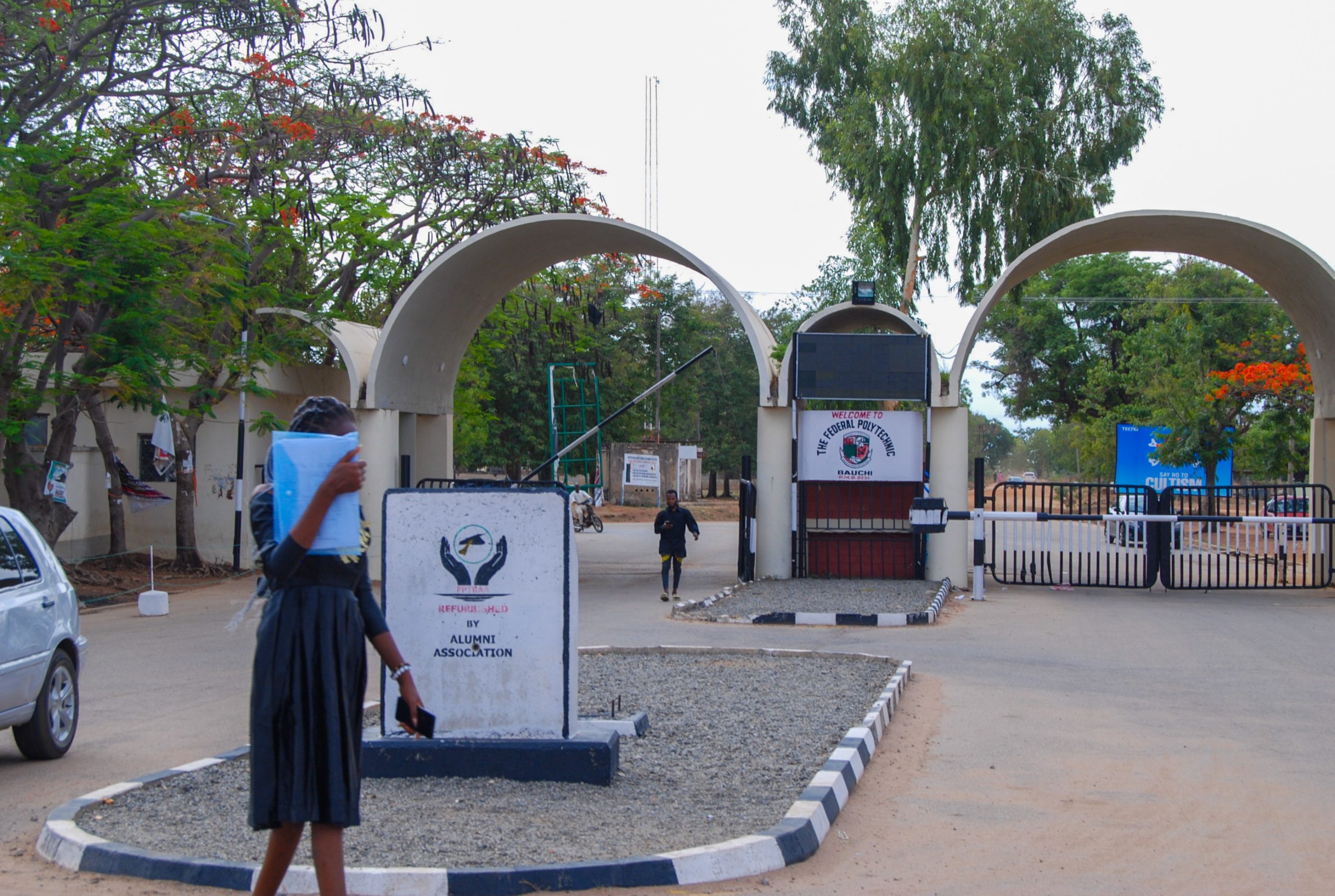
The Bauchi State Government has ordered the immediate closure of all schools across the state due to rising security challenges.

The directive affects primary, secondary and tertiary institutions. It also covers Federal Government-owned schools and private schools operating within the state.

In a public announcement signed by the Information and Public Relations Officer of the Ministry of Education, Jalaludeen Usman, the government said: “The Bauchi State Government wishes to notify the general public that all primary, secondary, and tertiary institutions—including Federal Government-owned schools and private schools—are hereby closed with immediate effect.”

The statement explained that the decision was not taken lightly. It said:“This decision, though difficult, was taken by the Government of Bauchi State after extensive consultations and in response to overwhelming security concerns affecting the safety of students, teachers, and school communities across the state.”

He acknowledged the disruption the closure may cause. It added:“The government is fully aware of the inconvenience this may cause. However, the protection of our children remains our highest moral responsibility. Every student in Bauchi State deserves to learn in an environment that is safe, stable, and free of fear.”

Parents, guardians, school owners and other stakeholders were urged not to panic. The statement said:“We therefore call on parents, guardians, school proprietors, and all concerned stakeholders not to panic, but to remain calm and cooperative. The government is working closely with security agencies to address the concerns swiftly and comprehensively, ensuring that normal academic activities resume as soon as it is safe to do so.”

The government also appealed to residents to stay alert and support security efforts. It stated:“If you see something, say something. Timely information from the public is crucial in safeguarding our communities.”

It assured the public that updates will be provided as the situation develops.

Distinguished Professor Umar Sani Fagge: An upright scholar and Islamic jurist, shaping knowledge and society

By Habu Abdu Aminu

Professor Umar Sani Fagge is widely recognised as a leading figure in Islamic scholarship and Arabic studies in Nigeria. His name commands respect not only in academic circles but also among millions of Muslims who follow his lectures, sermons, and community teachings. His life’s journey from the traditional Qur’anic school in the Fagge community to the rank of Professor at Bayero University Kano (BUK) represents an inspiring narrative of humility, perseverance, and the pursuit of divine and worldly knowledge.

Born into a devout, intellectually rich family in the Fagge area of Kano State, Professor Fagge’s educational journey began under his mother’s loving care. Coming from a lineage of knowledgeable parents and grandparents, he was nurtured in an environment where Islamic learning, moral discipline, and respect for knowledge were fundamental values.

His earliest education took place in the Makarantar Allo (traditional Qur’anic school), where he learned to recite the Qur’an. He later advanced to an Islamiyyah school, which broadened his understanding of Arabic grammar, hadith (Prophetic traditions), and fiqh (Islamic jurisprudence). These formative experiences instilled in him a passion for knowledge and an unshakable spiritual foundation.

Subsequently, he transitioned into the modern educational system, completing his primary and secondary education in Kano State. Motivated by a desire to deepen his understanding of Islamic and Arabic studies, he proceeded to Bayero University, Kano, where he obtained a Diploma, a Bachelor of Arts (B.A.), a Master of Arts (M.A.), and ultimately a Doctor of Philosophy (PhD) in Arabic. This remarkable academic progression not only reflects his intellectual capacity but also his lifelong dedication to scholarship.

Professor Fagge’s professional career began at the Kano State Ministry of Education, where he served as a classroom teacher. His outstanding teaching skills and commitment to educational excellence soon drew attention from the academic community. In 1991, he joined Bayero University Kano as a Graduate Assistant in the Department of Arabic, marking the start of an illustrious academic journey.

Over the following three decades, Professor Fagge steadily rose through the ranks, from Assistant Lecturer, Lecturer II, Lecturer I, Senior Lecturer, and Associate Professor, culminating in his promotion to full Professor in 2023. His promotion was celebrated across the academic and religious landscape as recognition of his scholarly distinction, exemplary service, and mentorship of younger scholars.

Throughout his tenure at BUK, he has taught a wide range of undergraduate and postgraduate courses in Arabic language, literature, and Islamic jurisprudence. He has supervised numerous research projects and postgraduate theses, shaping a generation of students and educators who continue to uphold his academic legacy.

Professor Umar Sani Fagge’s influence extends far beyond the university walls. As an Islamic jurist (faqih) and public preacher (da’i), he has become a household name in Northern Nigeria and beyond. He actively participates in Makarantar Soro, Islamiyyah schools, and community-based Qur’anic centers, where he teaches and delivers sermons to diverse audiences.

His da’wah activities reflect a holistic understanding of Islam, addressing both ‘ibadat (acts of worship) and mu’amalat (social and economic interactions). Through his public lectures, radio and television programs, and digital platforms, he promotes moral reform, justice, and socio-economic development in line with Islamic principles. Thousands of people attend his lectures, and his teachings are widely shared on media outlets, where he reaches audiences across Nigeria, Niger, and other parts of West Africa.

Among Professor Fagge’s many contributions to Islamic thought, his interpretation of Zakat al-fitr stands out as a practical and socio-economically relevant concept. In his lectures, he emphasises that Zakat al-fitr, a mandatory form of almsgiving at the end of Ramadan, is a crucial instrument of infaq (voluntary or obligatory charity) that directly addresses food insecurity in Muslim societies.

According to him, Zakat al-fitr is not a mere ritual; it is a divinely ordained social safety net aimed at eradicating hunger among the poor during festive periods. When administered correctly, it ensures that every Muslim, regardless of social or economic status, partakes in the joy and blessings of Eid. He argues that if properly institutionalised, Zakat al-fitr can enhance the living standards of the poor and promote socio-economic balance within the ummah.

Professor Fagge further observes that the real purpose of its implementation goes beyond the spiritual cleansing of the fasting individual. It also reflects the economic justice promoted by Islam, where wealth flows and benefits all parts of society. In his opinion, the proper management of Zakat al-fitr by reputable charitable organisations could significantly reduce hunger, poverty, and inequality within Muslim communities.

Moreover, Professor Fagge’s intellectual reach is amplified through his numerous public lectures, Qur’anic tafsir sessions, and radio commentaries. He is known for simplifying complex religious concepts and applying them to contemporary social issues such as governance, family relations, business ethics, and community welfare. His style is calm, evidence-based, and deeply rooted in classical sources, making his teachings both authentic and accessible.

He has also published academic papers and presented at conferences on Arabic linguistics, Islamic jurisprudence, and ethics. His insights continue to influence scholars, students, and policymakers who seek to align Islamic principles with modern governance and development strategies.

Over the decades, Professor Umar Sani Fagge has mentored countless students, many of whom have become lecturers, jurists, judges, lawyers, politicians, administrators, businessmen, and community leaders. His balanced approach to Islamic jurisprudence, combining intellectual rigour with moral empathy, has earned him a reputation as a reformer who promotes unity, moderation, and social responsibility.

His enduring legacy lies not only in the degrees he earned and the lectures he delivered, but also in the transformative impact he has had on his community. Through his tireless service, he embodies the Qur’anic principle that “those who are given knowledge and act upon it are truly among the most honoured of people.”

Professor Umar Sani Fagge’s journey from the traditional Qur’anic school of Fagge to the professorial chair at Bayero University Kano is a story of resilience, dedication, and divine blessing. His life underscores the timeless value of education as both a spiritual and social enterprise. Through his scholarship and da’wah, he has contributed immensely to moral reform, academic growth, and socio-economic enlightenment in Nigeria.

In an age where many scholars are confined to either the mosque or the classroom, Professor Fagge stands as a rare bridge between both worlds. His teachings on zakat al-fitr and food security reaffirm Islam’s commitment to justice, compassion, and collective welfare. Indeed, his legacy will continue to inspire generations to come—an enduring reminder that knowledge, when guided by faith, is the greatest form of service to humanity.

Habu Abdu is a researcher and social analyst from the Department of Banking and Finance at Kano State Polytechnic, Nigeria. He can be contacted at +2348086252563.

NYSC redeploys Corps member who threatened to sleep with students, deepens investigation

By Ishaka Mohammed

The National Youth Service Corps (NYSC) has withdrawn Oyaje Daniel from his Place of Primary Assignment (PPA) in Igabi Local Government Area of Kaduna State and redeployed him to the NYSC state headquarters for closer monitoring. This came after his threat on social media to sleep with his female secondary school students.

As part of the sanctions, Daniel has been denied access to the free accommodation at the headquarters despite being required to report there daily for the remainder of his service year.

The Daily Reality earlier reported that the affected Corps member serving at Judeen International School in Kaduna had threatened to sleep with his female secondary school students, whom he considered more voluptuous than undergraduates. 

According to John Adesogan, who appears to have been Daniel’s schoolmate, the Corps member was summoned by the NYSC Disciplinary Committee at the state headquarters after his comment attracted public outcry.

John Adesogan said, “The Alumni President of our college, Comr. Philip Ayuba Bobai and I went with Daniel to the NYSC Headquarters to further engage with the officials handling the matter.” 

He further revealed that the NYSC had constituted an investigation team to visit Daniel’s former PPA to determine whether any other form of misconduct had occurred. This is in addition to NYSC’s efforts to track other Corps members who made comments similar to Daniel’s on the same post.

Daniel has taken to social media to express remorse. Reacting to a comment from one Sabastine Ezekiel, who urged him to “be strong”, Daniel wrote, “Thank you, my leader. I’m sorry for disappointing your expectations. I was careless with my comment, thinking I was catching ‘cruise’. But I have learned my lesson. All I want is another chance to live up to my name and trust.”

Adesogan urged fellow Nigerians to use social media responsibly, maintain discipline, and create a safer, more decent online environment.

Breaking barriers: Why Arewa must invest in girls’ education

By Ibrahim Aisha 

Across much of Northern Nigeria, girls still face an invisible wall after secondary school. Parents’ fears, tight household budgets, and the pull of early marriage keep many daughters at home. Yet, data and role models reveal what is lost when the ambition of a female child is clipped.

For generations, education has been regarded as the key to progress and empowerment. Still, in conservative societies, the education of girls beyond the basics is often seen as unnecessary or even a threat to tradition despite government campaigns, NGO interventions, and success stories of women who have broken barriers.

The world has become a global village. Technology, digital communication, and international mobility have reshaped how we live and work. In this new reality, uneducated girls are left voiceless, powerless, and excluded from the spaces where contemporary women now thrive sitting in parliaments, leading global institutions, directing multinational companies, and innovating in science and technology.

Why, in 2025, do some communities still resist girls’ education?

The answer often lies in illiteracy. Parents who never had the privilege of education sometimes fail to see its value. Many fear what they do not understand. To them, sending a daughter to university feels like losing her to an unknown world.

Data from the National Bureau of Statistics as at 2017 defined literacy as the percentage of people aged 15 and above who can read, write, and understand simple expressions in any language. A Punch Editorial Board report from September 2023 highlighted Nigeria’s poor education outlook: although the government claimed a national literacy rate of 69%, this figure hides wide regional disparities. 

According to a UNICEF report on the state of Nigeria’s children, 10.2 million primary school-aged children and 8.1 million secondary school-aged children are out of school in the country.Reports indicate that between 2020 and 2025, Northern Nigeria consistently recorded between five and seven million out-of-school girls, with only minor fluctuations despite ongoing efforts.

Socio-Cultural Impediments 

Household-level constraints on access to education are not entirely economic. Studies and surveys identify several socio-cultural factors: erosion of extended family solidarity, weakening societal values, and gender-related issues such as teenage pregnancy, early marriage, and perceptions about the “proper role” of women.

Northern Nigeria is still shaped by cultural practices harmful to women’s emancipation, including early and forced marriage, wife-inheritance, widowhood practices, lack of access to education, low enrollment rates, poor funding, inadequate facilities for persons with disabilities, and frequent disruptions caused by conflict and seasonal migration.

Stories from the Ground

The experiences of girls and women across the North reveal both the struggles and the possibilities of education.

Rahama Dajuma, a graduate, said that education had done everything for her. She now works with an NGO and is about to get married. She relieved her father from the stress of buying furniture for her wedding, and her fiancé is allowing her to keep her job.

Zainab Abubakar, a student, mother and a resident of Sabuwar Gwammaja, argued that girls should be asked their opinions because “you can force a horse to the riverbank but you cannot force it to drink.” She added that many parents above 60 in her community do not want their sons to marry women educated beyond secondary school, fearing such women will not be submissive.

Zakiyyah Al-Hassan, a resident of Chiranchi, shared that she is not educated but wants her child to go beyond secondary school. According to her, the world is changing and women should not be stuck in the kitchen, as educated women contribute to the home even before bringing in their salaries.

Fatima Abubakar, a student of the School of Hygiene, explained that she is the only one schooling out of nine children. Her father could not afford fees for all, so her siblings sacrificed for her.

Iya Aminatu, a resident of Kurna Kwachiri, revealed that none of her seven daughters went beyond junior secondary school because her husband is completely against it, and she could not object to his decision.

Malam Rafa’i, a local Islamic teacher and resident of Tsakuwa, said during a telephone interview that it is a waste of time and resources to send a girl to school when she should stay home and learn how to cook so as to be a perfect wife to her husband.

Fatima Haruna, a secondary school graduate, recalled that her elder sister Khadijah finished with flying colours and was promised that she could continue schooling. After marriage, her husband refused, saying he had no intention of letting her further her education. He had only used that promise to lure her into marriage. Since then, their father insists that no daughter can further her education unless her husband agrees.

The Road Ahead

These stories show that the real question has shifted from “Should girls be educated?” to “How fast can Northern Nigeria catch up?” Education experts and stakeholders warn that if the situation does not improve, Northern Nigeria risks falling further behind, with dire consequences for national development. The region needs more investment in infrastructure, security, and teacher training. Cultural reorientation campaigns must also be intensified to promote the value of education, especially for girls.

The answer lies in stronger government commitment, sustained community awareness, and the courage to challenge harmful traditions. Education is no longer a privilege. It is a necessity for survival in the global age. 

Nigerians react as Corps member threatens to sleep with female students

By Ishaka Mohammed

A man serving under the National Youth Service Corps (NYSC) has come under fire for publicly threatening to sleep with his female secondary school students, whom he considered voluptuous.

According to a Nigerian Army officer and Facebook user, Kolawole Oludare Stephen, the Corps member, Oyaje Daniel (KD/25A/0494), currently serves at Judeen International School, Mando, Igabi Local Government Area, Kaduna State. The officer tagged the NYSC in a Facebook post for urgent action.

Another Facebook user, Ọluchi Eze, who tagged the NYSC in a post, mentioned Oyaje Daniel as a Corps member in a secondary school in Kaduna State.

Reacting to Ọluchi Ezeʼs post, the Corps member, with the Facebook name Comr Oyaje Daniel, confirmed his local government of national service and tendered an apology, but expressed shock at people’s judgment of his character.  “I am shocked by the news surrounding my character, and I want to assure everyone that I am not a rapist or a perpetrator of any form of abuse,” part of the post reads.


While some Facebook users considered him remorseful and deserving of forgiveness, others called for penalties. 


The Daily Reality gathered that Comr Oyaje Daniel had earlier commented on a Facebook post in which he had threatened to sleep with any SSS 3 female students who failed to “coordinate” themselves, stressing how their bodies were more voluptuous than those of 400 level undergraduates.


At the time of filing this report, the National Youth Service Corps has yet to comment on the matter.

BUK’s Pride: Aisha Musa Auyo defends PhD, extends family legacy of scholarship

By Muhammad Sulaiman

A regular contributor to The Daily Reality’s opinion section, Aisha Musa Auyo, has successfully defended her PhD dissertation in Educational Psychology at Bayero University, Kano (BUK).

Dr Auyo’s doctoral research, titled “Influence of Achievement Motivation, Academic Self-Concept, Emotional Regulation and Locus of Control on the Academic Achievement of Public Secondary School Students in Kano and Jigawa States of Nigeria,” marks a significant contribution to the study of learning behaviour and student performance in northern Nigeria.

Her achievement comes after six years of rigorous academic work and dedication. Described by her husband, Dr AC Abdullahi Maiwada, as “an authentic product of BUK,” Dr Auyo was born, raised, educated, and married within the university community, where she obtained all her degrees.

Academia also runs deep in her family. Her parents, Prof. Musa Auyo and Dr Hadiza Umar, both serve in BUK’s Department of Library and Information Science, while her husband, Dr Maiwada, holds a PhD in Mass Communication. Her parents-in-law are also accomplished academics, making the Auyo-Maiwada family one deeply rooted in scholarship.

The Daily Reality congratulates Dr Auyo on her outstanding achievement and wishes her continued success in her academic and professional pursuits.

Language is a tool; it’s not the destination | A look at Kano’s Hausa-only school policy

By Prof. Abdalla Uba Adamu

I rarely discuss politics, policy, or religion at any level on social media. These three are totally beyond my modest capabilities. However, the Educationist in me stirred when it became news in November 2025 that a bill was being proposed in the Kano State House of Assembly, titled the Kano State Mother Tongue (Hausa Language) Education Enforcement Bill. It was introduced by Musa Kachako, a member representing Takai under the New Nigeria Peoples Party (NNPP). 

The Bill seeks to ensure that all instruction in primary and secondary schools in Kano (presumably those under Local Education Authorities) is conducted in the Hausa language. According to online reports, when presenting the bill during plenary, Kachako stated that the initiative followed global best practices in education, citing countries such as China, Japan, and India, which he noted had made significant strides in science and technology by teaching children in their native languages from an early age. Kano State can do this because Education, being on the Concurrent Legislature, gives room for any policy variation of Education from that of the Federal Government’s Exclusive list. 

Certainly, the idea of teaching all subjects in Hausa springs from a noble intention — to enable children to learn in the language they understand best, and to reaffirm local identity against the long shadow of colonial linguistic domination. I witnessed this during my tenure as a Teaching Practice Supervisor in various schools in Kano. Students tended to understand language lessons more fluidly than those in other languages. And we are talking about over 40 years ago. Along the line, I even came up with how to use Hausa proverbs to teach science, based on over 30 curated Hausa proverbs with scientific content (e.g. gravity in “komai nisan jifa, ƙasa zai dawo”) and trained dozens of teachers in Jigawa (ironically enough, Kano was not interested at the time!) on this much later.   

Yet, the success of such a language policy depends on its contextual intelligence — its ability to strike a balance between local comprehension, national unity, and global relevance. In all cases of such debates, the examples of China, Japan, and India are the most commonly cited as best practices that have worked. With its virtual monolingual Hausa population (perhaps the only State in the Federation with this attribute), elevating Kano as “Little China” certainly sound, albeit contradictorily, post-colonially romantic. This all sounds inspiring. But, without taking the shine off it, how realistic is it?

There is a certain merit to the idea, but only to a certain extent. Research everywhere agrees: children learn faster and think better when taught in their native language. Even UNESCO and Nigeria’s own education policy support this approach for the first few years of primary schooling, where community languages are encouraged, rather than metropolitan languages. Let’s look at some cases.

Ethiopia is perhaps the only country in Africa with a continuous mother-tongue education system. The country did not suffer the horrors of colonisation on the same scale as the rest of Sahelian African countries, as it was only briefly occupied by Italians between 1936 and 1941. It uses regional languages (Amharic, Tigrinya, Oromo, Somali, etc.) as the medium of instruction in primary and secondary education. In universities and higher education, Amharic or English is used depending on the region and field. Thus, Ethiopia’s system is perhaps the closest to continuous mother-tongue instruction, although English dominates technical and postgraduate studies.

In Tanzania, Swahili is the dominant language in primary schools, but English is introduced from secondary schools up to universities, especially in fields such as science, medicine, and law. In Rwanda, the medium of instruction in schools was switched from French to English in 2008, while Kinyarwanda remains the mother tongue in early primary education. In Mozambique, Portuguese dominates in secondary and tertiary education, and local languages such as Makhuwa, Sena, and Tsonga are used in early primary school. 

This pattern is repeated in other African countries, such as Ghana (Twi/Ewe in early schooling, English later), Senegal (local languages in the early years, French later), and Kenya (Kikuyu, Luhya, Dholuo in early schooling, English later). Thus, no colonised African country has fully implemented mother tongue instruction from primary through university, rejecting colonial languages entirely.

In Kano, where everyone speaks Hausa, the policy could genuinely improve comprehension and reduce dropout rates. Pupils won’t have to struggle with English before grasping basic concepts in classrooms. That’s a win. However, there is a catch, and it lies in the regular comparison with China, Japan, and India, as if Kano is a nation, rather than a State within a nation that has 400 languages. Let us look at the language policies of these countries closely.

China has between 281 to 305 languages and dialects. However, it took decades — from the early 1900s to the 1950s — to standardise Mandarin (Putonghua), reform writing, and establish a comprehensive teacher-training and translation system, enabling everyone to be educated in one language. 

Japan is relatively homogeneous, but still has dialect diversity with 16 living languages. Although Japanese is the dominant language of instruction, there is no law declaring it the official language of the country. In fact, a school could use other languages. There are now a few schools that use English to teach science and mathematics classes. Japan created a national standard (based on the Tokyo speech) during the Meiji era (late 1800s) — alongside massive investment in textbooks, printing, and teacher training. India, on the other hand, is multilingual by law — it has 22 official languages and hundreds more in daily use. Each state uses its local language for early schooling, but keeps English for higher education and technology. 

So, what worked for these three was not language alone, but long-term state planning, standardisation, and bilingual balance. Each of these countries went through a long, continuously sustainable process of deliberate policy strategies that ensured the success of their language policies in Education, backed by political stability. In Kano, policies are routinely changed with new regime changes, regardless of their merit. Let us look at the obstacles. 

English remains the principal language of science, technology, and international communication. A policy that sidelines it completely in early and middle education could restrict students’ ability to compete globally and to access higher education resources. Unless a bilingual model is adopted, the system may produce students with strong local literacy but limited global mobility.

Nigeria’s labour market — in public service, academia, commerce, and technology — operates primarily in English. Graduates from a Hausa-only system would face difficulty transitioning into these environments without adequate English proficiency. This could widen inequality rather than close it. Unless there are expectations that students from Kano, who will be the products of this policy, will never work in any Federal government agency in the country. 

Nigeria’s educational bureaucracy is highly centralised. Curriculum design, examination systems (NECO, WAEC), and tertiary entry assessments (JAMB) all operate in English. Switching Hausa to the medium of instruction at primary and secondary levels, without corresponding policy alignment at higher levels, would isolate Hausa-medium students from tertiary education pathways. Thus, despite Education being on the concurrent list, centralised examinations are under the Federal Exclusive list. Kano cannot create its own WAEC, NECO, and JAMB examination boards; it must use Federal agencies for this purpose. These agencies are in Nigeria’s official language, which is English.  

Next would be concerns about teachers. Currently, and without being aware of the timeline for implementing the Bill, if it is passed successfully, there are not enough trained teachers in Kano with adequate linguistic competence to teach science, mathematics, or social studies effectively in Hausa. 

Moreover, curricular materials, textbooks, and terminologies for specialised subjects (such as chemistry, ICT, or physics) are largely underdeveloped in Hausa — except for some pioneering efforts by the Northern Nigerian Publishing Company and NTI Kaduna in the 1980s–1990s, and more recently by a few authors. For instance, the Centre for Research in Nigerian Languages, Translation, and Folklore at Bayero University, Kano, has produced eight Science textbooks in Hausa for students of primary, junior, and senior secondary schools in northern Nigeria. 

Written by Mika’ila Maigari Kashimbila of the Department of Physics, Bayero University, these are Kimiyya Da Fasaha Don Makarantun Firamare Books One to Three, Lissafi Don Kananan Makarantun Sakandare Books One to Three, Kyamistare Don Manyan Makarantun Sakandare, and Fizis (Physics) Don Manyan Makarantun Sakandare. He had earlier written Lissafin Makaratun Sakandare Na 1. 

I was even part of the committee set up by Bayero University Kano to “launch” these books, although things faltered, and I don’t think the launch ever took place. Wonderful as these books and efforts are, I believe they would serve as supplementary readers to the core textbooks, where they help to deconstruct the more esoteric prose of the English textbooks. 

Other concerns are sociological. For instance, making Hausa the exclusive medium in primary and secondary education in Kano risks political backlash from non-Hausa-speaking communities. In a multilingual federation, such a policy could be perceived as linguistic imperialism, deepening ethnic tensions and further alienating minorities. It may also entrench regionalisation rather than national integration — the very problem English was meant to solve.

Additionally, if Hausa becomes the sole instructional language, students from Kano may face difficulties participating in the global economy, digital platforms, and higher education, which remain English-dominated. True, the increasing use of Artificial Intelligence might alleviate some of these fears – but that is not the same as captive learning. A purely Hausa-medium system would require parallel translation of scientific and technological vocabulary to prevent intellectual isolation — a task that even developed monolingual nations struggle with.

On the positive side, a well-planned Hausa-medium system could revive indigenous literacy traditions, encourage the translation of modern science into local epistemologies, and restore pride in local knowledge systems. It could also expand Hausa publishing, radio, and digital content industries — thereby democratizing access to learning for those currently excluded by the dominance of English.

But the devil is in the details. Policy flip-flops reflecting a lack of consistency are the biggest danger. As antecedents have shown, this particular political climate might favour this move, complete with a law backing it. The next political class might very well destroy it simply because it was not its idea. This has always been the central characteristic of Kano politics. 

Kano State Council approves ₦4.9bn for education projects

By Hadiza Abdulkadir

The Kano State Executive Council has approved ₦4,931,962,184.11 for key projects aimed at revitalizing the education sector across the state. The approvals, made during the Council’s 33rd meeting chaired by Governor Abba Kabir Yusuf on Saturday, November 1, 2025, cover initiatives under both the Ministry of Education and the Ministry for Higher Education.

According to a statement signed by the Commissioner for Information and Internal Affairs, Comrade Ibrahim Abdullahi Waiya, the funds will be used to settle outstanding liabilities, enhance infrastructure, and improve learning facilities at all levels.

Among the major allocations is ₦1.49 billion for settling debts owed to boarding school feeding suppliers and ₦2.54 billion for the renovation of Government Technical College, Ungogo (Phase II). The Council also approved ₦270.9 million for the completion and furnishing of the E-Library at the Kano State College of Education and Preliminary Studies (KASCEPS), and ₦400 million for the procurement of office furniture and fittings at Northwest University, Kano.

Other approved expenditures include ₦308.9 million to clear liabilities owed to the National Board for Arabic and Islamic Studies (NBAIS), ₦139 million for instructional materials production by Kano Printing Press, and ₦140.7 million for accreditation exercises at Kano State Polytechnic.

The approvals, the statement noted, reflect Governor Yusuf’s commitment to revamping the education system through enhanced infrastructure, accountability, and effective resource utilization.

“These interventions demonstrate the administration’s dedication to ensuring quality education and conducive learning environments for students across Kano State,” Waiya said.

When universities go on strike, who really suffers, and who is to blame?

By Lawan Bukar Maigana 

In Nigeria, university strikes have become an all-too-familiar story, a recurring wound that never seems to heal. Each time ASUU announces an industrial action, lectures stop, campuses grow silent, and dreams are placed on hold. Politicians continue with their schedules, lecturers retreat to side jobs, but the students —the very heart of the education system —are left stranded. They lose time, motivation, and opportunities that they can never fully recover. Yet, as the cycle repeats, one cannot help but ask: who truly bears the weight of these strikes, and who should take responsibility for the damage they cause?

For decades, the Academic Staff Union of Universities (ASUU) has justified its strikes as a means of pressuring the government to honour agreements on better funding, fair wages, and improved infrastructure. These demands are valid. Anyone who has walked through the corridors of a public university in Nigeria would agree that poor facilities, overcrowded lecture halls, and unpaid salaries reflect a deep neglect of education by successive governments.

But while the union’s grievances are understandable, the methods have become controversial. The government, on the other hand, often accuses ASUU of holding the system hostage. It argues that the union’s insistence on strikes as the only bargaining tool cripples progress and punishes innocent students who have no hand in the dispute. In the end, both parties trade blame while the students, the most powerless group in the equation, pay the ultimate price.

A four-year course can easily stretch to six or seven years because of strike interruptions. Many students find their enthusiasm fading over time. Some lose focus entirely and drop out of school. For those who persevere, the delay spills into their plans. By the time they graduate, they are already approaching 28, 29, or even 30, before the one-year NYSC service.

The real tragedy becomes apparent when they start searching for jobs. Most government and private organisations in Nigeria set an age limit of 26 to 30 for entry-level positions. By the time many graduates are done with university and service, they have crossed the threshold. Their only crime is being caught in a system that values bureaucracy over merit and punishes them for something beyond their control.

This is why it is not just an academic crisis; it is an economic one. Each prolonged strike increases youth unemployment and deepens poverty. Parents who struggled to pay tuition watch their investments stagnate, and the nation loses years of productivity from its young minds. How can a country move forward when its brightest are trapped in uncertainty?

Yet, every time negotiations collapse, the conversation focuses on who blinked first, ASUU or the government, not on who bleeds most from the outcome. It is as though the welfare of students matters less than the politics of power and payment. That is the heart of the problem.

Let us be honest. Both parties are culpable. The government’s insensitivity and failure to prioritise education are unacceptable. Budgetary allocations to education consistently fall below UNESCO’s recommended 26 per cent. Lecturers, too, must reflect on whether indefinite strikes remain the most effective way to demand change. It is one thing to fight for rights; it is another to destroy the bridge that connects those rights to the future.

If universities had better funding, research grants, and prompt salaries, ASUU would have no reason to down tools. But if the union continues to rely solely on strikes without exploring alternative forms of advocacy, such as strategic legal action, citizen engagement, or performance-based protests, then students will remain collateral damage in every industrial action.

The solution lies in sincerity from both sides. Government officials must stop making empty promises and start implementing lasting reforms. ASUU must adopt modern negotiation strategies that prioritise students’ interests first. The students themselves must also rise, through constructive activism, to demand accountability from all sides.

Education is not a privilege; it is a right. Every time it is disrupted, a generation loses part of its potential. The government and ASUU must remember that time is not renewable. Every month lost to a strike is a wound that never fully heals for a student.

Some will argue that strikes have brought partial victories such as improved salaries, better agreements, and occasional funding. But these victories often come at too great a cost. Students spend longer years on campus, graduate later, and face tighter job markets. Many lose scholarships or opportunities abroad because their transcripts are delayed or their academic calendars are unpredictable.

A society that allows this cycle to persist undervalues its youth. The damage is not immediately visible, but it later manifests in the frustration of jobless graduates, the rise of social vices, and the erosion of hope. When young people start believing that hard work no longer pays, the nation begins to decay silently.

The truth is simple: when universities are on strike, everyone loses, but students lose the most. They lose time, morale, and faith. And no compensation can restore that lost time.

Until the day Nigeria treats education as a national emergency, not a political bargaining chip, these strikes will continue, and the nation will keep producing delayed graduates and disappointed dreams.

The next time a strike is declared, we should ask not just who is right or wrong, but who is hurting most. Because in the end, it is not the lecturers or the politicians who suffer, it is the students whose futures hang in the balance.

Lawan Bukar Maigana is a media consultant, humanitarian, storyteller, and inspiring diplomat. He can be reached via email at lawanbukarmaigana@gmail.com.