Education

Letter to Kano State Governor on the ongoing selection of candidates for the 2025 postgraduate scholarship scheme

Your Excellency,

We, the undersigned concerned applicants of the Kano State Postgraduate Scholarship Scheme 2025, wish to bring to your attention an issue that has caused great concern and uncertainty among many eligible indigenes of our dear state.

Following the screening exercise conducted by the Kano State Scholarship Board in January 2025, we were informed that nearly 4,000 candidates were confirmed eligible for the scholarship. The process was widely appreciated for its inclusivity across all fields of study.

However, it has come to our attention that the selection process for awardees has taken a one-sided turn. The Ministry for Higher Education has reportedly begun contacting selected candidates via phone calls; however, all those contacted so far are exclusively from STEM fields (Science, Technology, Engineering, and Mathematics). Applicants from equally important fields, such as the Social Sciences, Management Sciences, Arts, and Humanities, have been completely left out.

Several applicants have verified with the callers that only STEM candidates are being considered. This development has caused confusion and concern among the rest of us who also performed excellently and are proud indigenes of Kano State. We believe this situation undermines the spirit of equity and fairness for which Your Excellency is known.

To seek clarification, we formed a committee and visited the Scholarship Board. We were directed to the Ministry for Higher Education, but unfortunately, our concerns were not addressed; we were only allowed to submit a letter to the ministry’s secretary.

Your Excellency, we respectfully appeal for your kind intervention in this matter. We believe that every qualified and hardworking indigene, regardless of their field of study, deserves a fair opportunity. If the current arrangement cannot accommodate all eligible applicants from abroad and domestic private universities, we request that consideration be given to sponsoring students to domestic public universities within Nigeria or providing automatic job placements within the state civil service. These would be a worthy recognition of our academic dedication and a meaningful investment in the future of Kano State.

We remain hopeful and confident that Your Excellency will act with your usual sense of justice, fairness, and compassion.

Yours respectfully,

Comrade Safiyanu Yunusa Musa Rijiyar Zaki, Chairman of the Concerned Applicants Committee

MJ Bashir, Vice Chairman
Prof. Amoka slams SAN over “Unpopular Opinion” on Nigerian professors

By Muhammad Abubakar 

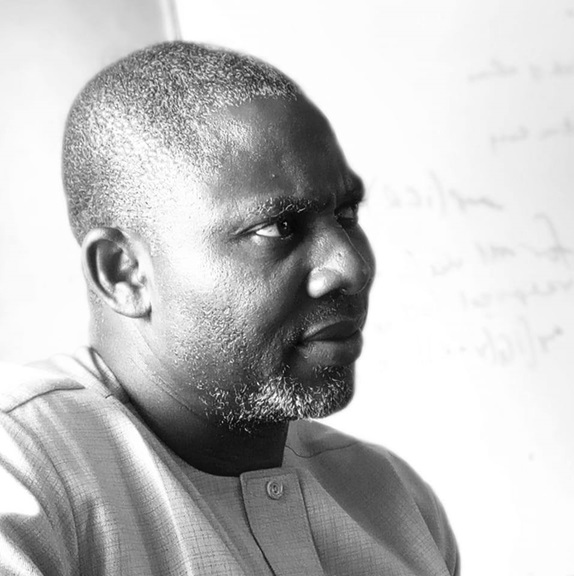
Professor Abdelghaffar Amoka of the Department of Physics at Ahmadu Bello University, Zaria, has responded strongly to what he calls a “misinformed and politically biased” opinion by Sunusi Musa, SAN, regarding the state of Nigerian academia.

In a lengthy rejoinder titled “The Impoverished Nigerian Professors and the ‘Unpopular Opinion’ of a Misinformed SAN,” Prof. Amoka criticised Musa for attributing the poverty of Nigerian professors to their alleged lack of productivity and large family sizes. 

Amoka argued that the true cause lies in the systemic neglect and chronic underfunding of the Nigerian education sector, particularly university staff salaries and research funding.

He noted that academic salaries have remained stagnant since 2009, with professors now earning the equivalent of less than $400 per month, a sharp drop from over $3,000 in 2009. He described the situation as a “crime against humanity,” accusing the political class of starving intellectuals while enriching themselves.

Amoka debunked the claim that Nigerian academics are unproductive, citing the international recognition they receive and their contributions to research and student success abroad. 

He further pointed out the lack of sufficient research funding, comparing Nigeria’s meagre investments to the billions spent annually by countries like the US, UK, China, and even smaller nations such as Norway and Malaysia.

The professor further criticised the SAN for bringing personal life choices—such as marriage and family size—into a discussion about national policy failure. He emphasised that productivity in academia depends on conducive working conditions and appropriate incentives.

Amoka ended the piece by urging fellow academics to prioritise their well-being, pursue legitimate side hustles if necessary, and continue doing their best to sustain a struggling system. He warned that the continued devaluation of education poses a threat to the country’s future.

“We are starving the thinkers and feeding those who can’t think. What sort of system are we expecting to create?” he asked.

Nigerian Professor Salary: The re-ignited debate

By Prof. Abdelghaffar Amoka

A Hausa interview by a professor from ABU, lamenting academics’ poor pay, is trending and has re-ignited the debate on the salaries of Nigerian academics on social media. The discussion is championed by my brothers from the region, which is considered by the country as educationally less developed. I didn’t know what to say that I hadn’t said before. It will be like repeating myself.

Professors in Nigeria are now blamed for their financial status. They are expected to stop lamenting and get a side hustle to augment their salaries. A professor whose salary was ₦450,000 in 2009, when the exchange rate was ₦140 per dollar, is blamed for his economic state in 2025, with a salary of about ₦500,000, when the exchange rate is ₦1,600 per dollar. 

Some people are referring to professors abroad as if some of us have not had the experience. A number of us have studied and worked there, and we know how their university system works. I got two grants in the UK during my PhD. They said a professor earns more abroad from their research grants. The primary beneficiaries of research grants are postgraduate students and postdoctoral researchers. Professors are not paid from their grants.

Grants have a budget, and personnel costs are not included. They are paid to the university account and managed by the university. The university pays professors to encourage them to think critically and attract grants for the institution. A university lecturer around the world is paid enough to give him the comfort to think and do his job as it should. Any extra cash from stuff like consultancy is for additional comfort. 

The Executive Secretary of TETfund, Sunny Echono, in July 2024, said: “On salary to lecturer, I feel ashamed because I have the privilege to represent Nigeria at a global conference where former presidents and prime ministers were in attendance. I was asked if it was true that a professor, after 20 years, still earns less than $1,000 a month. I couldn’t answer that question; I only said that we are doing something about it.” I think we should be proud of the salaries of our professors and boldly tell anyone around the world their actual salaries. 

Before you, in your narrow-minded state, blame professors for their financial status, ask yourself why the Nigerian government will pay the same professors about two thousand dollars per month under the Technical Aid Corp (TAC) to go help teach in universities in some African countries? The same professors who are given approximately $ 2,000 to teach in Ugandan universities under TAC are receiving an equivalent of $ 320 per month at home.

You know what? Everyone is right—those for and against. The argument won’t change anything, and it will likely end within a day or two. The new reality is that younger academics have learned from the impact of senior colleagues’ commitment to the academic job. The commitment you considered as “our stupidity”. The younger academics are planning for themselves.

A colleague, after the 8-month strike and the withholding of our 8-month salaries, said the university does not deserve his full-time commitment. That he is going to give the university the time it deserves and use a large chunk of his time for a side hustle to pay his bills, I thought, was unreasonable. I later realised I was the unreasonable one. And he is not doing badly from the side hustle. 

Around this time last year, I was passing and met some of my students in the class without the lecturer. In my usual chat with the students, I asked whose lecture it was. I decided to call a younger colleague, as students were waiting for his class in case he forgot. He picked up the call and said he had forgotten he had a class, but that he was on his farm planting, and that he would see them next week. He was at the farm during work hours and forgot he had a class because the farming hustle is paying the bills. He is actually doing quite well with his side hustle. 

Farming during work hours becomes more important. I reflected on that for several days. There are several examples of young academics who won’t be seen on campus, except when they have a lecture or are on campus for something they consider essential. 

People sometimes question why a whole professor would accept being an adviser or assistant to a political office holder. A trip with the political officeholder boss could get him his one-year gross salary as a professor. Since it’s his fault that he is poor, why shouldn’t he accept such an offer or even lobby for it?

As a consequence of defeat, we have accepted one awkward thing as a part of us. Because we can’t do anything about our tormentors and needed someone to blame, we blamed ourselves, the victims. It’s our fault that we’ve been on the same salary for 16 years, from 2009 to date. It’s our fault that successive governments refused to renegotiate the 2009 agreed salary with ASUU. It is our fault that the government of President Tinubu has kept Yayale Ahmed’s 2009 Renegotiation Committee report since November 2024 without speaking about it. They are still studying it, possibly till May 2027 or beyond. 

Universities are designed to attract the best minds from around the world. Universities, including those in Africa, such as those in Ethiopia, Uganda, Kenya, and Chad, are attracting the best brains. At the same time, we justify the poor pay for academics and still blame them for their inability to compete with their colleagues in the UK, the US, and Iran. We’ll continue to breed our best brains for these countries. 

Meanwhile, as we take all the blame for our economic status as professors, younger academics are devising ways to survive. They don’t want to he like their senior colleagues who bury themselves in their books thinking they are serving the country. They are given more time for their side hustle to pay the bills, and leave the students hanging. They’ll attend to them when we can. The system will bear the consequences of neglect, and our survival plans will be affected.

From a reality check, you can’t think when you are hungry. So, what are your expectations when your thinkers are hungry and you are unfortunately justifying it? We may be on a journey of illusion if you expect a man to look for food to eat and think for you. The future will tell who gains and who loses.

Best wishes to all of us! 

©Amoka

Malam Garba Umar Saleh: A teacher with a difference 

By Sani Surajo Abubakar

“Gurubi”, as he was fondly called by his colleagues, the teaching and non-teaching staff of Army Day Secondary School, Bukavu Barracks, Kano, remains a name that resonates in the ears of many who studied in the school in the late 80s, 90s, and years after.

Malam Garba Umar Saleh embodied the spirit of a true teacher. His commitment to education and passion for nurturing young minds were evident in every aspect of his work. 

It is with profound sadness that we reflect on the life and legacy of the late Malam Garba Umar Saleh, a dedicated teacher at Army Day Secondary School and other secondary schools. His passing left an indelible void in the lives of those who knew him, particularly his students, colleagues, and the broader community.

 He approached his role with diligence, patience, and kindness, making him a beloved figure in schools. His dedication to his students went beyond the classroom, as he often took extra time to mentor and guide them, both academically and morally.

The impact of Malam Garba Umar Saleh on his students cannot be overstated. He had a unique ability to make complex concepts accessible and engaging, inspiring a love for learning in countless young minds. His unwavering support and encouragement helped many students overcome challenges and achieve their full potential. His legacy lives on through the countless lives he touched, and his influence will continue to shape the futures of those he taught.

His colleagues at the Army Day Secondary School and other Schools also held him in high regard. His collaborative spirit, professionalism, and positive attitude made him a valued member of the school community. He made significant contributions to the school’s mission, consistently striving for excellence and innovation in education.

While Malam Garba Umar Saleh is no longer with us, his legacy endures. The lessons he imparted, the values he instilled, and the love he showed to his students and colleagues will forever be remembered. His life serves as a powerful reminder of the profound impact one individual can have on the lives of others.

As we remember Malam Garba Umar Saleh, we honour his memory by upholding the values he cherished: dedication, compassion, and a commitment to making a difference in the lives of others. His story is a testament to the enduring power of education and the profound impact one teacher can have.

This tribute serves as a heartfelt acknowledgement of the remarkable life and contributions of Malam Garba Umar Saleh. May it inspire others to follow in his footsteps, dedicating themselves to the noble cause of education and service to humanity. 

A 1982 NCE graduate of the Advanced Teachers College Gumel, the deceased was employed as Master III by the then Kano State Ministry of Education and posted to Government Girls College (GGC) Dala as his first port of service.

In his quest for knowledge, the late Garba Umar Saleh enrolled in a degree programme at Bayero University Kano and graduated with a Bachelor of Arts (BA) in Education/English in 1989.

He spent most of his teaching years, spanning more than three decades, at GGC Dala, Army Day Secondary School (Boys), Bukavu Barracks, and Muhammad Vice Adamu Government Secondary School Kuka (MVAGSS), serving as a classroom teacher, Senior Master, and Vice Principal, respectively.

Towards the tail end of his service period, he was redeployed to the headquarters of the Kano State Senior Secondary Schools Management Board (KSSSSMB) as Deputy Director, Training and Recruitment, a position he held until his last breath, some weeks before his exit from the service. 

  May Almighty Allah, the most Exalted, grant his gentle and innocent soul rest in peace, and Jannatul Fiirdausi be his final abode, the fortitude and solace for all of us to bear the irreplaceable loss. May his legacy continue to inspire future generations? 

Sani was a student at Army Day Secondary School, Bukavu Barracks, Kano, and is currently on the Staff of the Kano State Ministry of Information and Internal Affairs.

Gov. Yusuf appoints Emir of Lafia as chancellor of Northwest University, Kano

By Hadiza Abdulkadir

Kano State Governor, Alhaji Abba Kabir Yusuf, has appointed the Emir of Lafia, Justice (Rtd) Sidi Muhammad Bage, as the new Chancellor of Northwest University, Kano.

The announcement was made in a statement issued by the governor’s spokesperson, Sunusi Bature Dawakin Tofa, on Friday.

The appointment has been widely praised as a strategic move to bridge traditional leadership and modern academia. Emir Bage, a former Supreme Court Justice, brings decades of legal and administrative experience to the role.

Born in 1956 in Lafia, Nasarawa State, Bage earned his law degree from Ahmadu Bello University and was called to the Nigerian Bar in 1981. He served across Nigeria’s judiciary, culminating in his appointment to the Supreme Court in 2017 before ascending the throne as Emir of Lafia in 2019.

Governor Yusuf noted that the selection of such a distinguished figure aligns with the university’s values of excellence and integrity. “His track record of justice and community leadership will inspire our academic community and support the university’s growth,” he said.

The appointment letter was officially presented to the Emir by the University Council Chairman, Prof. Hafiz Abubakar, alongside Vice Chancellor Prof. Mukhtar Atiku Kurawa.

Prof. Haruna Musa emerges most popular candidate in BUK vice-chancellor selection process

By Muhammad Sulaiman

Professor Haruna Musa, Deputy Vice-Chancellor (Academics) at Bayero University, Kano (BUK), has emerged as the most widely accepted candidate in the university’s Vice-Chancellor selection process, following a keenly observed congregation vote held on Tuesday, July 1, 2025.

Prof. Musa, a Professor of Polymer Chemistry, secured a commanding 853 votes, far ahead of his four contenders in a process described as transparent and credible by participants and observers.

The vote, part of BUK’s Vice-Chancellor appointment procedure, serves as an indicator of community acceptability, contributing 20% to the final selection by the Governing Council.

Other contenders included Professors Mahmoud Umar Sani (367 votes), Sani Muhammad Gumel (364 votes), Adamu Idris Tanko (161 votes), and Bashir Fagge (18 votes).

Presiding over the session, Vice-Chancellor Prof. Sagir Adamu Abbas applauded the maturity and democratic spirit shown during the process, describing the outcome as a “collective victory” for the university.

“The result showcases our institutional commitment to transparency and unity,” he said, urging all candidates to support the eventual appointee.

Electoral Committee Chairman Prof. Muhtari Ali Hajara announced that 1,784 staff members were accredited to vote, with 17 votes deemed invalid and four unaccounted for.

Commending the process, Prof. Gumel, one of the candidates, stated: “The election was fair and credible. The result shows the community’s direction.”

Former Minister of Education, Prof. Rukayyatu Ahmed Rufa’i, and ex-VC of NOUN, Prof. Abdalla Uba Adamu, also praised the outgoing VC and the electoral process, urging continued cooperation for the university’s development.

The final appointment now rests with BUK’s Governing Council.

FUD to hold combined convocation for 4,227 graduates

By Ibrahim Yunusa

Federal University Dutse (FUD) is set to convoke a total of 4,227 students in a combined convocation ceremony for the 2022/2023 and 2023/2024 academic sessions.

This was announced by the Vice Chancellor of the university, Professor Abdulkarim Sabo Muhammad, during a pre-convocation press briefing, where he outlined the preparations and schedules for the event.

The convocation ceremony is scheduled to take place on Saturday, July 5th, 2025, by 9:30 am.

A convocation lecture will precede the ceremony on Friday, July 4th, 2025, at 4:00 pm at the Nuhu Muhammad Sunusi Auditorium.

The lecture, titled “Harnessing Research and Innovation for Sustainable Development in Nigeria: The Role of Higher Education Institutions,” will be delivered by Guest Professor Jibrilla Dahiru Amin, the pioneer VC of the university.

According to the VC, a total of 99 and 110 students graduated with First Class honors in the 2022/2023 and 2023/2024 academic sessions, respectively.

Additionally, 544 and 727 students graduated with Second Class Upper Division in the respective sessions, while 879 and 115 students graduated with Second Class Lower Division.

Furthermore, 321 and 283 students graduated with Third Class honors in the 2022/2023 and 2023/2024 academic sessions, respectively.

The VC highlighted some of the remarkable achievements of his tenure, including the university’s attractiveness to prospective students, with around 20,000 applicants seeking admission annually.

Other notable achievements include improvements in student and staff welfare, physical infrastructure development, introduction of new faculties and departments, enhanced security, research grant wins, and digital transformation, among others.

BUK don, Prof Hassana, presents Hausa translation of The Ideal Muslimah

By Uzair Adam

A professor of Special Education at Bayero University, Kano (BUK), Hassana Darma, has unveiled her Hausa translation of the globally acclaimed Islamic book The Ideal Muslimah, originally written in Arabic by Dr. Muhammad Ali Al-Hashimi and later translated into English by Nasiruddin Al-Khattab.

The book, now titled Musulma Ta Gari in Hausa, was presented during the monthly seminar organised by the International Institute of Islamic Thought (IIIT) at Bayero University, Kano, on Sunday.

Speaking at the event, Professor Darma narrated how the translation journey began with a single chapter she found in a folder of Islamic texts shared by a friend.

“I came across a chapter titled “The Muslim Woman and Her Husband”. I felt it was something that could benefit married women if translated into Hausa,” she said.

She later discovered that the chapter was part of a larger book while visiting a relative. “That’s when it dawned on me that I could translate the entire book, even if it would take years,” she added.

The project, which spanned nearly 15 years, was completed with guidance and review from Professor Ahmed Murtala of the Department of Islamic Studies and Sharia.

“It wasn’t an academic assignment; I did it during holidays, strikes, and personal time,” Darma explained.

Highlighting the book’s relevance, she noted that the content guides Muslim women through various aspects of life, ranging from their relationship with Allah to their interactions with parents, spouses, children, and the broader society.

“It’s a recipe for life. If you follow the content like you follow a cooking recipe, it can cleanse and guide your soul,” she noted.

Professor Darma also encouraged other women to take up translation projects, especially in areas that can benefit society.

“Many people don’t have access to knowledge because of language barriers. If we who understand more than one language translate, we will bridge that gap,” she said.

She further called on media houses to consider disseminating such works through radio, citing that “our people are better listeners than readers.”

Also speaking at the event, Dr. Furuk Umar Usman, husband to Professor Hassana Darma, commended her dedication to the translation project, stating that she was often seen working tirelessly at her computer.

He expressed gratitude to all those who supported the successful completion of the book, including their children, her sisters, and other family members.

Dr. Furuk acknowledged that the task was rigorous and time-consuming, but noted that the work received commendations from several respected individuals.

He narrated how Professor Ahmad Murtala provided support during the translation process and how the book was well received by the Vice Chancellor of Bayero University, Professor Sagir Adamu Abbas.

He added that the book was also presented to Professor Sani Umar Rijiyar Lemo, who equally praised the quality of the translation.

Also speaking, Professor Aishatu Abdu Isma’il of the Department of Political Science, BUK, and a director at IIIT, described the book as “a powerful guide” that helps Muslim women understand their purpose in life and their roles in building moral societies.

“She has not missed the message of the original Arabic or English versions. The book reminds women of who they are, who they worship, and how they relate with others,” she said.

She added that the values in the book address pressing societal issues such as gender-based violence, poor parenting, and moral decay.

“Chapter 10 alone talks about a woman’s relationship with her community — which is critical today,” she stressed.

Also commenting, Dr. Saida Ahmad Dukawa, the National Coordinator of the International Institute of Islamic Thought (IIIT), noted that the event was organised as part of the institute’s monthly intellectual engagement series.

He explained that the gathering was aimed at reviewing the Hausa translation of The Ideal Muslimah, titled Musulma Ta Gari, rendered by Professor Hassana Darma.

According to him, IIIT regularly hosts scholarly presentations to foster intellectual discourse and knowledge sharing.

Dr. Dukawa emphasised the significant but often undervalued contributions of women to societal development, stating that the influence of women—especially mothers—plays a foundational role in shaping individuals long before formal education begins.

“Almost every renowned individual begins life with the tarbiyya, or moral training, provided by their mother.

“Women are the first educators, shaping the values and manners of future generations,” he said, stressing that behind every successful man, there is often a strong and nurturing woman.

The official launch of Musulma Ta Gari is scheduled for July 26 at the Convocation Arena of Bayero University, Kano.

FG unveils committee to boost education infrastructure via PPP

By Hadiza Abdulkadir

In a significant move to overhaul Nigeria’s educational infrastructure, the Federal Government has inaugurated a high-level committee to develop comprehensive Public-Private Partnership (PPP) guidelines aimed at attracting private sector investment into the sector.

The initiative, led by the Honourable Minister of Education, Dr. Maruf Olatunji Alausa CON, seeks to address persistent infrastructural and capacity deficits, particularly in secondary and tertiary institutions.

Speaking at the committee’s inauguration, Dr. Alausa emphasized the need for innovation and collaboration in education financing. “Government cannot do it alone… We must leverage private funding to modernize and sustain our educational system,” he said, noting that while current funding efforts—such as the 2025 education budget and TETFund interventions—are commendable, they remain inadequate.

The newly inaugurated committee, chaired by the Honourable Minister of State for Education (represented by the Director of Special Duties), includes key directors from the ministry, and representatives from the Infrastructure Concession Regulatory Commission (ICRC), Ministry of Housing, and other stakeholders.

Its mandate includes formulating PPP benchmarks, reviewing legal frameworks, clarifying stakeholder roles, establishing performance indicators, designing oversight mechanisms, and recommending penalties for non-compliance. The committee has been given three months to submit its report.

“If we do this right, this document can be a model for other ministries,” Dr. Alausa noted.

Other speakers at the event, including ministry officials and stakeholders, expressed strong support for the initiative and its potential to transform Nigeria’s education landscape.

Why Nigeria’s education system is failing and what needs to change

By Muhammad Umar Shehu

The Nigerian educational system faces a crisis that can no longer be ignored. After years of neglect and outdated policies, the system has effectively collapsed. The curriculum in many public schools and universities is stuck in the past, failing to keep up with global developments and the skills needed in today’s workforce. Students often learn content that no longer applies to current realities, leaving them ill-prepared for the job market or further study.

One of the key problems is the failure to reform the curriculum in a meaningful way. While other countries continuously update their education content to match technological advancements and changing economic needs, Nigeria remains stuck with decades-old textbooks and syllabi. This disconnect creates a significant gap between what students learn and what employers expect, ultimately undermining the country’s ability to compete internationally.

The challenges extend beyond outdated content. Many schools are overcrowded, forcing students into cramped classrooms that are not conducive to learning. Basic facilities such as libraries, laboratories, and lecture halls are either dilapidated or entirely missing in numerous institutions. The lack of adequate infrastructure makes it difficult for students to engage in practical and experimental learning, which is critical to developing critical thinking and innovation.

Equally troubling is the condition of the teaching workforce. Many educators in the system are poorly motivated, largely because of low pay, irregular salaries, and poor working conditions. The absence of incentives and professional development opportunities means many teachers do not perform to their full potential. This creates a cycle where students receive substandard teaching, further reducing the quality of education and widening the skills gap.

Another critical issue is research funding, which is almost non-existent in Nigeria’s public education sector. Research is the backbone of academic and scientific progress, but here, lecturers often have to fund their projects or give up entirely. Without adequate grants, modern labs, or support for collaboration, innovation stalls. This lack of investment in research not only affects universities but also denies the country breakthroughs that could address local and global challenges.

The federal government’s role in this decline cannot be overstated. Despite education being constitutionally a priority, it remains underfunded and undervalued. While political budgets and other sectors receive increased allocations, education’s share continues to shrink. The failure to treat education as a strategic investment has led to a cycle of decay where graduates come out unprepared and schools continue to crumble.

In conclusion, reversing the collapse of Nigeria’s education system requires urgent and sustained commitment. It demands updated curricula, better infrastructure, improved teacher welfare, and significantly increased funding for research. Until these steps are taken seriously, Nigeria risks falling further behind as its youth are denied the quality education they need to thrive in a fast-changing world. The country’s future depends on a system that values knowledge, innovation, and real learning, not just ticking boxes on paper.

Muhammad Umar Shehu wrote from Gombe and can be reached via umarmuhammadshehu2@gmail.com.