Economy

From us, by us, for us: How homegrown Waqf initiatives can shift our gaze from international donors

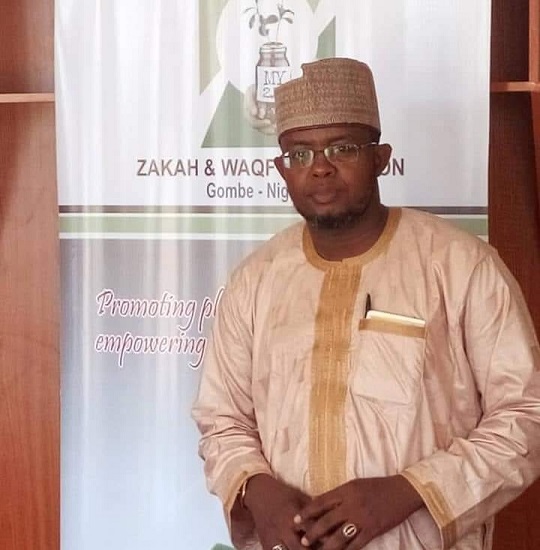
By Abdullahi Abubakar Lamido, PhD

It was a warm afternoon in my office at the Zakah and Waqf Foundation in Gombe, and I had cleared my schedule for what was described as a “very important meeting.” A group of nine young professionals—doctors, nurses, and medical administrators—filed in with purposeful expressions. These were respected Muslim health workers in our community, competent and resourceful in their own rights, leading their Muslim body. 

They sat down, exchanged pleasantries, and after a few minutes, one of them cleared his throat and spoke. “We were hoping you could help us reach Qatar Charity. We want to build a mosque in our hospital.”

I paused. My mind raced not with criticism but with confusion. These were not poor villagers. These were professionals, all salaried, some likely earning above average. I asked gently, “How much will the mosque cost?”

“About ten million naira.”

“And how many Muslim staff do you have?”

“Roughly 500,” they responded.

I picked up a pen and scribbled something. “That’s twenty thousand naira each,” I said. “Divided over four months, that’s 5,000 naira per month.”

There was a short silence. “You don’t need Qatar Charity,” I told them. “You need yourselves; you need Gombe Charity.”

From my limited understanding, I explained that most international charities, like Qatar Charity, raise funds from within their own people first. They identify a problem in a country, develop a proposal, return to their citizens and say: “Donate to build a mosque in Nigeria.” If they can do that for us, why can’t we do it for ourselves? I then told them to put my name as the first donor of the twenty thousand naira to kickstart the project. 

That brief meeting offered a glimpse into a deeper issue—our chronic psychological dependence on external aid, even when we can act. The problem isn’t always material poverty; often, it’s a lack of belief in our collective strength—a poverty of the mind and will.

The Turkey Phenomenon: A Lesson Misunderstood

Take, for example, the popular trend in some Northern Nigerian states where applications pour into Turkish and other organisations for Qurbani (Udhiya) distributions. Turkish charities, may Allah reward them, buy cows and distribute meat during Eid.

But here’s a crucial question: Is this a model to emulate or one to reconsider? If every year, our people look outward to receive—and never inward to learn how to organise, fund, and distribute—we risk cultivating a culture of constant reception without reciprocity.

Islam is not a religion of passivity. It teaches us to act before asking, to solve before seeking, and to build with what is already in our hands. Prophet Muhammad (peace be upon him) taught us that the upper hand is better than the lower one—the hand that gives is superior to the hand that receives.

The Al-Basar Example: From Vision to Visionary Impact

Now, let’s discuss a model worth following—Al-Basar International Foundation.

Al Basar International Foundation is a non-profit international NGO. Founded in 1989 by a group of concerned professionals. Al-Basar is a shining example of what happens when people come together to solve a problem themselves. Their focus? Combating preventable blindness across the Muslim world. No dependency. No grand donor campaigns. Just strategic self-mobilisation as well as waqf and collaborative mindset. 

It works in Yemen, Bangladesh, Sudan, Nigeria, Pakistan, etc. In Nigeria, for instance, a 2019 campaign funded by King Salman Humanitarian Aid and Relief Centre in collaboration with Al Basar International Foundation saw medical volunteers from Saudi Arabia meet 8,000 eye patients and perform 800 eye surgeries to remove cataract and glaucoma in Ibadan, Nigeria, as well as in Lafia in Nasarawa State. 

The foundation manages the Makkah Eye Specialist Hospital in Kano state, Nigeria, where 4,000 free eye surgeries were carried out in 2021. The hospital treats eye conditions, including diabetic retinopathy. In 2022, Al Basar International Foundation, in collaboration with the King Salman Relief Center, sponsored 400 free cataract surgeries for residents of Kano, which took place at Makkah Eye Specialist Hospital. 

Over the years, Al Basar has conducted over 2,000 outreach programs worldwide, performed over 700,000 cataract surgeries, and dispensed nearly 2 million glasses. With 28 hospitals across six countries, the foundation has recorded 26 million outpatient visits. It also invests in education by establishing colleges to train eye care professionals, impacting Africa and Asia. Their school screening program has reached over 1 million children, providing immediate interventions and ensuring a comprehensive approach to their eye health.

Now ask yourself: is Al-Basar a government-funded operation? No. Did it start with foreign aid? No. It was “from them, by them, for them.” And now it is for us, too—because they nurtured it to the point where it could grow beyond them.

We should not only admire such models. We should replicate them.

Historical Echoes: Islamic Proofs of Self-Driven Solutions

Uthman ibn Affan (RA) and the Well of Rumah

When water scarcity plagued Medina, and a private owner monopolised a well, the Prophet (SAW) called for someone to purchase it for the Muslims. Uthman (RA) stepped up, bought the well, and made it a public waqf. He didn’t write to Yemen. He didn’t petition the Romans. He simply used what Allah had given him to solve a problem for Allah’s sake.

So, What Can We Do? A Homegrown Waqf Blueprint

If we genuinely want to stop relying on donors and start building resilient communities, here are practical steps:

Think Within, Act Within: Begin every solution by asking what the community already has—not what it lacks. Do you have professionals? Land? Skills? Social networks? Then, start from there.

Group Economic Self-Waqfing: Encourage professional groups (doctors, teachers, engineers, traders, lawyers) to dedicate a portion of monthly income to a fund. Even a modest 5,000 naira monthly from 100 people can generate sustainable capital. At Zakah and Waqf Foundation, we enjoy that from some professionals, and it works. 

Community Challenge Waqf: Identify a local challenge—maternal health, education for orphans, access to clean water—and collectively endow a waqf around it. Let the yield solve that problem perpetually.

Transparent Management Structures: Set up trustworthy waqf boards to manage resources. Trust fuels contribution. Accountability sustains it.

Celebrate Independence: Create cultural pride around self-funded projects. Showcase schools, hospitals, orphanages, and mosques built without a single foreign dime.

It is Time to Change the Script

Imagine if each LGA in Nigeria had one waqf-funded primary health centre, one vocational training centre, and one scholarship fund—all funded by local contributions from professionals, retirees, and small traders.

We would not be beggars. We would be builders.

It’s time to write a new story. One not of helplessness and application letters to foreign NGOs but of resolve, unity, and strategic giving. One of From Us, By Us, For Us—in the truest, most impactful sense.

When that story is told to future generations, they will say: There was a people who stopped waiting and started building.

Amir Lamido wrote from Gombe via lamidomabudi@gmail.com.

Tinubu: Reforms are working, Nigeria is on path to stability and growth

By Hadiza Abdulkadir

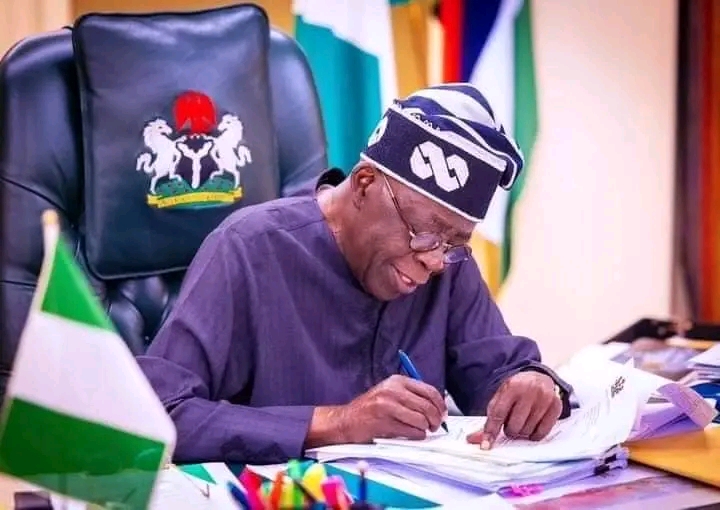
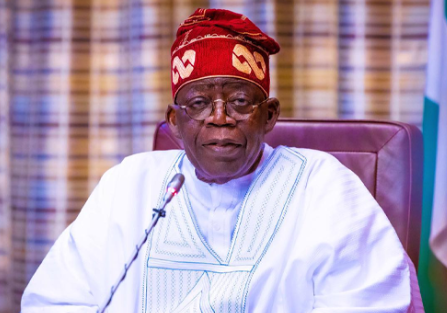
President Bola Ahmed Tinubu marked the second anniversary of his administration on Wednesday with an optimistic national address highlighting the government’s achievements and reaffirming commitment to economic reform, national security, and human capital development.

Speaking from the Aso Rock Presidential Villa, President Tinubu declared that his administration had made “undeniable progress” despite the sacrifices demanded of citizens, especially following the removal of fuel subsidies and the unification of foreign exchange rates.

“We are halfway through the journey that began 24 months ago. Today, I proudly affirm that our economic reforms are working,” he said, citing improvements such as easing inflation, increased foreign reserves, and higher state revenues.

According to the President, the federal government recorded over ₦6 trillion in revenue in Q1 2025 and successfully reduced the fiscal deficit from 5.4% of GDP in 2023 to 3.0% in 2024. Additionally, the country’s net external reserves rose sharply to over $23 billion by the end of 2024, a fivefold increase from the previous year.

In the energy sector, Tinubu noted a 400% increase in oil rig activity since 2021 and over $8 billion in new investments. “We have stabilised our economy and are now better positioned for growth and global shocks,” he added.

The President also highlighted reforms in taxation, infrastructure development, and the health sector. He announced the expansion of primary healthcare centres, the establishment of new cancer treatment centres, and a tax policy overhaul aimed at supporting low-income households and small businesses.

“Together, we are creating a system where prosperity is shared, and no one is left behind,” he said.

Tinubu celebrates economic resilience, sets sights on inclusive growth

By Muhammad Sulaiman

President Bola Ahmed Tinubu has reiterated his administration’s commitment to inclusive economic growth, declaring that the country’s economic resilience is beginning to yield tangible benefits for citizens across sectors.

Addressing the nation on the second anniversary of his government, President Tinubu described 2025 as a year of fiscal turnaround and recovery, driven by bold reforms under the Renewed Hope Agenda.

“Despite the bump in the cost of living, we have made undeniable progress,” he stated, noting improvements in inflation, food prices, and investor confidence.

A key highlight of the President’s remarks was the government’s aggressive tax reform agenda, which pushed the tax-to-GDP ratio from 10% to over 13.5% within a year. Tinubu explained that this success was made possible by simplifying tax policies and offering relief for low-income households and small businesses.

“We are eliminating the burden of multiple taxation and introducing a fairer tax system. Essential services like food, healthcare, and education will attract 0% VAT,” he announced.

President Tinubu also underscored the importance of sustainable national finances, stating that wasteful and opaque tax waivers had been abolished in favour of targeted incentives supporting high-impact sectors such as manufacturing, agriculture, and technology.

The administration is establishing an independent Tax Ombudsman to ensure accountability. The President says this move will protect small businesses and vulnerable taxpayers.

“We are creating an economy where investment is welcome, businesses can thrive, and every Nigerian can benefit from shared prosperity,” he added.

The President noted that subnational governments had also reaped the benefits of the reforms, with an increase of over ₦6 trillion in state revenues in 2024. This has enabled them to meet debt obligations and invest more in critical infrastructure.

“Our reforms are not just fiscal adjustments. They are about restoring confidence, strengthening institutions, and building a foundation for future generations,” Tinubu concluded.

Taranding vs Trending | Hausa Youth Entrepreneurship Visibility 

By Prof. Abdalla Uba Adamu

They are both young boys, although one seems slightly older. From March to May 2025, they captured the attention and interests of Hausaphone social media with their radically different approaches to digital media visibility. In the process, they provided a template or script for the future of youth engagement in public culture and demonstrated the power of agency. 

Taranding in an open cesspool (Kabiru Isma’il, Kano).

The first was Kabiru Isma’il, better known as Kabeer2pac (apparently a fan of the late American rapper 2Pac Shakur).He had 1.8m followers and 15.1m likes on his TikTok account, which prominently displays his phone number (or that of his agent) for advertising purposes. His early videos clocked in millions of views. His most famous video, in which he shakes the dust off his body and jacket, has earned 51 million views. He devised two strategies to achieve this fame. 

His first videos were posted during the 2025 Ramadhan on 19 and 20th March 2025. In the videos, he was recorded immersed in a stagnant open cesspool of household wastewater (kwatami), dunking himself in it and smearing the sediments on his face. The videographer asked for his motives, and he replied he was doing so to “tarand” (trend) because he yearns for fame (ɗaukaka). He affirms he was not a lunatic. The video had 2.6 million views. He further explained that he resorted to this because his earlier attempts at trending were unsuccessful.

On 3rd April 2025, he switched from cesspool contents smearing to getting a sack of charcoal dust dumped on his head,which earned the video 14.8 million views. By then, his fame spread because the CoalDust video he posted two days later earned him 51 million views. His videos attracted Gwanki Travels and Tours International Ltd in Kaduna, who invited him and offered him a free ticket to perform the lesser Hajj, Umrah. Beaming with happiness, Kabeer2pac declared his gratitude that he had achieved the fame he had sought and had “taranded” very well. Of course, Gwanki also trended because they were riding on his coat-tail, as it were, to advertise their services.

Reactions to Kabeer2pac’s fame and fortune were varied but predictable. Most commentators were happy for him and took umbrage at any view that condemned his behaviour as unhealthy and unbecoming. Some Muslim clerics condemned him. Others were against the money spent on his Umrah, arguing that he was young and the money should be invested in either a trade or his education. His behaviour led to copycat copying. 

Quite soon after it started trending, copycats appeared in various guises, including a cesspool girl, from dousing themselves with petrol to set fire on themselves, to having cement blocks banged on their head, to immersing themselves in a stagnant pool of waste water. In one case, a young boy entered a soak away— all in their desire to “tarand” and possibly get a free Umrah ticket.

In an RFI video interview posted on 16th April 2025, Kabeer 2pac admitted that the possibility of his social media celebrity status is likely to be short-lived, as he understands that people will soon get bored with his antics and switch to something else. But for the period he was trending, he was happy with the endorsements he received and his branching out into comedies and short dancing skits in his trademark winter jacket. 

He has accurately anticipated the ephemeral nature of his antics. About two years ago, others who trended and quickly faded away were even more famous and established what I call “celebrification culture”. The first was Ale Rufa’i Bullgates, who devised his own currency, “Gangalion”. He was followed by Ale Umar Bush, whose speciality was foul-mouthing everyone around him. Each was given a social media celebrity status – private jets, fancy meals, endorsement deals by fancy local merchants. Ale Umar Bush seemed to have a Middle-Eastern “girlfriend”. People mocked their mental health and turned them into the theatre. That was probably why Kabeer2pac prefaced his first video by proclaiming that he was not mad. 

What motivates people to watch grisly events as lookie-loos, whether on screen or in physical spaces? Kabeer2pac’s audience can be called voyeuristic or spectator audiences. Odd or outlandish behaviour fascinates them because it provides novelty, entertainment, and sometimes a sense of shock or disbelief. Due to its unconventional nature, such content often triggers curiosity, amusement, or even a desire to share with others. 

Trending Young Dangote (Sadiq Usman Ahmed, Kurmin Mashi, Kaduna)

In contrast to Kabeer2pac, Sadiq was a street hawker in Kurmin Mashi, Kaduna, whom someone tagged Young Dangote. His nickname refers to the Hausa business mogul Aliko Dangote, the richest Black man in the world at the time. Anwar Textiles Ltd discovered him at a traffic stop in Kurmin Mashi, Kaduna, on 18th May 2025, when the young lad, who looks about 13 years old, was hawking car fresheners. 

Intrigued, the videographer asked how he started the business. Beaming an incredibly infectious smile (alone enough to make you buy his ware, even if you had no intention of doing so), he said he started with ₦300 with which he used to purchase cotton buds for ₦50 and sold for ₦70-₦100, before moving to products he bought for ₦350, selling at ₦500, happy with whatever profit he made. Gradually, his capital reached ₦5,000, then ₦1000, “har jari ya kai dubu hamsin cifi cif”/up to ₦50,000 neat. He said he prefers schooling to hawking, but poverty forced him into hawking. He relates this with a devastating, charming smile and enthusiasm for his current station in life, clearly with a business goal in mind. 

Touched by his resolve to improve his business, the video was posted on Anwar Textiles’ personal account and went viral. This impressed so many people (including the Pop Cola company in Kano) that they sent their widow’s mite to Anwar Textiles to improve the boy’s capital. Some asked for an account. In a very honourable way, Anwar Textiles traced the boy’s father. They recorded a video in which the father explained their happiness about the crowdsourcedfunding efforts made by Anwar Textiles. He emphasised that they were not begging for assistance as such (they were well off, but had a bad patch in life), but are grateful to those who contribute to the boy’s entrepreneurial ambitions. An account number was given. 

By 16th May 2025, Sadiq had over ₦300,000 capital and a larger basket to hold more products, which Anwar Textiles helped to purchase for him. The balance of the money was handed over to the father. He thanked Anwar Textiles for making it possible for people to know him. He displayed his new “mobile shop” and declared, “daga nan sai ƙasar waje, inshaa Allahu”/next, overseas, by God’s grace. He also stated his intention to go back to school soon. 

I find Anwar Textiles honourable. He located the boy, helped him, and supported his family. Importantly, he did not engage the boy in a gaudy marketing gimmick for his company, as done with Kabeer2pac. The boys’ marketing strategy was brilliant, as seen in a video posted a few days later in which he persuaded a motorist to buy more car fresheners than the customer actually intended to buy!

Both of these teenage boys demonstrate what personal resolve can achieve. Through social media, each person has attained something they wanted at the beginning of their lives. Kabeer2pac’s social media platform, which thrives on trends and viral content, where the unusual or unexpected can quickly gain traction through likes, shares, and comments, further amplifying its reach, worked perfectly well. He has the fame (ɗaukaka) he strives for. 

For Young Dangote, who has no social media presence (I even doubt if he has a phone, for he would probably plough the money into his business), we see what the power of crowdfunding and simple determination can do spontaneously. Comments from those who knew the family indicated that they were stable (as indeed even the father stated), but went through a bad patch. Instead of mourning their turbulent period, Sadiq dropped out of school, picked up a basket, got some money, bought car fresheners, and started hawking them at traffic stops. The rest, as they say, is a viral history. 

Social media can be a space for what Bala Muhammad (Adaidaita Sahu) at the DEEDS Book vs Screen May 2025 KHAIRUN Dialogue refers to as “digital iskanci”—or something else. Your judgment of each is, of course, personal.

The curse of government intervention: How Nigeria’s leaders use economic policies to benefit few and harm many

By Nasiru Ibrahim

In Nigeria, government policies to improve the economy often fail to serve the broader population. Instead of addressing systemic issues, these policies often become tools for political favouritism, corruption, and inefficiency, benefiting only a few. This results in greater inequality, inefficiency, and social unrest, leaving millions of Nigerians struggling.

The critical question is: Are these economic problems not necessarily created by private organisations enough to justify applying the Keynesian model in developing countries like Nigeria?

We need to examine Nigeria’s economic realities in light of Keynesian theory to answer this. While the theory suggests that government intervention can correct market failures and stimulate growth, such interventions often exacerbate the problems they aim to solve in Nigeria. By comparing Nigeria’s situation to Keynes’s assumptions, we can determine whether government intervention is more of a curse than a blessing.

Keynesian Economics and Nigeria’s Reality

Keynesian economics is based on several assumptions: income, employment, output, money supply, and investment. Let’s break down how these assumptions fare in Nigeria’s context:

Money Supply and Interest Rates: Keynes argued that an increase in the money supply reduces interest rates, which should increase investment, income, output, and employment. In theory, this should stimulate economic growth. However, in Nigeria, despite the Central Bank of Nigeria (CBN) increasing the money supply, interest rates remain high, and inflation continues to rise. This inflationary pressure discourages investment and undermines businesses, many of which struggle to survive.

Effective Demand and Unemployment: Keynes suggested that unemployment is caused by a deficiency in effective demand, which typically occurs during the downward phase of the business cycle. However, Nigeria’s unemployment crisis is not cyclical but structural, stemming from insufficient capital formation and inadequate resources. Even during periods of economic growth, unemployment remains high, revealing deeper systemic issues than those addressed by Keynes’s theory.

Investment and Marginal Efficiency of Capital (MEC): According to Keynes, investment depends on the MEC, which is determined by the expected return on investment. In Nigeria, the MEC and actual investment remain low, primarily due to instability, poor infrastructure, and weak institutions. The lack of investor confidence further hampers growth.

Saving and Consumption: Keynes viewed saving as detrimental to economic growth, as it reduces consumption, which affects income and employment. In advanced economies, excessive saving may reduce demand, but the opposite is true in Nigeria. Saving is necessary for capital formation, yet savings rates are already low. Nigerians spend more than 80% of their income on consumption, limiting capital available for productive investment.

The Role of Foreign Trade: Keynes’s model was based on a three-sector economy (households, firms, and government), while Nigeria operates a four-sector economy, with foreign trade playing a significant role. Imports and exports, especially of crude oil, heavily influence national income and economic performance. However, Nigeria’s dependence on imports and volatile oil prices highlights the vulnerability of its economic structure.

Government Intervention: A Curse or a Blessing?

Government intervention can either benefit or harm an economy. However, history suggests that government intervention has primarily been a curse in Nigeria. The country’s interventionist policies have been marred by chronic corruption, policy inconsistency, weak institutions, and political patronage, leading to inefficiency and social harm.

Several examples illustrate the disastrous impact of government policies:

The Anchor Borrowers Programme: In 2023, the CBN admitted that over 76% of the loans disbursed under the Anchor Borrowers Programme had not been repaid. The scheme, designed to support farmers, became riddled with corruption. Many recipients were political loyalists without agricultural expertise, undermining the program’s effectiveness and inflating public debt.

Misuse of Public Funds: In 2020, a leaked memo revealed that over ₦81 billion was paid out through fake contracts to party loyalists, with no actual work being done. This wasted public funds that could have been invested in schools, hospitals, or infrastructure, further deepening the nation’s economic woes.

Ghost Workers in Kogi State: Over 3,000 ghost workers linked to political patronage were discovered on Kogi State’s payroll. These fictitious workers were paid salaries meant for public service, siphoning funds away from essential government services.

Political Patronage in Government Programs: Programs like TraderMoni and SURE-P, initially aimed at alleviating poverty, were instead used to reward political supporters during election periods. In 2019, around ₦10 billion was distributed under TraderMoni, with no clear records of repayment or follow-up, reducing the program’s ability to address real economic problems.

The Power Sector Crisis: Nigeria’s power sector remains in shambles despite spending ₦2 trillion in bailout funds since 2015. Many areas receive less than 8 hours of electricity daily, forcing businesses to rely on expensive generators, which increases their operational costs and deters potential investors.

The 2019–2021 Border Closure: The government closed borders to combat smuggling and encourage local farming. However, this policy led to soaring food prices—rice, for instance, increased from ₦15,000 to over ₦27,000 per 50kg bag. The policy also harmed small traders and businesses, exposing the fragility of Nigeria’s local production capabilities.

The Mismanagement of COVID-19 Funds: During the COVID-19 pandemic, the government allocated over ₦500 billion for palliatives, but many Nigerians, especially in rural areas, saw no relief. In some cases, food items meant for distribution were found rotting in warehouses, while the funds disappeared without adequate documentation.

The Ajaokuta Steel Company: Over $8 billion (approximately ₦12 trillion) has been spent on the Ajaokuta Steel Company since the 1970s, yet the facility remains non-operational. Despite its potential to transform Nigeria’s industrial landscape, it has become a symbol of inefficiency and political exploitation.

Foreign Exchange Crisis: The mismanagement of Nigeria’s foreign exchange policy has led to multiple exchange rates, fueling corruption and economic instability. The naira now trades at over ₦1,600 to the dollar, creating further challenges for businesses and pushing more Nigerians into poverty.

NNPC Report (2022): The Nigerian government spends ₦6 trillion annually on fuel subsidies, which mainly benefit the wealthy and fuel importers. This massive amount could have been used to improve critical sectors like healthcare, education, or infrastructure. Instead, it adds to Nigeria’s debt and fuels inflation, making life harder for ordinary Nigerians and slowing economic growth.

National Social Investment Programme (2021): Programs like the N-Power initiative, which aimed to tackle unemployment, have been poorly managed. Despite billions allocated, only about 5 million people benefited by 2021, and many faced delays in receiving payments. The program failed to meet its objectives, wasting public funds and doing little to address Nigeria’s unemployment crisis.

EFCC Report (2020): Corruption remains rampant. The government loses ₦500 billion annually due to corrupt procurement deals. These misappropriated funds could have been used to improve infrastructure, healthcare, and education, yet they enrich a few, further deepening inequality.

World Health Organisation Report (2021): Despite allocating ₦100 billion annually for healthcare, only 30%  is used for healthcare services. Much of it is lost to corruption or mismanagement, leaving Nigeria’s healthcare system underfunded and unable to meet the population’s needs, which worsens the economy’s overall productivity.

Federal Ministry of Agriculture Report (2021): Over ₦50 billion was meant to support farmers, but due to corruption, most of this money never reached those who needed it. As a result, agricultural productivity remains low, food prices rise, and the country struggles with food insecurity, exacerbating inflation.

Petroleum Industry Bill (2021): Delays in implementing the Petroleum Industry Bill have cost Nigeria ₦2 trillion in potential revenue. Failing to reform the oil sector has discouraged foreign investment, leaving Nigeria more dependent on oil exports and vulnerable to fluctuating global oil prices.

PIB Implementation Report (2021): The government has repeatedly delayed reforms to the petroleum sector, costing Nigeria about ₦2 trillion in lost revenue. This delay has hurt the oil industry and discouraged foreign investment, contributing to economic instability.

The Path Forward: Making Government Intervention Effective

For government intervention to be a true blessing, it must be transparent, effective, and focused on the long-term interests of the nation. Here’s how Nigeria can reverse the curse of misguided interventions:

Tackle Corruption: Hold government officials accountable for misused funds. Ensure that contracts are transparent and traceable.

Boost Local Production: Support farmers, manufacturers, and small businesses with affordable credit, reliable power supply, and the necessary tools to succeed.

Fix the Forex Crisis: Diversify exports, improve domestic production, and establish a unified exchange rate to stabilize the currency.

Create Sustainable Jobs: Focus on creating employment in agriculture, technology, and manufacturing—sectors that offer long-term growth, not temporary handouts during election periods.

Reduce Wasteful Spending: Cut unnecessary expenditures and focus on essential sectors such as healthcare, education, and infrastructure.

Stabilize Policies: Implement long-term economic policies that provide certainty and build trust among businesses and investors.

Strengthen Institutions: Ensure that institutions like the Central Bank of Nigeria (CBN) and the Nigerian National Petroleum Corporation (NNPC) function efficiently, regardless of political changes.

Invest in Power: Improve the power sector to reduce costs for businesses and encourage investment.

Promote Value-Added Exports: Move beyond raw material exports and focus on producing finished goods that earn Nigeria more revenue on the global market.

Involve the People: Engage citizens in decision-making processes and use data-driven approaches to inform policy.


Conclusion

For Nigeria to thrive, its government must rethink its approach to intervention. Instead of using economic policies as tools of patronage, it should focus on policies that genuinely stimulate growth, reduce inequality, and improve the lives of Nigerians. Only then can government intervention become a true blessing, rather than a curse.

Ibrahim is a graduate of the Department of Economics from Bayero University, Kano, and writes from Jigawa.

Nigeria clears IMF debt, exits debtor list

By Muhammad Abubakar

Nigeria has officially cleared its outstanding debt to the International Monetary Fund (IMF), marking a significant milestone in the country’s economic recovery efforts. This development follows a series of substantial repayments totalling $1.22 billion between the fourth quarter of 2023 and the second quarter of 2024, reducing Nigeria’s IMF debt from $3.26 billion in June 2023 to $1.16 billion by June 2024.

The IMF has acknowledged Nigeria’s commitment to meeting its financial obligations, noting that the country has no overdue payments as of April 30, 2024. This achievement reflects the government’s dedication to fiscal responsibility and economic reform.

In a statement, IMF First Deputy Managing Director Gita Gopinath commended Nigeria’s efforts, stating that the country’s debt level is “moderate and not high risk,” provided that sound economic policies are maintained. She emphasised the importance of continued domestic revenue mobilisation and targeted social interventions to sustain this progress.

Nigeria’s Finance Minister, Wale Edun, highlighted the government’s initiatives to enhance social investment programmes and strengthen domestic resource mobilisation through tax reforms and digitalisation. He also noted increased crude oil production, significantly boosting national revenue.

This financial turnaround positions Nigeria to engage more robustly with international financial institutions and investors, potentially attracting increased foreign investment and fostering economic growth.

The successful clearance of IMF debt underscores Nigeria’s commitment to economic stability and sets a positive precedent for other nations facing similar challenges.

Workers’ Day Without Workers’ Wages!

By Dr. Muhammad Sulaiman Abdullahi

There are some few, effortless and simple things, which I have already assured myself that, if they are not confronted and solved squarely and completely in Nigeria, we should all continue to consider Nigeria as a joke. In other words, if the Nigerian rulers and the ruled are unable to solve these simple managerial crises, we should all forget about anything development and continue to wallow in our self deception mode. On these issues, I have assurance but I remain to be corrected. They are only four (4) simple things, among others;

1) Fixed date for the payment of salary: this doesn’t mean that, salaries should be paid on 24th, 25th… it should be paid on whichever day chose!n by the government. However, one thing must be considered, that’s FIXING a specific date for that purpose. Salary is something that must be paid, then, why this deceptive and unorganized approach? Right now that I am talking to you, many workers haven’t received their pay for April, and May is already on.

For Nigeria to even start thinking of development, workers must be truly and carefully considered. Their rights must be paid on time, because, as they say, it is not a privilege. If the government likes, let it pay it on 30th of each month, or even make every month to contain 31 days and pay it on the 31st. Let’s have a fixed date please. If not, let’s take the police for instance. A police may not know when to get his salary for risking his entire life to protect people; however, he is sure, he can be bribed by the poor through corrupt ways. How can you deny him something that he is certain about with an uncertain? This penetrates deeper into every sector.

2) Respecting time: one of the cantankerous evil that people abuse all the time. It comes to the extent that responsible people would call for a meeting and say 4pm, but deep down in their mind they know the meeting would start by 5pm. If you ask them why, they would say people would not come on time. I use to be confused on this. So in Nigeria we respect late comers more than how we respect punctual people! We give them extra time and we don’t mind those who come on time. They, their punctuality and the respect they give to time should all go to hell. Unless we change this attitude, we will never do it right.

If you want to fight with (responsible) Nigerians insist on punctuality. Many of us, including leaders fail in this respect.

When we are in Nigeria, we hardly do official things on their respective timing. But when we go elsewhere we keep to time. Therefore, it is obvious that the problem is from us and we can easily adjust if we know there is repercussions.

3) Scheduling the epileptic power supply: distribution must be scheduled and properly planned. We are not even talking about standard supply, we are talking standardizing the supply of the short one we get. The little we have must not be given at random. People are entitled to know when they should expect the little light. Let it be 10:20am-11:20am on Wednesdays? Saturdays and Sundays nights? Two hours every day? When? All these must be planned and relayed to the payers if we are not jokers! This electric power people switch on and off at their will and we pay for the rubbish.

4) The National Carrier: this is bigger than us due to corruption. We should have a National career at least for our internal development. There are so many countries around the world especially in Africa which Nigeria and Nigerians underrate and undervalue, however, they have their Sudan, Ethiopian, Mali, Malawi, airlines, but the so-called giant of looting rely on ants for its air transport survival. This is a mischief of the highest order.

5) The over dependence and over reliance on dollar. Mark what I say, overdependence! Nigeria can use dollar. This is one of the obvious weaknesses which many people have agreed to live with, especially the Nigerians. However, the overdependence is alarming! Almost every individual in Nigeria, big or small, knows about dollar. Nigeria should learn to uplift its currency and leave dollar alone. Even ordinary people now know how to hoard dollar at the expense of the economic development of the nation. The bigger you are the more detached you are from using Nigerian currency. Kobo, 1 Naira coin have all gone into extinction physically but they are still there in our calculations. Now Tinubu’s government has made 5, 10 and 20 naira notes valueless and meaningless. They look so ugly to be touched by a clean hand.

There are so many other simple things which you can help to count. In other countries they are not even remembered because they are subconsciously arranged for over hundred years. But in Nigeria, we are still battling with something which can be corrected in two months. In Nigeria we face price hikes, lack of infrastructures, no medicines, no qualitative education, no good roads and no nothing….. You can continue counting our lacks, they are so many. However, the above mentioned five things are very simple, they can be corrected with a simple verbal order, without putting much money and effort. May Nigeria be great soon!

Muhammad Kano
May day 2017

NB: This was written in 2017, with little correction now but nothing much has changed.

Tribute to Prof. Khurshīd Aḥmad (1932–2025): A pioneer of contemporary Islamic economics and finance

Innā li-Llāhi wa-innā ilayhi rājiʿūn.

The passing of Prof. Khurshīd Aḥmad marks the end of an era in the intellectual development of contemporary Islamic thought, particularly in the fields of al-Iqtiṣād al-Islāmī (Islamic economics) and al-Mālīyyah al-Islāmiyyah (Islamic finance). 

A polymath, visionary, and tireless reformer, Prof. Khurshīd Aḥmad was one of the most distinguished Muslim thinkers of the 20th and 21st centuries. His scholarship, activism, and public service bridged the worlds of theory and practice, faith and governance, tradition and modernity.

Born in Delhi in 1932 and later migrating to Pakistan following the partition, he pursued higher education in economics and law. He eventually earned a Master’s in Islamic Studies and a PhD in Economics from the University of Leicester, United Kingdom. He was not merely an academic in the conventional sense; he was an intellectual activist whose writings and public engagements profoundly shaped the global discourse on Islam and economic justice.

His Legacy in Islamic Finance

Among his many contributions, Prof. Khurshī Aḥmad’s most outstanding intellectual work in the field of Islamic finance is arguably his foundational role in articulating and systematising the theoretical framework of an Islamic economic order, particularly through his seminal work: Islam: Its Meaning and Message (edited by Khurshīd Aḥmad, first published 1976).

This edited volume contains his essay  “The Islamic Way of Life”, which not only presents the ethical foundations of Islam but also outlines the spiritual, social, and economic dimensions of Islamic governance.

More specifically related to economics is his earlier and pioneering treatise: Islamic Economic System: A Socio-Economic and Political Analysis (1970). This work laid down the theoretical underpinnings of al-Niẓām al-Iqtiṣādī al-Islāmī and served as a cornerstone for the subsequent emergence of Islamic banking and financial institutions.

In Islamic Economic System, Prof. Khurshīd Aḥmad delineates a clear moral and functional distinction between the capitalist, socialist, and Islamic paradigms, advocating a system well entrenched in tawḥīd, ʿadl, and mashwarah.

He was also instrumental in the formation of the International Institute of Islamic Economics (IIIE) at the International Islamic University, Islamabad. He advised several governments and Islamic financial institutions in conceptualising and implementing Sharīʿah-compliant economic policies. His influence continues to shape policies in countries like Pakistan, Malaysia, and Sudan, and in global institutions such as the Islamic Development Bank (IsDB).

Prof. Khurshī Aḥmad’s intellectual legacy transcends geographical and disciplinary boundaries. He championed a vision of Islamic economics and finance not merely as an alternative system but as a holistic worldview embedded in divine guidance and aimed at achieving justice, equity, and human dignity.

May Allāh (Subḥānahu wa Taʿālā) forgive his shortcomings, reward him with Jannah al-Firdaws, and accept his works as ṣadaqah jāriyah. His writings will continue enlightening scholars, guiding policymakers, and inspiring future generations.

Dr. Oyekolade Sodiq OYESANYA wrote from the Department of Religious Studies, Tai Solarin University of Education, Ijagun, Ogun State, Nigeria.

What Nigeria can learn from global best practices in fiscal transparency and public integrity

By Muhammad Ahmad Iliyasu

Nigeria’s governance and fiscal challenges are undermined by persistent corruption, inefficiencies in public finance, and a lack of transparency, all of which have stymied economic progress, among other issues. According to the 2024 Mo Ibrahim Index on African Governance, Nigeria ranked 33rd out of 53 African nations with a score of 45.7 out of 100, reflecting a decline of 1.4 in its governance score between 2014 and 2023. 

The ranking (above) is further emphasized by low scores across critical categories such as Security & Rule of Law (39.7), Participation, Rights & Inclusion (47.9), Foundations for Economic Opportunity (48.6), and Human Development (46.4). While these challenges are substantial, examples worldwide illustrate the transformative potential of fiscal transparency and public integrity when supported by robust institutions and data-driven strategies. Nigeria can identify actionable solutions to address its governance deficits by examining how other countries have succeeded in these areas.

One of the most striking examples of fiscal transparency comes from Estonia, which has emerged as a global leader in e-government. Estonia has digitized its public financial management systems and introduced blockchain technology to monitor public procurement and spending. According to the World Bank, these innovations have resulted in a 30% increase in administrative efficiency and a 25% decrease in opportunities for corruption. 

In comparison, Nigeria’s procurement processes remain largely opaque, frequently marred by corruption scandals involving inflated contracts and the misappropriation of public funds. By 2023, procurement-related corruption cost Nigeria an estimated 30% of its annual budget. Estonia’s success showcases that technology when applied systematically, can be a game-changer in ensuring fiscal accountability.

Participatory budgeting, which originated in Porto Alegre, Brazil, is another area from which Nigeria could draw valuable lessons. By directly involving citizens in decisions regarding local government budgets, Porto Alegre has boosted investment in vital services such as healthcare and education by 20%, specifically targeting underserved communities. This participatory approach has not only enhanced public service delivery but also built trust in government institutions. 

In Nigeria, public participation in budgeting remains minimal, with the process often limited to elite stakeholders. A 2021 report by BudgIT revealed that over 70% of Nigerians feel disconnected from how public funds are allocated. A more citizen-centric budgeting process would bridge this gap, fostering trust and ensuring that budgetary decisions reflect public priorities.

Anti-corruption frameworks in countries such as Singapore and Botswana highlight the significance of institutional independence and efficiency. Singapore’s Corrupt Practices Investigation Bureau (CPIB), established in 1952, functions independently from other government agencies and has played a crucial role in reducing corruption to negligible levels. This success is evident in Singapore’s top-tier ranking on Transparency International’s Corruption Perceptions Index (CPI), where it achieved a score of 85 out of 100 in 2023. In contrast, Nigeria scored 24 out of 100, ranking 150th among 180 countries. The difference stems not only from institutional strength but also from the enforcement of laws. While Nigeria’s Economic and Financial Crimes Commission (EFCC) has made strides, its efforts are frequently compromised by political interference, inadequate resources, and inconsistent prosecution of high-profile cases.

Fiscal discipline is another area where Nigeria lags behind global standards. Sweden and Germany, for instance, have adopted fiscal rules that ensure economic stability. Sweden’s balanced budget rule requires government expenditures not to exceed revenues over an economic cycle, while Germany’s “debt brake” caps structural deficits at 0.35% of GDP. These policies have allowed both nations to maintain sustainable debt levels—38% and 60% of GDP, respectively, as of 2022. In contrast, Nigeria’s public debt has risen sharply, reaching 40% of GDP in 2023, with debt servicing consuming over 80% of government revenues. Without strict fiscal rules, Nigeria risks entering a debt trap that could hinder long-term economic growth.

Open data initiatives also illustrate the potential for transparency. The United Kingdom’s Open Data Portal provides public access to over 40,000 datasets on government operations, enabling citizens and civil society to monitor public spending effectively. This transparency has contributed to a 15% increase in public trust in government institutions, as reported in a 2020 World Bank study. Meanwhile, Nigeria’s efforts at transparency, such as the Nigeria Open Contracting Portal (NOCOPO), have yet to achieve comparable results. A lack of comprehensive data and limited public awareness have restricted its impact, with Transparency International noting that only 10% of procurement data is consistently published.

In this context, the Center for Fiscal Transparency and Public Integrity (CeFTIP) plays a crucial role in Nigeria’s quest for better governance. Through its annual Transparency and Integrity Index, CeFTIP evaluates government ministries, departments, and agencies (MDAs) on their adherence to standards of transparency and accountability. Its reports reveal systemic gaps in compliance with fiscal transparency norms and provide recommendations to bridge these gaps. Additionally, CeFTIP organizes sensitization campaigns to raise awareness about the importance of fiscal openness, while its capacity-building programs train public officials in best practices for financial management and anti-corruption measures. These efforts are vital in establishing the foundational infrastructure for a culture of accountability in Nigeria.

Whistleblower protection is another area where Nigeria falls short. In New Zealand and Canada, robust legal frameworks safeguard whistleblowers from retaliation, resulting in a significant increase in reported cases of corruption and misconduct. According to the International Whistleblower Protection Network, countries with effective protections detect 30% more corruption cases. In Nigeria, the whistleblower policy introduced in 2016 initially led to the recovery of over $500 million but has since stagnated due to weak legal protections and a lack of institutional support.

South Africa offers valuable lessons in civil society collaboration. Organizations such as the Public Service Accountability Monitor (PSAM) have successfully partnered with government entities to track public spending, resulting in a 25% improvement in service delivery outcomes, according to the World Bank. In Nigeria, civil society organizations like CeFTIP, BudgIT, and Connected Development have made strides in promoting accountability but often face resistance from government agencies. Strengthening these partnerships could amplify their impact and ensure more transparent governance.

Recommendations

For Nigeria to replicate these successes, it must prioritize institutional reforms like DOGE and adopt data-driven strategies tailored to its context. Establishing a robust digital public finance system akin to Estonia’s would enhance transparency and reduce corruption. Adopting participatory budgeting processes, starting at the local government level, would empower citizens and align public spending with community needs. Strengthening anti-corruption agencies through legal and financial autonomy is essential to combating high-level corruption.

Moreover, Nigeria should introduce enforceable fiscal rules to curb excessive borrowing and ensure sustainable debt levels. Expanding open data initiatives and increasing public awareness of platforms like NOCOPO would improve oversight and citizen engagement. Supporting organizations like CeFTIP through increased funding, open access, and government collaboration could scale their impact on promoting transparency. Finally, enacting comprehensive whistleblower protection laws and fostering partnerships with civil society organizations would create a more inclusive and accountable governance framework.

By learning from the advancements in countries such as Estonia, Singapore, and Brazil, and by utilizing the ongoing initiatives of organizations like CeFTIP, Nigeria can establish a direction toward fiscal transparency and public integrity. These reforms, although challenging, are essential for rebuilding public trust, attracting investment, and ensuring a prosperous future for all Nigerians.

Muhammad Ahmad Iliyasu is Strategic Communications Officer at the Center for Fiscal Transparency and Public Integrity. He can be reached via his email: Muhada102@gmail.com.

EFCC arrests 133 suspects in Abuja over alleged ponzi scheme

By Uzair Adam

The Economic and Financial Crimes Commission (EFCC) has arrested no fewer than 133 individuals in connection with an alleged Ponzi scheme operating under the name Q University, also known as Q-Net, in Gwagwalada, Abuja.

According to the anti-graft agency, the institution was running a scheme that recruited young Nigerians, promising them unrealistic financial gains.

The suspects were reportedly enrolled in a program dubbed “Special Training for New Generation Billionaires,” where they were allegedly brainwashed into believing they would become wealthy by recruiting others into the system.

EFCC spokesperson Dele Oyewale stated that the suspects were required to obtain an “Independent Representative Application Form” with motivational slogans such as “I’m a Champion,” “I’m Unstoppable,” and “I’m Infinity.”

The operation was conducted in collaboration with the 176 Guards Battalion of the Nigerian Army. Items recovered from the suspects include mobile phones, computers, and other electronic devices.

The EFCC confirmed that investigations are ongoing and that the suspects will be charged in court upon completion of inquiries.