Business

You can add some category description here.

₦8000 palliative: who sold this wretched idea to President Tinubu?

By Aliyu Nuhu

Can ₦8000 given over a period of 4 months solve poverty or alleviate the sufferings of people imposed by withdrawal of petrol subsidy?

If 12million people are getting the money, what of the remaining 168 million poor Nigerians? What will be the selection criteria. Sometimes you wonder at the quality of the thinking of our leaders.

Who sold this idea to president Tinubu?

To solve poverty you have to create business opportunities and provide loans. That was how China created wealth among its people. Loans were given with defaults in mind on self recognition only. No penalty for delinquency or business failure. Definitely some businesses will fail but many will succeed. China gave tax holidays to business startups and subsidized electricity and wages.

Brazil reduced poverty by reduction of inequality through equitable wealth redistribution programs. It did not only focus on economic growth, but accompanied this growth with active social policies for redistribution. The end results, economic growth led to better living standards for much of the population, through better wages and social transfers. Brazil gave family scholarship, business loans and huge minimum wages.

Egypt has long had a cash transfer/social assistance programme (maash al-daman al-igtimai), a program of the Ministry of Social Solidarity that reaches approximately 1.5 million households unable to work and uncovered by any other social insurance scheme. This mainly includes widows raising children, the elderly and the disabled.

In addition, two new cash transfer programs were launched in 2015. Karama (dignity) which provides an individual monthly allowance of LE320 for the elderly and those with severe disabilities. Takaful (solidarity), a conditional cash transfer program disbursed quarterly, which offers poor families with children who are younger than 18 a monthly allowance of LE325 and additional sums of LE60, LE80 and LE100 per child in primary, secondary or high school respectively, on condition of regular attendance. These programs, launched in early 2015 in some of the poorest villages in Upper Egypt, now reach almost 160,000 beneficiaries, with plans for geographic and quantitative expansion. Unlike Nigeria, the monies were not diverted and it surely reached the intended targets because of government sincerity of purpose.

It is not just about announcing unimplementable programs with no results in sight. Government must think deep and look at what other countries are doing. We cannot reduce poverty while at the same time imposing 7.5% tax on petrol and increasing price of electricity. We cannot end hunger, the bigger factor in poverty while banning importation of food that we don’t produce enough or closing borders. We cannot address inflation when we unleash extortion gangs on the highways collecting bribes from trucks that distribute goods to our cities.

It is as if Tinubu did not understand Nigeria and did not prefer or intend to govern it.

Has Tinubu forgotten North’s agriculture?

 By Zayyad I. Muhammad

On October 17, 2022, at Arewa House, Bola Ahmed Tinubu presented to the north his blueprint for the region. He said he would fight bandits and terrorists with the technology the Buhari administration began to use in 2022. Tinubu pledged to turn the North’s fertile land into grain fields- the North would become the agriculture hub. The dairy economy and agro-allied industries would be promoted as he accelerates the Mambila Project and rejuvenates existing power stations. He vowed to exploit the gold in Zamfara and iron ore in Kogi State. Tinubu also promised to bring millions of North’s out-of-school children back to school through incentives. He further pledged to create a special commission for Almajiri education, including employing Almajiri teachers.

So far, President Tinubu has appointed eight (8) Special Advisers (SAs), appointments seen by many political pundits as the direction of his administration’s policies and programs. Of the portfolios of the eight SAs, agriculture gets none.  Has Tinubu forgotten agriculture, or has he major policies and programs planned for the sector?

The North needs a unique recovery program in the agriculture sector- the mainstay of the region’s economy is now devastated by banditry, insecurity, floods, and corruption. Some of the previous administrations’ beautifully designed programs for agriculture have been abused.  Many ‘real’ farmers have tearfully complained that the custodians of the programs and projects have hijacked the benefits.

The Anchor Borrowers Programme, Presidential Fertilizer Initiative (PFI), Youth Farm Lab, Paddy Aggregation Scheme, Agricultural Trust Fund, Presidential Economic Diversification Initiative (PEDI), Food Security Council, etc., including other CBN interventions programs, are good. However, the implementation and targeting were not 100 per cent successful. For example, under the Presidential Fertilizer Initiative (PFI), fertiliser blenders benefit from government resources and smile to the banks, while the farmers for whom the scheme was primarily designed to buy fertilisers through their noses.   Instead of the 5,000 Naira per bag, as envisaged by the programme, a bag of fertiliser now costs between 20,000 to 25,000 Naira.

Despite the shortcomings of some of the programs,  Nigerian agricultural production has improved. For instance,  rice milling created many productive jobs.  The Central Bank of Nigeria (CBN) said the Anchor Borrower Programme (ABP) supported about 4.57 million smallholder farmers who cultivated over 6.02 million hectares of 21 agro-commodities nationwide. The programme has helped to improve the national average yield per hectare of these commodities, with productivity per hectare almost doubling within eight years of the programme’s implementation.

Also, the Food and Agriculture Organisation (FAO) statistics indicated that some of these programmes contributed significantly to the increased national output of commodities, with maize and rice peaking at 12.2 and 9.0 million metric tons in 2021 and 2022.

However, one of the fundamental bottlenecks that these projects and programs faced was their managers. For instance, the last two Ministers of Agriculture were somehow ‘disconnected’ from agriculture. Moreover, some programs and project managers are not agro-enthusiasts or farmer-friendly.

With workable and real farmer-friendly agricultural policies, programmes, and projects, President Tinubu will have a golden opportunity to directly ‘talk’ to millions of northerners. What should Tinubu do?- First, his Minister of Agriculture should be an agricultural enthusiast and an agile practising farmer who understands the entire agricultural value chain, politics, and markets.  A personality who understands the needs and global trends in agriculture and has a connection with real farmers and private initiatives. Tinubu’s agriculture minister should see agriculture from the prisms of entrepreneurship, wealth creation, and national GDP growth. Tinubu should also appoint a  Special Adviser on agriculture and an agricultural advisory team, which should be populated by competent real farmers. The Forum for Agricultural Commodities Association Chairman, Sadiq Darewa, once said: The Tinubu administration should sustain and improve upon programs and projects that have clear benefits for Nigerians. At the same time, those that have wasted Nigerians’ time should be rejected.

Tinubu may wish to sustain but redesign all the current agricultural policies, programs, and projects.  He needs to remove the apparent opacity which characterises most of the programs.

Tinubu should bring real farmer associations and groups on board to assist the government in redesigning the programs. They have a good grasp of what went wrong with the schemes, programmes, and projects and how to rejuvenate them for millions of real farmers in the country.

The redesigned and improved programmes should incorporate livestock production and the establishment of more herbicide and pesticide factories. Nigeria has no business spending billions of naira on importing water mixed with some chemicals; it should work on reducing the cost of seeds, fertilisers, and other inputs, including labour and transportation costs.

 Zayyad I. Muhammad writes from Abuja and can be contacted via zaymohd@yahoo.com.

What can I start with small or zero capital?

By Tijjani Ahmad, FCA

Many complain about lack of capital as the major barrier to their dream venture. This is not always true. It is just an excuse. While capital is an essential factor, it is not the only factor. Because it is relative, you will find out the complainer is referring to financial capital in the form of large amounts of capital when you ask further.

In business, many things can give you the advantage that capital “alone” can’t give. But if you have them, they can jointly stimulate your journey more than capital.

Skills: Ensure you have the know-how of any venture you are interested in. The know-how will make you be considered an expert, and people want to see expertise in whatever they want to relate with. For example, if you are interested in carpentry or the fashion industry, here is how you can start:

Know the theoretical skill: There are thousands of free courses, videos, and tips for beginners. All you need is the smartphone you use to read this. If you consistently commit 2 hours to attend the right courses and watch YouTube videos for a month or two, you will master the trade.

Learn the practical skill: You can learn this through apprenticeship. It will take time, but it will surely pay. Just prepare yourself and be ready to learn. Many people are there looking for people like you who are ready to learn. 

With basic skills earned through courses and commitment to your apprenticeship, what is between you and becoming your own boss is tools and the right attitude. 

Tools: Own the tools. I know some will ask how I can get the tools without capital. Here are the ways:

Your skills will land you your first work; with this first work, your first tools are secured. And then your second job and second tools, and the cycle will continue. 

Two years ago, I had a plumbing problem. I reached out to a plumbers shop in our neighbourhood. Unfortunately, the boss wasn’t around, but his apprentices were. I asked one of them to come and fix my tap; it could be done in less than 15 minutes. But he said I should wait for his boss. He went for another work with the tools.

To my surprise, the cost of the tools needed to come and fix my tap was not more than N2,000, and his fee was not less than N1,000. Meaning two works like mine will earn him his first tools.

Attitude: “A strong positive attitude will create more miracles than any wonder drug.” —Patricia Neal.

Attitude influences your action, response to challenges, incentives, and rewards. Attitude is not just about being positive or negative but also about being adaptable and willing to learn and grow. It will shape how you relate with yourself, your trainers, partners and customers.

Therefore, depending on your passion, expertise, location and resources available. Here are some of the businesses you can start with zero or negligible capital:

1. Farming and animal rearing 

2. Content creation, copywriting, coaching and vlogging

3. Consultancy service and remote jobs

4. Cleaning and laundry services 

5. Gardening and landscaping 

6. Event planning and management 

7. Sports centre facilitation 

8. Mini processing, packaging, printing services, 

9. Web design and development, marketing, commission agent 

10. Fashion design, makeup art

I wish you all the best.
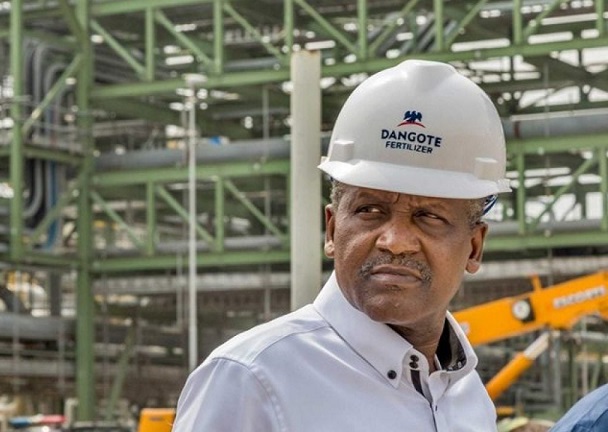
Dangote Foundation gives N100,000 relief to 125 Sudan returnees each

By Uzair Adam Imam

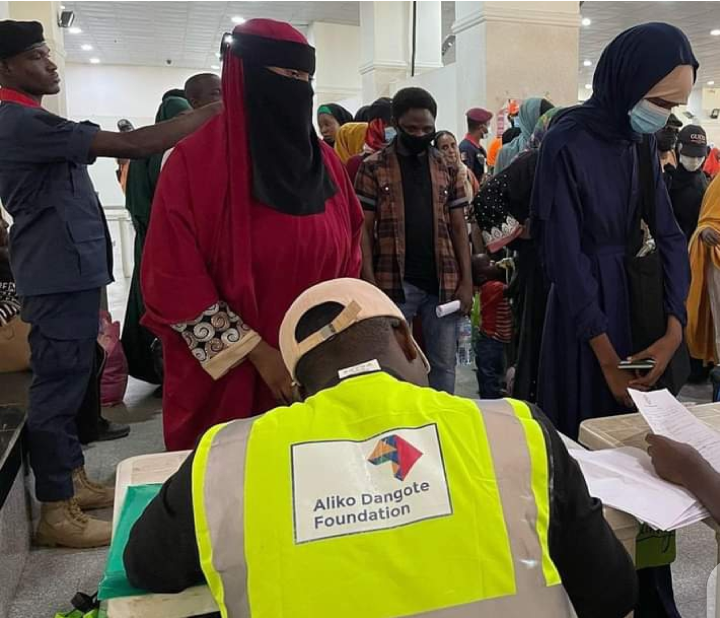
The Aliko Dangote Foundation (ADF) has offered N100,000 relief to over 125 Nigerians returning from Sudan to flee the incessant conflict in the country.

The returnees flown into Abuja on Saturday by Tarco Airline where each of them received N100,000 and dignity packs as a relief.

A statement by the foundation on Friday disclosed this, saying that the purpose was to enable the returnees address some of their problems.

The statement read, “One Hundred and Twenty-Five (125) persons including many disabled, flown into Abuja by Tarco Airline on Saturday, June 24th, each received N100,000 naira and dignity packs courtesy of the Aliko Dangote Foundation.

“It will be recalled that over 2,278 returnees received N100,000 Naira each in May, with care packs to help with their immediate needs, and enable them reunite with their families all across the country.

“ADF reactivated its intervention to help ease the return of stranded nationals evacuated from Sudan amongst them, older people, disabled persons- visually impaired, physically challenged, youth, women and children.

“Two men in their 70s who had planned to go on lesser Haj (umrah) by road through Khartoum got caught up in the war. Even though they tried another route, they were unable to reach their destination having lost all their belongings and their money.

“Several returnees had lost their various businesses to the war. Those businesses included leather, hides and skin, tailoring, shoe making, buying and selling scrap metal.

“An aged man, Muhammad Saidu Ahmed, said, “I came back from Sudan without a dime’, now I have N100,000 Naira! This is a welcome surprise – we never knew we would even survive the bombings.

“An aged woman narrated that when relatives in Sudan reported that they had lost her son while fleeing, she went in search of him only to discover that he died during a bomb blast.

“The 80 year old lady, said most of her family managed to escape death traps, bombings all the while desperately fighting hunger, the loss of their homes and livelihoods and displacement.

“They thanked the Aliko Dangote Foundation, ADF, for the intervention, which they described as unexpected, timely, and life-saving,” the statement added.

₦700/litre: A warning of petroleum marketers and the free market economy

By Aliyu Nuhu

The Petroleum Marketers, under the umbrella of IPMAN, are saying that petrol will be sold at N700 per litre if the next imported fuel arrives. But even at the current price, ask them “how market?”.

These days you see pump attendants sitting down for hours without selling 200ltrs. The moment they see a car approaching, they start shouting, ‘Come here! come here!’ It is now the buyer’s market; all that arrogance associated with the seller’s market during scarcity periods has vanished.

During fuel subsidy regimes, NMDPRA said we used to consume 66.8m ltrs of petrol daily. But after the withdrawal of the subsidy, the figure has dropped to 40m. If they increase the price to N700/ltr, the consumption may drop to 20m ltrs per day.

This will shrink the downstream industry and shut down half the filling stations in the country. Nigerians are resilient, and they know how to adjust to every difficult situation. People with many cars will sell them. Those with big cars will go for smaller, fuel-efficient cars. People will take Keke or bus and only travel when and where necessary.

The beauty of a free market economy is that the market forces of demand and supply will set price equilibrium to the acceptance of both sellers and buyers. There will be no market distortion, and petrol marketers will only make marginal gains relative to their level of capital and investment.

We are not scared of a free market. It is a waiting game. If they fail to sell their products due to low demand, they will lower the price. Otherwise, new entrants into the industry will come and offer lower prices for market penetration.

We are waiting.

Aliyu Nuhu writes from Abuja, Nigeria.

Aliko Dangote, Bill Gates meet President Tinubu in Abuja

By Muhammadu Sabiu

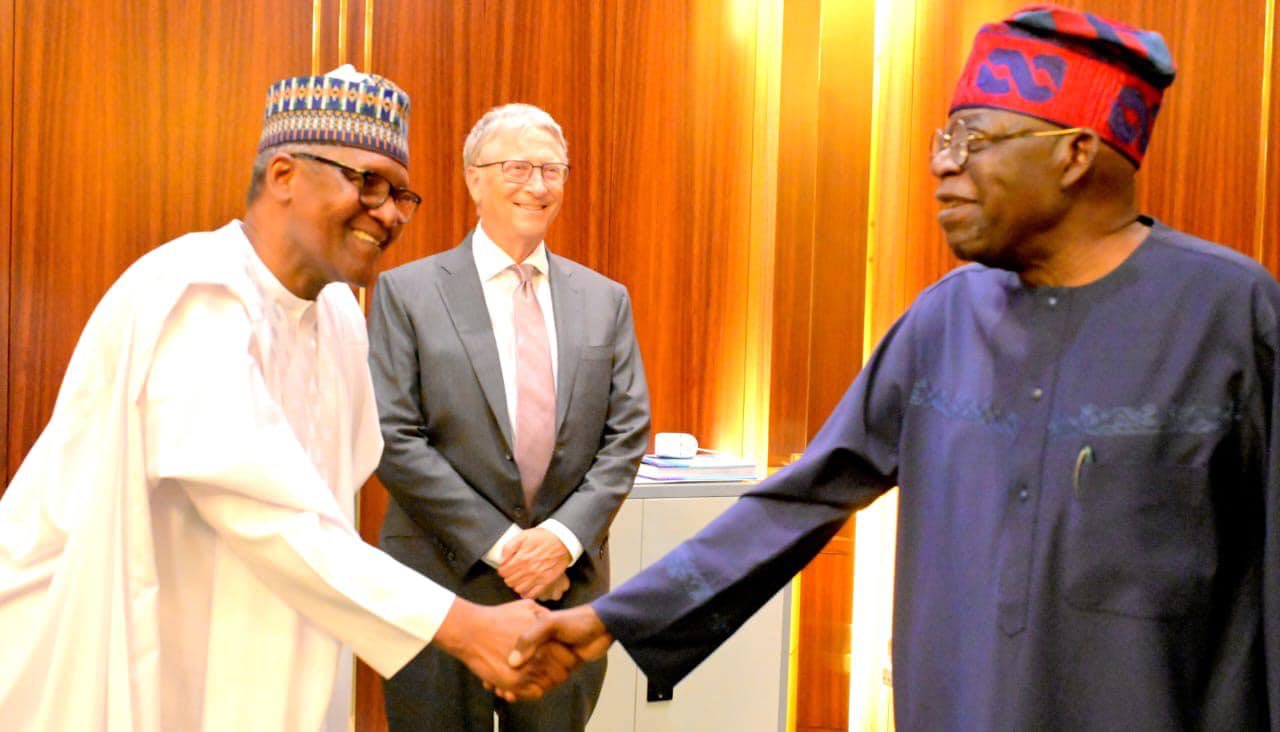
Bill Gates, the co-founder of Microsoft, and Aliko Dangote, the head of the Dangote Group, met with President Bola Tinubu on Monday at the Presidential Villa, Abuja.

Dayo Olusegun, Tinubu’s media assistant, tweeted about the meeting.

According to Olusegun: “Mr @BillGates, co-chair of the Bill and Melinda Gates Foundation and founder of Microsoft, has arrived the Presidential Villa with Alhaji @Aliko Dangote to see President Bola Ahmed Tinubu (GCFR).”

Recall that Dangote revealed last week that Tinubu and Gates would have a meeting today.

Just In: Tinubu suspends CBN governor

By Muhammadu Sabiu

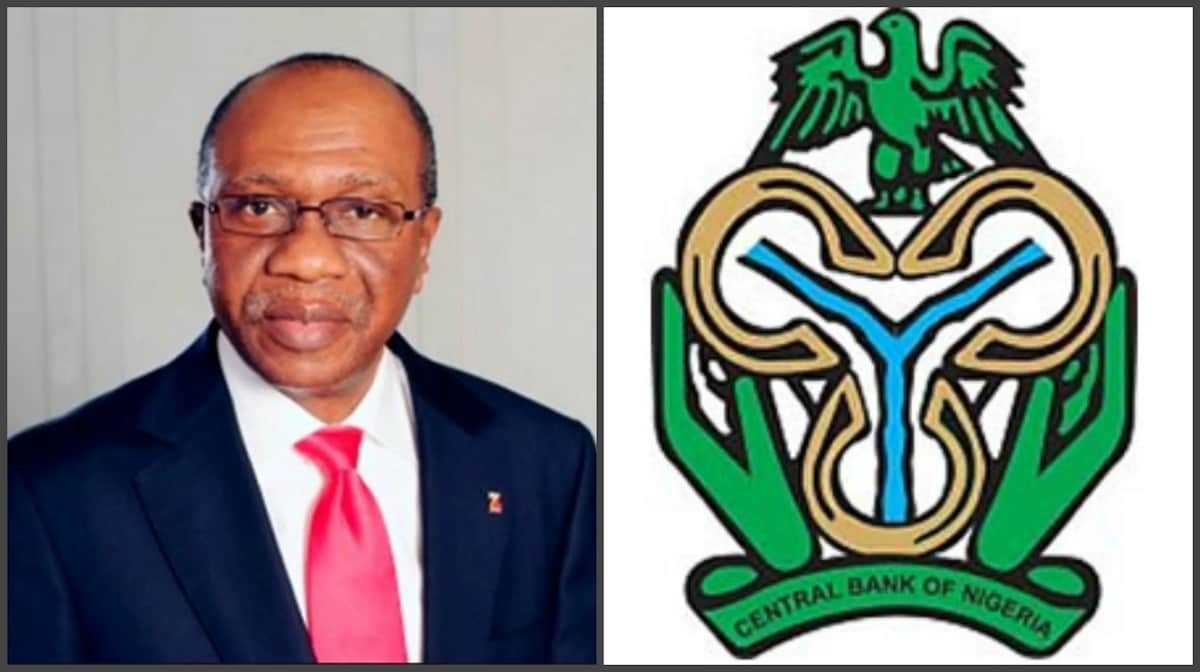
President Bola Tinubu has approved the suspension of Godwin Emefiele, the governor of the Central Bank of Nigeria. 

Willie Bassey, Director, Information Office of the Secretary to the Government of the Federation, said in a succinct statement on Friday night that it is in response to an investigation being conducted by his office and upcoming financial sector reforms. 

According to media sources, Emefiele has been instructed to immediately transfer control of his office’s operations to the deputy governor (Operations Directorate), who would serve in that capacity until the inquiry and changes are complete. 

Recall that there were many controversial policies that were introduced by the apex bank under the leadership of Mr. Emefiele. One of the policies that brought about the change of the Nigerian currency was seen by many people as an effort against the candidature of Bola Tinubu during the last general elections. 

Will Dangote Refinery be a monopoly?

By Zayyad I. Muhammad

One entity that will benefit most from the Petroleum Industry Act (PIA ) is Aliko Dangote, with his 650,000 barrels per day integrated refinery, which is Africa’s biggest and the world’s biggest single-train facility. The refinery has 1,100 kilometres of pipeline to handle three billion Standard Cubic feet of gas per day. In addition, it has power plants with a combined capacity of about 400MW.

Section 317 (8) of the Senate version of the PIA noted that petrol importation license would be restricted “only to companies with active local refining licenses”. This clause and the unmatched prowess occasioned by the refinery is a formidable edge for Dangote. However, some report state that the federal government has reversed these exclusive petrol importation rights.

Dangote can have absolute control of the petroleum industry’s downstream and midstream sectors. How? Dangote can acquire the numerous idle fuel stations scattered nationwide or take over one of the established major retail marketers, though most idle stations are not strategically located. However, Dangote can revive and utilise them using the price advantage- by setting an unbeatable price, and a litre is a litre strategy, employing the best domestic workforce in the downstream sector and optimising modern technology for service delivery in these stations.

The petroleum retail industry is growing in Nigeria. The growing number of fuel stations across corners of the country is proof of this. But operational and logistical gaps remain in the blooming industry, like bad roads coupled with the use of old trucks, poor remuneration of drivers, and lack of modern technology. Thus the industry is losing billions of Naira due to shortages when truck discharge petroleum products at fuel stations and the rising disputes between drivers and station managers.

Furthermore, some marketers have poor welfare systems for staff and have not put in place some feasible plans for the realities that will accompany the arrival of the Dangote Refinery in the PIA regime. As a result, many of them may end up operating in the dark. For any marketer to survive the new regime, they must set up a strong think-tank or a special unit in their R&D departments to ‘look’ at the future, opportunities and threats and opportunities that Dangote Refinery will come with.

With his current economic capacity, Dangote can exploit oblivious lapses to implement backward integration in the petroleum industry. The $100 million Dangote-Sinotruck plant in Lagos will give Dangote an advantage in the logistics and operations sector. The plant assembles trucks and cars in Nigeria for local use and export; it is 65 per cent owned by Dangote and 35 per cent by Sinotruck. Therefore, having new petroleum distribution trucks and well-trained and well-paid drivers will not be difficult for Dangote.

The Dangote Refinery will give him the required volume of products and enough loading bay for trucks to load. The refinery covers 2,635 hectares of land, six times the size of Victoria Island, Lagos. Scarcity will not be challenging for Dangote if he ventures into retail. Dangote can tap the domestic workforce to employ the best hands in the downstream sector. With access to funding and resources, Dangote can deploy massive Liquefied Petroleum Gas (LPG) and Compressed Natural Gas (CNG) skids at once in as many stations as possible to also prepare for the future.

As mentioned, if Dangote acquires these thousands of idle fuel stations or any of the established major marketers, the brand can offer mouth-watering prices at these stations, making customers travel even 5km just to purchase petroleum products at a Dangote station. Furthermore, these prices can knock many competitors out of the market. However, some of them can still survive as third-party partners to Dangote. However, the NNPC can take advantage of its $2.76 billion stake in the Dangote Refinery and boast its retail business.

With this colossal refinery, Dangote has the advantage in the midstream and downstream of the oil and oil gas industry. Anyone coming in will need the next ten years to catch up. The bigger, the more advantageous, it seems!

Zayyad I. Muhammad writes from Abuja via zaymohd@yahoo.mom.

Buhari launches Dangote Refinery in Lagos

By Ahmad Deedat Zakari

Barely seven days before the expiration of his final tenure, President Muhammadu Buhari launched the long-awaited Dangote Refinery in Lagos. The newly commissioned refinery is the first private-owned oil refinery in Nigeria. 

The President was flanked by many dignitaries from within and outside Nigeria during the unveiling. He described the refinery as a ‘game changer’ for the country’s economy. 

“This clearly makes this event a notable milestone for our economy and a game changer for the downstream petroleum product market not only in Nigeria but the entire African continent,” He said.

The accomplished businessman and owner of the refinery, Alhaji Aliko Dangote, gave the welcome remark at the unveiling ceremony.

He thanked President Muhammadu Buhari for his support and said he was his source of inspiration at times he felt like giving up. 

He also appreciated the Governor of the Central Bank of Nigeria, Godwin Emefiele, for ‘moving mountains’ in the course of the project. 

The billionaire also revealed that the first product of the $12 billion facility “will be in the market before the end of July, beginning of August this year”.

“Beyond today’s ceremony, our first goal is to ramp up production of the various products to ensure that within this year, we’re able to fully satisfy our nation’s demand for higher quality products,” he said.

The Dangote Petroleum Refinery and Petrochemical is the largest single-train refinery in the world and has a capacity of 650,0000 capacity a day.

Still on “Skills Rather than Just Degrees”

By Sulaiman Abba Aliyu

A person that went through formal schooling system and attained what he has attained because of that system will never downgrade the system. The system has done so well for him to downgrade it, he has reached his/its zenith, something many of the young bloods can only dream of and yet some among them find fault in a book published by him with a title they feel offended by, most without even going through the book. What happened to the saying “Don’t judge a book by its cover”? Don’t tell me you’ve judged it by its title!

I am not trying to justify what the author said for I believe he wasn’t trying to do so either. It’s just a friendly reminder from a person who has seen what you have not seen, worked where you haven’t worked, traveled places you didn’t even dream of. He’s not trying to downplay your “hard earned” degree, my dear graduate.

Let us get to the reality of things in this country and almost everywhere around the world. A degree is a paper issued to someone affirming that he/she has gone through the process of a university education and nothing more. If you are a university student or graduate or infact a student anywhere, you know that there are a lot of ways through which people earn their degrees, some earn it in a legitimate way and others otherwise. In universities, we have seen ladies complaining of how some lecturers harass them (demand for sex) so they will be awarded marks.

Again, how many of your colleagues cheat during exams and unluckily for them they weren’t caught up to their final years or even up to their graduation? How many more others do you know that theirs is just to memorize what is given to them even without understanding anything and passing the exams that way? I bet they are much more than those that are good at what they are studying. Do you then expect yourself as an employer to stick with first set of people just because they have a degree? For the sake of your company, your answer must be NO!

On the part of employers, how many people with good results have they employed and they delivered? Or do you mean because you have a degree and your employer knows how hard it is to earn a degree he/she won’t fire you if you cannot deliver? How many of those with lesser qualifications delivered in their work places because they have the required skills? Many! Or should they all be fired because they do not have a degree? Put yourself in the employer’s shoe and do what will save your company or enterprise.

I’ve seen and heard of so many people without degrees who excel in their endeavors. Some brought value to what they do beyond measures. Their biggest asset were the skills they possessed. And I’ve seen so many with certificates who destroy businesses because they lack the needed skills. These skills include; leadership skills, communication skills among others.

As a graduate, would you rather give your car to a mechanic with the skill of fixing the car or give a graduate with a first class degree with no skill to fix your car?

Your degrees are important nobody dares to downgrade them! But skills, if unemployed, increase your employability and if already employed, accelerate and simplify your job for you.

Do your degrees, if you can’t afford a degree find a skill and engrave it! You’ll appreciate yourself for making that decision.