Business

You can add some category description here.

The currency change in Nigeria: Balancing progress and people’s interests

By Yakubu Sani Wudil, PhD

The Central Bank of Nigeria’s announcement that some of the country’s old notes will cease to be legal tender by the end of January 2023 has caused significant concerns among citizens and businesses. While the move towards a cashless economy has its merits, such as increased security and transparency of monetary transactions, it is crucial to consider the potential negative consequences and ensure that proper measures are implemented to mitigate them.

One of the most pressing concerns is the availability of the new Naira notes. Many citizens have reported difficulties in exchanging their old notes for the new currency, and banks have been dispensing the old notes until only a few days ago. This has led to confusion and frustration among citizens, particularly those in rural areas who may not be as familiar with bank procedures. Therefore, the government should mandate banks to release the new notes in abundance to prevent any shortage or hoarding of the new currency.

Another primary concern is the impact on small businesses. Many small businesses have already shut down because they can no longer accept the old Naira note while the new Naira is scarcely inadequate. This has resulted in job loss and financial hardship for small business owners and created artificial inflation. To mitigate this, the apex bank should consider extending the deadline for the old notes to cease being legal tender to give citizens and businesses more time to adjust and exchange their old notes.

Policymakers need to consider the well-being of the citizens when implementing such a critical change to the country’s monetary system. The decision to cease the old notes as legal tender could disproportionately affect low-income and rural citizens who may not have access to the necessary technology or banking services to conduct electronic transactions.

To address this, the government must provide support and education on the benefits of a cashless economy, especially in rural areas. Such sensitisations should involve traditional and religious leaders because they are respected and trusted figures in their communities. They can help explain the system’s benefits and dispel any misconceptions or fears that people may have about the change. It is also important to note that the success of this transition will depend on the cooperation and participation of the public. Therefore, the government must provide adequate education and support to ensure that everyone can easily navigate the new system.

Undoubtedly, the cashless economic system constitutes the model of transactions embraced by all technologically advanced nations. With most transactions being conducted electronically, it becomes easier for the government to monitor and detect illicit activities such as money laundering or tax evasion. Additionally, a cashless economy can help reduce the risk of kidnapping for ransom, as there would be limited cash in circulation. It would also help curb buying political votes in the forthcoming general elections.

However, the sudden transition to a cashless regime also has its drawbacks. One of the most notable concerns is the potential decline in the value of the currency. The Naira has been facing significant inflationary pressures in recent years, and the cessation of the old notes could exacerbate this problem. Furthermore, the change in the currency and the scarcity of new notes may halt economic activities, which will hurt the economy and the well-being of the people.

It is important for the apex bank to consider the challenges people face and adjust accordingly. The deadline for the transition to a cashless economy should be reconsidered, and more time should be given for proper planning and implementation. The banks should also be mandated to release the new notes in abundance and ensure they are readily available to the public. The policymakers should also consider the impact of this change on small businesses so that the economy and livelihoods of the people are not negatively affected. The purpose of government is to develop policies that would improve the well-being of its citizens and not burden them with unnecessary hardships.

Dr Yakubu Wudil writes from King Fahd University of Petroleum and Minerals, Saudi Arabia, and can be reached via yswudil@yahoo.com.

China’s poverty eradication campaign: lesson for Nigeria

By Muhammad Muzdaleefa

Being a student of diplomatic history, I have been following the poverty eradication campaign in China for years. It is a shame that Western media have decided to bash it as Chinese propaganda instead of looking at the take away lessons that can be applied globally with necessary adjustments for sustainable growth and development.

The way China has been going through this issue is very methodical and practical. They have a clear standard of living which they are working hard to ensure it is universally achieved. In other words, they create a world where everyone has a smooth path to realize their dreams and ensure no one is left behind. This is very different from the competitive capitalist system practiced in the West where everyone is obsessed with being ahead of the other.

The Chinese have used very simple ideas. These include the following;

  1. Housing – The Chinese model is ensuring everyone has adequate and decent housing. Those with poor housing have had their houses reconstructed or relocated to new houses.
  2. Income – The Chinese have ensured everyone has a sustained income source that elevates them above the poverty line. This has been through implementation of various income generating projects based on local needs and environment.

In one example, some farmlands where farming was ecologically harmful were turned into a forest. The former farmers were then employed as forest guards. Another example is where some villages were helped to establish solar power plants from which they earn incomes.

  1. Education – The Chinese model states that education is the best way to stop transmission of generational poverty. As a result they have implemented a system which has resulted in zero school dropout cases. Some 8 million youths who had dropped out of school at various levels have been taken through vocational training.
  2. Health – Unhealthy people can’t fight poverty. They are people who are consigned to poverty due to treatable health issues. China has worked to ensure affordable healthcare in order to ensure that no person falls back to poverty dues to illness. The response of the Chinese government sequel to the outbreak of Coronavirus pandemic was admired throughout the world.

To achieve the above the following foundational issues are critical;

  1. Household targeted poverty eradication – a census of poor people was conducted which identified every household defined as poor. This bottom up approach is key because you cannot eradicate poverty until every household has been lifted from poverty. The household is the epicentre of poverty.
  2. Planning and involving people – after the poor are identified, detailed planning is undertaken and the people are involved in coming up with solutions to eradicate poverty.
  3. Clear goals – the officials are expected to come up with practical goals and realistic timelines. In one case where officials had set lofty and unrealistic targets President Xi Jinping emphasized that for the battle against poverty to be won there should be no procrastination or impatience.
  4. Measurement and independent evaluation – countries that claim to have eradicated poverty have to apply for removal from a list of countries that still have people living in poverty. Such an application is followed by independent verification. Evaluators are sent to verify the claims and they are supposed to visit each household without being accompanied by the village officials. Countries that fail to pass the evaluation have to continue with poverty eradication work.

In conclusion, eradicating poverty is not rocket science. Simple, practical and realistic steps are needed. Most importantly, a visionary, selfless and committed leadership must be in place for this to work effectively. 2023 is a good opportunity for Nigerians to elect capable, dependable and reliable leaders that will not only address the critical needs of Nigerians but will put the country on the path of sustainable growth and development for the contemporary generation and posterity.

Old currency deadline: Queues, frustration at banking halls in Kaduna

By Sumayyah Auwal Ishaq

Almost all banks are now attending to long queues in their banking halls as the deadline for the use old currency by the Central Bank of Nigeria (CBN) draws closer, investigation by The Daily Reality has revealed.

The rush by customers to deposit old currency generated much chaos in and around banks premises across the Kaduna metropolis throughout the week. The queues at banks in Yakubu Gowon Way, Station Road, Kano Road and Sabon Tasha were characterized by commotion caused by slow speed of the deposit process and impatience by customers.

Some of the customers who spoke to TDR said they were scared of losing their monies as the CBN had warned that those who failed to remit their old currencies would lose it after the deadline.

Officials of these banks had a very hectic time controlling the huge crowd in their premises, even as customers complained of slow services by the banks. Some of the customers expressed frustration queueing in the sun and the difficulty in remitting their monies, suggesting that further extension of the deadline would ease their pain.

It would be recalled that the CBN had given all Nigerians up to the end of January, 2023 to remit their old currencies as it ceases to be a legal tender after the stipulated time.

Dangote Cement appoints new MD

By Aisar Fagge

The Dangote Cement Plc. has Thursday appointed Arvind Pathak as the group Managing Director with effect from 1st March, 2023.

The news was relayed to journalists in a corporate disclosure made available to the Nigerian Exchange Ltd. by Edward Imoedemhe, the company’s acting Secretary/General Counsel.

It was gathered that the Pathak appointment was prompted by the retirement of Michel Puchercos from from the group Managing Director/CEO.

The statement reads in part: “The appointment of Arvind Pathak will be included in the agenda at the next Annual General Meeting for ratification by the shareholders in accordance with the Companies and Allied Matters Act.

“The Board would like to thank Michel Puchercos for his commitment and contributions to the Board and wishes him well in his future endeavours, while welcoming Arvind Pathak back to the Dangote family and wishing him success in his new role,” the company said.

Before his appointment, Pathak worked as MD and CEO of Birla Corporation Ltd. and was described as the experienced and hardworking person.

It was gathered that Pathak is also the former Chief Operating Officer and Deputy Group Managing Director of Dangote Cement Plc.

Philips Curve and Nigeria’s economic reality: a macroeconomic analysis.

By Muhammad Sagir Bauchi

Stabilization of prices and achieving full employment are among the core goals of every economy in their macroeconomic policies. In this case, there are two main approaches to curtail inflation, recession, unemployment and other negative macro-economic phenomena. These approaches are monetary and fiscal policies. While monetary policy refers to the central bank activities which are directed towards influencing the quantity of capital (money) and credit in an economy, fiscal policy refers to the government’s decisions on taxation and spending. Both monetary and fiscal policies are used to regulate economic activities over time. They can be used to accelerate growth when an economy starts to slow or to moderate growth and activity when an economy starts to overheat. In addition, fiscal policy can be used to redistribute income and wealth.

The overall goal of these monetary and fiscal policies is channelled to the creation of a healthy economic environment that could sustain economic growth, facilitate positive employment and stable inflation rate.

In a plain language, the main aim of these two policies is to steer an economy in the sense that the economy does not experience economic boom that could be followed by high period of low or negative growth, high level of unemployment and unstable price. In this situation, people can feel safe in their consumption, savings and investment decision and government could concentrate on economic decision making. And this is where the idea of Monetarist, Classical and Keynesian Schools of Economics come to play, where they have different views in respect to the effectiveness of the two policies.

PHILIPS CURVE FROM A SHORT GLANCE:

The issue of inflation and unemployment is not a new concept in the realm of economics and it’s one of the concepts that reflect the science of economics as a true reflection of reality, since that, almost everyone is feeling the impact of either of the two.

The history of Philips Curve can be traced to the research findings of A.W Philip, an economist who analyzed the relationship between unemployment and the rate of change of money wages in the United Kingdom in the years 1861-1957. At the end of his findings, he suggested that there is an inverse or negative relationship between wages and unemployment. In simple term, he meant that whenever there’s growth in unemployment, there would be a low level of inflation. And the rationale behind the justification of his idea is that wherein there’s employment, people have more money, which leads to high demand for goods and services, and eventually pushing prices up. On the other hand, when there’s a rise in unemployment, INFLATION will go down since there will be low demand for goods and services as there’s less money in circulation.

Philips and Other Economic Perspectives: there are different opinions with regards to the application of the curve and the measures to contain the phenomena.

According to Monetarist School, the issue of unemployment is a supply side phenomena, therefore, demand side measures cannot be used in curtailing them, and even if it occurs, it can be for a temporary and will accelerate price instability at the end. While to the Keynesian school, they argue that there can only be “demand deficient unemployment” And in the time of recession, demand side measures can reduce unemployment for long-term with little of inflation.

Nigeria’s Economic Reality:

In Nigeria, since its independence, unemployment and inflation are among the major distractions in the growth and development of the nation’s economy. This is evident as we are all witnessing a scenario where too much money is chasing few goods and another case of high supply of labor with low demand of it. According to data from the National Bureau of Statistics NBS), Nigeria’s inflation rate has been consistently high, averaging around 11% in the past decade. The high inflation rate can be attributed to a number of factors such as the devaluation of the Naira, increase in the cost of imports, and a rise in fuel prices.

In an effort to curb inflation, the Central Bank of Nigeria (CBN) has introduced and implemented a number of monetary policies, such as the recent cashless driven economy module; through daily and weekly money withdrawal limit, increasing interest rates, tightening liquidity, devaluing the Naira, etc. However, all these policies have not been entirely successful in bringing inflation under control. Additionally, the Nigerian government has also implemented fiscal and monetary policies such as capping government MDAs cash withdrawals limit to minimal amount, increasing taxes and cutting government spending to curb inflation, however, the effectiveness of these policies remains uncertain and challenging. Same goes to the apex bank ongoing monetary policy, especially the weekly withdrawals limit policy, which is an unprecedented threat to urban and rural businesses due to poor mobile/internet banking mechanisms in the country. As such, the apex bank must address these concerns through shifting the effective implementation date until all the proper mechanisms required to operate a cashless economy are put in place. This can be done if the CBN reasons and constitutes a committee that includes technocrats, bankers and internet service providers, which will make sure that effective moblie/internet services are made available to cover the whole country before the policy kicks off and kicks up.

In conclusion, the relationship between inflation and unemployment as represented by the Philips curve is a complex one that is influenced by a variety of factors. The Nigerian economy is facing significant challenges in terms of cashless economy application, high inflation and unemployment rates, and finding effective solutions to these issues will require a rigorous political will and careful consideration of both monetary and fiscal policies. It is important for the government and the central bank to continue to monitor and analyze economic data and make adjustments to policies as needed, in order to create a stable economic environment that supports growth and employment.

Muhammad Sagir Bauchi, is a graduate of Economics from Sa’adu Zungur University, Gadau, Bauchi State. He can be reached via ibrahimsagir1227@gmail.com

Old Naira Notes: January 31 deadline sacrosanct – CBN

By Sumayyah Auwal Ishaq

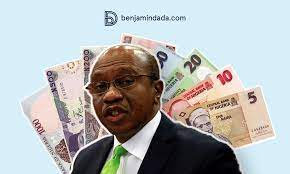
The Central Bank of Nigeria (CBN) has reiterated that the deadline for exchange of the old Naira notes for new ones remains January 31, 2023.

In its official Facebook handle, on Friday, the apex bank wrote, “A reminder to the general public that the old series of N200, N500 and N1,000 notes cease to be legal tender by January 31, 2023. You are once again advised to return them to your bank before the deadline”.

It may be recalled that last October, CBN announced that the old Naira notes would cease to circulate, and be legal tender from January 31, 2023 after detailing a number of reasons for the action.

The announcement sparked various reactions from the public, which in part, informed the call by the National Assembly for CBN to extend the deadline of January 31, 2023.

Dangote cement trains 40 Kogi women on fashion design

By Aisar Fagge

There has been great excitement among women in Obajana community, Kogi State when no fewer than 40 women sponsored by Dangote Cement Plc. were graduated from skills acquisition training school on Thursday.

The women learnt fashion and design and were advised to be self-reliant on it.

The Daily Reality gathered that the training was meant to address the biting economic hardship prompted by job scarcity and unemployment in the country through job creation.

Mr JV Gungune, the Plant Director, of Dangote Cement Plc, Obajana, while speaking at the graduation ceremony, said, “even though the job creation scheme aptly fits into the company’s vision and mission, it cannot do it alone, nor can it employ everyone.”

He also pleaded with the beneficiaries to put the skills and equipment provided by the company into proper use, adding that the beneficiaries should count themselves lucky to have been selected and trained.

The women also expressed happiness and gratitude to the President of the Dangote Group, Alh. Aliko Dangote.

The traditional rulers of the various communities commended the company and described the development as a huge intervention.

Also speaking, his Royal Highness, the Olu-Apata, Oba Dr Frederick D.O. Balogun, expressed appreciation and pledged his community’s continuing support for the company.

Cashless policy is too early for corrupt nations

By Lawan Bukar Maigana

I keep telling people that it is too early for us in Nigeria as a whole to adopt a cashless policy. It is just obviously too early. Yesterday, I read a post by Prof. Abdelghaffar Amoka of the Ahmadu Bello University, Zaria, in Kaduna State, about his experience with a Point of Sale, PoS, agent.

He had gone to refill his gas cylinders at the cost of 19k+ and he used a PoS machine to pay for it. Though he was debited, the money wasn’t credited to the PoS agent’s account. Rather than waste his time there, he transferred another money to someone’s account to pay for refilling. He would have become helpless if he was moneyless.

Some weeks back, I experienced a similar thing in Abuja. I went to withdraw 5k using a PoS from a woman at the NYSC parade ground. I was debited but she didn’t receive the money. She then told me that she won’t give me the money until she receives an alert. Luckily, I had a paltry sum left in my account. I then withdrew the money using a different PoS. It took my bank nearly ten days to refund me.

Before then, and about three years ago, I had the same experience with UBA. I used my father’s card to withdraw N100,000. I tried six times, but all of the transactions didn’t dispense cash, and he was debited five times. My dad only knew it after a week. He complained to the bank but they denied it, without carefully checking whether the transactions were successful or not.

They had to call me to come from school. I quickly got to the bank because it involved my father. I had to help them understand that the transactions failed. Only then they rechecked and discovered that I was right. That was indeed an issue bordering on unprofessionalism.

If not because of my father I would have sued the bank, because they threatened me with a police arrest, saying it was a criminal case. My father asked me to accept their apology else I would have sought compensation for making me look like a criminal, while they were at fault.

Before going ahead with its cashless policy, another factual and excusable factor the Apex Bank should consider is the fact that most of our businesses are done in cash, especially those trading in rural communities and towns and other remote areas where there are no banks, no network, no internet, no electricity, no education, and these people form a large portion of the Nigerian populace.

The questions I keep asking myself regarding this policy are: Did the Central Bank of Nigeria build banks in those areas? Would the people be traveling from their various villages to cities to transfer, withdraw or deposit money? What did the government do in place of these challenges? Does CBN have enough manpower to do this job even if they have built banks? Did CBN mistake Abuja, Kano, Lagos, Port Harcourt, and a few cities for Nigeria?

These, among other reasons, are the factors I want the CBN Governor to consider. Before they present this policy, they need to put all these things in place and educate people about it so that people will evaluate its strengths and weaknesses, and decide to either oppose or support it. The CBN didn’t do that. It just woke up from its slumber and served it to the Nigerians a la carte. Time will however tell if Nigerians will embrace it, warts and all.

Lawan Bukar Maigana is a social analyst. He writes from Abuja and can be reached via email: lawanbukarmaigana@gmail.com

Waqf Foundation upgrades lives of Nigerians

By Abdulhamid Muhammad

Sunday, 25th December 2022, was a day of revelations and feedback from the Waqf Ambassadors of the Zakah and Waqf Foundation, Gombe, Nigeria. It happened during the Uncovering Potentials Workshop (UPW) organized by the Foundation for the 1st and 2nd sets of its Waqf Ambassadors, which was facilitated by Dr Najeeb A.A. Gambo, a researcher with the Microsoft Company and Nigeria’s 2nd Google Certified Trainer.

It was conducted a day after a 2-day intensive induction training for the 2022/23 Waqf Ambassadors at the Foundation’s Training Room. As usual, of all the year-long life-changing training that the Foundation organizes monthly for its 80 enrolled Waqf Ambassadors annually, the UPW was highly impactful, thought-provoking and action-triggering.

In the closing session of the workshop, scores of youth voluntarily gave their testimonies on how the sessions of the workshops they have gone through in the last 12 months have completely revolutionized the way they look at the world financially and intellectually.

One of the ambassadors narrated how excited she was after starting a business and discovering that she could now do a lot of things with her earned income without asking or waiting for someone to give her. It was a great discovery because she grew up in a society that programmed her to think that she could not make money for herself.

Another person said that it was a workshop in ZAWFOG on reading culture that ignited in him the habit of reading books, and that has completely transformed his life, making him more creative and more confident, and hopeful about life.

Another Ambassador, whose parents hitherto paid all his bills, revealed how as a result of the motivation he got from these series of lectures is now able to earn more than the national minimum wage every month despite being still a student. And many of the participants went on and on.

These are a few of the testimonies, and I wished the Chairman of the Foundation, Ameer Abdullahi Abubakar, was there at the closing session to hear how the Foundation is making an impact and transforming lives. It is clear that his model is working; the Waqf Ambassadors are fast moving from poverty (p) to prosperity (p) and soon to philanthropy (p) in sha Allah. As envisioned by the founders of the Foundation, we will soon have a generation of youth who are rich enough and committed seriously to building our society through Waqf.

May Allah accept this from all the people who have contributed in one way or the other in moulding the next generation to be a productive one, amin. May He continue to bless the Foundation and take it to greater heights.

Abdulhamid Muhammad is a 2021 Waqf Ambassador and wrote from Gombe State, Nigeria.

Currency redesign and its attendant expectations

By Muhammed Umar-Hong

Changing the appearance of a country’s currency is widely practised worldwide by various methods and for different reasons. It could portray a nation’s rich cultural heritage, a change in regime to symbolise a ruler or celebrate national heroes with portraits of them attached to these currencies. However, the most cited reason has been to combat threats of counterfeiting. Threats which may lead to inaccurate figures of the total amount of money in circulation, for example. 

The Naira is certainly not a stranger to the redesign concept, which has seen various denominations change over the last few decades. Chief among the changes had been the transition to more durable currency notes which began with the N5, N10, N20 and N50 denominations all upgraded to polymer substrates in 2007. While 2014 saw the birth of the N100 commemorative note marking the nation’s centenary celebration. 

It should thus not be a contentious issue if the CBN decides, as it has, to make further modifications to the country’s currency. After all, it is within the apex bank’s constitutional powers as stated in the CBN Act, 2017 (Section 19, subsection 1b). This time, its primary aim will be to address our security challenges by reducing the hoarding of certain denominations whilst ensuring proper monitoring of monies in circulation. 

But before the release of the new bank notes, however, interactions on social media had clearly shown that not many Nigerians understood the difference between currency redesign and currency redenomination (which involves removing/adding more zeros to the currency), and some were highly expectant of the policy to have some technical outcome. Opinions and suggestions are illogical or don’t seem to rest on sound economic principles. But I took the trouble to note a few, and to explain my views on them below. Feel free to make your contributions.

Q: Why wouldn’t the government set our highest currency denomination to N20 to end money laundering? 

V: The reason for raising our highest denomination to N1000 is because our Naira has a fallen value. The change in exchange rates between two countries is usually determined by the constant demand for one currency by the other. If a country produces goods and services in commercially exportable quantities, the demand for those goods by foreign customers would automatically lead to foreign currencies being converted to local currency to enable these purchases, which ultimately drives the value of the local currency up. Foreign currencies would have to chase more Naira, thereby bolstering its value. 

On the other hand, for products such as petroleum, where the purchases are made in US dollars, the additional dollars can be used by the apex bank to purchase the Naira, thus creating a sort of artificial demand for the Naira that usually raises its value. 

I don’t think any money launderer (assuming I know how this is being done) would be deterred just because he now has to carry/stash away more currency in N20 denominations.

Q: Why wouldn’t the government choose an interval of four years to redesign its currency? 

V: The international standard for countries to redevelop their currencies is between a 6 – 8 year interval. This is not, however, a strict rule, as some countries do it more frequently than others. In the US, for example, the practice is to focus more on widely used denominations (prone to more wear-and-tear) or are frequently targeted for currency fraud (counterfeiting) for a redesign. For instance, a currency like the two-dollar bill has a much longer lifespan due to its near-absence in daily transactions compared to a dollar bill. 

Additionally, not every need for currency changes can be accurately foreseeable. And it may only sometimes be financially viable to make wholesale changes if it coincides with financial or economic shocks. Both of which our mono-economy is particularly susceptible to.

Q: Will the unaffected currency notes (i.e. N5, N10, N20, N50 and N100) remain in circulation after this redesign? Would their value fall?

V: The other currency notes that haven’t been affected by the current redesign will still maintain their legal tender status, fortunately, until the CBN says otherwise. They will also retain value as market forces dictate and are expected to remain in wide circulation. Elsewhere though, lower denomination currencies have been the most exchanged and most subjected to redesign, mainly due to their frequent use.

Q: Why not grant amnesty to hoarders of cash instead of embarking on the expensive redesign?

V: Well, I believe you can’t exert leverage over hoarders of cash if you were never going to carry out your threat (the redesign). 

But Abdullahi Imam has another angle to it: The question of amnesty is straightforward. Amnesties are mostly for criminal activities. It’s not a crime to have cash or to store it. So the topic of amnesty is a non-starter. Except if an amnesty is for those that need to exchange their old notes before the agreed deadline. 

Q: The government should introduce the use of coins if it hopes to increase its purchasing power.

V: Purchasing power is simply the value of a unit of currency in terms of the goods/services it can buy, which is effectively how strong/weak your currency is. The higher the purchasing (buying) power of a unit of your currency,  the greater the number of goods/services it can purchase, and vice versa.

Does the N5 note come to mind? It’s okay to say the note has become worthless these days. I can’t remember when I walked into a shop for an item priced in the multiple of 5. Most of our goods have now been (deliberately, I think) rounded up to the power of 10.

Although they play little or no role in our daily transactions, coins are currently the oldest form of money available to us. They used to have intrinsic value based on the valuable metals (gold, silver) they were made with until it became less expensive to produce using materials like Copper. In more notable climes, they have been used for commemorative purposes. 

Just recently, Britain had to redesign its fifty pence (50p) coin to feature the portrait of its new king, Charles III, following the death of Elizabeth II. And in many other countries, coin usage has practically been resigned to handling smaller transactions, often serving as ‘change’ from paper currency payments. This is more evident in countries assigning lower denominations to coins, effectively making the highest value of the coin in circulation worth less than the lowest-value note. 

Even in our case, Prof. Soludo, then CBN governor, in his 2007 paper titled ‘Strategic Agenda for the Naira’ had proposed the reintroduction of coins in the following denominations: 1 kobo, 2 kobos, 5 kobos, 10 and 20 kobos in his bid to make the Naira a currency of reference in Africa. 

Paper currency has become the preferred medium of exchange for higher denominations worldwide due to their convenient nature and the fiat status conferred on them by governments. To the best of my knowledge, no relationship EXISTS between using coins and increasing the purchasing power of a nation’s currency. But that’s not to say coins are wholly valueless and lack significance in the overall dealings of a country because, who knows, “the most important decisions you will ever make in your life may be decided with the toss of a coin.”

Muhammed Umar-Hong wrote via muhammedu.hong@gmail.com.