Contemporary political singers are known for the satirical content of most of their songs. Political songs are very descriptive of invective barbs, innuendos, and allusions. They are primarily meant to satirise opponents. Rarara’s invective style in his music can be the worst political song depicting invective barbs nowadays.
Tijjani Gandu is an exceptional political singer who uses minimal invective barbs. His songs are mostly for a one-sided party or his godfathers. Gandu is known for the centralised theme of his songs. He mostly only focuses on the party and the esteemed quality of his beloved and favourite politician.
“Abba Gida Gida” was the first song in 2019 to elevate Gandu’s reputation as a talented political singer. The song was accepted and spread to every nook and cranny. It was very stylish with its theme of mobilising for the then PDP gubernatorial flag bearer in Kano State (Engr. Abba Kabir Yusuf). The candidate was challenged for not being famous. So, Gandu released the song “Abba Gida Gida”, which made the candidate very well-known.
Gandu is always ready to challenge any chaos in Kano politics to protect the governor’s dignity. It has been known for the whole week that Kano State Governor Abba was criticised for his open statement against the inappropriate action of the Kano Hisba. The statement was misconstrued. The people’s opinions were very different. Some supported the Governor’s statement, and some opposed it.
Amid the chaos, Tijjani Gandu released a song recently titled “Saƙona,” my message. In the song, the singer, Gandu, sends sympathetic messages that make thousands of people weep while listening to the music. The song has some words of mercy and humility. The saying “Abba ya san girman malamai, shi ya sa ya ɗau Hisbah ya ba ta kullalle” means Abba respects Islamic clerics, so he appointed the most deserving person to head the Hisbah.
The singer tried to maintain his dignity of not being an abuser – he doesn’t abuse anyone in the song – he only calls the attention of the entire public to discard any misconceptions from any political opponents of the Hisba saga.
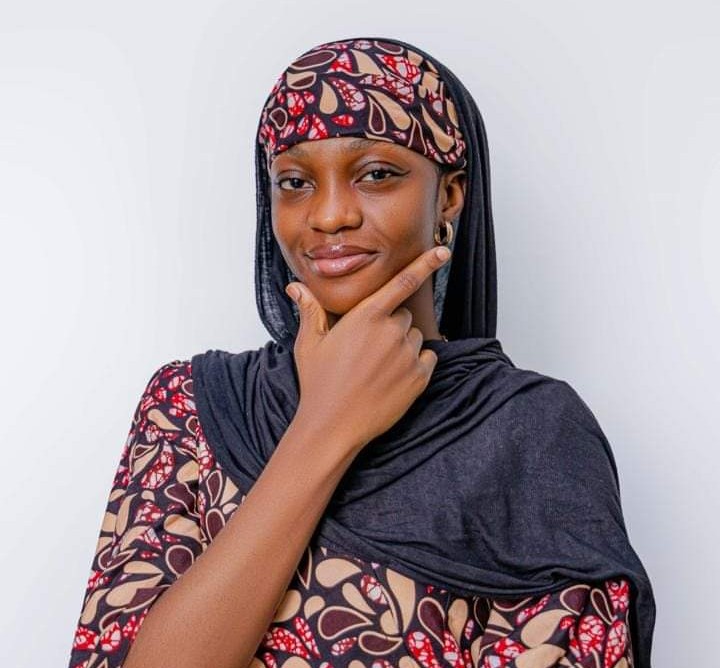
Muhabbat Yakubu, a student in SS2 at Nigerian Tulip International Colleges (NTIC), has received the prestigious honour of representing Nigeria at the upcoming International Festival of Language and Culture (IFLC) in Germany on May 31st, 2024.
IFLC, an annual celebration of linguistic diversity and cultural exchange, serves as a beacon of unity, fostering understanding and inclusivity through the universal languages of art, dance, and music.
Originating in Turkey in 2003, the event has since blossomed into a global phenomenon, with participation from 160 countries and over 2000 talented individuals in 2015.
Its mission of promoting peace, love, and friendship resonates deeply in today’s interconnected world. Muhabbat’s selection displays her exceptional cultural awareness, linguistic talents, and dedication to promoting harmony through language and culture.
Under the guidance of NTIC, she will showcase Nigeria’s rich heritage on the international stage, embodying the spirit of unity and cooperation that defines IFLC.
Mr. Fayzullah Bilgin, the Managing Director of NTIC, expressed pride in Muhabbat’s achievement, noting the school’s commitment to nurturing global citizens who embrace diversity and champion inclusivity.
As Muhabbat prepares to represent Nigeria with distinction, she carries the hopes and aspirations of her nation, symbolising the power of youth to build bridges of peace and understanding.
According to a report by the National Television Authority (NTA), the NTIC community extends its heartfelt congratulations to Muhabbat Yakubu and wishes her every success as she prepares to shine on the global stage at the International Festival of Language and Culture in Germany.
Nigerian poet Zaynab Iliyasu Bobi, known as @thee_black_sylvia on X (formerly known as Twitter), has been awarded the Carolyn Micklem Scholarship by Cave Canem, a prestigious organization dedicated to fostering Black poetry.
The news was announced on February 29, 2024, via Bobi’s X account.
Bobi expressed her deep appreciation to Cave Canem and everyone who donated to her fundraising campaign, which ultimately reached $4000.
These donations and the scholarship will enable her to attend Cave Canem’s fellowship retreat in Pittsburgh, United States.
Cave Canem is a renowned organization with a rich history of supporting Black poets.
The fellowship program offers a unique opportunity for aspiring poets to develop their craft in a nurturing community.
Bobi’s success story is a testament to the power of collective support on social media, and determination on the poet’s part.
It highlights the importance of organizations like Cave Canem in providing resources and mentorship to underrepresented voices in the literary world.
In today’s consistently evolving digital world, the pursuit of digital/ICT skills has become increasingly important for individuals and communities alike. This is particularly relevant for Muslim women, who often face unique challenges in balancing their religious and family values with their career choices, hence, making them to be left behind in the digital landscape.
In this article, we will explore the importance of creating awareness among Muslim communities about the need for Muslim women, especially the married ones, to pursue digital/ICT skills.
One of the primary concerns of Muslim women is the compatibility of their careers with their religious values and family life. Most jobs in our contemporary secular societies often raise ‘Sharee’ah’ concerns—which mostly revolve around free mixing and intimacy with ‘non-mahrams’, prolonged unavailability in their matrimonial homes that often impede performance of domestic responsibilities, compromising the Islamically mandated mode of dressing for Muslim women, and so on, making it challenging for some educated Muslim women to identify fulfilling careers that align with their religious values and beliefs.
God so kind, the recent advancements in the ICT sector has now alternatively offered a wealth of opportunities for Muslim women to pursue careers that are both fulfilling and compatible with their ‘Deen’ and family life, but unfortunately, most Muslim women lack sufficient awareness of those opportunities.
It is quite essential for Islamic scholars and Muslim elites to be aware of the recent advancements in the ICT sector and to consider enlightening their communities about the potential benefits of digital/ICT skills for Muslim women. By promoting awareness and understanding, these leaders can help Muslim women make informed decisions about their careers and contribute to the overall empowerment of the community, without compromising their religious values and beliefs.
Importantly, pursuing digital/ICT skills can also lead to remote job opportunities that offer flexibility and work-life balance. These jobs allow women to work from their homes, enabling them to demonstrate their supportive roles in their marriages, while still advancing their careers. Some of the skills that can lead to remote job opportunities include web development, copywriting, social media management, digital marketing, graphic designs, virtual administration, data analytics and so on.
Furthermore, encouraging Muslim women to pursue digital/ICT skills can lead to greater empowerment and intellectual development. By acquiring these skills, Muslim women can supportively contribute to their families’ finances and also become more intellectually sound, which is in line with the principles of Islam that promote the pursuit of knowledge.
In conclusion, we are in an interconnected world where digital skills are increasingly relevant across all sectors. Muslim women lawfully deserve to be equiped with these skills so they can also participate more actively in the global economy and contribute to the advancement of their communities, within the limits of Sharee’ah.
There may be misconceptions within Muslim communities about the compatibility of digital/ICT careers with Islamic principles. However, creating awareness can help address these misconceptions and demonstrate how these skills can be utilized in ways that are consistent with religious values.
It’s therefore crucial for community leaders, including Islamic scholars and Muslim elites, to actively promote the value of digital/ICT skills for Muslim women. Their support and endorsement can greatly influence the attitudes and decisions of community members.
Ibrahim Suleiman Ibrahim is a Public Affairs Analyst. He can be reached via: suleimibrahim00@gmail.com
The distinction between one’s private and public life is becoming more and more hazy in a time when social media dominates. Celebrities, who were formerly admired for their abilities and accomplishments, now have to navigate a world in which the public is interested in every aspect of their lives.
The younger generation has been influenced by this culture of perpetual exposure, as they readily divulge personal information online, undermining the idea of privacy. The story of Nigerian actor, Yul Edochi, and his second wife is a compelling illustration of this phenomena, and offers a prism through which to consider the effects of this invasion of privacy.
Without a doubt, the emergence of social media has completely changed how people communicate, making it possible to share information instantly with anyone on the planet. The loss of personal boundaries that results from people voluntarily disclosing their private lives to the world is the drawback, though.
Because they are in the public glare, celebrities have been hardest hit by this cultural change. For example, Yul Edochi’s second marriage turned into a social media show, with every detail of their union, family dynamics, and personal hardships visible to everybody with an internet connection.
Beyond just celebrities, this tendency affects the younger generation as well, who have grown up in a time of continual communication. Many people reveal personal information about themselves online because they want to be validated and accepted by others.
The younger generation frequently compromises privacy in the chase of likes, comments and virtual acceptance, whether it be for relationship milestones or personal struggles. This raises questions about how such behaviour may affect people’s general well-being, self-esteem and mental health in the long run.
Although the loss of privacy is a complicated problem with wide-ranging effects on the society, there may be ways to lessen its effects. Above all, it is critical to teach the next generation the value of establishing and upholding limits. Giving people the skills to decide what parts of their lives are best kept private helps them feel more in charge of their own story.
Prioritising digital literacy education is important, with a focus on the lasting nature of online content and the possible repercussions of excessive sharing.
Social media sites can also be extremely important in encouraging responsible sharing. Pop-up reminders and privacy checklists are two examples of features that can be implemented to encourage users to reconsider sharing sensitive information and prevent impulsive sharing.
Platforms should also make investments in strong privacy settings so that users may decide who can see their content. Encouraging social media usage in a way that is balanced and respects one’s personal limits sends a strong message about how important privacy protection is.
In the end, the degradation of privacy in the era of celebrity culture is a complex problem that calls for cooperation from people, organisations, and digital platforms. Fostering a healthier connection with the digital world requires finding a balance between the advantages of connectedness and the maintenance of personal boundaries.
We may endeavour to create a culture that values and respects privacy in an increasingly connected world by embracing responsible sharing behaviours, encouraging digital literacy, and setting positive examples.
Al-Janat Mohammed is an NYSC corps member with PRNigeria in Abuja
It has been almost a month that – the discussion on the issue of the discovered “existing law”, Marriage Practice Control (CAP 26) in Kano State has become the topic of the discussion on the media. The existing law that regulated the marriage practices among the respective Kano State community on how to get married in harmony, has been discovered by the notorious lawyer in Kano, Barrister Abba Hikima. The existing law, in section 5, has listed some practices that are not allowed in the marriage – and doing so – shall put the offender into a danger of imprisonment – or its likes as it’s mentioned in section 8 of the Act.
Notwithstanding of the fact that, the 1999 Constitution of the Federal Republic of Nigeria, unequivocally, recognises the existing law in section 315, the Marriage Practice Control (CAP 26) 1988 in Kano is not effective. The law is, as it’s recognised by the Constitution, valid – but it seems useless or not in existence. The essence of any law is to control the existence of the people. It gives the right of doing something and at the same time stops people from doing something.
As I heard about “the existing law” in question, I got confused pondering on it that how could this be possible? – it seems like it’s not for Kano – or it’s just in my dreams! The law is in contrary with the people of Kano State.
The 1999 Constitution of the Federal Republic of Nigeria gives room for the State House of Assembly to make law in accordance with the culture and customs of the people living in any state. Therefore, the then government of Kano State, in 1988, made that law (Marriage Practice Control) to control the marriage practices in those days. Unfortunately, the law they made for the marriage practices, is still not in conformity with the people in the State. The people of Kano are very serious about their culture and religion. They don’t leave their culture for anything other than religion. I believe that – the law that can be so effective to them – can be that one in conformity with their cultural norms and values. You can’t control something practicable and recognisable in one’s culture and make it effective to him/her easily.
In conclusion, I am with the opinion that – the issues of marriage practices can only be controlled when they’re not in conformity with the religion, but when they remain discretionary on the people practicing them can still remain classical. Marriage is being practiced in accordance with culture and religion – or culture of the people. This is the reason why the existing law of the Marriage Practice Control (Supra) is not effective. It’s beyond the perspective of the people living in its jurisdiction.
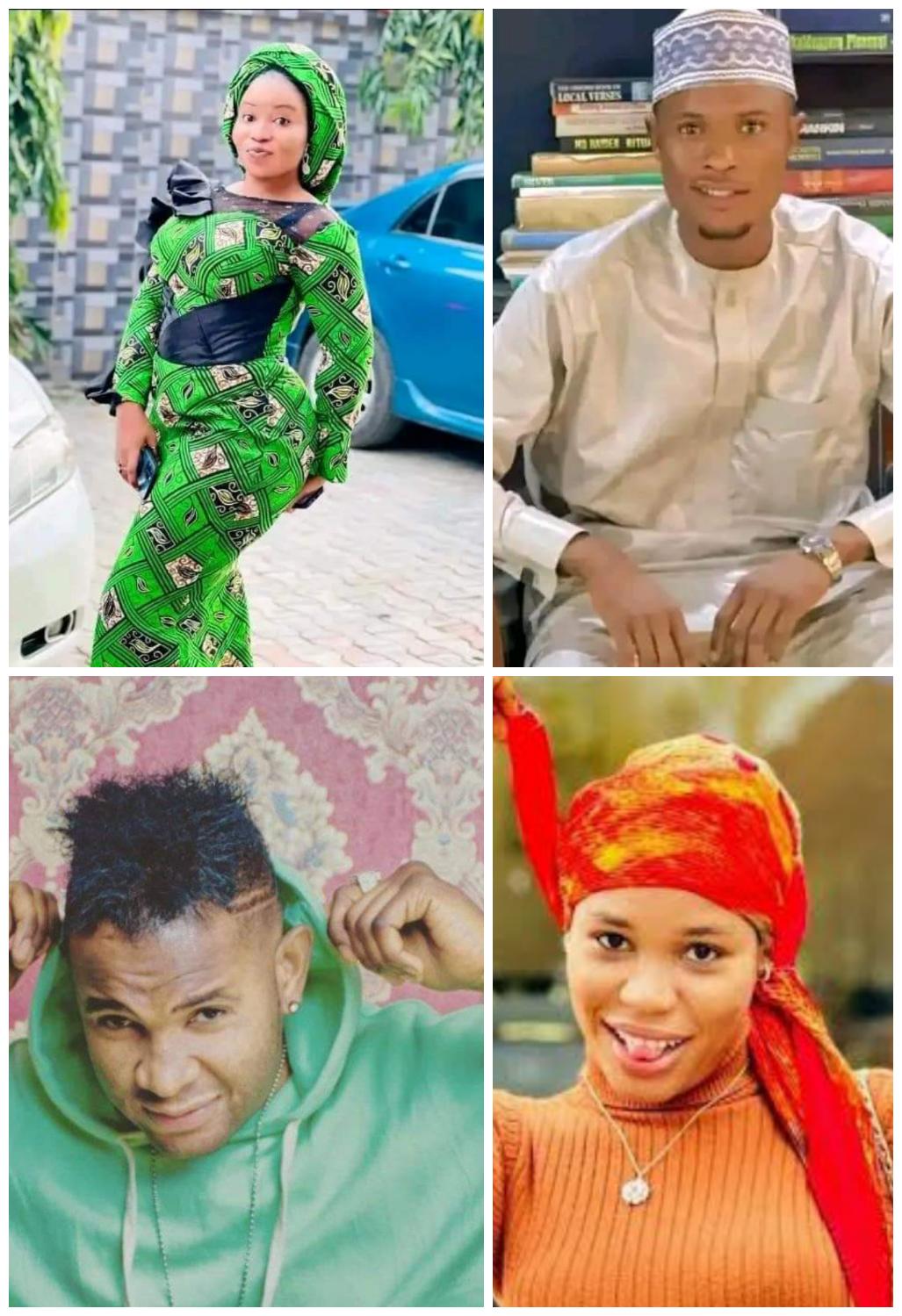
Kano State Hisbah Board has launched a manhunt for some prominent TikTokers over a vulgar post. The wanted TikTokers include Murja Kunya, Idris Maiwushirya, Shakira, Hassan Make-Up and Kano State Material, popularly known as G-Fresh.
Recently, the TikTokers posted an uncouth video on the TikTok app, which was said to have contravened the Hausa norms and Islamic teaching. But the board said it was responding to some distress calls it received from some concerned citizens in the state over the unethical video.
Declaring the TikTokers wanted, the board read, “We are looking for anyone who sees these people or knows where they could be found.”
Advert turns vulgar, immoral
The video, which went viral, was allegedly meant to advertise the enlargement supplements for women at the Shakira`s shop in Kano. However, the TikTokers resorted to what many critics consider vulgar utterances.
In the video, G-Fresh was seen flattering the body shape of one of the TikTokers, Murja Kunya, who was consequently turning her butt to show her curvy shape.
The Daily Reality’s finding shows that this is not the first time the wanted TikTokers have published such video content that is incongruous with the norms and values of the Hausa people and the religion of Islam.
Disrespect for Hisbah, law
A person close to the Hisbah, Malam Aisar Salihu Musa, said the wanted individuals are so disrespectful to Hisbah, Shari’a and other related laws in the state. He added that this was not the first time Hisbah summon these people and tell them what they were doing was wrong.
He stated, “Hisbah invited and preached to them. They were also advised on how to use their pages as Muslims and Hausa people. “Their attention was also called to the implications of what they were doing, which may, in turn, haunt their children later in life, let alone frustrate their relatives. However, Aisar lamented that the TikTokers’ immorality was even worse after the Hisbah interventions in 2023.
“Some of them, though not on the current video, were also called and cautioned by the board. Some were even jailed. Sadly enough, all of them have now gone back to their former behaviour and do even worse than what they were doing before.” He added, “I believe there are many ways these people can entertain and educate people without necessarily being immoral”.
Peoples` condemnations
Showing her disappointment, Khadija Deejah described the development as shameful, saying, “I feel shy whenever I come across their content. I am pleading with Hisbah also to arrest Sayyada Sadia.
Usman Auwal Hassan said, “They deserved (to be arrested) since.”
Sadia Uba Musa opined that they should face the wrath of the law for their actions over time. She stated, “They need to be strongly warned and punished for their actions over time.”
Suggesting how to find them, Hassan Ubali said, “There needs to be a check into our hotels, even if not all. I believe two or more of them could be found. Also frowning at the development, Nura Ahmad Usman said, “Murja needs to be severely punished to serve as an example for the rest because she thinks that she is above the law.”
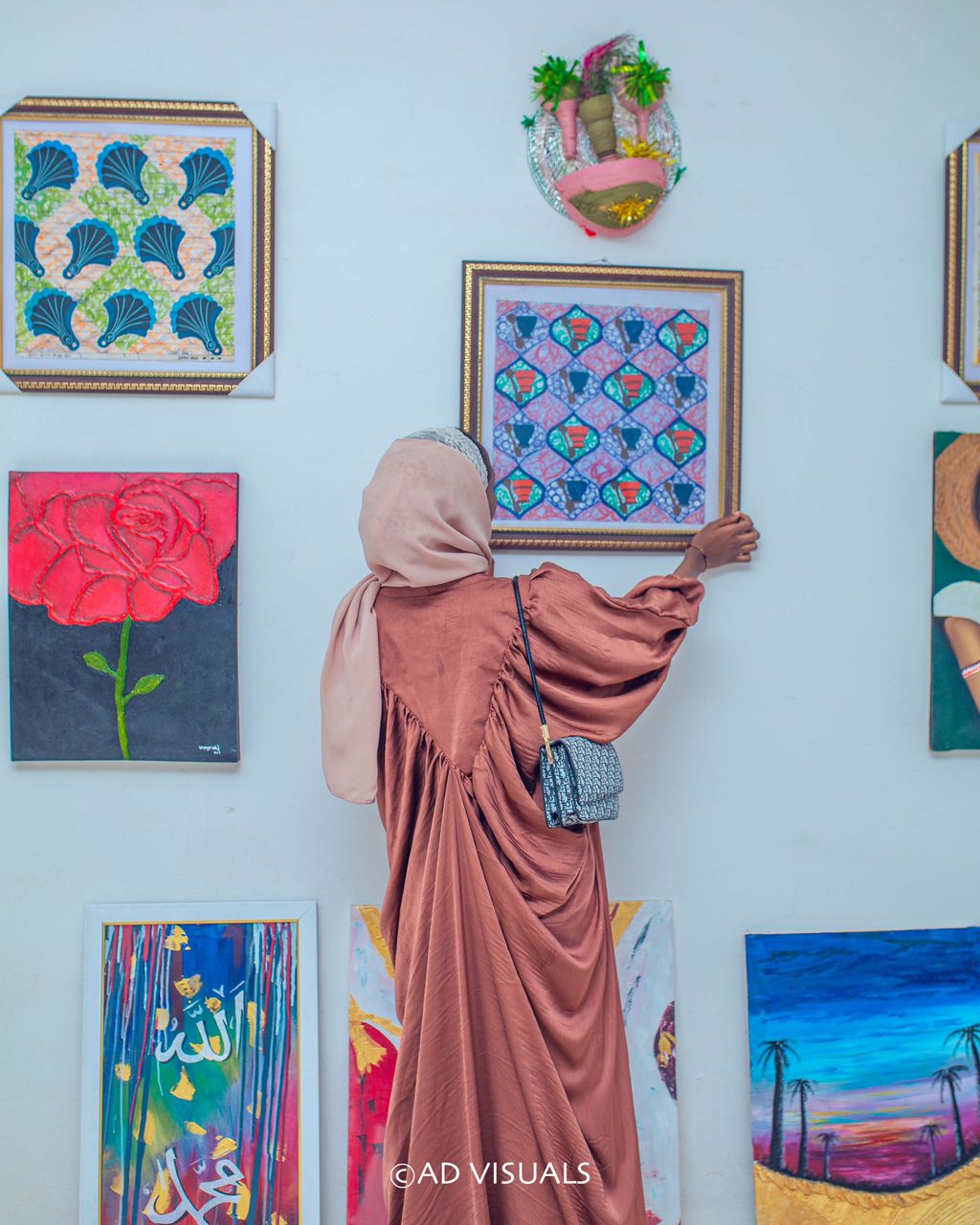
‘Please go in and see the magic I’d pulled off,’ Maryam Batool, the young Creative Director of Kabara Kreatives, said to me by way of welcome to Artistic Rendezvous, an exhibition she curated.
Her voice was cheerful but her smile was slightly exhausted. ‘Of course . I expected no less.’ I said and got ushered into the galleries. Indeed it was magic. From the very first gallery, my breath was taken away by these wonders of human minds, the best of human creativity hanging on walls, breathing shades of perspectives and aesthetics of the highest standards possible.
When the Italians and English were having their Renaissance as far back as the 14th century, such beauty was the reason they exalted the imaginations of mere mortals to the high heavens. I joined the pool of arts enthusiasts who had gathered at No. 7, Sokoto Road that Saturday with a clement January weather. We swooned and wowed and snapped pictures.
Sculptures, paintings, calligraphy, dye and textiles and other artworks were on display to the delight of students, observers, writers and culture critics. There was a stall too for art related souvenirs. One thing I noticed was that many people there were attending an exhibition on this bigger scale for the first time in Kano state.
Aside from a couple of galleries put of as side attractions at other events like art festivals, this was to be the first exhibition to give people an enriching, fuller artful experience. Most of the visual artists were live at the galleries. This shows that Kabara Kreatives has joined the Arewa Renaissance that we’re lucky to be part of and which my generation seem to be the vanguards of.
It was the season of firsts in Arewa, northern Nigeria which had hitherto been stagnant compared to other parts of the country in the cultural landscape. The first Hausa movie to premier on Netflix. For the first time a literary event on the scale of a festival was hosted in Kano ( HIBAF ’23). The first Kannywood actor to head The Nigerian Film Cooperation. The first edition of Storytelling Festival just held in Bayero University.
When viewed in light of the institutional discouragement and lack of government support in addition to a populace that’s equally nonchalant towards the arts, only then can one appreciate the efforts of the young people who on many fonts are impacting and reshaping the culture.
According to Professor Tanure Ojaide, ‘culture is the ornamentation of humanity, it’s a form of adornment to humanity.’ The culture of a people gives grounding to an artistic creation with its aesthetics. In that sense, considering the rich cultural heritage of northern Nigeria, it shouldn’t be surprising that its artist are making magic, with the promise to compete globally.
There are many arts collectives, initiatives, associations sprouting in the North but most of them are focusing on the non-visual arts like poetry and storytelling. Kabara Kreatives is changing the narrative by coming full force to give a semblance of balance in the ongoing Renaissance, giving prominence to visual arts.
Kabara Community Development Iniative (KCDI) was founded in 2016 with focus on improving the lives of Northern youths and women. Kabara Kreative is a subsidiary, an arts collective.
In her welcome address, Maryam Batool said the collective is an NGO dedicated to unleashing the talents of artist from northern Nigeria and promoting them by giving them platforms where they can create, connect, share and grow. ‘Our mission is to train artists and create opportunities for them to thrive in the national and international art community, ‘ she said.
Since their founding they have organized mini solo and group exhibitions and last year they partnered with Hausa International Book and Arts Festival to host a stories exchange with Narrative 4. She announced that workshops, more exhibitions, festivals, online events and other exciting events are underway.
The most heartwarming news though, was the news that a permanent gallery, The Kabara Gallery, had been set up. Batool is one of many young people raising the bar in their spaces by showing dedication and red-hot passion, be it in the developmental space ( Adamu Usman Garko with OKDI in Gombe & Yahaya with his activism to mention but a few), the literary landscape ( Summaya Jae in her capacity as Creative Director of Open Arts and the young chaps at Hilltop Creative Arts Foundation in Minna and other state chapters).
The 22- year old graduate of Library Science is a curator, writer and filmmaker. She has directed short films, sparked important conversations on gender and social justice. A force to reckon with, she remains committed to doing what she loves best. When Maryam joined KCDI last year, it was as creative director of the collective.
The initiative was obscure no doubt but the vibrant director has brought a new lease of life to it. As such, she embodies all that’s good about the vibrancy and passion of Nigerian youths. She’d been up and about, knocking on doors, meeting people and talking to artists. She’d visited the newly appointed Director, National Troupe of Nigeria, Hajiya Kaltume B. Gana. The director welcomed Batool with opened arms and commended her zeal and work.
In my interview with her after the exhibition, she talked about some of the challenges she was was experiencing as the director of the arts collective. From some stakeholders who were gatekeeping her, to artist themselves who were reluctant or nonchalant to such opportunities offered by Kabara and the media that’s not promoting such ventures.
After her opening address, an art historian was invited and he gave an overview of art in Kano, the history, challenges, prospects and social uses. An open mic session followed where poems and spoken word pieces were performed to the audience who were snacking on samosa.
The crowning moment of the session was a musical performance by the fast-rising musical artist and screenwriter, Idris Yusuf, better know by his stage name, Decypher. The late afternoon breeze carried his voice crooning from the speakers to soothe hearts and souls.
A tour to the gallery led by the artist was next. It was exiting to see the artists talking about their artworks, shedding lights on their creative process and artistic vision. My personal favourite was an artwork by the self taught artist Rayyana. I can’t remember the title but it’s the map of Africa made with charcoal over beautiful patterns. Rayyana informed me that she intended to do another art work of Nigerian map.
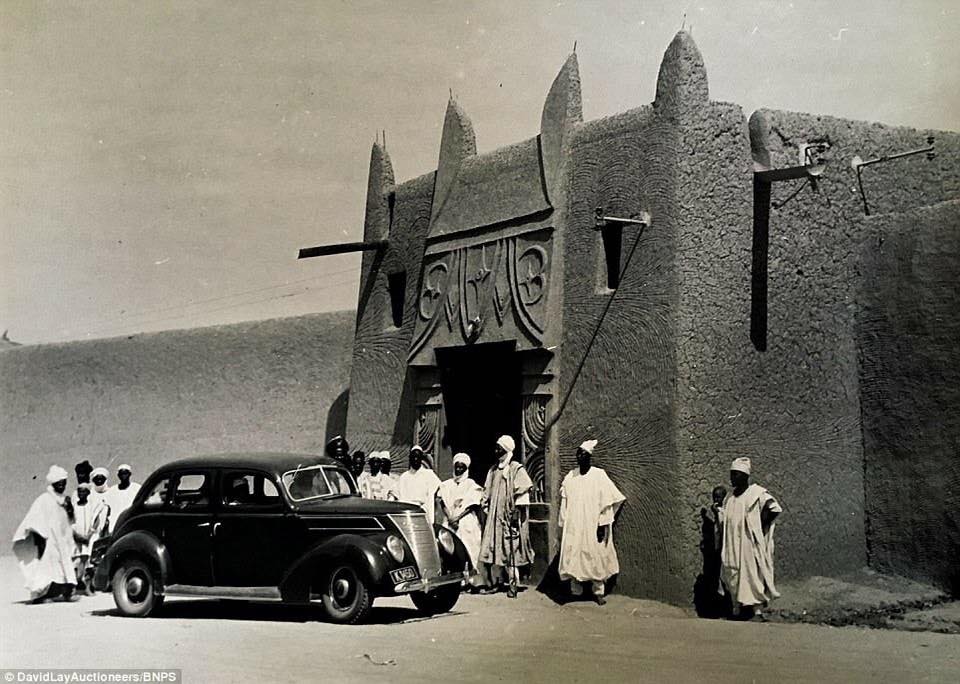
Worthy of mention is the Durbar, a painting that uses acrylic on canvas to show horsemen riding out of Gidan Rumfa, the Kano palace. The texture of the textile art was tender and quite brilliant. The landscape paintings were simply mesmerising. Overall, it was an aura of beauty and sophistication. I spoke with a few of the artists. Their enthusiasm and joy for the promises Kabara offered was evident. One artist, Muhammad Sanusi told me this exhibition was unique in many ways and that it’s nothing like what he’d been at previously. ‘Every exhibition I attended I just had to squat, but this is the first to give me enough space to display my work, ‘ the young artist said.
Maryam Mahmoud, another artist whose paintings were exhibited as well said she was grateful for the opportunity Kabara gives to artists. ‘And for art enthusiasts to feast their eyes on the beauty and serenity that art offers, especially here in Kano. I look forward to more of such events from them,’ she added. For Rayyana Beita, it’s the opportunity to connect with her audience and interact with other artists that she commended.
In the final analysis, this was a successful outing and one can not but hope to see what the future holds for this ambitious arts collective. The first writers’ residency in Northern Nigeria is being built by Hilltop Arts Foundation in Minna, and with Kabara Kreatives we have hopes of seeing the first artists’ residency in Kano and indeed the north at large.
Mujahid Ameen Lilo is the assistant editor of ABU Creative Writers’ Club. He’s a fellow of the Wole Soyinka International Cultural Exchange Program 2019 and Ebedi International Writers Residency 2023.