Art and Culture

The super bookseller; Tribute to Alaji Garba Mai Littafi.

By Muhammad Ahmad Iliasu

When Barr. Ammani recommended Hillary Clinton’s Autobiography ‘Living History’ to me back in 2018, I said to myself where could I find it? Because, among others, one thing was certain; books that are authored across the ocean are not easy to find. And if, in the rare case, they are available, a young student like me was most likely priced out of contention.

Then one day, during one of my trekking braggadocios between Kantin Kwari, Bata to Sabon Gari, I stumbled upon an intensely greying old man of modest stature, smiley and incredibly alert and mobile for a man of his age. What pulled my attention to his makeshift shop wasn’t him, but rather the large book carrying the face of Herbert Hoover – USA’s 31st President.

At that time, there were a lot of debates in our Macro class in BUK on Buhari’s Protectionist policy. And with Yanis Varoufakis’s dominance on my bookshelf, how protectionism backfired against Hoover as stated in his ‘Global Minotaur’ became of great interest to me. I didn’t only want to know all about protectionism in the 1930s but the whole lifetime of President Hoover and his administration.

Therefore I stepped to the old man, pointed at the book and asked ‘how much is that one, Baba?’ ‘It’s price is two-thousand five-hundred Naira, boy’ – he replied. I responded ‘what?’ – almost terrified by its incredible cheapness, even though I didn’t have that amount at the time. To which he incredibly remarked ‘if you are truly serious, I will leave it to you at one-thousand seven-hundred Naira’. I laughed and borrowed the money from my boss’s change to settle the payment. I asked him once again ‘do you by any chance have Living History?’ The old man smiled and said ‘That will be Hillary Clinton’s Autobiography. I sold it two days ago. But I have ‘Women in Charge’. He put my curiosity into perspective with that response. Because I didn’t think he would know that instantly. And from then my relationship with him became very close. I admired his familiarity with books, genres and authors. And he became fond of how much I was willing to spend on books.

Interestingly, we never exchanged contacts. I usually stopped by his place anytime my boss sent me to Sabon Gari. And whenever he had a book he knew I’d like, he would keep asking his customers if they knew one big lad from the core metropolis who is crazy about books – I knew that because he asked three people who knew me and passed the message.

Beyond the unbelievable cheapness of his books, what made Alaji Garba special wasn’t his eagerness to sell, but knowing what his customers wanted to buy. He had a way of profiling people’s interest perfectly. For example, anytime he had an autobiography of a famous leader or historical figure he would try his best to see me acquire it. I recall how he kept the biography of Joseph Stalin waiting for weeks even though many wanted to get it ahead of me. Funny enough, I didn’t know who Stalin was at that time. He just believed I would like it. And he was right.

From him I acquired more than 20 biographies of US presidents including those of Washington, Maddison, Jefferson, Lincoln, FDR and Reagan. I first heard about The Bourbons, House of Windsor and The Bolsheviks from him. Better yet, he supplied deep readings on them. I got classics authored by Rousseau, Locke, Homer, Byron, Marx, Calder, Orwell, Dante and Dumas from Alaji Garba.

He introduced me to the artistic savagery of Mario Puzo’s Mafia and the boiling horror of Stephen King. I know Jenni Calder and her father Angus Calder because of Alaji Garba, and thanks to that I know Thomas Carlyle and whoever he mentioned in his analysis of Heroes. I’ve forgotten to mention the book “Heroes” by Jenni which Alaji Garba gave me almost for free, the very book whose analytical dexterity formed the earliest foundation of my ability to conflate history with literature, personality with reality, and what an author seeks to achieve with every detail of his book.

On the afternoon I bought Eisenhower’s biography, Alaji Garba gave me ‘Thirty Centuries of Command’ for free. And beyond acquiring familiarity with the military-industrial complex, the misinformations in the Thirty Centuries of Command on Sultan Muhammad al-Fatih rattled me into reading the history of the Ottoman Empire since Sulayman Shah and Ertugrul up to Lawrence of Arabia and Mustafa Kemal Attaturk.

Indeed, I am nothing without my bookshelf, and my bookshelf would be nothing without Alaji Garba’s heavenly supply. There are five times more books on my shelf that were supplied by Alaji Garba than any other bookseller. And he’s probably only edged by Jakara City on the quantity of my readings supplied. The poor man, whom I truly loved, probably had no idea what he was doing jumping from one shadow to another under a bridge with those small sacks of old treatises. He was probably just trying to put food on his table, unsure of who next will buy, and whether that will be enough to pay the fare home. But he was more than that. And I wish he knew it. I wish he knew how many lives he changed with that materially unrewarding trade. I wish he can get recognition for the volume of knowledge he worked very hard to put into the hands of people who otherwise would never have gotten the chance to get.

I wish he knew how much I loved him and how much I understood his efforts and how much I admired him and his trade. I wish he knew how people like him inspire me to be great despite having no independent ambition to be so, just so that when I tell their story to the people who should’ve known them it will bear some weight. I write, partially, so I could tell the stories that may never be told. And Alaji Garba’s is truly one of a kind. May Allah rest him in His eternal peace. May ‘Iqra’a’ rescues him from the wrath on the day of judgement. For certainly very few have dedicated more to the love of reading.

Muhammad Ahmad Iliyasu is Strategic Communications Officer at the Center for Fiscal Transparency and Public Integrity. He can be reached via his email: Muhada102@gmail.com

Echoes of the past, choices of today: Will Kano’s throne withstand the test of time and wisdom?

By Usman Abdullahi Koli

The grandeur of Kano’s emirate is not merely an inheritance of a throne but the custodianship of a deep-rooted history, culture, and tradition that represents the very soul of African heritage. From the era of Bagauda to the reign of Ado Bayero, the emirate has stood as a symbol of resilience, dignity, and continuity. 

Today, as the emirship tussle continues, it presents a defining moment not just for those directly involved but for the entire Kano people, whose unity and stability rest upon the wisdom of their leaders. It is a moment that demands measured actions, guided by history and the sacrifices of great monarchs who prioritised the collective good over personal ambitions.

The Kano Emirate is no stranger to succession disputes; however, history has shown that wise leaders have navigated such crises with patience, foresight, and a commitment to preserving the integrity of the institution. From the reign of Emir Muhammadu Sanusi I to that of Ado Bayero, the emirate has undergone significant transitions- some peaceful, others contentious- but ultimately resolved with a sense of responsibility toward the larger interest of Kano.

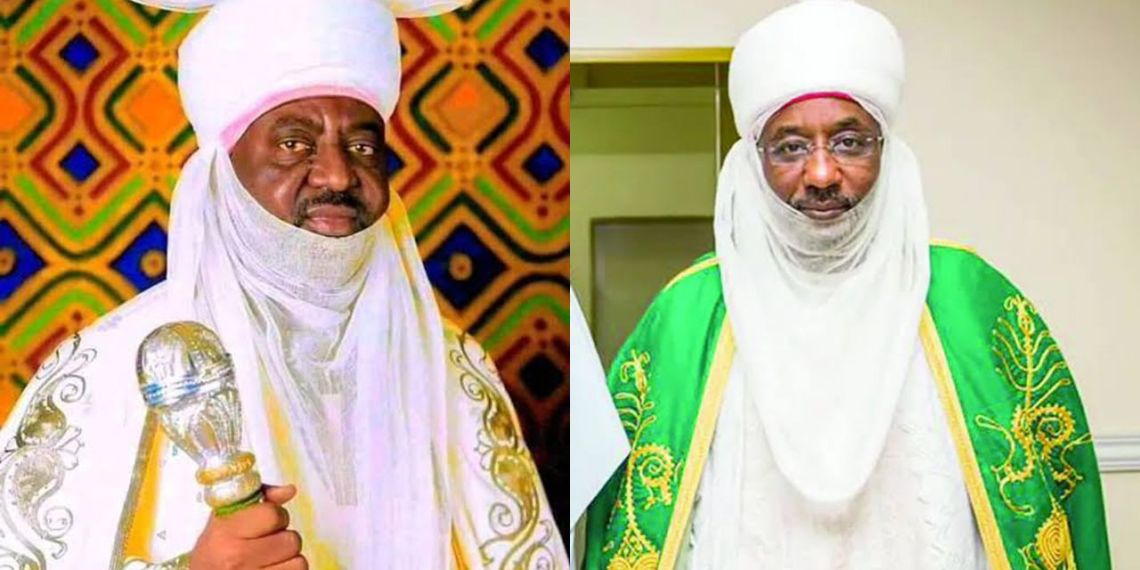
Today, we see echoes of the past in the contest between Emir Muhammadu Sanusi II and Emir Aminu Ado Bayero. While the legal and political dimensions of the crisis continue to unfold, the moral weight on those involved is immense. The key question remains: Will the dignity, harmony, and prestige of Kano take precedence over personal interests, or will history remember this episode as a moment of avoidable discord?

History is replete with examples of monarchs who faced displacement yet responded with wisdom, ensuring that their thrones remained symbols of honour rather than sources of division. In 1936, King Edward VIII of Britain abdicated the throne out of personal conviction, avoiding a constitutional crisis. 

More recently, King Juan Carlos of Spain voluntarily stepped aside to preserve national unity and dignity. Within Africa, deposed monarchs have often demonstrated restraint, placing the peace of their people above personal grievances.

A particularly relevant example is Emir Muhammadu Sanusi II, who, despite the political implications of his removal in 2020, did not rally his supporters to contest the decision. Instead, he accepted his fate with remarkable composure, trusting in destiny and the historical cycle that governs leadership.

Governor Abba Kabir Yusuf is enormously responsible for ensuring that his administration’s actions do not fuel unnecessary tensions in Kano. While he holds constitutional authority over traditional institutions, wisdom dictates that such decisions be made with a far-reaching vision that safeguards Kano’s unity, stability, and the sanctity of its traditions. Political decisions should not be allowed to erode the revered position of the emirate.

To Emir Aminu Ado Bayero, this moment calls for deep introspection on the true essence of leadership. His revered father, Emir Ado Bayero, was an emblem of peace, patience, and sagacity. The respect he commanded was not merely because he sat on the throne but because of his ability to navigate crises with wisdom. Now, his son faces a historic test: will he allow personal ambition to override Kano’s peace, or will he embrace the noble path of sacrifice? The decisions he makes today will shape how history remembers him.

To Emir Muhammadu Sanusi II, his reinstatement is a return to power and an opportunity to lead with renewed wisdom and vision. His expectations are immense—not for vengeance or retribution, but for reconciliation and statesmanship. The people of Kano look up to him to use his vast experience, intellect, and leadership to heal divisions, restore trust, and solidify the emirate as a pillar of stability.

Kano is more than a city; it symbolises Africa’s resilience, culture, and civilization. The emirate embodies centuries of tradition that must not be tarnished by personal conflicts. The world is watching, and history is recording. The real question is not who occupies the throne today, but how that throne is preserved for generations to come.

It is crucial for external influences, particularly those in Abuja, to respect the Kano State Government’s decision. The constitution recognizes states as custodians of their emirates, and any interference from outside forces risks escalating tensions rather than resolving them. Political insinuators should avoid fueling discord and instead honour the autonomy of Kano’s leadership.

Now, the great tradition of the Sallah Durbar, which both factions claim to organise, must not become a battleground for supremacy. The grand procession, deeply embedded in Kano’s cultural and Islamic identity, is meant to unite, not divide. It should not be reduced to a contest of power. Both sides must recognize that personal ambitions should never overshadow the collective peace of Kano. True leadership is tested not in times of comfort, but in moments of crisis, and the world is watching to see whether wisdom or ego will prevail.

Great monarchs are remembered not for how fiercely they fought to retain power, but for how wisely they managed transitions, prioritized peace, and left behind legacies of honor. The lessons of Kano’s past emirs—from Bagauda to Ado Bayero—should serve as a guide for present leaders. These revered figures ruled with dignity, wisdom, and a profound sense of duty to their people.

Those who occupy the throne today must consider: Will they be remembered for upholding this legacy or for diminishing it?

May wisdom prevail over pride, and may Kano remain the fortress of culture, tradition, and unity it has always been.

Usman Abdullahi Koli wrote via mernoukoli@gmail.com.

Governor Yusuf calls for preparations for Sallah Durbar celebration in Kano

By Hadiza Abdulkadir

Kano State Governor Alhaji Abba Kabir Yusuf has instructed all four state Emirates to begin preparations for the upcoming Sallah Durbar Celebration. The announcement was made following a Ramadan breakfast meeting with the Emirs at the Government House in Kano.

In a statement from the Governor’s spokesperson, Sanusi Bature Dawakin Tofa, it was highlighted that Governor Yusuf recognizes the community’s enthusiasm for the traditional celebrations, which include wearing new attire, lining the streets to witness the Emirs on horseback, and exchanging greetings.

Emphasizing his commitment to uphold this cherished tradition, the governor assured citizens that all security agencies will be mobilized to ensure their safety during the festivities. Additionally, he revealed plans to inaugurate the Kano State Emirate Council in April, aiming to enhance its functionality.

The relationship among the Emirs has reportedly improved under Governor Yusuf’s administration, with Malam Muhammadu Sanusi II, Chairman of the Kano Emirate Council, noting the friendly ties between the Emirs. He urged the governor to use traditional institutions to effectively communicate policies to the grassroots level.

Emirs from Karaye, Rano, and Gaya expressed their appreciation for recent government initiatives, especially the provision of fertilizer and enhancements in education, health, and infrastructure in their emirates.

The Spirit of Kano Photo Competition

By Prof. Abdalla Uba Adamu

For some weeks, I had been involved in judging a photo competition themed “Spirit of Kano”. One way or another, I was made the “Chief Judge” by the Curator, Dr. Shuaib Sani Shuaib, Executive Director, Makuba Center for Arts and Culture, Kano. He is also the Curator for Global Shapers Community, Kano Hub. Overall financial support was also provided by Engr. Anas Yazid Balarabe, who is also the founder of the cooperative. 

As an amateur photographer with a deep and intense interest in art and the aesthetics of the environment, coupled with a fanatical advocacy for the best State on this side of the Milky Way Galaxy, I was honored to be appointed the Chief Judge. However, since it was an open competition and open voting, I designed the judgement criteria for the photos,which were used to judge the 100 or so entries by other judges. Photographers were urged to send pictures that, in their view, capture the “Spirit of Kano”. Many people participated, and many photos were sent. 

These entries were beautifully shot and captured the Spirit of Kanawa and Kananci. They were all beautiful. However, I judged them based on what the images conveyed about Kano in various visual ways—history, architecture, food, clothing, urban life, historiography, etc. For me, choosing the best three was really difficult because there was so much beauty and talent in each photograph—faces, places, spaces. The entire collection was a riot of colorful visual poetry that describes Kano. 

Each picture in the entries has unique features and communicates the dynamism of both urban and rural Kano. Thousands of words could be woven around each picture that communicate the vibrancy of Kano. My selection cuts across history, trade and lived-in experiences. I would have loved to see some architectural shots – the ones I saw were mainly Emir of Palace pictures (Ƙofar Kudu or thereof). A few shots of ‘mansions’ and ‘haciendas’ would have given an evolutionary trajectory of the Spirit of Kano, in addition to the alleyways and gidan kara.

Four judges trudged through the 100 or so entries and made their choices. These were then further pooled by common choice from each judge to pare down the selection to six, on which the final judgment of three was made. To ensure a fair and transparent selection process, the top three winners were chosen based on a combination of judges’ evaluations and public voting. The final ranking was determined by taking an average of the judges’ scores and the public vote ranking in which the winners emerged. Very transparent. Further, everything was done online. 

The final judgment of the top three (shown here) truly deserves it. The winners, based on the highest scores, along with their prizes, were:

1- Muhamad Sani Abbas (₦250,000)

2- Alamin Mohammed (₦150,000)

3- Aisha Suleiman Halili (₦100,000)

Muhammad Sani Abbas’s best picture was of a young greengrocer measuring a customer’s order in a local market. The intensity of his face captured everyone’s imagination and admiration. The photo of the boy is a bookmark on Kano and its commerce—never too young to start. It was indeed a beautiful shot. 

Alamin Mohammed took second place. Interestingly, the picture also shows another young lad galloping on a horse in full ‘royal’ regalia. Frozen in time, the horse rider captures Kano’s ancient tradition and royal heritage. 

Third place went to a composite study of the Kano Emir’s palace guards (Dogarai) from a truly sensitive POV. The winner, Aisha Halilu’s portrait of a shadowed Dogari, makes the maximum use of light and shadows to accentuate the beauty of the setting. The Dogari, with his back to the camera, clearly was not the focus of the shot but the far houses he was gazing at—a contrast between the traditional Hausa architecture of the palace and the post-modern bungalows he was gazing at. 

A picture by Ahmad Sufi, which I voted for, did not win, but that’s alright; after all, it was aggregate scores that mattered. I didn’t place it number one, but I had expected it to be at least number three. The outcome only highlights the high quality of the visual appeal of the photos entered in the competition. 

The one that did not make it on my list was a market scene with an Arab (at least the guy looks like an Arab but dressed in Babbar Riga) holding on to a camel. Far in the distance is a communication tower. To me, the pictures talk volumes about migration, cultural adaptation, trans-Saharan road networks and contemporary communication – all visually encapsulating what Kano has been for centuries and those to come. 

I think it is wonderful that an NGO of young, committed individuals could come up with this. It should be the purview of the Kano State History and Culture Bureau. A letter was sent to the Kano State Government requesting partnership/sponsorship, but there was no response at all. Even the prize money was sourced by Dr. Shuaibu, showing a commitment to Kano far greater than many of us. 

What could the next steps be? Perhaps an annual event? Or a regionalisation of the competition? For instance, it would be fantastic to see the “Spirit of Zazzau”, followed by Rano, Daura, Katsina, Gobir, and so on, all the way to Niamey. This way, we could have an annual Spirit of Hausa Kingdoms as visual poetry, encouraging young people to appreciate the historical, cultural, and aesthetic qualities of their environment. 

Cultural advocates raise alarm over Hausa heritage decline

By Uzair Adam

The Hausa language is one of the fastest-growing languages, not only in Nigeria but also in other parts of Africa and countries such as China, Germany, and the United Kingdom.

However, despite its increasing global recognition and recorded successes, Hausa people seem to be neglecting the cultural teachings and traditions of their ancestors.

Hausa customs, norms, and values are gradually fading, turning into historical relics that may soon exist only in books or folktales.

This trend has raised concerns among cultural stakeholders.In response, the I-Care Initiative organized a two-day workshop in Kano from Monday to Tuesday, focusing on the preservation of Hausa traditions in the 21st century.

The event brought together stakeholders from various Hausa-speaking states in Nigeria to discuss the way forward through presentations, Hausa poetry, and other cultural showcases.

The workshop featured prominent Hausa novelists, including Dr. Bilkisu and Hajiya Hadiza Nuhu, as well as renowned traditional musicians such as Aminu Ala.

It also attracted traditional dancers, academics from Nigerian languages and mass communication departments, and other cultural enthusiasts.

According to Hajiya Amina Namadi Sambo, the Chairperson of I-Care Initiative and wife of former Vice President Namadi Sambo, the event aimed to highlight the rich cultural heritage of the Hausa people.

She noted the importance of preserving Hausa culture, stating, “Nowadays, many of our children can hardly speak Hausa without code-mixing or code-switching.”

She also lamented the decline of traditional Hausa cuisine, noting that many young people no longer know how to prepare these dishes.

To address this, the event showcased various Hausa delicacies alongside traditional businesses, allowing attendees to learn and appreciate their heritage.

Hajiya Amina further criticized the growing disregard for Hausa traditions, which has led some to believe they are superior to the Hausa people.

She urged individuals to read Hausa literature and called on Hausa filmmakers to promote authentic Hausa culture in their productions.

Speaking at the event, Vice President Kashim Shettima, represented by Sayyada Rahma Abdulmajid, praised Hausa culture and reaffirmed the federal government’s commitment to preserving Nigerian traditions.

He highlighted the creation of a ministry dedicated to cultural preservation and the allocation of significant funds for this purpose.

Shettima reiterated the global significance of Nigerian culture, stating, “Our culture commands great respect worldwide.

“Wherever you go, among every five black people, one is Nigerian. Moreover, the best among them is often a Nigerian.”

The event also showcased Hausa crafts and trades, such as hand fans (mafici), woven mats (tabarma), clay pots (tukunyar kasa), and dyeing techniques.

These businesses have historically connected Hausa traders from Kano to Sokoto, Zaria to Timbuktu, Marrakech, and across West and North Africa.

“Through these businesses, the Hausa man built his own house and city, which later contributed to the formation of Northern Nigeria,” she added.

Also speaking at the event, Professor Aliyu Bunza from the Department of Nigerian Languages, Usmanu Danfodiyo University, Sokoto, took attendees on a historical journey tracing the origins of the Hausa people and the factors behind their success.

Bunza attributed their resilience to strong cultural and moral values, stating, “The Hausa people are known for their honesty and truthfulness. If you are trustworthy, you will earn their respect, but if they find you deceitful, they will not trust you.”

The event was attended by traditional titleholders, government officials, and wives of former governors, including Dr. Aisha Bala Muhammad, wife of the Bauchi State Governor, and Hajiya Amina Shekarau, wife of former Kano State Governor Ibrahim Shekarau, among others.

Unveiling the healing power of arts on mental health

By Hassana Suleiman Kandi

Health is not merely the absence of disease in the human body; rather, it encompasses the physical, social, and emotional well-being of individuals. Mental health refers to a person’s ability to cope with life’s stresses, recognise their abilities, and function effectively in work and learning environments.

Mental health is integral to our well-being and significantly contributes to our daily decision-making ability. It encompasses the complexity of an individual’s social and psychological life, highlighting the urgent need for action on mental health. It is vital for personal development.

However, mental health is experienced differently by each person. This includes conditions like mental disorders, psychological disabilities, and other mental states associated with impairments. People are inherently vulnerable to mental health challenges.

Social interactions and personal skills strengthen resilience, and mental health issues can be mitigated by identifying social and emotional determinants. However, some issues require actions that go beyond the health sector. 

Fortunately, various forms of art offer protective benefits that can bridge the gap for common mental health conditions. The arts play a pivotal role in mental health. Engaging with the arts can help moderate the risk of mental health problems. 

Art exists in many forms, including visual, performing, and literary arts, each offering unique benefits. Taking a break from daily routines to engage in artistic activities can significantly improve mental health, as the benefits are numerous and deeply engaging.

Visual Arts: Anyone, regardless of skill level, can participate in visual arts. Many people have been encouraged to look after their health by utilizing their leisure time creatively. Visual art, including painting, drawing, and sculpture, is therapeutic, boosting self-esteem and enhancing skills.

Performing Arts: Music, dance, poetry, and storytelling are accessible to all, regardless of skill level. These activities improve mood, promote physical health, boost emotional well-being, and help ward off negative thoughts. Lady Gaga, for example, has famously used music and performance to manage anxiety.

Literary Arts: Writing, poetry, and spoken words can also effectively address mental health issues. These forms of expression are open to all and can help with mood expression and self-reflection. Schools should encourage students to engage in literary arts, as they foster emotional expression and can boost self-confidence.

Crafting: Knitting and woodworking promote relaxation, reduce stress, improve mood, and alleviate anxiety. Many people, particularly women, craft as a fun and therapeutic way to relieve stress.

Numerous individuals have coped with and overcome mental health challenges through art. For example, the renowned painter Edvard Munch struggled with anxiety but found solace in his artwork. Art stimulates brain regions that promote neural connections, adaptability, and the release of endorphins, all of which improve mood.

Many people have overcome common mental health problems such as anxiety and depression by engaging in the arts. Art provides a unique outlet for emotional expression and helps individuals realise their potential. Creativity is innate in everyone, regardless of age, race, or skill level.

Art fosters understanding and unity between individuals or communities, leading to a stereotype-free environment and encouraging cohesive socialisation. Furthermore, it helps represent emotions through body language, words, and patterns. The most exciting part is that anyone, including individuals with disabilities, can participate in art.

It is crucial not only to protect and promote the mental well-being of all but also to deepen the value placed on mental health. A committed approach to addressing the needs of those with mental health conditions will undoubtedly improve overall mental health outcomes.

Hassana Suleiman Kandi is a student at Ibrahim Badamasi Babangida University Lapai and an intern with PRNigeria. She can be reached at kandihassana@gmail.com.

The Kano durbar UNESCO inscription: Beyond the jubilations

By Salim Yunusa

The formal inscription of the annual Kano Durbar by the United Nations Educational, Scientific, and Cultural Organization (UNESCO) on its Representative List of Intangible Cultural Heritage of Humanity is a welcome development to not just Kano but Nigeria as a whole. The nomination, adopted on the 6th of December, 2024, in Paraguay, at the 19th session of UNESCO’s Intergovernmental Committee for the Safeguarding of the Intangible Cultural Heritage, makes it the 8th element to be inscribed from Nigeria. UNESCO is a specialised agency of the United Nations that promotes peace and security through international cooperation in education, science, culture, and communication.

According to many sources, the Kano durbar is the world’s largest procession of colourful horses. It has evolved with the history, religion, culture, and tradition of the Kano people over time. It is usually done to mark the Islamic holidays of Eid-el-Fitr and Eid-el-Adha, among other special celebrations. While other similar durbars are carried across almost all Northern Nigerian cities such as Zaria, Katsina, Bauchi, Gombe, Hadejia, Maiduguri and Sokoto, the Kano durbar stands out due to the sheer number of participants, tourists, spectators and days of celebrations.

This global recognition is a significant milestone, celebrating one of Nigeria’s most vibrant cultural festivals. Renowned for its majestic horse parades, traditional regalia, and music, the Kano Durbar reflects Northern Nigeria’s cultural pride and rich heritage. While the jubilations over this achievement are justified, it is essential to explore the opportunities and responsibilities that come with the UNESCO inscription.

 Beyond the celebrations, stakeholders must now prioritise preservation, promotion, and leveraging this global acknowledgement to foster tourism, break down stereotypes, and drive cultural and economic development in Kano and Northern Nigeria as a whole.

Kano—and Northern Nigeria as a whole—is a goldmine of culture and tradition preserved for ages, although these are currently under threat of extinction. The Dye Pits of Kofar Mata, founded in 1498 and spanning five centuries, are at risk of becoming extinct due to disrepair and unsustainable practices in recent times. The walled city of Kano is gradually disappearing to give way to commercial structures along the busy roads of Kano. There is a growing threat of climate change eroding sites like Dala Hills, Gidan Makama and others due to neglect. Sustainable protection and preservation of sites like this must be done for future generations.

This particular UNESCO inscription underscores the need to preserve the Kano Durbar for future generations through strategic documentation and archiving of the festival’s history, rites, and performances. High-quality visual content and written materials can help maintain its essence while creating accessible records for global audiences. This will effectively engage the youth, which is vital to ensure the tradition remains dynamic.

In addition, effective and efficient collaboration between the Kano Emirate council, non-governmental organisations (such as MACOBA, UNESCO, Global Shapers, etc.) and government agencies (NICO, Ministry of Arts and Culture, Tourism Development, etc.) is necessary to provide funding, technical support, and regulations that safeguard the festival’s cultural integrity.

In a state like Kano, boasting the highest population in the country and being the most populous in Northern Nigeria, the Kano Durbar has the potential to become a cornerstone of Nigeria’s cultural tourism, becoming a blueprint for other durbars across the region. To achieve this, a well-coordinated tourism strategy is essential. This could include partnering with airlines, hotels, and tour operators to create attractive travel packages for domestic and international tourists. Marketing campaigns highlighting the Durbar as a unique travel experience should be launched across social media platforms and international media outlets. Collaborations with influencers and travel bloggers can also amplify its appeal.

Furthermore, enhancing the visitor experience is key. Infrastructure around festival venues should be improved, with better roads, accommodations, and festival-specific amenities. Creating dedicated viewing platforms and cultural villages can also enrich the experience for attendees, making the Durbar more accessible and enjoyable.

Beyond cultural pride, the inscription opens doors for economic development. Investments in Durbar-themed merchandise, souvenirs, and artisanal crafts can generate revenue for local communities. E-commerce platforms can facilitate the sale of these items to a global audience.

Additionally, recognising the festival as an international heritage can attract global partnerships and funding for sustainable development initiatives in the region. Furthermore, technology offers endless possibilities to promote the Kano Durbar. Virtual reality (VR) and augmented reality (AR) experiences can bring the Durbar to audiences unable to attend physically. Comprehensive online platforms can offer ticket sales, merchandise, and interactive content, ensuring year-round engagement with the festival. These digital initiatives can transform the Durbar from a localised event into a global cultural phenomenon.

Finally, the festival could serve as a hub for cultural exchange, inviting participants from other regions and countries to share their traditions and learn about the Durbar, fostering mutual respect and understanding. It could be so much more, with proper organisation and intention by the stakeholders involved.

The UNESCO inscription of the Kano Durbar is a momentous achievement that places the festival on the global stage. However, this recognition comes with responsibilities. By preserving its legacy, harnessing its tourism potential, and leveraging technology and cultural exchange, stakeholders can transform the Durbar into a beacon of Nigeria’s cultural excellence. Beyond the jubilations lies an opportunity to turn this acknowledgement into a catalyst for cultural pride, unity, and economic development. The time to act is now.

Salim Yunusa writes from Abuja, Nigeria and can be reached at syunusa@gmail.com.

Cultural diversity and its benefits in Nigerian education

By Waliyat Ayomide Oseni

In an era increasingly defined by globalisation and interconnectedness, cultural diversity has become pivotal in shaping educational frameworks worldwide. In Nigeria, a nation rich in ethnic plurality and cultural heritage, cultural diversity within educational institutions assumes strategic importance.

Cultural diversity refers to various cultural, ethnic, and social backgrounds represented within a community. Nigeria is often called a “melting pot” due to its numerous ethnic groups, languages, customs, and traditions. This diversity can enrich the educational experience, providing students with a broader worldview and enhancing their understanding of global issues. 

Nigeria is a diverse country with over 250 ethnic groups and more than 400 languages spoken, reflecting a rich cultural tapestry. This diversity is fundamental to Nigerian society and contributes to its vibrancy and uniqueness. Ethnic groups such as the Hausa-Fulani, Yoruba, and Igbo, among others, each bring their traditions, languages, and customs, creating a mosaic of cultures across the nation. 

Religious diversity is also prominent, with Islam, Christianity, and traditional African religions coexisting harmoniously. This cultural richness is celebrated through various festivals, ceremonies, and events, showcasing the country’s diverse heritage and promoting unity among its people.

One of the most significant benefits of cultural diversity in Nigerian educational institutions is promoting critical thinking and problem-solving skills. Diverse classrooms encourage students to engage with differing viewpoints, challengepreconceived notions, and foster respect for others’ beliefs and practices. This exposure sharpens analytical skills andcultivates empathy and social awareness, which are crucial for functioning in a diverse society and workplace. 

Diversity also fuels creativity and innovation in the learning process. When students are encouraged to collaborate across cultural boundaries, they combine unique experiences and ideas, leading to imaginative solutions to complex challenges. 

For instance, blending cultural perspectives in group projects can enhance creativity and result in more comprehensive and multifaceted outcomes. Educational leaders who emphasise collaboration among students from diverse backgrounds can harness this potential, creating an environment that nurtures innovative thinking.

In addition, extracurricular activities such as cultural festivals, language clubs, and international exchange programs can enrich students’ learning experiences and promote cultural appreciation. These initiatives foster community and belonging while encouraging students to celebrate their unique identities.

In conclusion, cultural diversity within Nigerian educational institutions offers many benefits, including enriched learning experiences, enhanced critical thinking, and improved interpersonal skills. Educators play a vital role in embracing this diversity and fostering an inclusive environment where every student can thrive. As Nigeria continues to navigate its identity within a global landscape, prioritising cultural diversity in education will undoubtedly enrich the learning experiences of future generations and contribute to the nation’s development.

Waliyat Ayomide Oseni wrote from the Department of Mass Communications, Bayero University, Kano.

Prominent leaders attend wedding of Kwankwaso’s daughter in Kano

By Uzair Adam

Former President Olusegun Obasanjo, Vice President Kashim Shettima, and former Vice President Atiku Abubakar were among the notable figures who attended the wedding Fatiha of the daughter of former Kano State Governor, Engr. Rabiu Musa Kwankwaso, in Kano on Saturday.

The grand event also brought together the groom and bride’s fathers, prominent businessman Dahiru Mangal and Rabiu Kwankwaso, alongside Kano State Governor Abba Kabir Yusuf and his deputy, Aminu Abdusalam Gwarzo.

The wedding Fatiha was held at the Palace of the 16th Emir of Kano, Muhammad Sanusi II, and drew dignitaries from across the country.

The ceremony marked another significant gathering of Nigeria’s political and business elite, reflecting the strong ties among the nation’s leaders.

Impact of social media on teenagers

By Zainab Haruna Abba

Social media has become an integral part of teenagers’ lives, but its impact on their well-being and mental health is a topic of concern.

Social media allows teenagers to connect with friends and family, share their thoughts and experiences, and access information and resources. It can also provide a platform for self-expression and creativity. Additionally, social media can be a powerful tool for raising awareness about important issues and promoting social change.

The impact of social media on teenagers can be significant. It’s not just a case of losing sleep and getting distracted during the day; social media can have far-reaching adverse effects on a teen’s mental health.

As the adolescent brain is still developing, it’s more vulnerable to time online. And since teens can sometimes struggle to self-regulate their screen time, their exposure and the risk of harm increases. As a result, teens’ social media use often correlates with depression, anxiety, low self-esteem, envy and loneliness.

However, parents can take steps to encourage responsible use of social media and limit its negative effects. Setting reasonable limits on social media use is crucial. Parents should talk to their teens about avoiding interference with important activities such as sleep, meals, or homework. Establishing a bedtime routine that avoids electronic media use and keeping cellphones and tablets out of bedrooms is also essential.

Monitoring teens’ social media accounts regularly is vital. Parents should let their teens know they will check their accounts and follow through. Explaining what’s not okay to share or do online, such as gossiping, spreading rumours, bullying, or damaging someone’s reputation, is also important.

Encouraging face-to-face contact with friends is particularly important for teens who are vulnerable to social anxiety disorder. Parents should talk openly about social media and its potential impact, sharing their experiences and habits and asking teens how they use it and how it makes them feel.

Reminding teens that social media is full of unrealistic images can help mitigate negative effects. Parents can also help protect their teens by setting guidelines and teaching responsible use.

An estimated 4.9 billion people worldwide are expected to use social media in 2023. For teens who grow up with technology, those digital platforms are woven into the fabric of their lives.

“Social media is here to stay,” said Mary Alvord, PhD, a clinical psychologist in Maryland and adjunct professor at George Washington University and a member of the APA panel. That doesn’t mean we have to accept its dangers, however. “Just as we decide when kids are old enough to drive, and we teach them to be good drivers, we can establish guidelines and teach children to use social media safely,” Alvord said.