Admin

NNPP names Abiya acting Kano chairman as leadership crisis deepens

By Uzair Adam

The leadership crisis rocking the Kano State chapter of the New Nigeria Peoples Party (NNPP) has intensified following the appointment of Abdullahi Zubairu Abiya as Acting State Chairman after the removal of the former chairman, Hashimu Dungurawa.

The Daily Reality reports that the decision was announced after an emergency meeting of the NNPP State Executive Committee held at the party’s secretariat in Kano, where members endorsed Abiya’s appointment in line with the party’s constitution.

Speaking on the development, the party’s Assistant Legal Adviser, Barrister Yusuf Mukhtar, said the emergence of Abiya followed due process and was consistent with the provisions of the NNPP constitution.

He explained that the move came after Dungurawa was rejected and removed at the ward level.

Party sources disclosed that the action was based on a formal resolution submitted by the Dawakin Tofa Local Government Executive Committee, which recommended the sack and expulsion of Dungurawa over alleged anti-party activities.

It was gathered that the resolution originated from the Gargari Ward Executive Committee in Dawakin Tofa Local Government Area and was forwarded to the state leadership by the local government executive, led by Hon. Abdullahi Ali Uban Iya Dawanau.

The ward-level decision was reportedly adopted at the second executive meeting of the Gargari Ward, held about two weeks after the general election, where Dungurawa was accused of actions deemed inimical to the party’s interests.

After reviewing the report, the State Executive Committee ratified the resolution and approved Abiya’s emergence as Acting State Chairman, party officials said.

NNPP officials described the move as part of efforts to restore internal discipline, strengthen party unity and reposition the party for future political engagements in Kano State.

Reacting to his appointment, the Acting Chairman, Hon. Abdullahi Zubairu Abiya, said the party would ensure fairness and justice for all members.

He added that the Kano NNPP would remain loyal to the party’s national leader, Senator Rabiu Musa Kwankwaso, as well as the Kano State Governor, Engr. Abba Kabir Yusuf.

Tinubu vows to proceed with new tax laws despite public opposition

By Anas Abbas

President Bola Ahmed Tinubu has maintained that the federal government will go ahead with the enforcement of the newly enacted tax laws legislation as scheduled, dismissing calls for a delay amid widespread debate and criticism.

In a statement issued from the State House on Tuesday, December 30, 2025, the President made clear that the new tax framework which includes measures that already took effect on June 26, 2025 and others set to begin on January 1, 2026 will be implemented in full and on time.

Describing the reforms as a “once-in-a-generation opportunity” to strengthen Nigeria’s fiscal architecture, Tinubu stressed that the laws are intended to reset the country’s revenue system, promote fairness, and enhance economic competitiveness. He rejected claims that they are designed to raise the overall tax burden on citizens.

The Presidency acknowledged the ongoing public discourse surrounding allegations that the officially gazetted versions of the tax laws differ from those passed by the National Assembly, but maintained that no substantial legal flaw has been established that would justify halting the roll-out.

Tinubu urged Nigerians and all stakeholders to support the implementation phase, which he said is now firmly underway, and emphasized his administration’s commitment to due process and the integrity of duly enacted laws. He also pledged to work closely with the National Assembly to resolve any issues that may arise during implementation.

The announcement comes amid growing pressure from various groups including student associations and opposition voices who have called for suspension of the commencement date pending thorough review and public sensitization.

Kannywood rallies to save actress Zee Diamond as colleagues appeal for ₦7 million balance

By Hadiza Abdulkadir

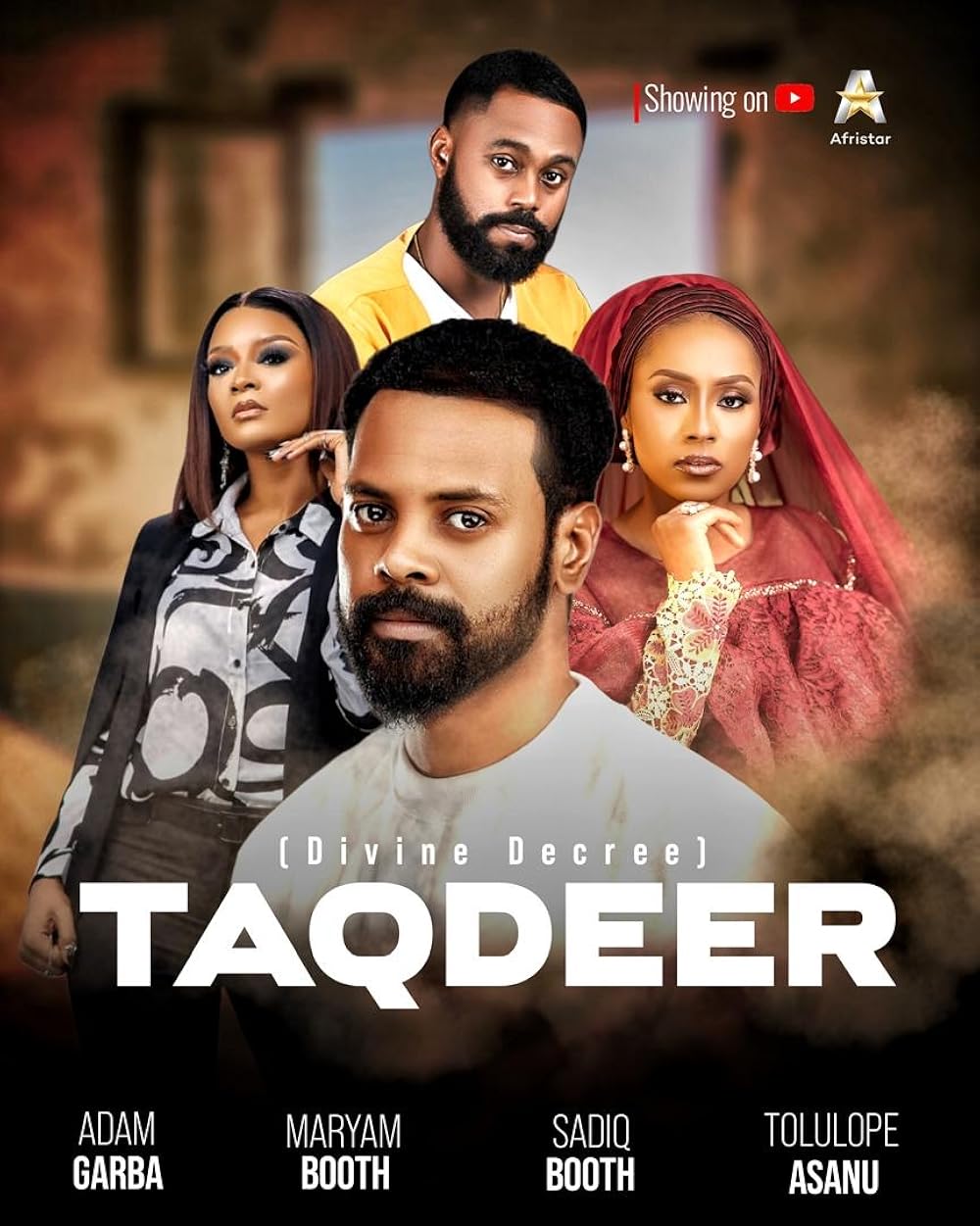
Yunusa Mu’azu, a well-known actor and producer in the Kannywood film industry, has issued a public appeal for urgent financial support for popular actress Zee Diamond Talatuwa, fondly known by fans as Maman Bintalo from the hit television drama Labarina.

In a statement posted on his official Facebook page, Yunusa Mu’azu revealed that the actress is battling a serious and life-threatening medical condition involving blocked blood vessels and abnormally thick blood. According to medical reports shared in the post, the condition—linked to hereditary factors and allergies—has made even basic intravenous treatment difficult and places her at high risk of heart failure and kidney complications.

Doctors have reportedly advised that Zee Diamond must be taken abroad for specialized treatment, as the condition cannot be adequately managed locally. The total cost of the medical procedure and travel is estimated at ₦25 million.

Yunusa disclosed that members of the Kannywood community, alongside the actress’s relatives, have so far raised approximately ₦18 million, leaving a shortfall of ₦7 million. He added that medical experts have warned that the treatment must be carried out within the next two months, stressing that any delay could have fatal consequences.

The appeal has triggered renewed calls for support across social media, with colleagues, fans, and well-wishers urged to contribute toward closing the funding gap. The development has once again drawn attention to the health challenges faced by creative industry professionals and the strong culture of solidarity within the Hausa film industry.

Army rescues eight kidnap victims in Cross River waterways operation

By Abdullahi Mukhtar Algasgaini

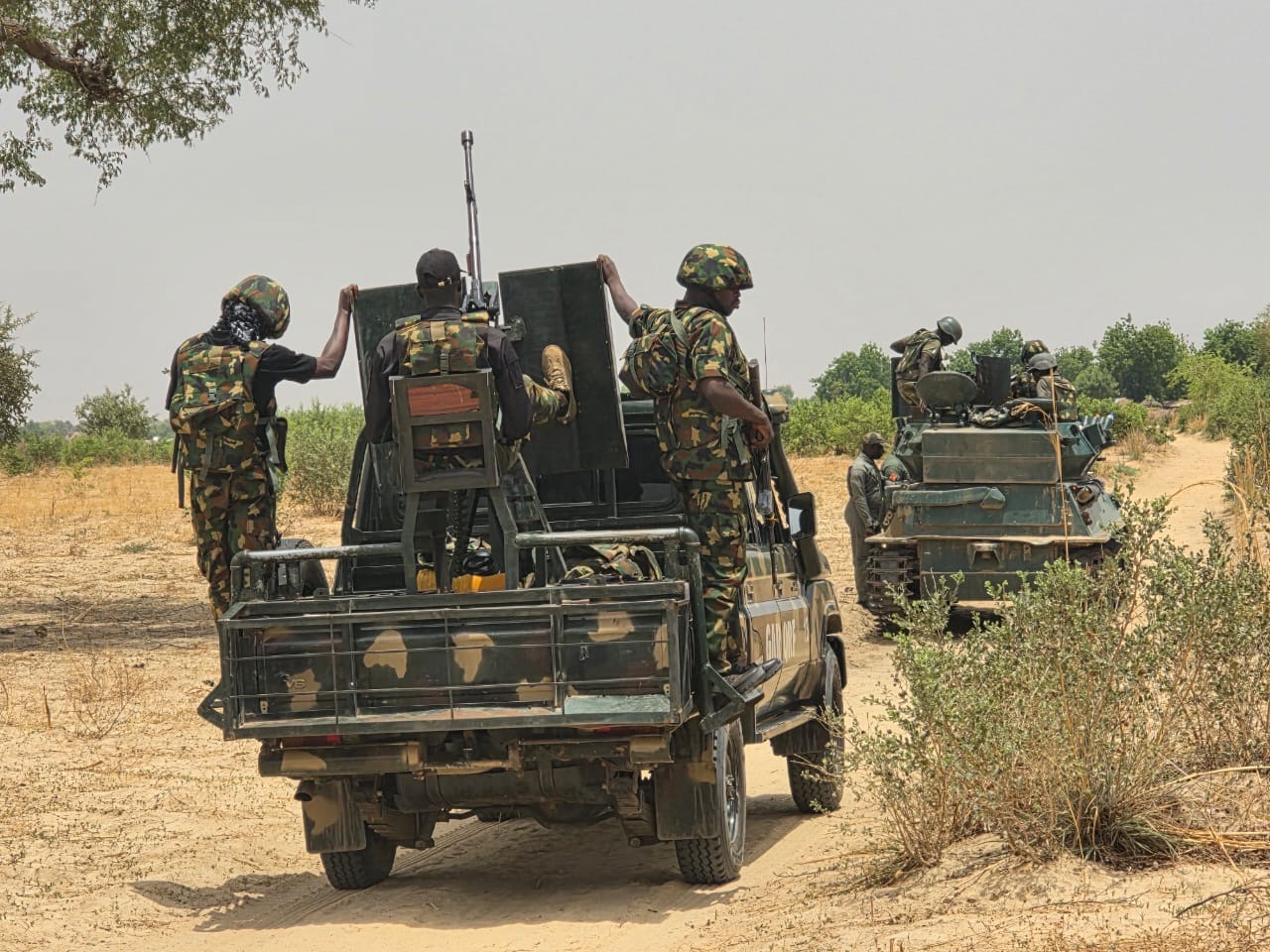
Troops of the Nigerian Army’s 13 Brigade executed a successful rescue operation on Sunday, freeing eight civilians abducted by suspected militants along the Ikang-Cameroon waterways.

Acting on a tip-off from local residents, soldiers from the Forward Operating Base (FOB) Ikang swiftly mobilized after learning that gunmen had intercepted a commercial boat and seized its passengers—six adults and two minors.

A military spokesman said the troops deployed rapidly, blocking escape routes and dominating the area. Under pressure, the militants abandoned their captives at the Ini-Abasi Fishing Port and fled toward the open sea. All eight victims were recovered unharmed.

After documentation and debriefing at the brigade headquarters, the rescued individuals were released to their families. No casualties were reported during the mission.

Brigadier General PO Alimikhena, Commander of 13 Brigade, praised his troops for their professionalism and thanked the community for the timely intelligence. He reaffirmed the army’s commitment to maintaining aggressive patrols to deny criminals freedom of action in the region.

The public is urged to continue providing credible information to security agencies.

The lie called “One Nigeria”

By Oladoja M.O

There comes a point in every nation’s existence when it must interrogate the very myths that forged its being, and it appears Nigeria has reached that juncture. “One Nigeria”, a slogan as old as our independence, repeated in classrooms, parliaments and pulpits alike, has gradually morphed from a patriotic creed into a hollow incantation that adorns speeches, but no convictions. A rhetoric that unites in sound but not in substance. And yet, like an overused balm, it is still generously applied to wounds that have long become septic.

When the British, in their cartographic arrogance, decided that the roaring rivers of the Niger and Benue could somehow dissolve the ancestral boundaries of a hundred nations into a single name, they planted both a promise and a peril. The promise was the strength of size, the illusion that numerical vastness equals greatness. The peril, however, lay in presuming that different civilisations, with their own gods, economies, memories, and destinies, could be hammered into a coherent polity without a shared philosophy of being. What emerged was less a federation of equals than a fragile patchwork held together by coercion and cliché.

History is replete with examples of states that mistook enforced coexistence for genuine unity. The Soviet Union once imagined that the subjugation of difference equalled solidarity until it collapsed under the weight of its own contradictions. Yugoslavia thought nationalism could be suppressed by ideology until ethnic passions burned Sarajevo into ash. Even Sudan, our continental cousin, insisted on an indivisible state until the centre could no longer contain the centrifugal cries for dignity and recognition, and the South tore itself free in a baptism of blood. Each of these polities preached “oneness,” but none could manufacture mutual trust. Unfortunately, Nigeria’s situation, though cloaked in democratic pretensions, bears an unnerving resemblance.

Decades after independence, we continue to stagger under the illusion of unity while exhibiting every symptom of division. Our politics remains a theatre of tribal anxieties. Our economy, a contest of regional grievance. Our institutions, battlegrounds of exclusion and suspicion. Every census, every election, every policy debate collapses into the arithmetic of ethnicity. We have created a federation in name, but a feud in practice. The Nigerian state, like a badly tuned orchestra, plays the anthem of unity while each instrument screams in its own discordant key.

What has deepened the tragedy is not merely that we are divided, but that we have learned to romanticise our dysfunction. The myth of “One Nigeria” has been elevated to the level of moral blackmail, as though questioning it were heresy. Yet, the facts are unflinching. From the coups and counter-coups of the 1960s, to the Biafran war that drenched this soil in youthful blood; from the endless agitations of the Niger Delta, to the violent insurgencies of the North, and the secessionist murmurs of the East, we have been a nation perpetually negotiating its own existence.

Even now, in the twenty-first century, the markers of mistrust remain, only deepened by new forms of betrayal. We have witnessed, time and again, how national security efforts are quietly sabotaged by regional sympathies where the pursuit of peace against terror becomes a political chessboard, and those who menace the state are garlanded as champions in their communities. In some quarters, it has almost become an identity to excuse barbarity in the name of kinship, to embrace those who burn the nation’s fabric as heroes rather than outlaws.

There are regions where individuals, through their character and conduct, have dragged the nation’s image into global disrepute, staining the diplomatic standing of millions, and forcing the country to spend years rebuilding bridges of trust with the international community. Elsewhere, the spirit of entitlement fosters a belief that governance is a turn-by-turn inheritance, that “it is our time now,” and so positions of influence must rotate along bloodlines and geography rather than merit. Even the recent rumblings of military adventurism, the whisper of coup sympathies and their architects seem disturbingly traceable to predictable corners of the polity, confirming that our divisions have not merely survived time; they have evolved.

Thus, we remain a country trapped in its contradictions: differential justice, uneven development, selective outrage, and an ever-widening gulf between the governors and the governed.

How then do we continue to recite the catechism of unity with straight faces? When the “one” in “One Nigeria” has become a question rather than a statement. For unity cannot be decreed by constitutions nor enforced by soldiers; it must be earned by fairness, equity, and mutual respect. When a nation’s prosperity is monopolised by a few, when power circulates within predictable bloodlines, when regions are treated not as partners but as provinces, the rhetoric of unity becomes an insult to intelligence.

We deceive ourselves with patriotic songs while ignoring the dissonance in our reality. The world is changing; nations are redefining themselves in pursuit of justice and balance. Ethiopia, after decades of internal conflict, restructured its governance to reflect its ethnic federalism. The United Kingdom, once rigidly centralised, conceded autonomy to Scotland, Wales, and Northern Ireland to preserve its union. Even Belgium, split by language and identity, discovered that devolution was the price of stability. In each case, political maturity triumphed over sentimental unity. Why then should Nigeria, with its far deeper pluralities, cling to a system that has neither delivered prosperity nor peace?

It is at this critical juncture that Nigeria must summon the courage to confront itself, not with nostalgia or denial, but with truth and pragmatism. The time has come for an honest national conversation, a sober rethinking of our structure, values, and vision. We must ask: What truly binds us, and on what terms should we continue this union? This is not a call to disintegration, but to redefinition. 

If genuine unity is to be sustained, it must be built on a framework that reflects our peculiarities rather than suppresses them. Perhaps it is time to revisit the foundations of our federalism to decide, through dialogue and consensus, whether the present centralised model still serves our collective good.

If what we need is a restructured federation that grants greater autonomy to regions, then let us pursue it with sincerity. If what we require is a return to a confederation that allows each region to govern according to its social and economic realities, then let the people decide it freely. And if, after exhaustive dialogue, it becomes clear that coexistence itself has become unsustainable, then perhaps peaceful dissolution negotiated with maturity and justice may be the truest form of unity left to us.

Whatever the outcome, silence and pretense can no longer suffice. We must choose between a future defined by courage or a decline defined by denial.

It is time to stop pretending that unity is sacred when it has become suffocating.

If we refuse to confront this reckoning, we risk learning, as others have, that when unity becomes a prison, freedom will break the walls. For now, the cracks are visible in our rhetoric, our regions, our republic. Whether they widen into collapse or are sealed with courage depends on our collective honesty. But one thing is certain: the chant of “One Nigeria” will not save us if it continues to mean nothing more than silence in the face of inequality.

Until we replace illusion with justice, and ideology with sincerity, we will remain what we are, a country yoked together by history, but not joined by purpose.

Oladoja M.O writes from Abuja and can be reached via mayokunmark@gmail.com.

President Tinubu consoles sports star Anthony Joshua after fatal crash

By Abdullahi Mukhtar Algasgaini

President Bola Ahmed Tinubu has extended his heartfelt condolences to renowned sportsman Anthony Joshua, following a tragic accident on the Lagos-Ibadan Expressway that claimed two lives and left the athlete injured.

In a personal message, the President expressed his deep sympathies, describing the incident as “an immense tragedy” that casts a shadow on the season. He acknowledged the emotional weight Anthony Joshua and his family are bearing.

President Tinubu praised Anthony Joshua’s qualities as a sportsman, noting his “courage, discipline, and unwavering love for our country,” which have made him a source of national pride.

He emphasised the need for communal support in times of grief, urging citizens to “encourage one another as brothers and sisters with a shared destiny.”

The President concluded with prayers for divine strength, wisdom, and grace for Anthony Joshua, wishing him a speedy recovery and eternal rest for the souls of the departed.

Blackout as national grid suffers fresh collapse

By Sabiu Abdullahi

Nigeria was thrown into darkness on Monday after the national electricity grid experienced another system failure following a sharp drop in power generation.

Findings showed that the disruption occurred at about 3 pm when major power stations supplying electricity to the grid suddenly lost generation, forcing the system to shut down.

Data obtained from industry sources indicated that electricity output earlier rose to about 4,800 megawatts on Monday. The figure later fell steeply to 139 megawatts as of 3 pm, which triggered the collapse of the grid.

The immediate cause of the failure was not confirmed at the time of reporting. However, the incident happened while the Nigerian Independent System Operator was working to increase electricity supply after recent gas shortages that followed cases of pipeline vandalism.

Checks further revealed that as of the time this report was filed, all 22 power plants connected to the national grid had dropped off from electricity generation.

The development left several parts of the country without power supply, as distribution companies struggled to restore electricity to affected areas.

More details are expected as authorities continue to assess the situation.

Two dead as Anthony Joshua survives motor accident in Nigeria

By Muhammad Abubakar

British/Nigerian-born professional boxer Anthony Joshua has survived a fatal road accident on the Lagos-Ibadan Expressway that claimed two lives.

The accident occurred on Monday along the Shagamu Interchange axis of the busy expressway. Confirming the incident, Lagos State Commissioner for Information, Gbenga Omotosho, said the crash involved multiple vehicles, resulting in the deaths of two persons at the scene.

Joshua was reportedly involved in the accident but escaped unhurt. Details surrounding the circumstances of the crash and the identities of the victims were yet to be fully disclosed as of press time.

Emergency responders were said to have arrived promptly, while traffic was temporarily disrupted as authorities cleared the scene and commenced investigations into the cause of the accident.

Digital transfers boost FG revenue as EMTL gives way to stamp duty

By Abdullahi Mukhtar Algasgaini

The Federal Government generated a total of N8.09 trillion from Value Added Tax (VAT) and the Electronic Money Transfer Levy (EMTL) between January and November 2025, analysis of documents from the Federal Account Allocation Committee (FAAC) has shown.

Of the amount, N7.69 trillion came from VAT collections, while N403.68 billion was realised from EMTL during the 11-month period.VAT receipts opened the year at N771.86 billion in January but declined to N654.46 billion in February and N637.61 billion in March. Collections rose slightly to N642.26 billion in April and climbed further to N742.82 billion in May before falling again to N678.16 billion in June.

Revenue improved in the second half of the year, with N687.9 billion recorded in July and N722.61 billion in August. September saw a peak of N872.63 billion, before dropping to N719.82 billion in October and N563.04 billion in November.

EMTL collections followed a similar fluctuating pattern. Revenue stood at N21.40 billion in January, rose to N36.63 billion in February, and fell to N26.01 billion in March. April recorded N40.48 billion, while N28.82 billion was collected in May.

Collections increased to N30 billion in June and N39.16 billion in July before declining to N33.68 billion in August. September recorded the highest EMTL revenue at N53.83 billion, followed by N49.86 billion in October and N43.4 billion in November.

Meanwhile, EMTL will be replaced by stamp duties from January 1, 2026, in line with the Nigeria Tax Act (NTA) 2025. Under the new regime, a N50 stamp duty will be charged on transfers of N10,000 and above, with the sender bearing the cost, as mandated by the Federal Inland Revenue Service (FIRS).

Digital payment firm PalmPay, in a notice to customers, said the charge would not apply to transfers between a customer’s own accounts where names and BVN or NIN match, stressing that the duty is remitted directly to the Federal Government.

Daily Trust reports that EMTL has become a growing source of non-oil revenue, generating N219.11 billion in 2024, exceeding its N174.24 billion projection. The growth was driven largely by the extension of the levy to fintech platforms such as OPay, PalmPay and Moniepoint.

Under the new stamp duty regime, government revenue is projected to rise to N456.07 billion in 2026, N579.82 billion in 2027 and N752.45 billion in 2028, figures already factored into the Medium-Term Expenditure Framework (MTEF).

While officials insist no new tax has been introduced, analysts note that the N50 charge, though small individually, could generate hundreds of billions of naira annually due to the high volume of digital transactions, even as concerns persist over its impact on small businesses and POS operators.

A reminder to all Muslims around the world

By Amara Sesay

All praise is due to Allah, the Most High, the Most Exalted. We seek His peace and blessings upon the last Prophet sent to humanity, Muhammad (may the peace and blessings of Allah be upon him), his noble household, his companions and all those who follow in their footsteps until the Last Day.

“Has not the time come for those who have believed that their hearts should become humbly submissive at the remembrance of Allah and what has come down of the truth? And let them not be like those who were given the Scripture before, and a long period passed over them, so their hearts hardened; and many of them are defiantly disobedient. Know that Allah gives life to the earth after its lifelessness. We have made clear to you the signs; perhaps you will understand.” (Surah Al-Hadid, 57:16–17).

O Beloved Muslims, Has Not the Time Come? Beloved brothers and sisters, reflect for a moment—are we content with the state we find ourselves in today? How can we exchange a seat of honor for one of humiliation? Are we not the same people who pray at least five times daily, asking Allah: “Guide us to the straight path”, yet so easily stray toward the ways of those who have earned His anger? How can we abandon the mosque, the remembrance of Allah, and the noble mission entrusted to us, only to imitate those who oppose divine guidance? Are these the actions of Ahl al-Albab (the people of understanding)? Do they reflect the character of Ibadur-Rahman (the servants of the Most Merciful)?

Will such deeds bring us the comfort of angels at the time of death, or the comforting words Angels in the darkness of the grave? O Muslims, Do You Not Know Your Worth? You are the most honored of all peoples. Allah has chosen you to lift humanity from servitude to men into the worship of the ONE TRUE CREATOR of men. You were sent to liberate humankind—from the narrow confines of this world to the vastness of this life and the Hereafter.

For this noble mission, Allah has blessed you abundantly: He gave you the Qur’an, a book so mighty that if it were sent down upon a mountain, it would crumble from humility. He sent you Muhammad (may the peace and blessings of Allah be upon him)—a mercy to all creation. And the best of all created beings. Can there be a better role model for you? He granted lands rich in resources and strategically placed across the world.

He gave you population, wealth, heritage, and faith—blessings that many envy. But know, O servants of Allah, that these are trusts (Amanah) for which you will be questioned on the Day of Judgment. So fear Allah and let each soul reflect on what it has prepared for tomorrow. Truly, the convulsion of the Final Hour is a terrible thing!

O My Sister in Faith! You are the cornerstone of this Ummah’s future. You owe the world your purity, your steadfastness, and your sacrifice in raising a generation that will save mankind from despair and darkness. Do not be deceived by the false glitter of this fleeting world. The world praises you only when you abandon your modesty—but remember the deception of Shaytan toward your mother Hawwa (Eve). She lived in pure freedom until Shaytan promised “more,” only to strip her of dignity. Do not trade the honour of Maryam (Mary) for the cheap attention of those who see women as objects. Allah did not create you to be consumed and discarded—you were created to nurture faith, justice, and light. So fear Allah and pay attention to the kind of deeds you are sending forth for the Hereafter. Indeed, the convulsion of the Hour is a terrible thing.

O Believers, Remember your accountability know that every one of us will be questioned by Allah—about our life and how we spent it, our youth and how we used it, our wealth and how we earned and spent it, and the blessings we so often take for granted. “Then you will surely be asked that Day about pleasure.” (Surah At-Takathur, 102:8).

Will we then be grateful servants—or are we among the heedless who allowed this world to blind them from the Home of Eternal Bliss? “It [Paradise] is not [obtained] by your wishful thinking or by that of the People of the Scripture. Whoever does a wrong will be recompensed for it, and he will not find besides Allah a protector or a helper. And whoever does righteous deeds, whether male or female, while being a believer—those will enter Paradise and will not be wronged [even as much as] the speck on a date seed.” (Surah An-Nisa, 4:123–124).

The Promise of Allah Is True “If only the people of the cities had believed and feared Allah, We would have opened upon them blessings from the heaven and the earth; but they denied [the messengers], so We
seized them for what they were earning.” (Surah Al-A‘raf, 7:96).

Even amidst the trials facing the Muslim world—humiliation, oppression, poverty, and spiritual confusion—the promise of Allah remains true. The pious will inherit the earth, and the believers will rise again to a state of dignity, security, and leadership. The problem is not with the promise, but with the promised—all of us. If only we could temper our love for this fleeting world, conquer our fear of death, and return to Allah in sincere repentance—we would find Him Most Forgiving, Most Merciful. “O you who have believed, bow and prostrate and worship your Lord and do good that you may succeed. And strive for Allah with the striving due to Him. He has chosen you and has not placed upon you in the religion any difficulty. [It is] the religion of your father Abraham. He named you ‘Muslims’ before and in this [revelation], that the Messenger may be a witness over you and you may be witnesses over mankind.” (Surah Al-Hajj, 22:77–78).

“O you who have believed, persevere and endure and remain stationed and fear Allah that you may be successful.” (Surah Aal-Imran, 3:200). The Final Word, “And Our word has already preceded for Our servants, the messengers, that indeed they would be those given victory, and indeed Our soldiers will be those who overcome. So leave them for a while and see, for they are going to see. Exalted is your Lord, the Lord of might, above what they describe. And peace be upon the messengers. And praise to Allah, Lord of the worlds.” (Surah As-Saffat, 37:171–182).

O Muslims—return to Allah before death returns you to Him. Awaken your hearts, renew your faith, and rise to the honour Allah has destined for you. Hold fast to the rope of Allah together, for He is your Protector—and excellent is the Protector, and excellent is the Helper. May Allah revive our hearts, unite our Ummah, and make us among those who hear the reminder and follow the best of it. And the final word is: All Praise is due to Allah, Lord, and Nourishers of everything that exists in the Universe. And may the peace and blessings of Allah be upon the Messenger, his household, his companions, and all those who followed them on the right path.