Admin

Insecurity: school closures not the best option

By Tajuddeen Ahmad Tijjani

It is a crying shame that we are living in such a horrible situation in Nigeria. The Kaduna State government has closed down 13 schools recently, in the wake of the latest attack on a school by bandits who abduct innocent students with impunity. These ungodly gangs are aggressively challenging constituted authorities and getting away with it.

We have been harping on insecurity on several occasions. But, unfortunately, the criminals are emboldened day by day. The frequency with which these unscrupulous elements are having field days unchallenged is frightening. Perhaps that’s what gives them the audacity to continue unleashing mayhem on unsuspecting citizens with little or no fear of any resistance. This chronology of tragedy is a national embarrassment that shouldn’t be left unchecked.

However, superior forces must be applied to free our country from kidnapping, banditry, Boko Haram insurgency and all forms of criminalities. Beyond any doubt, sending these monsters to the gallows is the only solution at this juncture while rescuing all hostages without further delay.

We can only imagine the state of despair and traumatic condition that overwhelms the parents and hostages at this time of uncertainty. 

Nigerians are traumatised. Therefore, the government must rise to its responsibility by protecting the lives and properties of the people. My heart goes out to the victims of kidnapping at this most trying time.

“Verily with every difficulty, there’s relief”. However, we’re trapped between a rock and a hard place in our effort to understand the actual problem of insecurity, especially kidnapping. The government’s response must be more rigid and more decisive than what it is at this particular moment.

May God bring succour and lasting solutions to these disturbing trends happening in our country, amin.

Tajuddeen Ahmad Tijjani writes from Galadima Mahmud street, kasuwar kaji Azare, Bauchi State.

The high rate of divorce and the needful actions

By Naseer Tijjani

From the simplest to the most complex, all human societies have some forms of inequality that seem stratified. God Has distributed sustenance among humankind in different ways for them to live in comfort with one another. Almighty Has created all creatures in pairs (male and female) for their proper existence on the earth. Marriage has been described as the legal relationship between husband and wife. When the former and the latter agree to live legally, then they become a married couple.

Comparatively,  the relationship between men and women is as old as the world itself. The two are meant to interact and survive together for so many reasons. However, marriage does not bring a higher status for many men and women than bachelorhood or spinsterhood. Equally, to some, surviving with husband or wife has a tremendous advantage.

There is no doubt that our society is now full of unmarried girls, widows and divorcees. Women are getting divorced daily and at a very high rate. To me, none of the couples should be blameless, for marital conflict involves two parties.

Where do the problems lie?

Divorce is often pronounced when the husband or wife is provoked due to certain utterances or actions of one of them. If a conflict exists between the couples to the extent that they cannot control their temper, then divorce usually comes as a last resort. Culturally, parents/guardians play a significant role in resolving any form of misunderstanding between husband and wife. They mediate wisely and eloquently whenever the problem arises. In a typical Hausa society, parents/ guardians are the final judges that preside over any marital problem. The culture is still in existence in some places. However, it is good to note that marriage is all about tolerance, perseverance, patience, kindness, love, affection, caring, concern and peace of mind. When these are lost, the purpose has been defeated.

Nowadays, some people get married only to satisfy their sexual desire and not establish a peaceful family with purpose and focus. Before the marriage, the two loved each other like Romeo and Juliet, exchanging terms like “sweetheart”, “my honey”, “my other half”, “my dream,” “my happiness,” etc. However, the story begins to change after the marriage. Meanwhile, failure to fulfil the mandate of each other also brings the couples to separation. When the two refuse to shoulder their responsibilities with care, there must be problems at some – or all – levels.

The Needful Actions

We should maintain the culture of consulting parents/guardians before making any decision. Therefore, one should not divorce his wife without the consent of his parents/guardians. In addition, the couples should make sure that they fulfil all the marriage obligations enforced on them by religion and culture (where necessary).

Sometimes, the best response to women is silence. Don’t exchange terms with her when you are provoked. Instead, get out of the house for a while so as not to hear her offensive words.

Being the pillar of the family, the husband should not hesitate to apologise if a mistake is made, as should the wife. The couples should Continue to use the love terms as mentioned earlier, for they assist a lot.

Naseer Tijjani writes from Gwaram and can be reached via tijjaninasiru@gmail.com.

Killers of Haiti president identified

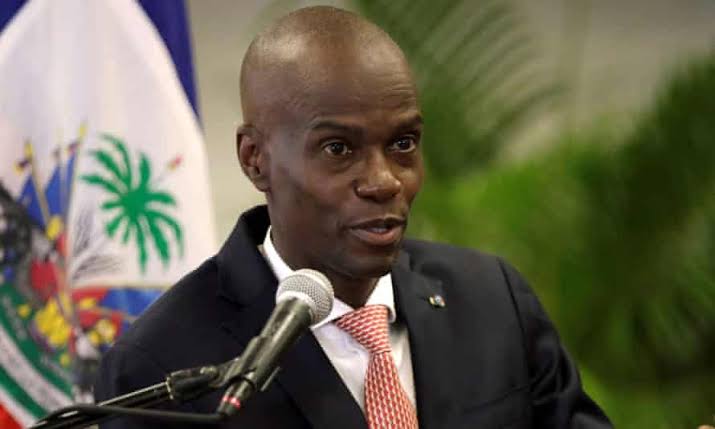
According to a BBC report, it was a group of 28 foreign mercenaries, including retired Colombian soldiers, who assassinated Haiti’s President Jovenel Moïse earlier this week, police say.

After a gun battle in the capital Port-au-Prince, 17 were detained, some at the house they were using, others after entering Taiwan’s diplomatic compound. Police killed three suspects, and eight are still being sought. Bloodied and bruised, arrested suspects were shown to the media on Thursday, along with a slew of seized weapons.

The assassins paraded to the media.

It is still unclear who organised the attack and with what motive.

In the early hours of Wednesday, the attack took place when gunmen broke into the president’s home in Port-au-Prince, shooting him dead and wounding his wife. According to authorities, Mr Moïse, 53, was found lying on his back with 12 bullet wounds and a gouged eye.

Martine Moïse, 47, was seriously wounded and is in a stable condition after being flown to Florida for treatment. Police said the hit squad included mainly Colombians, along with two Haitian-Americans. Found in the suspects’ possession were firearms, sets of US dollar bills, the president’s personal chequebook and the server that held surveillance camera footage from his home, Le Nouvelliste newspaper reported. Taiwan confirmed that 11 of the suspects were arrested after breaking into a courtyard at its compound.

Angry civilians had joined the search for the gunmen and helped police track down some who were hiding in bushes. The crowd set fire to three of the suspects’ cars and destroyed evidence.” We Haitians are appalled; we do not accept it,” one man told the AFP news agency. “We are ready to help because we need to know who is behind this, their names, their background so that justice can do its job.”

Bandits demand food for their hostages

The armed bandits who kidnapped some school children in Kaduna have demanded the state to give them food for their hostages. It was gathered that the parents and management of the Bethel Baptist High School, which is located at Marabar Rido in Kaduna State, have already raised money to buy foodstuffs and every other thing as demanded by the abductors of the 121 students of the school.

Such kidnappings and killings have become commonplace in the North, where people are kidnapped and killed almost every day, especially in Zamfara, Katsina, Katsina, etc. The parents of the students are so scared and frightened over the recent threat and boldness of the kidnappers, pinning their children’s survival on their necks through the evil demand.

It can be recalled that the bandits forced themselves into the school on Monday around 2 am and kidnapped 121, who were said to be primarily senior students.

Nigeria: what the future holds for the younger generations?

By Kasim Isa Muhammad

Saying Nigeria has failed is an understatement. Unfortunately, nobody can also predict what the future holds for the younger generations. The recent abductions of school children, kidnapping on the major highways, and increased tuition fees by the Kaduna government show that Nigeria is on the brink of collapse. Nevertheless, the most perturbing question running on my mind and fellow ordinary Nigerians is: who will bring succour at this time of unprecedented crises?

We all know that Nigeria got its independence sixty years ago, and it will clock sixty-one in few months to come, but unfortunately, the country lacks direction. Innocent citizens are killed daily, graduates roaming streets looking for jobs,  while senior politicians buy luxury cars, their children study abroad. In contrast, the children of the masses study in dilapidated classrooms. With this, no one can predict the future of Nigeria as a nation.

With all the problems mentioned above, and despite facing severe insecurity challenges in Kaduna, the state governor, Nasiru El-Rufai, increased tuition fees. Unfortunately, instead of the governor providing a lasting solution to the problems bedevilling the state, he chose to add salt to the current problem people of Kaduna are wallowing in. I often ask myself this question: Do the poor children have a future in this country? Yes, the answer to the question is visible to the blind and audible to the deaf because when you fail to educate the children of the poor that voted you into office, you will never know peace. It’s high time the governor thought and have a rethought.

Nonetheless, the recent statistics establish that 25 million graduates are unemployed. This shows that future generations will not invest in education. When a country fails to employ the vast population of its graduates, they will only engage in nefarious activities, such as gangsterism, kidnapping, banditry, militancy, and all heinous activities. Therefore, we need to wake up from our deep slumber in providing job opportunities to our youths.

It’s pertinent to note that statistics also establish that 900 schools were destroyed in Nigeria recently, especially in the northwestern part of the country. Still, unfortunately, many Nigerians don’t find this worth talking about. They instead talk about the Twitter ban. We all know how some unpatriotic Nigerians use the microblogging platform to spread hatred, disunity and unsubstantiated stories to bring about conflict in the country.

Have we forgotten the slogan saying children are the leaders of tomorrow? Yes, there is a need to ask this question when the so-called leaders of tomorrow stay at home because their parents cannot afford their tuition fees; are they even leaders of tomorrow when their leaders fail to protect their lives and properties today? 

By looking at the current situation and Nigeria’s stalking on social and economic impacts, the youths have lesser opportunity to get involved in governmental issues. 

In some developed countries, technology plays a crucial role in successful programs, advances tech power, and engages youths in learning to generate a source of income. However, there are so many obstacles in Nigerian technological development and a massive challenge for the youths. The government invests insufficient funds in technological methods, which seem to be a modern pillar of providing enormous job opportunities. 

 However, the youths probably graduate from various universities, come out with outdated skills, and have no chance of getting a job. Therefore, the government needs to introduce programs in the universities for a change of method in teaching, entrepreneurship, and ways to inspire the youths.

 Also, international investments are advised to enlarge ways of poverty alleviation from millions of youths living without any hope here in Nigeria. Building up companies and carrying out regular works will help to make a way out of these obstacles. 

Youths can also be involved in politics. The vibrant minds have the zeal to change many things here in Nigeria but some uncertain beliefs came to destroy the future of youths into politics.

When the government provides job opportunities and tackles insecurity issues, future generations will write the name of our leaders in a golden slate of history.

Now, in Nigeria, the only thing we need is to work together collectively. Our problems are beyond political affiliations, ethnicity, religion, and sectionalism. Yet, we need to take a deep breath and ask ourselves what the future will hold for the future younger generation.

Kasim Isa Muhammad is a 200 level student in the Department of Mass Communication, University of Maiduguri.

Certificate of Survival

By Amir Abdulazeez

Some weeks ago, I was caught up in a debate involving some people trying to justify the Federal Government of Nigeria’s ban on Twitter and those who opposed it. If I am to be fair to both groups, every side had some very good points, strong enough to sway a neutral person to their side. However, one thing remains fundamental and clear even to the debaters; the Twitter ban will not solve any of our short and long-term problems, including the very ones for which the Federal Government used to justify the ban.

It will not be difficult for any critical observer to note that the Buhari administration had not taken lightly any action that will or can undermine official state authority or that of the President since its coming in 2015. This is perhaps why over 1000 Shiites were allegedly killed in the administration’s early days for blocking the way of the Chief of Army Staff, among other things. It may also be why IPOB and End SARS protesters were not treated with the kid gloves with which bandits and mass murderers of ordinary citizens are apparently treated. Twitter had not offended ordinary Nigerians as much as it had offended the Presidency and hence the ban. Regardless, at least the ban is a strong message that not everything can be tolerated by Nigeria, especially the sort of highhanded arbitrariness on the part of the social media tech giant.  

A few hours before the ban came into effect, I was surfing the platform to catch up with the day’s national and international news when I came across an interesting statement credited to ex-Senator Dino Melaye.  Melaye was reported to have said that any Nigerian that survived this APC’s administration to its end alive deserves a certificate of survival. I don’t know whether he actually said that or not, but the statement is typical of him. Besides, the truth is that ordinary Nigerians are currently receiving the suffering of their lives.

According to the Consumer Price Index report, recently released by the National Bureau of Statistics (NBS), Nigeria’s inflation rate for May 2021 stands at 17.93%, a slight drop from April 2021, which was 18.12%. Food which is the most critical item, recorded an inflation rate of 22.28% in May. This is the highest since April of 2017. Nigeria ranks 13th in the global inflation table and 7th in Africa, making it among the worst worldwide. At less than $80 per month, Nigeria’s minimum wage is one of the poorest in the world. A substantial percentage of the Nigerian population has been reduced to begging. The crime rate in almost every state of the federation is on the increase; income is static, expenditure is growing, no jobs and opportunities.

The Consumer Price Index (CPI) measures the change over time in the prices of 740 goods and services consumed by people for day-to-day living. The index weights are based on expenditures of both urban and rural households in the 36 states. How good a measure it is to quantify our real suffering from this hyperinflation is another question of its own.

Our real problem is that these figures only give us an idea but not an accurate picture of the cost of living in the country. We all know that these figures are mainly hypothetical; we have essential goods and services that have recorded a 100% increase in prices within weeks. Another concern is that other countries facing inflation are somehow doing well relatively. For example, the twelve countries worse than Nigeria in the global inflation ranking are better off in terms of peace and security (except maybe Syria) and prosperity (except perhaps Sudan and South Sudan).

The country faces multiple, unprecedented and overwhelming security challenges from all fronts. With no clear end in sight, many people in some parts of the country live every day in uncertainty while helplessly waiting for the worst. In parts of Katsina, Zamfara, Kaduna and Niger States, people live to tell the daily stories of tragedy while hopelessly waiting to be consumed like their brethren. Survival has become a privilege these days.

The government is overwhelmed and had resorted to foreign debts to keep the collapsing economy working. Nigeria’s External Debt has reached $32.9 billion US Dollars as of March 2021. Roughly, each Nigerian is indebted to the tune of 65,000 to 70,000 Naira at the official exchange rate of dollar to Naira. We have not stopped borrowing; a substantial amount of our current and future budgets still depends on external borrowing. We are not talking of internal debt.

Ordinary Nigerians are finding life unbearable. Are these sufferings temporary? What are we doing to stop this? Why is every previous year better?  How does the future look like for ourselves and our children? How many of us will survive this? Is survival our emerging national culture and priority? People are employing any available means to stay alive, thereby gradually turning societies into jungles where everyone wants to thrive even at the expense of others.

What is the overall implication of all these? Now here comes the real danger. When a greater majority of a country’s citizens are preoccupied with how to survive, no one will be left to create and add the value that will take the country to the promised land. When most people spend 75% of their time trying to fetch their families amidst rising costs and harsh conditions, they can only spend the remaining 25% to rest against the subsequent struggle, leaving them with zero time to think and create anything. When almost everyone lives to attain Dino Melaye’s survival certificate, we will have no other aspirations other than food and shelter. The result will be a backward nation that will remain static for only God knows when.

We cannot say that the current government is doing nothing about all these challenges, but they are doing nothing revolutionary. Measures like N-power, Conditional Cash Transfer and the likes are cosmetic, inadequate and unsustainable. Even their effects in the short term are too minimal to reflect on the general quality of national life. First and foremost, the country must have a comprehensive and exhaustive national development plan with inputs from local, state and federal stakeholders. This plan must be well developed, implemented and not politicized. If needs be, it should be backed by legislation. Government appointees at any time must be people that understand and can implement that plan religiously irrespective of their demography and political affiliations.

The development plan should strengthen sectors like manufacturing, power, infrastructure, security, and justice because such sectors can automatically create and consolidate direct and indirect development. For example, if there is adequate security and power supply, independent businesses would run for 24 hours. When some people who conduct businesses during the day are asleep, some others resting during the day will operate businesses during the night. Nigerian companies will work for 24 hours with no valuable time to waste, thereby hugely increasing productivity. We should be able to produce most of the goods we import.

When power is available, thousands of jobs would be created both directly and indirectly. Therefore, rather than investing in providing direct jobs that cannot satisfy all, let the government strengthen security and power.  We have seen what the telecommunication and entertainment industries have done to our economy through direct and indirect jobs creation with ripple effects. I think that success can be replicated in many other sectors. When this is done, governments will rely on happy and self-employed citizens for taxes rather than the other way round.

Unfortunately, we cannot implement essential solutions now and then because politics has been our number one national priority since 1999. This has made many people lose interest in providing any meaningful input to the Nigerian development discourse. I have received countless messages over the last eight months, including from some newspaper editors over my long break from analytical writing with some enquiring on what must be responsible. I usually didn’t have any consistent answer; sometimes, I’ll only compose any reply that comes to mind.

Whatever will be said has been said many times before. We just lack the will as a nation to take the bull by the horn. Just some days ago, a reader reminded me that it had been a year since I wrote an opinion piece asking why. I doubted and quickly went to my personal online blog only to confirm what he said was indeed true. I was surprised myself; the reader didn’t know that I am currently battling to obtain my own Certificate of Survival.

Twitter: @AmirAbdulazeez
Taliban’s follies, Western gains

By Salisu Yusuf

Almost 20 years since the September 11 attacks in the U.S. and the subsequent occupation of Afghanistan, the last Friday’s swift vacation of Bagram Airbase by the U.S forces, the situation in Afghanistan gets worst. The country is becoming more divided; social strife grows, and citizens become more disenchanted. Hostilities between the Hazara Shia minority and mainly Pashtun Sunni majority increases. All over the country, people feel less secure in groups and individually as each one is afraid that the rival militia may attack them. The hitherto communal Afghanistan is fast turning individualistic, especially as a result of Talibans’ follies, misrule, the failure of the sectarian/tribal leadership, the role of Ulama and by the Russian occupation in the 70’s and ’80s, as well as the U.S’s so-called war on terror.

I have never seen a religious sect that clings to power and unorthodoxly turns to folly like the Taliban. They have crossed religious, ethical lines. They ask their members to attack hospitals, with women under labour, children receiving natal care, and other defenceless people receiving treatment. In one instance in 2020, they struck a maternity hospital belonging to the international organisation Medicines Sans Frontiers in Kabul. They gruesomely murdered 24 victims, including impoverished women, children, and babies. A week-old baby was among the dead; another two-week-old baby survived though his mother could not. There has not been a worse unnatural disaster!

Moreover, coordinated, reciprocal attacks by both Sunni and Shia militants are on the rise. I have not seen thoughtless sects like the two groups in Afghanistan/Pakistan axis, where each group asks its members to attack the other while performing obligatory prayers in mosques! And when such attacks are carried out, while the victims’ relatives nurse them and mourn other fatalities, the attackers get euphoric as they believe that they have fulfilled a religious duty. Outrageously they think that should if they die in the process, they would directly go to paradise – as if it belongs to their fathers!

 In addition to such senseless attacks, the Taliban has stepped up on a campaign against girl-child education. As a result, hundreds of innocent girls have been killed on their way to schools because, to them, girls’ education is a deviation from the norm. 

In one such horrendous attack, the vocal Malala Yusafzai is lost to the West. The girl was 11 when she’s shot in the head on her way to school. The girl’s crime was pleading to the Taliban to let girls pursue their educational careers. As the saying goes, the rest is history. Malala is now an Oxford University graduate in philosophy, politics and economics. 

Malala is lost to the West with her two young brothers. Pakistanis could only watch her on T.V. addressing the U.N. Assembly, celebrating her birthday, or receiving Nobel Prizes. If she had not been shot, she would have been in Pakistan, and a practising Muslim, whose talent might have been used in teaching and aspiring young girls. Girls like Malala could have been used to heal the growing social division between Sunni and Shia; alas, she’s lost to Europe.

More painful is the list of Nadia Nadim. A more intelligent and talented girl who’s also lost to the West. Nadia’s father was also killed by the Taliban when she’s a child. Under a false identity, the girl fled Afghanistan on a truck at just 11 years. She’s currently living in Denmark, studying reconstructive surgery. Nadia, like Malala, is lost to the West. Her colossal talent would have been more beneficial to Afghanistan because she’s a prospective scientist. Nadia speaks 11 languages. She also plays football for the Danish National Team, scores 200 goals, making her a celebrity.

If Nadia’s father lived, she would have been left to pursue her career, would have been in Afghanistan practising Islam. She could have been a medical doctor, possibly assisting thousands of Afghan women in need of medical care. But, alas, she’s lost to football, playing a celebrity role, her beauty being explored, etc. 

The above are a few lessons to Nigerian youth who sympathise with terrorist groups like Boko Haram. Such groups are in for regression rather than progression.

While the so-called Doha Peace Conference between the Afghan government and Taliban is in progress, the country is hotly on the brink of another civil war. The Taliban is advancing towards Kabul, inciting more antagonism while the country suffers from brain drain; indeed, it’s Talibans’ folly, but Western gains.

Salisu Yusuf teaches at the Department of English, Federal College of Education, Katsina. He can be reached via salisuyusuf111@gmail.com.

Southern governors should prepare for boomerang

By Muhammad Mahmud

Even as the nation is struggling to bring an end to the Boko Haram crisis, which could’ve been effectively tamed but for the inane and complacent manner the leadership of some Northeastern states treated the issue initially, we could not but gape at the myopic decision of the Southern governors to fly the kite of moral support to their organized thugs who were recently suppressed by the authorities. 

At their meeting on Monday, July 5 2021, the southern governors “resolved that if for any reason security institutions need to undertake an operation in any State, the Chief Security Officer of the State MUST be duly informed.” (Emphasis mine).

It is unmistakable that the governors were referring to the recent success recorded by the nation’s security agencies in arresting many IPOB members, including their “supreme leader” Nnamdi Kanu, and the arrests at the residence of a tribal warlord, Sunday Igboho.

One cannot but wonder how on earth these governors will be so insensitive to the flights of their people. The gory stories emanating from the arrested members of IPOB, where 2000 fresh skulls of innocent southern girls were targeted and how lives of fellow southerners who never aligned themselves to the “cause” were to be wasted, are enough to galvanize the governors into taking stern action against those terrorists. But to the shock of the whole nation, these governors, who never even found it worth their time to give a one minute silence to mourn souls of the ten brutally killed girls, have the temerity to demand that they must be informed whenever the criminals are to be arrested. 

Perhaps the support for IPOB and Igboho militia by the southern governors has everything to do with what Rochas Okorocha said, in an interview with BBC, that it was the fear of what the IPOB boys could do to them that stops Igbo elders from speaking against them. This gives a picture of caged and gagged elders who have no option but to simply watch as the boys took their entire region into uncertainty. This means that Kanu’s group has evolved into a monster that no Igbo could dare criticize even from afar. 

Maybe the southeastern leaders fear that what happened to the four Ogoni chiefs could befall them if they dare oppose IPOB. On May 21 1994, four Ogoni chiefs were beaten to death by angry Ogoni youths. The victims’ names were Edward Kobani, Alfred Badey, Samuel Orage, and Theophilus Orage. Their crime was that they were suspected to be against the MOSOP. Perhaps the Igbo leaders fear the Ogoni chiefs’ treatment from IPOB; that’s why they are backing them. 

But suppose Igbo elders are so terrified with the IPOB to the extent that they are hypnotized into submission, or they are so emotionally sympathetic to the “cause”. In that case, it is very dumbfounding that the south-southern governors couldn’t see the danger of backing IPOB for the simple fact that they (IPOB) made it categorically clear that any non-Igbo will be, and shall remain, a third-class citizen in the region. Suppose the south-western governors found it strategically right to support IPOB in supporting their tribal warlord, Igboho; what exactly is in it for the south-southern region? Their governors seem to be either coerced/harangued into submission or too foolish to figure this out for their people.  I believe if a south-southerner like Reno Omokri is among the governors, he will object to this. 

It appears as if the southern leaders are no longer in control. They seem to be tele-guided by the prevailing emotions in their regions instead of playing the leadership role of directing towards a better future for their people. 

Notwithstanding some of their failures and the resentments of their people, Northern elders are more in control and seem to be leading. When some northern youths issued a quit notice to the Igbos, in a reaction to the IPOB’s agitation, the leaders of the north rebuffed them. Governor El-Rufa’i even ordered their arrest. When some northern youths initiated “Shege Ka Fasa” as an answer to south-western governors’ backed “Amotekun”, the leaders of the north stopped them, and they complied. Even Boko Haram, with their firepower, did not frighten northern leaders into opposing the federal government to support them!

If the southern leaders are publicly backing their criminals with a kind of moral encouragement by attacking the federal government’s crush on them, they should, rest assured, know that it will boomerang. They should have taken lessons from what happened during the early stage of Boko Haram in the northeast.

During the initial stage of Boko Haram, they enjoyed massive support from their people. This is partly because they appeal to their people’s sentiments. All they need is to list eloquently, in a highly sentimental manner, the ills and backwardness that bedevilled the people in addition to hunger, poverty, diseases etc. and finally quote relatively congruent verses of the Qur’an and sayings of the Messenger of Allah (peace be upon him) to drive home their point that “Jihad” is the only way out and they, as the conveyors of that message, are the ones to lead. It was full of promises of a utopian state that will replace the current dystopian state. And that appealed to many, more especially as most of the movement members were children of the elite. What a perfect gulp of toxic will that be on the gullible, the strata of his/her social status notwithstanding.

It was only after the actual road to Sambisa was taken that the people realized, albeit too late, how wrong they were and how naive they behaved.

Now the IPOB and the tribal warlord, Sunday Igboho, are getting the support of the southern governors because they appeal to the sentiments of regionalism and tribalism (or drum up support for their political agenda), only time will reveal the sour fruits that will shower down. I hope some leaders will be blunt enough to put aside political correctness and act appropriately before that happens.

Malam Muhammad writes from Kano. He can be reached via meinagge@gmail.com.