Admin

Nanono hands over to Dr Mahmood as new Agric and Rural Development Minister

By Sumayyah Auwal Ishaq

The erstwhile Minister of Agriculture and Rural Development, Alhaji Sabo Nanono, on Thursday handed over to the new Minister, Dr. Mohammad Mahmood Abubkar in a brief ceremony at the ministry’s headquarters in Abuja.

In his speech, Nanono thanked President Muhammadu Buhari for the opportunity given to him to serve the country. He also thanked the entire staff for the cordial relationship and teamwork they have had. During his remarks, Dr. Mahmood commended President Buhari for the confidence bestowed in him. He also saluted the outgoing minister for the achievements.

The Minister reiterated his commitments towards the actualization of President Buhari’s policies for the economic development of Nigeria.

21st-century students and reading culture challenges

By Muhammad Abubakar

Technology has changed the world of education. It provides quicker ways of accessing learning materials in varieties. Indeed, this is a brilliant opportunity. Technology provided cyber-libraries, fully occupied with every knowledge in every fabric of human endeavour. From sciences to humanities, all is available over the internet. There they are available, every time, every day, everywhere and for everyone.

Knowledge with the help of the internet has become accessible and very cheap for almost everyone. With very affordable data, one can download as many reading or learning materials as he wishes to possess in every literature genre—poetry or prose. Moreover, the technology is beyond providing a reader with the recently published works; much older works, dating five, six, seven or more hundreds years back, can be found and be successfully downloaded.

Often I say, “If you want to see the world naked, fall in love with books.” Only through reading and writing the recorded history of the past nations and communities reside in these days; only through it would we record the present as a documentary to the younger ones and the future generations to come. A good reader would have an excellent knowledge of the past, present and can predict the future. Readers have eyes to see the unborn days. If readers didn’t read and write, we might not have lived a complete account of life.

Reading culture died among young people these days. However, in the past three to four decades—albeit I was not part of the days there, I collided with authentic histories of how the predecessors [students] of those days suffered in seeking knowledge. I academically encountered examples of good students—who came through the doors of past days, whose education, knowledge and experience are beyond the curriculum. They are well educated and well trained. They read, write and speak better than 21-century students. Despite their meagre technological resources, short-planned curriculum, reading and learning materials scarcity, they are far more developed than us.

Twenty-first-century students’ poor reading habits lead to many crying stories and anti-social behaviour—for instance, school violence, massive failure and examination malpractice. The massive failure of the 2021 UTME in Nigeria is an example of bad elements generating by poor reading culture.

Students don’t read, and they need high quantity certificates. This century provides an excellent opportunity for students in reading, self-development and intellectual development. But we prefer utilizing our time in other options than reading. We spend most of our time; exhaust most of our data: gossiping and uploading pictures to appreciate others.

Technological advancement has a role in adjusting our reading attitudes. Students should adopt the habit of utilizing most of the time reading. The difference between the past students and these of the present is befriending books. Our being online on Facebook, WhatsApp, Instagram, Tik Tok, and other media platforms should be less—and if necessary, let’s use it positively. It’s crystal-clear that our habits show that we hate reading. Despite the resources we possess in today’s world [21 century], most secondary and tertiary institutions students can not effectively write a letter of any format.

For example, PDF Drive provides any kind of material students can require to learn, curricular or extracurricular. University of People also delivers lectures on every topic need. You don’t need to be constantly reading, and every time, twenty to thirty pages of a book every day will suffice you. Better too late than never. If you’re finding reading boring—read simple stuff, gradually you will make it.

I recommend we should promote reading culture among ourselves through reading and writing challenges. For example, organizing poetry and prose contest, book chats and reading sessions can help. Reading culture would be rapidly promoted among students [young and older ones] in our communities through these means and others.

In conclusion, during our leisure time, weekends and breaks—let’s train our younger siblings; divert their zeal to books. Coach and guide them towards their curricular and beyond. Read them stories, poems, and lots more. Ask them to practice writing—and make simple competitions to them regarding reading and writing. Let’s no go and leave the young generation behind.

Muhammad Abubakar can be reached via muhammadabk1097@gmail.com.

JUST IN: Kaduna releases fresh resumption dates for schools

By Sumayyah Auwal Ishaq

The Government of Kaduna State has announced a new resumption date for its schools after months of disruption in the school calendar due to insecurity ravaging the state.

The state’s commissioner for education, Shehu Makarfi, disclosed this while participating in a virtual workshop organised by the Education Writers’ Association of Nigeria. According to him, students of the state are expected to resume on Sunday, September 12, 2021.

However, the commissioner said rather than resuming for the third term that was aborted in the state, the schools will resume the first term for the 2021/2022 academic calendar.

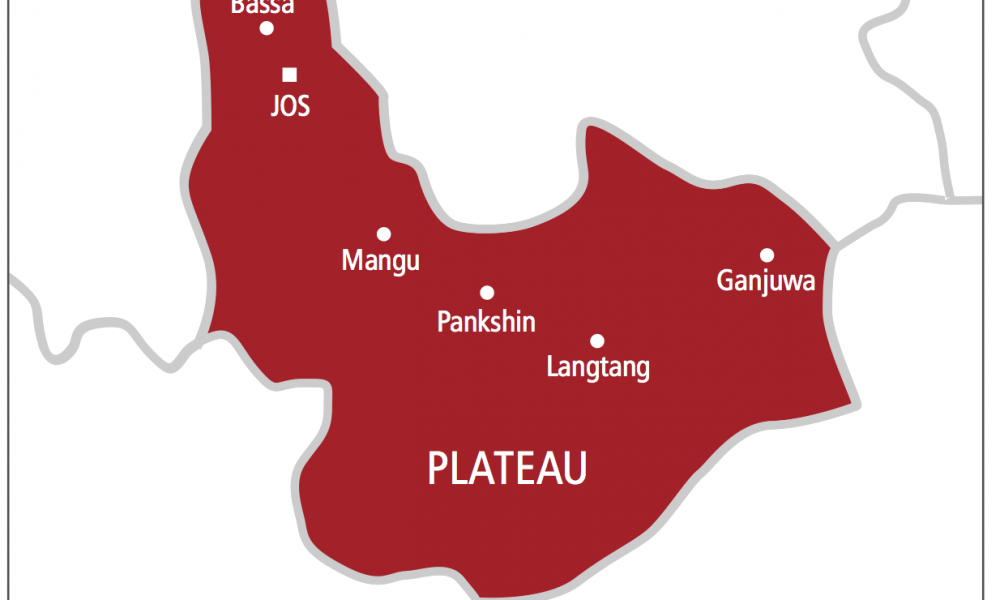
Reminiscence of 7th September Jos Crisis

By Mohammad DonHussy

Tuesday was exactly 20 years since the breakdown of peace among communities and the beginning of the so-called ethno-religious conflict in Jos. Since then, thousands of innocent lives have been mercilessly killed, properties worth billions of naira destroyed, and hatred has been deeply entrenched, more than ever before, in the minds of the younger generation; vengeance has become a mantra on their lips. Thus, 7th September was a dreadful day that shouldn’t have repeated itself. But, unfortunately, it became the beginning of an era of chaos, conflicts and incessant killings.

Two things led to these horrible events. Firstly, religious leaders from both sides of the aisle did much to spawn the conflict either by abstaining from condemnation and reprimanding their audiences or fanning the flame with hate preachings. Secondly, and more morally reprehensible, politicians agreeably encourage the clash by not stepping up to quell the prerequisites that lead to the unrest. As a result, the conflicts have become a potent political weapon exploited by the elite to either consolidate power or amass luxury. Thus, the masses became pawns who reap the harmful consequences of the seed they never sow.

The crises have been heaped around many myths—that the conflict is an ethno-religious conflict is not only a hoax but an absurd claim that seeks to cast an illusion on the minds of the masses. Again, that Hausa-Fulanis have any grand plan to take over the helm of affairs in Plateau State is false. And, conversely, that the Christians are collectively responsible for the destruction of Jos Main Market, which plunged the Hausa’s into economic hardship, is equally false.

Few cabal members engineer these unfounded narratives to swerve the attention of the masses from demanding accountability from their incompetent leaders and have paved the way for kleptomaniacs and opportunists to reach up and embezzle our funds. To understand this better, reflect on what Samuel Ortom, the governor of Benue State, said, and I quote, “As Jesus died on the cross for Christians, I am prepared to die for Benue people.” The same person has now refused to pay civil servants their salaries and remain negligent on development and infrastructure. Scenarios similar to this are countless. By the way, Shari’a was once exploited by northern governors to mislead gullible Muslims. So it is more about vested political interests and amassing of wealth than faith or ethnicity.

Luckily, the panacea to this menace is within reach of the masses; all they need is the necessary introspection to grasp the problem for what it is: class warfare. And it’s also to resist the temptation of acquiescing in the vile tactics of divide and rule. If one scrutinises the conflicts, the masses, not elites, are constantly the victims of the mayhem. What sort of a people will be so adamant about inflicting such untold suffering to each other?

Does the killing of fellow humans strengthen anyone’s determination or make anyone’s life better? Why then the insanity and the insensitivity towards each other while those vultures are relentlessly sucking the masses and plundering the state’s treasury? The masses must understand that they share a common enemy, whether Christians or Muslims and that their enemies are within their respective faith or ethnic group. Regardless of any differences, the elite are hellbent on enriching themselves; neither their children nor closed ones participate directly in any conflict for whatever reason.

It is time for the masses to reflect on their actions, grasp reality and tolerate one other. The series of events that unfolded from the onset of the first crisis to today have caused indescribable suffering to the people of Plateau. It has slowed development and clogged prosperity. However, peace has no alternative, and tolerance is the only rational covenant.

Mohammad DonHussy writes from Jos. He can be reached via donhussy95@gmail.com.

Kaduna enumerators, farmers decry deceit and propaganda in FMARD project

By Bature A.

Initially, it appeared that the Federal Ministry of Agriculture and Rural Development and the Project for Agricultural Coordination and Planning (Fmardpace) had come to help farmers and enumerators. However, the ministry has nothing to offer; it has lost focus and all the promises made have turned out to be deceptive.

When India championed and succeeded in the Green Revolution of the 1960s, it was not grounded on propaganda, delay in payment and late distribution of inputs, withholding extension workers allowances, deceit and misleading publications.

According to the Premium Times online report (June 29, 2020), the ministry targeted 2.6 million farmers, while N600 billion was earmarked for the farmers’ fertiliser subsidy, grant and non-interest loan. However, despite its early approval, the program’s impact is yet to be felt by the farmers and enumerators.

The ministry promised to help reduce the negative impact of the COVID-19 pandemic on agricultural production in Nigeria. Recall that AFJP was launched in Funtua Local Government of Katsina state on July 23, 2020, as reported by Daily Trust and Vanguard. The formal commencement of the program took place at the home town of the chairman House Committee on Agriculture.

Agricultural inputs such as fertiliser, pesticide, herbicides, seeds and motorcycles for extension work are displayed to the attendants and reporters. However, after the occasion, the displayed items are nowhere to be seen or heard of again.

A well planned Agricultural support program should be ready to reach beneficiaries by April or mid-May. Although some ABP companies draw their funds from or liaise with the CBN/Nirsal Plc, they distribute inputs early than the government’s ministry itself. It took Fmardpace almost two years to finalise data capturing, reconcile data and initiate distribution of inputs. Many enumerators miraculously escaped snakes’ bites, kidnapping, robbery or being lynched by angry farmers. Enumerators have crossed through the thick and thin weather[s] to carry out their duties. Manual mapping and data capturing, for that matter.

Enumerators suffered rough handling from the Fmardpace. Initially, the ministry promised to pay for the work done weekly after verification of the Surveys done. Subsequently, it takes months to process despite working as an influencer, Orientation and Mobilization agent.

The first and worst of all, maltreatment is the delay or withholding of payment. The second is, invalidating enumerators surveys without sufficient explanation.  Some surveys were rejected without transparency on what makes them invalid. Thirdly, the complete failure to initiate the distribution of inputs to qualified farmers on time.

In addition, enumerators have carried out soil sampling exercises/collections between May 10 to 26, 2020. However, some enumerators managed to collect the samples without being provided with the due equipment. In the plan, the soil sample collecter would get a hoe, shovel, bucket, and a small bag. However, only the bag was provided.

This is a program that had been moving forth and back without progress. On May 26, 2021, the ministry stated that the second level validation for surveys carried out in June and July was completed. On June 30, 2021, the ministry confirmed that the federal government had approved the Fertilizer Subsidy Grant to farmers whose BVN was validated by the NIBSS. On July 2, 2021, the ministry confirmed that payment processing of the first batch of the fertiliser subsidy grant to qualified farmers had begun. 

Enumerators have raised concerns over certain decisions by the ministry. For instance, when Fmardpace said their agents from Abuja would be calling farmers for verification, they were urged to consider some factors, which I’ll list below.

First, the majority of the farmers are rural dwellers. So they may not be able to speak English (which FMARD agents use). Secondly, there was network scarcity in rural areas. If the ministry uses phone calls, then over a half will be disqualified. Thirdly, when the contractors of inputs distribution came, they came with strangers that are afraid to get to the villages or remote towns to verify farmers, which may automatically disqualify farmers.

It’s fascinating to note that enumerators were doing their work patriotically until when mistreatment of the workers worsened. Then, the faces of enumerators and farmers became wallowed in the mud: no payment, no reply, mainly robotics/programmed responses from the situation room computers.  

Enumerators have since submitted to the formalities of the ministry. Seventeen (17) months of the program, the remaining balance of 50% per cent payment, after the second level validation of the surveys, is not being processed. There’s no specified date for it or helpful insight to it.

Enumerators need a clear statement from the new Minister of Agriculture on why their payment was withheld. Fmardpace should take note that there are damages incurred on enumerators for violating the initial arrangements of the payment. The collective wishes of the enumerators, master trainers and farmers is that the new minister should be different from his predecessor.

I recommend that when the next Fmardpace is to undertake farmers surveys, they should build an app that the enumerators can see right away on the screen of their mobile phone when surveys are valid or otherwise. Meanwhile, transparency is enhanced.

When there’s an exercise to be carried out, the ministry should not send people to the field without having their payment voucher on the ground. Adhoc, part-time or extension work should not be like capital projects that would have to be included in the annual budget before payment could be made. Besides, where is the yearly budget of the ministry?

They should also make sure the application they’re building contains all the necessary steps for the required information that NIBSS and CBN need from every beneficiary to be qualified. There’ll be ease of (extension workers) stress of recollection and reconciling of data. 

Furthermore, farmers need agricultural loans the most between April, May and June to prepare in advance. Therefore, if the ministry is genuinely concern and working towards revolutionising Agriculture in Nigeria, they should act on these issues as soon as possible.


Bature A. writes from Kaduna. He can be contacted via glitzinkreviews@gmail.com.

BUK promotes Dr Sani Rijiyar Lemo, Dr Umar Sani Fagge, others to professorial chairs

By Muhammad Sulaiman

In recognition of their significant contribution to scholarship, research and development at the Faculty of Arts and Islamic Studies (FAIS), the governing council of Bayero University, Kano (BUK) has approved the promotion of Dr Sani Umar R/Lemo, Dr Umar Sani Fagge, others, to the coveted professorial positions.

The following faculty members have been promoted to full professor status: Shehu Ahmad (Arabic), Aminu Lawal Auta (Nigerian Languages), Usman Sani Abbas (Islamic Studies), Sani Ayagi ( Islamic Studies) and Umar Abdulkadir (Islamic Studies).

Furthermore, the following have been promoted to associate professor status: Umar Sani Rijyar Lemo (Islamic Studies), Aliyu Harun (Islamic Studies), Nura Sani (Islamic Studies), Isa Yusuf Chamo (Linguistics), Aishatu Umar (English), Tijjani M. Naniya (History), Muhammad Wada (History), Umma Aminu Inuwa (Nigerian Languages), Maryam Mansur Yola (Nigerian Languages), Halima Abdulkadir Dangambo (Nigerian Languages), Ahmad Salisu (Arabic), Matabuli Shehu Kabara (Arabic) and Umar Sani Fagge (Arabic).

More members from other faculties have been equally promoted based on their value of excellence in teaching and scholarship, and service to BUK. However, as of during filing this report, the lists were still incomplete.

Popular Nigerian university dismisses lecturer over ‘sexual misconduct’

By Muhammad Sabiu

Authorities of the Obafemi Awolowo University (OAU), Ile-Ife, have dismissed a senior lecture, Adebayo Mosobalaje, from the institution over alleged sexual misconduct.

The senior lecturer was from the Department of English in the Faculty of Arts.

The dismissal was announced in a statement by the university’s public relations officer, Abiodun Olarewaju.

Mr Olarewaju said, “In its avowed determination to rid the University of any form of sexual intimidation, harassment and, or coercion, the Governing Council of Obafemi Awolowo University, Ile-Ife, has dismissed another lecturer who was found guilty of sexual demeanour against a female student.

“The decision to dismiss Dr. Adebayo Mosobalaje of the Department of English Language in the Faculty of Arts was taken by the University Council at its last sitting on Tuesday, September 7th, 2021.

“Having exhaustively deliberated on the report of the Joint Committee of Council and Senate, which investigated the case of sexual harassment against Mosobalaje, the University Council, unambiguously declared its zero tolerance to sexual harassment in any form or guise and, accordingly, applied the appropriate University sanctions for such an offence as contained in the University regulation.”

This is not the first time the OAU got enmeshed in the scandal of sexual misconduct between lecturers and students.

In 2018, a professor of accounting at the institution, Richard Akindele, was also found to have been involved in a sex-for-marks scandal, which got him fired from the institution.

Prof. Akindele demanded five-round sex from a student before he would pass her in a course he took. 

The news went viral after the student exposed him through their recordings in the course of their engagement.

Since 2018 when the story of sexual harassment allegations against a professor of accounting at the university’s Faculty of Administration, Richard Akindele, went viral, the institution has regularly been in the news for similar reasons.

Akindele, who the university dismissed, was also found guilty and sentenced to two years imprisonment following his prosecution by the Independent Corrupt Practices and Other Related Offences Commission (ICPC). He has since been released.

There is also the unresolved case of a lecturer of International Relations, Bisi Olaleye, and another at the school’s Centre for Distance Learning, Monday Omo-Etan.

Kannywood: consumer’s or producer’s market?

Northern Nigeria’s Hausa film industry, Kannywood, has been at the centre of brainstorming discussions over the years. One of the most interesting is why film consumers are attracted to the industry and otherwise. So often, the analysis of such magnitude is drawn concerning the industry’s foreign and domestic rivals because they provide an alternative to what the industry produces, which directly affects its local market. And like in any other industrial conglomerate, the sustainable conduct and development of Kannywood as an industry thrive on the quality, affordability and viability of its products.

As the so-called king of the arrangement, it’s impossible to conquer any market without exploring the psychological drivers of consumer’s preferences. That said, the primary concern of the teeming film consumers who boycott Kannywood movies revolves around the appeal, quality and uniqueness of storylines and whether it connects with the inner cravings of a modern watcher. A film consumer demands an illusion, one that not only tells him “this is the movie he wants to watch” but also if “it’s the one he should be watching”. An illusion that challenges his status quo creates a reception for the new order and paves the way for a route to escapism. Arguably, many people watch films to escape from their core reality. This occurs either by consuming movies that aim to rediscover an old order. Such order seeks to reflect on the current order or ones that wish to rewrite the order itself in the forms of fantasy movies, futuristic science-fiction movies, historical fiction and nonfiction movies, among others.

In the case of Kannywood, it has done reasonably well in producing movies that reflect greatly on the dynamics of the current order. But then that’s an order of which its potential consumers happen to be physically part. In which case, most of the content would appear familiar and cheap, which will bore the consumers and hand them the warranty to look elsewhere. Meanwhile, Kannywood competitors have religiously developed the culture of challenging the essence of everything a watcher stands for. This makes them more viable, even if more costly than Kannywood, because they satisfy consumer’s utility.

Interestingly, Kannywood’s content has been profiled as the one that agrees with its watchers’ demand. This is indifferent to saying the industry produces only the content which its watchers want to consume. But if that’s any good, why has the industry been economically stagnating and remain vulnerable to its rivals’ invasion? To be fair, Kannywood and its competitors aren’t of the same financial muscle. This plays a vital role in the distinction of their products. However, it is equally valid to mention that all other industries rivalling Kannywood have, at some point, been where it is today. So the most crucial point is how did they move forward?

Revenue, which is the excuse of Kannywood in comparison to its rivals, in the context of production, is a bi-product of the initial measures that a producer put in place to ensure the success of his product. That’s to say, as far as the producer has the initial capital, what happens next is dependent on him. And start-up capital is hardly the problem of Kannywood producers. The actual problem is recouping the expenses and profiting from the venture.

If indeed, Kannywood produces only the films that’ll appeal to its watchers for fear of losing revenue, then it’s vivid that the industry perceives the film market as a consumer’s market rather than a producer’s market. This is perhaps why they produce movies that watchers ‘want rather than the ones the watchers’ think they want. And there’s a big difference between the two. Failure to dissect this difference creates a dilemma that’s so sensitive; it makes or breaks the possibility of any market dominance.

For instance, the romantic, singing and dancing genres that Kannywood produce at a more regular rate is what Hausa watchers want. But the more adventurous and dynamic content being delivered in other film industries are what Hausa watchers think they want – hence they rush to. And the ability to deviate the latter from the former ensures whether a consumer illusion is created or not. Illusion is vital in production because it makes people consume something believing that it’ll satisfy their utility when it won’t. But, instead, it’ll only make them crave for more. And the more is being craved, the better is the chance of getting addicted, and that’s the trap of every capitalist producer.

Hollywood and Bollywood industries come from well-equipped capitalist societies where consumer psychology is conquered. Down there, it’s a producer’s market. Hence, the curve of their revenue never stops rising. Their movies are regularly subjected to sequels and prequels, defending what the producer wants. In the build-up to the preface of his critically acclaimed novel, “The Godfather”, the great author Mario Puzo confessed that a producer’s girlfriend could demand a movie scene to be filtered out. And the consumers would watch nonetheless. In my opinion, there’s no bigger evidence of control. Which greatly unlocks creativity and unhindered filmmaking viscosity.

Kannywood, on the contrary, produces what annihilates the utility of the consumer instead of what’ll make him crave more. Capitalist experts assert that if a consumer gets what he asks for, he’ll be satisfied. And if he gets satisfied, he’ll not need the product again. That’s why a wise producer never allows consumers to ask for products. Instead, he creates the product questions for them. And in turn, answer the questions in a way that’ll make them even more curious. Kannywood does the opposite. Producers obeying the trend of narrowly imaginative consumers is why the watchers don’t find the films as unique as the foreign ones, which is also why the industry is painfully stagnating.

To clear doubts, how the dubbed versions of foreign movies are being consumed at an equal if not higher rate than Kannywood movies in its native domain should erase any iota of doubt on film market being producer’s market rather than consumer’s. For if it was consumer’s, who researched the interest of a villager in Kano before making a movie in Hyderabad, India, that enables him to watch the film with keen interest?

In the end, movie producers need to conquer the fear of losing the market. The film market is a producer’s market contrary to their belief. Agreeing with that would be a new phase for creative filmmaking. They should sharpen and unlock their imagination to produce what watchers would marvel at. Hausa-Fulani society is rich with contents that can create consumer illusion—ranging from history, culture, geography, economy, politics, anthropology, etc.

MA Iliasu writes from Kano State. He can be reached through his email: muhada102@gmail.com.

Gun duel between vigilantes, bandits leaves two dead in Niger

By Muhammad Sabiu

A gun duel between suspected bandits and vigilantes in the Mayaki community in Lapai Local Government Area of Niger State has led to the death of two people.

According to the Daily Trust newspaper, the two victims were on the side of the vigilantes.

Confirming the death of his members, the Lapai division commander of vigilante corps, Muhammadu Ibrahim, said, “It is true that we lost two of our men during a patrol in an ambush by the bandits around Mayaki forest.”

He added that they had deployed their men to launch a manhunt for the suspected gunmen.

El Salvador becomes first country to legalise, incentivise use of Bitcoin

By Muhsin Ibrahim

El Salvador has become the first country to make bitcoin a legal tender in the world. According to the Central American country president, Nayib Bukele, the government will give every adult citizen $30 in bitcoin, provided they download and register the government’s cryptocurrency app, known as Chivo.

The 39-year-old Bukele, who is also a right-wing populist, rose to power in 2019. Since then, he has initiated drastic changes in the small country. He announced plans to start using bitcoin in June. Late Monday (yesterday), he made another announcement via a televised speech, which was also streamed on YouTube, that the digital currency becomes legal from today (Tuesday).

El Salvador’s official currency is the U.S. dollar.

In his reaction to the fears expressed by some people and financial experts, particularly regarding the future of wages and pensions in bitcoin, President Bukele explained that Salvadorans will still have access to dollars.

Matt Novak, a Gizmodo reporter, questions whether or not El Salvador’s experiment with bitcoin will work. In response to that, he adds that “Only time will tell. But with bitcoin’s wild volatility it’s hard to see how the economy won’t get absolutely crushed when bitcoin’s price plunges.”