Admin

Late Sheikh Ja’afar’s daughter named Izala women leader

By Muhammad Sabiu

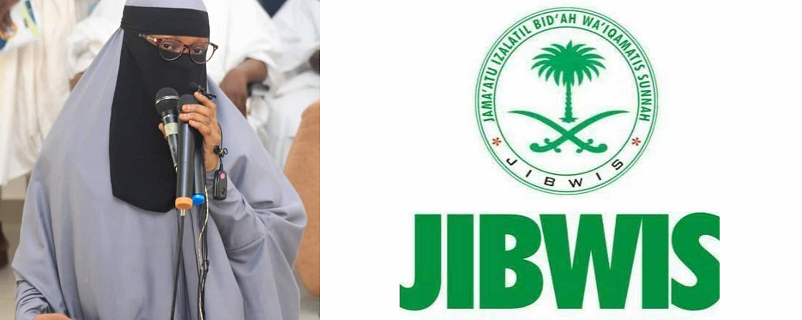
The daughter of the late Sheikh Ja’afar Mahmud Adam, Zainab, has been appointed as the new leader of a JIBWIS women body, also known as Nisa’us Sunna.

Delivering her acceptance speech after she was named the leader of Nisau Sunna, Malama Zainab expressed her gratitude to the Almighty Allah for making the event a reality.

She said, “I am grateful for being given this opportunity not because we are better than anybody, but for the simple reason that trust has been vested in us, with the thought that we will try our level best. And we hope the Almighty will spare us from disappointing (you), and may He grant us the opportunity to discharge the good expected of us.

“We, therefore, seek their [our leaders’] guidance in different aspects—in the aspect of praying for us as our parents, and on the part of commanding us.”

She also stressed the importance of the inclusion of women in areas that have to do with community development, adding that women are of great importance in any effort of bringing development.

The naming of Malama Zainab as a women’s leader went viral, thanks to the prominence and influence of her late father, Sheikh Ja’afar.

Recall that the late cleric was murdered in 2007. However, no culprit had been brought to justice even though a former leader of Boko Haram, Abubakar Shekau, claimed responsibility for his killing on several occasions.

Bishop Kukah blows hot, tells Buhari to expose names of terrorists’ sponsors

By Muhammad Sabiu

Bishop Hassan Matthew Kukah, the Archbishop of Sokoto Catholic Diocese, has again yesterday berated the Buhari-led administration, saying that the president isn’t ready to deal with terrorists.

The Bishop expressed concerns as to why the Federal Government isn’t ready to expose the elements financing terrorism in the country, stressing that “Nigeria is decomposing from within.”

Delivering a sermon at the Priestly Ordination of Five Deacons at the Holy Family Cathedral, the cleric vented his anger at the terrible condition the country is in.

He was quoted as saying, “Nigeria is a broken country. It is decomposing from within. Our heart is broken and lives are haemorrhaging by the day. We cannot go on like this. The country and people have become so traumatised and sedated by horrible news, that have now become comfortable in ‘this swamp of evil’.

“No number of horrific deaths, murders, sexual violence and kidnapping of children or adults can make us stop our life of debauchery.”

Mr Kukah has been one of the fiercest critics of the Buhari administration, and the Presidency doesn’t take it lightly in replying to the bishop, in what could be tagged as ‘a war of words.’

90,000 malaria related deaths are recorded every year in Nigeria – NMEP

By Hussaina Sufyan Ahmad

MEP Advocacy Communication and Social Mobilisation (ACSM) Officer, Eunice Subair, disclose that 90,000 malaria deaths are recorded yearly in Nigeria at the quarterly meeting of the Civil Society in Malaria Control, Immunisation and Nutrition (ACOMIN), held in Abuja on October 3, 2021.

Subair noted that progress is being made to control malaria, with prevalence going down from 42% in 2010 to 27% in 2015, and 23% in 2018 (MIS 2010 and NDHS 2018).

She said malaria was still a significant burden in Nigeria, and that the Seasonal Malaria Chemoprevention (SMC), was ongoing in all the eligible states.

She also requested the media to help in achieving the malaria elimination goal by making the disease a topmost topic of discourse to the public by including malaria issues in their programmes. And educating the public on the importance of sleeping inside ITNs every night to protect themselves against mosquito bites, among others.

Subair stressed the need for pregnant women to visit clinics at the earliest stage of pregnancy, to undergo antenatal care and admonished Nigerians to always go to the hospital whenever they suspect their systems to have malaria symptoms.

The Coordinator of the Civil Society in Malaria Control, Immunisation and Nutrition (ACOMIN), Ayo Ipinmoye, said more than three billion people, about half of the world’s population, are at risk of malaria, which is treatable and preventable.

He noted that the recently upgraded customised management information system would save the Federal Government about N293,700,000 in logistics cost, out of the N890m budgeted for the implementation of the malaria Intervention programme.

He further explained that the deployment of technology in data collection would help check malaria commodities, such as the ACT and insecticide-treated net.

He said with the latest upgrade of ACOMIS, data could be collected from the field on a real-time basis across all implementing states.

High rate of stealing and its possible solutions

By Nasiru Tijjani


Doubtless, stealing is one of the social problems bedevilling the peace and stability of almost all human societies. Therefore, stealing means taking something away from a person, shop/store, etc., without permission and without intending to return or pay for it. The problem, needless to say, is known to every reasonable person who cares to look and discuss their societal issues. Quote me anywhere that no society can fully develop and excel in all spheres of life if its members are thieves, burglars or robbers. For clarity, thieves are persons who steal things, especially secretly and without using violence. Burglars usually get into a house, office, etc., especially by force, to steal stuff, while robbers steal property from a person or public place, especially using violence.


The rampant cases of stealing are gradually becoming a new normal in our society. The culprits are always employing different strategies to safeguard themselves against an unwarranted arrest by the security agencies and other community volunteers. The community members gradually become helpless and equally lose hope about when to live in peace and comfort with their property. I don’t need to justify anything here for you, or your brother might


Since time immemorial, stealing has been discouraged by Islam and Christianity. The duo has strongly warned their followers through a significant portion of scriptures that they should shun the attitude of taking someone’s property without the owner’s consent. Apparently, the act has been classified as taboo and unethical that can only be committed by the mannerless, heartless and idle good-for-nothing person whose faculty of reasoning is abysmal. The effects of their (thieves) actions negatively affect the peaceful co-existence of the entire society either by crippling the welfare of the people or creating an unresolved hatred and enmity.


What comes first on the list has to do with parents. To me, they should not be left blameless, for they have a role to play in the proper upbringing of their children. They have been saddled with the responsibility of meeting the needs of their children, right from appropriate education to marriage. Nowadays, children are left to stand on their own feet in all walks of life. Parents are gradually disowning the mandates of their children as enshrined in the religious and cultural provisions.


Coming next after the first is peer-group influence. Children usually commit crimes under the influence of friends. This is because they typically get to know the attitude of each other better during their friendship. Psychologists have identified imitation as one of the stages of cognitive development. Therefore, children effortlessly emulate the behaviour of their friends. A friendless child is safe for not associating with rotten eggs, for he is less likely to be influenced by peers.


It is a known fact that the care of children is being placed firmly within the domain of their parents. Therefore, they (parents) should ensure that they fulfil all the mandates saddled on them. They must be answerable for their children’s failure, either for poor upbringing or anything for that matter.


The influence of some films that are of no character-building is equally associated with the topic under discussion. For example, with the recent release of Kannywood seasons, youths learn different tactics of stealing and other unwanted behaviours. “A Duniya“, a new Hausa season produced by Tijjani Asase, is a classic example of such a film. Recently, the Kano State Censorship Board has cautioned its makers and asked them to reshape the season’s activities considering the negativity of some scenes.


The human being is a social animal that cannot live in isolation without associates. However, children/ youths should not be left under the control of friends. Instead, they need to be guided/assisted in choosing or deciding on whom to befriend/mingle with.


Besides, people should reduce their quest for materialism. For instance, youths should regulate their strong desire to possess smartphones, among other things. Parents and security personnel may begin to ask the owners to account for the source, originality and anything to do with the suspected phones or any other property.


In conclusion, stealing is a correctable problem like all other social vices. I can attest without any iota of hesitation that the above-stated recommendations will surely bring a lasting solution to the unwanted act if taken into consideration. Meanwhile, I fancy the idea of not forgiving the doers of the action, for they know not the purpose of being human.


Nasiru Tijjani, Gwaram Tsohuwa, Jigawa state. He can be contacted via tijjaninasiru@gmail.com.

Bayero University Kano confirms extension of registration period

By Khadija Muhammad

It has been widely circulated that the Senate of Bayero University, Kano, has extended its resumption time from October 4, 2021, to the first week of November. However, students were worried as nothing was mentioned concerning the actual time of closing registration. Nevertheless, today, The Daily Reality newspaper has seen and verified a Facebook post of the Dean, Student Affairs, Bayero University, Kano, Professor Shamsuddeen Umar. The Dean posted as follows:

“Dear BUK Students.
1. With [the] extension of the resumption time, the registration time has also been extended accordingly. So the registration portal will not close and even if it closes it will be opened again. So there is no cause for alarm.

2. The Vice-Chancellor has increased the number of students to benefit from the Indigent scholarship. The list will soon be pasted and this year close [to] 500 students will get #50,000 each to help them register and do other things.

3. The Vice-Chancellor has also directed for the employment of interested students, to do some work during their lecture-free time in the University and they will be receiving payment weekly to enable them [to] cater for themselves while studying.

I wish all of you success,
Prof. Shamsuddeen Umar
DSA

Bandits kill nurse, others in Zamfara

By Hussaina Sufyan Ahmad

The story of the bandits’ attack on Saturday evening killing at least three people, including a humanitarian staff nurse working with Medicine San Frontiers (MSF), has been widely reported on social media.

The victims were all travelling within Zamfara State inside a commercial vehicle.

The MSF nurse, Hassan Muhammad, was returning to his work station in Shinkafi town when the bandits opened fire on the vehicle he was in on the Shinkafi – Kaura Namoda road.

The two other deceased identified are Dahiru Scamper and Musa Moriki, the driver of the vehicle.

One of the injured, Shuaibu Buti, is currently receiving treatment at the General Hospital in Moriki.

A friend of the slain health worker, Usamah Abubakar, confirmed the circumstances of Mr Muhammad’s death.

“Hassan lived a life of service to humanity and God, as a life saving professional. For the much time I knew him, he was a very humble, calm and honest person,” Mr Abubakar said.

Shinkafi is one of the local government areas most plagued by bandits’ attacks in Zamfara State.

Zoning or merit: what path Nigeria?

By Abdulrazak Iliyasu Sansani


Nigeria, the most populous African country: endowed, cerebral, and should have been one of the most promising countries in the world has democracy as its form of government.

This has not always been the case for a country that will be celebrating her 61st anniversary as an independent country on October 1, 2021. Nigeria’s path to Independence was rather long,  laced with procrastination, and unlike most of her fellow African countries. Some of them getting Independence earlier than Nigeria, even when Nigeria was more prepared to handle the travails of life in a newly independent country.

Some of the founding fathers of Nigeria, especially from the northern part of the country had a hand in how this panned out. So many accounts point to the fact that they did all that to protect the interests of our compatriots from the north, who were lagging behind in education, what is referred to as western education, especially in northern Nigeria to differentiate it from the Islamic education, which the north was already well established as a region, with the Kanem Bornu empire having a documented history of more than a millennium in Islamic scholarship.

Thus, some of the founding fathers thought that having independence at one point in time would have affected their region in managing the affairs of an independent state. They worked and took their time in preparation for having what it took to run self-government, which in the end delayed our independence from colonial rule. I hold no brief for any of them despite the fact that I will always have utmost esteem for all of our founding fathers’ because of their contributions to our dear country.

Six decades after Independence. We have tested disparate forms of government and systems. In these periods, Nigeria has seen what it means to be under any of these. It has taken us a long time to settle for what we today practise: democracy. Having experienced many civilians and military regimes in Nigeria. This civilian, democratic dispensation has lasted longer than any in our quest for true nationhood.

When on May 29, 1999, Chief Olusegun Aremu Obasanjo mounted the podium to take the most sacred oath of office, as the President and Commander-in-chief of the Nigerian armed forces. It was not only in fulfilment of the legitimate aspirations of Nigeria for a sound democratic country but also the inherent freedoms, respect for rule of law, justice, and all ensuing benefits of living in a country where a much-revered document, the constitution explicitly guaranteed all rights that preserve as well as uphold the dignity of all citizens irrespective of faith, region, gender, age, social status, etc.

22 years afterwards we are yet to decide on even the most salient of issues, which deciding who governs the country forms a big part of it at any given time. Since the zoning lexicon was introduced in the 2nd republic by the iconic Dr K.O Mbadiwe, zoning has taken centre stage throughout. Becoming more prominent by every electioneering even when it has been assumed erroneously to become less crucial. In fact, zoning in Nigeria is like the proverbial cat with nine lives that has refused to die.

Zoning of positions has taken an integral place in the political office sharing formula prior to elections and endorsements among political power cycle whether subtly or glaringly. It has reached a point where zoning has almost become a norm. Even though, it is not enshrined in our constitution or clearly stated in the constitution of any of the major political parties in Nigeria to the best of my knowledge. But there seems to be an unwritten rule vividly engraved in the minds of most of the major political actors, followers, average politicians, political pundits, etc. It is a stark reality that there is a gentleman agreement that drives agitation for zoning in the political sphere of Nigeria. This has continued to lead the quest for power at all levels: regions, zones, states, local governments, districts, wards, villages, etc.

Yet, we have failed as a nation to give zoning the priority it deserves in our political discourse. As far as Nigeria is concerned, we are living in self-denial as regards zoning. Zoning is abhorred, cherished, and even discussed when political interests are at stake on many occasions without the pure intent of the interest of the masses at heart. Examples abound in many states of Nigeria where people could study and comprehend zoning. I will dwell more on the presidency, which today is the focal point of strong proponents of zoning who have resolved to ride on the back of it to the Aso Rock Presidential Villa, the Nigerian President’s official workplace and residence.

‘The Forum reiterates its commitment to the politics of equity, fairness and unanimously agrees that the presidency of Nigeria be rotated between Southern and Northern Nigeria and resolved that the next president of Nigeria should emerge from the Southern Region,’ said in a communique issued at the conclusion of the meeting of governors of Southern Nigeria at the Lagos State Government  House, Ikeja, Lagos State, on Monday, July 5, 2021, Nigeria.

While the same journey to the coveted  Aso rock villa has invited the wrath of the sudden champions of merit over zoning, or any political consideration, the problem is that one doesn’t just grasp anything when zoning is the topic of discussion. For the same proponents of zoning today who believe it is the flawless solution to our difficult decision of the leadership of our country at any given time, most of them were the people who were absolutely against it and clearly asserted that it impedes our progress as a country. They believed only the best deserved to lead this country.

‘The Forum observed that some Northern States Governors had earlier expressed views for a power-shift to three Geo-Political Zone in the South with a view to promoting unity and peace in the Nation. Notwithstanding their comments, the Forum unanimously condemn the statement by the Southern Governors Forum that the Presidency must go to the South. The statement is quite contradictory with the provision of the Constitution of the Federal Republic of Nigeria (1999) as amended that the elected President shall:- score the majority votes; score at least 25% of the votes cast in 2/3 States of the Federation. In the case of run-up simple majority win the election,’ one of the resolutions of the Northern States Governors’ Forum meeting with Northern Emirs and Chiefs held on Monday, September 27, 2021, in Kaduna.

Today, the views remain astoundingly the same but the majority of those who shared them have seamlessly changed positions from Arewa Consultative Forum (ACF) is a political and cultural association of leaders in Northern Nigeria, which has sizeable influence in the political scene. Afenifere pan Yoruba socio-political group. Ohanaeze Ndigbo is the apex Igbo socio-political group. Northern Elders Forum, Southern Governors forum, an avalanche of powerful politicians from all over the country, and just recently Northern Governors Forum followed suit, etc.

When former President Goodluck Ebele Jonathan succeeded his boss, late President Umaru Musa Yar’adua I could vividly recall the north was against his candidacy, especially the  PDP chieftains from the north who said it was the north’s tenure. I recounted the national press is awash with news that concentrated on the candidacy of the then occupant of the Presidential Villa, Dr Goodluck Jonathan. I remembered one of the popular songs then, which was urging him to contest. ‘Run, Goodluck, Run,’ which the amazon Onyeka Onwenu MFR recorded and released in 2011 in support of the former President’s electioneering.

Most of the people who are ardent supporters of zoning today are from the south and they were blatantly against it then and had the unconstitutionality of zoning as their chief reason. Of course, because it didn’t favour them. While those who are mostly antagonistic about it today, are amazingly from the north and have similar motives like those, who were against it then, certainly because it doesn’t favour them too now.

 As it is President Muhammadu Buhari who hails from Katsina State, the northern part of the country finishing his last tenure. Should the next President come from the south, we would be back to this same situation in eight years time, if the needful is not done now. That is if we don’t make zoning constitutional now. We have to tackle this issue once and for all.  If we fail to do it now, the northern and southern parts of Nigeria will simply change stance without any shame let alone remorse whenever it suits them. What country do we want to bequeath to our children and the future generations indeed, that is if we survive all these self-defeating and self-destruction onslaughts against the country?  We must ponder on these things.

It must be noted some of these organisations I have mentioned above are not directly political in nature while others are.  But they all have joined this discussion with all vigour, tenacity, and everything they have. This obviously shows that the issue of zoning in Nigeria has transcended political membership and affiliations. It has gone far beyond that.

Take the two different governors fora whose members come from different parties namely: the leading, All Progressives Congress, the main opposition party, People’s Democratic Party, and the All Progressives Grand Alliance. This speaks volumes for anyone to understand that zoning is what should be thoroughly discussed. For it is what the politicians talk about all the time and reject it only when others are to benefit from it. It is laughable,  worrisome, and unfortunate. But it is the most consistent thing about zoning I have painstakingly observed over the years in Nigeria. Take your time, follow, observe, and study Nigerian politics with an emphasis on zoning you would arrive at my point. Nigerians must not shy away from discussing zoning. We have to talk over it with a view to finding lasting solutions.

Over the years, I have constantly advocated for merit over zoning. I have remained consistent on that with copious evidence. But I think there is a need for acceptance of a little change or even outright in my position with the benefit of insight.  Time and again the idea of zoning remains constant in Nigeria, while politicians decide what the masses support more often than not without the people having a clue that they are being sacrificed on the altar of self-serving political goals.

Yes, to be fair to them there are quite a number of politicians who are genuinely interested in the sincere and fair sharing of power at all tiers of government. This is a huge reason for us to push forward for a critical discourse that treats this matter frankly with the ultimate goal of eventually completing this seeming personal jigsaw that has refused to fall in place or more correctly we haven’t done much as Nigerians as regards to this.

‘As I ponder on today’s event, I remember with great euphoria that one striking beauty of democracy is the glamour and solidity of majority rule in which the greater number of the people participate in the decision-making process of the system. Hence, de-emphasizing majority rule is a strong negation of democracy and an attempt to deprive the society of that unalienable privilege. However, there is also, the other side of the coin in this discourse…’ because the classical democracy oversimplified its essence to the exaltation of the tyranny of the majority and to the chagrin of the oppressed minority. Thus it is the effort to diminish the tyranny of the majority that people came up with various ideas of which consensus democracy and zoning of political power, etc. are part of.

‘Nigeria’s multi-faceted problems can be encapsulated into economic, cultural, religious and political, but I am of the opinion, that if we can be able to get our politics right, the others will follow suit, this is because, no Nation can be able to achieve meaningful national development if the polity is corrosive, structurally imbalanced and defective, no matter the amount of abundant resources at its disposal,’ Senator (DR.) Ben Ndi Obi CON said, in a seminar organised in 2017 on zoning in Anambra State, Nigeria by Anambra State council of traditional rulers.

Nigerians have to comprehend the peculiarities of their country. It is a unique, complex, diverse, sharply divided along ethnic and religious lines country. If you are a Nigerian full aware of these and all the consequences of these, how best do you advocate that we address this? Do you think after seeing this issue arising over and over again that the best way is to remain static and gloomily speculate that things will change on their own?  This is apparently not the best route to take.

Nigerian lawmakers must make new laws or enact ones that will make zoning constitutional until we hopefully reach a point where Nigerians comprehend that only the best or those we believe to be the best based on their proven records of excellence service regardless of region, faith, gender, etc deserve to lead us. I pray that time comes in our lifetime. I hope we all match prayers with great efforts to see it through.

For now, we must address this issue based on the urgency, the state of our polity, and our realities permit. I propose that zoning be institutionalised in Nigeria. This should be made by amending the Nigerian constitution to incorporate zoning into it. But this idea should experiment within some specific years. There should be a well-defined scope of the zoning. I suggest it should be first among regions and then geo-political zones. Regions here means the north and south. Geo-Political zones here represent the northeast, the north-central, the north-west, the south-east, south south, and south-west.

 Everyone must be carried along if we must close loopholes that politicians exploit. What is good for the north should definitely be good for the south. What is bad for the north should surely be bad for the south vice versa. If this country should thrive, we must eschew all sentiments and pursue causes that aid the whole country. We must have mutual respect, understanding, and love for one another. It doesn’t help any of us being acrimonious.

So many Nigerians may not agree with what I proposed. As I earlier stated, I was not a supporter of zoning. I still prefer merit to it. But in a country like Nigeria with the level of ethnic tensions, misunderstanding, mistrust, mischief, polarisation, evil machinations, etc: it is for the best that we make sacrifices, test new ideas, or old ones we have shied away from in our aim to get a workable solution for the country we all love.

Nigeria needs an accommodating, more inclusive, and better polity that gives room for everyone, even if it means getting it turn-by-turn. With time, we could reach the level where Nigerians will decide that we do away with zoning. Our level of understanding, maturity and development will warrant that one day. Policies, legislation, laws, and whatever are there for the purpose and time they best serve. Once they are no longer fashionable, they don’t address issues they were made in the first place to; amendments or new ones outrightly will be employed.

 Nothing is too complicated, overly strenuous, inconceivable, or even impossible to explore in the quest of building that truly great nation that will be the envy of other nations and a clear example of the incredible success that could be achieved when we get it right. I work and I long for the day we will get it right as a nation. Happy 61st Independence anniversary Nigeria. God bless Nigeria.

Abdulrazak Iliyasu Sansani wrote from Turaki B, Jalingo, Taraba State. He can be reached via abdulrazaksansani93@gmail.com.
Hausa language translation grows bigger in Kano

By Abubakar Muhammad Musa

The Nigerian Institute of Translation and Interpreters (NITI) formed Kano State Council*

Shortly after the International Translation Day organized by the National body, then a three member committee (the NITI National President Prof. Hafizu Miko Yakasai, NITI Publicity Secretary Mustapha Adamu Indabawa and Associate Professor Isa Yusuf Chamo HOD Linguistics & Foreign Languages, Bayero University Kano) coordinated the formation and inauguration of Kano State Council of the Institute. The following executive members were unanimously elected:

1. Mustapha Adamu Indabawa, MIIMA, MNITI – Chairman, Kano State Council.

2. Muhammad Sagir Abdullahi, MNITI: 1st Vice Chairman.

3. Dr. Halima Umar Sani, MNITI: 2nd Vice Chairman.

4. Yagana Ali: 3rd Vice Chairman.

5. Abubakar Muhammad Musa (Saraki), MNITI: Publicity Secretary.

6. Nadiya Muftahu Garba: Treasurer.

7.Dr. Isa Muhammad Inuwa, MNITI: Secretary General.

8. Ibrahim Is’haq Ɗan’uwa Rano: Assistant Secretary General.

9. Prof. Mustapha Ahmad Isa Former Vice Chancellor Yusuf Maitama Sule University Kano: Ex-Officio.

10. Dr. Aminu Bello Muhammad, Registrar Kano University of Technology, Wudil: Ex-Officio.

Similarly, the NITI Kano State Council had seen the need for the formation of two special committees that would handle organization of the ITD at State Council level and Trainings for members of NITI at the State Council level. Thus, the two special committees were formed as follows:

i) A special Committee on International Translation Day, with Malam Nura Ahmad of Arewa24 as Chairman, while Malam Badsha Mukhtar and Patience Abo would serve as members of the Committee.

ii) Training and Capacity Building Committee: This Committee would handle seminars, capacity building workshops and professional trainings on translation and interpretation or anything relevant, this Committee would be under the watch of Dr. Muhammad Sulaiman Abdullahi, as Training Officer I and Dr. Jamilu Abdullahi – Training Officer II. Plus two other members fom the media.

Abubakar Muhammad Musa (Saraki), MNITI, Publicity Secretary NITI Kano State Council

What independence do we celebrate?

By Muhammad Mubarak Ibrahim Lawan

I still wonder about the “independence” that people celebrate on Social Media. Are we independent? Anyway, that’s a topic for Postcolonial theorists. However, I pity the barely Nigeria-educated boys and girls who blocked our roads yesterday shouting with fanfare about that “Independence”. Are they celebrating the blessed geographical entity called Nigeria or the non-working national system that was poorly set on the landmass exactly 61 years ago?

I for one find no reason to celebrate these years of bloodletting, corruption, political prostitution, misgovernance and economic mismanagement that destroy education, healthcare, transportation and hope. To respond to some commenters, I do not I receive “free education” from “Nigeria” nor pay very low tax. We all receive the education we pay for and also pay the tax that is barely seen in government’s projects.

We all pay school fees. One may argue that it is low compared to what is paid in other countries. However, the quality education that students receive in those countries is commensurate with what they pay. Here, we pay less money and get less, poor education. I believe he is sick in the head whoever thinks that parents should pay huge amount of money to enroll their children into the highly dilapidated public schools that have no toilets, no seats, no chalkboard let alone marker board; no teachers, no laboratories, no security and any academic aura.

Similarly, do we get electricity, roads, hospitals, schools, etc, from the little tax we pay? What we pay is even bigger than the little they give in return. Whatever subsidy that a government puts in place to ease the life of citizens does not exist in Nigeria. Yet some people tell you that Nigeria is the best country to live in. I pray may God heal their hearts!

The Peace and Unity that end our National Anthem are never true to the nation today. No region is peaceful or united from within let alone with other regions around. Everyday dozens of people die like fowls; tens are kidnapped and billions of Naira are embezzled and misappropriated. Still we lie to ourselves about the nation and even celebrate it’s “independence” day.

What is it to celebrate in Katsina, Zamfara, Niger, Kaduna, Borno and other places where thousands of women are made widows and their children orphans, still, running into thousands in IDPs? As such, is the celebration not a betrayal of our humanity? Are we truly celebrating this independence that equips bandits, kidnappers and other terrorists with more state-of-the-art weapons than the Nigeria Army?

We are not well-meaning Nigerians by mere celebrating independence day and sharing the “un-presidential” speech of the president who has been cocooned from the real world for years. Poor opportunists! We are not well-meaning Nigerians until we share the tragedy of every Nigerian. Similarly, we could only be Nigerians by fighting injustice, misgovernance and insecurity in every possible way.

Mubarak Ibrahim Lawan is a socio-political analyst. He writes from Kano, Nigeria.

Nigeria and the need for food security

By Mukhtar Ya’u Madobi


The right to sufficient food is enshrined in the Universal Declaration of Human Rights and subsequent international law. Food security is regarded as a situation whereby all people at all times have physical, social and economic access to sufficient food to meet their dietary needs for a productive and healthy life.  Food security is ensured when food becomes available, affordable and accessible.


However, it is good to note that food security is not simply having sufficient quantities of various staple foodstuffs. It also entails access to the entire citizenry to these food items at affordable prices. It further means that we must not only engage in mass food production but also ensure that Nigeria has sufficient purchasing power to acquire food items that guarantee good feeding and nutrition.
Food security has to do with the absence of threats of hunger or malnutrition people face in their lives. In a broad sense, it entails safety from basic physiological needs. The lack of safety will be manifested in chronic hunger or starvation and malnutrition.

The majority of the rural populace depends on Agricultural related activities for their livelihood. The appraisal in the past showed that successive administrations in Nigeria had initiated programs towards ensuring food availability and accessibility for the teeming population in the country.

These include; the National Accelerated Food Production Program (NAFPP) by Gen. Yakubu Gowon, Operation Feed the Nation (OFN) by Murtala/Obasanjo Administration; River Basin and Rural Development Authority (RBRDA), Green Revolution and World Bank-funded Agricultural Development Project (ADP) by Shehu Shagari and Babangida’s Directorate for Food, Road and Rural Infrastructure (DFRRI) among others.

Despite these efforts, Agriculture has been constrained by numerous challenges such as rural-urban migration, insufficient infrastructure, poor agricultural inputs, reliance on oil economy, over-dependence on rain-fed farming, environmental degradation, inadequate funding, poor socio-economic status of farmers, poor mechanization, climate change, corruption and poor commitment to the implementation of agricultural policies.

Yet, the most grievous bottleneck facing the agricultural sector today in Nigeria is the mass abandoning of arable land by farmers due to security challenges. These security threats include but are not limited to insurgency, banditry and kidnappings, killings and farmers-herders’ clashes. Consequently, all these turmoils lead to a deficit in agricultural production.

Nigeria still has the potentials to be food-secure through the adoption and implementation of strategic measures for the peasant farmers to operate in their farming activities through ensuring rural development, provision of easy access to basic farm inputs, adequate budgetary allocations to agriculture, particularly to the food crop sub-sector, enunciation of appropriate policies for food crop sub-sector, political stability, reduction in rural poverty, and peasant farmers’ education among others.

In response to that, the current administration of President Muhammadu Buhari has initiated multiple agricultural programs aimed at ensuring food security in the country. Notable among them include the Anchor Borrowers’ Programme (ABP) that commenced in 2015, which provides farm inputs both in kind and cash to smallholders farmers to boost the production of agricultural commodities. Tremendous success stories were achieved through this program, especially with breakthrough rice production in Kebbi State. The Presidential Fertilizer Initiative (PFI) was launched in 2016, a partnership between Nigeria and Morocco to make fertilizer available to the farmers. In addition, farm Youth Lab (FYL) is another Initiative of the Federal Agricultural Ministry to train Nigerian youths on livestock production and sustainable urban agriculture.

Additionally, the Presidential Economic Diversification Initiative (PEDI) was also launched in 2017 to support the revival of moribund industries, especially agro-processing ones, through facilitating investment, reducing regulatory bottlenecks, and enabling access to credit.

Moreover, in March 2018, President Muhammadu Buhari inaugurated the National Food Security Council (NFSC). The council was mandated to develop sustainable solutions to farmers and herders clashes, climate change, piracy and banditry, as well as desertification and their impacts on farmland, grazing areas, lakes and rivers. All these efforts are aimed towards increasing food production in the country.

The latest version of National Security Strategy 2019, a document released by the Office of the National Security Adviser (ONSA), Retired Major-General Babgana Monguno, noted that with the drastic reduction of food importation, the government would continue to develop agricultural potentials to attain self-sufficiency in food production as well as exportation. “The government will further consolidate investment in agricultural mechanization, irrigation and infrastructure to mitigate the risk and uncertainty occasioned by seasonal rainfall. In addition, modern techniques will be adopted to improve beef and dairy production and consolidate strategic food reserves to ensure that the nation is prepared for major emergencies and shortages”.

The latest Federal Government directives on the establishment of farm estates in 109 Senatorial districts across the nation deserves an accolade. This mandate is to be realized by the recently resuscitated National Agricultural Land Development Authority (NALDA), which has already commissioned its first integrated farm estate in Katsina and other states. Across the country, each farm is expected to engage in the rearing of poultry, fish and livestock, apiculture, crop farming, packaging and processing, respectively.

With this development, it is hopeful that the country will achieve food security and self-sufficiency in food production within the near future.

Nonetheless, even if all the policies mentioned above are implemented unless strategic measures are put in place to curtail the rising security challenges bedevilling the country, otherwise, the wish of the country to become a food-secure nation will never be realized.

Thus, peaceful environments should be created for farmers to resettle and muster more strength towards cultivating the vast abandoned arable lands in order to boost agricultural production in the country.

Mukhtar Ya’u Madobi writes from Kano. He can be contacted via ymukhtar944@gmail.com.