Admin

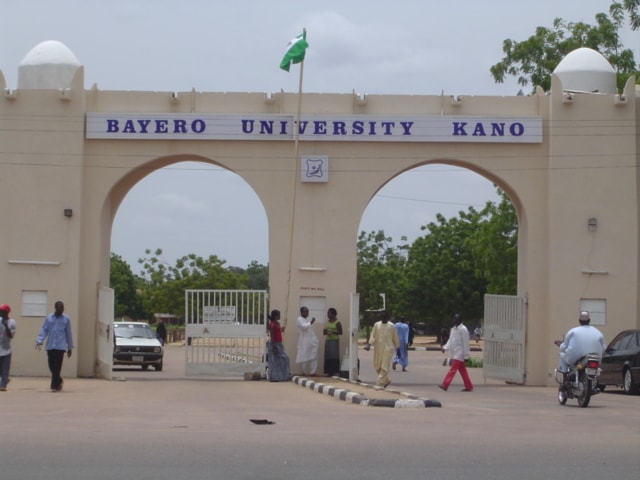
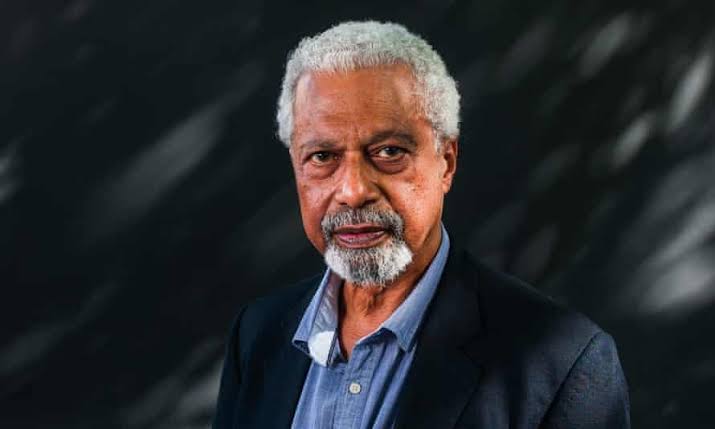
Former colleagues, students from Bayero University, Kano congratulate Abdulrazak Gurnah for wining the 2021 Nobel prize in Literature

Colleagues and former students of Abdulrazak Gurnah, from the Department of English and Literary Studies, Bayero University, Kano, congratulate him, as he emerged this year’s winner of the prestigious Nobel prize in Literature.

According to one of his former students, Ibrahim Garba, “we already foresaw than in him, since the 1980s when he taught us in the department, here in Bayero University, Kano, Nigeria. He deserves it. Gurnah has always been enthusiastic about Literature and today he attained the highest and most popular status. Congratulation sir”, he said. He added that “Bayero University, Kano would be equally happy and part of this achievement, as a place where Gurnah worked and served diligently.

According to the Guardian Newspaper, UK, the “Tanzanian novelist is named laureate for ‘uncompromising and compassionate penetration of the effects of colonialism’

The Nobel prize in literature has been awarded to the novelist Abdulrazak Gurnah, for his “uncompromising and compassionate penetration of the effects of colonialism and the fate of the refugee in the gulf between cultures and continents”.

Gurnah, who grew up on one of the islands of Zanzibar and arrived in England as a refugee in the 1960s, has published 10 novels as well as a number of short stories. Anders Olsson, chair of the Nobel committee, said that the Tanzanian writer’s novels, from his debut Memory of Departure, about a failed uprising, to his most recent, the “magnificent”, Afterlives, “recoil from stereotypical descriptions and open our gaze to a culturally diversified East Africa unfamiliar to many in other parts of the world”.

No black African writer has won the prize since Wole Soyinka in 1986. Gurnah is the first Tanzanian writer to win.

Gurnah’s fourth novel, Paradise, was shortlisted for the Booker Prize in 1994. Olsson said that it “has obvious reference to Joseph Conrad in its portrayal of the innocent young hero Yusuf’s journey to the heart of darkness”, but is also a coming of age tale, and a sad love story.

As a writer, Gurnah “has consistently and with great compassion penetrated the effects of colonialism in East Africa, and its effects on the lives of uprooted and migrating individuals”, Olsson told gathered journalists in Stockholm.

Gurnah was in the kitchen when he was informed of his win, said Olsson, and the committee had “a long and very positive” conversation with him.

Gurnah’s most recent novel Afterlives tells of Ilyas, who was stolen from his parents by German colonial troops as a boy and returns to his village after years fighting in a war against his own people. It was described in the Guardian as “a compelling novel, one that gathers close all those who were meant to be forgotten, and refuses their erasure”.

“In Gurnah’s literary universe, everything is shifting – memories, names, identities. This is probably because his project cannot reach completion in any definitive sense,” said Olsson. “An unending exploration driven by intellectual passion is present in all his books, and equally prominent now, in Afterlives, as when he began writing as a 21-year-old refugee.”

Afterlives by Abdulrazak Gurnah review – living through colonialism

Worth 10m Swedish krona (£840,000), the Nobel prize for literature goes to the writer deemed to be, in the words of Alfred Nobel’s will, “the person who shall have produced in the field of literature the most outstanding work in an ideal direction”. Winners have ranged from Bob Dylan, cited for “having created new poetic expressions within the great American song tradition”, to Kazuo Ishiguro “who, in novels of great emotional force, has uncovered the abyss beneath our illusory sense of connection with the world”.According to Ellen Mattson, who sits on the Swedish Academy and the Nobel committee: “Literary merit. That’s the only thing that counts.”

The Nobel winner is chosen by the 18 members of the Swedish Academy – an august and mysterious organisation that has made efforts to become more transparent after it was hit by a sexual abuse and financial misconduct scandal in 2017. Last year’s prize went to the American poet Louise Glück – an uncontroversial choice after the uproar provoked by the Austrian writer Peter Handke’s win in 2019. Handke had denied the Srebrenica genocide and attended the funeral of war criminal Slobodan Milošević.

The Nobel prize for literature has been awarded 118 times. Just 16 of the awards have gone to women, seven of those in the 21st century. In 2019, the Swedish academy promised the award would become less “male-oriented” and “Eurocentric”, but proceeded to give its next two prizes to two Europeans, Handke and Polish writer Olga Tokarczuk.”
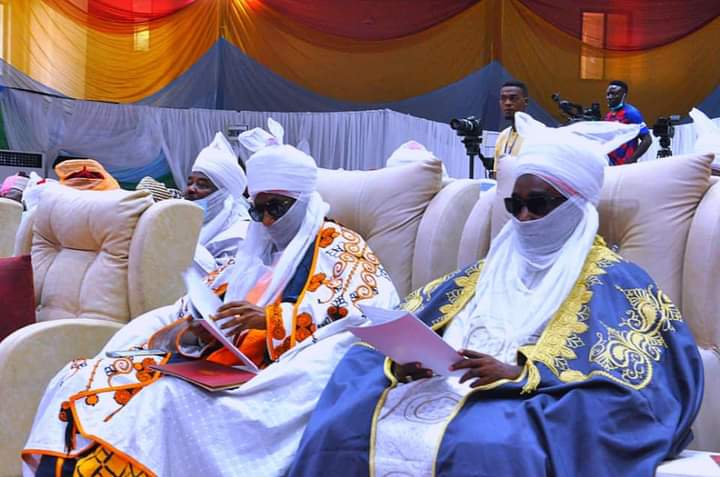
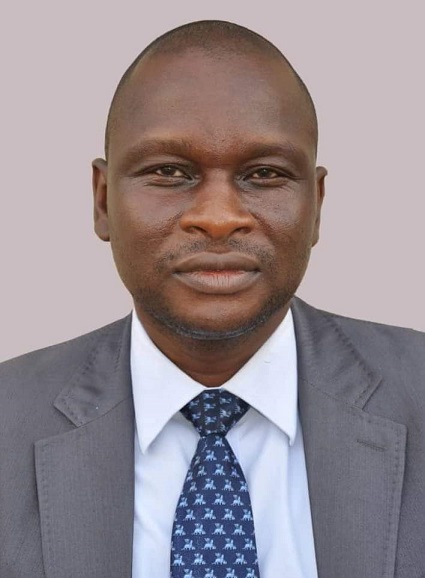
Namadi Sambo, Khalifa Sanusi, others, attend Emir of Zazzau anniversary lecture

By Sumayyah Auwal Ishaq


Former Vice President, Arch. Namadi Sambo, Khalifa Muhammadu Sanusi II, the Deputy Governor of Kaduna State, Dr Hadiza Sabuwa, representing Governor Nasir El-Rufai among other dignitaries, are attending a public lecture in celebration of the one-year anniversary in office of HRH Ambassador Ahmed Nuhu Bamalli, the 19th Emir of Zazzau at Yaradua Hall, Murtala Square, Kaduna.

Nigeria at 61: A giant with challenging crises amid opportunities

By Terhemba Wuam, PhD

As Nigeria marks its 61st anniversary of independence, its citizens are stuck in general anomie of despondency. This is due to general insecurity in the country, rising unemployment and high cost of living.

It is also an age of anxiety, with many measures of Nigeria’s socio-economic progress painting a picture of a nation in great distress. Nigeria’s economy has been stagnant, growing at less than 1% cumulatively during the past six years, far below population growth of 2.6%. It also has about 40% of the population of about 200 million living below the poverty line.

The country is equally beset by security and political challenges. Boko Haram insurgents still operate in the North-East. In the North-West, bandits are overwhelming the security forces. In North-Central Nigeria, deadly clashes between farmers and herders continue. And separatist and irredentist agitations resonate in the South-East and the South-West of the country.

Despite these problems, Nigeria has made substantial socio-economic progress, at least since 1999 when it returned to democracy after decades of military rule. It is also a country with huge resources that have yet to be fully tapped. The biggest of these is Nigeria’s educated citizens. The country had a literate population of less than 5% at independence. Now, more than 60% of the population is literate. Also, enrolment into tertiary education keeps increasing.

The past 60 years
A review of the past six decades shows that the Fourth Republic, which took off in 1999, has been Nigeria’s golden era in terms of economic and social indicators. This reality is, however, a difficult one to present to the millions of unemployed who are out of work and struggling to cope with inflationary pressures on food and other basic livelihood requirements.

Since 1999, Nigeria’s economy has grown more than sevenfold. A big chunk of this is explained by the rebasing of the economy in 2014. It was found that the economy was 60% bigger than previous estimates.

Before 2014, Nigeria had been using the 1990 prices and the composition of the economy to determine its size. Yet, a lot had changed since then. For example, telecommunications had grown substantially with the introduction of mobile telephony. Nollywood, Nigeria’s movie industry, has also expanded and morphed into a more professionally organised and run sector.

Nigeria moved from lower-income to lower-middle-income status, based on national income per head of population, during the Fourth Republic. That’s based on World Bank rankings. Other countries in this category include Algeria, Egypt, Kenya, Tunisia, India, Iran and Ukraine.

Economic difficulties
Nigeria’s economic difficulties started in the mid-2010s. Nigeria’s economic fortunes are closely aligned with oil prices which showed a sharp decline between 2014 and 2016.

The World Bank has described the 70% drop during that period as one of the three biggest declines since World War II, and the longest lasting since the supply-driven collapse of 1986.

In response, Nigeria’s economy, which had recorded an average growth rate of 6.68% between 1999 and 2015, has plunged in and out of negative figures since 2016. Within this period, it entered recession twice. Cumulative growth since 2016 has averaged below 1%.

Nigeria has taken steps to reduce its reliance on oil. These measures include the revival of the agricultural sector as well as reducing government reliance on oil revenues by tax revenue from other sources. These have yet to pay off. And the COVID-19 pandemic has aggravated the economic downturn, plunging more people into unemployment and poverty.

Nigeria’s government has invested in agriculture and has articulated economic programmes for other sectors, progress has been hampered by inflationary pressures, low oil prices and a weak currency. The government’s inability to arrest the security crises in several states has also affected agricultural productivity. Other factors include the government’s inability to articulate a clear economic agenda for the country. In addition, its monetary and fiscal policies favouring dual exchange rates, and restrictions on foreign trade through border closures have limited recovery and growth.

A national call to action
Nigeria requires a national leadership with the understanding and capability to set the tone and direction for national growth and development. This must incorporate all citizens, irrespective of ethnic or geopolitical affiliations in a grand vision of collective dynamic growth.

A lack of such political leadership denies the country the possibility of meaningful growth and critical citizenry.

Nigeria remains a country of great potential. Her fountain of possibilities can be found in its growing population of educated citizens. The population of the educated at this very moment in the country’s history is at the threshold or point of national acceleration. An example is the country’s burgeoning tech ecosystem largely driven by young people. It is at a point conterminous with those of the Asian Tigers before their rapid transformation to the developed world and high-income status.

All the fundamentals are indicative of a country at the point of a great leap forward, the role of an enlightened and well-educated population is crucial to that process.

Despite limitations in the education sector, Nigeria has more than 190 universities, the largest university and tertiary education sector in Africa. The country churns out millions of graduates annually, creating the most educated workforce on the continent.

This growth represents both a challenge and an opportunity. It will be a challenge and a huge economic burden if productive opportunities are not found for their engagement. Gainfully employed, these educated millions can be harnessed to drive Nigeria’s economic growth, thus promoting social stability.

Political leadership
Nigeria challenge is not that its political leadership has been corrupt, but that it has had limited ability to govern the country effectively. Nigeria needs a modern political administration where the state is not about maintenance of the status quo and the mere allocation of existing economic values for project and self-aggrandisement.

The state should be reoriented and directed purposely towards a more expansive interpretation with a focus on rapid economic growth and the provision of public goods that empower citizens to become meaningful actors in the overall positive transformation of their society.

Such purposeful action by the national leadership, who must be clearly reformist, is required to alter the trajectory of poor economic growth. It is also required to foster sustained productivity gains in the country’s economy to generate growth to average 6%-10% annually. Such growth is what will enable Nigeria to triple and possibly quadruple its economy within the next 10-15 years in a repeat of the first 20 years of the Fourth Republic.

Inevitably, a growing economy represents the best pathway toward addressing many of the social and economic challenges Nigeria now faces in its seventh decade of independence.

Dr Terhemba Wuam can be reached via terhembawuam@yahoo.com.

BUK student abducted in Kano

By Muhammad Sabiu


A 23-year-old female student of Bayero University Kano (BUK) has on Tuesday afternoon been abducted around the Rijiyar Zaƙi area in Kano State.


The student identified as Sakina Bello is a botany student at the university.


Hours after the abduction, reports have it that the kidnappers of Sakina have demanded N100 million ransom from her family.


A source, who is in the know of the incident, was quoted by an online newspaper as saying, “She left home around 3 pm on Tuesday and could not come back until this moment. She was supposed to go to Janbulo from our house in Rjiyar Zaki.


“They called her elder brother around 9 pm and informed him that she was in their den and that they would call back on Wednesday. And the next they do is to demand N100million ransom,” the source added.


Unlike Zamfara, Sokoto, Katsina and other terrorised northwestern states, kidnappings and killings are not incessant in Kano.

That essay, Cornflakes for Jihad!😃

By Ibrahim A. Waziri

To most non-Muslims researching and writing about Boko Haram, the problem generally begins with Muslims and Islam in Northern Nigeria and, to some degree, across the globe.

To them, BokoHaram is synonymous with the issues of ontology and epistemology of Islam. That is why their narrative of it can encircle Shehu Dan Fodio, Late Sheikh Mahmud Gumi or even Ahmadu Bello Sardauna, the Premiere of Northern Region, during Nigeria’s first republic. They also do find its bits of ideological nuggets in the earliest of the Islamic literature!

But to most Muslims or their sympathisers, Boko Haram is a persistent story of fringe, rebellious elements among the larger Muslim population across history. These elements are primarily rigid and resistant to any contemporary interpretation of the Islamic canons, which goes with the present circumstances and gives maximum peace, harmony and cooperation among Muslims; and between them and non-Muslims.

The non-Muslim researchers generally point to Islam as the source of the problem. The Muslims point at Khawarijism (rebellion) against any Muslim broad social consensus (like Nigeria as it is presently constituted), at a particular point, as the problem.

The non-Muslims argue that the problem is profoundly historical. So they travel back the archives and exhume positions, at one time, of individuals, such as Sheikh Daurawa, Sheikh Gumi, Sheikh Dahiru Bauchi, Sheikh Auwal Albani, Sheikh Jaafar Mahmud, etc., to drive home their points.

While the Muslims are inclined to reject such a notion, arguing that social consensus is a transitional thing by nature, and Muslims embody the concept of Transition Personalities most. [Transition person as a concept is sufficiently delineated by Stephen Covey, in his, The Seven Habit of Effective People].

That, it is embedded in Muslims traditions and part of their essential social jurisprudence, that what is a norm today may not necessarily be the norm tomorrow. And that, the internal problem of the Muslim communities are those fringe elements who do not reflect the power of transition and acknowledge the value of consensus building, with new variables that new situations always present.

The very recent article by a certain David Hundeyin making waves through social media, Cornflakes for Jihad, also reflects the usual sentiments identified with many non-Muslims types of research about BokoHaram.

Apart from the basic factual errors it contains – which Abdulbasit Kassim diligently pointed out – it also concluded with logic barren childish conspiratorial arguments that send us millennia backwards in our struggle searching for the appropriate problem definition, analysis and solution recommendations on the issues of BokoHaram.

Contrary to the essay’s claims against Ahmed Idris Nasiruddeen (NASCO), Nasiruddeen has lived a life of a pious Muslim who was using his wealth to help Muslim friends, associates and organisations.

Of course, as any other friend or associate one might have helped, they too are naturally transitioning personalities (not necessary in the positive sense) living in a transitional world. One can help a person or an organisation, for a specific general reason or objective, only later in life for them to shift their objectives, metamorphosing into something different.

The fact that the NASCO conglomerate was once allegedly accused of financing terrorism (by whoever) does not mean it intentionally did that. Likewise, Sheikh Yakubu Musa was once allegedly accused of funding terrorism (by whoever) does not mean he is guilty.

Until we begin to look at the ontology and epistemology of issues around BokoHaram in this kind of light, our analysis about it will always leave undesired dangerous results born of misdiagnosis. We may begin to indict people like Alhaji Aliko Dangote and Abdussamad Isiyak Rabiu (BUA) because we are likely to find that the Imams, Mosques or organisations now or in the future they have once helped are enmeshed in terror wave of related accusations. Then we will begin to write warped essays like Cement or Sugar for Jihad.

Writing informed public commentaries or being a sound public intellectual is beyond the ability to flawlessly and flowerily write essays, making endless references to a large swathe of literature and records. No. It requires multidisciplinary insights, a great deal of patriotism, a deep sense of intuitive social measurement, appreciation of people and cultures from both etic and emic perspectives, history, and sound ability in social system projections.

Indeed, one cannot have a Nigeria of great value today or in future if they have a large heart sufficient enough to accommodate Ahmadu Bello, Sheikh Gumi, President Buhari, BokoHaram founder, Muhammad Yusuf and Abubakar Shekau, lumping them as the same people, who worked or are working, to turn Nigeria into an absolutely imaginary Islamic state.

Ibrahim A. Waziri writes from Zaria, Kaduna.

On the culture of disrespect and disregard for term limits

By Mujahid Ameen Lilo


When in 2015, the then incumbent president of Nigeria, Goodluck Jonathan, called to congratulate his opponent ahead of the announcement of the election winner, it was hailed as a heroic act. The act further cemented the country’s democratic maturation and avoided the imminent disintegration of the country had the president not accepted defeat. Moreover, it ensured a stable and successful government transition in a country on the brink of war.


The former president of the Niger Republic got the Mo Ibrahim Prize for Achievement in African Leadership because he respected term limits. Yet, nobody was found worthy of the award for eight years, which points to African leaders’  disgraceful culture of disregard for term limits and bastardising of democracy. What’s more annoying, though, is the culture of celebrating the few ones that respect the term limits.


When we understand that it’s the moral imperative of our leaders to bow to the people’s will, to respect the constitutional authority that put them there and dictate their term limits. Until then, we wouldn’t rush to make a big deal of it and lionise them, present them with awards, among other things. We tend to forget and forgive their misrule. The great disenchantment with the previous administration’s sadistic leadership style made Nigerians ready to go to any lengths to vote out that party. People were prepared for war if the election got twisted. So it’s the morally and politically correct thing to do, that is,  handover.  Most of these leaders leave behind enormous debts, worsening insecurity, cases of corruption and so on.


The recent coups in Guinea and Chad and the foiled one in Niger indicate the frightening facts that the West African countries are far from political stability. Military intervention hardly change matters. It shouldn’t be the response to a faulty democracy. The West African subregion should thoroughly shake itself off the yoke of any military powers. The democratisation of the whole subregion would go a long way in stabilising it. Not that democracy is perfect per se (what with her so-called upholders violating one of the fundamentals: periodic election), but that we can and should practice it most purely, quite distinct from the military system. There should be an atmosphere that’ll facilitate proper reforms of democracy.  A stable system of government will guarantee peace and also bring about the desired developments.


It’s on this premise that I’d now address another factor that is damaging to our democracy, threatening what little peace and stability is left in the region: electoral processes.  In my country Nigeria, once it’s time for elections, people who live away from their states of origin start rushing back to their hometowns because elections have been synonymous with violence leading to the death of many people. There should be peace for people to exercise their fundamental right of voting. Instead, thugs are paid to violate the process. Many people believe in the quote that ‘our votes do not count; otherwise, they wouldn’t let us vote’.  However, that is not where the problem lies.  I believe that we’re capable of holding free and fair elections as we’ve done in the past. We can cite many examples with Nigeria as a case study. The fourth republic election in Nigeria that put Chief Obasanjo into power was relatively free and fair. The two elections that put Buhari into power were also pretty free and fair. We cannot forget the annulled election of June 12, 1993.


I was born in the early 2000s. My generation is called the ‘golden generation’ because the Nigeria we’re born in is democratic, free from colonial and military powers. But my generation suffers from a collapsing education system (most have to attend private schools because the government ones are total craps), from frequent strikes in universities to insecurity devouring our lands like an inferno. This semester, I was looking forward to fieldwork we are supposed to go on in a literature course but have to resort to what our lecturer calls ‘mental research’ because nowhere is safe. This generation is so angry – a wave of anger manifested in the Endsars protests.


On days like this, independence day, I sit and reflect on the happenings in my nation while my fellow teenagers are out having fun, draping their bodies in the country’s colours and posting things like ‘happy independence’ on social media. Yet, the ghost of Achebe and Gimba surrounds me as I struggle to intellectualise my thoughts, building it on Achebe’s dictum (the trouble with Nigeria is simply and squarely a failure of leadership) and the Gimba’s theory that differs from Achebe’s.


I am a lover of columns. As a child, I was very socially and culturally conscious, reading my dad’s dailies. On my shelf, I have a collection of columns: Gimba’s Why am I Doing This, Tundes’s Nigeria: A Thousand Cries, A Thousand Laughs, Nda Isiah’s Nigeria: Full Disclosure, and Victor’s Excuse Me. The writings there span Nigeria from Obasanjo’s first tenure to the eventful short tenure of Yar’adua and Goodluck’s tenure. Presently, I read Kakanda, Bulama and Abubakar,  whose columns are about the present administration. All through, there is rage. There is a disappointment. These essays echo in my conscience, making it hard for me to celebrate not only Nigeria’s birthday but those supposed champions of democracy, that after much damage, step aside and respect term limits. Like Jonathan. Like Niger’s Muhammdou, winner of Ibrahim Prize for Achievement in African Leadership.


Mujahid Ameen Lilo is a winner of the Wole Soyinka Essay Competition and a student at the Department of English, Ahmadu Bello University, Zaria.

World Teacher’s Day: Nigerian students send wishes, prayers to their teachers

Compiled by Aisar Fagge

Today, October 5, is designated as World Teacher’s Day. Students across the globe are celebrating the day with their teachers by sending them flowers, cards, taking them out for dinner and writing goodwill messages on various social media platforms.

The Daily Reality collects some opinions of Nigerian students about this day. Here are some:

Umar Haruna Tami

“Teachers are the nearest alchemists within our reach. The good students they produce are the result of patience, perseverance and dedication to the service. They don’t prioritize what’s in it for them. May their spirits never lose shape.”

Adamu Kazaure

“Without the hard work of Nigerian teachers, the level of illiteracy will have been unmeasurable. We are ever grateful to all the Nigerian teachers. You all deserve to be celebrated.”

Hafeez Kiido

“Uncle Ishaq, who taught me in my elementary school, Maitama Yousuf. He was the first person who had inspired me to read and be courageous when giving it back(public speaking in debates). Malam Sanusi was the second person who usually exempted me out of many applauding my doings. That motivates me, though.

Prof. Tijjani M Naniya of BUK (well-known historian), from whom I retrieve raw knowledge of history. I also emulate some of his positive and solid character. For example, he once told us to be self—defendants and not to part in sectarianism, as sectarianism was solely built upon politics, not religion.

Late Malam Sanee taught me Quran in my early childhood stage (Allah ya gafarta masa).

Last and not least was Malam Abdullahi Abba, who was my Project Supervisor at Kano state Informatics. I will never forget his kindness and guidance towards our studies. May the brim of blessings of Allah flood them all.”

Sohaib Infinity

“Teachers are the reason for what am I today; I always respect them, and my love for them is immeasurable.”

Abdullahi Idris Tikau

“We know we don’t have a Kobo, Naira, or Dollars to pay you. So your (teachers) reward is in heaven. May Allah be your helper and protect you from the trials of this Dunya. May Allah bless your excellent work for humanity. Long live Nigerian teachers. Your good work will not be in vain.”

Jamila Umar

“Teachers are community builders. I can recall when a teacher in primary six once told me about vision 2020 (2005) that all the academic, health challenges etc., we are facing in Nigeria will become history. Since then, I have been dreaming of this dreamland. He speaks sincerely with hope for our future, but upon reaching 2020 now, the result is ‘irony.’ I still have hope for the future generations to come. May Allah reward our teachers.”

Harun Muhammad Yakasai

“Teachers are the angels who enlighten our lives with the light of knowledge and wisdom. Wishing you immense joy, happiness and prosperity because teachers like you deserve the best. Happy teacher’s day to you all.”

Sani Muhammad

“My best regards to both my Islamic and western education teachers as they have really impacted on me in relations to honesty, dedication and many more.”

Dan Ladi Hausawa 

“I don’t have enough words to express my gratitude to my humble teachers who guided me on how to become a useful person among the people. God bless our teachers.”

Auwal Mukhtar

“Today is the teacher’s day. Teachers are the bedrock of any sane and progressive society without which any society can only live in room and gloom. They perform lofty and noble acts which go unnoticed and adequately compensated. My utmost regards to my teachers, who helped to shape and mould my thinking. Who always taught me the act of self-sacrifice and selfless living. My sincere appreciation to Mrs Beatrice Okoro, Mr Yemi Odedokun, Mr Nkuma, Late Atemken Achanga, Mal Abdullahi Musa, Mal Yusufu, Mal Nura Khalid ( digital Imam), Ass. Prof Bappa M Abubakar, Ass. Prof Manir Kamba, Prof Lukman Diso, Dr  Abdulkadir Idris Ahmed and many others too numerous to mention.”

Karama Jamila Sani Yaro

I will forever be grateful to my teachers. My parents were my first teachers. Both Islamic and Western School teachers I attended. And the entire teaching staff of Al-Manaahil Academy. You all are much appreciated.”

Yahanasu Ibrahim Isah

“Dear teachers, it is because of you I became a good student. Thank you, all, that you have done for me. I wish you a delighted teachers day. If knowledge is the light, then you are the guiding stars that give us this light. I celebrate you all. Happy teachers day. Proud to be one. I celebrate us all.”

Hassan Mujtaba
“I was inspired by many teachers, and you are included. The way teachers inspired me is to be a hard-working student. Alhamdulillah. I took their advice. I always work hard. I rather fail and fail than cheat in any exam. I believe deep down in me that this is a very good thing and am proud of it. Above all am proud to be among your students, sir. Am still seeing it as a favour. May God bless all our teachers.”

Teacher’s Day

By Muhammad Rabi’u (Bin Isah)


IN MOST CASES, we look at many successful people without remembering those people that held the lamp for them. Teachers are the light-bearers of success, the beacons of progress and the building blocks of a good generation. “Islamiyya teachers” at the top, and the Boko teachers; they all hold lamps for us. But they are less assisted, remembered and appreciated.

Of all people, teachers are the most selfless segment of the society that derive pleasure not in failure but in the success of their students and people in general. Whether doctor, engineer, lawyer, administrator, etc., a teacher stands behind you in support. They feel delighted when students learn and understand, take and pass their tests, and when they hear that one of their students has made a remarkable achievement in life. After exhausting their energy in bringing light in person, they are now fully assured that their effort has not been in vain.

Teaching, as the essential task of teachers and the most fundamental component of education, can never be achieved without teachers. Education, the art of imparting knowledge, skills and experiences to learners, will lose its meaning without the help of teachers. Because education, which we now equate with schooling, taking schools as the vital places of learning, where socialization takes a decisive form, is not effective without teachers’ sacrifices.

The system of our organizations, whether governmental or non-governmental; the processes of our public and private enterprises; the modalities and mechanisms of our modern state of affairs; the leaders that serve the workers that run our world and us; all are not but the manifestation of the work of one selfless, good-loving and a charitable individual called a teacher. But this teacher is not appreciated, and they don’t care as long as the world stays educated, sane and developing.

Whatever we may say about teachers, we can never elucidate the merits of their services in their deserved way. Words can never capture the splendour of their roles and works in man’s development and wellbeing. Teachers love nothing more than the feeling of being successful in putting life into a place where death has taken an abode.

Teachers can be forgotten, but in every word spoken and any letter written, and in any sense made and any problem solved, the teacher takes credit, and particularly the teachers, at the primary levels of our learning, who have helped us learn how to read and write, understand and play with numbers in order to have eyes, hands and tongues to communicate with the world.

You can say “Thank You” to your teachers, and you’re still less thankful for the life they have breathed into you. Perhaps, by excelling more and being a good member of society, the teachers will feel better appreciated. And you can still never pay them. And nobody can ever pay them. Indeed, their reward is in heaven.

Thus, I say, a happy #WorldTeachersDay.

Muhammad Rabi’u (Bin Isah) writes from Bauchi State.

Kano Government shut down 537 fake hospitals, 138 pharmacies and 399 patent medicine shops

By Hussaina Sufyan Ahmad

The Government of Kano State ordered the closure of no fewer than 1,581 premises used as hospitals, clinics, pharmacies, and patent medicine shops in 20 Local Government Areas of the state.

The government embarked on these measures following the growing menace of quack doctors, inexperienced pharmacists, and other health officials that use unlicensed premises for rendering health services across the state.

In this regard, the government’s action was said to have been prompted by reports that many unsuspecting residents had continued to fall victim to the nefarious activities of quack doctors and illegal clinic operators in the state.

The state, working in collaboration with the Pharmacists Council of Nigeria (PCN), has since swung into action, shutting the fake centres and moving ahead with more measures to sanitize the state and save the lives of the citizens.

The Registrar of the PCN, Pharmacist Elijah Mohammed, represented by his Director of Enforcement, Stephen Esumobi, told the media that efforts to sanitize the state would continue until the place is safe and secure from unqualified persons to practice and render services.

Mohammed said: “A total of 1,581 premises comprising 657 pharmacies and 924 patent medicine shops were visited across 20 local government areas of the state. A total of 537 premises made up of 138 pharmacies, and 399 patent medicine shops were sealed for offences which include: operating without registration with the PCN, selling ethical medicines without the supervision of a pharmacist, poor documentation, poor storage conditions, unauthorized sale of substances of abuse, amongst others.

While 25 were issued with compliance directives. Many patent medicine shops and medicine dealers in Kano still operate without adequate storage facilities, while others have illegal warehouses scattered around the state, some of these warehouses have a large stock of ethical products and substances of abuse which could find their ways into the camps of criminal elements in the society thus contributing to the adverse security situation.”

Similarly, the Private Health Institutions Management Agency, PHIMA, has also closed down many illegal clinics actively rendering services as hospitals to unsuspecting persons in the state. The Agency’s Executive Secretary, Usman Tijjani Aliyu, said the agency shut a chemist operated by a low-level secondary school exciter as a ‘hospital,’ describing it as a case of ‘quackery’.

The Chairman of the Kano State Chapter of Nigeria Medical Association (NMA), Dr Usman Ali, said that efforts were in been taken to checkmate activities of quack doctors in the state; “We are fighting this quackery, and it is because of this that a committee, Medical and Dental Council of Nigeria, (MDCN) monitoring team was set up in the 36 states including Federal Capital Territory.

“The committee comprises director of medical services of the Ministries of Health as chairman and the NMA chairman of each state as the secretary. About two years back, with the collaboration of the Kano Police Command, we have arrested two to three quack doctors in the state. Similarly, for all doctors in the state, we must make sure a doctor is qualified and certified to practice in Nigeria. That is why the same monitoring team is going round to help check these in hospitals.”

Facebook, WhatsApp outage: Nigerians react

Facebook and its family of different applications which are massively used by Nigerians and billions of people worldwide have encountered a very big technical trouble that led to general outages worldwide. According to The Newyork Times, Facebook and its family of apps, including Instagram and WhatsApp, were inaccessible for hours on Monday, taking out a vital communications platform used by billions and showcasing just how dependent the world has become on a company that is under intense scrutiny.

Facebook’s apps — which include Facebook, Instagram, WhatsApp, Messenger and Oculus — began displaying error messages around 11:40 a.m. Eastern time, users reported. Within minutes, Facebook had disappeared from the internet. The outage lasted over five hours, before some apps slowly flickered back to life, though the company cautioned the services would take time to stabilize.

Even so, the impact was far-reaching and severe. Facebook has built itself into a linchpin platform with messaging, live-streaming, virtual reality and many other digital services. In some countries, like Myanmar and India, Facebook is synonymous with the internet. More than 3.5 billion people around the world use Facebook, Instagram, Messenger and WhatsApp to communicate with friends and family, distribute political messaging, and expand their businesses through advertising and outreach.

Facebook is used to sign in to many other apps and services, leading to unexpected domino effects such as people not being able to log into shopping websites or sign in to their smart TVs, thermostats and other internet-connected devices.

Technology outages are not uncommon, but to have so many apps go dark from the world’s largest social media company at the same time was highly unusual. Facebook’s last significant outage was in 2019, when a technical error affected its sites for 24 hours, in a reminder that a snafu can cripple even the most powerful internet companies.

This time, the cause of the outage remained unclear. It was unlikely that a cyberattack was the culprit because a hack generally does not affect so many apps at once, said two members of Facebook’s security team, who spoke on the condition of anonymity. Security experts said the problem most likely stemmed instead from a problem with Facebook’s server computers, which were not letting people connect to its sites like Instagram and WhatsApp.

Facebook apologized for the outage. “We’re sorry,” the company said on Twitter after its apps started becoming accessible again. “Thank you for bearing with us.”

The outage added to Facebook’s mounting difficulties. For weeks, the company has been under fire related to a whistle-blower, Frances Haugen, a former Facebook product manager who amassed thousands of pages of internal research. She has since distributed the cache to the news media, lawmakers and regulators, revealing that Facebook knew of many harms that its services were causing, including that Instagram made teenage girls feel worse about themselves.

The revelations have prompted an outcry among regulators, lawmakers and the public. Ms Haugen, who revealed her identity on Sunday online and on “60 Minutes,” is scheduled to testify on Tuesday in Congress about Facebook’s impact on young users.

“Today’s outage brought our reliance on Facebook — and its properties like WhatsApp and Instagram — into sharp relief,” said Brooke Erin Duffy, a professor of communications at Cornell University. “The abruptness of today’s outage highlights the staggering level of precarity that structures our increasingly digitally-mediated work economy.”

When the outage began on Monday morning, Facebook and Instagram users quickly used Twitter to lament and poke fun at their inability to use the apps. The hashtag #facebookdown also started trending. Memes about the incident proliferated.”

Even here in Nigeria, many Facebook, WhatsApp and Instagram users start exchanging pleasantries and teasing one another that those apps are not to be trusted as the ultimate way of communication. A Facebook user, called Abdullahi, posted that: “I am happy we are old, we came all the way from the time when there were no social media and I feel we were not taken by surprise as we are not like the boys of today, whose life is largely dependent on Facebook, as that’s the only thing they know”. Abdul’aziz, another user said “I didn’t even know that it happened. While another Facebook user was shocked and he said, “I thought it is the end of time”. Another user opined that “what do you think if it is Oxygen that is stopped for certain hours”! Users continue to say their minds as Facebook and its family apps are resuscitated back to life.