Admin

2023: North-West youths urge Governor Yahaya Bello to run for president

By Sumayyah Auwal Ishaq

Nigerian youths under the auspices of GYB Awareness Project 2023 across the North-West geopolitical zone have urged Governor Yahaya Bello of Kogi to run for the office of president in 2023.

The youths on Saturday declared their support for Governor Bello during a press conference in Kaduna. Mr Saifullahi Bawa Kajuru, leader of the group said “the objective of the meeting is to conscientise Nigerians, especially the youths in the north-west on the need to support youth presidency come 2023”. He said a young person of Mr Bello’s calibre in 21st century Nigeria could change the narratives of the country through effective leadership and governance.

Mr Bawa added that “after wide consultation with stakeholders, youth groups, student unions, market unions, religious and traditional bodies from the North-West geopolitical zone, we the Northwest Youth under the umbrella of GYB Awareness Project 2023, hereby call on Governor Yahaya Bello to contest for the office of the President, the Federal Republic of Nigeria come 2023. Nigeria must continue to move on the right path in 2023”

“GYB Awareness Project 2023 will continue support, propagate, promote and project the ideals of Governor Yahaya Bello. It also wishes to confidently state that the entire youths of the north-west region comprising of Kaduna, Kano, Katsina, Kebbi, Sokoto, Jigawa and Zamfara States are solidly behind Governor Yahaya Bello candidacy comes 2023” the statement added.

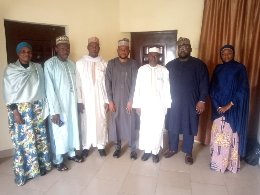
Some of the state coordinators of GYB Awareness Project 2023 from Kano, Katsina, Kebbi, Sokoto, Jigawa, Zamfara and others urged Nigerians and the leadership of the ruling party to present Governor Bello as the candidate of the party in the next general elections.

The Southeast is no less a burden

Ahmadu Shehu, PhD.

As we continue the inconvenient conversation on Biafra and what it portends for the Southeast and our country, I find the need to clarify some insinuations raised in the troupes of comments and rejoinders that trailed my previous articles. But, before proceeding, I must commend many southeasterners for their dispassionate contributions and insightful perspectives.

However, although critical, some of the comments have missed salient truths that need further explanation. This will help our generation avoid past mistakes committed mostly by overzealous politicians, leading to avoidable wars and near-disintegration of our dear country.

There is this illusion that conflates southern Nigeria, particularly the Niger Delta, with the Southeast or “Biafra”. The truth is that the people of the Niger Delta region (let alone the southwest) do not align with the Southeast in politics and administration. For the information of our youth, the first secessionist war in Nigeria was fought between Niger Delta activists under the leadership of Isaac Adaka Boro and the Nigerian forces led by Chumeka Ojukwu, who later became a secessionist himself.

The three phases of Ojukwu’s career: from a defender of Nigeria’s unity at the battlefield to a rebel against his own country and later a senator and presidential candidate for the very country he fought to disintegrate should tell discerning minds that there are many faces to the idea of Biafra, none of which is the common interest of the Igbo people.

Please permit me to be blunter here. As far as our contemporary political and economic realities are concerned, the Southeast is only hiding behind the shadows of other regions in the south to claim prosperity. In other words, when our Igbo brothers call the northerners parasites, lazy or Abuja-dependent, they are actually borrowing the glory of the Niger Delta, and probably Lagos State, to abuse others. Because in reality, the contributions of the Southeast in the so-called feeding the nation is not as significant as they may like us to believe.

If you doubt this, let’s ask a few questions on the most critical sectors of the Nigerian economy. Since 90% of Nigeria’s foreign income depends on crude oil, what is the contribution of the Southeast in the two million barrels Nigeria makes per day? Very little is the answer. For, out of the nine oil-bearing states in Nigeria, Imo and Abia are the only southeastern states, accounting for an abysmal 1.6% and 0.68% of the total crude oil produced in the country. This is very negligible, as far as the numbers in this sector are concerned.

The Nigerian GDP, which is the bedrock of the economy and the source of non-oil revenue, primarily comes from agriculture. What is the contribution of the Southeast to agricultural production? The numbers are even more insignificant here. It is unfortunate that except for the oil-spilt Ogoni land, the Southeast is Nigeria’s least agriculturally viable region. Most states and local councils in the Southeast are not food sufficient.

By the nature of its geography, the Southeast sits on one of the country’s most infertile, erosion-prone lands. It is also the smallest and most overpopulated region leading to congestion and resource scarcity. It is no coincidence, therefore, that no one buys farm produce from there. Conversely, we see tons of raw food and livestock being transported daily to feed the region.

Some people may argue that the economic strength of the Southeast lies in its profoundly robust revenue base generated from industries and MSEs. They further postulate that the region contributes the most to the Nigerian revenue basket, albeit without evidence. Well, all the regions of the federation contribute their fair share to the federation tax revenue. However, the evidence available proves that the Southeast is neither the highest contributor nor is it self-reliant.

According to the National Bureau of Statistics, Southwest and South-South have the highest IGR per capita, and the Southeast is at par with North-Central, followed by Northwest and Northeast. None of the five southeastern states appears close to the top ten high revenue-generating states. Like any other northern state, none of the southeastern states – despite the 12% derivation funds – is wealthy enough to pay salaries without the federation account. Thus, one may ask: what kind of entrepreneurship and economic prosperity we are talking about here?

The fallacy behind the overestimated economic contribution of the Southeast is just one of the many problems. For instance, more than once, our country’s unity and cohesion are put on dangerous edges, thanks to the secessionist tendencies of the Southeast. Instead of forging ahead and pursuing alliances and friendships countrywide, the region and some of its people have continued on the path of division and segregation. The hatred propagated against anything and anyone perceived to be anti-Biafra has been phenomenal.

Furthermore, the Southeast is the main culprit in destroying Nigeria’s image and dignity in the international community. The Nigerian passport, which commanded respect a few decades ago, has become a suspect document worldwide. This unfortunate degradation of national identity and pride is the handwork of Nigerian drug pushers, physical and internet scammers, illegal migrants and human traffickers, most of whom are known to be southeasterners.

The same people are dealers and distributors of fake, contraband medications and drugs in all the nooks and crannies of this country, particularly in the North. This has always been an open secret and has been made even more vividly evident by the recent successes of the Nigerian Drug Law Enforcement Agency (NDLEA). The dangers these portend to our national development and global recognition is unquantifiable.

Therefore, if the above is true, claiming that the North is a mere burden on the Nigerian federation is absurd. For some, this might be based on ignorance, while for others, it is a deliberate attempt to malign and stereotype the region for reasons best known to the perpetrators of these dangerous narratives. But, whatever the motive is, we must recognize that all the federating units cause shared burdens to our national growth and development.

Since the North’s limitations and other regions have been overstretched in our national discourse, I believe it is equally important to remind our brothers in the Southeast that they are no less a burden than the other regions. As Nigerians, we should prepare to share both the positive and negative consequences of the actions and inactions of our fellow citizens. But, this is only possible when all parties acknowledge their limitations and are ready to embrace one another. Nigerians are siblings of a single family that are more alike than different. The earlier we accept this truth, the better.

Dr Ahmadu Shehu is a nomad cum herdsman, an Assistant Professor at the American University of Nigeria, Yola, and is passionate about the Nigerian project.

Maulud: Tuesday is public holiday—FG

By Muhammad Sabiu

Tuesday, October 19, has been declared by the Federal Government of Nigeria as a public holiday in commemoration of the Maulud celebration.

According to a statement signed by the Permanent Secretary, Ministry of Interior, Shuaib Belgore, on Friday, the Minister of Interior, Rauf Aregbesola, congratulated all Nigerian Muslims on the occasion of Eid-ul-Maulud.

Mr Aregbesola was quoted as saying, “As the indisputable leader of our race, we (Nigerians) must show responsible leadership in Africa.

“Irrespective of faith, ideology, social class and ethnicity, I urge you to cooperate with President Muhammadu Buhari’s administration in its effort to build a progressive and enviable nation that all citizens would be proud of.”

If your children cannot study here, don’t take gov’t appointments – ASUU President

By Uzair Adam Imam

ASUU President, Prof Emmanuel Osodeke, urged the National Assembly to formulate a law that will ban government officials from taking their children to study abroad. He added that if one knows his children cannot study here, one should not take government appointments.

Osodeke made the disclosure in Abuja at the reconvene meeting with the federal government, chaired by the Minister of Labour and Employment, Dr Chris Ngige.

Daily Trust reported that ASSU also called on the National Assembly to formulate a law that makes it compulsory for the public office holders to send their children to public schools in the country, saying such a step would let the officials know the decay in the public universities.

Speaking, Osodeke stated that, “We hope that the government will make it mandatory that if you accept a government appointment, your children must attend universities in the country.

“The National Assembly must formulate a law that if you take an appointment, your children must study here. If you know that your children cannot be here, don’t take government appointments.

“When you hear those in the government who send their children to schools abroad say that ASUU goes on strike, they should know that strike is not the problem. The problem is the issues afflicting the universities; nobody is interested in tackling them.

“Look at the budget we have seen recently, it is exactly the same thing we have been seeing. Nothing has changed. And this country is paying the high price for neglecting education – the banditry you see, the kidnapping and what have you, is because people are not being taken care of.

“That is why ASUU has been struggling so that Nigerian universities will be revamped so that as our children go outside for learning, other children from other countries will come here too and pay to this country in hard currency.”

Bomb blast hits Afghan Friday mosque again

According to a BBC report, “at least 16 people are dead and 32 injured after an explosion hit a Shia mosque during Friday prayers in the Afghan city of Kandahar.”

This act of terrorism has continued to pester among the Muslim communities in Afghanistan and elsewhere in various Muslim nations, with no clear cause and motive behind it. Such killings are perpetrated in order to tarnish the image of Islam and continue to ridicule the religion in the sight of others.

The recent “blast occurred at the Iman Bargah mosque. Pictures from the scene show shattered windows and bodies lying on the ground while others try to help.

The explosion’s cause is not yet clear but a suicide bombing is suspected.

A local doctor told our source that the injured worshippers were being taken to the Mirwais hospital.

BBC Afghanistan correspondent Secunder Kermani says that IS-K, a local branch of the Islamic State Group, was expected to say it was behind the attack.

Last Friday, a suicide attack on a Shia mosque during Friday prayers in the northern city of Kunduz killed at least 50 people. IS-K said it carried out the attack, which was the deadliest since US forces left at the end of August.

IS-K is violently opposed to the governing Taliban, has carried out several bombings recently.

The Taliban took control of Afghanistan after foreign forces withdrew from the country at the end of August following a deal agreed with the US.

It came two decades after US forces had removed the militants from power in 2001.

CIFCFEN appoints Fatima Buhari as board member

By Uzair Adam Imam
Daughter of the Nigerian president, Fatima Buhari, has been appointed as a member of the board of trustees of the Chartered Institute of Forensic and Certified Fraud Examiners of Nigeria (CIFCFEN) recently.
The event took place at ANAN House in Abuja.
The Cable reported that speaking at the ceremony, Iliyasu Gashinbaki, CIFCFEN’s president, said Buhari joins the board with a wealth of experience garnered from the public sector and international organisations.
“She has been engaged in working in the development space and extensive experience with development partners,” he said.
“With the wisdom of the board, we found it necessary for more women to be admitted to the board. This is in tandem with international best practices of having gender balance on every board and we want to lead by example.”
Speaking during the occasion, Buhari expressed her gratitude to the Institute for considering her worthy of the appointment.

Infidelity: Court ends marriage after husband threatened to commit suicide

By Muhammad Sabiu

The marital union between a 64-year-old man, Amos Akinlolu, and his wife has been dissolved by an Ibadan customary court.

This is coming after Mr Amos had threatened to commit suicide if the marriage was not brought to an end because, according to him, his wife was an “unrepentant adulterer.”

“My lord, peace is now a thing of the past in my family since Funmilayo started making herself a public tap where all men fetch water.

“I can no longer bear living under the same roof with an adulterous wife because she poses a threat to me,” Mr Amos was quoted as saying.

His wife, Funmilayo, however, described her husband’s claim as unsubstantiated.

She told the court that “Akinlolu has never caught any man in bed with me.”

2023 Elections: Kano politics so far…

By Salisu Uba Kofar-Wambai

Kano politics is unique, unmatched and unparalleled in all its ramifications. The uniqueness begins from its genres of political communication. The encapsulation of comedy, funny utterances and other rhetorics in the body politic define Kano politics since the First Republic. One can authoritatively posit that the Kano political propaganda through name-calling and other techniques cannot be found anywhere in the world.

The other philosophy and unequalled precept that distinguish its politics is radicalism and politics of ideology. It is the home of Malam Aminu Kano, the renowned masses emancipator and the leader of Nigeria’s democracy of doctrine and dogmas. The ideology taught by the past generation of Kano politicians is always passed from generation to generation. This will explain why, no matter the circumstances, our governors must work harder than other governors of Nigeria to win the electorate’s support. Every governor is struggling to wipe the history of their predecessor in projects executions even when the politics of corruption and deception take centre stage nationwide. Many didn’t know this secret of Kano distinct way of politics. It is our talisman.

However, you can’t superimpose a candidate in Kano politics no matter who you think can control and influence public opinions. There are easy swings in loyalty; therefore, it is the electorate that decides their fate. The maxim of collecting any candidate’s money and vote your choice on election days is attributed to Malam Aminu Kano. It is still very relevant in Kano politics.

Looking at the two camps of Kano political heavyweights today will be an interesting analysis. APC, as a ruling party, is a powerful force to reckon with. It has encompassed renowned politicians like Malam Ibrahim Shekarau, Senator Kabiru Gaya and what have you. The party has become an escaping ground of many seasoned politicians who cannot stand Engr. Rabiu Kwankwaso’s kind of power grip in the PDP.

Although these sets of politicians are not relevant to the APC’s camp, they’re not happy with the way, and manner Governor Abdullahi Ganduje’s government is run, especially the land matters and prioritization of projects that only serve the interest of the governor to earn his mighty 10 per cent. Let alone how the APC chairman and his cronies run the party as if they’re military dictators. There is nothing like internal democracy. And the chairman’s utterances have become a source of worry and grief to those party followers who want to see the sustenance of the party’s success come 2023.

Now that the struggle for 2023 has started and the politicians have already beat the drum, APC faces a threat and an uphill task on who will take after Ganduje. One can easily fathom and decipher from the hottest exchange of politicians how tough the politics will be.

So far, the top contenders are the deputy governor, Nasiru Gawuna, who remains mute, and the commissioner for local government affairs, who’s considered to be Ganduje, and his wife’s anointed son, who is doing all the talks for the deputy governor. The seconder is  Kano North senator and chairman senate committee of appropriations, Barau I. Jibril.

However, the recent outburst by Dr Hafsa Ganduje alias Goggo, the governor’s wife, who let the cat out of the bag, bluntly showed the governor’s support. So it lies with the deputy governor’s camp even though the commissioner of the information spun her statements where he said: she wasn’t understood, her utterances were twisted. The other contenders are AA Zaura and Barrister Inuwa Waya.

It seems the governor is caught between the devil and the deep blue sea. It is an undeniable fact that Senator Barau is the man of the moment. His political machinery is increasingly gathering momentum, and he’s believed to be the man who can challenge PDP Kwankwasiyya political movement in popularity and funds wise. But the governor seems not to be with him. And Gawuna has no political and economic wherewithal to fight for the Kano seat. Nobody will argue this. So, if the governor mistakes the gubernatorial candidate, it is at his own risk, for his sworn enemies may likely grip on to power, and he knows the consequences.

However, the meeting of Shekarau, Gaya, Barau and some reps like Shaaban Sharada and Abdulkadir Jobe says a lot. They all felt that they were relegated and marginalized to mere party members during the recently conducted local government party executives positions elections and the upcoming Saturday state executive party positions contest. It is a clear pointer that the party is facing severe intraparty wranglings. And such tussles can quickly become an undertaker of the ruling party.

As the opposition party, PDP is facing its kind of internal disputes between the Kwankwasiyya political movement and the Aminu Wali’s camp, former minister of foreign affairs, one of the remaining PDP founding fathers and member of the PDP board of trustees. There have intense struggles with who will control the party at the state level. Wali’s camp is accusing Kwankwaso of total domination of the party and blaming him of anti-party activity during the 2019 general elections when Atiku Abubakar contested for presidency. On the other hand, Kwankwasiyya is equally boasting their number of supporters, the popularity of their grand leader, Rabiu Kwankwaso, the former Kano state governor.

As things keep on twisting by day, we wait to see how far the gum will be shot into the air.

Salisu Uba Kofar-Wambai wrote from Kano. He can be contacted via salisunews@gmail.com.

The Igbo Presidency!

By Mohammed Zayyad

The debate that the presidency moves to the South in 2023 has gained momentum. Also, presidential hopefuls from the North, like Atiku Abukar, Sule Lamido, Senator Bala Mohammed, Senator Rabiu Musa Kwankwaso, are also effectively playing their games.

The calls for power to shift to the South have further triggered permutations and realignments in the polity. Both the Peoples Democratic Party (PDP) and the All Progressive Congress (APC) have strong candidates from the South. But these candidates have their respective baggage, and the parties have internal squabbles that must be resolved.

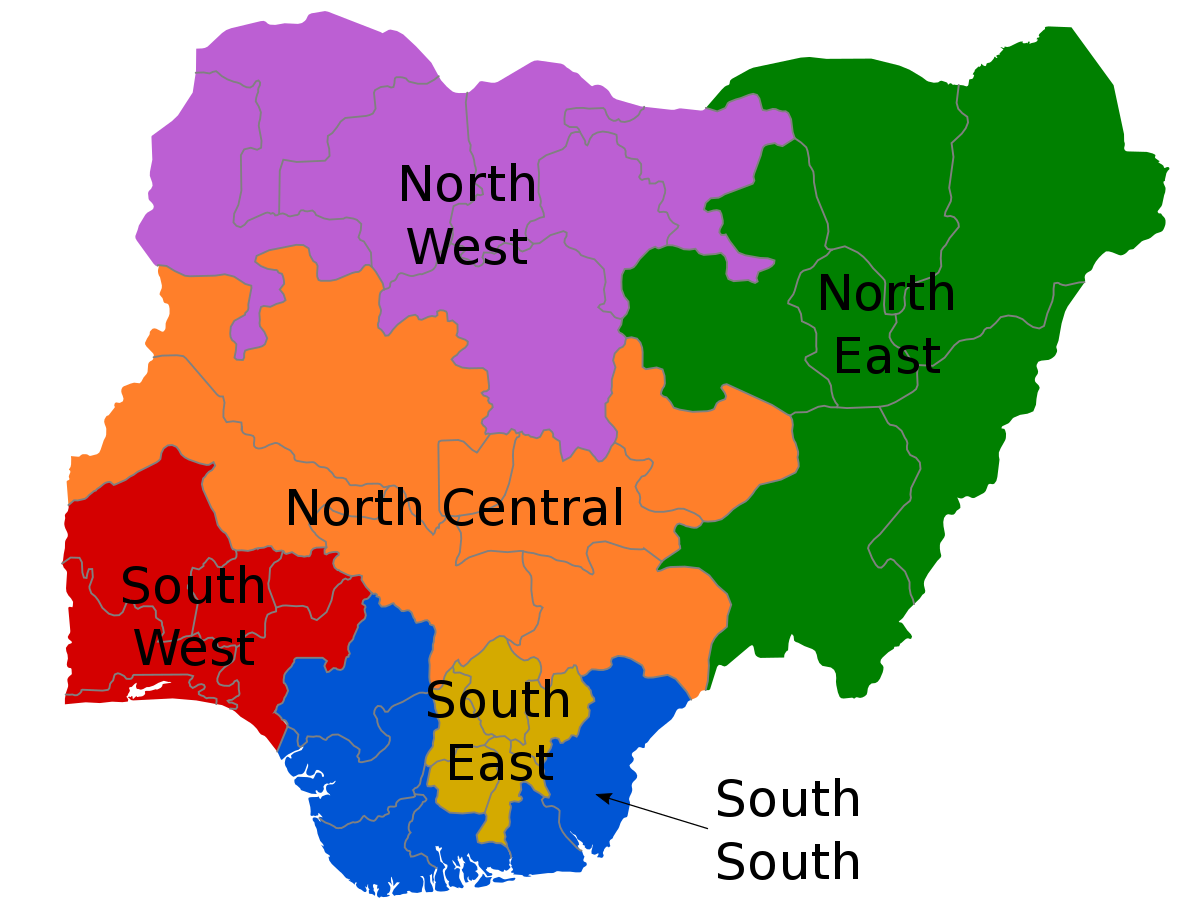
The APC has its stronghold in the Northwest, Southwest, Northeast and Northcentral – four of the nation’s six geopolitical zones. The PDP has strong structures in the six zones with a stronghold in the Southeast and Southsouth. However, the APC has moved into the Southeast in full force. Before the 2015 elections, nobody had ever thought that the APC would someday have even a ward councillor in the Southeast. But, today, the party has two state governors, senators, House of Representatives members, state house of assembly members, local council chairmen, councillors and formidable party structures in all the five southeastern states.

Come 2023, the APC has no reasons to retain power in the North, but there is strong politicking by some governors and other bigwigs to maintain power. This will mean the APC contravening the unwritten agreement between the North and the South on power rotation. In any case, the APC does not have a strong presidential candidate from the North. This is a big plus to the presidential hopefuls from the South, or Southeast, in particular. Furthermore, the Southeast has a strong case to present based on a plank that the Southeast is the only geopolitical zone in the South that has not produced a President or vice president on any political party platform since 1999.

If APC picks its presidential candidate from the South, especially Southwest, the PDP may attempt to outwit this by looking to the North for its presidential candidate. This, as well, will put the  PDP in a catch-22 situation on how to explain this to the South, especially the Southeast and the South-South, why the North again, after eight years of the North being in power.

PDP has good candidates in their own ‘rights’ from the Southeast and South-South. Enugu State Governor Ifeanyi Ugwuanyi, Peter Obi from Southeast and Governor Nyesom Wike from the South-South. Obi does not have friends in the North and has never tried to pull an appeal from the region, directly or by proxy.  His deportation of other Nigerians to their states when he was governor of Anambra state was used against him in the North during the 2019 campaign, and it worked.

For Wike, his words, ‘Rivers is a Christian state’ will be used against him in the North like Governor El-Rufai’s Muslim-Muslim ticket in Kaduna can be used against him (El-Rufai). This is how local politics impact a candidate’s wider political opportunities. Some young people in the north are also campaigning for  Enugu State Governor Ifeanyi Ugwuanyi. Still, the IPOB issue will be a significant hindrance in the North, but it is not insurmountable. Advocates of secession appear not to understand Nigeria. There are massive inter-marriage, friendships, business links and political alliances, among other ties, between many northerners and many Igbos.

Some nationalistic politicians from the Southeast have started to convince other Nigerians to support the region to produce the Nigeria president of Southeast extraction in 2023.  The bigwigs’ forefront presidential hopefuls are Governor David Umahi,  Orji Uzor Kalu, Governor Ifeanyi Ugwuanyi, Rochas Okorocha, Chris Baywood Ibe, Ken Nnamani, Minister of State for Education, Dr Chinedu Nwajiuba, Sen Osita Izunaso and many others. Of course, these politicians have their political baggage and controversies. However, people like Chris Baywood Ibe are new faces without any political baggage and controversy-free.

A thorough understanding of how Nigerian politics works is paramount in achieving the political goals of a group, a region, or individuals. There are so many conflicting interests in Nigeria. Still, there are always windows for alliances, give-and-take, a hand of friendship, and convincing others to support a particular political cause or an individual’s.

For the 2023 presidency, the Southeast should present a candidate with a new face, no controversies, no political baggage and who has friends and is well-known across the Niger. For both the APC and the PDP, it will be an opportunity to reunite Nigeria and rekindle the historical political alliance between the north and the southeast while maintaining the partys’ current national. The Igbo presidency is possible through the spirit of one Nigeria.

Zayyad I. Muhammad writes from Abuja. He can be reached via zaymohd@yahoo.com.

El-Rufai presents N233 billion 2022 budget to Kaduna Assembly

By Sumayyah Auwal Ishaq

Governor Nasir El-Rufai of Kaduna State has unveiled a draft budget of 233 billion for the 2022 fiscal year that reflects the government’s commitment to sustainable growth, promoting equal opportunity, accelerate human capital development, and attain fiscal viability.

The governor noted that “when approved, is projected to have the capital to recurrent ratio of 63%:37%. The 2022 estimates are slightly smaller than the proposed 2021 budget estimates of N237.52bn, of which N157.56bn was capital and N79.96bn recurrent expenditure, a 66% to 34% capital to recurrent ratio,” he said.