Admin

Valentine’s Day: A strictly non-Muslims’ affair

By Adamu Bello Mai-Bodi

Valentine’s Day, also called Saint Valentine’s Day or the Feast of Saint Valentine, is celebrated annually on February 14. It originated as a Christian feast day honouring one of the early Christian martyrs named Saint Valentine. Later on, the tradition becomes a significant cultural, religious, and commercial celebration of romance and love in many world regions, including some Muslim communities (Mostly unaware of what they celebrate). But, Saint Valentine’s Day is an official feast day in the Anglican Communion and the Lutheran Church. In addition, many parts of the Eastern Orthodox Church also celebrate the day.

In my view, Muslims have no business celebrating this day. Moreover, a Saudi cleric, Sheikh Muhammad Al-‘Arifi, said on Valentine’s Day, “Celebrating this holiday constitutes bid’a—a forbidden innovation and deviation from religious law and custom and mimicry of the West.” Besides, Islam is all about showing love and humility every day, not only on February 14.

Numerous early Christian martyrs were named Valentine. The Valentine honoured on February 14 is Valentine of Rome (Valentinus Presb. Mart). He was a priest in Rome and martyred in 269. That was added to the calendar of saints by Pope Gelasius I in 496 and was buried on the Via Flaminia. The relics of Saint Valentine were kept in the Church and Catacombs of San Valentino in Rome and later in Santa Prassede, which remained an important pilgrim site for Christians.

In The Dictionary of Christianity, J.C. Cooper writes that Saint Valentine was “a priest of Rome who was imprisoned for succouring persecuted Christians.” It states that Saint Valentine was persecuted as a Christian and interrogated by the Roman Emperor Claudius II in person. Claudius was impressed by Valentine and had a discussion with him, attempting to get him to convert to Roman paganism to save his life. Valentine refused and tried to convert Claudius to Christianity instead. Consequently, he was executed.

However, before his execution, he is reported to have performed a miracle by healing Julia, the blind daughter of Emperor Asterius. As a result, the Emperor’s daughter and his forty-six member household (family members and servants) came to believe in Jesus and were baptized. That upset the Emperor even more.

So, on the evening before Valentine was to be executed, he is supposed to have written the first “valentine” card himself, addressed to the daughter of his jailer, Asterius, who was no longer blind, and signing it as “Your Valentine.” The expression, “from your Valentine”, was later adopted by modern Valentine’s letters. 

With the concatenations mentioned above, it is not rocket science to understand that Valentine’s Day is strictly a Christian affair.

Adamu Bello Mai-Bodi wrote from NPA Quarters, Apapa, Lagos. 

Murli Mahmood: The painful death of a true friend

By Mukhtar Jarmajo

Aside from the fact that boarding secondary school provides the ground for moral and academic excellence, it is also a platform for socialization. People of different backgrounds in terms of social class, religion, culture and even thoughts converge in one place, of course from different corners of the country, to mingle as they work and walk towards civilization. It was undoubtedly for the above and many other reasons that on October 2, 1999, we all converged in Hassan Ibrahim Gwarzo Secondary Schools, Kano. We were there to pursue knowledge in a journey of self-search with the hope that in the end, we will make a responsible community from which society will benefit.

And so it happened, through time, we endured all the rigours and the backbreaking toil that come with the boarding school environment and with the challenges of learning, especially in a setting that the late Prof. Ibrahim Alƙali Ayagi managed. In aiming for excellence, Ayagi always raised the bar for promotion to the next class. From the policy that a student must pass all core science subjects to mathematically create the formula which postulated that the average of a student’s cumulative scores must be higher than that of the class before promotion, Ayagi kept us on our toes throughout the time. 

And for senior secondary classes, it was the famous Operation Credit Only (OCO). One morning in 2003, the boys and the girls in senior secondary classes gathered for a combined assembly. Prof. Ayagi used the opportunity to announce the new policy that the least acceptable score for us was a credit. He also announced that from that day, the SS2 and SS3 syllabuses would be covered in SS2. So that in SS3, it will be “revision, revision and revision only.” And to achieve this, we had classes during evening preps and during holidays in what was referred to as “extension classes.” 

And true to it, the efforts of the school management, as well as our commitment and doggedness, paid off. As a result, the school began to have better JAMB/WAEC/NECO results. Thus by the time we obtained our O’ Level results in 2005, it was the best at that time. Both the JAMB and SSCE results were commendable. Hence, that year, O’ Level holders from Hassan Ibrahim Gwarzo Secondary Schools got unprecedented placements in universities worldwide. 

Many of us got admission to Abubakar Tafawa Balewa University (ATBU), Bauchi. Murli Mahmood, Shaheeda Abdullahi Umar, Ismail Umar (Ashaka), Amina Ahmad Usman, Abdulhafiz Nuhu Ahmad, Rahanatu Ahmad Aliyu, Umar Saidu Abashe, Abdulqadir Hussaini Mukhtar, Salamatu Bashir Dogara, Usman Nagado Usman, Abdullahi Farouk Bello and I got admissions into various departments. But as providence would have it, few left the university for other schools for one reason or the other. 

Murli Attaib Mahmood left for Ahmadu Bello University, Zaria, to continue studying Geology, which he started at ATBU. He later obtained a Bachelor’s degree there, and after the compulsory national youth service (NYSC), Murli Mahmood joined the services of the Bauchi State Judiciary some years ago. He got married last year (2021) and died on January 8. Innalillahi wa inna alaihir ra ji un! 

In the early hours of that fateful day and on the Maiduguri bypass in Bauchi, Murli Mahmood got involved in a fatal auto crash. It happened at the Ramadan Press junction that links the bypass with the ever-busy Murtala Muhammed way. Murli Mahmood came from Awala Roundabout, which is on the bypass. And while trying to crossover to move into Murtala Muhammed way, a commercial bus came from the popular Gidan-Mai Roundabout, heading towards Awala Roundabout, only to hit Murli’s car on the passenger side. 

And because of the high speed with which the commercial bus came, Murli, who was on the driving wheel, could not withstand the intensity of the pressure exerted on him. As a result, he sustained internal injuries and almost immediately succumbed to death. On arrival at the Abubakar Tafawa-Balewa University Teaching Hospital (ATBUTH), medical personnel confirmed his death. That was how he left without saying goodbye to us. 

The last time we spoke was on January 3. He called me on the phone around 8 pm for consultation on his intention to participate in the elections of the Bauchi State chapter of the Judicial Staff Union of Nigeria (JUSUN). Murli told me that he wanted to contest either the seat of the Treasurer or that of the Chairman. After a lengthy discussion, I advised him to go for the Chairmanship position. However, we concluded that the final decision would be made when he sat with his father. I then requested that I be made a member of the Campaign Council even though I don’t belong to the JUSUN. 

From then, the next thing that came to me was the news of Murli’s shocking death. After the early morning prayers on January 8, I tuned in BBC Hausa 06:30 am program. While listening, I slept off only to wake up a few minutes later to realize I missed 11 calls, mainly from Ismail Umar (Ashaka). When I called back, he broke the sad news to me. I immediately broke the news in the WhatsApp group of the Class of 2005, jumped out of bed and rushed to the Gida-Dubu estate where Murli Mahmood resided. 

Before I got there, his lifeless body was already home, and it was being bathed in accordance with Islamic rites. I profusely cried when I saw Muhammad Ma’amun (Baban-Bauchi), one of his closest elder cousins, preparing Murli’s body for funeral prayers. It certainly took a lot of courage for him to be there, especially because they have, over time, metamorphosed into friends. It was through Murli we knew Baban-Bauchi. His elder brother, Aslam and younger brother, Asdaq, were also around. But I did not see both of them close to Murli’s body. One can imagine the grief that weathered the time. It was unquestionably a moment of heartache, so the atmosphere was tense. 

At 1 pm, the Janaaza prayer took place, and Murli Attaib Mahmood was buried. He was a man of the people who related very well with us. He was a friend maker who maintained cordial relationships with almost everyone in his network. We have indeed lost a true friend who never failed to be present in our times of need. I have lost a friend of about 20 years who grew up to become a family. I have also lost my “political opponent.” We hardly stood on the same political side. Therefore, in most cases, we debated our points to buttress our stands. Meanwhile, I must acknowledge that Murli`s political and socio-economic views were based on his genuine concerns for a better society. I have indeed lost a friend and brother!

May the soul of Murli Mahmood rest in eternal peace. Ameen!

Jarmajo can be reached via dattuwamanga@gmail.com.
2023: Memo to APC, PDP on youths’ inclusion

By Ibraheem Abdullateef

Late last year, Nigerian media was awash with my statement of appeal to the two biggest political parties, All Progressives Congress (APC) and the Peoples Democratic Party (PDP), on the review of nomination form fees for office-seekers under 35 years old in the 2023 elections, to deepen inclusion, and strengthen national democracy. Weeks later, none of these parties has made any official statement on the matter. We must sustain the tempo until the cause is achieved. 

The review of nomination form fees by APC and PDP is urgent to strengthen our democracy, encourage diversity, and foster youths’ inclusion in politics and leadership. It is socially, economically, and politically unhealthy to retain the same table used in 2019 for the 2023 elections. 

In the 2019 elections, PDP sold their gubernatorial expression of interest and nomination forms for N1 million and N20 million, respectively.

Reports also show that PDP charged N12 million for both the expression of interest and nomination form for the Office of the President, N3.5million for Senate, N2.5million for House of Representatives, and N600,000 for the House of Assembly.

In a similar vein, the gubernatorial expression of interest and nomination form of the ruling APC attracted N2.5 million and N20 million, respectively. 

It also sold for N5 million the expression of interest and N40 million for nomination form for the Office of President, N7 million for Senate, N3.5million for House of Representatives, and N850,000, for the House of Assembly.

It is most worrisome that these political parties retained the fees in the recently held Anambra elections, Ekiti primaries, and others in 2022.

While I understand that funds accrued from the sale of forms remain a serious source of funding its operations, the decision of the parties to make young people pay the same fees as more established office-seekers is unfair and inconsistent with emerging realities in modern democracies. 

As it stands today, the exorbitant fees for nomination forms are mitigating against the legitimate ambition of over 65% of credible, capable young Nigerians to run for elective offices. It also encourages corruption and godfatherism; fuels the orgy for violent, do-or-die electoral practices while deepening the gap between the rich and have-nots in our society. No party must retain those crazy fees for the 2023 elections. 

Data about the 2019 elections released by YIAGA showed that only 8.6% (68 members) of 991 seats in the 36 State House of Assemblies and 6.8% of 360 members of the House of Representatives were under 35 and below.

Although youth candidacy in Nigeria’s elections rose from 21% to 34.2 % (13.5 per cent of the candidates vied for the Senate, and 27.4 per cent for the House of Representatives), the fact is that buoyed by the Age Reduction Act, Nigeria could have recorded better youths participation under a more favourable party system. This shows that the demography that constitutes over 60% of the registered voters in the country has literally had no place in Nigeria’s democracy. 

From 1999 to date, the abysmal record of youths participation in politics is a direct effect of our mega parties, PDP and APC’s weak commitment to youths inclusion agenda. Despite the notable efforts of #NotTooYoungToRun in improving eligibility, affordability of the political system reduction in nomination fees is key to unlocking the space for young Nigerians. This is why these parties need to decide now to show over 80 million Nigerian youths they genuinely believe in them and are the best platforms for the Nigeria Project. 

It no longer sells the stories about the non-participation of young people in politics. What is new is the understanding that there has been no space for them in the leadership. From communication to organising, and even campaigns, they have always been involved at different levels. But, with a lack of deliberate intra-party youths-friendly policies, Nigerian political parties are meant to attract seasonal voters, not future leaders.

Let me state that I am aware that the PDP and APC constitutions give women a 50% cut in regular fees for nomination forms and find that applaudable. But I cannot understand in 2022 why the same constitution would make no provision for the youths, especially after the #EndSARS struggle and the global youths renaissance, to encourage young Nigerians’ dreams and passion for the motherland. Nigerian youths deserve a 60% cut in fees. 

With our sheer numerical strength and globally acclaimed talent and industry, Nigerian youths do not deserve this strategic exclusion and alienation from democracy from the parties that average Nigerian youths consider as platforms of choice. The message this passes inadvertently is that they are not much wanted, accepted, and treasured, as is usually parroted. And seriously, this is a bad curve on our political values that must be reset immediately by the parties. It is time to match words with actions. 

When these constitutions are reviewed, I have absolute faith that they will positively change leadership selection, becoming instrumental to the clamour to ingest energy and innovation to national leadership. There is no doubt of Nigerian youths’ abilities to lead and make impacts to accelerate the growth and development of the nation. 

I appeal earnestly to the leadership of these parties to stop this alienation, review and reduce the fees for the nomination form for office-seekers below 35 years of age in the 2023 elections. It is the ultimate way to reciprocate the love and loyalty, maximise the talent and energy of the youths constituency, to promote inclusion, peace and development of Nigeria. 

Abdullateef is the Kwara Central Representative in the Nigerian Youth Parliament (NYP) 5th Assembly. He can be reached via ibraheemabdullateef09@gmail.com.

Suspension of Vision FM’s “Idon Mikiya” programme: A threat to democratic governance

By Aminu Rabiu Kano

Historically, the mass media, both print and electronic, has presented threats and opportunities to different socio-economic and political classes. Thus, it has always been a target for control, influence and manipulation by aristocrats, religious authorities and politicians. This pinpoints the preponderance of the mass media in human societies worldwide. Nevertheless, the role the mass media plays, the importance it assumes, and the influence it exercises are determined mainly by the prevailing political arrangement in a particular country.

Characteristically, democratic governments globally have a good relationship with the media houses in their home countries. In these countries, mass media plays a vital role in informing citizens on issues of national interest. Most importantly, the mass media serves as a watchdog of society by holding the government accountable in all aspects of governance. In Nigeria, the mass media has enjoyed some constitutional protections since the return to civil democratic rule in 1999. To buttress this point, section 22 of the 1999 Constitution (as amended) states that “the press, radio, television and other agencies of the mass media shall at all times be free to uphold the fundamental objectives contained…..and uphold the responsibility and accountability of the Government to the people.”

Despite the constitutional provisions enjoining the mass media to, at all times, be free to hold the government accountable for its actions and inactions as the case may be, the mass media has never been free in Nigeria. Several instances of crackdowns on media outlets have been reported in the past. Recently, the Federal government of Nigeria, through its regulatory agency, the National Broadcasting Commission (NBC), shut down a discussion program segment of the Vision Radio FM in Abuja. The government regulatory body cited national security as the reason behind the shutdown. Additionally, the government fined the radio station a sum of five million naira.

But in reality, the discussion program titled “Idon Mikiya” convenes reputable journalists and experts who, thrice a week, meet to discuss and critically evaluate the government’s policies and programs. The program is prominent for its constant and sharp critique of government actions perceived to be against the public interest. Remarkably, its presenters were recently heard exposing the incompetency and corruption of the National Intelligence Agency (NIA) director-general, Rufa’I Ahmad.

Naturally, the government may not be happy, especially since elections are fast approaching. Thus, with its anti-democratic posture, the tendency to severely deal with any person or group of persons exposing its inadequacies or loopholes is high. But this poses a severe threat to the nation’s efforts at consolidating democratic governance.

First, as explained above, the mass media is a building block of any democratic society. Thus, any attempt to weaken them is tantamount to jeopardizing democratic governance. Second, as nefarious as it appears, this action of government will make the international community lose confidence in the Nigerian state and its political institutions, especially if this continues. Third, the government’s decision will inevitably send some bad signal to other media outlets, especially those brutal in telling the truth to powers that be.

Finally, in a situation whereby a media outlet is censured for exposing the incompetence and corruption of those in power, one may ask what is happening to the same government’s commitment to fighting corruption and getting rid of all parasites in the government.

Aminu Rabiu Kano is a political analyst and public affairs commentator. He can be reached at arabiukano@gmail.com.

Powerful Magajin Garin Sokoto, Hassan Danbaba is dead

By SSumayyah Auwal Ishaq

An influential member of the Sultanate council, the Magajin Garin Sokoto, Hassan Danbaba, is dead. He was 51 years.

A source confirmed to The Daily Reality that the Magajin Gari died today (Saturday) in Kaduna, ansmd that his remains would be flown to Sokoto for burial.

The late Danbaba was the grandson of late Sir Ahmadu Bello, Premier of Northern Nigeria. Until his demise, Danbaba was Part-Time Chairman of the Governing Board of Sokoto-Rima River Basin Development Authority, Sokoto.

New Attah of Igala to receive Staff of Office in March

By Ahmad Deedat Zakari

The new Attah of Igala, Mathew Opaluwa Ogwuche Akpa II, will officially receive the Staff of Office in March 2022.

In a statement signed on Friday, February 11, by the Kogi State Commissioner of Local Government and Chieftaincy Affairs, Barr. Salami Momodu Ozigi Deedat, the state government, invites the public to the official installation and presentation of the Staff of Office to the new Attah of Igala, Mathew Opaluwa Ogwuche Akpa II, by the Kogi State Governor, Yahya Adoza Bello.

The statement scheduled the installation as follows: “Date: Friday, 4th March 2022. Venue: Attah Igala Palace. Time: 9 am”.

It is also noted from the statement issued that there will be a presentation of the Staff of Office to other traditional leaders. The statement partly reads:

“Presentation of Staff of Office to other concerned traditional rulers holds the next day (Saturday 5th of March, 2022). Time: 10 am. Venue: Muhammadu Buhari Civil CENTRE, Opposite Ministry of Local Government and Chieftaincy Affairs, Lokoja”

Water supply dilemma in Kaduna metropolis

By Sumayyah Auwal Ishaq

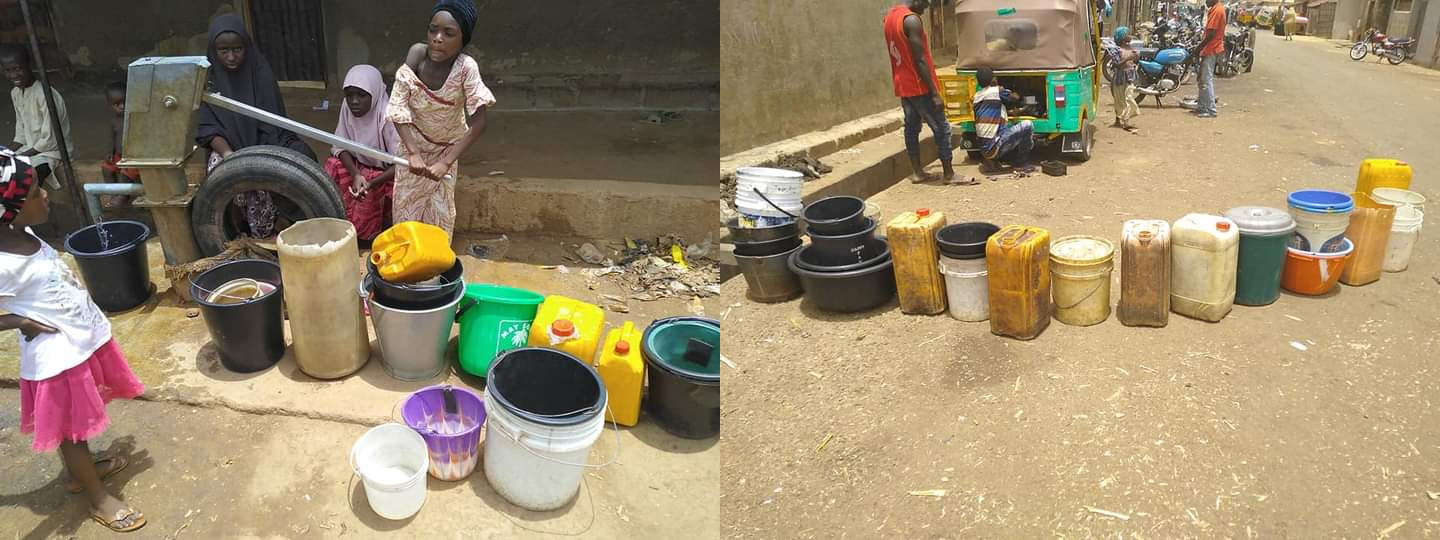
Potable water scarcity has been one of the major problems facing residents of the Kanuda metropolis for a long time. Stories of potable water scarcity in places like Rigasa, Kawo, Barnawa, Tudun Wada, Kabala West, Unguwar Kanawa, Unguwar Rimi, and others have, in the past years, remained a recurring issue with most of the past administrations failing to arrest the situation till date.

Although the past administrations failed at finding a lasting solution to the water scarcity, nearly all of them committed a large chunk of money to the rehabilitation of water facilities in the state. 

As of now, an investigation by The Daily Reality reveals that water scarcity across the metropolis becomes worst during the dry season when the majority of those that could not afford sachet water, borehole water resolve into patronising a series of questionable water sources available to them. 

It has been discovered that most of the administrations put up measures at making the corporation effective and efficient, the Kaduna State Water Corporation (KSWC). Still, the efforts were not all needed to tackle the chains of problems facing the corporation.

Most of the residents that spoke to The Daily Reality (TDR) in the affected areas expressed displeasure. However, they are pleading with the administration of Governor Nasir Ahmad El-Rufa’i to pay attention to the issue before the expiration of its term.

BUK: VC lauds Dr Sani’s new book lesson, invites Dr Bashir to begin another

By Uzair Adam Imam

The Vice-Chancellor of Bayero University, Kano (BUK), Prof. Sagir Adamu Abbas, has commended the new book lesson started by the quintessential West African Islamic scholar, Dr Sani Umar R/Lemo at the university’s new Friday Mosque in the new campus on Wednesday, February 9, 2022.

Prof. Abbas made this remark during the first lesson of the book “Alfawa’id” By Ibnul Qayyim Aljauziyya, which will be taking place on Wednesdays, saying that the plan had been in the pipeline over the years.

He stated that the intent was to shape the thought of the youth through the provision of knowledge for peaceful coexistence.

He said, “Going by the general belief that youth are the hope of the future for any given society, we don’t have a future if our youth go astray. It is also part of our plan to provide an Islamic Centre that will be providing members of the public with a fatwa concerning the issue of a time.”

The VC added that “[In our effort to achieve] all this, I had to contact our great teacher, Prof. Sani Zahraddeen, who was a former Vice-Chancellor of this university, for advice.”

However, Prof. Abbas also promised that efforts to provide a similar lesson at the Old Campus of the University are on top gear.

Dr Bashir Aliyu Umar, the chief Imam of Al-Furqan Mosque, is tipped to commence a new book lesson.

Commenting, Sheikh Umar Sani Rijiyar Lemo commended the effort of the Vice-Chancellor, saying the university is blessed with such a leader.

Head of Information and Media Studies Department, Dr Nura Ibrahim, who is also the secretary of the Mosque Committee, has urged people to cooperate.

Gunmen assassinate Kaduna agency official 

By Sumayyah Auwal Usman

Suspected assassins have killed the Director of Operations of the Kaduna Geographic Information Service(KADGIS), Malam Dauda, in the early hours of Friday. 

It was gathered that the assailants attacked the victim’s house located in the Barakallahu community in the Igabi Local Government Area of the state where they assassinated him. Sources have confirmed to The Daily Reality that the assailants killed the victim and took off, leaving all valuables in the house.

Attacks by terror groups on communities in Kaduna have become rampant, with hundreds of people killed or kidnapped in 2021. Despite the heavy deployment of security operatives to the area, the attacks have continued.

Boko Haram will be defeated before 2023 – Zulum

By Ahmad Deedat Zakari

Borno State Governor, Babagana Zulum, had expressed confidence that Boko Haram would end before the end of Buhari’s administration.

He said this on Thursday, February 10, while responding to questions from reporters in Abuja after meeting with President Muhammadu Buhari at the Presidential Villa.

When asked whether it would happen in his administration, he said: “Inshaa Allah. Even now in Borno State, we are doing very well, extremely well.”

He was pressed further if he meant Boko Haram activities would end before 2023. He said: “Inshaa Allah. You know what I mean by Insha Allah, God willing.”

Governor Zulum added that about 30,000 repentant terrorists from Boko Haram and Islamic State’s West African Province (ISWAP) have also surrendered without any incentive from the government.