Admin

INSECURITY: El-Rufa’i briefs stakeholders on development

By Uzair Adam Imam

The Kaduna State Government has on weekend held a meeting with the stakeholders to brief them on the incessant security issues bedeviling the state for a very long time and other government policies.

The governor of the state, Malam Nasir El-Rufa’i, chaired the meeting which was held at the Murtala Square, Kaduna.

The purpose of the meeting, however, was to brief the stakeholders on security challenges, adding that the security operatives have been quite successful and security breaches have been reduced.

He added that: “We are not imposing hardship on certain people but they can see the benefits of the actions we have taken.

“We got good suggestions from stakeholders which would be used to modify some of our policies. It has been a very rich and engaging conversation,“ he disclosed.

The governor also promised of the other projects would be completed before he leaves the office, adding that: ” We are pleased with the support clerics were giving to the Religious Preaching Regulatory Council.”

Recalled that the council has been established to ensure that clerics are committed to peace in their preaching and sermons.

El-Rufa’i also assured the stakeholders that number of programmes would be introduced by federal and state governments to reduce the hardship faced by Nigerians.

Re: Ikoyi tragedy and casual bigotry against Yoruba Muslims: my views, my experiences

By Alhaja Adeola Agoro

I read Kperogi’s article with a smile playing around my lips. It brought back the contents of the second chapter of the first part of my (yet to be published) book, ‘Journey to Islam: The Journey So Far’.

While I wouldn’t say Kperogi was totally right in his submissions, I’ll say that I agree with a lot of what he said.
I was born a Christian. I converted to Islam in 2009. I have spent enough time in the Islamic religion to form an opinion about it. I can say what is right or wrong about the religion and those who practise it.

I started writing the book, ‘Journey to Islam in 2017. Then I paused. Life is a journey and you can never really capture it all until the last day, so I said, ‘Let’s see if something will change and I may have to change some things in the book’.

As Jon.Bellion said in one of his songs that I love so much, “Nothing has changed, he’s the same…” From the point of writing that book till now, let me say nothing has changed. So, let me share the second chapter of the first part of that book below:

2’Yerima and Other Influences

Long before my innocent mind began to get conscious of the fire religious strife and crisis caused by displacing people and rendering many homeless, fatherless and sending several to their early graves in Nigeria, I knew about religious marginalisation. I grew up to know about religious sentiments, influences and stigmas.

I grew up amongst a certain class of Christians who considered themselves holy. Going to church on Sunday, coming back to eat jollof rice and chicken and watching good family films like the ‘Sounds of Music’ was a way of life. In those days, we were made to believe that the Christian kids were the ones who wore crisply ironed clothes on Sunday. They were the ones who wore ‘ready-made’ clothes with socks and nice shoes to match. Looking back now, I must admit that it was the highpoint of Christianity to wear the kinds of beautiful dresses with hats to match that I wore on Sundays.

Looking that good meant I was a Christian. Or so I was made to believe. We were the sheltered ones who were not allowed to mix with just any other children in the neighbourhood. We were only heard from the confines of our homes and hardly seen. On the other hand, those who wore clothes sewed with ankara materials, who played outside, who went to Arabic schools or who chanted Arabic language as dictated by their teachers were regarded as considered to be a little lower than us.

The explanation was not really made; we just knew. I knew how the opinions of certain people about you became coloured the moment they found out your name was Mojeed or Shakirat or whatever Muslim name it was. Oh no! It just meant that you must be ill-bred. It meant that your upbringing was not all together complete. In cases where they couldn’t fault you for being half-baked because you were a Muslim, they assumed that you were aggressive and stubborn. In Ibadan where I spent my first sixteen years, Muslims were referred to as ‘Imale’ (followers of the hard religion).

To this day, there is an area in Ibadan known as ‘Imalefalafia’ literarily meaning the ‘followers of the hard religion want peace’.In the Christian family where I grew up, a Christian was more likely to be trusted for anything than an imale. By a stroke of fate, I discovered that most of the people hired for house chores and such other things in my family were Muslims. It went to show that the Muslims around us then were not educated and so had to take the lowest of jobs. I could remember that the woman who did our laundry till I grew up was called Iya Seki (Sekinat). It was just assumed that Muslim families didn’t care about educating their children beyond a certain level.

I can’t remember if anything was ever done to assist them in that regards. In a funny way, it didn’t matter if you were a Baptist or Anglican, if you came for a domestic work and it was discovered that you were a Christian, it used to elicit a level of surprise that you were not educated or that you chose to do some menial jobs. It was certain that your employer would ensure that you either went to school or learnt a vocation. All you to had to do worm your way into the minds of your employers or to get favours was to say you were a Christian. (It might matter though if you were a Celestian or aladura.

You were not quite different from a Muslim in the estimation of the holier-than-thou Christians). But things did not have that kind of colouration the moment I stepped out into the real world. From the moment I left home for my higher education till the moment I embraced Islam, it never mattered to the Muslims I met whether I was a Christian or Muslim or traditionalist before help came my way. All that mattered was the fact that I was a human being. And very much unlike what I grew up to know with somebody preaching to you that you must accept Christ to enter heaven and bearing heavily on your whether you wanted to talk religion or not, the Muslims I met NEVER tried to talk to me about their faith in a you-must-accept-it-by-force manner.

To this day, no Muslim that I met in those days condemned my religion.I would sit and dine with Muslims and we would be talking but the moment it was time for prayer, they would excuse themselves, do their ablution and quietly withdraw to pray without as much as invite you. If you visited them on Fridays, they would leave you in their house, go to mosque to pray and come back to meet you. Not only were they respectful of your religion, they trusted you with their possessions.

I wonder if there are Christians who would leave you in their house on a Sunday when going to church without pressurizing you to go to church with them – whatever your religion or sect.This was my unprejudiced observation until I met Yerima. Sen. Ahmed Sani popularly known as Yerima was the Governor of Zamfara State then.Yerima came into national prominence for the introduction of Sharia Law to Zamfara State. Under him, the Penal Code became more effective and whoever erred or contravened the law faced summary actions.

The name Yerima meant fear to non-Muslims outside his state. It was the general opinion that if you were not a Muslim, you couldn’t be safe near a fanatic like Yerima and in fact, you had no business being in Zamfara. I had started making a mark in journalism when one day, a friend I went to school with called to say she met Yerima’s ADC and discussed the prospects of me coming down to Zamfara to interview the governor. Without thinking about it for a moment, I turned down the opportunity.

Me, Yerima? No way!! As hungry as I was for good stories, I didn’t think Yerima was an area I could approach and I thought I was not the kind of journalist he would want near him for an interview. After all, I was a jean-wearing journalist with braids and totally un-Islamic in all ways.Little did I know that fate was bringing me in contact with Yerima and that was going to be an opportunity to see all Muslims in the same light – accommodating and not condemning of your religion. I met Yerima in the Summer of 2006. I was one of the panellists on a live broadcast of the breakfast show of Ben TV where Yerima was a guest. I had gone there dressed in jeans with my braids pulled up and complete with trainers and clanging bangles.

I looked a complete I-don’t-care type – a yuppy woman. After the television program, along with some other journalists, I went for more exclusive interview for my newspaper and despite Yerima’s stance on Sharia, he didn’t as much as look at me as a sinner for once.

The biggest part of it is that when I returned to Nigeria and applied to be one of his media consultants, he gave me the chance without delay. There I was, a Christian and a woman for that matter!I was treated with much respect and dignity and everybody around him respected me for what I had to offer – my brain.

Whenever I had a job to discuss with him or show him, he would attend to me but he never allowed us to be alone together. And when it was time for prayer, they would all go for prayers and come back to resume whatever I had to show him.

It was around that time that I began to feel naked by not covering my head and body. Something in me told me it wasn’t right. Yerima and those around him preached to me through their behaviours without saying a word. They accepted me the way I was. They worked with me without discrimination and they made me see what beauty there was in Islam.

In those days of surrendering to the silent and beautiful pull of Islam, I couldn’t stop asking myself if any of those I grew up with in my Christian background would be so accommodating. Would they give a Muslim woman a chance to work with them, dine with them, make money and not go to church with them?

Would they have a very attractive Muslim woman around them and not as much as make a pass at her?I doubt. Seriously, I doubt.

From Justice Babatunde Adejumo, President of the National Industrial Court to my mentor and father, Sen. Umaru Dahiru through whom I finally embraced Islam, through whom I went for Hadj, through whom I grew in faith and through whom I have learnt a lot, to Arch. Halima Tayo Alao, to Dr. Mahmuda Aliyu Shinkafi and so many others, I have been given opportunities by a lot of Muslims without any asking for anything in return.

These are all people of deep faith who never asked me to compromise my former religion till I was personally convinced. I am indeed lucky to have seen the light of Islam myself through the conducts of these Muslim people.

These people showed the way to Islam more through deep love and acceptance of everybody whatever your religion than through talks. May Allah continue to guide them in their faith and make them lead more to Him through their conducts, ameen.’

That’s that about the second chapter of the book.

I’ve not come here to say I agree or disagree with Kperogi, but I know that a Muslim will most likely accept you for a job or marriage or anything sooner than a Christian will.

Well…. I stand to be corrected after so many years of holding that belief.

Alhaja Adeola Agoro JP writes from Abuja

Katsina Government set to move tax payment and others “electronic”

By Hussaina Sufyan Ahmad

The new development by Katsina State Internal Revenue Service (KIRS) has been an immediate stoppage of all cash payments and collection of revenues, taxes and other levies due.

The Executive Chairman of KIRS, Mustapha Muhammad Sirajo, on Sunday in a statement issued to journalists added:

“The stoppage of the cash payments takes effective from Monday, November 8, 2021. As part of the modernization project of its service, Katsina State Internal Revenue Service (KIRS) is reviewing the process of collection of revenues, taxes and levies due to Katsina State’s Developments.”

“The commercial banks are First Bank, Access Bank, Eco Bank, First City Monument Bank, Fidelity Bank, Guaranty Trust Bank, Keystone Bank, Polaris Bank, Stannic Bank, Sterling Bank, Union Bank, United Bank of Africa and Zenith Bank.”

“The public is hereby informed that all cash payments and transactions have been halted and e-payment effective from Monday 8th Nove mber 2021.”

Fuel scarcity hits Kano

By Hussaina Sufyan Ahmad

Lines of cars on heavy queues return to Kano filling stations on November 7, 2021, prompting some people to accuse the Independent Petroleum Marketers Association (IPMAN) of intentionally creating an artificial scarcity.

Most filling stations have been nil with no sign of activities, while motorists move about looking for the fuel.

Reports indicate that speculation of a possible increase in fuel price by the Federal Government might have resulted in the scarcity.

Nigeria’s anti-drug abuse agency, NDLEA, apprehends notorious drug dealer

By Muhammad Sabiu

A drug dealer who has been accused of trying to export illicit drugs to the United Kingdom and other countries, Okoli Collins, has been apprehended by men of the National Drug Law Enforcement Agency (NDLEA).

According to a statement signed by the agency’s Director (Media and Advocacy), Femi Babafemi, on Sunday, the suspect was once in November 2020 arrested after he was caught trying to export 15.700kgs of Methamphetamine to Australia.

He had also been involved in a series of attempts to export “78 parcels of Cannabis, concealed in black soap packs labelled as Dudu Osun, with a total weight of 12.250 kilograms heading to the UK.”

The statement added, “Further investigation also revealed that Okoli is the one behind the attempt to export 7.350kgs of Cannabis to the UK on Thursday, October 21, a consignment that was intercepted at NAHCO export shed of the MMIA.

“Curiously, a separate investigation by operatives of the Directorate of Operations and General Investigation of the agency, attached to courier companies have equally traced to Okoli two other attempts to export 47.7kgs of cannabis to the UK through courier firms after his agents arrested in the course of investigation named him as the owner of the consignments.”

Anambra guber poll: Voting extended to Sunday

By Muhammad Sabiu

The voting exercise of the Anambra State governorship election being conducted by the Independent National Electoral Commission (INEC) has been extended to tomorrow Sunday, “due to malfunctioning of the Bimodal Accreditation System (BVAS) to vote.”

Dr Nkwachukwu Orji, the Resident Electoral Commissioner for INEC in Anambra State, on Saturday in Awka made the announcement, in which he says the voting is extended by one hour.

He was quoted as saying, “In line with existing regulations and guidelines of the Commission, any intending voter who is on the queue by 4.00 pm shall be allowed to vote.

“The extension of time arose out of several field reports that voters have had problems with accreditation.

“The Commission is currently investigating the reason the accreditation devices, Bimodal Voter Accreditation System (BVAS), have worked perfectly in some Polling Units, but not in others.

“In cases of malfunction of the BVAS, the Presiding Officer must inform the voters and polling agents that accreditation and voting shall continue tomorrow or at another time determined by the Commission.”

EFCC denies taking selfie with Cubana

By Ishaka Mohammed

The Economic and Financial Crimes Commission, EFCC, has denied claims that its staff took a selfie with a billionaire socialite and businessman,  Obinna Iyiegbu, aka Obi Cubana.


This is in reaction to a picture trending online with the caption, “EFCC Crew poses for quick photograph with billionaire socialite and businessman Obi Cubana”.


In a statement released on Friday, November 5, 2021, by the commission’s head of media and publicity, Wilson Uwujaren, the anti-corruption agency considered the news of the photograph as fake.


“…at no time during his ongoing investigation, period in custody or release did Obi Cubana pose for photographs with EFCC staff,” part of the statement reads.


Proving the fakery of the alleged selfie, the agency quoted a popular security analyst, Uncle Deji, who traced the picture to October 2021, as against the claim that it was taken in the first week of November of the same year.


“This post is deliberately misleading, this picture was taken 7th October 2021 during a book launch of Colonel Chukwu Obasi at Nigerian Army Resource Centre in Abuja in which Obi Cubana attended as a guest,” the post reads.


The commission held and interrogated Obi Cubana between Monday 1st of November, 2021 and Thursday of the same week.

COVID-19: Nigeria records deaths and new infections

By Hussaina Sufyan Ahmad

The Nigeria Centre for Disease Control (NCDC) on Friday morning via it’s official website has announced the new toll of Covid-19 cases recording two deaths and 87 new cases of in the country.

The NCDC website said 87 new infections on Thursday was as a result of the infectious decrease from the 209 infections reported of on Wednesday.

The Public Health Institute added that the new infections were recorded across seven states of the federation and the Federal Capital Territory (FCT) on Thursday.

“Zamfara – 29, FCT – 25, Rivers – 11, Kano – 8, Bauchi – 5, Gombe – 4, Lagos – 3 and Taraba – 2.”

“While the latest report includes zero cases from Delta, Edo, Sokoto and Taraba States. Taking the country’s total confirmed cases to 212,446. However, 204,047 of those infected have recovered while 2,902 have died.

Arewa, religious intolerance and the road to Afghanistan

By Aminu Mohammed

“Aminu! I cannot travel to Afghanistan. I am afraid that the Taliban will kill me. I am not going anywhere and will rather die in Germany”.

These are the exact words by my friend and neighbour, Suroosh, who incidentally is from Afghanistan. According to him, going to Afghanistan is akin to signing his death warrant. Suroosh also narrated a gory tale about how a relative was hacked to death a few weeks ago by the Taliban just because he worked as a translator for the United States Embassy in Kabul.

This issue got me perplexed, and I became curious about why the Taliban wanted Surrosh dead. My neighbour revealed that he previously worked for an international non-governmental organisation in Kabul before moving to Germany for further studies. This alone puts him on target for elimination by the Taliban if he decides to visit Afghanistan.

I usually perform my Friday prayer at the Afghan mosque in my city here in Kiel. However, from my interaction with some Afghan nationals, I observed that feeling of hopelessness and agony. These people cannot go back to their country for fear of the unknown. Most of those I engaged in conversation with are afraid to go home for fear of being killed by religious zealots.

This article is not about the Taliban or Afghanistan; I want to draw our attention to the negative trend and how lack of proper understanding of Islamic tenets can lead to chaos and anarchy, resulting in mass suffering among the citizens. It should be noted that this discussion with my neighbour took place shortly after the Taliban took over the mantle of leadership in Afghanistan.

I have always refrained from engaging in any discussion about the myriad of challenges bedevilling Northern Nigeria. However, I realised that one could not continue to maintain silence when it comes to issues about one’s homeland. I am compelled to write this because I am worried about the current security situation in the North, especially kidnapping and banditry. The issue at home has become critical that we need to do whatever it takes in one way or the other to change the narrative.

I have observed with keen interest and dismay the incessant verbal attacks and altercation among our people, particularly our youths, over religious issues in various social media platforms and offline. We attack one another and show hatred and bitterness to our fellow Muslims just because of sectarian differences. This has degenerated to the extent that people within a particular sect will be tagging others who do not believe in their doctrine as infidels.

The Islamic scholars from various sects are not left out in this altercation and dangerous trend. Some make uncomplimentary remarks against other scholars and sects during their preaching and sermon, which always elicit amusement rather than condemnation from their audience. This has become constant and worrisome that we must try as much as possible to propagate against this; otherwise, it will not augur well for our society if we all keep quiet and refuse to act.

Let me, first of all, clarify some issues. First,  I am not an Islamic scholar, and I do not claim to have a vast knowledge of Islam. However, having been taught by Sunni Islamic scholars from Pakistan, India, and Egypt at the College of Arabic and Islamic Studies, Afikpo, Ebonyi State, I can distinguish between right and wrong in Islam. Our teachers (at Markaz) never taught us to discriminate against other sects or abuse people that do not believe in our doctrine. I still don’t understand why our people dissipate energy on religious arguments and trivial issues to the extent of cursing one another.

Today, the North is no longer secure and safe. People are being hacked to death in large numbers. Religious intolerance has become a significant challenge in our society. We derive joy in casting aspersion on people and mocking those who do not believe in our ideology.  This got me wondering whether there is something wrong with us. Why should we be fighting one another over different doctrines and sects? Is Islam in Nigeria different from the one being practised in other saner climes and countries?

Are we not concerned with the number of out-of-school children, illiteracy, industrial stagnation, high unemployment and the raging inflation in the North?  Are the incessant killings of hapless villagers perpetrated by marauders and bandits in our rural communities not enough to wake us up from our slumber? I am afraid that if we continue on this trajectory, we will wake up one day and discover that we have no place to call home because of what we have done to ourselves.

Afghanistan is in chaos and ruins today because of this religious rascality, and I am afraid the North is heading in that direction. Prayer alone without action cannot stop the calamity that may happen if we fail to take action. Therefore, it behoves us as individuals and groups to start a conversation and see how we can live in unity and harmony with our fellow Muslim brothers irrespective of their sect and ideology.

We should learn to accommodate people in our midst irrespective of the sect they belong to or the religion they practice. We should endeavour to voice out against Islamic preachers who abuse other sects or do not share their ideology.  Tolerance should be our watchword and the only key to our progress and prosperity as a people. We need peace and security for us to grow as a nation.  Silence is no longer a virtue. We cannot remain silent and continue to watch as spectators while our region degenerates into anarchy.

Aminu Mohammed is at the School of Sustainability, Christian-Albrechts-Universität zu Kiel, Schleswig Holstein, Germany. He can be reached via gravity23n@gmail.com.

Borno Hospitals, telecommunications under attack by ISWAP fighters

By Hussaina Sufyan Ahmad

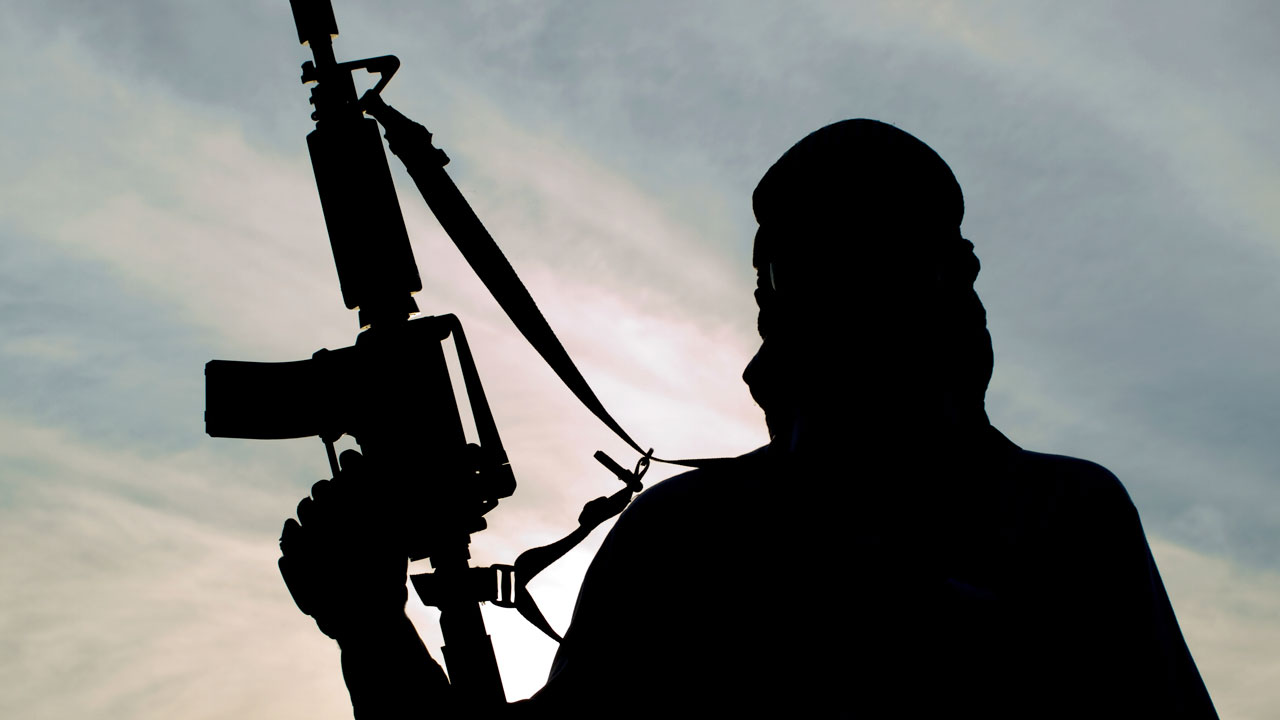
There have been reports of attack by ISWAP fighters on a com­munity hospital and telecommunication mast in the town of Mugumeri Local Government Area of Borno State on November 3, 2021.

It was gathered that the at­tackers stole some drugs and other medical consumables from the facility.

While the military ex­changed gunfire with a group of the ISWAP fighters, the other group sneaked into the hospital to steal drugs, a refrigerator and some bedsheets, according to a source.

“They attacked the town from behind, burnt down Airtel mast and ransacked the hospital.

“They went away with drugs, a refrigerator and some bedsheets.”

Magumeri is about 40 kilo­meters away from Maidugu­ri, the state capital.