Admin

People trapped as building collapsed on Beirut Road, Kano

By Muhammad Aminu

At least ten people have been trapped in a three-storey building being constructed in the famous Beirut Road market in Kano City.

An unspecified number of people have been affected, including some people working on the construction site.

An eyewitness said that the Kano State Government is constructing the building. He confirmed that close to ten people are still trapped in the collapsed building.

Three people have been rescued so far, but residents are lamenting the late arrival of the rescue operations team. An eyewitness also said his friend was among the trapped as his number rang and he answered, saying he was suffocating.

The incident happened around 30:30pm Tuesday.

Atiku donates N50m to Kwari market flood victims

By Muhammad Aminu

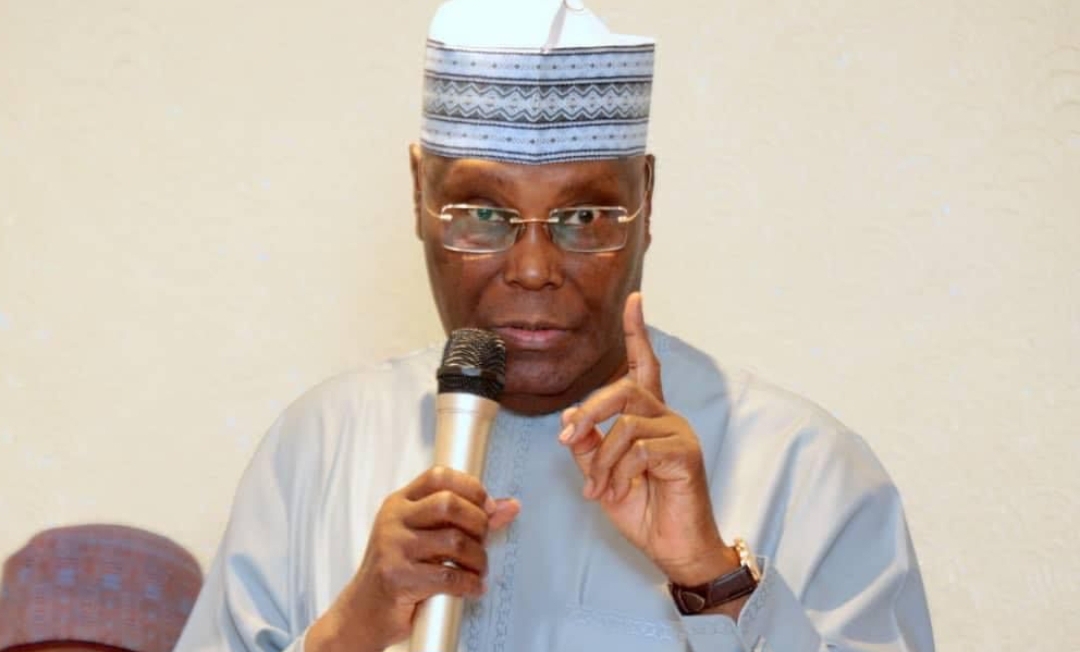
The presidential candidate of the People’s Democratic Party (PDP), Atiku Abubakar, has donated N50 million to Kantin Kwari textile market in Kano following a flood that affected the market.

The Star earlier reported that Kano has been witnessing torrential rainfall in the last few days that has led to floods in many parts of the metropolis, including the Kwari textile market.

The presidential candidate announced the donation Monday while welcoming former Kano State Governor Ibrahim Shekarau to the PDP.

He sympathized with the businessmen and women who were already suffering from an unfriendly business environment with economic hardship.

According to him, Shekarau’s defection is a win for the people of Kano State, the PDP and the country.

The former Kano State governor argued that Atiku was the most qualified candidate to get Nigeria working again come 2023.

Atiku was in Kano since Sunday alongside his running mate Governor Ifeanyi Okowa, Governor Aminu Waziri Tambuwal of Sokoto State, former Governor of Jigawa State, Sule Lamido, former Minister of Transportation, Senator Abdullahi Umar Idris, among other party chieftains.

El-Rufai calls ASUU “useless union”

By Ahmad Deedat Zakari

Bashir El-Rufai, the son of Kaduna State Governor Nasir Ahmad El-Rufai, has described the Academic Staff Union of Universities, ASUU, as a “useless union” that should be scrapped.

The junior El-Rufai, on Monday, August 29, 2022, said ASUU is useless and should be replaced with educators that care about the students and Nigeria.

“ASUU is a very useless union. They should be scrapped & replaced with educators that actually give a damn about students and how that translates to the future of this country.” He tweeted

El-Rufai’s condemnation of ASUU is coming after the union extended its ongoing strike in the early hours of this morning. ASUU has been on strike for half a year, an industrial crisis that has crippled the academic activities across Nigeria’s public universities.

3 persons die, 15 others injured in Kano auto crash

By Uzair Adam Imam

At least three people reportedly died while 15 others sustained injuries in an auto car accident that occurred in Takai Local Government Area of Kano State.

The Kano State Fire Service Spokesman, Yusuf Abdullahi, confirmed the development Sunday, saying the accident involved a Toyota Hilux conveying three people from Jigawa State and a commercial hummer bus conveying 15 others from Kano.

Abdullahi, who identified the dead victims as Sani Isah 28, Shamawilu Isah 30 and Musa Yusuf, 32, stated, “On receiving the information, we quickly sent out our rescue team to the scene of the accident for rescue.

“On arrival, we found out that it was a commercial bus (hummer bus) without registration number and conveying 15 people from Kano that had a head-on collision with a Toyota Hilux conveying three persons coming from Jigawa with registration number JMK 142 XA. The hummer bus was engulfed by fire.

“Out of the 18 people involved, 15 people were rescued alive while three out of the passengers from the hummer bus were rescued unconscious. We immediately conveyed them to Takai General Hospital where doctors on duty confirmed the three unconscious, dead,” he said.

2023: Shekaru, associates dump NNPP, join PDP in Kano

By Muhammadu Sabiu

Malam Ibrahim Shekarau, a former governor of Kano State, has formally rejoined the Peoples Democratic Party (PDP).

Shekarau joined the PDP on Monday in Kano after leaving the New Nigeria Peoples Party (NNPP).

The PDP’s presidential candidate, Atiku Abubakar, Iyorchia Ayu, the party’s national chairman, and other PDP members met with the former governor.

Shekarau joined the NNPP from the All Progressives Congress (APC) and left it two months later.

Shekarau, a senator for Kano Central, previously served as Kano’s governor for two terms and as Nigeria’s minister of education.

He also contested for president of Nigeria in the 2011 general elections.

The imperatives of Nigeria’s war against poverty (II)

By Lawi Auwal Yusuf

Researchers in social policy now prefer to use the concept of social exclusion to explain multiple deprivations that prevent individuals from joining important community activities. This goes beyond commodities that can be directly purchased. For example, it’s difficult for the socially excluded to secure a job, engage in recreational activities or participate in politics beyond mere voting.

It moves beyond consumption to examine how resources affect the participation of worse-off members in society. Poverty impinges on participation in social activities that are essential to everyday life. For instance, visiting a hospitalised brother or friend. Individuals are deprived if they cannot afford even the cheapest activities.

In the same vein, controlling inequality is indispensable if poverty and social exclusion are to be combated. Any nation with a broader gap between the rich and the poor is bound to be stubbornly enmeshed in poverty. However, some scholars accept that it is not easy to uproot inequality completely. They suggest making a poverty benchmark: income below the average. Those individuals with scanty resources less than this dividing line are considered poor with an intolerable living standard. In this case, there might be inequality devoid of poverty. This idea is primarily concerned with dissipating poverty altogether and integrating people rather than making them more equal.

It is crucial to distinguish between poverty and social exclusion. Poverty refers to material fewness or the lack of means to live a happy life. While social exclusion consists of a broader range of ways whereby members of a society are disadvantaged, consequently predisposing them to poverty. It involves a lack of participation in decision-making and civil, social and cultural life. These deprivations hinder individuals from participating fully in social life. However, both portray the existence of injustice in society.

Tackling social exclusion must involve measures to deal with institutional ethnic stratification, tribalism, sex discrimination, and gender inequality and encourage stronger community cohesion. Nonetheless, institutional ethnic stratification of minority groups is more likely to cause poverty and exclusion among disadvantaged groups than all the other factors. This is because ethnic harassment does produce fear and a sense of isolation, thereby augmenting the social exclusion produced by other inequalities.

Furthermore, women and children are more vulnerable to extreme poverty than men, while lone mothers are at higher risk. This speaks to the high rate of unemployment which is also higher among women than men. This is a reason that helps to explain the high rate of women deprivation that is becoming more noticeable. To cut women’s poverty, it’s necessary to combat the underlying causes like girls’ educational disadvantage, idleness of women, gender discrimination/inequality, lack of promotion for women on low wages and deficient educational achievement for the children of impoverished households. However, a significant increase in welfare services and full employment of women would make a difference.

Disability is another relevant factor prone to poverty and exclusion. Rude attitudes of people towards disabled individuals remain a major cause of exclusion, whereas the need now is for inclusion. Stigmatisation is not only a barrier to participation in the community but also a deliberate move to distance them from the existing opportunities. Moreover, high rates of deprivation among disabled people are a result of marginalisation in the labour market.

Unfortunately, impaired persons tend to have higher living expenses than normal persons for commodities of their special needs. The extra costs for disability include healthcare, physical aid or transport. As a result, they suffer from poverty alongside exclusion, while participation in society is restricted by sensory defects or limited mobility. This results in overall deficient health, which impedes their employability and the ability to work, unlike the non-disabled.

However, poverty and social exclusion are not inevitable consequences of disability. Instead, they are due to discrimination and failure to provide the resources and facilities needed to reduce its effect. Thus, authorities must make strict laws against the harassment of persons with an impairment. Furthermore, public and private organisations must also take reasonable steps to accommodate the needs of disabled persons until the physical environment becomes completely user-friendly for them.

The major causes of poverty in Nigeria include dead-end jobs, low pay, lack of promotion of low-income workers, poor education for the children of the poor and high taxes. The government must understand that excessive taxes such as Value Added Tax and duties tend to take up a larger share of the income of average Nigerians.

Furthermore, a lack of sound education and training for the children of ordinary Nigerians is the leading force behind poverty and exclusion. Skills are increasingly becoming more valuable in the labour market, and without them, there is a high risk of redundancy.

Joblessness is a strong predisposing factor because participation in the labour market greatly reduces the risk of poverty and exclusion, while idleness is closely correlated with them. Provision of full employment with prospects is the gateway to ensuring a better and prosperous life. It also provides the poor with social networks that give a sense of inclusion. It also helps in coping with these acute situations.

Similarly, a high number of children in a family is another factor that increases the risk of poverty compared with smaller households because of the extra costs involved.

Finally, for Nigeria to win its war against poverty, good governance must be the leading force in this crusade. Stealing, embezzlement and turning public office into an instrument of creating wealth for acquaintances and tribal brethren must utterly vanish. Contrarily, transparency, providence, judicious redistribution of resources and equal treatment of all irrespective of closeness or ethnic background must prevail. 

Lawi Auwal Yusuf wrote from Kano, Nigeria

Maqari Controversy: If ASUU says it, it must be right

By Yusufu Musa

Watching Prof. Ibrahim Maqari’s outburst the other day made it difficult to respond to several inquiries. One of these is whether solving all the problems ASUU is bringing home will fundamentally alter the perception of the higher education system and transform our universities into those we hear about in Europe and North America.

On February 14, the Academic Staff Union of Universities (ASUU) announced the start of a four-week roll-over strike that has since been extended three times. However, the issues brought up by Prof. Maqari are not ones that ASUU is examining. Instead, the union is concerned about the subpar working circumstances of its members, the proliferation of institutions, and the appalling physical and technological facilities of public universities.

Maqari alienated his old coworkers by criticizing them. He accused them of working only three to four hours a week, failing to undertake significant research, and engaging in academic fraud to further their careers. Unfortunately, I lack the means to substantiate his broad assertion because intellectual property theft is a severe legal matter. Thankfully, the targets have responded to him with detailed arguments.

I’m arguing in support of his assertion that lecturers should do the duties for which they are compensated, such as quality research and teaching if they want to be paid like Harvard professors who put in long hours. Because when a lecturer declines to instruct, the pupils suffer as a result.

I believe the next battle is one that students should win on their own. There is an internal conflict at the university. University students, who are primarily young people, can ensure that lecturers are held accountable. Still, they don’t always seem to reject the behaviour of some instructors, about whom ASUU appears unconcerned despite the proverb that “charity begins at home.”

ASUU is fighting its own battle but never agrees there are bad elements in the university system that should be fished out. 

The allegorical story Animal Farm by George Orwell struck a chord with me because of how the author captured the naivety of the oppressed in the figure of Boxer. Napoleon never fails, according to Boxer. This is a ball of fire that allows himself to be fooled. In actuality, he is the manor farm’s strongest animal.

Since then, critics have said Boxer represents the Soviet Union’s working class under Stalin’s rule. Members of this group contributed to Stalin’s rise to power. What took place in the end? Boxer became so weak that he was used and dumped. He believed the “thing with two legs” to be his enemy and agreed to help destroy the farm’s owner, only for his persuaders to grow more oppressive.

Consider Nigerian students to be Boxers because they believe ASUU is always right.

While it is true that Nigeria is not working, we are all equally to blame. We understand the system rather well because we are students at the institution.

Prof. Maqari revealed the other side of the story, but ASUU was not pleased. ASUU is bringing the gospel to the government house even though they also require it.

According to Qur’an 2:44: “Despite reading the Book, do you preach holiness but fail to uphold it yourself? Why don’t you understand?”

Through a lecturer, I learned that someone had proposed in one of his university’s senate sessions that professors be required to periodically take an exam so that administration may determine if they are still “professing.” The contributor worried that his colleagues would stop performing research once they received the title. For fear of the professors leaving for other universities, his recommendation was flatly denied.

When they notice that a promotion exercise is getting closer, some professors realize they need to compose a paper. When they do, no one will read the pieces they publish in a departmental journal. The articles are created for promotion rather than to contribute to the scientific community.

I recently visited a department head in one college of education. I noticed some journals on her bookcase. I told her I wanted to submit an article for their upcoming issue. Try to guess what the HoD said. She said that the journal was only released during every promotion season.

Government investment in universities may not change much because some teachers’ unethical behaviour is not being monitored. Even worse, individuals who should be watching for such unethical behaviour believe they are always right. According to them, only the government and students engage in destructive behaviour. Who will then stand up for students?

Students should reject any proposal to restructure the university system without establishing a framework to monitor the behaviour of the teachers. The battle for a functional university system goes beyond having lovely lecture halls, modern labs, and libraries.

Junior academics, resentful of their seniors, do most of the work. Because they are overseeing their PG dissertations, they treat them like slaves.

Even in the classes these powerful lecturers teach, the juniors are tasked with grading the written assignments. A junior lecturer would be seen grading papers for eight courses.

Most of our professors would visit the classroom once or twice during our time at the institution to launch a course and hand it off to a junior scholar. Some of them never even tried to educate us. Due to their inflated sense of importance, they are too big to instruct undergraduates. They were seldom ever seen in the departments. Because their mentors don’t have time, graduate students spend years researching at the institution.

Students must understand that nobody would stand up for them. The government may revitalize institutions and increase funds for higher education, but who has the right to oversee professors’ negligence?

Nigerian young, unlike Boxer, are aware of their power, which they used during the EndSARS rally. The youth must speak up and demand changes in education and other areas of national policy that will affect their future. Some of these teachers have our support despite doing nothing. The strike will finish. We’ll return to the classroom, but will the ASUU police its members there as well?

Yusufu Musa writes from Kaduna and can be reached via ymusa4055@gmail.com.

Scientifically proven ways to learn like a pro

By Hidayah Bashir Dayyib

There’s a famous saying that “learning never ends”. We’re always learning either actively or passively. Learning starts right from birth, at school/college, and even after graduation.

Learning new skills and honing the acquired ones is of utmost importance for one to succeed or stand out in whatever profession, job, or workplace. And thanks to today’s digital world for providing numerous ways of learning than ever before. For example, you can take online courses, watch YouTube videos, attend webinars, and many more.

As we all embark on the learning journey, we focus only on the “learning” and perhaps never think of learning how to “learn”.

There are scientifically proven techniques based on neuroscience and cognitive psychology to help you “learn more effectively” and “learn like a pro”.

Despite our different levels of understanding, these techniques are helpful and productive when applied. These are some of them:

1. Retrieval practice: This is the best and most effective learning technique. It is a way of testing yourself to recall/retrieve from your memory the key ideas and important points,  remembering as much as possible from what you learn (it may be a lecture, a video, reading a book, or solving a problem).

The best way to understand your learning process is through retrieval practice (what scientists call “metacognition”)

This technique will help you learn faster and better and give you a deep understanding of what you’re learning.

2. Pomodoro Technique: It was invented by an Italian Francisco Cirillo and is super simple. The first step is clearing away distractions and setting a timer to 25 minutes. Work as intently as possible during these 25 minutes, and then take a break for 5 minutes. “Taking a brief, five-minute break after approximately 25 minutes of studying can help your brain process new learning, so what you’ve just been learning isn’t overwritten”.

It is required to relax and not switch tasks during the break.

The Pomodoro is flexible. You can experiment with the timing that works best and go with it. This technique is a powerful tool that helps you sharpen your focus and learn faster and deeper.

3. The hard start technique: This technique is used when solving a tricky problem. It is a way of starting a test or assignment with the hardest part. When you get stuck, leave it and solve the simpler problems coming back later to it. You’ll find yourself making progress because your brain has been trying to find a solution to it while you’re away. In addition, the “Hard Start” technique can help you get credit for more challenging problems on tests.

4. Spacing out your learning into smaller periods over several days. Experiments have shown that spacing your learning over several days helps you learn better with less effort. Moreover, pacing out your learning over several days will make your brain strengthen the stored information.

When you use spaced learning, the infirmaries can make their way into your long-term memory.

Fun fact: Regular exercise boost learning

5. Association and metaphor

Metaphor is relating what you’re learning with what you already know. This helps the new knowledge stick better to the brain. A difficult idea can be simple when related to the right metaphor.

Associating what you’re learning with what you already know will help me remember better.

6. Memorisation: memorising information makes you understand it better, and memorising what you understand more easily. There’s a link between memory and understanding.

Best ways to memorise include:

A. Retrieval practice: instead of the traditional way of memorisation by looking or reading the information, try retrieving it from your memory and testing yourself to recall the information. A powerful way of retrieval is using flash cards.

B. Form an acronym or sentence from keywords: This is a powerful and efficient way of memorisation. Play around with the order of words to come up with a remarkable combination. 

C.  Use the Memory Palace technique: it is a technique used by memory champions to memorise incredible information. It involves using an image-based memory technique.

In the memory palace, you create an image of every word or phrase you want to remember and then place these images in a building you’re familiar with. This is a fantastic technique for memorising large amounts of information or data. When mastered, you’ll be amazed and appreciate it.

D. Form memorable mental images is similar to the association technique above. For example, when you try to remember a trip or a moment, it is usually through the images of the events that happened. Our brains function through images. It is recommended while learning a new language.

Which of these techniques do you use to learn? Please share with me the ones you’re fascinated about and would try. Then, as you are submerged in learning, remember to use these techniques to facilitate your learning.

Happy learning.

Hidayah Bashir Dayyib wrote from Kano via hudaelbasheer15@gmail.com.

Commuters advised to take alternate routes as Gwaram-Basirka bridge collapses

By Muhammad Aminu

Commuters plying Gwaram-Basirka road in Jigawa state are advised to take alternate routes to their various destinations.

This development followed a bridge collapse along the way due to a heavy downpour the previous night.

The Jigawa state Police Public Relations Officer, Lawan Shiisu, stated this in a terse statement on Sunday in Dutse.

“On 28/08/2022, as a result of downpour over the night, a culvert under Gwaram/ Basirka Road, precisely at Rabadi village in Gwaram LGA of Jigawa State, has been washed away.

“In view of this, road users should seek alternative or use the diversion created by the authority.”

Residents protested earlier this year on the same road that links that part of Jigawa with its neighbouring Bauchi State when a collapsed bridge led to its closure.

Police, vigilante raid kidnappers’ den, arrest suspects in Jigawa

By Muhammad Aminu 

Police in Jigawa State have arrested two suspected kidnappers following a raid at the kidnappers’ hideout in Nisan Marke Settlement in Ringim Local Government Area.

The Police, in collaboration with a vigilante group, acting on earlier received intelligence information, carried out the raid successful.

Police spokesperson in Dutse, DSP Lawan Shiisu, said operatives from Ringim Area Command in conjunction with a local vigilante group led by Ringim Divisional Police Officer (DPO), SP Shehu Hamdullahi, acted on credible and actionable intelligence and conducted the operation at the identified suspected kidnapper’s hideout.

He noted that one 45-year-old Muhammad Sama’ila of Madari village in Warawa LGA of Kano State was reported to have been wounded all over his body while fleeing from the suspects.

He explained: “On receipt of the information, a team of Policemen swung into action, visited the scene of the crime and conveyed the victim to the hospital.

“While at the hospital, after regaining his consciousness, the victim revealed that he was Kidnapped on Tuesday 22nd, August 2022, at about 0130hrs from Madari Village in Warawa LGA of Kano State and taken to Nisan Marke Herdsmen.”

He added that when he attempted to escape from the abductors, he was attacked by one of the kidnappers and inflicted injuries on his body.

He said: “On the same date at about 0850hrs, a team of Policemen stormed the Area, where one of the kidnappers named Abdurrazaq Musa, 40 years of Gurgunna village, Babura LGA, Jigawa State was arrested, and the phone that belongs to the victim which was used for ransom negotiation was recovered in his possession.

“Furthermore, one Hassana Jimau, age 30 years of Nisan Marke village, was also arrested at about 1230hrs.

“During interrogation, both the suspects confessed to having abducted the victim with eight other gang members while the effort to trace their accomplices is on top gear.”

According to him, the suspects have been handed over to the team of the anti-kidnapping section of Kano State Police Command for discreet investigation and necessary action.