Admin

Interfaith in Northern Nigeria: A non-romantic view

By Ismail Hashim Abubakar

A few days ago, while at our university campus here in Rabat, I heard shouts outside the premises resembling a public demonstration – something quite unusual and often carried out orderly in Morocco, without the slightest chance of being hijacked by hoodlums. I could not understand what people were saying because they spoke in Darija, the local, broken Arabic dialect spoken colloquially in Morocco. I tend to pick some sentences in normal circumstances, especially when spoken to me directly.

So, I asked my Moroccan friend what was going on, and he answered that people were chanting pro-Palestinian songs and shouting anti-Israeli slogans. I found that interesting given the special place of Jews in Morocco, who, according to Aomar Boum, the author of Memories of Absence:  How Muslims Remember Jews in Morocco (and translated into Arabic as “Yahud al-Maghrib wa Hadith al-Dhakirah” by Khalid Saghir) used to number more than 200, 000 before the creation of Israel and up tp around 1950s, but in post-independence Morocco, their number slashed to less than 5000, as they engaged in gradual exodus to their newfound state. But I noticed that the small protest was officially unwelcome when suddenly security guards of the university closed its gates and prevented the intrusion of protesters, who were mostly, if not entirely,  students of the university. I would only come to know the exact cause of the protest a few minutes later when, together with my Moroccan friend, we were encouraged and directed by some officials of the university to follow a way that led us to one beautified public lecture hall to participate in a conference, about which we were neither aware nor essentially prepared to attend.

I went straight to the front row in the hall and found a seat where I could watch and listen with much attention, while my friend preferred to sit at the back.  It quickly dawned on me that the conference themed “al-Diyanat al-Samawiyah Hamilat Risalat al-Salam” (Heavenly Religions Carrying the Message of Peace) was, besides, a few delegates from a Moroccan council of Islamic knowledge, hosting the Archbishop of Rabat, Cardinal Cristobal Lopez Romero and a Jewish Rabbi, Rabbin Mardekhai Chriqui, coming all the way from Jerusalem.

I started enjoying the proceeding when the MC made her introduction in Arabic and coalesced it with the famous verse of Surat al-Hujurat upholding the spirit of humanity and emphasizing racial and ethnic diversity as a distinct human property. And I did not bother much when she switched to French, which I assumed was the translation of what she said in Arabic, though I do not understand. When I looked at my phone, as the audience awaited the Jewish speaker to take over the stage, I just clicked on my WhatsApp and saw my friend’s message, telling me that he had gone out and we might meet in the mosque. I would have also gone out, but I was lured to stay to listen to the heavily bearded Israeli Rabbi, perhaps because that was my first time to see a real, self-identifying Jew physically and, in fact, a religious authority for that matter. When the man took over the podium, he spoke briefly in Darija, which I luckily understood as he minced his words slowly as if lamenting that he had to do that before switching to French. In the Darija, the Rabbi just excused that although he spent about 40 years in Morocco, he was not good at Arabic, so he informed his audience that he would prefer to switch to French, which he then did without any ado. At this juncture, I also decided to exit, without knowing if his speech would be interpreted in Arabic or not, and without bothering if too many speakers would speak in Arabic later. (A link to the conference is https://m.youtube.com/watch?v=fY6eoZ6RObA&t=703s).

The most relevant part of this story is that there are indeed initiatives of interfaith dialogue worldwide, and this seems to have come to define interreligious relations among members of heavenly religions. But it is also a fact, as this anecdote demonstrates, that some actors in the interfaith program may be unwelcome, detested or rejected. This is precisely what reminds me to offer my humble thoughts on the current brouhaha about the interfaith issue, which has just become a topic of discussion, at least in northern Nigeria.

Perhaps a few people will disagree that the matter was dragged to the public domain by the removal of Shaykh Nuru Khalid, the chief Imam of the Friday mosque at Apo Legislators’ Quarters, less than two weeks ago. That happened over a sermon he delivered on the collapsing security situation in Nigeria. The Imam would have been hailed as a hero and a  champion that deserved accolades by the entire northern Muslims, but for his flirtation with the controversial phenomenon of interfaith. After all, distinguished scholars who have become a sort of religious canons in Nigeria like the late Shaykh Ja’far Mahmud Adam, the late Shaykh Muhammad Auwal Albani Zaria and the few ones alive like Shaykh Bello Yabo, Shaykh Murtala Asada Sokoto, Shaykh Idris Abdulaziz Bauchi and a few others are known to be showing impatience toward any untoward development that affects (affected) the poor Nigerian masses. These scholars have uttered bitter homilies and persistent tirades against governments over neglect of their primary responsibilities, particularly protecting lives and properties. Their prominence and public acceptance are partly glued to their decision to maintain a frugal life, remote from the corridors of power, hence capable of speaking truth to power, no matter whose ox is gored.

Naturally, by siding with the masses, Imam Nuru Khalid, who was psychologically martyred when fired from his job, should have been catapulted to such a prestigious clerical position. But in his case, this was impeded by his affiliation to interfaith organizations, often seen with Christian groups who, it seems, trust him as one of the symbols of moderation and tolerance, which may not be entirely untrue. The attention of the Muslim public was recently attracted by his unpopular view when in the aftermath of Abduljabbar Nasiru Kabara’s blasphemy saga and the ensuing arguments, Nuru Khalid voiced views that did not go well with the majority of enthusiasts, particularly on the shortlived misunderstanding between Prof Ibrahim Maqary and Dr Abdallah Gadon Kaya, two rising scholars in northern Nigeria.

At that time, Nuru Khalid was exposed as an advocate of interfaith, which in Hausa people wrongly render as wahdatul adyan (unification of religions), thanks to the widely circulated clips of Shaykh Albani, which popularized this view and mentioned Nuru Khalid as one of its agents. Hence, when Nuru Khalid was removed from his imam position, many commentators in the North merely clung to his affiliation to the interfaith group to further endorse, celebrate or justify his removal. But the mosque did not cite that as a cause for his sack or regard it as a fundamental problem of the Imam. However, Nuru Khalid’s sudden transformation as a hero in the milieu of Nigerian Christians, some of who might not have known him before, his public revelation about some international groups proposing to finance a mosque project for him and his more open hobnobbing with Christians have further thrown him into disrepute among Muslims, who still sense that this interfaith phenomenon is nothing but attempts to eclipse the teachings of Islam and collapse all religions into one new faith.

Another figure, also seen as a vital organ in the interfaith dialogue program, coincidentally also bearing the name Shaykh Nuru Lemu. Although sounding calm and soft-spoken unlike his namesake, Nura Lemu has taken it up to himself to clear what he thought are misconceptions being circulated about the interfaith dialogue initiative. In an audio clip shared via social media, Nuru Lemu claimed that interfaith is never a new invention nor devoid of a rudimentary religious basis, tracing it to the time of Prophet Muhammad when he designed a pact of peaceful coexistence with Jews as citizens of Madinah, and when he entered into a truce with Quraysh polytheists in the famous treaty that would be known as Hudabiyyah. Nuru could have cited the pre-Islamic treaty known as Hilf al-Fudul, which the Prophet participated in, and pledged to partake in a similar one if a need for that would arise. In fact, Nuru would have cited numerous Quranic verses upholding peaceful coexistence and dialogue between Muslims and members of other faiths, as can be discerned in chapters like Surat Ali-Imran, Surat al-Ma’idah, Surat al-Mumtahanah, etc. Since the second biggest religion after Islam in Nigeria is Christianity, it is interesting to make a case with the verse that says: 

“You shall certainly find the Jews and those who associate partners with Allah the most vehement of the people in enmity against those who believe, and you shall certainly find those who say, `We are Christians,’ the nearest in friendship towards those who believe. That is so because there are savants and monks amongst them and because they are not haughty ” [Surat al-Ma’idah verse 82].

Nuru Lemu, who is one of the heads of a mega religious and educational centre in Niger State, a neighbour to Abuja, where his sacked namesake is based, added that the dialogue would also concentrate on intra-Muslim relations. Thus, it will work out ways to dent and lessen the growing discords and animosities among Muslims occasioned by ideological rivalry and sectarian division. 

From this viewpoint, it is not hard to convince Muslims that the interfaith issue is a healthy, innocuous mission that Muslims would warmly welcome as a process of living up to the expectation of their scripture and broader Islamic vision.

However, it must be clarified that interfaith dialogue may have a  unique interpretation for Christians different from what Muslims may be ready to accept. Muslims do not appear prepared to assimilate the neo-liberal interpretation of Islam in such a way that they would compromise established Islamic values and fundamental teachings. Muslims may fail to implement specific injunctions of Islam based on human weakness, but they will hardly portray them as outmoded, irrelevant and unsuitable for the modern situation.

Christians, for instance, as evinced by the obsession of Mathew Kukah in his anti-Islam columns and public discourses, may conjure that interfaith dialogue would henceforth guarantee them an institutional legitimacy of marrying a Muslim woman, or it may make Muslims feel reluctant in missionary work while they (Christians) continue to win converts either directly by luring pockets of northern animists or through the new atheism phenomenon that trend mainly in the virtual world and cyberspace. Christians may conjecture that Muslim females, especially in Yorubaland, where the controversy keeps erupting, will relinquish their fundamental right of wearing hijab. In fact, many Christians would wrongly assume that interfaith dialogue, when successfully embraced, will encourage Muslims to keep mute on tragic instances befalling their fellows, such as the series of ethno-religious crises that broke out in places like Jos, Tafawa Balewa, Southern Kaduna, Lagos Sagamu, etc. 

In retrospect, to what extent are Nigerian Christians ready to accept Prophet Muhammad as God’s apostle just as Muslims uphold Jesus as Prophet as a fundamental condition of being a Muslim, without which one will be outside the fold of Islam? Or at least, are Nigerian Christians ready to reserve some respect for Prophet Muhammad so that they will shun all utterances and actions that may be considered blasphemous, which, needless to say, fuels religious crisis and further strains relations between Muslims and Christians? 

Nigerian Muslims would be very willing to uphold peace initiatives. Still, they will be very unlikely to accept any interfaith interpretation that warrants silence and reprisals in situations where their fellows are innocently attacked and persecuted anywhere on Nigerian soil. Muslims will invoke the same scripture which warns them not to ally with their enemies –  whoever they might be, which enjoins them not to give in to treachery, which cautions them on prospects of being bamboozled and hoodwinked by their enemies and which reminds them to be prepared for self-defence. Therefore, the interfaith initiative appears to be a neutral concept that can be applied positively or negatively and can be abused or misinterpreted disproportionately.  But, clearly, its application goes hand in hand with contexts and real-life experiences.

Ismail wrote from Rabat and can be reached via ismailiiit18@gmail.com.

Man connives with friend, abducts girlfriend, collects 2m as ransom

By Uzair Adam Imam 

The police in Lagos State have confirmed being on the trail of one Ahmed for allegedly conspiring with one Uchenna Daniels to abduct his girlfriend, Hannatu Kabri.

The Daily Reality learnt that Daniels reportedly abducted Kabri in Abuja on March 31 2022.

After her abduction, Daniels took Kabri to Lagos, a catastrophic situation that put her family in a dilemma.

In an attempt to save Kabri, her parents had no option but to pay the ransom of two million naira for her release. 

The case was reported to the police, and a search was launched for the suspects, leading to Daniels’ arrest.

Addressing journalists on Thursday at the Lagos State Police Command headquarters in Ikeja, Lagos, the spokesperson for the command,  SP Benjamin Hundeyin, stated that the police were making efforts to arrest Ahmed and one Biliya who allegedly participated in the crime.

He added, “Operatives of the command tracked and arrested the suspect, Uchenna Daniels, at Allen Avenue, Ikeja. 

“The suspect revealed that the victim’s boyfriend one Ahmed and one Biliya planned the kidnap with him and collected a ransom of N2 million in Kaduna through a Bureau de Change from the parents of the victim before she was released.

“The suspects used a toy gun to commit the crime. An investigation is ongoing to arrest other fleeing suspects,” he added.

Houses destroyed as Maiduguri witnesses first rainfall

By Uzair Adam Imam 

A heavy downpour accompanied by the wind storm has destroyed many houses and properties worth millions of naira in Maiduguri.

Our correspondent gathered that the heavy downpour lasted for four hours on Tuesday.

The heavy downpour was the first rainfall of this season in the state and started a few minutes after 3 pm on Tuesday. 

Reports from the state disclosed that many people had become homeless as the rainstorm destroyed many mud houses in the state area and some parts of the city centre.

The rainstorm had destroyed the roofs of many houses and uprooted trees in many locations within the state and its environs.

All efforts to get the reaction of the Borno State Emergency Management Agency (SEMA) proved abortive.

There’s unholy handshake between bandits, Boko Haram insurgents – FG

By Uzair Adam Imam

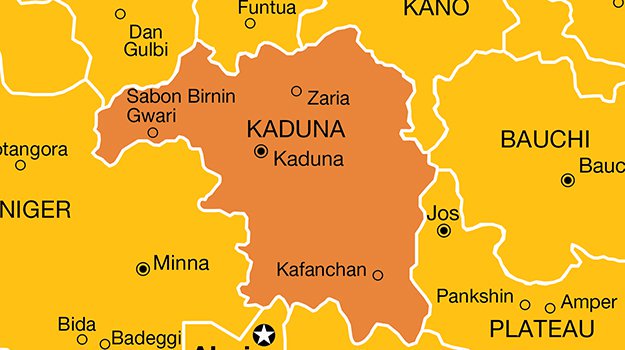
The Federal Government of Nigeria said the preliminary reports of what transpired at the Kaduna train attack had revealed a kind of collaboration between the bandits and the dislodged Boko Haram terrorists from the northeast. 

The Minister of Information, Lai Mohammed, disclosed this Wednesday while responding to the State House reporters in Abuja.

Recall that The Daily Reality reported how no fewer than nine persons died, hundreds sustained injuries while over sixty were kidnapped when terrorists stormed a passenger train along the Abuja-Kaduna railway a few weeks ago.

Mohammed reportedly intervened after the Minister of Defence, retired Major General Bashir Salihi Magashi, was questioned to provide details on the perpetrators of the train attack.

He said: “What is happening now is that there is a kind of an unholy handshake between bandits and Boko Haram insurgents. 

“Preliminary reports of what transpired at the Kaduna train attacks show that there is a kind of collaboration between the bandits and the dislodged Boko Haram terrorists from the northeast. I can tell you very confidently that the Federal Government is on the top of this matter.”

Magashi, in his earlier response to the question, stated that: “Honestly, I think the security chiefs are working hard to unveil those that are involved, and we will tell you very soon those that are carrying out these attacks. 

“Both Jos and Kaduna, we will come and explain to the public what is really going on and our efforts to ensure that all these activities are stopped once and for all. We are rarely on top of the situation, we are planning hard, and we will get it out as soon as possible.”

On interfaith

By Dr Babayo Sule

The revolution in social media, no doubt, made life fascinating for the present generation in information dissemination and data assembling but most importantly, in harnessing dialogue among inter-cultural and diverse complex groups cutting across the universe unprecedented. Many societies are positively utilising the leverage of social media to develop their political and socio-economic sectors individually and collectively. However, in Nigeria, social media is dangerously setting us on the path of collapsing our values and tolerance and it is ambitiously threatening to magnify ignoramus into the regalia of scholarship while scholars are being relegated to objects of caricature. This is anticipated in the warnings of Daniel J. Levitin in his Weaponised Lies: How to Think Critically in the Post-Truth Era and Nicole A. Cooke’s Fake News and Alternative Facts: Information Literacy in a Post-truth Era, that the era of honest ideas and truth is fast passing and this is palpable more in our environment where things are twisted deliberately for sentiment or personal agenda. This has manifested in the recent development in national issues where the bedevilling monster of insecurity is becoming worrisome. The high level of ignorance in understanding, interpreting, comparing and linking issues in Nigeria bordering religion, politics, economy and other social issues is nauseating. This is evident in the use and abuse of the term ‘Interfaith’ by social media interlocutors. 

The two Arabic terms are mixed up unconsciously by itinerant merchants of social media but most surprising, by even some religious Sheiks either deliberately or out of ignorance. The term ‘Wahdatul Adyan’ (unification of religions) in the Arabic language can never be the same as ‘Hiwar Al Adyan’ (interfaith dialogue). Unification of religion means collapsing of faith to become one while interfaith dialogue means debates, comparative studies and discussions of understandings as well as the relationship among followers of a different faith. The word ‘Hiwar’, dialogue, was mentioned three times in the Qur’an 18:34; 18:37 and 58:1.

How can Islam, for example, collapse and become one with Christianity when Islam philosophises the unity of Allah (SWT) while Christianity accepts the doctrine of ‘Trinity’ or how can Islam unite with Judaism that does not believe in Jesus Christ and Prophet Muhammad (SAW), at least, the current version of it? Or how can Christianity unite with Judaism that does not believe in Jesus Christ? Can Islam ever accept any form of law besides the Shari’ah principles? 

A scholar, popularly known as ‘Digital Imam’ made some utterances on escalating insecurity situation in a delivered sermon which eventually led to his removal. The crux of the matter is that I am not in support or opposing what the Imam uttered in his furious outburst. Many messengers have their philosophy, style, methodology and perspective of conveying messages based on their training, background, experience and the environment. How or why the Imam decided to deliver the message in the mode he did was not the main concern here. Some may see it right while others may see it as unfit and all are right in their perception. I am not in defence or support of the Imam and his words nor am I his spokesperson but some misperceptions, distortions and misrepresentations of the term ‘interfaith’ need to be cleared to avoid the created confusion. However, the annoying aspect of the issue is the way the ‘message’ was totally ignored and the messenger is being crucified on account of being what they called ‘Interfaith’. 

And what is interfaith? Is it a polytheistic process or a pronouncement that will disqualify one from Islam? Does interfaith has a basis from the religious roots and branches? Is our education level annihilated to the extent that our social media pedestrians could not understand what it is or is learning Islamic scholarship withering away to the level of misunderstanding Islam or misusing it? What is the link between sermon on insecurity and participation of Digital Imam in interfaith? Interfaith means dialogue among the various Abrahamic religions of Judaism, Islam and Christianity to promote peaceful co-existence and to understand more the philosophy of each other to avoid sustained mutual hostility. The Merriam Webster Dictionary defines interfaith as activities involving persons of different religious faith. Going by this definition, who is not involved in activities with persons of different faiths in Nigeria?

Islam is a religion that by virtue of its philosophy encourages logic, wisdom and reasoning. It challenges its believers to ponder on signs and symbols of the divinity and unity of Allah and the truthfulness of the religion. Allah (SWT) dialogues with His Angles on the wisdom, logic and the reason for creating the weak Adam (AS) and placing him on earth despite the weakness and the vulnerability to sins (Q. 2 verses 30-35). If Allah (SWT) wishes, He will simply create without consultation or dialogue and made the Angels prostrate compulsorily without any resistance or disobedience by Satan but for His prior knowledge of all, He wanted it that way. Is there no lesson for mankind in it to understand that reasons and logic are used in dialogue to convince?

Allah (SWT) in many places commands that believers should reflect and find faith in Islam not follow what is bequeathed to them by their ancestors presenting to them logical arguments, scientific facts, miracles and points of pondering. Prophet Nuh (AS) engaged his people in peaceful interfaith dialogue to convince them to believe in his religion for 950 years using alternative views and arguments (Q.7 verses 59-64; Q.10 verses 71-73; Q.11 verses 25-49; Q.21 verses 76-77; Q.23 verses 23-30; Q.25 verses 37; Q.26 verses 105-122; Q.29 verses 14-15; Q.37 verses 75-82 and Q.71 the complete chapter).

What about Prophet Ibrahim (AS)? He could have argued forcefully with the divine support and protection and ridiculed his people for worshipping idols that they had created with their hands but instead, he chose the path of wisdom and logic and the power of peaceful dialogue to make them understand particularly being careful of the presence of his father among the idolaters. Several Qur’anic chapters and verses (Q.2 verse 258; Q.14 verses 35-41; Q.19 verses 41-50; Q.21 verses 51-73; Q.26 verses 69-104; Q.29 verses 16-27; Q.37 verses 83-113 and Q.43 verses 26-31).

In all the chapters and verses above, Ibrahim (AS) used a superior dialogue with wisdom, chosen soft words and logic to explain his faith before the idolaters. Then take the instance of Musa (AS) who had not only debates with the Pharaoh and his people but went the extra mile in the demonstration of faith and interfaith dialogue under the command of Allah (SWT) in the Pharaoh’s palace. Many chapters and verses (Q.7 verses 103-173; Q.10 verses 75-93, Q.11 verses 96-99; Q.17 verses 101-105; Q.20 the complete chapter; Q.25 verses 35-36; Q.26 verses 10-68; Q.27 verses 7-14; Q. 28 verses 1-50 and several others too numerous to mention all here). It should be noted that Prophet Musa (AS) dialogued with his people profusely in convincing them against Shirk (polytheism) after he rescued them from Pharaoh using logic and wisdom (Q.2 verses 40-61; Q.7 verses 137-141 and Q.20 verses 83-97) and Prophet Musa (AS) also dialogue and went into a voyage of discovery with Khidr (AS) (Q.18 verses 60-86). 

Other Prophets (AS) dialogued in what is closer to interfaith with their people which time will not allow for all of them to be enumerated here but some few cases are still necessary. Prophet Ilyas (AS) dialogued with his people and showed them a reason to desist from worshipping a lamb as mentioned in Q.37 verses 123-132. Prophet Yusuf (AS) also convinced his inmates’ partners and his people of the unity of Allah (SWT) through an interfaith dialogue (Q.12 verses 37-41). Prophet Isa (AS) was shown the path of dialogue by Allah (SWT) when he was asked if he is behind the instigation for people to worship him when he responded beautifully, respectfully, logically and scientifically in this way (Q.5 verses 116-120) and he also tried and convinced his disciples on the miracle and powers of Allah (SWT) when they challenged him for manna (Q.5 verses 112-115) and elsewhere (Q.19 verses 30-33), Prophet Isa (AS) dialogue with his people to convince them while in his infancy that his mother Maryam (AS) was innocent and that he was a miracle of Allah (SWT). 

The most astonishing aspect of those who wanted to confuse interfaith with unity of faith is their lack of acumen in understanding ‘Asbabul Nuzul’ (purpose of revelation of Qur’anic verses) otherwise they would have saved their ignorance before the public humiliation. One of the outstanding characteristics of the Makkan chapters and verses of the Glorious Qur’an is the dialogue between the Prophet (PBUH) and Makkan infidels to scientifically show them the logic and reason of worshipping Allah (SWT) alone and the dirtiness of idolatry. These chapters and verses are too many to mention here. When Christians from Najran (Nazareth), a place near Madina in those days, heard the preaching and teaching of Prophet Muhammad (PBUH) on Jesus Christ, they approached the Prophet (PBUH) for interfaith dialogue and that was the reason for the revelation of Q.3 verses 33-83 as mentioned by Al-Ghazali in his book ‘Asbabul Nuzul’ and also as narrated by Imam Ibn Kathir in his ‘Tafsir’ (Qur’anic exegesis or commentary). 

The Prophet (PBUH) did not only engage in interfaith dialogue but he agreed that Muslims under threat and vulnerability can seek shelter in other places of different religions when necessary. He asked his companions to migrate to Ethiopia where a Christian king was ruling, Najjash (Negus). The Makkan oligarchs, Abu Jahl and Abu Sufyan sent a delegation to King Negus to convince him to return the Muslim believers to Makka so that they could persecute them until they revert to idolatry. They went to the king with gifts and presents but he rejected their request.

The representatives of Makkan infidels adopted emotional manipulation by telling King Negus that Prophet Muhammad (PBUH) and his followers were also saying evil things about Mary and Jesus Christ (AS). The king summoned Muslims to his palace and questioned them. One of the companions, the Prophet’s cousin, Ja’afar Bin Abi Talib, explained to him their idolatry and decadent situation before the emergence of Islam and went ahead to recite before him the Surah Maryam Q.19 verses 16-40. The scholars of history like Ibn Hisham and Ibn Kathir reported that king Negus and his people wept on hearing these verses which was the reason for revealing Q.5. verses 82-85. Later. King Negus converted to Islam and the Prophet (PBUH) prayed for him from Madina which served as the juristic justification for ‘Salatul Gha’ib’. 

Apart from the above views on interfaith dialogue, many companions of the Prophet (PBUH) were reported in authentic hadiths by Bukhari and other reporters and scholars of the history of engaging Jews in Madina, Christians and pagans in interfaith dialogue using the Qur’an and other sources heard from the Prophet (PBUH). Ibn Taymiyyah, one of the medieval Islamic respected scholars devoted an entire book of two volumes in interfaith dialogue with Christians titled Al Jawabul Sahih li man Baddala Dinal Masih (Answer to those who Altered the Religion of Jesus Christ). Besides, contemporary Islamic jurists have their views on interfaith dialogue. For instance, Ismael Raji Al Faruqi characterises dialogue as Da’awah which includes preaching Islamic teachings, promoting virtues and avoiding vices and providing comprehensive knowledge to understand the purpose of life. 

The Christians and Jews are addressed with respect in the Qur’an ‘as people of the book’. The Prophet (PBUH) was reported to have been visiting the ill in Madina irrespective of their faith (Tirmidhi). The Prophet was sympathetic, patient and understanding with people of other faith. He never imposed Islamic laws on them. Abu Hurairah narrated that once a group of Jewish scholars came to the Prophet (PBUH) and declared that one of them committed adultery. The Prophet (PBUH) judged the matter using the Jewish scriptures and not Islamic laws (Al Tabari).

In essence, most Islamic jurists agreed that Islamic teachings are not in favour of eliminating the preaching of other faiths. Islam is, instead, in favour of counterbalance as a means of creating a harmonious environment instead of confrontation. This is mentioned in the Quran (Q.22 verse 40). It is based on this that the power of Qur’anic dialogue challenged the entire universe to produce its like or to ponder on the saved corpse of Pharaoh Menerpter as a sign of miracle of Islam and the Glorious Quran open for a challenge by those interested. An attempt to do so earned Islam valuable converts such as Professor Mike Moore, Professor Maurice Bucaille, Professor Gerald Dirk, Dr Gary Miller and many famous global scholars of various fields of human endeavour. 

The question to ask ourselves is, if not because of the flavour and the assistance of interfaith dialogue, how could the gallant intellectuals armies of Islam confront the entire world with intellectual discourses of comparative knowledge? The blessed Sheikh Ahmed Deedat, Sheikh Dr Zakir Naik, Dr Abu Ameenah Bilal Philips and other ones who stand tall in the hall of fame of comparative religion and remain unchallenged by all religions when it comes to dialogue and reasons. How many hundreds of thousands or millions have they converted to Islam successfully? Could those against interfaith serve Islam in this capacity? What about the blessed Adnan Oktar aka Harun Yahya who solely demolished Darwinism and Marxism by the mighty power of his Islamic dialogue pen?  Have we forgotten our own, Sheik Auwal from Jigawa State who has been busy propagating Islam in America? What about the blessed Sheik Hussaini Yusuf Mabera? What about the good work of the Da’awah Institute of Nigeria in bridging the gap of knowledge closer to what even a layman can comprehend? Please what is the name of what they are doing? What about Nigerian Inter-Religious Council? What is it and who are the members? It is a civil society of interfaith dialogue and action involving the supreme spiritual leader of Islam, his Eminence, the Sultan of Sokoto and the Chairman of the Christian Association of Nigeria (CAN), other distinguished scholars of Islam and Christianity just for the information of the misguided interfaith antagonists. 

It is frightening that the Nigerian Ummah is gradually drifting towards Al Qaradawi’s description of extremism and Abdulkadir Oudah’s ignorant followers and incapable scholars. Al Qaradawi in his book, Islamic Awakening Between Rejection and Extremism warned that extremism is an uncalled duty to Islam by ignorance which has six symptoms including bigotry and intolerance, commitment to excessiveness, uncalled for austerity, severity and harshness, thinking ill of others and Takfir stage which is the dangerous one. Abdulkadir Oudah in his view argues that Islam and Muslims are suffering from the comity of ignorant followers and the inaction of incapable scholars aided by amoral leadership.

The debates on interfaith by some scholars wrongly and the perception of ignorant followers exhibited this fear and it is tilting towards the symptoms of extremism warned by Al Qaradawi which we must be cautious of. Of course, some of the views may not lack relevance to late Dr Yusuf Bala Usman’s postulation of the manipulation of religion in Nigeria but it is shameful and uncalled for. Saying an opinion or a view before the public must have a moral burden. Ibn Qayyim Al Jawzi in his book Ilamul Muqi’ina an Rabbil Aalamin exponentially exposed us to the intricacies of those who can speak on Islamic issues and fatwas and the chain of authorities that can qualify one to be among them. I don’t think the interfaith interlopers qualified to be among the ones listed by Ibn Qayyim.

I am not in any way in convergence with Digital Imam on that fateful sermon. It is wrong to advocate for a boycott of the election in a democratic clime. It is an unpatriotic, irreligious and social disservice.  We differ completely in this perspective. Instead, I am an unrepentant advocate for voting and election and a transparent one for the better. In an era where the leaders failed glaringly but their failure is not instilling remorsefulness in them to desist from power scramble, how could the voters sacrifice their legitimate opportunity to vote? In essence, I am calling on Nigerian voters not only to vote but to vote a protest vote on target. To identify candidates on their own, sponsor them, vote for them and guard their votes to succeed for better governance without regarding any party (parties that lack ideology or even principles) do not matter in developing democracies more than individuals in elections. 

Based on the above observation, I am suggesting the following as remedies against this detrimental degeneration that will consume us if we are not careful.

1. The Digital Imam and other religious leaders should invoke the saying of Allah (SWT) in delivering their messages Q. 16 verse 125 “call to the way of your Lord with wisdom and goodly exhortation, and reason with them in the best manner possible. Surely your Lord knows best who has strayed away from His path, and He also knows well those who are guided to the Right Way”. 

2. People should desist from throwing themselves into the arena of knowledge and scholarship based on anecdotal stories and emotions while those who know but are trying to divert the subject matter or discussions should fear Allah (SWT) and relay that which is the truth because “Not a word does he utter but there is a sentinel by him, ready (to note it)” (Q.50 verse 18) and “And do not pursue that of which you have no knowledge. Indeed, the hearing, the sight and the heart – about all those [one] will be questioned” (Q.17 verse 36). 

3. Matters should be dealt with accordingly instead of manipulated. Matters of security discussed by a cleric should not be dismissed away for trivialities such as interfaith. Interfaith is a different subject matter so also a sermon and issues of insecurity why lump them unnecessarily?

4. The social media abuse should be checked by authorities before another Tunisian model is engineered deliberately out of ignorance or sentiments. Government has the legal duty to do so. In an era where wise people are using social media for business, we are busy abusing it for the promotion of ignorance.

5. A strong Shura committee is needed to check fatwas and online scholars that are incapable of judging a simple matter or need rigorous scholarship training before their views can see the light of the day. 

6. Ahlul zikr should kindly intervene and educate our Ummah on critical issues to avoid misperceptions, distortions and misrepresentations of facts that can drag our youth into ideologies that will throw our society into further disaster.

Dr Babayo Sule is the H.O.D International Relations, Faculty of Social Sciences, Federal University of Kashere, Gombe State.

Killings: Reps urge for joint security intervention at Taraba, Plateau borders

By Uzair Adam Imam 

The House of Representatives decried the incessant security challenge in communities bordering Taraba and Plateau states, urging the Chief of Defence Staff, Gen. Leo Irabor, to begin joint security operations in the areas. 

This reportedly followed the adoption of a motion by a member from Taraba State, Abdulsalam Mubarak.

Mubarak raised an urgent need to mitigate the security challenge of banditry and kidnapping in the areas.

He lamented that banditry in the areas had skyrocketed with several reported cases of killings, rape and kidnappings.

However, the House also pleaded with the Ministry of Humanitarian Affairs, Disaster Management and Social Development and the North East Development Commission to assess the damage cost by banditry and provide palliative to the victims.

Insecurity is one of the menacing challenges that militate against peace in communities bordering Taraba and Plateau and the entire northeastern and northwestern parts of the country. 

Several hundreds of people were reported dead due to the insecurity, with many others kidnapped, raped or displaced. 

Boat capsizes, 26 die in Sokoto

By Muhammad Sabiu

Following a boat tragedy on the Shagari River in the Shagari local government area of Sokoto state, 26 people have been confirmed deceased, with the search continuing.

Aliyu Dantani, Chairman of Shagari Council Area, told the News Agency of Nigeria (NAN) in Sokoto on Wednesday that the accident happened on Tuesday evening.

Dantani added that 21 of the 26 bodies retrieved were women, while five were children, and that a search and rescue attempt was still underway.

On the other hand, the chairman stated that the exact number of passengers on the boat could not be determined right away.

He said that local divers were currently in the river, trying to figure out how to recover dead or save lives.

Northern elders ask Buhari to resign over incessant security challenge 

By Uzair Adam Imam 

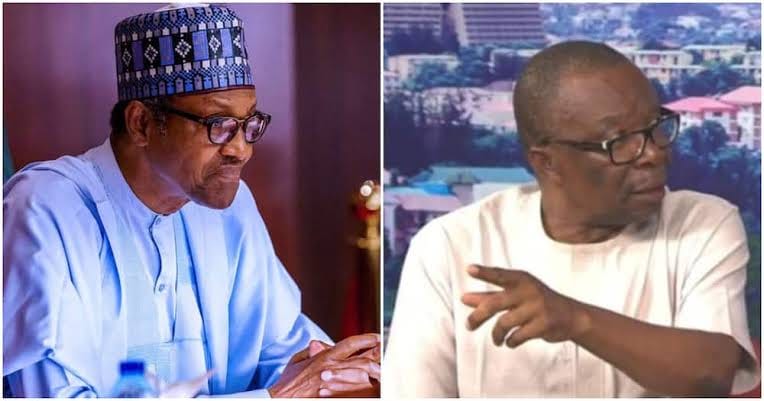
The Northern Elders Forum (NEF) has demanded the immediate resignation of President Muhammadu Buhari over the incessant security challenge bedevilling the northwestern part of the country. 

The Director, Publicity and Advocacy of NEF, Dr. Hakeem Baba-Ahmed, made the call on Tuesday saying that Nigerians cannot continue to live and die under the dictates of bandits.

Baba-Ahmed lamented that Nigerians had shed enough tears and blood without an appropriate response from those with responsibilities to protect us.

He added that President Buhari’s administration does not appear to have answers to the challenges of security to which Nigerians are exposed. 

He stated that “We cannot continue to live and die under the dictates of killers, kidnappers, rapists and sundry criminal groups that have deprived us of our rights to live in peace and security.

“Our constitution has provisions for leaders to voluntarily step down if they are challenged by personal reasons, or they prove incapable of leading.
“It is now time for President Buhari to seriously consider that option since his leadership has proved spectacularly incapable of providing security over Nigerians. 

“Our Forum is aware of the weight of this advice, and it is also aware that we cannot continue to live under these conditions until 2023, when President Buhari’s term ends,” Baba-Ahmed said.

Bandits storm mosque in Taraba, kill district head

By Uzair Adam Imam 

Bandits have invaded a mosque at Maisamari town in Sardauna Local Government Area of Taraba State and killed Alhaji Abdulkadir Maisamari, a district head.

A source disclosed that Maisamari was shot dead during Ishai prayers on Monday night.

The bandits were reported to have opened fire shortly as they roamed the prayer ground. 

However, residents reportedly confronted the gunmen, forcing them to run for their lives. 

The bandits were also said to have fled into a mountain close to the town.

The Taraba State Police Command spokesperson, DSP Usman Abdullahi, confirmed the incident to journalists. 

BREAKING: Recruitment of Constables: Police to conduct CBT for shortlisted candidates next week

By Ishaka Mohammed

The Nigeria Police Force has shortlisted qualified candidates for the next stage of its 2021 recruitment of constables.

In a statement signed by the force’s acting public relations officer, CSP Olumuyiwa Adejobi, applicants who attended the physical screening exercise are to check their application status on http://www.policerecruitment.gov.ng.

Qualified candidates are urged to print their slips for the Computer-Based Test (CBT) scheduled to hold on April 20 and 21, 2022, at designated centres nationwide.

On his part, the Inspector-General of Police, IGP Usman Alkali Baba, maintains that “the recruitment is absolutely free”, adding that applicants should be wary of criminal elements who might want to dupe them. He urges candidates to channel their complaints through 08100004507 or support@policerecruitment.gov.ng.