Admin

A hazardous journey

By Mallam Musbabu Magayaki

I took this picture after seeing some unidentified gunmen not far away from us on Monday, April 25th, 2022, while plying the dreadful Birnin Gwari-Kagara and Kontagora roads. The road is full of uncertainty about the unavoidable fear of bandits. Fortunately, we arrived home safely (glory to God). Nonetheless, our hearts’ continued to rewind the dangerous nature of the road in a flashback format.

However, after spending a horrendous one-hour journey that looked like an eternity waiting for help, we were escorted by vigilantes and police officers stationed at Udawa-Buruku villages, particularly for travellers, with a fare of N1000 for each car. They would arrange all the cars in a straight line after collecting the charge of N1000 from each car’s driver for him to be part of the convoy. 

As we began the terrifying 30-km journey, the security operatives operating on the road arrived. They told us glad tiding of seizing three bandits’ motorcycles (TVS-like), which they distributed to three groups as a spoil of war: one for the vigilantes, one for the military personnel, and one for the police officers.

While plying, everyone was anxious and confused, saying various forms of supplications for fear of bandits’ retaliatory attacks. But, thank God, despite the dangerous nature of the short journey through the almost impenetrable bushy forest, we arrived safely in Buruku.

We thanked God and hailed the vigilantes who risked their lives to save us from any bandits’ attacks that might have come at us. 

I recommend that the Kaduna and Niger state governments for empowering those vigilantes in their regions with modern weapons. They are genuinely trying, without compromise, to safeguard the lives of innocent travellers. 

Mallam Musbabu Magayaki wrote from Sabob Fegi, Azare.

Jonathan remembers Yar’adua twelve years after

By Ahmad Deedat Zakari.

Nigeria’s Former President, Goodluck Jonathan, has taken to his official Facebook page to remember his former principal, Late President Umaru Musa Yar’adua.

Thursday, May 5, 2022, marks exactly twelve years since Yar’adua died, and Jonathan, who succeeded him as Nigeria’s President after his death, remembers him fondly on the anniversary.

He said although Yar’adua has left this world, the memories of his great works live with us.

“Twelve years ago, our nation lost a patriot, a selfless leader and a peacemaker who governed with sincerity and passion for the people. President Umaru Musa Yar’ Adua is no longer with us today, but his strides in public life continue to testify for him and keep his memory alive,” He wrote.

Jonathan also added in the third paragraph of his eulogy that Yar’adua is the kind of leader that is rare and hard to find

“He was a soldier of truth, committed to justice, equity and other democratic virtues. He was a servant leader and a good man, the type that is hard to find.” He stated

Telecom firms write NCC, propose new prices for calls and data

By Ibrahim Nasidi Saal

Nigerians may have to pay more for calls and data as telecommunication companies proposed a new tariff increase of 40 per cent. They made this known in a letter sent to the Nigerian Communications Commission titled, ‘Impact of the Economic and Security Issues on the Telecommunications Sector’.

The telecommunications companies wrote the letter under the aegis of the Association of Licensed Telecommunication Operators of Nigeria to the NCC.

According to The Daily Reality sources, the Telcos have proposed the price floor of calls will increase from N6.4 to N8.95 while the price cap of SMS will increase from N4 to N5.61.

The Telcos noted that the increase in energy costs had impacted their operating expenses by 35 per cent, Our Source added. 

The Telcos, which include MTN, Glo, Airtel, and 9mobile, also said that the introduction of the recent excise duty of five per cent on telecom services had further increased the burden of multiple taxes and levies on the industry. 

The letter read in part:

 “As the commission may be aware, the power sector, under the supervision of its Nigerian Electricity Regulatory Commission of the power sector in November 2020, undertook a review of electricity tariffs to cater for the economic headwinds reported above.

“In view of the foregoing, ALTON considers it expedient for the telecommunications sector to undergo periodic cost adjustments through the commission’s intervention in order to minimise the impact of the challenging economic issues faced by our members.

“Upward review of the price determination for voice and data and SMS. Given the state of the economy and the circa 40 per cent increase in the cost of doing business, we wish to request for an interim administrative review of the mobile (voice) termination rate for voice; administrative data floor price, and cost of SMS as reflected in extant instruments.

“With respect to voice an SMS cost, ALTON respectfully requests the commission to consider a mark-up approach to address the upward price adjustment desirable for the industry. We have enclosed herein and marked as ‘Annexure 1’our proposal in that regard.

“For data services, we wish to request that the commission implements the recommendations in the August 2020 KPMG report on the determination of cost-based pricing for wholesale and retail broadband service in Nigeria. Excerpts from the report, are attached and marked ‘Annexure 2’ to provide a further illustration.

“In implementing the said recommendations, however, we recommend that the 40 per cent increase in the cost of doing business be factored in to arrive at a cost price per GB in view of the current economic situation.” 

How Kano workers spend Sallah festivities without salaries

By Uzair Adam Imam

Amidst Sallah (Eid-el-Fitr) celebration, when people jubilate the end of Ramadan in new clothes and different sorts of delicious dishes, civil servants in Kano have seen their 4th day of a new month without salaries, the development they said has thrown them and their families into dilemma.

Reacting with dismay, the workers said the government has failed to keep to its promise of paying the salaries on the 25th of every month.

The Daily Reality learnt that some workers had to hide because they could not make any provision to welcome and host their friends and relatives as usual.

The workers who bitterly complained about the government’s carelessness towards their wellbeing said they remained indoors on the Sallah days because they were economically depressed.

Eid-el-Fitr is the period when the Muslim faithful happily celebrate the end of Ramadan. The days are usually welcomed with beautifully sewed clothes, different sorts of delicious foods, and meats of all kinds provided they are Islamically lawful, and relatives from all walks will call on their family and friends to celebrate the day.

Salary delay leaves a big hole in our minds

One of the civil servants who spoke to our reporter said that he went ahead to embrace his old craft of sewing for a living. The civil servant, who our reporter found busy sewing in a tailoring shop, said this delay has left in their minds a very big hole.

He added, “I can not do what I used to do on Sallah days. I couldn’t afford to buy a single chicken for my family. We did not cook anything nor did we have any new clothes to wear.”I used to sit with friends after Eid to exchange greetings and share pleasantries. But this time around, as I was depressed, I remained indoors until 4 pm when I came out to pray,” he added.

Another source, Ibrahim Shu’aibu, decried the experience as horrendous as they largely depend on their monthly income for a living.

Shu’aibu said, “The experience is horrendous. The effect is deep. It has affected almost all aspects of our lives as civil servants. More than half of the civil servants rely on salaries to cater for themselves, their families as well as some members of their relatives.”

In the same vein, this incident has deeply affected many businesses in many states in this country, Kano in particular.”

Personally speaking, this Eid-el-Fitr has passed like an ordinary day. I had to hide because I didn’t make any provision to welcome and host my friends and relatives as usual,” he stated.

Also, another source who pleaded for anonymity confided in our reporter that this Sallah is one of the worse situations he ever found himself in. He said, “We didn’t cook anything for this Sallah because I was broke. And I couldn’t afford to buy Sallah attire for my small kids. Here we are living like baggers.”

The worst part of it is that the government keep mute about the issue. I think the government should have addressed us. But sadly enough, what we only hear or see from the government officials is their beautifully snapped pictures at Umara.”

Another worker, Sulaiman Abdullahi, not his real name, said they found it difficult to handle the situation as they mostly live from paycheck to paycheck.

He said, “that’s why most of the workers are indebted beyond settlement. As we receive our salaries, we go ahead to pay the debt. I know you can imagine how hard we civil servants live our lives.”

Kano economy in a chain – Economist

An economist teaching in one of the Kano institutions lamented that the state economy is in a chain, leaving a lot many sectors affected. The economist said the delay in this month’s salary has affected many businesses, leading to the stop in the facilitation of goods and services in the state.

He further stated that “generally, the state economy is the dependent economy. It is dependent because it depends on workers’ salaries. When workers get paid at the end of every month, they will take their income into circulation by purchasing goods and services.

“At the end of this month, workers have not been paid. The facilitation of goods and services from various markets in the state will stop.

“The welfare of workers and their families will be affected. The state economic facilitation and activities are also stopped. And in long run, it will give a gap in which businesses will be dropped. And if it dropped it will create losses,” he said.

Could Kano State Government respond?

In line with balancing this report, our reporter contacted the Kano State Chief Press Secretary, Malam Abba Anwar, to know the cause of the delay in this month’s salary payment. However, all attempts were proved abortive despite huge complaints by the workers about the government’s silence on the issue.

Kaduna 2023: El-Rufa’i endorses Uba Sani as successor

By Sumayyah Auwal Ishaq

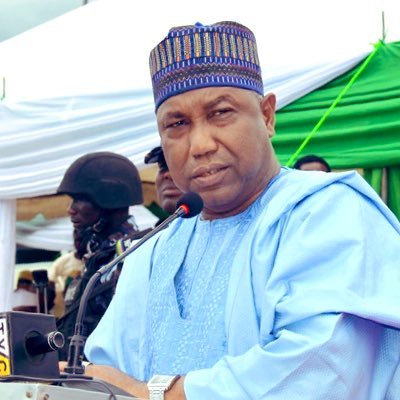
Governor Nasir Ahmad El-Rufa’i of Kaduna State has finally ended months of speculations and permutations with the endorsement of one of his long time allies, the incumbent senator representing Kaduna Central Senatorial District, Uba Sani, to succeed him as Governor in 2023 under the All Progressive Congress (APC).

This comes barely two months after Governor El-Rufai announced that his successor would be selected from the core team of his administration since 2015.

It was learnt that the former Commissioner of Budget and Planning, and a strong contender for the gubernatorial seat, Muhammad Sani Dattijo, had been asked to pick up the senatorial expression and nomination form for Kaduna Central.

Senator Uba Sani’s endorsement is bound to encounter some stiff resistance within APC in Kaduna State as other aspirants have already purchased the nomination forms.

Monstrous Madrid face Liverpool in UCL final after eliminating Man City

By Muhammad Sabiu

Real Madrid have secured a place in the Champions League final. They will play against the English Premier League Giants, Liverpool, after crashing Manchester City out of the competition today, Wednesday.

City had their opener through Mahrez in the 73rd minute, while Madrid had their goals thanks to Rodrygo’s brace—the first one in the 90th minute and the second one in the 91st minute—and Benzema’s third penalty goal in the 95th minute. That made the match end 3-1.

The goal aggregate emerged 6-5 as Madrid made it to the final even after being beaten 4-3 by the City last week.

Kannywood boycotts 2022 Zuma Film Festival, petitions organisers

By Ahmad Deedat Zakari

Arewa movie producers, under the umbrella of the Motion Picture Practitioners Association of Nigeria (MOPPAN) and Arewa Filmmakers Association of Nigeria (AFMAN), have urged their members to boycott this year’s Zuma International Film Festival (ZUFF).

The reasons for the decision were stated in an undated open letter addressed to the Minister of Information and Culture, Lai Muhammad and jointly signed by the presidents of MOPPAN and AFMAN, Dr Ahmad Muhammad Sarari and Alhaji Sani Sule Katsina.

According to the two associations, marginalisation and infringement of their fundamental rights are the prevailing reasons that forced them out of participating in the government-sponsored ZUFF Festival. 

“The event was deliberately fixed on ‘Sallah’ day, which, apart from being a festive day for all Muslims in the world, it is also a public holiday meant to honour and celebrate the end of the holy month of ‘Ramadan.’ This singular act precludes all Muslims from participating and benefitting from the festival.”

The release, among other things, concludes that “[W]e doubt if any government agency can organise such national event on Christmas or New-year festive days.”

The coalition also implores the Minister of Information and Culture, Lai Muhammad, to step into the issue and address their grievances.

Why Gawuna is the man for the job in APC

By Dr Ibrahim Siraj

Apparently, no governorship election ever in Kano has drawn a larger number of aspirants than the forthcoming 2023 elections. From the two major parties to other newer and smaller parties, no fewer than a dozen people are vying to lead our great Kano State.

There is however a great deal of interest in what happens in APC owing to the obvious reason that it is the ruling party in the State and the fact of its factionalization and the intrigues that surround it even as parties in the party’s leadership legal tussle await the verdict of the Supreme Court expected to be delivered any moment from now.

This notwithstanding, the ruling All Progressive Congress (APC) appears to have the largest number of aspirants many of whom have started mobilization through their support groups and the recalibration of their political structures throughout the State. Each of them though would hope to be Governor Ganduje’s ‘anointed’ candidate knowing full well the value and power of such ‘anointment’ in influencing the outcome of the primary election in Nigeria’s democracy. Other aspirants may not have the privilege of asking for more than just a level playing field.

While the search for Ganduje’s successor continues, some people are inclined to believe that The Kano State Commissioner for Local Government Affairs, Alhaji Murtala Sule Garo is the one going by some public utterances made by the Governor’s wife to that effect although the government was quick to issue a disclaimer to douse the tension generated by such outburst. There are others who feel the Governor would anoint his Deputy the same way he was anointed by Kwankwaso but in the hope that all will end well. And this brings me to my main topic.

For me, the farthest Murtala Sule Garo can go on a governorship ticket is the position of Deputy Governor due to reasons that are so obvious enough to be called common knowledge. Murtala Garo may be a tenacious, fearless, dependable and reliable political mobilizer in his own right but he appears to be lacking in so many qualities needed to govern a complex state like Kano: education (western and Islamic), administrative experience, exposure, charisma, urbaneness, etc. This is not to add the huge baggage of antagonists (I don’t want to call them enemies) that he has cultivated for himself either through his role as the most powerful Commissioner in Ganduje’s government or his role as “Commander” of the ruling party’s “militant wing”.

APC’s surest bet under the circumstances, therefore, is no other person than Nasiru Yusuf Gawuna. The Deputy Governor has all it takes to lead Kano in 2023. All that is lacking in Garo is present in Gawuna in sufficiently varying proportions. Gawuna is well educated and vastly experienced. He has the exposure, experience, sagacity, shrewdness, administrative acumen and humble mien to make a good governor. His cosmopolitan nature makes it easier for him to connect and relate well with the different strata of Kano society. His politeness coupled with his approach to politics makes him earn the respect of political gladiators across party divides. He abhors politics of bitterness and adversity. He, as a result, has the smallest number of antagonists possible for a politician of his calibre. Ultimately, he will be relatively an easy sell by a party suffering from a serious popularity crisis.

His over seven years as Local Government Chairman, his decade-old experience as Commissioner (and member of the State Executive Council) as well as his five years as Deputy Governor have more than prepared him for the job. None of the aspirants can boast of leadership skills and training acquired through years of on-the-job experience like Gawuna.

As a beneficiary of financially autonomous Local Government administration, Gawuna understands what it means to have a functional local government system that is able to cater for the immediate needs of our masses in the realization of the noble objective of bringing government closer to the people. He will be expected therefore to end the obnoxious joint state-local government account that has paralyzed governance at the local level and is further pauperizing our local populations.

Should APC field Gawuna and other parties equally field their own best, the task of choosing a good leader for Kano will be made much easier for the people. It will be a matter of choosing the best among the best for our State. We must therefore encourage all political parties to present their best materials so that whoever wins our dear State will be better off for it. The opportunity to vote for good leaders is often missed at the level of the primary election.

May Allah make the best of choices for us, Ameen!

Dr Ibrahim Siraj writes from Kano and is a lecturer with the Department of Mass Communication, Bayero University, Kano.

Reflection on poor parenting

By Abdullahi Yusuf (Abdool)

The viral tape of Chrisland School, Lagos, has become a trending topic lately due to its indecency and the nature of the people involved (i.e. children).

But before we conclude on whether the act involved rape or not, let’s look at the bigger picture, which is questioning the moral upbringing of the kids involved, who are obviously at the initial stage of puberty (below 13 years of age). We can all believe that it is too early for them to have such a bad experience at this young age. But who is to be blamed for this?

The 21st century has come along with many technological advancements. Some of these are of optimal benefit to humanity but detrimental to morality in some aspects. Contemporarily, one can access information and things we merely hear about in the olden days.

Internet is one of the goodies of this century. It enables its users to access what happens around the world quickly. Internet helps one learn a lot of things and get exposed to global opportunities with ease, while on the contrary, it holds a lot of negativities, especially for our younger ones.

We can’t dodge away from the reality of the moment, but we can put a lot of effort into making sure the negativities of the moment do not corrupt our progeny or us.

Parental negligence is the major contributing factor to the immorality we are experiencing. Parents nowadays show an unreasonable love to their children, which haunts them when they can no longer protect themselves or the children. This love gradually exposes the evil in the children due to a lack of due diligence in discharging parental responsibilities by the parent.

In the olden days, a total stranger could discipline a child for misbehaviour, and the child’s parent would appreciate the stranger for helping them do the right thing. But unfortunately, in the present time, a neighbour cannot punish a child for any misdemeanour because doing that could instigate the wrath of the child’s parent, and they would fight back as if punishing their child is a felony.

I could remember a scenario I read about on Twitter not long ago. A lady who visited her aunt narrated the story. She was necessitated to make a call and realised that her phone was out of credit which compelled her to borrow the phone of her aunt’s son, who was about 14 years of age, to make the urgent call. When using the phone, a video suddenly came in through WhatsApp, and she became curious to see what had just come in. She was shocked when she saw a nude sent to the boy by a young lady who happened to be his classmate. So she went through his chat with the same young lady to ascertain the fact. What she saw was devastating. She realised that the boy had been in a sexual relationship with that girl for a very long time.

In the above scenario, the parents are unaware of what’s going on with their child. He has been destroying his life without their knowledge due to their negligence. Their contribution to his misbehaviour is massive as they provided him with a phone and never cared to monitor what he was doing with it.

Typical African parents find it disgusting to give sexual orientation to their children. They think doing it is immoral, while not doing it causes more harm than good to our contemporary society.

Sex education to children is not about telling them about sexual intercourse; it’s about orienting children about their sexuality, sexual abuse, and what they should know about the sensitive parts of their body and acts they should consider as molestation. It is also about gender stereotypes and limitations concerning their morphology and physiology.

In conclusion, being a parent means being a protector, a teacher, a guide and a counsellor to the child. As a parent, don’t ever become reluctant to discharge your sole responsibility. Whenever you fail as a parent means unlocking an element of distress to society, which will strain you before diffusing to the larger community.

Abdullahi Yusuf (Abdool) studies at the Department of Human Kinetics and Health Education, Bayero University, Kano. He wrote from Kaduna State via abdoolphd@gmail.com.

Almajiri System: From the prism of broken marriages

By Nusaiba Ibrahim

When all this brouhaha on the Almajiri system of education is over just before we hop on another discussion likely to be initiated by random persons online, we will then realise we have failed to acknowledge the failed infrastructure that has created and will continue to fuel the unrefined Almajiranci system of education by the day.

The earlier we realise how enormous challenges have, over the years, consumed our societies in the North, courtesy of broken marriages or homes, the better for us to understand the enormous task ahead of us in empowering our communities with the correct information and strategies to face greater challenges now and in the future, especially with regards to marriage as an important social institution. No matter how hard you try, as an optimistic Northerner, to overlook the series of ongoing debates in the past week online, it is practically difficult and impossible to ignore them, given the current reality that we have found ourselves in.

There is a reason why I choose to deliberately sideline discussing the Almajiri system from the premise of system reformation, the aspect of its essence or in contrast to modern primary education that has continuously screamed for aid. Unless we address the myriads of problems faced by the major social institution that is essential for development – family/marriage, we are hence, collectively wasting our efforts and brains to come up with solutions to transforming the system. At the same time, many under-aged will continue to be pumped out into these traditional Islamic schools, which are, of course, overwhelmed in the name of Qur’anic education.

It’s impossible to continue thinking that only strategic transformation, erasing the system or replacing it with a standard Islamiyya system, will bring a lasting solution to this misery. Agreed, they are essential to improving the system and even sustaining it. But as time flies, if they ever get a chance to be thoroughly revamped, they too will be overwhelmed to take care of these children sent to them in multitudes.

Now, let us take a quick recap of why our primary education has continued to suffer greatly. If you choose to think critically, you will understand that it’s the same reason in the context of the Almajiri system of education that has continued to promote this unending menace. It continues to act as a shield to a lack of good parenting, thanks to unsuccessful marriages. It’s nothing other than overpopulation alongside a dwindling economy. Hence, a multi-faceted menace like this requires a robust approach from virtually all aspects of social life.

My thoughts on why broken homes have the lion’s share of Almajiri menace are based on the facts highlighted in many of the reports that have been consistently aired on our local radio stations in Kano State and a recent publication by The Daily Reality on the 28th of March 2022. Several instances of why these unkempt children are sent to these schools all boil down to the separation of parents either directly or indirectly, which necessitates living with grandparents and stepmothers, who are eventually left without no quicker choice but to use the Almajiri system as an escape route from discharging their parental duties.

In a bid to understand the in-depth social ills of our dearest Northern Nigeria, particularly on the marriage institution, The Daily Reality published a report highlighting the rate of divorce in Kano State to be at about 32%, with an average age of divorcees ranging from 20-25. Presenting these figures shows a red flag and a slap on our faces as we boast of some of the best religious scholars, undisputed morals and values compared to our neighbouring counterparts.

But unfortunately, some low-IQ dimwits denied the facts with fierce rebuttals. While some challenged the veracity of the facts, another portion challenged the authenticity of the reportage/research findings by reducing it to mere propaganda than research. And for others, it doesn’t even reflect the reality on the ground. And the consequences aren’t confined to their families alone, which we are well aware of. Unfortunately, with developments in several aspects of social life around the world, we are still in the age of denying facts that are under our noses.

Let’s assume the facts aren’t authentic enough. Still, mere observations and intuitions have made us all realise that there exists a particular season of the year when agricultural products are everywhere in the markets. The number of these children quadruple on our streets. These periods always signal the season of new marriages in villages with the bit of fortune made from the sales of agricultural produce, thereby forcing these children out of the homes to accommodate new wives. You may choose to argue with whatever is next to you – these are undeniable facts. Interviews during the height of the ban against street begging unveiled many children narrating experiences of their grandparents, fathers and step-mothers taking them to traditional Qur’anic education alias Almajirci before harmattan season kicks off. Radio stations in Kano State primarily documented these.

Delving deep into the report, what struck me hard was, who will then take responsibility for the children out of these marriages? In whose custody will they survive if their mothers remarry? Will their new stepmothers be willing to accommodate them? What about their step-fathers? Indeed not the government, and it cannot be the community either. So, they’ll add another layer of complexity to our complex problems. In my thoughts, I silently hoped that people might look at this dimension which happens to be the root cause. If you think broken marriages aren’t the problem, try surveying many Almajirai in your community.

In all sense of honesty, I must recognise that the essence of the Qur’anic education in the North has not only proven to be undisputedly essential for authentic Islamic education but is also the pillar that sets the pace for all modern Islamiyya education in Northern Nigeria. Contemporary Islamic education has only gone further to modern teaching and learning methods in line with global Islamic development based on the strategies of traditional Quranic education. Many of our reputable religious scholars, professors and other professionals in different fields of endeavour are beneficiaries of the conventional Qur’anic systems.

Apparently, we have seen examples of why transforming the Almajiri system of education is almost impossible, especially because of government inconsistencies, discontinuity of government policies and lack of political will to tackle the menace. Besides, there are even mightier problems that are yet to be addressed. However, I firmly believe that strengthening marriages via introducing policies to safeguard and sustain good parenting can be a strategic move to tackle the menace of Almajirai. It will undoubtedly produce a desirable result by solving multiple challenges simultaneously.

Nusaiba Ibrahim Na’abba is a master’s student from the Department of Mass Communication, BUK. She is a freelance writer and researcher. She can be reached via nusaibaibrahim66@gmail.com.