Admin

Kogi: Disguised Sallah guests abduct petrol station CEO

By Uzair Adam Imam 

Alhaji Muhammed Jamiu Idris, the Chief Executive Officer of Always Petroleum Energy Services, has been abducted by unknown gunmen. 

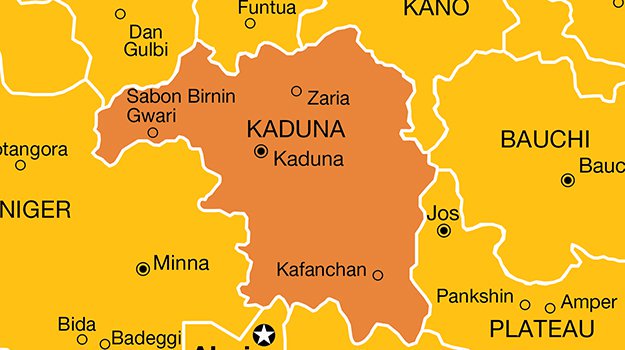
Our reporters gathered that Idris was abducted at his residence in Idare in Okene Local Government Area of Kogi State.

However, he was said to have been beaten mercilessly before being whisked to an unknown destination.

A family source disclosed that the men disguised as Sallah visitors before they eventually brought out sophisticated weapons and instructed Idris to follow them.

The source added that the kidnappers shot sporadically to scare people who attempted to resist the kidnapping of Idris.

The Kogi State Police Command has confirmed the incident to journalists. He stated that the abductors went to the house shortly after the Eid prayers.

The kidnappers had not made any contact with his family as at the time of this report.

APC urges Nigerians to pray for Buhari over rising insecurity

By Uzair Adam Imam 

The All Progressives Congress (APC) has urged Nigerians to pray for President Muhammadu Buhari as insecurity exacerbates in the country. 

Barr Felix Morka, the APC National Publicity Secretary, disclosed in a Sallah message to Muslims on Saturday. 

Morka said Nigerians should put the interest of the nation first, adding that Nigerians should pray for Buhari to end the security challenges bedevilling the country.

The party said, “We urge Nigerians to continue to support and pray for the government of President Muhammadu Buhari as it tackles our national security challenges just as we continue to reject insensitive and unpatriotic attempts by some partisans to politicise security breaches by enemies of our land.

“On this occasion of Eid-El-Kabir, we urge all Muslims to pray for sustained peace, security and prosperity of the country as the APC-led government continues to prioritise the wellbeing and safety of all Nigerians.

“On this occasion of Eid-El-Kabir, we urge all Nigerians to place national interest first in all dealings. We must not yield to retrogressive elements who seek to divide us through terror and hate.”

The sociology of Eid festivals in Nigeria 

By Hassan Idris

It’s quite important to demystify the fact that in the festivity of the Eid festival, which is a religious celebration amongst Muslims all over the world, there is quite a lot of sociologically significant display, which demands sociological explanations and outlooks. Religious festivals such as Eid hold greater importance to sociologists like Emile Durkheim (1858-1917). He developed a widely used theory for explaining what holds society and social groups together through his study of religion. He identified core aspects of religious structure and participation that sociologists today apply to the study of society in its entirety.

This includes the role of religious festivals and rituals in bringing about social cohesion, social solidarity and people together around shared practices and values. It also comprises ways that participation in religious festivals and rituals reaffirms shared values and thus reaffirms and strengthens the social bonds between people and the experience of “collective effervescence,” in which people tend to share in feelings of excitement and are unified in the experience of participating in religious festivals and rituals together. The Eid festival, an Islamic holiday celebrated by many Muslims as a religious holiday with religious rituals, values, and relationships, is one of them.

Thus, Durkheim defined religion as a“unified system of beliefs and practices relative to sacred things. Sacred to him meant extraordinary—something that inspired wonder and that seemed connected to the concept of “the divine.” He argued that“religion happens” in society when there is a separation between the profane (ordinary life) and the sacred. A rock, for example, isn’t sacred or profane as it exists. But if someone makes it into a headstone, or another person uses it for landscaping, it takes on different meanings—one sacred, one profane. Durkheim, who’s generally considered the first sociologist to have analyzed religion regarding its societal impact, believed that religion is about community. It binds people together (social cohesion), promotes behaviour consistency (social control), and offers strength during life’s transitions and tragedies (meaning and purpose).

With the applicability of the methodology of natural science to the study of society, Durkheim held that the source of religion and morality is the collective mindset of society and that the cohesive bonds of social order result from common values in a society. He contended that these values need to be maintained to maintain social stability, to which explanations of Durkheim on the importance and functionality of religion would be used to explain and understand the religious Eid festivals celebrated by all the Muslims in the world.

However, the word “Eid” means festival or feast. Therefore, it depicts the event that is being celebrated. Muslims celebrate two types of Eid yearly following two significant acts of worship. The first is called “Eid Al-Fitr”, which means “the fast-breaking Festival” celebrated after fasting the entire month of Ramadan. The second, known as “Eid-ul-Adha,” meaning “the festival of sacrifice which is celebrated immediately upon the completion of Hajj, the annual pilgrimage to Mecca. The Eid Al-Adha entails going for a pilgrimage to Mecca performed by millions of Muslims simultaneously once a year. Through Eid Al-Adha, the sacrifice Abraham was willing to make to God and the mercy God had upon him becomes celebrated and manifested.

Muslims celebrate the day by sacrificing a sheep or so and sharing it not just with family and friends but also with the less privileged. This celebration lasts four days, beginning the day after the completion of Hajj. The celebration of Eid Al-Fitr lasts one day, starting with the sighting of the new moon, which marks the end of the Islamic month of Ramadan and the beginning of the following month. During Ramadan, Muslims fast to purify themselves and get closer to God. Ramadan is like a retreat, a time to step aside worldly worries, focus on spirituality, and improve connections with the one who gave them life and blessings.

After going through a long spiritual retreat for a maximum of 29 to 30 days, it is only logical that a feast is held to mark the end of the month. This is what Eid Al-Fitr is all about. Like Ramadan, Eid Al-Fitr begins with the first sighting of the new moon, so most of the time, Muslims have to wait until the night before Eid to verify its date. If the new moon is not visible, the month lasts 30 days. The date changes annually on the Gregorian calendar and varies from country to country, depending on geographical location.

Though, in declaring the start of Eid, Muslim-majority countries depend on the testimonies of local moon sighters. The Judicial High Court then decides if Eid has arrived. When the sighting has been verified, Eid is declared on television, radio stations and mosques. The celebration of Eid Al-Fitr lasts one day, starting with the sighting of the new moon, which marks the end of the Islamic month of Ramadan and the beginning of the following month.

The first Eid Al-Fitr was celebrated in 624 CE by the Prophet Muhammad (PBUH) and his companions after their victory in the battle of Badar, a turning point in the prophets’ struggle with his opponents among the Quraish in Mecca during the early days of Islam. Inasmuch as all Muslims celebrate the festival, there are many doctrines and ways of celebrating it which are sociological and are of paramount interest and importance to sociologists and Anthropologists. However, the traditions of Eid Al-Fitr entail ‘Sawm’ ( fast), which is the practice of fasting during the holy month of Ramadan and is one of the five pillars of Islam.

Muslims believe that during Ramadan, the Qur’an text was revealed to the Prophet Muhammad (S.A.W). Muslims celebrate Eid Al-Fitr with “Salat Al Eid” (Eid prayers). There is no audible call to prayer for the Eid prayers. Muslims will gather in mosques or open spaces and offer two units of prayer–called “Rakat”. The prayers are followed by a sermon, in which the Imam asks for forgiveness, mercy, and peace for every being worldwide.

To further bolster the sociological social solidarity and love in Islam, which clarifies Durkheim’s postulation, the other key element of the Eid festival is giving money to the poor alias ‘Zakat al-Fitr’, sending Eid greetings and feasting with families. For many Muslims, Eid al-Fitr is a festival to show gratitude to Allah for the help and strength he gave them throughout the month of Ramadan to help them practice self-control. The phrase commonly used by Muslims as a greeting on this day is “Eid Mubarak”, which is Arabic for ‘blessed festival’.

Muslims begin Eid with the observance of the Eid congregational prayer, sometimes in the mosque but usually in an outdoor location. Before going for the Eid prayer, it’s encouraged to take a bath, wear the most befitting clothes, and look dignified for the celebration. On the way to the Eid Prayer, Muslims recite the words: Allah is great, Allah is great, Allah is great. There is no other God but Allah. Allah is great; Allah is great. To him belongs all praise. And after the Eid prayer, people gather to feast with their families and friends, where they get to savour the taste of various dishes.

Some even travel to their hometowns or home countries to celebrate with their extended families and rekindle the bond of kinship. There is a rich tradition of gift exchange during Eid. For example, it is customary to gift new clothes and shoes to children in Nigeria. Sometimes, the children receive money to buy sweets and snacks to enjoy with their friends and cousins. In western countries, however, children receive gifts instead of cash, and parents decorate their homes to create a mood of excitement for the family.

Finally, Eid is meant to celebrate the completion of spiritual duty and a time to bond and exchange hugs, kisses, and laughter with family, friends and the community. Each country has traditional foods, and sweets prepared ahead of Eid or on the morning of the first day. These foods range from special biscuits and bread to cakes and puddings. On the first day of Eid al-Fitr, voluntary fasting is not allowed as Muslims are encouraged to feast and celebrate the completion of a month of worship and abstinence from food.

Greetings for Eid also vary depending on the country and language. For instance, in Indonesia, Eid is called Lebaran, so Indonesians would say, “Selamat Lebaran”, which means Happy Eid. Other variations of Happy Eid are “Barka da Sallah” in Hausa, a Nigerian language. In addendum, with clothes being an essential marker of Eid, some people wear traditional clothes from their culture, while others pick out something new to wear. Eid is a time for every Muslim to share and express love, peace, and friendship worldwide and extend hands to their non-Muslim neighbours and friends during this festival.

Hassan Idris wrote from Kogi State via idrishassan035@gmail.com.

OBITUARY: Nura Mustapha Waye, the genius behind ‘Izzar So’

By Habibu Maaruf Abdu

On Sunday, July 3, 2022, Kannywood lost a colossus and a rare talent, Nura Mustapha Waye. Thousands of condolences started pouring from all angles as soon as the news of his death broke. Waye was the director of Izzar So and many other series and feature films. His sudden death came as a tremendous shock and left the Kannywood members and millions of their audience with tears in their eyes.

“Waye’s death is a significant loss to Kannywood, for he’s, I believe, the most prolific director today.” So says the Kannywood leading scholar-cum-critic, Dr Muhsin Ibrahim, in his short tribute to the late director.

Nura Waye, or Malam Nura, as he was respectfully called, proved unique among his peers in the Hausa film industry. He neglected its favourite musical love stories to make topical Islamic compliant productions. His dream of educating the audience prompted him to incorporate Qur’anic verses and prophetical sayings into the dialogues of his most of his films.

“In filmmaking, there are messages you could send and get a divine reward from the Almighty Allah… I take film as a medium for propagating a particular policy or ideology. This is what primarily inspired me to venture into it,” he once told VOA Hausa in an interview.

Waye began his Kannywood journey in the late 1990s. He was an actor throughout his first five years in the industry. He, afterwards, switched to director to realize his ambition of making films with a didactic tone. His early films left no mark, and he remained unnoticed for over a decade. Kuru-Kuru (2018) was, perhaps, his first movie to get critical attention.

The movie, which deals with the issue of ‘incest’, revolves around a new bride whose husband finds to be pregnant. After a lengthy investigation, it’s discovered that her uncle is responsible for the pregnancy. The movie received positive reviews and was generally praised for its theme and steady plot. But Waye would never rest there.

He reached the pinnacle of his career in 2020 after creating the YouTube series IZZAR SO. It was a sensational hit, and it went on to become the most-watched Kannywood series on YouTube. Its remarkable success dictated the migration of the Hausa film business to the online platform. Muhsin describes it as a ‘game-changer’ and opines thus:

“There might be a few YouTube series before Izzar So, but many more emerged following its unprecedented success. This has inspired many filmmakers, both struggling and established, to resort to making series, serials and feature films for YouTube.”

For Waye, however, Izzar So was not just a success but a fulfilment. This is because it catapulted him to the top of his career, which was his ultimate goal. “I want Allah to elevate me to its top,” he said when asked about his dream in the filmmaking business.

Nonetheless, Waye’s films are only one aspect of his legacy. He, on another side, had a reputation for being a very gentle, peaceful man. He was also so decent that he hardly features an actress wearing a tight-fitting dress in his movies. These, together with his vivid love for the Prophet (S.A.W), endeared him to the Hausa-Muslim populace despite their hostility towards Kannywood members.

Finally, as a Kannywood movie reviewer, I affirm Nura Mustapha Waye’s rare creativity. I believe he will always be remembered as a socioreligiously-committed filmmaker who led to Kannywood’s migration to online space and, above all, ‘the genius behind Izzar So’.

Habibu Maaruf Abdu wrote from Kano, Nigeria, via habibumaaruf11@gmail.com.

Tribute to my late mother, Zainab Basiru (1957-2022)

By Nasiru Manga

My dear mother, as pilgrims converge at Mount Arafat today, marking the climax of this year’s Hajj, I can’t help but shed tears, remembering that it was one of the lifetime ambitions you didn’t live to fulfil as you passed on precisely 155 days ago. Had you been alive and healthy, you could have been among the over one million pilgrims standing at the plain of Arafat today in observance of one of the five pillars of Islam that not every Muslim is lucky to perform.

I know you craved nothing in this world more than seeing yourself circumambulating the house of God, Kaaba al-Musharraf, in Makka and visiting the holy prophet of Islam (PBUH) in Madina. This informed my decision the first time I was blessed with fortune enough to sponsor your pilgrimage about three years ago.

I remember your reaction vividly when I broke the good news to you as I was seated a few meters away, facing you after you finished your Duha prayers one Saturday morning. Your face radiated with joy instantly upon hearing my plan, and for the first time in my life, I noticed tears of joy cascading down your cheeks despite your effort to stifle them. This image of you has kept flashing on my memory all these five months since you met your creator. I remember how you made me blush as you kept showering me with prayers and words of blessings as it was your wont in every little thing done to you.

We started all the necessary preparations for your Hajj. That was when I got to know your actual date of birth, as I had never discussed it with you before. You told me you were sixty-four and born on Sunday, the 7th day of Ramadan. So, using the Hijri converter, I arrived on 7th April 1957, the date we used in all your official documents to anticipate your lifting up to the holy land.

I remember how we had an animated conversation over the phone on the first day you started attending the weekly lessons organised for intending pilgrims in Dukku. You excitedly told me what transpired at the session in minute detail from the attendants, the number of lessons’ teachers and all each of them said, while I was keenly listening, interrupting you only for more clarification. However, we were disappointed when the organisers brought the session to an end a few weeks later. To our disappointment, we learned that there would be no hajj in 2020 due to Covid-19 pandemic restrictions in the world, including the Kingdom of Saudi Arabia, thereby upending your plan to fulfil your lifetime ambition of answering the call of Prophet Abraham (PBUH).

I remember your response when it was suggested that you perform Umrah, when the Kingdom of Saudi started relaxing its Covid-19 restrictions. You told me over the phone that I should allow God to decide. You insisted that it should be Hajj first before Umrah. And you added: “If Allah so will that I will be there, they will push me even in a wheelbarrow, but if it was already written in lauhul mahfuz that I will not perform hajj, there is nothing you can do about it”.

Your health condition started deteriorating during the Covid-19 imposed two-year hiatus from Hajj. You had been a hypertensive patient, a regular visitor to the Federal Teaching Hospital Gombe, but you were never on admission until barely six months before you departed us. And even during your on and off admissions to the hospital, you were hopeful that the restriction would soon be lifted, and you would witness this day on the mount of Arafat. In fact, it was why you agreed to be hospitalised after your grandchildren convinced you that you should take your treatment seriously for this important day.

When I last saw you on a hospital bed, along with my wife and your grandchildren, you looked frail and not the spirited and good-humoured Maama I knew who would tease her grandchildren lovingly. But despite your condition, you were conscious of time for five daily prayers. The following day when I visited you, I heard you complain in a barely audible and soft voice about how your granddaughter did not wake you up in time to observe Subh prayer. I take consolation like a soothing balm in knowing that, as a follower of Tijjaniyya Sufi order, your mouth was full of Azkaar when you were placed on a ventilator about an hour before you took your last breath on 2nd Rajab 1443 (4th February 2022) after Juma’at prayer. It was around 3 pm that I received an unforgettable call from my kid bro and your youngest child informing me of the inevitable.

It’s been five months since you left us, Maama, but we have yet to come to terms with the vacuum you created. It has left an ineffable deep void in our hearts. Now I feel down every morning I wake up. I cannot hear your voice over the phone; listen to your never-ending prayers for me until I cut off the call. Your prayer for me, which I believe catalyses my success, is what I miss greatly. Images of you kept flashing in my memory when I last set my foot in your room which was a source of comfort and joy to everyone around you, especially your grandchildren, who thronged it for the daily goodies you preserved for them. My last call with you was on Wednesday, two days before your death, when I informed you of having an additional grandson, and I remember how you teased the new child calling him Moɗadimbo since his elder brother was called Moodibbo.

You taught me in your words and deeds how I should be generous and a happy giver, believing that what I give out to others is what’s mine, not what I spend on myself. I also learned altruism from you, as you were always concerned about the well-being of others above yours. The first time I brought you some stuff, you shared almost everything in my presence. This taught me a lesson not to buy things for you alone: I had to include my stepmother and uncle’s wives.

I remembered when once I visited you and discovered that your fan was not working. After buying you a new one, you insisted I  should do the same for my stepmother as her own wasn’t functioning too. Any time I visited, you would remind me to see so and so person, and while on the phone, you would tell me to call and felicitate or commiserate with so and so person, and you would ask me the next day whether I carried out your command.

I often felt guilty for hiding some of my problems from you because of your extreme care and concern for me. However, this was out of my respect for you, too, as you became more affected by my problem than I do. Missing you now is a heartache that will never go away.

On this Arafat day, which you had been longing for, I pray to Almighty Allah to grant you al-Jannatul Firdaus and forgive your shortcomings.

Nasiru Manga wrote from Dukku, Gombe State, via nasman@gmail.com.

In carrying out a wife’s dual mandate

By Aisha M Auyo

You are married to me, not the kids.”

“I was here before the kids.”

“I come first and not the kids.”

“Your primary duty is to me and not the kids.”

How often do wives/mothers hear the above statements? Very often, of course. And to many, it’s a shame that husbands or fathers compete with their kids to get the attention of the woman of the house? Is it really?

Well, one may say, “aren’t you lucky to have your husband and kids fight over you?” But no, that is far from being lucky. The woman in this context is thrown into a state of dilemma, confusion and psychological trauma.

Husbands should be able to save their wives from this heartache and trauma by being more considerate and appreciative of the wives-cum-mothers’ indispensable roles in the family.

The moment a child is born into the world, a mother’s duties commence. In the first days of its existence, an infant is more feeble and helpless than any other living creature. They are unable to minister to their own needs. But to meet this weakness and incapacity on the part of the infant, God has implanted in the mother’s heart a yearning affection for her offspring. No one can understand so well or ever so ready to meet the needs of a child as a mother.

Nevertheless, having said all these, let’s pause and ask ourselves, “is it appropriate for a mother to make her kids her first care in a bid to fulfilling her duties?’ No. Her whole time should not be spent attending to the kids’ needs at the expense of her husband’s. However, it is necessary that reasonable time should be spent so that the kids could have the comfort and happiness they deserve.

It is, therefore, imperative to stress that husbands SHOULD NOT be neglected; neither should they be substituted for their kids.

One of the purposes of marriage is companionship and a man is expected to find this in his wife. As the wife becomes overly involved with and attached to her kids, she falls short of fulfilling this purpose towards her husband.

When this happens, the man feels lonely and loses his best friend, who is supposed to be his wife. He then becomes vulnerable to outside temptations. Will you, therefore, blame a man for reacting to this?

When a woman places her kids above her husband, her action tells him that she loves the kids more than him. This should not be so. Instead, make your husband feel important and know how much you value him.

 Alternatively, instead of treating him as a second-class citizen in his own home, why not treat him as one of your children. After all, the legendary French fashion designer Gabrielle Bonheur Chanel (CoCo Chanel) rightly said, “As long as you know men are like children, you know everything!”

Wives/mothers, be wise. But I must admit, it’s easier said than done!

Aisha Musa Auyo is a Doctorate researcher in Educational Psychology, a mother of three, a Home Maker, caterer and parenting/ relationship coach.

Hajj 2022: NAHCON apologises for failure to convey 1,500 intending pilgrims 

By Muhammad Sabiu

The National Hajj Commission of Nigeria (NAHCON) publicly apologized on Friday for its inability to transport 1,500 pilgrims for the 2022 Hajj.

Mrs Fatima Usara, the commission’s Assistant Director, Public Affairs Division, issued a statement on the unfortunate drama on Friday in Abuja.

She stated that there would be nine pilgrims from Bauchi, 91 from Plateau, and 700 from Kano State, who were supposedly travelling to the holy country.

Usara also expressed regret for the commission’s inability to transport an estimated 750 intending pilgrims from the Private Tour Operators sector.

She stated that the commission accepted responsibility for the hardships and disappointments experienced during outbound airlift operations to the Kingdom of Saudi Arabia by intending pilgrims for the 2022 Hajj.

Usara was quoted in the statement as saying, “Sadly, in spite of all efforts to transport all Nigerian intending pilgrims to Saudi Arabia for the 2022 Hajj, NAHCON was incapacitated in discharging this responsibility.

“Majorly due to last-minute setbacks that frustrated its plan to conclude transportation of pilgrims by June 27.

“Unfortunately, the chartered flights option that gave so much hope to NAHCON and the Private Tour Operators’ leadership also became a failure as their IBAN accounts failed accreditation by the respective authorities in Saudi Arabia.”

Meanwhile, a video of some aggrieved intending pilgrims who also didn’t make it to the 2022 Hajj has gone viral on social media, airing their grievances and cursing anyone who has a hand in their ordeal.

Kogi Governor, Yahaya Bello, joins Buga dance challenge

By Uzair Adam Imam 

The Kogi State Governor, Yahaya Bello, has joined millions of music fans to partake in the ‘Buga Challenge’, the development that took many by surprise. 

Bello was seen displaying several dance moves to the trending song of Nigerian Act, Kizz Daniel, after he alighted from a vehicle.

This was in a video he posted on his Twitter handle with the caption, “after a hard day’s work…. we buga,”

His dance had thrown his followers into wild jubilation as he danced in excitement.

The trending song is said to have been one of the most popular songs in Africa that continues to enjoy massive streaming from fans/followers at the moment.

Former Japanese prime minister, Shinzo Abe, passes on

By Muhammad Sabiu

The former prime minister of Japan, Shinzo Abe, has passed on after sustaining injuries after he was shot in the neck.

NHK and Jiji news agency reported confirmed that Abe died in hospital

NKH stated, “According to a senior LDP (Liberal Democratic Party) official, former prime minister Abe died at a hospital in Kashihara city, Nara region, where he was receiving medical treatment. He was 67.”

This is coming a few years after Abe stepped down as the Asian democracy’s prime minister due to his ailing condition.

Media reports have quoted the President of France, Emmanuel Macron to have been “profoundly shocked by the despicable attack” on Mr. Abe.

Between Atiku, Wike and the PDP

By Zayyad I. Muhammad

The 2023 presidential elections present the Peoples Democratic Party (PDP) with a golden opportunity to wrestle power from the ruling All Progressive Congress (APC). However, the PDP faces a daunting challenge in how to utilize this opportunity. To do this, the PDP needs to present a common interest from the party’s wide, and sometimes, varying interests so as to secure for the party, sufficient internal and external support during the elections.

PDP got its calculations right. The All Progressives Congress (APC) picked its presidential candidate from the South, especially the Southwest – Asiwaju Ahmed Bola Tinubu, is APC’s presidential candidate.

The emergence of Alhaji Atiku Abubakar as the presidential candidate for the main opposition party – (PDP) was a product of three things. The party has settled for someone who has the national outlook; the party wants to outwit the ruling All Progressive Congress ( APC) in one of the latter’s strongholds — the North, and lastly, the party needs a strong war-chest for the 2023 presidential elections.

Atiku’s emergence was smooth, despite the political intrigues that occurred before and during the presidential primaries. The selection of Ifeanyi Okowa as Atiku’s running mate had appeared also a smooth one. But two weeks after, it is causing dangerous stirs in the PDP camp that had appeared united, initially after the primaries. Former Governor Ayo Fayose scratched the ‘ old-wound’ of the call for a southern presidential candidate, Governor Samuel Ortom of Benue state is fuming, while  Governor  Nyesom Wike’s camp is causing more ‘commotion’ within the party by threatening the much-needed unity in the party. 

To be nominated or selected as a Vice Presidential candidate, the person must bring something to the table — votes, a daring war chest, well-established political structures, or influence in the political party.

Had Atiku picked Wike, the PDP would have appeared to opt for someone that will bring a massive war-chest and “home votes”. At the same time, the PDP would appear to have succumbed to pressure and tried to calm ‘a bull in a china shop’.

The APC, on the other hand, would have been happy, if Wike had emerged as the PDP vice presidential candidate. Firstly, it would have ‘balanced’ its controversial Muslim-Muslim ticket. Secondly, the APC would have used Wike’s candidacy to consolidate its votes in one of its strongholds — the North. In the 2019 presidential elections, the APC used Peter Obi’s Vice Presidential candidacy to de-market the PDP in the north. Peter Obi’s deportation of northerners was massively used against him. Like Peter Obi, Wike doesn’t have longtime friends, political associates or structures in the north, to defend him. However, to be fair to Wike, during the campaign for the PDP presidential primaries, he was able to tour the country, thus making some new networks and contacts. Furthermore, if Atiku had picked Wike, the former would have had to work extra hard in the north, because Wike will be a good recipe for APC’s strategy in the North. With Wike as VP, those people who are unhappy with APC or have not decided, may not want to thumbprint a ballot paper with a “Wike.”

The selection of Governor Ifeanyi Okowa as Atiku’s running mate is a product of PDP’s strategy to consolidate its footings in its strongholds — the Southeast and the South-South while not jeopardizing its attempt to strike the APC in the North. Okowa is controversy-free and the North will not have any issue with him.

Any person in Governor Nyesom Wike’s shoes will certainly feel hurt and demeaned — he has been a pillar in the PDP when the party was ‘deserted’ and he’s among the very bigwigs that have never left the PDP to another party. Furthermore, Mr. Wike polled 16 votes to defeat Mr. Okowa who scored three votes in a shadow election by a committee set up by the PDP to pick a running mate as reported by many media houses in the country. Moreover, whether one likes or dislikes Wike, for sure, he has something to offer the PDP.

That window created by Atiku for the PDP to setup a committee to select for him the Vice Presidential candidate, was an error on Atiku, so to say. The selection of a running mate is the absolute right of the flagbearer. Since Atiku already had someone in his mind, that committee was unnecessary. Though, it appears it was an honest attempt to bring everybody on board in making or taking a decision.

When it comes to elections, every political party has its own strategy. Had Atiku accepted the choice of the ‘VP Selection Committee’, it would have been the first time in the history of Nigerian politics, that a political party will solely determine the VP candidate for its presidential candidate. Though the PDP said, it was Atiku that requested the party to recommend to him, a VP. Atiku has the final say!

Atiku Abubakar is a master in negotiations, give and take and reaching out to people, including adversaries. Atiku should sit down with Wike, one-on-one, to resolve all the issues. It’s politics. It’s all about winning!

Zayyad I. Muhammad writes from Abuja, Nigeria. He can be reached via; 08036070980 or zaymohd@yahoo.com.