Admin

British Council announces fee increase for IELTS tests

By Muhammadu Sabiu 

In a recent announcement, the British Council informed test takers about an upcoming fee increase for its IELTS (International English Language Testing System) examinations.  

Effective September 1, 2023, the new pricing structure aims to maintain the high-quality standards of testing experiences. 

Under the revised pricing, IELTS Academic and IELTS General Training tests will be priced at NGN 107,500, while the cost for UK visa and Immigration-related tests will be NGN 116,000. Additionally, the Life Skills test will see a price adjustment to NGN 104,000. 

The British Council emphasised that the decision to raise prices is essential to upholding the exceptional quality that test takers have come to expect from their IELTS assessments. 

Despite the increase, the council remains committed to providing accurate evaluations of English language proficiency to individuals pursuing academic, professional, or immigration-related goals. 

In a concise statement, the British Council expressed gratitude to all those who have chosen their services for language assessment. 

Test takers and individuals planning to take the IELTS tests after September 1, 2023, are advised to take note of the updated pricing structure to ensure accurate financial planning for their assessment endeavours.    

Fred leaves Manchester United

By Muhammadu Sabiu
 
Manchester United has given the green light for midfielder Fred’s move to Fenerbahçe, marking a significant milestone as all parties involved have successfully come to an agreement.
 
The deal, which has been confirmed as an exclusive story, showcases the remarkable development in the football transfer landscape.
 
Sources reveal that Manchester United have accepted Fenerbahçe’s proposal, which includes a base transfer fee of €10 million along with an additional €5 million in potential add-ons.
 
This financial arrangement underlines the strategic nature of the deal and emphasises the high level of interest in securing Fred’s talents.
 
Equally crucial, Brazilian midfielder Fred has given his affirmative response to Fenerbahçe’s proposition.

The graduate skills that you ignored

By Prof. Abdelghaffar Amoka

When I was an undergraduate student, one of my lecturers during a physics class told us that physics makes you think better than others. We were wondering how. He said we don’t have to pick up a physics job after graduation but that whatever we decide, the skills acquired while studying physics will lead us through. That I later found to be true when I look at my classmates and their different endeavours.

In another class, the lecturer told us we should learn not to compartmentalise our brains. Let all that we have in our heads work together. During my undergraduate days, we were constantly reminded that as we pass through the university, we must allow the university to pass through us.

I was passing by the Department of Mathematics this morning, and my eyes captured their sign oars. On the signboard was the motto: “Critical thought for a critical mind”. The department claimed to be a place to develop critical minds. I have seen critical minds from there that are bankers, entrepreneurs, etc.

We were discussing this morning, and a friend narrated to us how he got a job as a marketing officer, a position he never applied for. He applied for the position of Admin Officer, and to end the interview after responding to all the questions from the panel members, the DG asked him why he didn’t apply for the position of Marketing Officer. He answered that he did not study marketing and he felt that from his degree, he was only qualified to be Admin Officer. The DG then responded that with his communication skill and confidence, he would do well as a Marketing Officer and was hired as a Marketing Officer.

One of the top skills required from a graduate is communication skills, and your training in the university includes that. Graduates need to be able to effectively get the message across, including in verbal and written formats. It’s also about listening and understanding other views. Good command of languages for projecting a confident, professional image and for good communication with clients and colleagues. If you don’t have it, you should blame yourself, not your university.

Aside from your hard technical skills, the other skills expected from a graduate are Time management, flexibility or adaptability to respond to unexpected changes in circumstances or workload effectively. Ability to work in a team to take on the responsibility to ensure your team achieves its goals. Critical thinking and problem-solving skill to approach problems and resolve issues from different angles is also highly valued.

Interpersonal skills to build positive working relationships, good communication, persuasion, and negotiation. Being flexible in your thinking and being open-minded and curious, and creative thinking that will help in problem-solving and innovation. The ability to understand others towards finding solutions that allow both parties to achieve their goals or come out of a situation. Leadership, the ability to bring something extra to a team, is essential. You are required to have a basic knowledge of the field. And guess what? You should have learned all these skills in school.

These are embedded in some of the activities we ignored in school. Some of them look routing, but there are important lessons in them. Time management is ensuring you hand in your assignment or report at the due date and time. That lecturer who locks you out of the lecture room, because you are 10 minutes late to his class, has nothing to benefit from you missing the class. He is training you to respect the time and be punctual. They say time is money, and punctuality is the soul of business. Flexibility to handle unexpected workloads is managing your time to take extra lectures and extracurricular activities. The ability to work in a team ensures that your practical or presentation group achieves its goal within the specified time.

Giving a class assignment or exam questions that require a little thinking is building your critical thinking to deal with challenging situations. You have classmates with diverse beliefs and ideologies to develop interpersonal relationships with and get to understand them. You are made to have seminar presentations to develop your ability to present an idea to the public and defend it. You are meant to lead a practical or study group for a reason. You are learning to be a team leader. Campus associations and societies are not there just for fun. Some of the union leaders grow to become political leaders.

So, don’t let anyone discourages you from pursuing a degree program, except it’s your choice not to go for a degree. Pursue your degree and pay attention to the requisite skills for the degree.

If you didn’t get these skills as you are graduating, stop arguing over skills vs “just” degree and blaming your university and lecturers for failing to acquire the skills during your study. You just passed through the university and did not allow the university to pass through you. Go and develop it; it is not late. Maybe you are the one that the book is referring to.

However, let me remind you that if you have these skills in Nigeria, it will be easier to use them to get a job outside than in the country. To get a job here, you may need the extra skill of knowing someone that knows somebody that knows another person to get a job. I learn some jobs are on sale. If you have the cash to buy one, I wonder if you need these skills.

An ex-aide to the Chairperson of the Federal Character Commission was reported to have confessed before a House of Representatives ad hoc committee investigating job racketeering at ministries, departments and agencies (MDAs). He said he had sold federal employment slots to job seekers at the directives of his former boss. According to him, some paid N1 million, others N1.5 million.

Finally, our problem is not skills or degrees; we have these in abundance and even export them abroad (the Japa phenomenon). Our problem is creating a system where the son of nobody can become somebody without knowing anybody. Our present system is not sustainable. It’s a disaster waiting to happen.

Abdelghaffar Amoka Abdelmalik, PhD, wrote from Ahmadu Bello University, Zaria. He can be reached via aaabdelmalik@gmail.com.

FUYODA condemns attacks on innocent Fulani commuters by Birom terrorists in Heipang

By Muhammad Idris

The attention of the Association of Fulbe Youths Development Association, Plateau State, under the leadership of AY Umar has been drawn to an unfortunate incident that took place at Heipang Village (located at Plateau State Airport) Barikin Ladi Local Government Area on Sunday 06/08/2023 between the hours of 7pm and 8pm.

Facts at our disposal reveals that some criminals gangs strongly believed to be from Birom Armed Militias groups attacked and killed the innocent FULANI Citizens while they were returning home from the popular cattle market in Bukuru, Jos South, LGA, Plateau state.

Victims of the incident were Umar (adult ‘m’ from Barikin ladi) who was killed and Yakubu (adult ‘m’) from Bokkos sustained gun shot injury and currently receiving treatment in hospital.

Moreso, Yusuf Bibbi (20yrs) and Abdulrahman Bibbi were also ambushed around KwallDistrict of Bassa LGA, when they were going to fetch water for domestic use about 7:00Pm, on Monday 7th August 2023. Both of them sustained enjury and they are receiving medical treatment.

Similarly, another attack was carried out on innocent fulani commuters while returning from the same cattle sometimes in June 2023, involved in the incident were Muazu Aliyu (adult from Barkin), Aminu Goma from Barkin were wounded and one other killed.

Few days later another Fulani commuters were attacked in the same area while coming back from the same market.

Furthermore, one Alhaji Auwalu Shanono of Barkin Ladi was murdered on his way to inspect his herds on Sunday 16th April 2023 by the same armed men suspected to be Berom militias in between Plateau State Polytechnic and Airport, Barkin Ladi, Plateau state. His dead body was recovered with about 10 bullets wounds on it and his bike stolen away. All these were reported to security agencies including the Police and Operation Safe Heaven and all promised were make to take serious action but nothing was done to date while the trend continued not mitigated.

This Association has noticed that, this unprovoked act of criminality has been in practiced for decades although was tackled by former Commader Sector Seven Barkin Ladi when he took necessary security measures around the area sometimes in 2018.

While drawing the attention of all stakeholders, The President Federal Republic of Nigeria, Plateau state Government, the media, international organisations and observers, civil society organisations, religious leaders, Christians Association of Nigeria,(CAN) Jamaatul Nasrul Islam (JNI), Miyetti Allah Kautal Hore, Miyetti Cattle Breeders Association of Nigeria (MACBAN), TABITAL PULAAKU International, FUDECO, that this incident has resurged and is going on unabated in a time when state Government and security agencies have told the world that all necessary measures have been taken to bring lasting peace on the Plateau state.

It is in view of the above we urged the above mentioned stakeholders and any other interested party to note this developments and further requests as a matter of urgency fetch out the killers in Hipang.

To share more light on the trend is that these Birom Militias gangs do used to pin down on the Federal road Junction of Hipang community fully armed and thereby shut on citing any car carrying Fulani men on the road.

We therefore called on the plateau state Government to act on the issues of security, so that peace shall return to the Plateau state.

We wish to reaffirm that pastoralists are bonafide citizens of Nigeria and Plateau state and hence deserve the protection of their lives and properties as enshrined in the constitution of the Federal Republic of Nigeria and International convention and treaties, United Nations and African Union and ECOWAS treaties for the protection of rights of persons and their properties.

We also wish to call on the Fulani youths to show calmness, resilience and eschew all forms of taking the law into their hands and as well have faith that the government will take necessary action in curtailing this trend.

We further wish to state that the enemies of peace should be aware that Fulanis are Nigerians and citizens of Plateau state and therefore, no amount of blackmail and intimidation will make them leave their homes. The ethnic cleansing and profiling that had been ongoing against the Fulanis in the cover story of terrorists to derail the truth in the Plateau must be stopped as a matter of urgency to forestall further breakdown of law and order across the state.

As an association, we reaffirm our unalloyed loyalty to the federal Republic of Nigeria.

Muhammad Idris
FOYUDA Publicity Secretary
08/08/2023.

BREAKING: Ahmed Musa donates millions to veteran Hausa actor, Karkuzu

By Abdurrahman Muhammad

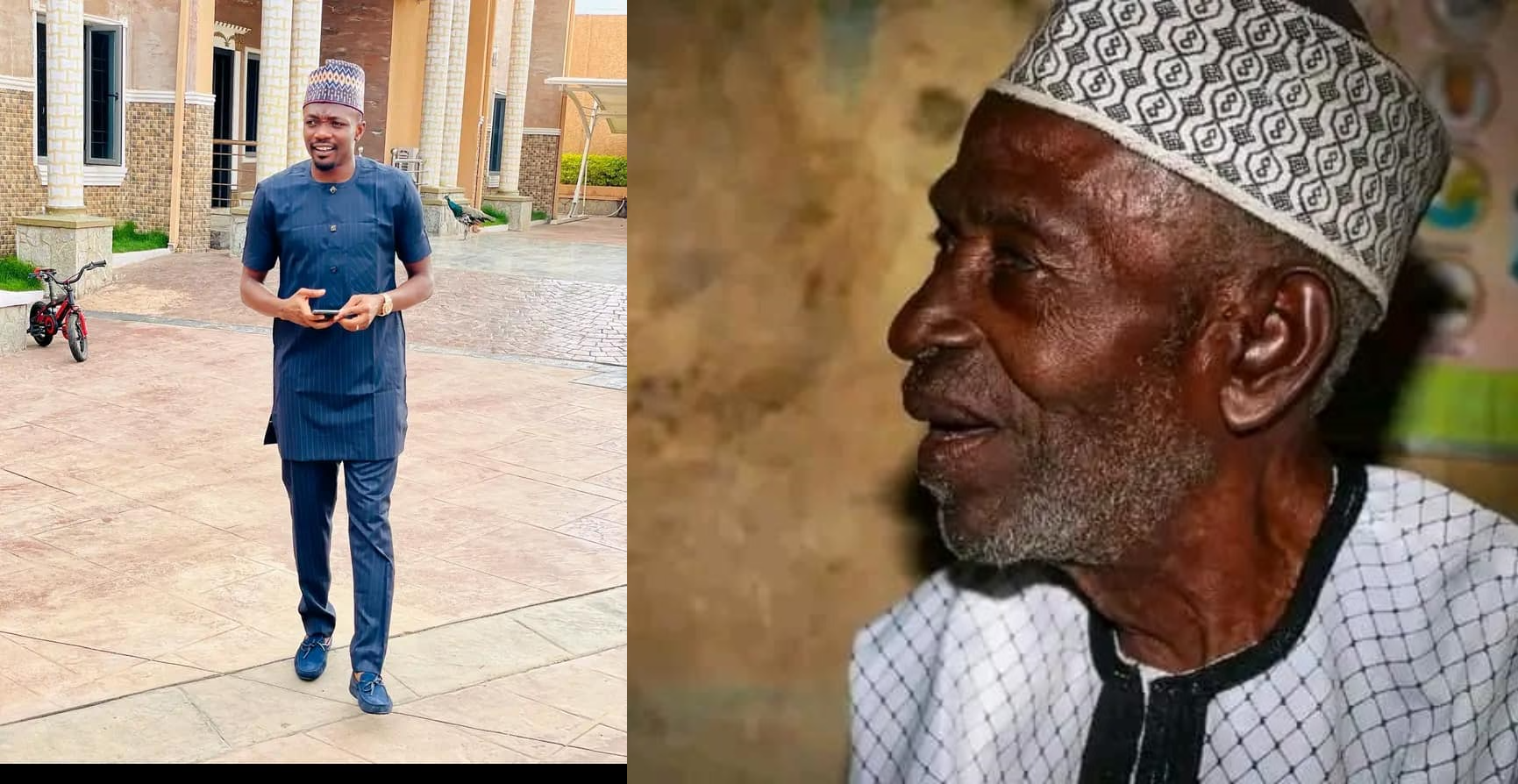
The former Super Eagles captain and philanthropist, Ahmed Musa, donated the sum of ₦5.5m to the embattled veteran Hausa actor Abdullahi Shu’aibu, alias Abdullahi Kano or Karkuzu.

In a viral social media video, the aged actor, who has also gone blind, pleaded with the general public for help.

He further spoke about his daily struggle to feed, adding that he had even been threatened with eviction. Thus, he wanted people to help him own a house before his death.

The Daily Reality has yet to be able to contact Karkuzu, his family in Jos, Plateau State, or Ahmed Musa during this report. However, sources and reports have confirmed the donation.

Bauchi pension board worker fired for diverting 4 years of deceased’s pension funds

By Muhammadu Sabiu 

The Bauchi State Civil Service Commission (CSC) has taken a decision in fighting corruption as it announced the dismissal of Ibrahim Garba, Chief Secretariat Assistant attached to the State Pension Board. 

The decision was made on August 1, 2023, at the Commission’s Conference Hall during its 17th plenary session. 

Ibrahim Garba was fired as a result of his involvement in wage and pension fraud, which the Commission judged to be gross misconduct. 

Public Service Rules (PSR) 0327 (XI), which expressly handle matters of financial embezzlement, were judged to have been directly violated by his acts. 

Ibrahim Garba’s attempt to illegally syphon pension funds was discovered during the disciplinary procedure. 

He altered the late Audu Mohammed’s account information, replacing it with his own account information. 

Then, after the deceased’s relative reported the death, he was able to adjust the pay point. 

Ibrahim Garba was able to obtain an unauthorised pension for an astonishing fifty-five (55) months at a cost of N54,871.26 per month, thanks to this fraudulent behaviour. 

This fraud continued for a total of four years and seven months and resulted in the theft of N3,017,919.30.

Working women in Islamic perspective: Prohibitory or permissibility

By Omar Muaz

As commonly understood by many people that a working woman only means one that goes outside her matrimonial home or her parents’ house to earn a living [in most cases a salary or an income] isn’t but, as rightly put in different ways by Amina Adamu, in her paper “Balancing the Home and Work: Tales of Working Women” one who has attained a certain level of education and use it as an opportunity to secure jobs. Or the one who earns a living inside her home by engaging in in-door businesses such as fish farming, tailoring, poultry, and even selling clothes and kitchen equipment, or lastly, one who earns a living within the confinement of her house by using their children to hawk and sell for them. Whichever one takes as a definition of a working woman, it’s fine and okay.

I have read many articles claiming modernism to be the root of working women. However, history has it that in traditional African society, women work as much as men [or even more] to sustain the family. They do house chores and look after children and even the man himself — besides cooking for the family, the women wash the man’s clothes and keep his room and the whole house tidy. In addition to all, as affirmed in The Journal of the Islamization of Knowledge and Contemporary Issues, Vol. 1, they go to the farm and cultivate crops to supplement the feeding and economic sustenance of the family. 

By the coming of Islam — a religion that propagates women’s seclusion based on the Quranic provision in Suratul Al-ahzāb, verse 33 “And abide in your houses and do not display yourselves as [was] the display of the times of ignorance.” and some authentic traditions of Rasūl, prophet Muhammad (PBUH) — to Nigeria in the eleventh century (Clerke and Lindern, 1984), women, more especially in the Northern part of the country, were restricted from going out unnecessarily which includes going to farm. They then concentrated on their roles as mothers while the men accepted and carried out their religious responsibilities of providing the basic needs for their family until the introduction of Western education [read: conventional education] to Nigeria in the 19th century.

The early 70s witnessed a large enrolment of girls into conventional schools, which started affecting the status quo of the family system, with women starting to work as civil and public workers in various organisations and parastatals at the attainment of conventional schools. Moreso, the spread of globalisation through the Western media led to the very foundation of the family, which includes respect, love, and trust for each other to start playing the second fiddle. 

From the 90s up to the end of the last century, 20th, many Islamic families subscribed to the global village by connecting the satellite dish to their homes and, of course, the internet. Probably, due to the impact of the Structural Adjustment Programme (SAP) — an ambitious structural adjustment program which was adopted in June 1986 as a result of initial reforms including substantial increases in domestic petroleum prices that were announced in the 1986 budget — in the 80s, the man no longer care and provide the basic facilities needed in their homes. Thus, the man lost his pride and respect as the breadwinner both from the wife and the children. Hence, women were left with the only alternative, which was finding means of supplementing the family income, even outside their homes (Emeagwali in El-Sohli & Mabro, 1994).

It’s worth noting from the above paragraphs women were traditionally working before the advent of Islam, more especially in Northern Nigeria, which abolished the practice with the world turning into a conventional one. Women work to supplement the family income with reasons, of course, varying. There are many women that work, despite their husbands or parents being rich, because they feel bored sitting at home. This category consists of almost 10% of the working Northern Nigerian women. Others go out to work to earn a living, while others, at the death of their husbands, provide shelter for their children. In addition to the mentioned categories, some work to serve humanity in governmental and Non-governmental organisations (NGOs).

Some Muslim husbands and parents, based on one of these cases, allow their wives and daughters to work while others, basing their argument on the Islamic concept of seclusion, keep their women at home. Now, the question is on the concept of women’s seclusion from in Islamic perspective. What is it? Women seclusion is a term referring to various practices designed to protect women from men in traditional Muslim societies, including confining women to the company of other women and close male relatives in their home or in separate female living quarters, veiling, self-effacing mannerisms, and the separation of men and women in public places.

According to the International Institute of Islamic Thought Nigeria Office’s journal, Al-Ijtihād, the issue of women’s seclusion in the Nigerian context, as has been identified, includes (1) complete seclusion — an opinion championed by traditionalists and fundamentalists who strongly believe that women’s role is exclusively restricted to her home only and therefore any other role outside her matrimonial home is forbidden. (2) partial seclusion — that women are allowed to go out when there’s need to go, such as hospital and visiting sick relatives and even attending Islamiyya schools, and (3) voluntary seclusion is seen as a more symbolic seclusion rather than physical.

The third, unlike the complete seclusion which was built on the widely circulated “myth” in some years back, at least in the Hausaland, that a woman has only three outings in her lifetime — that of her being delivered from her mother’s womb, going out to her husband house [being married], and then lastly taken to her grave —, is propagated by those in favour of women going out to work outside her matrimonial homes or parents’ houses and encouraged women who have attained conventional education to work in the civil service and other parastatals.

The existence of these divergent views, even during the lifetime of Usman Ɗan Fodio, triggered him to write a book “Kitabul Irshadul Ikhwān” in which he stated twelve instances where women are allowed to go out in Shari’a: going out in search of knowledge, participating in religious war [Jihād] where there’s need for their assistance, attending congregational prayers in mosques, attending Juma’at prayer, attending Eid prayer, attending prayer for rain [Salatul Istisqa], attending prayer for the dead [Salatul Janaza], going to pilgrimage, going to the court of law to sue or to be sued, visiting their parents and relatives, attending wedding ceremony [especially escorting the bride to her house because Aisha (RA) was reported to have done that] and buying and selling things especially when they don’t have someone to do it on their behalf.

In addition to the above-mentioned twelve occasions where women are allowed to go out, going out to teach isn’t in exclusion. There are instances — according to the prophetic ahādith, which were reported by Abu Dāwud, Ahmad and Imam Hakim — where women went out to teach even the wives of the prophet Muhammad (PBUH). The case of Shafa’a Bint Abda is a glaring example when the prophet (PBUH) not only recommended her for teaching His wife, Hafsa (RA), how to write but advised her to teach the wife how to cure rashes and bugs [Rukhyatul Namla]. Thus, Imam Ghazali, among many other Islamic scholars, emphasised the importance of women’s education, especially in the field of Medicine and Mathematics, with the essence of them specialising in these areas to cure sick Muslims and to teach Muslim children.

It can be concluded that women — even though they are fragile and weak because of them being created from a “crooked rib” of a man — among them are those who are blessed with the strength and energy to participate in even manual labour and, thus, they are not completely restricted, Islamically, to work as related above.

However, in order to have equilibrium in terms of matrimonial stability of the home on one hand and the woman’s pursuit for economic stability on the other, there should be an understanding between the two spouses [which is the man who is the head of the family and the woman under the umbrella and control of the man]. It’s recommendable that a working woman should fear Allah (SWT) in her mind wherever she goes and, when going out, should dress properly according to the dictates of the Shariah.

Allahu A’alam [ Allah knows the best].

Omar Muaz wrote via muazuumar45@gmail.com.

El-Rufai Plc and the Presidency

By Dr Aliyu U. Tilde

How many times have I restrained my fingers from writing on this topic? It first came to mind when I heard His Excellency, Malam Nasiru El-Rufai, hinting that he would not be part of the Bola Ahmed Tinubu administration. I watched the clip and laughed. I said does not Malam know that he is now a Plc and no longer an individual enterprise? Can Aliko Dangote one day dream of returning to his quiet personal status of 50 years ago?

Once you are a Plc, forget it. You no longer own your life. We own it. You are our property. Our slave. Period. That is the liability you become to yourself when you prove to the public your competence in serving it. The prize of hard work is more work, they say.

I knew the positions of SSG and COS did not fit people of his personality even if he eyed them. Malam is at his best either as an executive or a project person tasked with a very difficult task, like Ministry of Power.

After missing him on campus, I came to know him through many of his intimate friends in Kaduna since 1986. But I knew him from a distance the more when he started public service in BPE, then as Minister of FCT and lastly as Governor of Kaduna State. In summary, he is one Nigerian that has proven his competence beyond a reasonable doubt.

That is not to say Malam, 63, is not human. Nobody can come straight in these positions without stepping on many toes, especially in a country that is as tortuous as Charles H. Robinson described the African footpath in 1892. Those adversely affected by his policies, which were necessary to straighten up things, will understandably complain and write petitions against him.

Then Malam is also a politician, a fierce one for that matter. We have seen that much during the build-up to the last presidential election. To complicate matters, he is vocal, unrelenting, open and many times politically incorrect; yet, calculating enough to yield result. These are enough to court him for many troubles.

One of those troubles is with the legislature. He had a problem in 2003 when the Senate refused to clear him. Finally, he got cleared by the intervention of President Olusegun Obasanjo and went ahead to prove his worth as FCT minister. This time the media is saying it is not about money or even the legislature per se but about some petitions or security issues.

Today President Tinubu needs to play the role that Obasanjo played in getting the Senate clearance in 2003. He campaigned for Godwill Akpabio, the President of the Senate. Some say he also intervened for Festus Keyamo. He stood for two other competent people before: Vice President Kashim Shettima and NSA Nuhu Ribadu.

The President has promised to choose for the country the best talents to serve under his government. Though he had difficulties keeping this promise on some of his nominees, the nation may not forgive him for missing the target on Malam. He should defy Malam’s opponents just as he did for many others.

Both the security apparatus and APC owe Malam a debt. His doggedness on power shift to the South and in fighting to neutralize the effect of last-minute anti-people’s policy of the Buhari administration that would have cost the APC the Presidency are moral debts that both the President and the party owe Malam; otherwise, both will suffer a trust deficit in the eyes of the public. I have told many—and I may be wrong—that even from a strategic point of view, not having a cerebral and politically hyperactive El-Rufai on board will be a grave political miscalculation for the administration.

The security apparatus has no moral locus to abandon Malam either. He stood by it and acted on its reports to literally go on the ethnic cleansing of Shi’ites in his State—his one act that I strongly abhor and wrote against.

The President now has three major contentious issues at hand: Removal of fuel subsidy, dollar deregulation and the coup in Niger Republic. He must make El-Rufai Plc become the fourth.

Dr Tilde tweets via @Dr_AliyuTilde.

Tinubu, Pate, Okonjo-Iweala meet 

By Muhammadu Sabiu

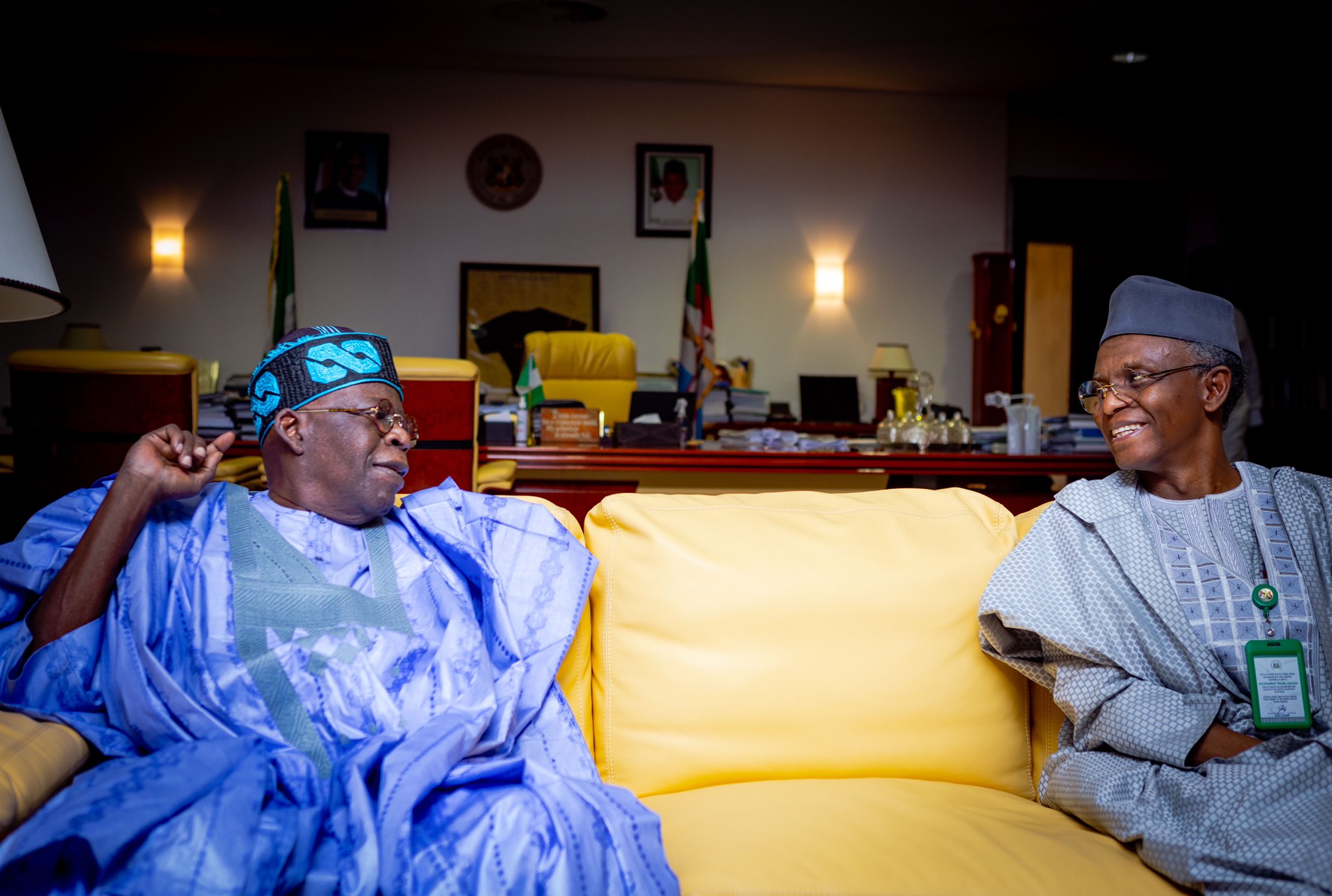
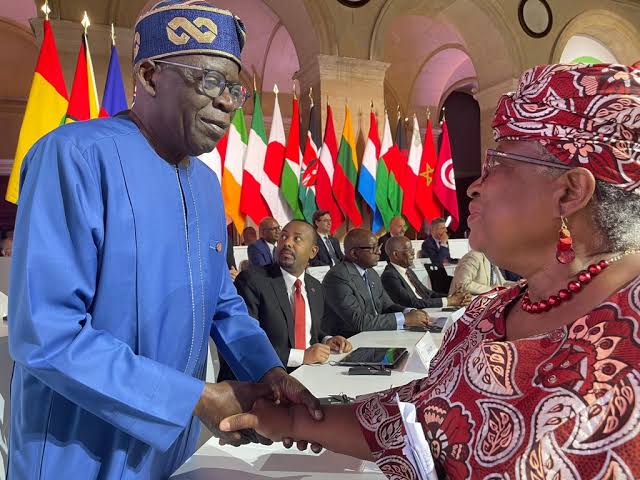
President Bola Tinubu is currently having a meeting with Ngozi Okonjo-Iweala, the WTO’s director general, at the Presidential Villa in Abuja.

At around 2:50 on Tuesday, Dr Ali Pate, a former minister of state for health, and Okonjo-Iweala arrived at the Presidential Villa.

This medium has not been able to gather the purpose of the meeting as of the time of filing this report.

Recall that Okonjo-Iweala and Tinubu met earlier in June while attending the leadership summit in Paris, France.

Okonjo-Iweala served as finance minister under the administration of former President Goodluck Jonathan.

Industrialisation of the North: The future

By Muhammad Sani Usman

Somebody was shocked that the revenue of Zenith Bank as of 2022, which is N945 billion, is greater than the internally generated revenue of northern states combined. Literally, Zenith Bank alone is more financially buoyant than northern Nigeria. And he was lamenting about the poor inclusion of northerners in such investments in their states.

Kaduna is taking the lead in investments in the North, but her (Kaduna) IGR is not up to one hundred billion Naira; it is half of that. Even the profit after tax of Zenith is bigger than the economic cities of Kano and Kaduna. These two states are not up to N100 billion altogether.

I told him, “Investing in banking is highly industrious. But our northern billionaires have no business with anything “Knowledge-based economy”. What they know is to hoard dollars, buy shares, and run over a baby company/factory, as in acquisition.

Prof Murtala Sagagi of the Economics Department of Bayero University, Kano, told us, “While conducting a survey about the percentage of non-inclusion of Kano people to most of the fine-investments in food and beverages, logistics, and Banking Industries, one manager of one famous company told him, “When they try to recruit graduates for trainee positions; they expect them to be meticulous in training before they think of absorbing them fully as staff.

But you’ll employ someone as an assistant quality control officer or sales personnel, but his/her performance index will shock you unless you change your mindset seriously. Industries require expertise to run; you can’t employ someone you can’t fire or are lazy.”

There was another testimony last week. I was discussing with an auditor of one of the best companies in Northern Nigeria. The guy told me they had recruited a new customer care representative, and he was deployed to that branch, but all the time, the guy was not working; even the invoice that he was supposed to do, he couldn’t.

Unknown to the guy, a letter was sent from the headquarter for monitoring and evaluation of his performance by the senior staff of that organisation. My guy is among the people to vouch for him, i.e., whether he would be retained as permanent staff.

However, this is not limited to banking or the mentioned industries; this is about the lackadaisical attitude of our politicians about not creating factors that will favour industrialisation in the North. The A-K-K gas project is among the hope we have for the future of the North. Let’s wait and see!

Muhammad Sani Usman an industrial chemist who advocates good governance and Sustainable development goals. He writes from Zaria via Muhdusman1999@gmail.com.