Admin

Nigerian university reduces number of workdays for staff due to ‘exorbitant’ cost of petrol

By Muhammadu Sabiu

The management of the University of Ibadan has approved the reduction of the number of workdays for staff from five to three.

According to a statement by the institution’s registrar, G.O. Saliu, the decision was taken due to the skyrocketing costs of fuel.

“The generality of Nigerians have experienced enormous economic difficulties as a result of the astronomical increase in the pump price caused by the removal of subsidy by the Federal Government,” the statement reads.

“Salary earners who have to commute to work every working day are faced with an aggravation of the condition, given the attendant hike in the transport fare and cost of living.

“After careful consideration of the situation, the University Management recommended a temporary work schedule adjustment for members of staff, which Senate at its meeting of Thursday, 03 August 2023 considered and approved.

“Accordingly, members of staff are now expected to work on-site for three (3) days in rotation per week, with effect from Monday, 14 August 2073. “It should, however, be noted that those on essential duties are exempted from this adjustment.

“It should be further noted that Management will review the arrangement as the situation improves. Meanwhile, members of staff are to maintain commitment, open communication, and cooperation towards ensuring free workflow, including working from home where and when necessary.

“In light of the foregoing, management seeks the understanding of all Deans, Directors, Heads of Departments and Units towards a smooth implementation of the intervention,” the statement added.

Shettima commends Google’s N1.2b grant initiative to support Tinubu’s employment target

By Muhammadu Sabiu

Vice President Kashim Shettima applauded Google’s N1.2 billion grant programme for the President Tinubu administration’s one million jobs goal.

The compliment was given by Mr. Shettima on Tuesday in Abuja when he welcomed several executives of Google, a well-known international technology corporation, to the Presidential Villa.

He believes the N1.2 billion award announced to support the Tinubu administration’s digital jobs initiative is admirable and deserving of imitation by other businesses.

“Let’s think outside the box and create more job opportunities. We need to walk the talk. It is easy to pontificate but very difficult to bring all of the ideas to fruition. I want to assure you, this administration is ready to partner with you.

“Nigeria is ready for business. The President that we have now wants to leave a legacy that Nigerians will be proud of many years after,” Mr Shettima said.

Who is watering the Nigerian grass?

By Bello Hussein Adoto

A few days after someone glibly told me that the grass was greener in Nigeria, a young medical doctor Dr Diaso Vwaere was crushed to death in an elevator accident at the General Hospital in Odan, Lagos State.

Netizens and other persons who have worked at the hospital said they complained about the malfunctioning elevator for years, but the management did nothing tangible to address it. So the young female doctor, with two weeks to complete her housemanship, took the elevator to retrieve a dispatch—a food package—on the ground floor. She never made it.

I imagine her in the elevator anticipating the food she ordered, salivating, getting ready to devour her food, and returning to her busy schedule as a house officer. I imagine her standing on the elevator, weightless, as it moves.

Then it snapped. Suddenly, the metal box is crashing down from the 10th floor all the way to the ground. Imagine her now in the elevator, weightless, as it falls freely. Imagine her grasp at everything and anything, something to break her fall. Then, bam, it crashed. Imagine her now.

What do you think she would have felt? She was trapped in the rubble. The package she was going to retrieve was less of a worry. Her call can wait. The world can wait. Now, she needed freedom, a way out of the rubble. She needed air. The wreckage is choking.

While in the rubble, time trickled. Seconds must have felt like a decade, minutes like forever. Time trickled. One, two, three… 40 minutes. She was there for 40 minutes before help came. She was out, finally. Ahhh, some relief.

Anyone could have been in that elevator. It could have been a patient, doctor, nurse, relative, or even you, my reader. It could have been a visitor, like the state governor or the CMD. Would this incident have made any difference? I wonder.

A consultant once said it’s better to have a heart attack on the streets of London than in the corridors of a teaching hospital in Nigeria, and I thought that was ridiculous. From what I have seen in recent times, he was not wrong. It is not impossible. We are all at our own’s risk.

Those who should provide the basic oversight at the hospital, from government officials to the hospital management and staff, seem to have other businesses than their jobs. That’s why the elevator could be so bad as to take a life before they consider fixing it. Do we need the president, governor, or minister of health to come and fix it too? What happened to the hospital management?

The elevator accident happened at a hospital big enough to have house officers, ten floors, and elevators. It is a big hospital, indeed, by every standard. Yet there was no blood to rescue Dr Diaso. Some said there was no morphine, emergency supplies, or cotton wool. The last part could have been a stretch, but I have seen resident doctors protest that there was no normal saline, which should be as common as sachet water. Yet…

When patients come to hospitals, and these supplies are not available, and they cannot afford them, they turn on the doctors and nurses that are equally helpless. A soldier beat my friend’s wife, a nurse at Sobi Specialist Hospital, some time ago because she asked him to get delivery packs for his wife’s delivery. Last December, patient relatives at the University of Ilorin Teaching Hospital pinned a doctor to the wall. They beat him because they thought their father was dying and he wasn’t helping. Meanwhile, they were asked to do a test they had yet to do.

These incidents happened in tertiary hospitals where we should expect—sorry, hope—that things are better, where supplies were available for patients to use and pay later. But they aren’t. What is the hope of someone in a rural area?

I wonder what would happen if someone fell off a storey building in Obehira, where I grew up, or Ikuehi, my hometown. What would be their fates? They may have to be referred to the recently built Reference Hospital in Okene. Will they fare any better there?

Back to Dr Diaso, the doctor in the elevator accident. She survived the crash but not the injuries she sustained. She was severely injured and needed blood. “There was no blood available for resuscitation,” wrote the Lagos branch of the Nigerian Medical Association. There she was in the hospital. She had spent 11 months and two weeks on calls, attending to patients, saving lives, unable to be resuscitated because there was no blood. She died. She died in the institution where she served.

They say the grass is greener here. Who is watering the grass?

Bello Hussein sent this piece via bellohussein210@gmail.com.

Can Tinubu do like Abacha?

By Malam MB

On May 25th, 1997, the democratically elected of Sierra Leon, President Ahmad Tejan Kabbah, was toppled by Major Johnny Paul Koroma. The development in Sierra Leone disrupted the plans of the Economic Community of West African States (ECOWAS) under the leadership of Nigerian Head of State, General Sani Abacha.

ECOWAS pleaded with the Koroma junta to step down but it didn’t budge. General Abacha didn’t shilly-shally, he directed the Nigerian troops under the Economic Community of West African States’ Ceasefire Monitoring Group (ECOMOG) to station themselves in and around Freetown (the Sierra Leone’s capital).

Major Johnny Koroma instantly became scared and sought dialogue which gave birth to Conakry Peace Accord on October 23rd, 1997. This Accord called for reinstatement of the legitimate government of President Tejan Kabbah within a period of 6 months.

Major Koroma who expressed his commitment to the Conakry Peace Accord dilly-dallied and that prompted General Abacha to oust him on February 6th, 1998 and reinstate President Tejan Kabbah.

When General Sani Abacha ousted Major Koroma, Nigeria didn’t experience collateral damage or negative implication because it doesn’t share any border with Sierra Leone and it didn’t have Boko Haram and Banditry then.

Today, Nigeria shares border with Niger Republic and our Nigeria that grapples with Boko Haram, Banditry and so much corruption, wants to militarily oust the Nigerien Dictator Abdurramane Omar Tchiani and reinstate the democratically elected President Mohammed Bazoum. Yes! Nigeria has the military strength to defeat Niger, Mali and Burkina Faso but how can President Tinubu contend with collateral damages and proliferation of Boko Haram and Bandits’ activities? I advise that Niger Republic should be sanctioned until the Nigerien people ask Dictator Tchiani to step down. Ah! I ought to ask again, can Tinubu do it like Abacha did?

Malam MB is a Senior Advocate of the Commoners (SAC) and can be reached via: malammb16@gmail.com

UNICAL law students call out don for alleged sexual harassment

By Ahmad Deedat Zakari

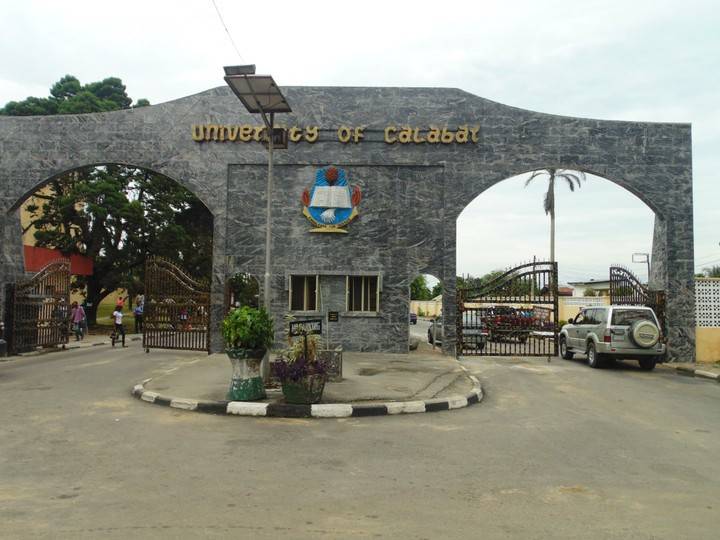
Students of the Faculty of Law, University of Calabar, have protested against the Dean of Law of the University, Prof. Cyril Ndifon, over sexual harassment. 

On Monday, the students demanded the dismissal of the learned professor, as they carried placards clearly stating their reasons for the protest. 

They accused the university don of sexually harassing students and threatening to fail them. They also alleged the suppression of their voice over the alleged infamous conduct of the professor by the institution. 

Prof. Ndifon was previously removed from his position as Dean of Law over allegations of rape in 2016. Ndifon was, on August 29, 2015, accused of sexually assaulting a 20-year-old 400-level student (name withheld) in the faculty after ordering her to his office. Following the development, authorities of UNICAL suspended the dean from office. The suspension was to last until he was completely exonerated from the allegations.

However, according to reports, the University of Calabar (UNICAL) reappointed him as the Dean of its law faculty in 2022.

Orientation course to resume in Borno after long hiatus due to insurgency—NYSC

By Muhammadu Sabiu

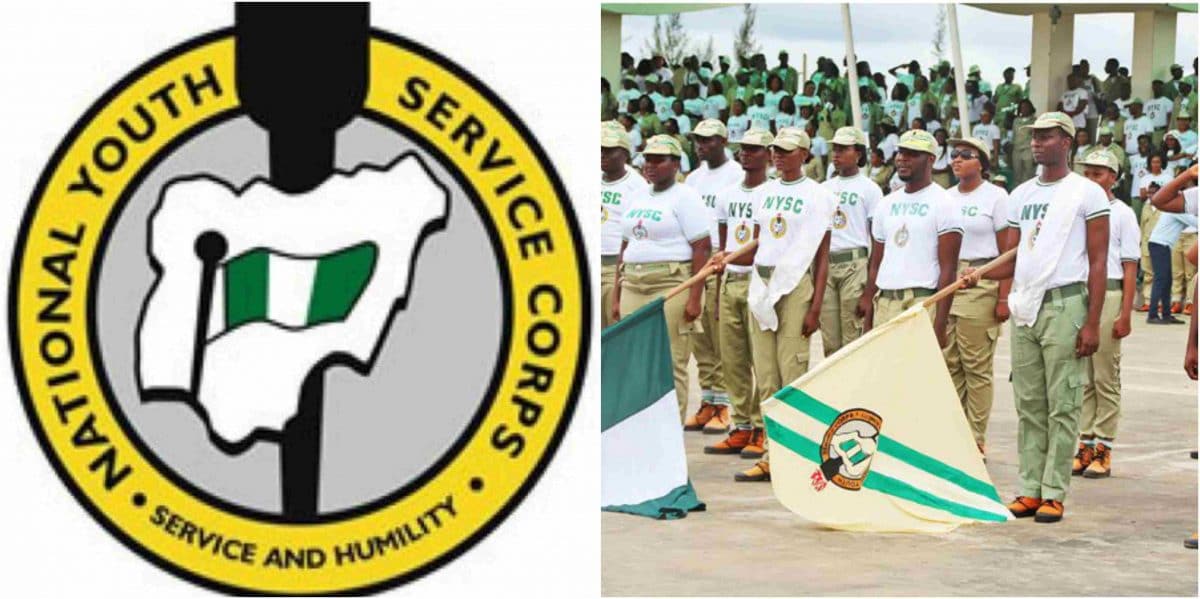
The National Youth Service Corps (NYSC) says it plans to resume its orientation programme for new corps members in Borno, 13 years after it was put on hold owing to the Boko Haram insurgency.

According to the News Agency of Nigeria (NAN), the insurgency has, for numerous years, forced corps members who had been posted to the state to do their orientation course in Katsina State.

The next orientation would take place in the state, according to Mr Lawal Yusufu, the state’s commissioner of police, who was speaking to reporters at the ad hoc orientation camp on Monday at the Arabic Teachers College in Maiduguri.

Yusufu, who spoke after examining the camp’s facilities, stated that security agencies will collaborate to provide security for the incoming NYSC members at the camp’s entrance, exit, and other strategic locations.

Government representatives, including the Secretary to the State Government, Alhaji Bukar Tijjani, the State NYSC Coordinator, Mr. Mohammed Adamu, and the State Chairman of the NYSC Governing Board, Alhaji Mohammed Badiya, accompanied the commissioner on the tour.

The new NYSC members’ orientation programme is scheduled to start on August 18.

David Jowitt, eminent English teacher, dies at 80

By Abdurrahman Muhammad

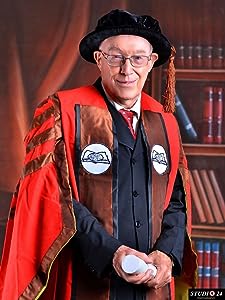
David Roger Jowitt, the renowned British professor of Nigerian English, who had lived in Nigeria for six decades and became a citizen in 2023, died yesterday after a brief illness.

Professor Jowitt was an academic and an author. His books, Nigerian English and Common Errors in English, are some of the best on the subject. He had reportedly been working on his memoir before his death.

He also taught at Bayero University, Kano, University of Jos, among many other institutions across the country.

Provide qualitative education to wards – College don charges parents

By Abdulbasid Aliyu Adam

Parents have been reminded of the need to play their parental role in providing qualitative education to their wards to curtail social vices.

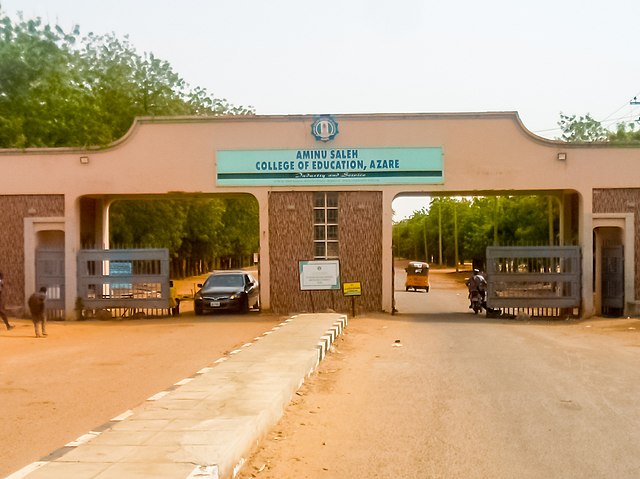
Dr Abdullahi Jaji of Aminu Saleh College of Education Azare remarked while presenting a paper themed, the challenges of post-primary Education in Northern Nigeria: the Role of Stakeholders at the closing ceremony of the three-day annual quiz, debate and essay competition organised by MSSN Bauchi State Area Unit.

Dr Jaji, who spoke at length on the challenges of post-primary Education in Northern Nigeria, attributed the menace to the misplacement of priority by the parents. Hence the need for parents to shoulder all the responsibilities of their children’s education described knowledge as the bedrock of every development.

Earlier in his welcome address, the quiz coordinator of MSSN Bauchi state, Dr Muhammad Adamu Hamid, said the program was designed to improve the readiness of Muslim students in Bauchi State to face the Senior Secondary school Certificate Examination to meet world tertiary institution entry requirements in an examination malpractice free environment.

Dr Hamid, a lecturer with the Department of Mass Communication, Pen Resource University Gombe, charged the participants to double their efforts in seeking religious and Western education.

Speaking at the occasion, Amir of the MSSN Bauchi State Area Unit, Dr Rabi’u Barau Mball, applauded the efforts of the host communities for their job well done and urged the relevant authorities to continuously support the activities of MSSN at all levels for the speedy development of education and the state at large.

Dr Barau Mball, a lecturer with the Department of Sociology, Bauchi State University Gadau, used the medium and informed the public that the leadership of the society would host the 2023 National Islamic Vocation Course (IVC) hence the need for government support and all the sister agencies.

In their separate remarks at the occasion, Hon. Ahmed Mai Kudi Yaya, a member representing the Misau constituency in the State Assembly and Hajiya Bahijja Auwal Babaji, deputy chairman of Giade Local Government as well as the District Head of Giade represented by the Galadiman Giade, commended the state leadership of MSSN for organising the August, events and prayed for its sustenance.

The program, which draws participants from SS one and two of all secondary schools across the twenty local governments of the state, held at the Government Science Secondary school Giade, declared Katagum local government as the overall best, followed by Bauchi and Toro as Second and third, respectively.

NAF jet crashes in north-central Nigeria

By Muhammadu Sabiu

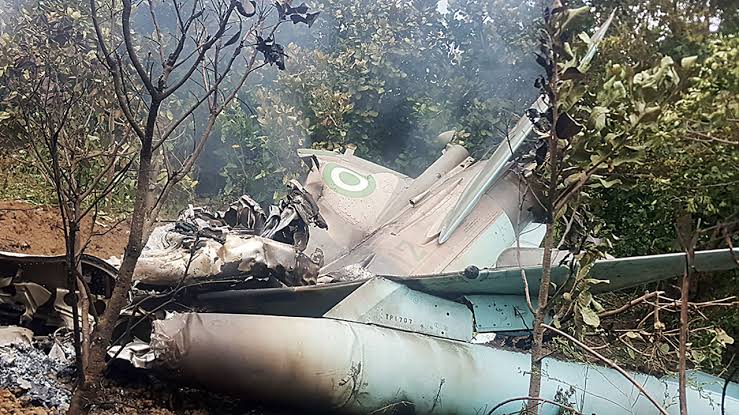
Reports coming from the north-central part of Nigeria have indicated that an aircraft belonging to the Nigeria Air Force has crashed in Nigeria State.

The aircraft was confirmed to have crashed on Monday on its way from Kaduna State to Niger State.

The NAF Director of Public Relations and Information, Air Commodore Edward Gabkwet, confirmed the incident in a statement.

The statement partly reads, “A Nigerian Air Force MI-171 Helicopter on a casualty evacuation mission crashed today, August 14, 2023, at about 1:00 pm, in Chukuba Village in Niger State. The aircraft had departed Zungeru Primary School en route Kaduna but was later discovered to have crashed near Chukuba Village in Shiroro Local Government Area of Niger State.”

The Daily Reality could not independently reach a Nigerian Air Force official to get more details about the incident as of the time of filing this report.

However, reports suggest that efforts are being made to rescue survivors of the crash.

Fear of war vanished, hope for peace rekindled as Nigerian Islamic scholars met with Niger coupists

By Aisar Fagge

There were growing anger and threat between the Niger Republic and the Economic Community of West African States (ECOWAS) since the military coup in July that ousted the democratically elected government of Muhammed Bazoum. The ECOWAS, under the chairmanship of President Bola Ahmed Tinubu, demanded that the military junta should handover power Bazoum or else face its wrath.

Several media reports indicated that all attempts by the ECOWAS to peacefully restore power to Bazoum had failed, a development that exacerbated the already worse situation. On Saturday, the leaders of the Islamic groups from Nigeria met with the coupists in Niger. In this interview, Professor Salish Shehu, one of the Ulamas, detailed The Daily Reality about the purpose of their visit, how fruitful it was and what they have achieved.

TDR: Prof., can you please detail The Daily Reality about the purpose of your visit to the Niger coupists?

Prof. Salisu Shehu: The purpose of our visit to Niger is very clear. The purpose is for reopening, so to say, the windows of dialogue on AMFAS between ECOWAS, on one hand, and the military junta in Niger. There is an apparent breakdown of communication since the refusal by the junta to receive the former head of state, General Abdussalam Abubakar and his eminence, the Sultan of Sokoto. You know people generally across the two countries are becoming increasingly anxious and are becoming increasingly afraid that violence may breakdown – there is palpable fear, actually. A collection of some Ulama felt that we need to meet the president of Nigeria and discuss this matter with him. And, when we met him, we emphasised the fact that dialogue should be the only thing and dialogue should prevail in this matter and he accepted. We asked him that he should give the chance to the Ulama to play their own role, to contribute to ensuring that dialogue prevails and to ensuring that the crisis is resolved amicably through peaceful means. And, therefore, it was for the purpose of contributing to the promotion of dialogue, contributing towards broadening consultations and engagement, that was actually the reason why we went to Niger and to meet the new military administrators in Niger with the view to engendering a sort of reconciliation process between the two purpose.

TDR: Sir, you said the visit was constituted by the group of some Ulama. Can you please tell us about the members of your entourage?

Prof. Salisu Shehu: The entourage constituted of scholars from different Islamic groups and Islamic sects. That why you can see that all the Islamic groups and organisations were represented in the composition. Beginning from the group of scholars that met with the president, foremost was Sheikh Dahiru Usman Bauchi, represented by his eldest son, Ustaz Ibrahim Sheikh Dahiru Usman Bauchi, Sheikh Abdullahi Bala Lau of the Izala group, Sheikh Qarbibullah, the leader of Qadiriyya in the whole of Africa; and then there academics like us and other da’awa wokers, like Professor Mansur Malumfashi, Prof. Mansur Ibrahim Sokoto, Imam Abdurrahman Ahmad; the Chief of Ansaruddin, Sheikh Jalo Jalingo, Sheikh Muhammad Haruna Gombe, Sheikh Yakubu Musa among others. These were also some few government officials that accompanied us.

Sheikh Bala Lau was the one that led us to Niger and he was the leader of team and he was the one that introduced us to the  military leaders. We met the military leaders together with the scholars of the same kind of categories we went in Nigeria. So all the the leaders of the groups – the Tijjaniyya, the Qadiriyya, the Izala groups, we all met in Niger. It was such a successful paternal visit.

TDR: Sir, what have you discussed and was your visit any meaningful?

Prof. Salisu Shehu: I can only tell you about the general discussion we had. But, it is not possible to broadcast the nitty-gritty details of our discussion, especially some of the very very specific issues we discussed with them. But, what we actually generally discussed was about the fact that we came as a group of scholars from Nigeria, having been permitted and approved to come by the president. Therefore, we were in Niger with the consent of the President, Asiwaju Bola Ahmed Tinubu, who is also the Chairman of the ECOWAS, that we could come and discuss with them as a demonstration of acceptance of dialogue and reopening of communication between them. So we emphasised the need for dialogue. We drew their attention to the fact that as long as we don’t reopen the door of dialogue, the animosity will keep increasing. And, hence, it is not going to be good for us. So, we made it very clear to him that we went there in order to avert violence, to avert military intervention and to promote peaceful and amicable resolution to the problem, actually. And, we also emphasised the need for the give and and take in the matter. That it will do no good for both of them and the entire West African sub-regions, that if both of them were not ready to give something and take something, if both of them maintain extremist positions, then it is not going to be good. And, they actually accepted. They were already told to make some concessions on the matters.

TDR: What have you have achieved in your meeting with the coupists?

Prof. Salisu Shehu: The most important achievement in this regard is the fact that that option of dialogue have so much sufficiently be promoted. And it is hopeful that this our visit has led the foundation for peaceful engagement between the two. So, I think this is an achievement. Another tremendous achievement is the fact that across the two countries, the palpable fear, that was so preponderant, has been allied and the people’s hope regarding the fact they will continue to live in peace, they will continue to leave as brothers and sisters, they will continue to live as neighbours, that spirit has really been rekindled even if it was about to die. People have so much been at rest and at ease now because of this visit. People have become more assured that there won’t be violence. And, I believe this is the most important achievement as far as this visit is concerned. Like I said, there is no reason actually to keep on avoiding meeting and discussion. So, we have to intervene in this way. And because we are not supposed to give specific details, there is no any discussion about the terms of agreement we had with them.