Admin

Iconic Hausa actor Samanja dies at 81

By Sabiu Abdullahi

The Hausa entertainment industry mourns the loss of Usman Baba Fategi, popularly known as Samanja, who passed away on Sunday at the age of 81 in Kaduna’s Garden City Hospital after a prolonged illness.

A retired Nigerian soldier, Samanja made significant contributions to the broadcasting industry at the Federal Radio Corporation of Nigeria, Kaduna broadcasting station.

Survived by two wives and 14 children, his funeral is set to take place later today at the Jaafaru Estate Juma’at Mosque, Kabala Costain, Kaduna. The entertainment world bids farewell to a true icon.

140 inmates on death row await execution in Kano

By Sabiu Abdullahi

The Nigerian Correctional Service in Kano State disclosed that 140 individuals on death row are awaiting execution. 

The spokesman for the Kano State Command, Musbahu Kofar-Nassarawa, conveyed this information to the News Agency of Nigeria on Saturday, emphasizing that the condemned individuals comprise both genders. 

Mr Kofar-Nassarawa clarified that the Kano Correctional Centre lacks a hangman as it operates as a Medium Security Custodial Centre.

The absence of a hangman further complicates the situation, raising questions about the state’s preparedness for implementing capital punishment. 

He pointed out that the governors in the state have not taken decisive action by either signing death warrants or commuting the sentences of those on death row to life imprisonment.

The complex nature of the legal process and the reluctance of the governors have contributed to a growing number of individuals in a state of limbo, awaiting a final decision on their fate. 

Mr Kofar-Nassarawa highlighted that some governors utilize constitutional provisions to release inmates, relying on recommendations from the Advisory Council on the prerogative of mercy to alleviate congestion in correctional centers.

The plight of these 140 inmates underscores the broader challenges within the criminal justice system and the need for swift and decisive action to address their uncertain future.

Public Universities: the FG’s new revenue generation goldmine

By Prof. Abdelghaffar Amoka

The Academic Staff Union of Universities (ASUU) has been in a battle with the Federal Government of Nigeria over the funding of the public universities. The facilities that made our universities to still have a semblance of a university were products of ASUU strike. ASUU was so passionate over public universities funding to the point that the public began to think that such funds, when released, are paid into ASUU’s account. Even some journalists that are supposed to be properly informed shared in the ignorance or misinformation.

You read headlines like “FG releases 2 billion naira to ASUU for university funding”. ASUU pursued funding at the expense of its members’ welfare. The battle has been on funding to an extent that the younger generation of academics began to wonder why their welfare is not at the top of the union’s demands. The consoling words from our veterans have always been: You get true fulfillment when you have an ideal working environment.

The battle took a new dimension last year, during the reign of the ex-president Muhammadu Buhari, who had no agenda for education aside from establishing more universities without funding plans. Yeah! Buhari came to re-write the story of our university system. The number of the underfunded new tertiary institutions were listed as his major achievements. A strike on funding and the renegotiation of conditions of service that should not have lasted for more than four weeks, if sincerely handled, was dragged on for eight months and the lecturers starved. A few died and many survived and are still surviving but not an item on the demands on the needs of the universities was treated.

While ASUU was fighting for adequate funding, the FG had a hidden plan. It publicly declared that the universities will have to generate their money to partly fund themselves. The public couldn’t see the implication of the statement. The statement received support from some Nigerians whose education was funded from primary to PhD with public funds. However, besides this declaration, they are also seeing the universities as revenue generation institutions rather than institutions to be funded. They were wondering why they should keep funding these institutions when they are supposed to be generating revenue for the government.

Having conceived the idea to make federal universities an internally generated revenue (IGR) source for FG, their challenge was how to make these institutions generate revenue for FG without backlash. The only obstacle to the plan is ASUU that is always using strikes to force to unwillingly release some funds for the universities. ASUU was on strike again. They find their trouble annoying and something must be done. They engaged their friends that are former union leaders to develop the strategy to clip ASUU. Hunger strategy was found most effective and that was deployed and the rest was history.

From the experience of the last strike, call for a referendum on strike today and the members will tell you that if they will lose their salary for a one day strike, they won’t join. They are still paying their debt. So, they began starving the universities of funds.

Universities like Ahmadu Bello University (ABU) and Unilag, whose electricity bills are around 120 million naira per month, are given about 150 million naira per annum for operational expenses. How they pay their bills was left as their business. So, to keep up with the bills, the universities began to review the service charges. The universities estimated what can run the universities and appropriate charges were put together as fees for students. There were outcries on the fee increment. Some called it tuition and that got FG worried.

FG had to come out with a press release. They acknowledged the increment but that FG has not introduced tuition. The increase in fees as announced by various universities was to reflect the current economic reality; mission accomplished. However, the FG didn’t see these increased fees as service charges, they saw them as IGR by the universities and hence became interested.

As the universities were busy announcing the revised fees, the Minister of Finance suddenly remembered that there was a circular FMFBNP/OTHERS/IGR/CRF/12/2021 dated December 20, 2021 that said all partially funded FG Agencies should remit 40% of their IGR to FG. Universities are currently expected to remit 40% of the fees collected from the students to FG as revenue generation. These service charges in the universities are referred to as Gross Internally Generated Revenue. The deduction is effective from November 2023.

This means that if a student is charged N2,000 for an ID card, the university will give N800 out of it to the FG. It doesn’t matter to the FG if the cost of the ID card is truly N2,000. If a student is charged N10,000 as laboratory charges for chemicals and consumable, the university will give N4,000 out of it to the FG as revenue. If every student is charged N30,000 for electricity, water and sanitation bills, the FG will enjoy N12,000 out of it as revenue. It doesn’t matter if the remaining amount is not enough to pay those bills. If a student is charged N15,000 for a field trip or SIWES, the FG will take N6,000 out of it. If a student pay N5,000 as examination fee, the FG will take N2,000 from it as IGR for the FG. etc.

The insensitivity of the government to the needs of the people has gotten that bad. Public universities are the government’s new revenue generating agencies. This 40% revenue is expected to be paid by kids whose parents are earning less than N100,000 per month from the same FG. As they are milking the people dry, they have refused to cut off the cost of governance. The NASS members that were supposed to drive a car of 7 – 8 million naira by law got 160 million naira cars as against the law.

The bad thing is that the government will deduct 40% from the money as it is paid. It is auto-deduction. They will take their share before the universities even have access to the money. The announced fees were calculated to barely take care of the basic needs of the universities. So, how will the universities be run without the 40%?

My opinion…

Dear parents, tight your seat belt and the revised fees of your kids in any federal higher institution increased by 40%, thanks to FG quest for IGR. ASUU has done its bit for us Nigerians. It should not be a major discussion at the ongoing NEC. Nigerians should be allowed to fight their fight. The fight should now be left for the students and their parents. If they are willing to fight, ASUU members can join as parents. If they are not ready, we all MILT and move on as usual. After all, we are used to suffering and smiling.

The university managements, Senates, and Councils should find an appropriate way to introduce the 40% FG IGR from the universities into the fees. The universities that are yet to announce their revised fees should add the FG 40% university IGR to their fees. It should be separated from the university charges. It can be called “40% FG IGR charge” as a separate item. So that the students and parents will know what they are paying for. They need to know that rather than FG funding the education of their kids, something ASUU has fought for and prosecuted over, FG is now generating revenue from them as they pay their kids fees.

©Amoka

As Governor Fintiri constructs the first superhighway in the Northeast

By Zayyad I. Muhammad

The Adamawa state government, under the leadership of Governor Ahmadu Umaru Fintiri, has commenced the construction of a 20.8-kilometre superhighway in Yola, the Adamawa state capital.

The Superhighway, starting from the Yola City Gate and ending at AA Lawan Junction inside the city of Yola, will open up a new corridor in the Jimeta-Yola metropolitan area as the superhighway is passing through virgin land, though there is massive building activity along the way—new housing estates, including the 2000 housing units constructed by the Governor Fintiri Government for civil servants and other citizens of the state. Other activities along the corridor are industries, farmhouses, schools, and commercial activities.

Some critics have been accusing state governors of neglecting basic needs while constructing big roads and flyovers, but Governor Fintiri is different—he has struck a balance between human development and infrastructure, rural needs and urban development, and community engagement, and political engagement. Governor Fintiri has built cottage hospitals and rehabilitated general and specialist hospitals throughout the states. He built new schools and improved the existing ones, including the payment for WAEC and NECO for all Adamawa State students.

In the just-released 2023 NECO Results, Adamawa State recorded the highest number of candidates with five credits, including English and mathematics. Recently, Governor Fintiri launched the Adamawa Human Development Council to drive Adamawa’s human development initiatives and oversee all human development issues in the state. Furthermore, Adamawa State has one of the most well-structured and sustainable poverty alleviation and wealth creation agencies in the northeast: the Adamawa Poverty Alleviation and Wealth Creation Agency (PAWECA). The agency trains and develops skills for youth and women; it’s doing well in that its core mandate

Coming back to the main topic, the superhighway, it is simply a product of knowledge-driven governance, which always strives to strike a balance between development and expansion, rural needs and urban requirements, and people’s needs and wants. This balance is essential for any state government to fulfil its vital role in how its citizens and businesses travel, commute, and transport goods and services. One of the crucial components of modern transportation in this era of high-speed technology is superhighways.

Like any other huge construction project, superhighways have their challenges, but the importance and the need for the 20.8-kilometre superhighway along that corridor overshadow its challenges.

City expansion, urban congestion, population growth, and modernization necessitate the need for better roadways on a global scale. Superhighways in towns and cities bring efficiency to businesses that depend on transportation, reduce commuter time, and are designed to enhance road safety while reducing accidents. Their economic impact is substantial, improving connectivity between different sections of the city, reducing congestion, and diverting long-distance traffic away from the inner town’s roads. Governor Fintiri’s 20.8km superhighway stretching from the Welcome Yola City Gate to AA Lawan Junction inside the city, which will be the first in any state capital in the Northeast, will offer these benefits, including opening a new corridor in the Jimeta-Yola capital city.

Zayyad I. Muhammad writes from Abuja via zaymohd@yahoo.com.

Governor Dikko deprives local government pensioners of their benefits

By Muhammad Malumfashi

It is no longer intriguing to discuss with the victims of withheld pension payments under the current administration in Katsina State. The pensioners are experiencing severe hunger, their children are unable to attend school, and as a result, their families are vulnerable to social problems for which the governor of Katsina is responsible.

How can a rational government extend the screening process until salary time, knowing that their screening team is not mature and time-conscious enough to complete their work before the start of the salary period? This government, which claims to be ‘intelligent’, is creating unnecessary chaos.

I have listened to the accounts of the victims. Regrettably, this government is not taking significant steps to address the issue. These unpaid pensioners dedicated their lives to serving our state. Some could have found lucrative jobs elsewhere but chose to remain in Katsina and serve their home state until retirement. And now, the government is rewarding them with starvation. What an ungrateful government!

If Governor Dikko Umar Radda (PhD) indeed possesses a doctorate, he should not have merely stated it through words, but instead, he should have demonstrated it through his actions. Unfortunately, his actions don’t even match those of someone who has never had the opportunity to attend elementary school. A PhD, in my opinion, should be characterised by excellence, compassion, promptness, and exceptional decision-making. However, the current government, led by Dikko, is the complete opposite of what we expected.

Dikko should not give us the impression that we are moving from frying pan to fire under the APC’s administration in Katsina. We have long to witness a significant distinction between educated leaders and those lacking education. But Dikko demonstrates, through his actions, that the only difference lies in whether they attain power. They are all birds of the same feather.

Dikko started impudently with a fervent religious overtone and resolute vigour regarding his esteemed doctorate. Katsina’s initial expectations were that a transformation would ensue, surpassing the advancements of neighbouring states in infrastructure development, educational excellence, scholarly interventions, agricultural sustainability, and unexplored approaches to security intelligence. However, to our dismay, we regret electing this incapable and uninspiring PhD holder to lead our state affairs.

We earnestly implore Governor Dikko to take compassionate action, whether motivated by his moral duty or the preservation of his scholarly prestige and promptly provide the pensioners with their long-overdue pensions. Their current living conditions have reached an unacceptable state, bordering on the unimaginable, and if not addressed promptly, dire consequences may unfold.

It is disconcerting to witness the sight of workers and pensioners protesting on the streets, exemplifying the government’s ill-treatment towards them. Should our esteemed governor not execute the necessary actions, it would mark an unfortunate first during his tenure and harm the state’s harmonious relationship with its workforce.

A thorough assessment of his achievements thus far has made it evident that a degree or doctorate certificate is not a prerequisite for government appointments or the ability to govern effectively. Dikko’s PhD has not set him apart from his predecessors; instead, he merely builds upon their legacies. The sole accomplishment I can attribute to his tenure is the establishment of the ‘Katsina State Security Watch Corps,’ which emerged as a product of his government initiative. Unfortunately, there seem to be no further substantial achievements to highlight.

Nonetheless, our followers are responsible for recognising that even the constitution does not require a specific educational qualification, such as a degree or PhD, for individuals seeking governance. We should disregard excessive education and prioritise transparency, credibility, competence, experience, past performance, and a candidate’s track record to determine their eligibility for our vote. This is because having a PhD has not translated into tangible benefits for our society, such as improved living conditions or economic prosperity.

Initially, I believed that with the grandiose claims made by Dikko and his supporters about his PhD degree, Katsina would have transformed into a modern metropolis like Dubai or Qatar by now. However, disappointingly, we have yet to surpass the standards set by even neighbouring states in the northwest, let alone compete with the more developed southern states.

We have now realised that all the hype and celebration surrounding Dikko’s qualifications were falsehoods (duk karya ne). He has failed to deliver on his promises, and the role of the governor surpasses that of the Director-General of Smedan. Furthermore, Katsina is not simply a local government like Charanchi.

Muhammad Malumfashi wrote via muhammadisyakumalumfashi@gmail.com.

WhatsApp enables multiple accounts on Android phone

By Ishaka Mohammed

Meta’s instant messenger, WhatsApp, has allowed Android users to have two active accounts on one phone.

The Daily Reality confirmed the development after accessing a Facebook post by one Pal Kelly Media.

Recall that on October 19, 2023, the Chief Executive Officer of Meta Platforms, Mark Zuckerberg, revealed the company’s intention to enable multiple WhatsApp accounts on Android.

WhatsApp also reported the same in a blog post guiding users on how to add a new account. Part of the post reads as follows:

“Today, we’re introducing the ability to have two WhatsApp accounts on Android logged in at the same time. Helpful for switching between accounts – such as your work and personal – now you no longer need to log out each time, carry two phones or worry about messaging from the wrong place.

“To set up a second account, you will need a second phone number and SIM card or a phone that accepts multi-SIM or eSIM. Simply open your WhatsApp settings, click on the arrow next to your name, and click ‘Add account’. You can control your privacy and notification settings on each account.”

However, users are required to update their WhatsApp to enable them to access the new feature.

Prioritising skills and knowledge 

By Salisu Uba, PhD FCIPS

Let’s discuss why it’s crucial to focus on gaining knowledge and skills as you step into the post-graduation world. Instead of chasing influence or hoarding resources, the real power lies in arming yourself with knowledge and skills.

Being well-known might seem appealing, but the true influence isn’t about being the talk of the town. It’s about leveraging your understanding and expertise to make a positive impact. Genuine influence comes when you navigate challenges with the wisdom gained through knowledge and skills.

Accumulating wealth and resources can be tempting, but having a vault of riches won’t get you far if you don’t know how to use them wisely. It’s not just about having resources; it’s about being savvy enough to transform them into meaningful contributions. Knowledge and skills are the keys to unlocking the full potential of the resources at your disposal.

Think of knowledge as a vast kingdom waiting to be explored. It’s about understanding the rich history, diverse cultures, and the broader world. The more you know, the better equipped you are to connect the dots and see the bigger picture. Knowledge acts as the map that guides you through the complexities of the professional journey, especially when combined with digital skills.

Imagine having the ability to navigate complex tasks, communicate effectively, or solve intricate problems. These skills set you apart in the professional world. Furthermore, being skilled means being prepared for the challenges that come your way, making you a valuable asset in any field, anywhere, at any time.

When you combine knowledge and skills, you become an unstoppable force. For example, graduates who merge theoretical understanding with practical abilities can turn ideas into reality. With the wisdom of knowledge and the practicality of skills, you’re equipped to find innovative solutions, inspire others, and contribute to building a brighter future not just for yourself but for generations to come.

Finally, remember this; while influence and resources might glitter, it’s knowledge and skills that truly shine with everlasting brilliance. Equip yourself with the finest tools, explore diverse knowledge, and let your skills improve your professional path.

Dr Salisu Uba, PhD FCIPS, writes from the United Kingdom.

Tragedy as ex-student stabs teacher to death in Taraba

By Sabiu Abdullahi 

Mr Bassey Sardauna, a secondary school teacher at Government Model School, Jalingo, met a tragic end when he was fatally stabbed by a former student, who remains at large, on Thursday evening.

The incident was confirmed by the state Police Public Relations Officer, SP Abdullahi Usman. 

According to Usman, the attack occurred in a tricycle following an earlier altercation between the teacher and his assailant, identified as James Williams.

The police are actively pursuing Williams, emphasizing their commitment to bringing him to justice. 

In a statement condemning the attack, Dr Augustina Godwin, the state Commissioner for Education, shed light on the events leading to the tragedy.

The confrontation began when the former student, accompanied by a friend, walked through a line of students awaiting inspection.

An argument ensued after the deceased teacher questioned the behavior. 

“The deceased asked why he walked through the students instead of passing behind them and while the former student made his way back to follow as the deceased teacher had directed, his friend asked why he should obey and do what the deceased said.

“From there commotion started and the deceased hit one of the two of them with a stick. The former student came to the school because he wanted one of his teachers to sign his Air Force application form, which his father made a call earlier asking for assistance for his son from one of the teachers.

“When the incident got to the knowledge of the school authority, they quickly called for the local vigilante in the area to keep watch over the school until closing time. The vigilante personnel left the school shortly before closing time. Some teachers decided to go with the deceased to take a tricycle the boys who were hiding attacked and stabbed him, leading to his death,” explained Commissioner Godwin. 

Governor Agbu Kefas, responding to the incident, has directed a thorough investigation and increased security surveillance to prevent such tragedies in the future.

In a statement released by his Special Adviser on Media and Digital Communication, Mr Emmanuel Bello, the Governor expressed profound sadness and called for swift justice for the grieving family and the school community.

Bayelsa, Imo, Kogi States hold governorship elections amidst security concerns

By Sabiu Abdullahi 

After months of rigorous campaigns and preparations, Bayelsa, Imo, and Kogi States are set to elect new governors today.

The Independent National Electoral Commission (INEC) reported that 5,169,692 voters collected their permanent voter cards out of the 5,409,438 registered voters across the three states. 

In Bayelsa State, out of the 1,056,862 registered voters, 1,017,613 collected their PVCs, leaving 39,249 PVCs uncollected. Imo State witnessed 2,318,919 collected out of 2,419,922 registered, with 101,003 PVCs still uncollected.

Meanwhile, Kogi State reported 1,833,160 collected PVCs out of 1,932,654 registered, leaving 99,494 uncollected. 

Incumbent governors Douye Diri (Bayelsa) and Hope Uzodimma (Imo) seek re-election, while 18 candidates vie for the Kogi State governorship. 

In Imo State, the APC’s Hope Uzodimma faces stiff competition from 17 candidates, with Samuel Anyanwu (PDP) and Athan Achonu (Labour Party) emerging as top contenders.

In Bayelsa, Governor Douye Diri (PDP) contends with 15 other candidates, notably Timipre Sylva (APC). 

Kogi State sees a race between APC’s Usman Ododo, PDP’s Dino Melaye, SDP’s Muri Ajaka, and ADC’s Leke Abejide, among others. 

Despite confidence from incumbent governors, opposition candidates in Imo and Bayelsa assert that the current leadership has performed poorly. 

Unfortunately, all three states have witnessed instances of violence resulting in casualties. The police and security agencies assure voters of their safety during the election, emphasizing a commitment to maintaining order and safeguarding the democratic process.

Negligence of technology careers in northern Nigeria

By Salim Sani Haladu

The medical industry held the most lucrative career prospects in the past, and parents encouraged their children to study medical-related courses. During those days, parents were willing to invest any amount to see their children as doctors, nurses, and pharmacists. Some even compelled their children to study these courses. Consequently, these children achieved remarkable success in these fields.

However, the landscape of lucrative careers has shifted in contemporary times. Technology-related careers have emerged as the new leaders in terms of profitability and job opportunities. According to the US Bureau of Labor Statistics, “the projected employment growth for computer and information technology occupations from 2021 to 2031 is 15 per cent, significantly above the average for all occupations”. This shift is becoming evident even to a layperson.

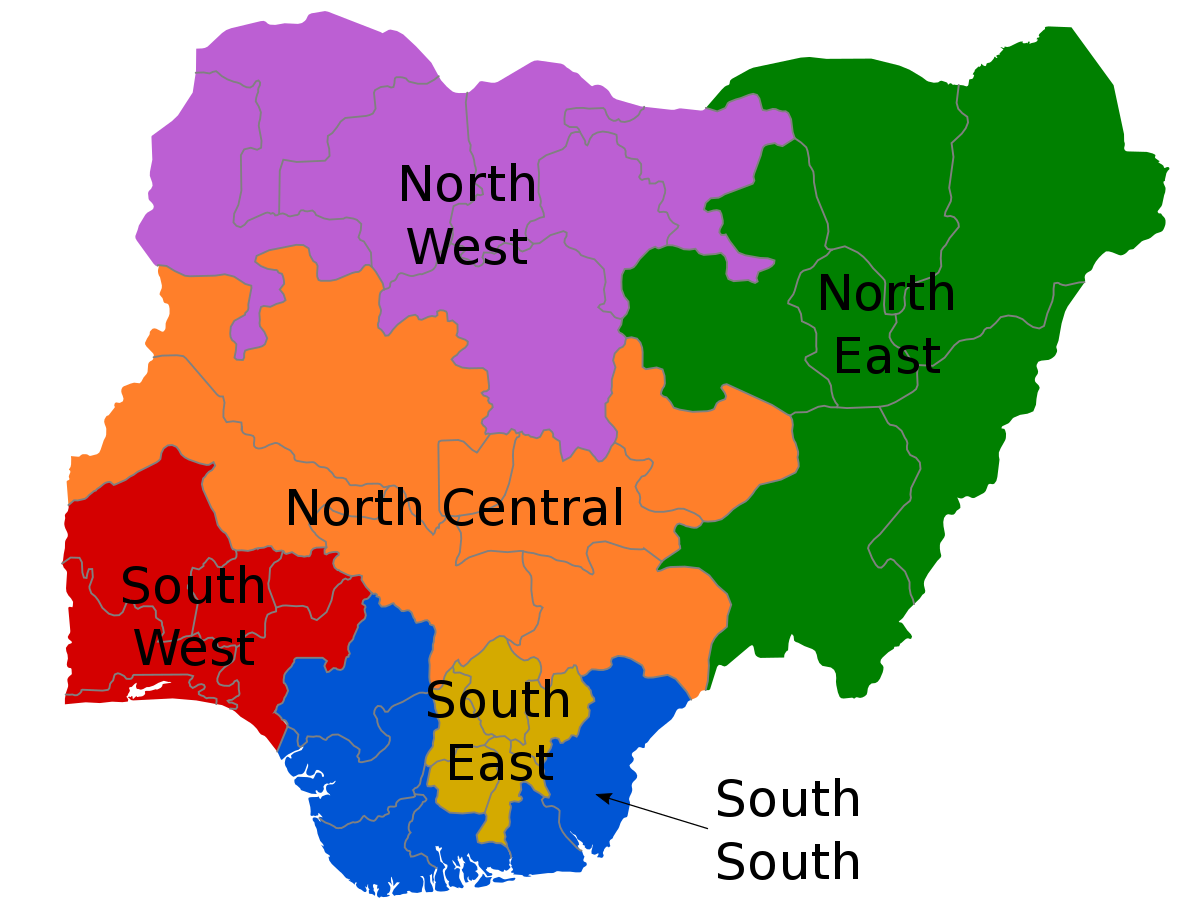
This change has led many parents to guide their children toward technology careers. Nevertheless, there exists an uneven distribution of this awareness within Nigeria. While parents in southern regions have readily embraced this change, their counterparts in the northern areas lag in grasping its significance. As a result, the northern part finds itself taking a backseat in technology careers.

In 2000, the former governor of Jigawa State, Saminu Turaki, established one of the first ICT institutes in Northern Nigeria—the Jigawa State Institute of Information and Technology, located in Kazaure. Strikingly, several students who enrolled in the institute did so solely to acquire a free laptop. They then sold the computer to fund their journey to Lagos, where they eventually engaged in dead-end handwork.

Furthermore, a project manager’s experience at the NITDA Blockchain meeting in Kano State last year highlighted the technological apathy, stating, “It is evident how far behind Northerners are in the world of technology.” Even in technology projects directly related to the Hausa Language, the predominant ethnic group in the northern region, participation was surprisingly minimal. I was astonished that only two of us from the North joined a Hausa transcription project I recently participated in.

Moreover, looking at the UTME cut-off marks for most northern universities reveals that tech-related courses like Information Technology and Cybersecurity have low cut-off marks, reflecting the limited number of applicants. Numerous examples abound, illustrating how Northerners are trailing behind in technology careers. The prevailing aspiration revolves around courses that promise a meagre N150,000 salary job.

A primary reason behind this negligence is that Northerners view technology careers as unconventional, failing to perceive them as real jobs. Mainly, if someone is working from home, it is often seen as a sign of aimlessness or lack of purpose. Unfortunately, some Northerners still hold the negative stereotype that individuals working in the technology industry are merely scammers.

Another reason is many people’s preference for security. Consequently, many opt to stay within their comfort zones rather than take risks to pursue greater opportunities. Most technology careers offer wages instead of salaries, which aligns with the Northern preference for security. It’s disheartening to learn that some people are even selling their farms to secure low-paying jobs, a profoundly unfortunate decision.

I recommended an IT course to a young man inquiring about a lucrative career. He expressed concerns about finding a job immediately after graduation. I suggested he consider creating jobs instead of continuously seeking employment.

With the rapid development of Artificial Intelligence (AI), there’s a legitimate concern that the careers Northerners heavily invest in might eventually become automated. For instance, professions involving routine tasks and predictable outcomes, such as data entry, assembly line work, and customer service, are particularly susceptible to automation. As AI technologies advance, they can handle these repetitive tasks more efficiently and accurately, potentially displacing human workers. It would be disheartening for someone to invest significantly in a career only to discover that their desired job has already been automated.

Prominent figures like the late Sheik Muhammad Auwal Adam Albani and Dr. Isa Aliyu Pantami are examples from the North who have embraced technology and achieved remarkable success. They’ve made indelible marks on the country’s technological landscape through innovative technology use.

Enhancing the curriculum of high schools is essential to address this challenge. While Data Processing and Computer Studies are part of the curriculum, introducing practical skills like coding and web development is crucial. Equipping students with these skills will better prepare them for the digital age and empower them to thrive in today’s tech-driven world.

In conclusion, the negligence of technology careers in Northern Nigeria presents a concerning trend that warrants immediate attention. The shift in lucrative career prospects from traditional fields to technology careers is undeniable, with evidence supporting the exponential growth and opportunities in technology-related jobs. While the southern regions have recognised and embraced this change, the northern regions lag due to a lack of awareness about technology careers, negative stereotypes, and a preference for security over risk-taking. Educational institutions and policymakers must take proactive measures to address this issue. By integrating practical technology skills into the curriculum and promoting a positive perception of technology careers, Northern Nigeria can bridge the gap and empower its youth to thrive in the dynamic world of technology.

Salim Sani Haladu is a Pharmacy student at Bayero University, kano. He can be reached via pharmsaleemskhaleed@gmail.com.