Admin

El Classico: Barcelona investigate alleged racist abuse against Vinicius

By Sabiu Abdullahi 

FC Barcelona has initiated an investigation into the alleged racist abuse directed at Real Madrid’s Brazilian winger, Vinicius Junior, during the recently played El-Clasico.

The incident occurred during the match held at Barcelona’s temporary Olympic Stadium, where a video published by Spanish media outlets seemed to capture a home supporter hurling racial slurs at Vinicius Junior. 

The video footage, widely circulated on social media, depicted a spectator in the stands allegedly referring to Vinicius Junior as a “monkey.”

Additionally, another disturbing incident occurred when what appeared to be a banana skin was thrown from another section of the stadium. 

Expressing their commitment to upholding the fundamental values of football, including respect for opponents, FC Barcelona released an official statement via their social media platforms, stating, “FC Barcelona will always defend the values of football and sport such as respect for the opponent, and we will investigate any racist insult that may have occurred this afternoon during the match against Real Madrid.” 

Throughout the match, Vinicius Junior faced jeers and derogatory chants from some Barcelona supporters.

Tensions escalated when the 23-year-old winger was substituted late in the game, following Jude Bellingham’s dramatic stoppage-time goal that secured Madrid’s victory.

Despite the hostile reception, Vinicius attempted to celebrate the win, pumping his fists towards the stands. Real Madrid’s coach, Carlo Ancelotti, intervened, guiding Vinicius Junior off the pitch while attempting to shield him from further provocation. 

The incident has reignited discussions about racism in football and the urgent need for decisive action to eradicate such behaviour from the sport.

FC Barcelona’s investigation aims to identify the individuals responsible for the abusive behaviour, underscoring the club’s dedication to promoting respect, tolerance, and inclusivity within the football community.
Breaking: Ohinoyi of Ebira dies, aged 94

By Ahmad Deedat Zakari

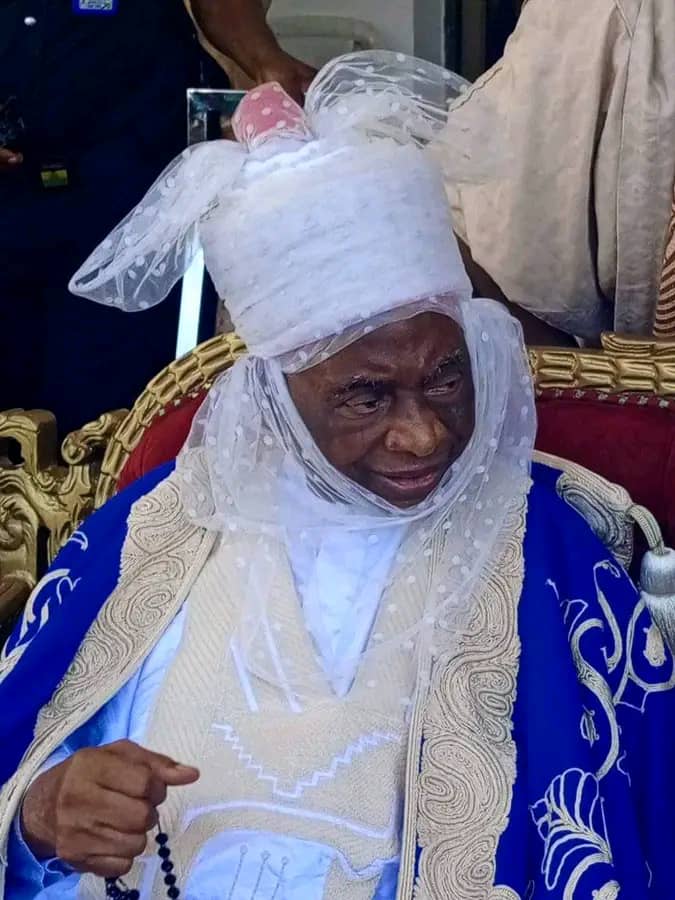
The paramount ruler of Ebira people of Kogi State, the Ohinoyi of Ebira, Abdulrahman Ado-Ibrahim, has passed on.

The Daily Reality gathered that the monarch died on Saturday night after a brief illness in Okene at the age of 94.

“His death will be announced officially, during the day”, a source told The Daily Reality.

The deceased king was enthroned on the seat of his forbears in 1997 and his reign was relatively peaceful.

His Majesty was born on February 7, 1929. He attended both Western nursery and Quranic schools, and went on to conclude his primary education in 1940 at the Native Authority (NA) primary school in Okene, Northern Region (now Kogi State). He, began his secondary school education at Ondo Boys High School and later on moved to Oduduwa College, where he graduated in 1949. In 1954, he obtained a bachelor’s degree in Economics from the London School of Economics and a master’s degree from Harvard Business School in 1959.

Adamawa tribunal confirms Umaru Fintiri’s victory as governor

By Sabiu Abdullahi 

The Adamawa State Governorship Election Tribunal has upheld Umaru Fintiri’s victory in the March 2023 governorship election.

Fintiri, representing the Peoples Democratic Party (PDP), secured 430,861 votes, defeating Aisha ‘Binani’ Dahiru of the All Progressives Congress (APC), who received 398,738 votes.

The tribunal’s ruling dismissed challenges from Dahiru and other contestants, affirming Fintiri as the legitimate winner.

The decision highlights the principles of Nigeria’s electoral process, providing a clear path for Fintiri to continue his governance in Adamawa State.

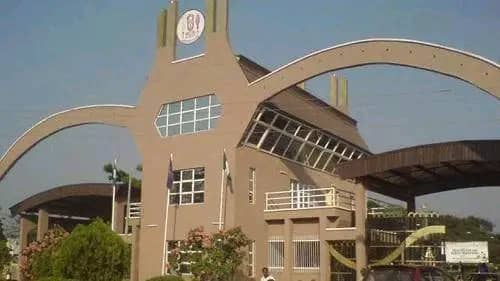
Cult war in UNIBEN leaves one dead, three injured

By Ahmad Deedat Zakari 

The cult war at the University of Benin has resulted in the death of a student at the university.

Three other students of the institution were reported to have sustained different degrees of injuries as a result of the clash. 

However, as of the time of writing this report, the Police Public Relations Officer in the State, SP Chidi Nwabuzor, said he was yet to be briefed on the incident. 

“I am yet to be briefed of [sic] such an incident. When I get the brief, I will let you know but for now no information,” he said.  

The incident reportedly happened at the Anatomy Department of the University on Friday, when the enraged cultists stormed the department gate to kill their target.

The deceased was shot at close range, while others were shot while trying to escape. 

The cult clash has caused panic among students and members of the staff of the institution. 

The University of Benin is reputed for deadly cult attacks in the country. Many students of the institution believed this incident was the university living up to its reputation.

The Night Prayer (Qiyamul Lail): A test of true desires

By Abdurrazak Muktar Makarfi

In the depths of the night, when most of the world sleeps, there are those who choose to rise. They are the ones who understand the value of Qiyamul Lail, the act of waking up to pray during the night. This predawn vigil is not just a spiritual obligation for Muslims but also a powerful manifestation of one’s deepest desires and intentions.

Qiyamul Lail is an act of devotion and a reflection of one’s commitment to one’s faith. It is a time when the world is still, and the heart is most receptive to spiritual connection. The act of willingly sacrificing sleep to stand in prayer is a testament to the strength of one’s faith and the sincerity of one’s desires.

Desire, in its purest form, is the driving force behind our actions and aspirations. It is what motivates us to work hard, to overcome obstacles, and to strive for better lives. But how can we measure the depth of our desires? Qiyamul Lail offers a unique litmus test.

If you find yourself desperately wanting something in life, be it success, happiness, or peace, and yet you are not waking up for Qiyamul Lail, then you may need to question the authenticity of your desires. True desire demands sacrifice. It requires us to prioritise what matters most to us. When we value something deeply, we are willing to make sacrifices to attain it.

Waking up for Qiyamul Lail is not just about fulfilling a religious duty; it’s about demonstrating the intensity of your yearning. It’s a declaration that your connection with the Divine is so profound that you are willing to forgo sleep, one of the most basic human needs, to nurture that connection.

Moreover, Qiyamul Lail is a time for reflection, self-examination, and supplication. It is a chance to pour your heart out to the Creator to seek guidance, forgiveness, and blessings. It is a moment when you can lay your deepest desires and concerns before the Almighty with a heart filled with humility and hope.

In the stillness of the night, when the world is hushed in slumber, you have the opportunity to reflect on your aspirations and the path you are on. If your desires are sincere, if you truly long for your goals to be realised, then Qiyamul Lail is your arena to prove it. It’s a chance to show that your ambitions are not mere words but a profound yearning that drives you to action.

So, let the night prayer be a reminder—a reminder to measure your desires against your actions. If you’re desperately wanting something and you’re not waking up for Qiyamul Lail, then you don’t want it enough. But if you’re willing to rise from your slumber, stand in devotion, and whisper your desires to the heavens, then your desires are genuine, and you’re on the right path to fulfilling them.

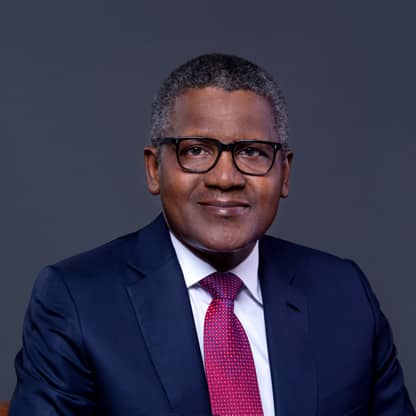
Dangote Cement surges with 15.2% Pan-African sales growth, record profits, unstoppable expansion

By Uzair Adam Imam

In the nine months leading up to September 30, 2023, Dangote Cement has reported a remarkable 15.2 percent increase in its pan-African sales volumes, reaching 8.5 million metric tons (Mt) compared to the 7.4 million Mt in the same period in 2022.

Pan-African volumes represent the sales volume from Dangote Cement plants located outside Nigeria.

These figures were revealed in the company’s unaudited results on the Nigerian Exchange (NGX) portal. The surge in volumes was primarily driven by exceptional sales performances in key locations.

The Dangote Cement Plant in Senegal saw a substantial 66.9 percent increase in sales, while the Dangote Cement Plant in Congo reported a 60.5 percent surge in volumes.

Dangote Cement Zambia experienced an 18 percent increase, with Ghana and South Africa following closely at 15.5 percent and 18.5 percent growth, respectively. Ethiopia and Tanzania also contributed to the positive trend with 6.5 percent sales volume increases.

Furthermore, Dangote Cement noted a 20.5 percent increase in profit before tax, rising from N335.9 billion to N404.89 billion, while the profit after tax increased by 30.2 percent, from N213.10 billion to N277.55 billion.

Arvind Pathak, the Chief Executive Officer of Dangote Cement, commented on the results, stating, “This positive nine-month result reflects our strong value proposition, enhanced operational efficiency, and our commitment to cost containment in the face of rising inflation. Group revenue reached ₦1,514.6 billion, with EBITDA reaching an all-time high of ₦662.8 billion, marking a
28.5 percent increase.”

He also highlighted the impressive growth of the company’s pan-African operations, which contributed 41.9 percent to Group volumes, with a record revenue growth of 103.9 percent and EBITDA growth of 255.4 percent.

Pathak emphasized that the growth was a result of sustained demand across the regions in which Dangote Cement operates.

Looking ahead, Pathak expressed optimism about the company’s future, particularly with
the final stages of a new grinding plant in Cote d’Ivoire nearing completion.

He reaffirmed the company’s commitment to delivering quality cement products to
its customers and expressed confidence in a strong finish to the year.

Dangote Cement is Africa’s leading cement producer with a capacity of 52.0 million metric tons across the continent. Through strategic investments, the company has not only eliminated Nigeria’s dependence on imported cement but has also transformed the nation into an exporter, serving neighboring countries as well.

Dangote Cement’s extensive operations include plants in Cameroon, Congo, Ghana, Ethiopia, Senegal, Sierra Leone, South Africa, Tanzania, and Zambia, in addition to its prominent presence in Nigeria.

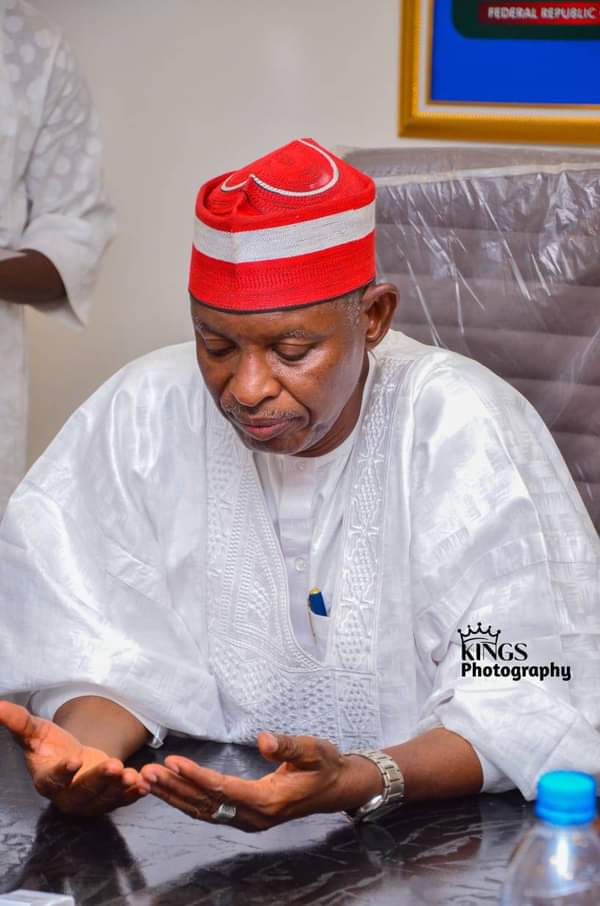
Contrasting priorities and policy impact between Abba and Ganduje

By Mansur Hassan, PhD

Engr. Abba Kabir Yusuf, the Executive Governor of Kano State, has recently shed light on the alleged misappropriation of funds by Nigerian governors, exposing lack of impactful policies.

Over the past eight years, Kano State witnessed a dearth of policies that benefit the less privileged directly. In contrast, the Kwankwasiyya administration, led by Abba Gida Gida, has swiftly demonstrated its prowess in governance within five months, particularly through transformative healthcare and educational ‘revolution’ spanning from primary to tertiary levels.

Under Kwankwasiyya’s leadership, there has been a significant focus on education, including sponsoring first-class graduates to foreign universities—an initiative emulated by other nations. The educational revolution initiated during the 1999-2003 and 2011-2015 periods has left an enduring mark, with numerous scholars benefiting from foreign scholarships.

However, the governors who presided over the state from 2015 to 2023 failed to implement any substantial policies for the state’s improvement. Criticism was leveled against the transformative programs introduced by H.E. Abba Kabir Yusuf, particularly after the mass wedding event known as “auren ‘yangata.” The sponsorship of 1001 first-class graduates further intensified opposition, with the former Governor of Kano State, Abdullahi Umar Ganduje, dismissing the program as useless.

This criticism seemingly stemmed from the program’s focus on underprivileged children, contrasting with Ganduje’s past sponsorship of his own children’s education abroad. The clash underscores a debate on priorities and equitable policies in Kano State.

Dr. Mansur Hassan is a Senior Lecturer, Department of Mathematics, Yusuf Maitama Sule University Kano

Buhari, not Tinubu, destroyed Nigeria—Hausa political singer Rarara

By Sabiu Abdullahi

In a recent press conference held in Kano, the renowned Hausa political singer, Rarara, made startling accusations against Nigeria’s immediate-past president, Muhammadu Buhari.

Rarara, who gained fame for his unwavering support for Buhari through numerous hit songs, publicly voiced his regret over endorsing the former president.

He accused Buhari of leaving behind a crumbling economy for the current president, Bola Tinubu. 

Rarara’s criticisms were not limited to Buhari alone; he also questioned the current administration’s silence regarding what he described as the alleged financial mismanagement during Buhari’s tenure.

He called for transparency and openness, emphasizing the importance of truthfulness in governance.

The singer warned against building the foundation of the current administration on falsehoods, highlighting the potential disastrous consequences such a path could lead to for the nation. 

He expressed deep concern over the destruction he claims Buhari caused to the country and urged the current administration to openly acknowledge these challenges to the Nigerian people. 

When asked about his regret for supporting Buhari, Rarara openly admitted his disappointment, stating that he had supported the former president blindly, hoping that Buhari would address the damage caused by the previous administration.

He emphasized the need for transparency and honesty in governance, urging leaders to be accountable to the citizens they serve. In addition to his criticisms, Rarara highlighted his significant contributions to the success of the ruling party.

He asserted his right to have a say in political appointments, citing his pivotal role in supporting President Tinubu’s victory.

The singer argued that his efforts, particularly in the northern region, warranted recognition, either in the form of a political appointment or the opportunity to recommend individuals for such positions.

Zamfara institute of technology bill passes second reading at House of Reps

By Sabiu Abdullahi

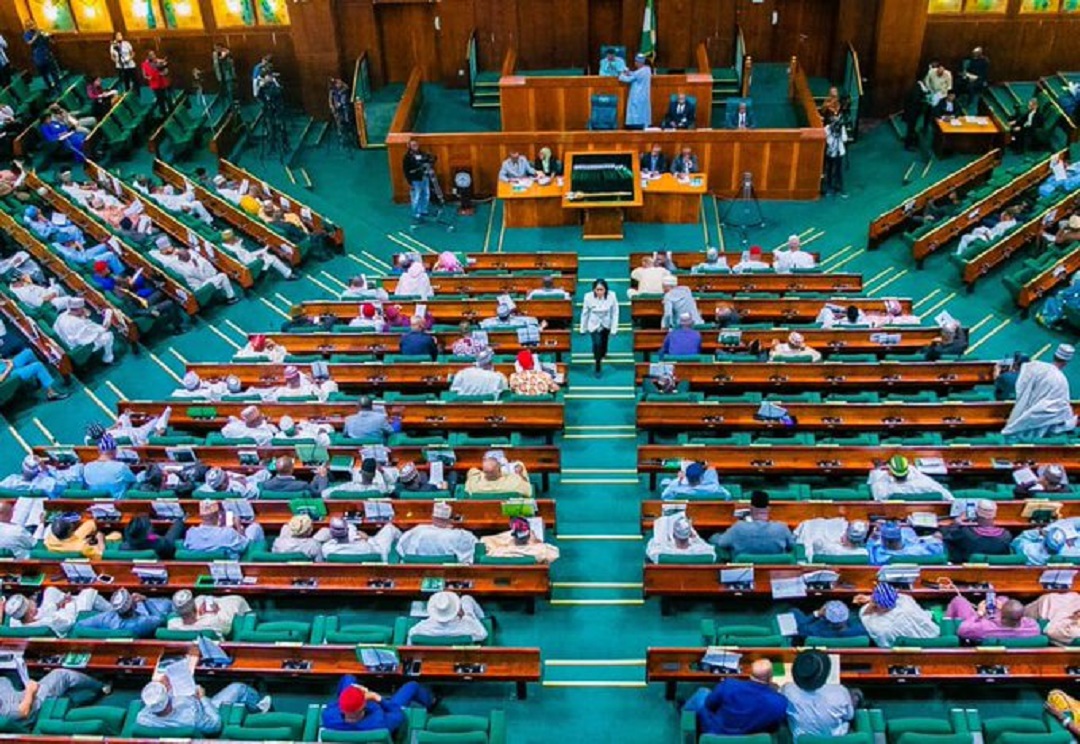
The House of Representatives has advanced the Federal Institute of Technology and Entrepreneurship Bill to the next stage of the legislative process.

The bill, sponsored by Hon. Abdulmalik Zubairu Bungudu, representing Bungudu/Maru Federal Constituency of Zamfara State, successfully passed its second reading, garnering widespread support from lawmakers. 

The proposed legislation seeks to amend the Federal Polytechnic Act, 2004, enabling the establishment of the Federal Institute of Technology and Entrepreneurship in Bungudu, Zamfara State.

The institute’s primary focus would be on offering specialised courses and programmes tailored to address the technology and entrepreneurship challenges faced by Nigeria.

By equipping students with relevant skills and knowledge, the institution aims to empower them to create jobs and contribute significantly to the nation’s economic growth. 

During the deliberations, Hon. Abdulmalik Zubairu Bungudu passionately argued for the bill, emphasising the urgent need to reposition the education system.

He highlighted the prevailing economic realities, where traditional job opportunities are limited, especially in regions like Zamfara State, where farming, a primary source of income, is severely impacted by banditry and insecurity. 

Members of the House expressed unanimous agreement on the bill’s potential to transform the educational landscape. They underscored the importance of aligning education with the demands of the contemporary job market and commended Hon. Abdulmalik Zubairu Bungudu for his vision in sponsoring the bill. Speaker Hon.

Tajudeen Abbas, in his closing remarks, reiterated the House’s commitment to promoting initiatives that enhance economic opportunities for Nigerians.

He assured that bills like the Federal Institute of Technology and Entrepreneurship Bill, aimed at fostering self-employment and economic growth, would receive expedited attention. 

The bill has now been referred to the House Committee on Tertiary Institutions, where it will undergo further scrutiny before returning to the Committee of the Whole for final deliberations.

This development marks a significant stride towards empowering the youth, encouraging entrepreneurship, and ultimately bolstering Nigeria’s economic resilience.

Budget and National Planning

By Bilyamin Abdulmumin

Last week, during the FEC meeting, the Minister of Budget and National Planning, Senator Abubakar Atiku Bagudu, made a groundbreaking announcement by revealing the budget forecast for 2024. It sent shockwaves through the nation, and understandably so, as the projected budget of 26 trillion naira was unprecedented; it was a staggering  4 trillion compared to the previous year.

Nigerians have consistently expressed concerns about the ever-increasing budget forecasts year after year. Regrettably, this budget inflation trend has persisted. For instance, the budget started at 299 billion during the Obasanjo government in 1999 but ballooned to 2.3 trillion when he left office. Yar’adua handed over a 4.4 trillion budget to Jonathan, who returned the exact figure in 2015 (despite presenting a 4.9 trillion budget in three previous years). The budget increase went wild during President Muhammad Buhari’s tenure, reaching a staggering 21 trillion in 2023 when he left office.

Although I am not an expert on budget matters, it’s apparent that every budget must consider factors such as market dynamics, inflation, and the growth of the national population and its demographics.

Rather than fixating solely on the budget figures, we, as citizens, should focus on the prudent and effective utilisation of these budgets. If the Nigerian budget had been prepared and executed more efficiently, we might have already achieved the promised Eldorado.

For example, 43 years have passed since the Shagari and Gowon green revolution, 33 years since Vision 2000, and a decade since Jonathan’s Agricultural Transformation Agenda. However, the majority of Nigerians still lack access to quality housing and healthcare, and we continue to struggle to feed ourselves. Similar ambitious visions have come and gone, including IBB’s structural adjustments, Abacha’s Vision 2010, Obasanjo’s Vision 2020, Yar’adua’s seven-point agenda, and PMB’s Vision 2050.

One crucial issue highlighted by BudgIT, a civic organisation monitoring the Nigerian budget, is the disconnect between our budget and national planning, hindering the realisation of the promised utopia. Our budget is not aligned with our national planning, and it seems that from the beginning, Nigeria has not been drawing the budget structure from national planning.

In the words of Oluseun Onigbinde, Global Director of BudgIT, “The Nigerian budget has delivered sub-optimal results because it has not been linked with national strategic plans written for the medium or short term. The current President has a public manifesto, and the Federal Government recently, at a significant cost, also delivered strategic plans that terminate in 2025 and 2050. It does not make sense if the national budget is not linked to these documents. The budget needs to stop just being a contract vending machine stuffed with varied interests but a thorough planning document.”

If the masses can redirect their attention to this issue rather than merely reacting to budget forecasts, expecting more effective and desirable results is plausible.

Interestingly, the Minister of Budget and National Planning, Senator Atiku Bagudu, has pledged to address this issue and reached out to the public for understanding and engagement. This outreach occurred during an official visit by the House of Representatives Committee on Alternative Education. The minister reaffirmed the government’s commitment to the APC comprehensive plans, particularly Agenda 2050 and the 5-year development plan.

Dear Nigerians, it’s time to refocus our priorities and stop chasing after the shadows.