Admin

The resurgence of kidnapping in northern Nigeria

By Mukhtar Garba Kobi

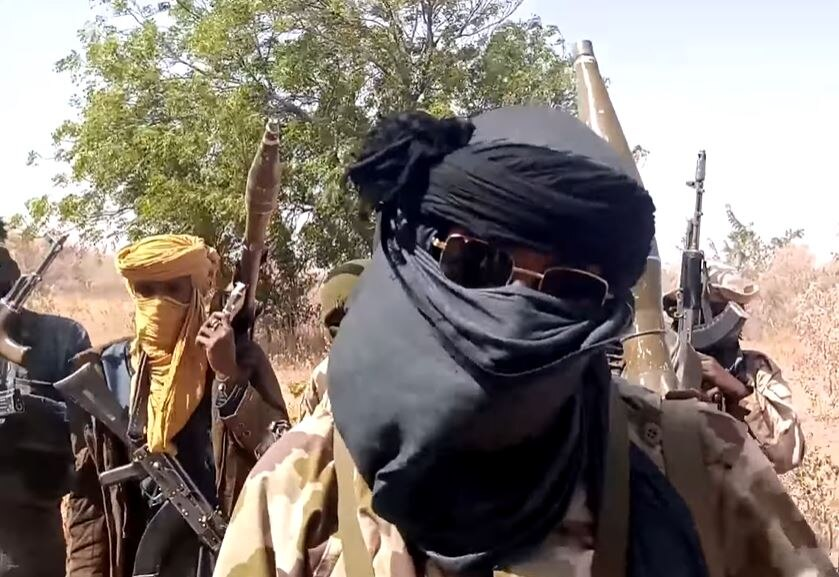
The barbaric act of abducting people by some bad elements in the Northern part of Nigeria is one of the major threats to the endearing peace and economic growth; bandits operate on roads, communities and recently in institutions of higher learning. News of an unspecified number of farmers in Borno and students of Federal University Dutsen-Ma has gone viral lately; bereaved families of the victims are still in shock while many resolved to withdraw their wards from schools; this is bad looking at the importance of education to mankind and development of all. People in those areas are doubting the promises made by leaders on protecting lives and properties.

Nobody on this mother earth is above the law. In some developed countries, even incumbent leaders are forced to face the jury and account for their mischievous deeds in office. Still, unfortunately, in Africa, the existence of immunity attached to leaders gives them the audacity to do as they wish.

One of the bandits’ kingpins in the Northern part of Nigeria, Dogo Gide, released an audio message which a well-known media man, Bello Mu’azu, shared. Still, the message contained has added fuel to the blazing fire of insecurity. The dreaded Dogo Gide stated that he preferred to die as a bandit and had no interest in reconciling with the government, no matter the money given to him.

Since most of the bandits’ hideouts are known by our gallant security forces, they (bandits) could be cleared in a few days, but such only end in discussions. Public figures have made excellent attempts to mediate between bandits and governments. Unfortunately, their efforts were fruitless due to the negligence of the government. There is no way fire could be put out with the same fire, but combining the two (attacks and dialogue) would greatly help. Moreover, engaging in dialogue would pave the way for peace in most kidnapping-ravaged States. Culturing crops and businesses would regain their lost glories while students would learn without fear.

Furthermore, research conducted by SBM, which is an investigative firm, revealed that between June of 2022 and July of 2023, three thousand six hundred and twenty (3,620) people were taken hostage in five hundred and eighty-two (582) kidnap-related incidents in Nigeria. It was further uncovered that “North-West and North-Central regions exhibit higher in-kind ransom demands. This aligns with Nigeria’s poverty and its correlation with areas where food is commonly demanded. Additionally, these regions have seen a surge in motorcycle demands due to economic opportunities and possibly because of their potential use in terror activities”.

Some of the factors that fuel kidnappings include high levels of poverty and hunger; waking up empty-pocketed and nothing for family members to consume have forced many into the act, especially unemployed Fulani herders. The second factor is greed and uncontrolled love to be rich, which also persuaded many into kidnappings; shallow-minded persons often view abduction as the easiest way to get enough money to meet their daily needs. Kidnappers play vital roles in influencing their friends; they give uninterested friends convincing points while those low faculty of thinking accept the offer without a second thought on the implications of such ventures. 

The mass abduction of people can be stopped if the following measures are adopted: schemes for employing youths or training them on skills have left behind several villagers, and most of the arrested kidnappers were dwellers; there is a need for the villagers to be included in whatever government came-up with. Since kidnappers have leaders, there is a need to have a virtual or physical meeting with them to know why they are kidnapping. Governments should ensure that their demands are met. Granting amnesty to repentant kidnappers would be a welcome idea, but they should not be reintegrated back into societies. They should be taken to rehabilitation homes and trained on different skills to be useful community members. 

Mukhtar writes from Bauchi and can be reached via garbakobim@gmail.com.
Gov. Buni assures personal supervision of solid project in Yobe

By Muhammad Suleiman Adam

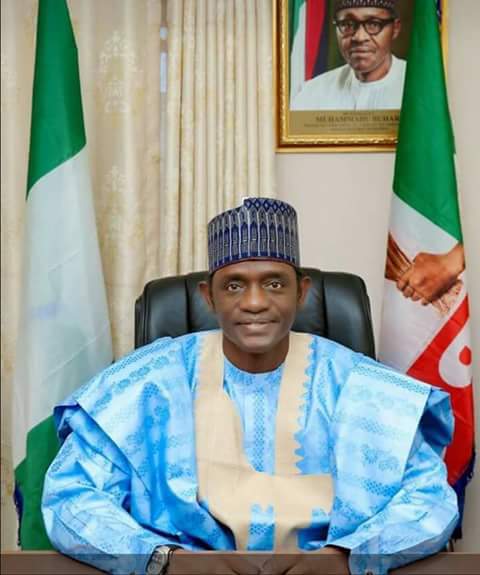
Yobe state Governor Mai Mala Buni said he would personally supervise the implementation of the Sustainable Solutions for Long-Term Displaced persons (SOLID) project to ensure the success of the programme in the state.

He stated this on Wednesday when a team from the World Bank paid him a working visit in Damaturu. 

“I am delighted to welcome yet another initiative by the World Bank to support the state government in implementing more sustainable solutions for long-term displaced persons and to support the host communities in dealing with the challenges they face” Buni said

He further said Yobe is the second most affected state that recorded massive destruction of facilities and infrastructure by the insurgency, therefore, the need for additional facilities to support government efforts to effectively serve the people cannot be overemphasized as some of the displaced persons have chosen to settle permanently in the host communities.

He commended the World Bank and other development partners for supporting the recovery efforts of the state government in resettling displaced persons in their communities with dignity.

He directed MDAs to ensure full participation for ownership and sustainability of the SOLID project “the MDAs should identify areas of intervention and ensure harmonization for greater impact across the state”.

Leader of the delegation, Fuad Malkawea, commended the positive interventions made by the Multi Sectoral Crisis Recovery Project (MCRP) another World Bank programme in the state.

He assured that the partnership would further provide support to the host communities.

“The intervention is to provide support to existing facilities some of which are over stretched” he observed. 

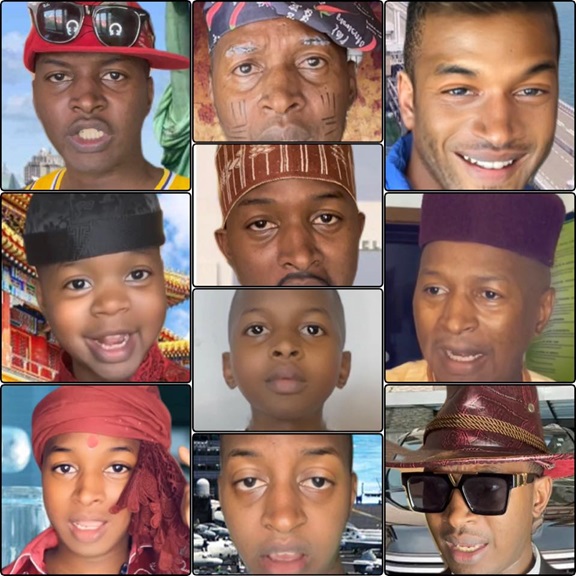
A serious humour: Bello Galadanchi’s comedy skit for social commentary

By Sa’id Sa’ad

Earlier this year – when Bello Galadanci’s videos were becoming popular on digital platforms – a colleague posted a video of his skit on his WhatsApp status. From what might be a simple curiosity, I asked him if he knew who the person was – of course, expecting him to at least know a bit – but he replied that he did not know him beyond his not-so-much-funny recent “comedy skits.”

That was weeks after the publication of my recent essay, A Crack on Hadiza Gabon’s Wall: Humanizing Northern Nigeria Storytelling, where I described what the show meant to storytelling in Northern Nigeria and the impact of what I called “hypocritical denial and intentional lack of acknowledgement” from the northern community. As it has always been, I bumped into a tweet where a young person from “northern” Nigeria condemned the entire comedy skits made by Bello Galadanci. If I weren’t from the North, I would have wondered why Northern consumers always find a way to devalue Northern content creators in whatever discipline. But I didn’t, because I understood the game. So. Well. It is nothing to raise a brow at, mainly because, as creatives, criticism as such is often expected, “Thanks for the PR” was the short response Galadanchi gave him.

Even with the recent trooping of young creators into the skit-making industry in Nigeria, majorly due to its financial and digital-popularity lakes tunnelled by TikTok, Instagram and YouTube, one could guess accurately – as most other useful or even useless “developmental” growth – that adoption of content creation as a business by young people in Northern Nigeria, came very late, as well. It is difficult to mention by name – the northern skit creators who began early – and still maintain the same consistency as one would mention Taoma or Aproko Doctor or Mr. Macaroni from the South. Only Galadanchi and a few others still retain their craft consistently.

Many young people in northern Nigeria continue to comment, criticise, or label Bello Galadanchi and his skits in multiple ways.

Aside from the unpopular northern Nigeria population that perceives his skit as the “working-for-the-white” theory (or the painting north black belief), and the many who – due to educational standards and exposure – fail to comprehend the satirical nature of his contents, most of those who do not find him funny do so due to Broda-Shaggying or Sabinufying Galadanchi’s skit.

Unlike most skit makers in Nigeria, whose focus is majorly only on sowing laughter and entertainment into the market and reaping their golds, built on creative juice – Galadanchi’s contents are meant for social and political commentary using humour and satire. Backed by journalism, creative, and educationalist careers, it might seem almost impossible for Galadanchi – even by himself – to create non-questionable or fluid content only meant for laughter because creatives are muscled with the hunger to correct and change using their art. His could be simplified as addressing serious problems without being too serious.

Therefore, this makes it difficult for those Broda-Shaggying and Sabinufying him to comprehend the content as, thus, they expect a consciously endowed full-length comedy. I don’t mean to belittle content created by skit makers whose conscious aim is to create a hundred-percent comedy piece. However, expecting an all-comedy-induced piece from a skit maker whose purpose is challenging social and political ills using humour could be as good as expecting something from nothing.

While writing this essay, I shared on WhatsApp status a short clip from an interview Bello Galadanchi granted CGTN where he sat on stairs with three other Chinese, in a swagger-spirited looks with polished accent and blonde hair. Most GenZ’s (respectfully) responded to have known him only through his comedy and never “expected” him to be this “polished”, so far away from what they expected Dan Bello (his character) to be.

That means most of those who denigrate his content would have been from their “expected lens” through which they measure him to be. As argued in my previous essay above – could this also be what I called “hypocritical denial and intentional lack of acknowledgement” of the northern population for contents and creators coming from the north? Because, of course, what Bello Galandanchi is doing for northern Nigeria-specific social and political issues is what Aproko Doctor is exactly doing for Nigeria’s health sector and health-related issues.

Though satire could emerge in professional, amateur, elitist, and popular forms, those who do not comprehend his satire might also be due to their level of comprehension rather than the perceived educational standard or exposure. However, I believe both play a role here. Of course, satire is meant to use humour and irony to criticise, as in the case of the Nigerian writer Elnathan John with his famous book, Be(com)ing Nigerian. However, because Galadanci focuses on the “North”, he is quickly labelled with the “working-for-the-white theory”.

Perhaps if Elnathan’s book was a digital piece as Galadanci’s – and produced in the same form and language – the same label could have been blanketed for him, too. Sometimes, the theory sounds a lot like a comedy skit as well because even a deported northerner fighting the cause of his people – in any way different from the (usual) northern norms – would be considered brainwashed to work for the whites.

More so, those who do not comprehend the satire in the contents are often blindfolded from seeing the patriotism in these pieces. If not for a deep love for a people, I wonder how one would continue to create these provocative contents that question deep political ills in the region. While also soaking insults from young people in the same region who barely understood the depth of what his craft was uprooting.

However, looking at his pieces of art critically (beyond Broda-Shaggying them), how they are deeply immersed in satire and sheer creativity, one could vividly tell how varying it is from the contents created by other skit makers. If other skit makers called theirs “contents”, a creative could easily describe Galadanchi’s as a “piece of art”. The beauty in the work is so immense that one could smell creative fragrances all over the place.

Imagine if the digital youths in the north focus on – if not creating – promoting creators from the region rather than policing social media in the holy name of the north. Imagine if we all question the system in the individual creative juices deposited in us. Imagine if we learn to place a market value on the creators and contents from the north rather than wasting our time watching these wayward girls crowd-chasing nonsense on TikTok in Hausa and serving them to your screen back-to-back. Imagine if we focus on the problems rather than those who help us understand the problem. Imagine if we don’t call for the heads of those who create alphabets to remind us of where we are.

Galadanchi didn’t just find questioning the ill social and political system for Nigerians in Nigeria. He has lived with the system, experienced the system and carried dozens of scars from the system to wherever the world took him.

If these pieces of art are what come out from creatives whom the ill Nigerian system has wounded, then very soon, the Bello Galadanchi in all of us will prevail.

Sa’id Sa’ad is a Nigerian writer, poet, and playwright from Maiduguri. He won the Peace Panel Short Story Prize 2018 and the NFC Essay Prize 2018. He tweets @saidsaadwrites and can be reached directly via saidsaadabubakar@gmail.com.

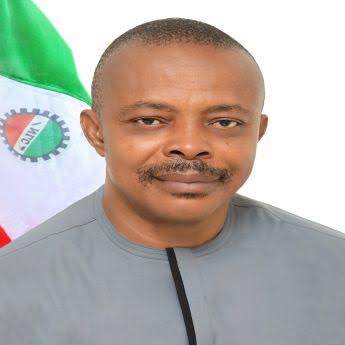
Police arrest NLC president in Imo

By Sabiu Abdullahi 

Imo State witnessed increased tensions as Joe Ajaero, the National President of the Nigeria Labour Congress (NLC), was reportedly arrested by Nigeria Police Force operatives in Owerri on Wednesday.

Ajaero was taken into custody at the NLC state council secretariat, according to Benson Upah, the Head of Information at NLC, and subsequently transported to an undisclosed location. 

This development followed the NLC’s announcement of an impending total strike in Imo State, set to commence on November 1, 2023.

Ajaero had accused Imo State Governor Hope Uzodimma of neglecting workers’ welfare and violating their rights.

He highlighted several issues, including prolonged non-payment of salaries, the wrongful categorization of workers and pensioners as ghost beneficiaries, and non-compliance with the national minimum wage. 

During a press briefing held on Sunday, Ajaero criticised the state government’s refusal to honour past agreements and its resistance to engaging in social dialogue and collective bargaining.

He underscored the grave consequences, citing reports of workers losing their lives due to the alleged lack of salary payments. 

The arrest of Ajaero has intensified the labour dispute, raising concerns about the ongoing situation in Imo State.

The NLC and its members continue to demand fair treatment and the fulfilment of workers’ rights.

As the state government faces mounting pressure to address these grievances, the labour unrest in Imo State remains a cause for growing apprehension and scrutiny.

President Tinubu issues warning about unauthorised access to FEC meetings

By Sabiu Abdullahi

President Bola Tinubu has issued a strict warning against unauthorised attendance at Federal Executive Council (FEC) meetings.

Specifically addressing his son, Seyi Tinubu, and other individuals, President Tinubu emphasised the need for adherence to established security protocols during the vital national discussions. 

The president named the only approved attendees, including his Special Advisers and key staff members, stressing that no one else should participate without his explicit invitation.

He directed top officials to enforce this directive, ensuring the integrity of FEC meetings. 

President Tinubu also praised the recent successful bilateral meetings with German Chancellor Olaf Scholz and urged ministers to focus on innovative reforms to attract investors.

He noted the importance of creative solutions for enhancing Nigeria’s investment opportunities.

CBN debunks rumours of naira redenomination

By Sabiu Abdullahi 

The Central Bank of Nigeria (CBN) has debunked rumors of a naira redenomination in the near future. 

In a statement, which was signed by the bank’s Director of Corporate Communications, Isa AbdulMumin, on October 31, 2023, the apex bank states that the contents of a text message circulating widely suggesting that the CBN plans to redenominate the naira in January 2024 are “misleading.” 

It further states that the authors of the text message “modified text eked from an old policy move by a previous CBN Governor in 2007 to make it appear recent.”  

The CBN advised the public to ignore the rumors, as they are “speculative and calculated to cause panic in the polity.”

The bank also stated that any reforms to the naira would be subject to “laid down procedures in line with the provisions of the CBN Act, 2007.”

Lionel Messi wins eighth Ballon d’Or 

By Sabiu Abdullahi 

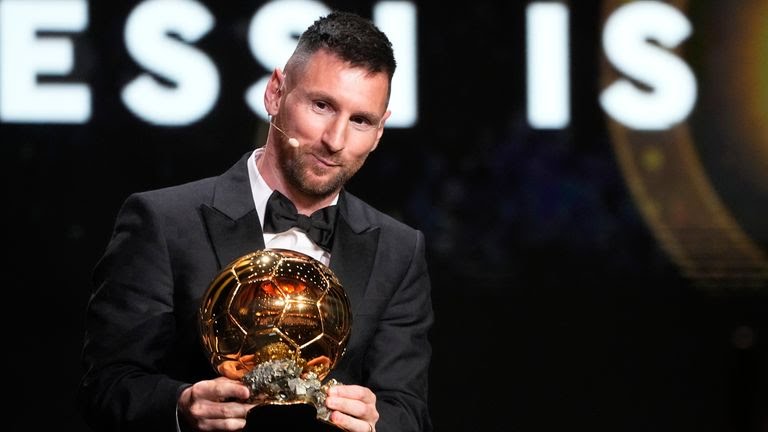
Lionel Messi, the iconic Argentine forward, has seized the Ballon d’Or for an unprecedented eighth time.

Messi, who now graces the fields of Major League Soccer with Inter Miami, achieved this remarkable milestone after steering Argentina to its maiden World Cup triumph in Qatar last year.

Not only did he guide his nation to glory, but he was also honoured with the Golden Ball award, recognising his stellar performance as the tournament’s standout player. 

His achievement widens the gap between him and his perennial rival, Cristiano Ronaldo, who notably did not feature on the shortlist for the first time since 2003.

Ronaldo, a five-time Ballon d’Or winner, currently plies his trade with Al Nassr in Saudi Arabia. 

Having bid adieu to European football at the conclusion of the last season, exiting after a successful stint with Paris Saint-Germain, where he clinched back-to-back Ligue 1 titles, Messi embarked on a new chapter in his illustrious career with Inter Miami in Major League Soccer.

UK government sacks ministerial aide for calling for ceasefire in Gaza

By Sabiu Abdullahi 

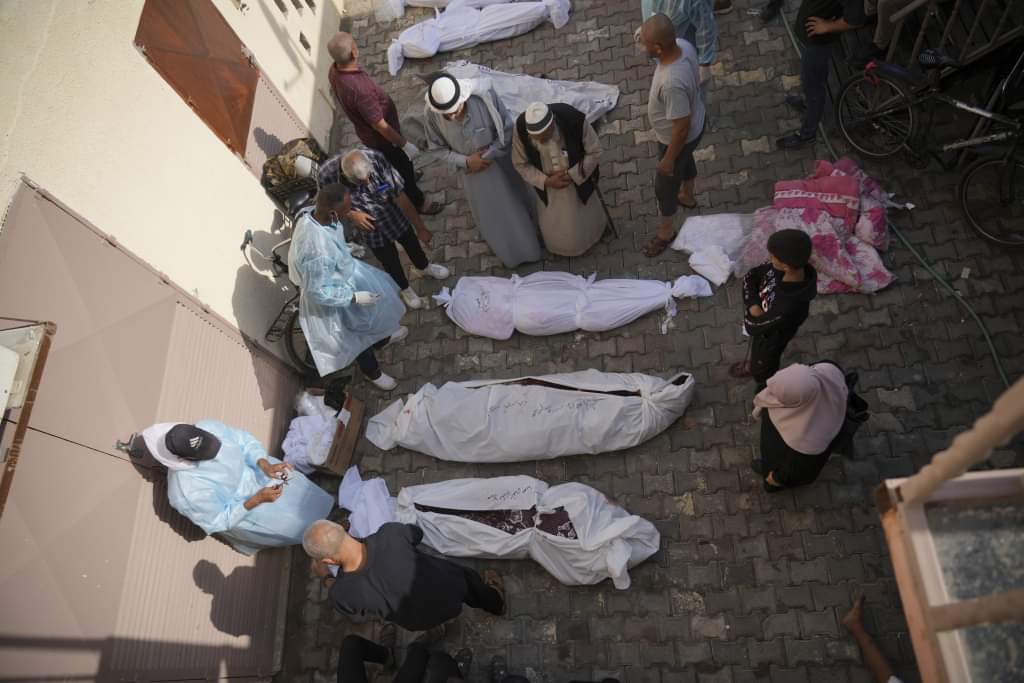
Tensions within the British government have come to the forefront as a ministerial aide, Paul Bristow, was dismissed from his position after calling for a permanent ceasefire in the ongoing Gaza conflict.

Bristow’s plea for a ceasefire conflicted with the government’s support for “humanitarian pauses” instead. 

The dismissal came in the wake of a letter Bristow addressed to the Prime Minister, urging for a lasting ceasefire to save lives and enable crucial aid delivery to the affected region.

His removal was swift, with government officials citing his comments as a breach of the principle of collective responsibility, wherein government members are expected to publicly support official policies regardless of personal beliefs. 

The internal discord was further highlighted during a recent session of Prime Minister’s Questions, where Chancellor of the Exchequer Rishi Sunak advocated for “specific pauses” to facilitate aid delivery while firmly rejecting calls for a complete ceasefire.

Sunak emphasised Israel’s legitimate right to self-defence, underscoring the government’s stance on the matter. Bristow, a Conservative MP representing Peterborough, expressed his deep concern for his constituents, a significant portion of whom have been directly impacted by the conflict.

His questioning of the effectiveness of ongoing military actions in enhancing security or improving the situation resonated with a portion of the public. 

This incident reveals a rift within the UK government, raising questions about the nation’s diplomatic stance and the complex challenges posed by international conflicts.

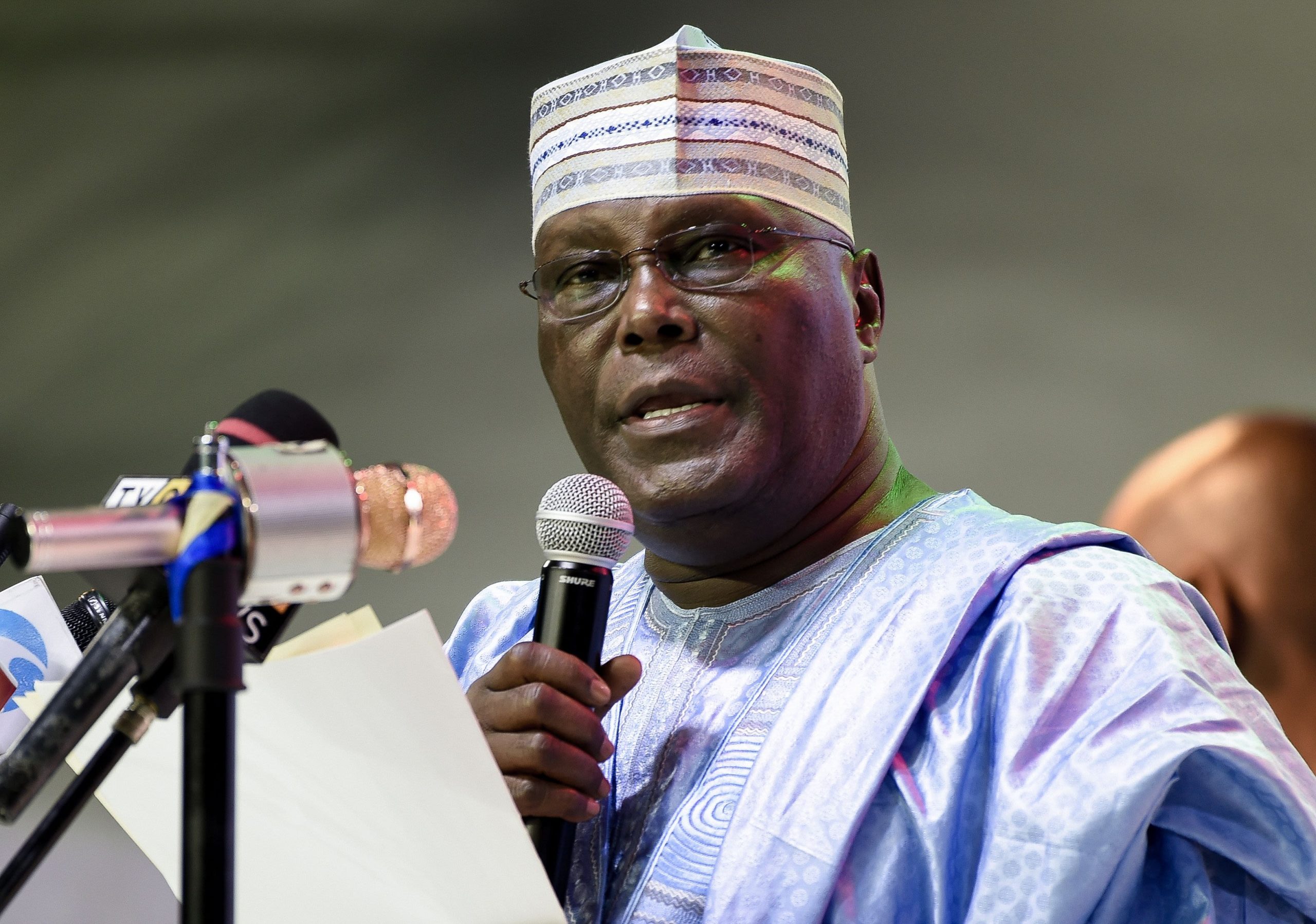
FULL TEXT of Atiku Abubakar’s press conference  

By Sabiu Abdullahi 

Alhaji Atiku Abubakar, the presidential candidate of the Peoples Democratic Party (PDP) in the 2023 election, has appeared again to conduct a press conference in the aftermath of the judgement passed by the Presidential Election Petitions Tribunal in favour of President Bola Tinubu. 

Below is the full text of the press conference: 

Protocol. 

Gentlemen of the Press. Someone asked me what I would do if I lost my election petition appeal at the Supreme Court. In response, I said that as long as Nigeria wins, the struggle would have been worth the while. By that, I meant that the bigger loss would not be mine but Nigeria’s if the Supreme Court legitimizes illegality, including forgery, identity theft, and perjury.  

If the Supreme Court, the highest court in the land, implies by its judgment that crime is good and should be rewarded, then Nigeria has lost and the country is doomed irrespective of who occupies the Presidential seat. If the Supreme Court decides that the Electoral umpire, INEC, can tell the public one thing and then do something else in order to reach a corruptly predetermined outcome, then there is really no hope for the country’s democracy and electoral politics.  

Obviously, the consequences of those decisions for the country will not end at the expiration of the current government. They will last for decades. I am absolutely sure that history will vindicate me. We now know what the Supreme Court has decided. 

At critical points in my political life, I always ignored the easy but ignoble path and chosen the difficult but dignified path, the path of truth, of morality, of democracy and rule of law.  

I always chose freedom over servitude, whatever the personal discomforts my choice entails. When I joined politics, the critical challenge was easing the military out of power so that civilian democratic governance could be restored in Nigeria. It later became a very defining struggle, and, as one of the leaders of that struggle, I was targeted for elimination.  

In one incident, nine policemen guarding my home in Kaduna were murdered in an attempt to assassinate me. I was also forced into exile for nine (9) months. In addition, my interest in a logistics company that I co-owned was confiscated and given to friends of the military government. As Vice President in the civilian government that succeeded the military, I, again at great personal cost, chose to oppose the extension of the tenure of the government beyond the two four-year terms enshrined in our constitution.  

In response to the official backlash against me, I instituted several cases in the courts, which led to seven landmark decisions that helped to deepen our democracy and rule of law. At the current historic moment, the easier option for me would have been to fold up and retreat after the mandate banditry perpetrated by the APC and INEC.  

But I went to the Nigerian courts to seek redress. I even went to an American court to help with unravelling what our state institutions charged with such responsibilities were unwilling or unable to do, including unravelling the qualifying academic records of the person sworn in as our President and by implication, hopefully who he really is.  

I offered that evidence procured with the assistance of the American Court to our Supreme Court to help it to do justice in this case. I give this background to underscore that what we are currently dealing with is bigger than one or two presidential elections and is certainly bigger than Atiku Abubakar. It is not about me; it is about our country, Nigeria. It is about the kind of society we want to leave for the next generation and what kind of example we want to set for our children and their children.

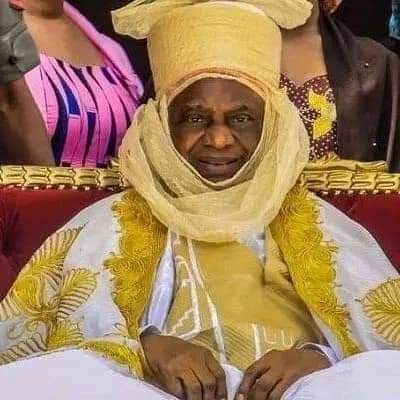
Ohinoyi of Ebiraland, Dr. Ado Ibrahim, mourned by Northern governors

By Sabiu Abdullahi

The Northern Governors’ Forum has expressed its deep sadness over the passing of the revered Ohinoyi of Ebiraland, Dr. Abdul Rahman Ado Ibrahim.

Governor Muhammadu Inuwa Yahaya of Gombe State, the Chairman of the Forum, expressed heartfelt condolences over the demise of this iconic monarch. 

Mr. Yahaya, in a statement, praised Dr. Ado Ibrahim’s legacy of peace, unity, and cultural preservation in Ebiraland.

He extended his sympathies to the people of Kogi State and the entire Ebira community, urging them to uphold the late monarch’s values. 

In this time of mourning, the Northern Governors’ Forum stands in solidarity with the family of Dr. Ado Ibrahim, honouring his contributions to the region’s heritage and praying for his soul’s eternal peace.