Admin

15 students abducted in Sokoto despite Tinubu’s vow to crush insecurity in north

By Uzair Adam Imam

Bandits have reportedly abducted 15 tsangaya students in a fresh attack Saturday at Gada local government area of Sokoto state.

The Daily Reality learned that several other students are currently missing.

The students were said to have been abducted from their school around 1:am on Saturday.

The attack was coming after President Bola Tinubu on Thursday vowed to crush insecurity in the northern part of the country.

The President was said to have directed the security agents to fish out the perpetrators of these abductions.

The proprietor of the school, Liman Abubakar, told journalists that 15 students were unaccounted for so far after the early morning attack.

Abubakar narrated how the bandits invaded the town around 1 am, shot one person and abducted a woman.

“As they were leaving the town, they sighted our students rushing into their rooms and they kidnapped many of them.

“We have so far counted 15 who are missing and we are still searching for more,” he said

He added that this was not the first time the village was attacked by bandits.

Speaking with the journalists, the member, representing Gada-East Constituency at the state House of Assembly, Kabiru Dauda while has confirming the attack.

He stated that he received a call from the village around 2 am that it was invaded by bandits.

“I reached out to the local government authorities and security agencies and I am sure they are doing something about it,” he said.

However, the Sokoto State Police Command has denied awareness of the attack.

From Ruga to Artificial Intelligence: A mother’s lexicon of love

By Prof. Abdalla Uba Adamu

You might have remembered the post. March 8, 2023, to be precise. It was on International Women’s Day in 2023. It was about Sadiq, the fura hawker, and his wonderful mother, the fura seller at Bayero University, Kano. It was about love, faith, and sacrifice.

A simple Fulani woman sells fura so nourishing, fresh, and delicious that she could be given a slot in any restaurant at Harvard University—not the tree shade she occupies—and is often harassed at Bayero University. She does not sell fura because she needs the money. She sells it because she does not want to be idle. She is wealthy. Very wealthy. No mansions with a sea of workers at her beck and call. No fancy cars. No holiday retreats to the Seychelles. Simple meals. No crabs, oysters, lobsters, or caviar. No shopping in Paris and Dubai. Just cows. Many cows. Her lifeblood. She was willing to sell some of the cows to pay for her son’s education because, as a mother, she believed in him. She loves him and was willing to sacrifice her heritage—the cows—to ensure a sustainable future for him.

The son, Sadiq, has his head in the sky. He wants to fly, to be a pilot. The cost of the training at the Nigerian College of Aviation Technology, Zaria, in northern Nigeria, was more than ₦7 million. “No problem,” says the woman who lives in a hut with no electricity and draws her water from a well in a land that is not hers. “I can sell my cows for you to become a pilot.”

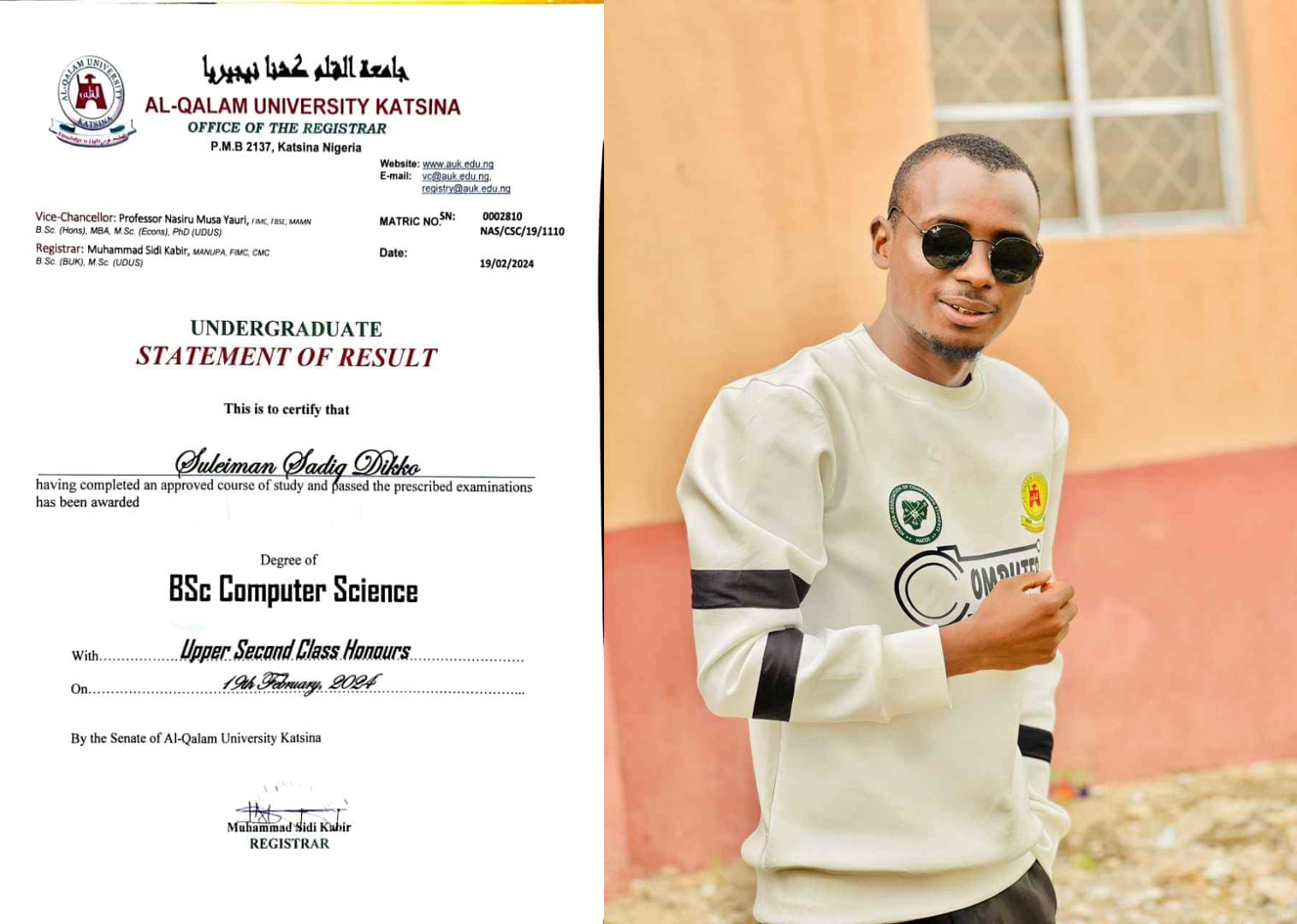
Unfortunately, Sadiq could not make the student pilot selection tests. Undeterred, she paid for his next choice—Computer Science at Al-Qalam University, Katsina, also in northern Nigeria. What made her a heroine was her sheer determination to see that he was educated. Human resource development at its most anthropological best—more sophisticated than the theories of Robert Owen, Charles Babbage, and Frederick Winslow Taylor, the credited proponents of the discipline. In this single but simple act of sacrifice, we see the power of love and the power of a woman who is not educated in any fancy school but the massive school of life. Yet, she knows, as a mother, the value of human capital development and is willing to sacrifice what she has to actualize it for her child.

At Al-Qalam, Sadiq was no slouch. His mother had sold a few cows to pay for his school fees for four years and also gave him spending money. He invested it in a fura business in Katsina—no doubt bringing Katsinawa the best fura they would ever taste from Kano! He did so to sustain himself throughout his college years without burdening his mother for upkeep money. He even employed some fellow students as his distributors. Extremely outspoken, he was the perfect candidate for the presidency of the Computer Science Students Association of the college, to which he ascended after being the Vice-President II of the association.

Back in Kano, he became a youth activist. He encouraged the formation of the Kano State Nomadic Fulɓe Youth Association in 2018. This was a coalition of all Fulani youth who had some form of education, especially higher education, and could therefore demand integration into society and better attention from politicians for their kraals. Ironically, considering that the power, hegemony, and control are actually in the hands of the Fulani—and have been so since 1807. This created a linguistic anomaly for the Fulɓe youth: those in power claim to be Fulɓe and although they have voices, they care less about Fulani causes. Those who speak Fulfulde and care more about Fulani causes are voiceless in the larger scheme of things.

Sadiq’s Fulɓe Youth felt the only way to gain attention to the plight of the Fulani was to align themselves with a political party. They chose a party not in power, the New Nigeria Peoples Party (NNPP), because they felt they would be listened to. Ironically, the All Progressives Congress (APC), which was in power, would have worked for them because of the “ability to speak Fulfulde” factor, since the then Governor of Kano, Dr. Abdullahi Umar Ganduje, is a genuine “I can speak Fulfulde” Fulɓe. But they chose the NNPP and its gubernatorial candidate, Eng. Abba Kabir Yusuf. They believed in him and devoted themselves to his cause.

During Engineer Abba Yusuf’s campaigns in 2019, a lyricist named Tijjani Gandu composed a political song for him titled, “Abba Gida Gida Abba”/Abba in every home. This actually became more or less Abba Kabir Yusuf’s nickname. With a catchy chorus and hook, it was perhaps the most iconic political song in Kano’s popular culture, even eclipsing “Kwankwaso Dawo Dawo”/ (Kwankwaso re-contest). Someone even had White kids somewhere in the US or Europe dancing to the chorus on social media!

Sadiq and Fulɓe Youth came up with a brilliant plan: map out all the Fulani kraals (Ruga) in Kano using their GPS coordinates in Google Maps to obtain data for easy access to the Fulani kraals (which he pluralizes as ‘Rugage’). Using satellite mapping, it would be relatively easy to determine access, population, and the level of development in each Ruga, which would be effective for campaigning, as well as for other uses—health and vaccination campaigns, schooling drives, etc. Next, the Fulɓe Youth under Sadiq came up with a slogan to campaign for Abba Kabir Yusuf: “Abba Ruga Ruga Abba,” deliberately rhyming with Abba Gida Gida Abba. They were even able to negotiate access to the man himself, i.e., Abba Kabir Yusuf. But it all came to naught.

Sadiq continued his studies, finishing in the autumn of 2023. Everyone knew he was excellent, and when Al-Qalam held a convocation ceremony last year for only First Class students, everyone who knew Sadiq expected him to be among those honored. Alas, it was not to be. However, Sadiq scored a Second Class Upper in Computer Science—perhaps a first for a fura hawker who lives in a kraal.

With such brilliant results in computer science and a committed social philosophy of uniting all Fulani youth in all kraals on a peace mission, it remains to be seen whether his mother’s sacrifice has been in vain. Being the son of a nobody, he lacks access to ‘big people’ who will give him a job. But Sadiq is not one to give up easily. His mind is too sharp, too restless to trudge from one office to another with a large brown envelope carrying his CV and looking for a job in futility.

I won’t be surprised if he uses these attributes to design an Artificial Intelligence routine that would perfect milk production—thus giving us better fura. Who knows? Harvard University might even invite him to open the first AI Restaurant in the world. Before then, as he faces his NYSC in May 2024, it would be a shame to waste his organizational skills. SA on Fulbe Youth? Why not? After all, the kraals also need development and attention—and not only during elections either.

Sadiq is what he is now—a unique, proud, hardworking, and brilliant Fulɓe youth advocate—because of his mother’s love and dedication. An ordinary mother, not the daughter of a “big man” or “important people,” just ordinary, but with an extraordinary commitment to love and sacrifice—and without being a social parasite.

Allah’s blessings for eternity to all mothers of the world on this day of re-embrace of Sadiq’s mother and her lexicon of love.

Prof. Abdalla Uba Adamu can be contacted via auadamu@yahoo.com.

Customs GC visits Emir Bayero, expresses readiness to ease business in Kano 

By Sabiu Abdullahi

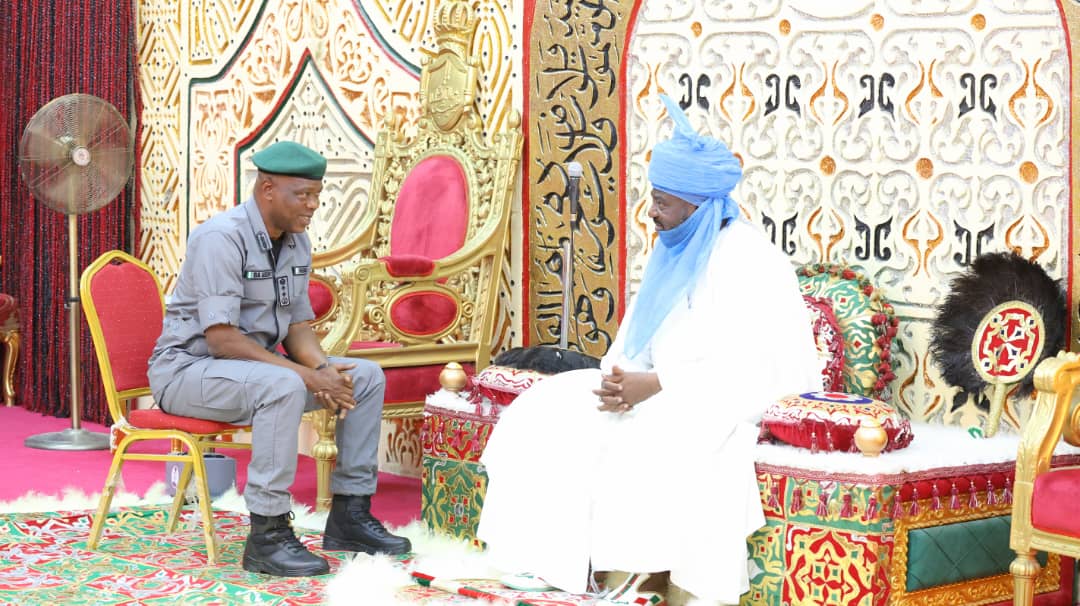
The Comptroller-General of the Nigeria Customs Service (NCS), Bashir Adewale Adeniyi, in a demonstration of respect and commitment to bolstering positive relations, yesterday paid a visit to the Palace of the Emir of Kano, Aminu Ado Bayero. 

During the meeting, CGC Adeniyi stated the importance of fortifying the bond between the Nigeria Customs Service and the Kano community, noting a deeper dedication to collaboration and mutual understanding. 

Expressing a resolve to facilitate trade in the region, CGC Adeniyi pledged to implement policies aimed at simplifying business processes and engaging with stakeholders effectively. 

Moreover, CGC Adeniyi revealed the NCS’s plans to address the pressing challenge of food scarcity in Kano by distributing food items to the state’s citizens, aligning with the upcoming season of Ramadan. 

In his address to the Emir and members of the Emirate Council, CGC Adeniyi stated, “We are here in Kano for two reasons: first, as we approach the season of Ramadan, it is good for us to come around and extend our felicitations to the Emir and join him in the prayers that Almighty God will make this month a blessed and glorious one for us and our country.”

Highlighting the agency’s responsibility in tackling national challenges, CGC Adeniyi stated the NCS’s commitment to supporting the Federal Government’s efforts in achieving food sufficiency. 

He further reiterated the NCS’s readiness to collaborate with the Emirates Council, acknowledging the significance of traditional institutions in preserving cultural heritage. 

In response, Emir Aminu Ado Bayero warmly welcomed CGC Adeniyi and commended the NCS’s initiative to alleviate the suffering of Kano citizens amidst prevailing hardships. 

Expressing gratitude for the gesture, Emir Bayero underscored the importance of effective partnerships between governmental agencies and traditional authorities in fostering shared prosperity. 

The Emir assured CGC Adeniyi of his palace’s unwavering support and cooperation, reaffirming a commitment to initiatives that would yield positive outcomes for Kano and Nigeria as a whole.

Unraveling the power of PR in the conflict between Sheikh Daurawa and governor Abba Kabir

By Auwal Sani

In the heart of Kano State, recently, conflict ensued between the state’s religious police popularly known Hisbah [Command], Kano State government and the controversial TikToker, Murja Kunya. This conflict has not only sparked public debate but also highlighted the critical role of effective public relations (PR) in governance.

It all began with Kano State Governor, Abba Kabir Yusuf’s critique of Hisbah’s modus operandi, particularly in response to perceived deviations from the established laws. The governor’s remarks triggered a flurry of reactions, especially online, culminating into the unexpected resignation of Hisbah’s Director-General, Sheikh Aminu Ibrahim Daurawa. This abrupt departure further fueled tensions and political discord within the state.

However, amidst the turmoil, the saga took an intriguing turn with the involvement of Murja kunya, an ardent supporter of the Governor and his party (NNPP). Murja’s arrest by Hisbah and her miraculous release from prison without proper legal procedure raised eyebrows from various quarters, prompting questions about influence and justice.

Central to this unfolding drama is the apparent lack of effective PR strategies employed by both the government and Hisbah. A failure to conduct thorough situational analyses, engaging stakeholders, and maintaining open communication channels exacerbated the crisis, leading to a breakdown in trust between the authorities and the public.

Governor Yusuf’s comments, though well-intentioned, underscored the importance of a robust PR team to navigate sensitive issues and convey messages effectively. Collaborating with Hisbah’s leadership could have fostered dialogue and addressed concerns constructively, preventing further escalation of the situation.

Furthermore, the need for a crisis communication response team within the government and Hisbah is imperative. Timely and convincing damage control measures are essential to clarify intentions and restore public confidence in governance institutions.

Equally crucial is, the proactive engagement of relevant stakeholders by Hisbah before undertaking operations. Consultations with religious, governmental, and civil society leaders, among others, would ensure a comprehensive approach to addressing societal issues while mitigating potential conflicts.

Moreover, adequate training of Hisbah members on legal frameworks and rules of engagement are essential in preventing human rights violations and ensure professionalism in their duties. Additionally, investing in PR expertise within Hisbah’s communication department is essential to bridge the gap between the organization and the general public.

In hindsight, the confrontational response of Hisbah’s former Director-General to the governor’s criticisms highlights the need for professionalism and diplomacy in addressing internal challenges. Written correspondence or a formal meeting could have provided a more constructive platform for dialogue and resolution.

As the saga begins to fade, however, it serves as a stark reminder of the intrinsic link between effective public relations, transparent governance, and social harmony because, only through proactive engagement, strategic communication, and a commitment to openness can institutions like Hisbah navigate the complexities of contemporary society while upholding their mandates with integrity and accountability.

Auwal Sani writes from Kano State and can be reached via auwalsani986@gmail.com

Women’s education—a command, a right, a life, here and hereafter!

By Aisha Musa Auyo

International Women’s Day holds immense significance as a global observance dedicated to celebrating women’s achievements, promoting gender equality, and raising awareness about the challenges women face. It serves as a reminder to acknowledge and appreciate women’s contributions in various fields, while also highlighting ongoing efforts to address gender disparities. The day fosters a sense of solidarity among women worldwide, encouraging discussions and actions to advance women’s rights and opportunities.

The theme for IWD 2024 is “Invest in Women: Accelerate Progress”. It highlights the importance of women’s and girls’ empowerment and their rights to healthier lives.

I plan to write this article from a religious and social perspective because many have hidden behind the veil of religion to deny women their basic right to education and empowerment.

Without question, education for women and girls is an integral part of Islam.

In the Holy Quran, Allah orders both men and women to increase their knowledge and condemns those who are not learned. The very first revelation to Prophet Mohammed (ﷺ) starts with the word “read” and says:

“Read. Read in the name of thy Lord who created; [He] created the human being from a blood clot.

Read in the name of thy Lord who taught by the pen: [He] taught the human being what he did not know.” (Q96: 1-5)

In addition to the clear stance of the Qur’an on knowledge acquisition by every Muslim woman and man, the Prophet is also reported to have said (hadith):

“The acquisition of knowledge is the duty of every Muslim man and Muslim woman” (Rahman 1980, 397).

From the above verse and hadith, we can conclude that

1. Girls’ Education Is a Divine Command

The obligation for women and men to study is also confirmed by the hadith and the sunnah. Preventing women and girls from receiving an education is preventing them from fulfilling the divine obligation commanded by Allah and intervening with their akhirah, or afterlife.

2. Girl’s Education is a Divine Right

Education of girls is central to their faith because it increases their knowledge, teaches them how to use their intellect, furnishes them with critical reflection skills, and makes them better Muslims and better members of their communities. It allows girls and women to make use of the gifts Allah has given them.

Preventing women and girls from receiving an education is preventing them from fulfilling the divine obligation commanded by Allah and intervening with their akhirah, or afterlife.

Prophet (PBUH) Invested in the Education of Girls

Since the early years of Islam, learned women enjoyed high public standing and authority. The Prophet (ﷺ) made an effort to educate women and girls and encouraged his wives and daughters to learn and be educated. He held classes for women, and women were often present in the public assemblies that came to learn from the Prophet (ﷺ). Women in his household received education not only in Islamic sciences but in other fields such as medicine, poetry and mathematics, among others. He made arrangements for training women in the commandments, fixing one day a week to meet with them.

Aishah and Umm Salamah (ra) are among the greatest narrators of hadith. Much of what Muslims practice today in terms of their religion is transmitted via the education of these two great women. The world’s first institution of higher education, the University of Qarawiyyin in Morocco, was established by a Muslim woman, Fatima al-Fihriyya.

How the society benefits from educating women

“Education is the only way to empower them [girls], improve their status, ensure their participation in the development of their respective societies, and activate their role to be able to take responsibility for future generations.” – Dr. Yousef bin Ahmed Al-Othaimeen, secretary-general of the Organisation of Islamic Cooperation

Education is more than just the ability to read and write. It is the process of acquiring knowledge, skills, and values in various fields that enable individuals to contribute meaningfully to the social, economic, and political well-being of their families and communities. Without educating its citizens, no society can develop and prosper.

The concept of knowledge in Islam covers a broad spectrum of subjects. The Quran describes the breadth of knowledge as vast and states that learning encompasses both religious and secular subjects. Many verses of the Holy Quran invite the reader to reflect and contemplate the creation of the universe. Therefore, it is incorrect to restrict women to the study of only religious sciences and prohibit them from a broader scope of education.

Some of the benefits of educating women include the following:

Educating girls contributes to stronger economies and alleviates poverty. Economic development and poverty reduction require countries to benefit from the talents, skills, and productivity of all their citizens, both men and women. Reducing the gender gap and educating girls in science, technology, engineering, and mathematics (STEM) will help reduce the skills gap, increase the employment and productivity of women, and reduce occupational segregation.

Educating girls leads to healthier and happier families because, as mothers, educated women make better and more informed decisions for their children’s well-being, including protecting them from disease.

When women are educated, violence is reduced, and children have better psychological well-being and are happier.

Ways to invest and accelerate women progress

Investing in women for societal progress involves addressing various aspects to empower them holistically. Here are key areas for investment:

Education: Ensure access to quality education for girls and women. Support scholarship programs, mentorship initiatives, and STEM education to bridge gender gaps.

Healthcare: Invest in women’s health services, including reproductive health, maternal care, and mental health support. This contributes to healthier communities and improves overall well-being.

Economic Opportunities: Promote equal economic opportunities by supporting women entrepreneurs, providing training, and encouraging workplace diversity. This enhances financial independence and contributes to economic growth.

Legal Rights: Advocate for and invest in legal frameworks that protect women’s rights. This includes combating gender-based violence, ensuring equal pay, and promoting workplace policies that support work-life balance.

Technology and Innovation: Encourage women’s participation in technology and innovation sectors. Investing in programs that provide skills training and mentorship can bridge the gender gap in these rapidly evolving fields.

Community Engagement: Invest in community-based programs that empower women, addressing social and cultural barriers. This can involve awareness campaigns, support groups, and grassroots initiatives.

Media Representation: Support initiatives promoting positive and diverse portrayals of women in media. This contributes to changing societal perceptions and breaking stereotypes.

By investing comprehensively in these areas, societies can foster an environment where women have equal opportunities, contribute significantly to various sectors, and play vital roles in societal progress.

Let us unite in a collective call to action for the continued support of women’s empowerment. Support, sponsor, and encourage the women and girls around you. By standing together, we can accelerate progress toward a future where women’s rights are not only acknowledged but celebrated, ensuring a more equitable and prosperous world for all. The journey toward women’s education and empowerment requires each of us to play a role—let’s commit to this shared mission and create lasting change.

Happy International Women’s Day to all women and the men who have allowed, supported, sponsored, and encouraged women’s education and empowerment.

Religion doesn’t hinder national development, by Dr. Muhsin Ibrahim

Someone on Facebook argues that religion hinders countries from developing. I fail to see the connection. Politics is chiefly responsible for a country’s development or lack thereof.

Islam and Christianity, the religions I am most familiar with, do not prevent their adherents from attending school or pursuing any field of study.

My family is, I can confidently say, quite religious. Despite this, we have members who are Ph.D. holders and other graduates. We also have nurses, midwives, and teachers, etc., among us (both members and their spouses).

Qatar, Malaysia, and Indonesia are three good examples. They are “conservative” Muslim countries. However, they are developing on a fast track.

Iran and Bangladesh have some of the highest female literacy rates in the world. Women work in almost all sectors in Saudi Arabia today. The examples are many.

It’s sad our youths are misinformed about religion and modernity. They always look at Westerners’ lifestyles as synonymous with development and civilization. No, they are more than that.

To the vast majority of the Muslim world, Boko is not only halal but essential. Thus, don’t pigeonhole your views. Or rely on some ill-informed writers and sensationalized mainstream media headlines.

May we be guided, amin.

Muhsin Ibrahim is a PhD who teaches at the University of Cologne, Germany and he can be reached via muhsin2008@gmail.com

Customs initiate housing scheme to boost personnel’s welfare 

By Sabiu Abdullahi

The Comptroller-General of the Nigeria Customs Service, Bashir Adewale Adeniyi MFR, has unveiled plans to provide shelters for Customs officers and men. 

Speaking at the flag-off ceremony of the NCS housing scheme in Kaduna on Thursday, CGC Adeniyi emphasised the significance of the initiative, stating, “This ceremony is not the last episode of what we have planned. There are projects similar to this in Kano, Asaba, Yola, Abuja, Enugu, and Uyo ready for flag-off.” 

Highlighting the service’s commitment to addressing the housing needs of its personnel, CGC Adeniyi recalled a similar project launched in Ibadan in December 2023 aimed at serving officers and men of the NCS.

He stated the importance of providing suitable housing options, especially for retired personnel. 

The CGC indicated that the initiative aligns with President Tinubu’s vision of providing affordable housing to Nigerians and commended Governor Uba Sani of Kaduna State for his support for the success of the exercise. 

Addressing officers interested in the housing scheme, CGC Adeniyi urged them to remain steadfast, announcing plans for the service to collaborate with Cooperative Mortgage Bank to streamline the payment process. 

George Anih, Portfolio and Assets Manager of Family Homes, reiterated his firm’s commitment to providing affordable housing solutions, pledging to partner with the Nigeria Customs Service to deliver 5000 houses for its officers and men. 

Mr. Musa Abubakar, Managing Director of Cooperative Mortgage Bank, affirmed his dedication to ensuring the timely completion of the housing project, assuring the Comptroller-General of Customs of his bank’s support. 

The NCS housing scheme represents a significant step towards enhancing the welfare and livelihoods of customs personnel, reflecting the service’s dedication to serving its workforce and contributing to national development.

Outrage as bandits abducted over 280 pupils, teachers in Kaduna

By Sabiu Abdullahi 

There has been outrage over the abduction of over 280 pupils and teachers of Government Secondary School and LEA Primary School at Kuriga, Kaduna State, by bandits on Thursday. 

The bandits reportedly invaded the Kuriga area of the Chikun Local Government Area of Kaduna State on Thursday, shooting at their victims before taking away at least 280 of the pupils and teachers from both schools.

The secondary school had been relocated to the primary school due to insecurity in the council. 

Various organisations and authorities, including the Jama’atu Nasril Islam, Amnesty International, the Parent-Teacher Association of Nigeria, the Nigeria Union of Teachers, and the House of Representatives, have condemned the attack, calling on the government to rescue the victims immediately. 

This incident occurred barely 24 hours after insurgents abducted 200 internally displaced women in Borno State.

The women were kidnapped in Ngala, the headquarters of Gambarou Ngala in Borno State, while fetching firewood in the bush. 

Sani Abdullahi, a teacher at Government Secondary School Kuriga, narrated the attack, stating that about 280 pupils and teachers were taken by the hoodlums.

He recounted the chaos that ensued as the bandits surrounded the school premises, forcing them to flee into the bush. 

State Governor, Senator Uba Sani, led senior government officials and heads of security agencies to the scene of the attack, assuring the community that efforts were underway to rescue those abducted.

The governor stated that security operatives had swung into action to search for the kidnapped pupils. 

Efforts to identify those kidnapped are ongoing, with the head teacher of the school and some staff members among those abducted.

According to reports, a pupil identified as Ahmed, who sustained gunshot wounds during the attack, succumbed to his injuries while receiving treatment at Birnin-Gwari General Hospital.

The community is reeling from the shock of the incident, with residents describing the bandits as wielding dangerous weapons and taking their victims into the forest.

Shaykh Aminu Daurawa, Gov. Abba K. Yusuf and the triumph of Hisbah in Kano

By Isma’il Hashim Abubakar, PhD

In my previous article, which predated and possibly heralded the public announcement of the voluntary and, of course, short-lived resignation of Shaykh Aminu Daurawa from his post as the Commandant-General of the Hisbah Board, I challenged what many people alleged to be a political romance between the Kano State Government and Murja Kunya, a rising TikToker who achieved notoriety through her lecherous utterances, unblushing gyrations, and licentious dances that not only defy moral codes but also corrupt the norms and values of Muslim society in northern Nigeria.

In that write-up, described by some as extremely blunt and overly radical, I chronicled a brief history of Hisbah and marshaled the unequal clout the morality police institution used to wield during previous Hisbah commandants and the immense sacrifices each of them made, which ultimately reinforced Hisbah and made it the most enduring and impactful religious bureaucracy established by the government since the return of Shari’ah at the turn of the century. I juxtaposed the achievements of Hisbah during previous leaderships against the commitment of the current command under Daurawa and concluded that the cleric was changing the course of how things used to be before his ascendancy as the Board’s head.

This view gains legitimacy through some of the Shaykh’s public confessions that, unlike during his predecessors’, he has modified and limited the ground operations of Hisbah such that he commands his guards to avoid storming and chasing elites, powerful figures, and places owned by influential personalities, while restricting their raids and arrests to the poor and weak masses who have no one to intervene and secure their release. This, to me, sounds counterproductive and explains why Murja Kunya nearly defeated Hisbah after she was arrested and jailed while awaiting trial, before her mysterious escape from prison.

To be candid and honest, Daurawa’s arrest of Murja was a courageous and commendable move, although certainly itself an act of defiance of a theory he formulated, which showed that he perhaps underrated Murja, and that was why he thought she belonged to the class of powerless masses, the supposed target of Hisbah’s wrath.

Meanwhile, the sudden announcement of Daurawa’s voluntary resignation after Governor Abba Kabir Yusuf’s public speech, which Daurawa and thousands of listeners received with dismay and interpreted as an authoritative demoralization of Hisbah, was ironically, based on the development that followed the resignation, a blessing in disguise. This awakened not only stakeholders but also remote audiences to the essentialness of the existence and backing of institutions like Hisbah. Having earlier decried Daurawa’s “soft” approach and selective application of his mandate, his resignation should be welcomed by me and those who have reservations about his policies.

However, like many pro-Hisbah fellows, I ironically found his sudden resignation shocking, albeit trying to live by the dictates of my admonition in my previous essay, thanks to the circumstances through which he almost vacated his seat. I spent the whole day after listening to the short clip of the scholar announcing his resignation, contacting and discussing with friends, and deliberating on who might be the right candidate to succeed Daurawa. Some of the names I heard allegedly being peddled and imposed on the conscience of Governor Abba sincerely scared me a lot.

One of those candidates is even a crony and closest representative of an infamous scholar who almost ignited a war in Kano due to his poisonous and blasphemous preachings before he was finally convicted by the court and is now still languishing in jail. It suddenly dawned on me, as it did to thousands of the audience, that Daurawa’s resignation would hardly lead to the reform of Hisbah we crave and the brave and intrepid posture and outlook that we aspire for the head of Hisbah to wear and maintain. In fact, whoever would have succeeded Daurawa would merely do the bidding of the Governor and avoid unleashing Hisbah’s wrath on people connected with the Governor’s political victory, even if they are as worthless as Murja Kunya.

It was this similar feeling and the fear of the decline of Hisbah’s influence that virtually alerted concerned Muslims to wade into the matter and, at different levels, embarked on calls and campaigns to have an understanding between the Governor and his cleric appointee to recant the resignation and to have a rethink on the position and function of Hisbah amidst growing disappointment at how immorality is holding sway in cyberspace and social media domains within the region. The mission for reconciliation sponsored, led, and facilitated by the Coalition of Ulama in Kano, besides the calls for Governor Abba to make peace with the Hisbah boss that stormed different quarters from various constituencies, has been very fruitful.

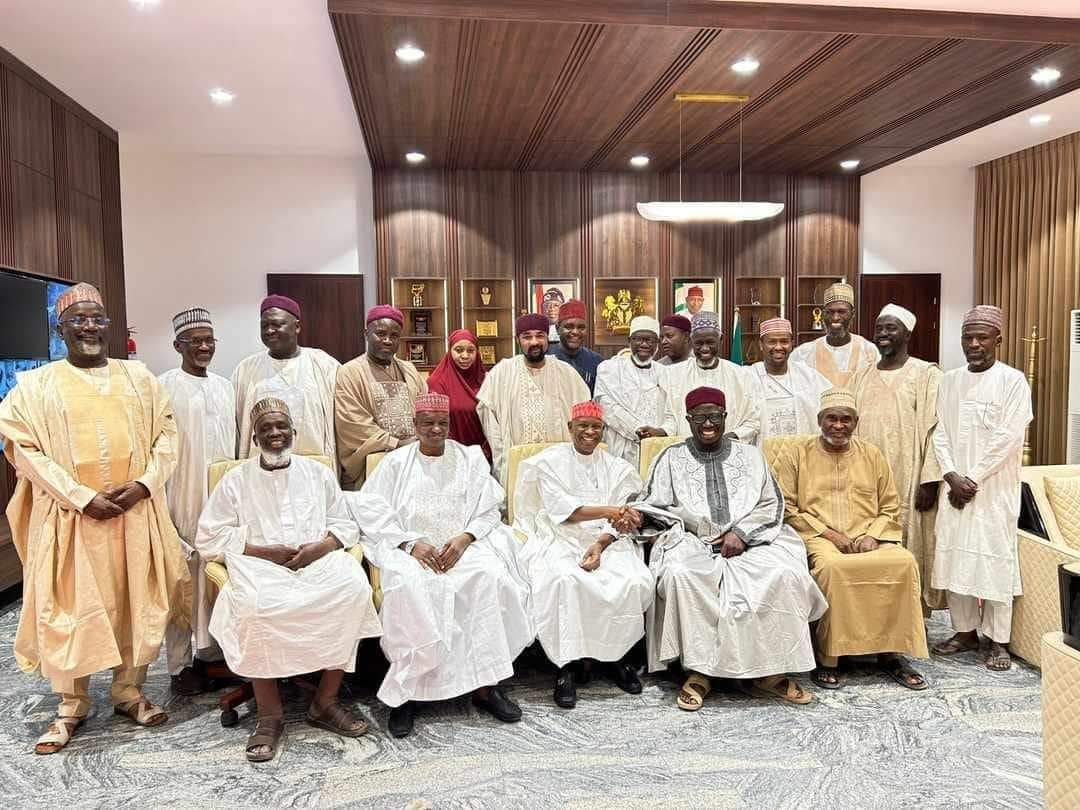
Sincere happiness and celebration for the triumph of Hisbah are now the stuff that spectators have to feast on these days, with pre- and post-reconciliation group photographs of the Governor, Daurawa, and the peacekeeping team flooding social media from all angles. Daurawa himself expressed happiness that the worries and reservations he earlier nurtured, which likely but also partly justify his diplomatic approach, will now be a thing of the past since there is a renewed commitment from the government to support, empower, and stand with Hisbah.

Daurawa’s recent efforts to synergize the function of Hisbah, mobilize, and secure more support for Hisbah from various groups and levels of people, as expressed in his public address and illustrated by his recent visits to important arms of government, including the Grand Khadis, are chiefly commendable moves.

The gaps created by Murja’s illegal escape from prison, which will hopefully now be checkmated, and the subsequent resignation of Daurawa all evince the previous lack of a commensurate and strong network that Hisbah ought to have had, which would have made its work easier. With the Sultan of Sokoto, the highest Muslim royal figure in Nigeria; top business moguls; prominent Islamic clerics across different sectarian divides; senior government officials; technocrats; academics and intellectuals; as well as the overwhelming majority of concerned Muslims within northern Nigeria all backing Hisbah and pledging unanimous allegiance to its commandant, the Board now has adequate authority to tackle and contain immorality on a larger scale and without, in the slightest sense, any class discrimination.

There is no better time than now to expand the scope of Hisbah and extend its activities to other Muslim states within the region. Sheikh Daurawa will be a very good asset, particularly as he reviews some of his previous approaches, to spearhead an advocacy movement to institute a unified Northwestern Hisbah command or zonal network, officially and legislatively endorsed by state governments in order to effectively counter the rising challenge of immorality that is spread largely on social media platforms.

The approachability, broadmindedness, and openheartedness that informed Governor Abba Kabir’s swift acceptance and accommodation of criticism and correction have restored some hope to the public of having a governor who would combine the leadership qualities of decisiveness, intrepidity, hard work, foresight, wisdom, and clemency at one time—the principal behavioral dispositions, part of which define Engineer Rabiu Musa Kwankwaso and his longtime political counterpart, Malam Ibrahim Shekarau. These are expected to come into play in Abba’s expected commitment toward and prioritization of Hisbah activities, particularly by reforming the administrative aspects of the Board, by first appointing a formidable governing council peopled with members who will be devoted to their job ahead of considering it a political favor through which to get material gratification. The best pool to draw on will be the same peacekeeping team that ensured the reconciliation between the Governor and Hisbah commandant.

Previous senior Hisbah officers as well will be of great importance as part of the governing council. An upward review of the monthly allowance from ten thousand Naira for Hisbah guards, such that it triples their current take-home pay, will be a visible indication that the Governor is now in full support of Hisbah. The Governor will be wiser if he takes singular caution by distancing himself from the pseudo-cleric he appointed as a religious adviser. The opportunist appointee, who is rubbishing Hisbah’s mission by advising his boss to reward Murja Kunya and integrate her into his cabinet, seems to be on a mission to drag the Governor into an unnecessary but suicidal fight with the religious constituency. With elements like this in the corridors of power, the sudden triumph of Hisbah will remain incomplete unless Murja Kunya faces the severe wrath of the law.

Isma’il writes from Rabat, the Kingdom of Morocco and can be reached via ismailiiit18@gmail.com.

On the Kano Coalition of Ulamas’ giant efforts in promoting sanity and peace in the state

By Salihi Adamu Takai

Kano State Coalition of Ulama comprises the great Islamic clerics of Kano from different sects to promote sanity and peace. The coalition is headed by Sheikh Abdulwahab Abdullah (Imam Ahlussunnah). The clerics, who grouped themselves in the religious effort of making the work of Almighty Allah effective in the state, are very important scholars of impeccable characters.

Kano State happens to be the ancient city in the northern part of Nigeria that is very popular for its religiosity. It is one of the first states in Africa to receive the light of Islam. Many scholars have revealed that Islam was received in the state through Wangarawa and Arab merchants.

The spread of the Islamic religion in the state has made it a very religious city—and the religious aspect has become very sensitive in the state. After some years of the spread of the Islamic religion in the city, there has been the existence of Sufism and other sects of beliefs.

The Islamic reformers played very vital roles in sanitizing the aspects of the religion. They focused vehemently on the teachings. They gave more emphasis to the seeking of knowledge of Islam. This aided the reformation in the religious activities of the State.

The spread of Sunnah came and knocked on every door. The objective of the Kano State Coalition of Ulama is to reform religious teachings to accommodate morality. Despite people having embraced religious knowledge and Western education, there is also a need to reform teaching activities and their adoption.

Sometimes, people have the knowledge, but they need to be guided on how to apply it to their teaching and learning. So, the reformation needs a coalition for its success. It is for the Muslims.

The Coalition of the Ulamas has been intervening in matters of religion. They are very keen on promoting sanity in religious activities. They call for peace—and peace signifies the best way of depicting Islam.

To also achieve the aim of their activities, they refer to themselves as the Coalition of Ulama of Kano. This means they comprise different Ulamas from different sects; from Izala, Qadiriyya, and Tijjaniyya.

The Coalition could also be the source of understanding one’s teachings amongst the Ulamas. The Tijjaniyya Clerics in the Coalition could understand some aspects from those Sunni Scholars.

Moreover, the Coalition led by Sheikh Abdulwahab Abdullah reconciled Sheikh Aminu Daurawa with Governor Abba Kabir Yusuf following their misunderstanding about the conduct of the Hisbah corps. Today, Daurawa has resumed his position as the Hisbah Commandant. This is one of the thousands of achievements of the Coalition. They intervene in every matter that affects the public.

May Almighty Allah continue to support the Coalition in achieving their goals, and may He reward them, amin.

Salihi Adamu Takai wrote via salihiadamu8888@gmail.com.