Admin

Islam, modern Jihad, and democracy: A short reflection and appeal

By Ibraheem A. Waziri

Lately, I have been reflecting deeply on Islam and its legacies, particularly in light of the growing rhetoric against democracy by some Northern Nigerian Islamists. Among them are both young and experienced clerics, such as the recently banned Muhammad Muhammad of Niger State and Shaykh Dr Idris of Bauchi, who appeared to endorse the same ideals. 

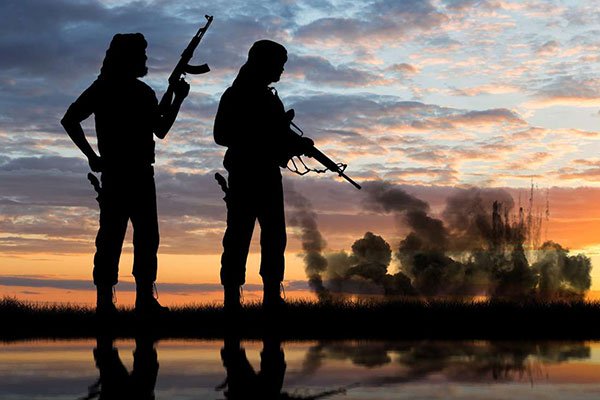
My reflections have led me to conclude that there is little justification for condemning democracy and the freedoms it provides, nor for advocating or mobilising for physical jihad in today’s world.  

When we examine the origins of Islam, we find that during the early days of Prophet Muhammad’s (peace be upon him) mission in Mecca, his primary focus was the establishment of a peaceful society where his message could be conveyed freely. Allah states in the Qur’an:  

So remind, [O Muhammad]; you are only a reminder. You are not over them a controller.” (Qur’an 88:21-22).  

This underscores that Islam flourishes in environments of peace and freedom, where individuals can practice their faith openly without coercion. Such conditions allow Allah’s promise to manifest naturally:

Indeed, Allah will fulfil His purpose. Allah has set a measure for all things.” (Qur’an 65:3).  

The first instances of physical jihad in Islamic history were acts of self-defence prompted by aggression against the early Muslim community. Even the campaigns against the Persian and Roman Empires were primarily preemptive, aimed at securing the survival of the nascent Muslim polity against formidable adversaries.  

Closer to home, the renowned 19th-century jihad of Shaykh Uthman Bin Fodio in Hausaland was not launched until his students faced severe threats and persecution from the rulers, who sought to prevent them from freely practising their religion. This historical context highlights that jihad has historically been reactive, not offensive, and born out of necessity rather than choice.  

Similarly, the historical example of the Mongol Empire, which conquered large parts of the Muslim world, demonstrates Islam’s transformative power. Despite the initial devastation, peace was eventually restored. As the Mongols settled and engaged with Islamic teachings, they embraced Islam. This illustrates the enduring strength of Islam’s principles when conveyed in a peaceful and conducive environment.  

In contemporary times, a comparable trend is evident. While the colonial era brought conquest and turbulence, democracy and freedom of choice have facilitated a relatively peaceful global environment. This peace has enabled a surge in the appreciation of Islam’s teachings, as seen in the increasing number of reverts worldwide. Allah reminds us:

When the victory of Allah has come, and the conquest and you see the people entering into the religion of Allah in multitudes, then exalt [Him] with praise of your Lord and ask forgiveness of Him. Indeed, He is ever Accepting of repentance.” (Qur’an 110:1-3).  

Today, Islam is the fastest-growing religion worldwide, a testament to its universal appeal and the truth of Allah’s promise. In light of these realities, is there any justification for militant jihadist movements in the modern era? Especially now, with social media and other platforms offering unparalleled opportunities to spread knowledge, values, and Islamic teachings globally?  

I firmly believe that the focus of our time should be on intellectual and spiritual jihad — investing in research, education, and content creation that addresses the challenges and opportunities of our era. Allah emphasises the power of wisdom and thoughtful persuasion in spreading His message:  

Invite to the way of your Lord with wisdom and good instruction, and argue with them in a way that is best. Indeed, your Lord is most knowing of who has strayed from His way, and He is most knowing of who is [rightly] guided.” (Qur’an 16:125).  

This is the jihad of our age: to understand and teach Islam in ways that resonate with the modern world, using peaceful means to inspire hearts and minds toward the truth. 

May Allah guide us on the best paths and strengthen our resolve in this noble endeavour, amin.

Top 7 Kannywood Series of 2024

By Habibu Maaruf Abdu

For the Kannywood film industry, 2024 has been a remarkable year filled with unprecedented achievements and historic milestones. These include Ali Nuhu’s appointment as the Managing Director of the Nigerian Film Corporation and Rahama Sadau becoming part of the federal government’s Investment in Digital and Creative Enterprise Program (iDICE).

However, while the year was marred by the losses of veteran actress Saratu Gidado (Daso) and singer El-Muaz Birniwa, it also witnessed the emergence of fresh talent and a notable improvement in film quality. Big-budget productions like Nanjala and Mai Martaba achieved significant feats; Nanjala debuted in Turkey and the United States, and Mai Martabawas selected as Nigeria’s official entry for the 97th Academy Awards. Moreover, Sadau’s film Mamah was screened at the prestigious Red Sea Film Festival in Saudi Arabia.

Interestingly, despite the above-mentioned films’ successes, television and web series topped the charts in popularity throughout the year. Established series, such as Labarina and Manyan Mata, continue to reign supreme, with the latter’s instalment (Season 8, Episode 6) amassing over 1 million views on YouTube within 24 hours of its release in January. This success has paved the way for numerous new series. The following are the top 7 among them. Please note that the established series were not considered for this list.

1. Garwashi

Garwashi is arguably the most topical and stimulating series of the year. It confronts critical social issues such as widowhood, moral decay, reckless marriages and irresponsible parenting. The story mainly centres on Asmau/Ma’u (Fiddausi Yahaya), a widow who faces unrelenting adversity due to the cruelty of her in-laws. Her situation is further exacerbated by the greed and heartbreaking indifference of her father. The series is captivating and deserves praise for its engaging writing, intense drama, and realistic portrayal of everyday life. The actors deliver convincing performances, particularly Abubakar Waziri (alias Bado), who plays Asmau’s irresponsible father. His rendition of the Sokoto Hausa dialect is ultimately impressive. 

Additionally, the roles of Baba Lami (Balaraba Abdullahi), Gaddafi (Kabiru Sani), and Sameera (Aisha Humaira), among others, are outstanding. Co-produced by Umar UK and Fauziyya D. Sulaiman and directed by Yaseen Auwal, Garwashihas garnered widespread acclaim, generated buzz, and trended on social media. Other cast members include Yakubu Muhammad, Maryam Yahaya, Isa Adam, Hadiza Muhammad, Sabira Mukhtar, and Rukayya Sharada.

2. Gidan Sarauta

Premiered in 2023, Gidan Sarauta achieved greater popularity in 2024, becoming one of the year’s top series. This is because its episodes get no less than 600,000 views on YouTube weekly. The story follows a complicated love triangle involving two royal brothers, Prince Bello (Umar M. Shareef) and Prince Mu’azzam (Garzali Miko), and a poor daughter, Bintu (Mommy Gombe). Prince Bello initially hides his feelings for Bintu, treating her like a sister and even arranging her marriage to his brother Mu’azzam. Meanwhile, he marries Gimbiya Fa’iza (Aisha Najamu), his cousin whose father (also his uncle) holds the throne. The two couples live together in the royal household, where Bello and Bintu’s bond deepens despite being married to different partners. The drama escalates as Mu’azzam discovers their secret romantic exchanges, leading to intense confrontations and emotional fallout. The series features other compelling characters, such as Alhaji Mai Dala (Rabi’u Rikadawa), his wayward son Kaka (Daddy Hikima), and Tafida (Bashir Bala Ciroki), among others. It was produced by Abubakar Bashir Maishadda and directed by Ali Nuhu.

3. Allura Cikin Ruwa 

2 Effects Media’s Allura Cikin Ruwa revolves around Na’imatu (Ruky Alim), a charming young woman at the centre of attention with numerous men vying for her love. These include Maina (Yakubu Muhammad), Sadiq (Isah Feroz Khan), Dr Hashim (Adam A. Zango) and Alhaji Hadi Makama (Sani Danja). As the title suggests, Na’imatu is like a needle in a vast ocean, which Hausa wisdom says “only the fortunate can find”. Alhaji Hadi is that fortunate one, but he divorces her two days after marriage, adding complexity to the plot. Other characters in the series, such as Maina and his former wife (Fiddausi Yahaya), have interesting backstories that add depth to the narrative. The series features an ensemble cast, stunning visuals and evocative background music. It is also packed with twists and turns, which may hook the audience despite some minor flaws. Sani Danja produced the series, while Yakubu Muhammad directed it. Other casts include Aisha Najamu, Tijjani Faraga, Daddy Hikima, Amal Umar, Ramadan Booth, etc.

4. Darasi

Produced by Sadiq Shanawa and directed by Abubakar S. Shehu, Darasi stands out for its relatable themes, strong performances, and reasonable production quality. The series follows the lives of fresh graduates: Kabiru (Ibrahim Yamu Baba), Marwan (Shamsu Dan Iya), Sadiq (Sadik Shanawa), and Salma (Mommy Gombe), each navigating the challenges of life after graduation. However, Kabiru’s story turns dark after being heartbroken by his love interest, Rabi (Amal Umar), who leaves him for a wealthy son, Shehu Hutu (Abdul S. Tynkin). This betrayal drives him to join a secret cult, aligning himself with powerful influencers such as the corrupt politician Alhaji Audu Maye (Ali Nuhu) and the immoral tycoon Alhaji Maliya (Tanimu Akawu). As the story expands, events become intricately woven. The series is quite popular. It garnered widespread pre-release buzz thanks to promotional photos of Mommy Gombe and other cast members wearing NYSC attire.

5. Wata Rana a Kano 

Wata Rana A Kano is a 5-episode mini-series that addresses the pressing issues of thuggery and phone snatching, which have recently surged in certain areas of Kano State. It is exclusive to Arewa24 TV, unlike many other series that are also available on YouTube. The series exposes the heartlessness of corrupt politicians and their role in fuelling gang violence. It also explores the importance of community involvement in aiding security operatives in combating the problem. Besides its timely thematic relevance, Wata Rana A Kano stands out for its top-notch production quality. The cinematography is exceptional, with realistic portrayals of violence and bloodshed that leave a lasting emotional impact. Many viewers have confessed to crying during a particular scene where the character of Abba Jago (Daddy Hikima) kills Hassan (Adam A. Zango). Produced by Abubakar Bashir Mai Shadda and directed by Kamal S. Alkali, the series also features Mommy Gombe, Umar M. Shareef, Abdurrazak Sultan, Alhassan Kwalle, Abba El-Mustapha, Ali Nuhu, and others.

6. Zafin Nema

Sadik Sani Sadik and Tahir I. Tahir, known for their iconic roles in the Mati franchise as Mati and Lado, respectively, reunite in the topical comedy-drama titled Zafin Nema. The series explores themes of materialism and ambition through the story of two young men, Ilu (Sadik Sani Sadik) and Rabe (Tahir I. Tahir), from a poor background. The duo faces humiliation in their village, Tungan Barau, due to their poverty. Rabe’s father attempts to arrange his son’s marriage to Tala (Mommy Gombe), but her father rejects the proposal despite their familial ties. Similarly, Ilu loses his love, Saude (Maryam Yahaya), to the wealthy Alhaji Dangana (Shehu Hassan Kano). Driven by a desire for wealth, respect, and revenge, Ilu and Rabe embark on a journey to the city. Their misadventures unfold as they foolishly pursue get-rich-quick businesses. The series seamlessly weaves together humour and substance. The actors also deliver excellent performances. It was co-produced by Abdul Amart and Tahir I. Tahir and directed by Yaseen Auwal. Other casts include Al’amin Buhari, Jamila Nagudu, Minal Ahmad, Bello Mohammed Bello, Hajara Usman, Alhassan Kwalle, etc.

7. Umarni 

The series Umarni primarily deals with the issue of wife-mother-in-law relations in Hausaland. It explores the complex and often tense relationships, including jealousy and conflicts between them. In the series, Hajiya Binta (Saratu Daso) reveals her jealousy when her son Ahmad (Bilal Mustapha) prepares to marry his beloved Madina (Bilkisu Safana). She reduces the substantial trousseau he plans to take for the wedding and forbids him from living with his wife in their newly built home. Her intimidation continues while the couple lives with her in the family household. On the other hand, Salma (Sameera Sister) treats her mother-in-law (Asma’u Sani) poorly. Her husband, Sadik (Garzali Miko), initially sides with his mother but is eventually convinced to see her faults. The story evolves as new themes, characters, and conflicts are introduced. The series is generally enjoyable.

Umarni is likely the last film to feature the late veteran actress Saratu Daso. However, the rest of the cast comprises mostly rising stars who nonetheless deliver satisfactory performances. Seikh Isa Alolo directed it, while Naziru Dan Hajiya is the producer. Its second season, which runs during the writing of this review, was co-directed by Tijjani Mai jama’a.

India’s ex-prime minister Manmohan Singh passes away at 92

By Sulaiman Abdullahi

Manmohan Singh, the renowned economist and former Prime Minister of India, has passed away at the age of 92, according to local media reports on Thursday.

Singh, who served two consecutive terms as prime minister, was instrumental in steering India’s economic liberalization during his tenure as finance minister.

A respected economist-turned-politician, he also held the position of governor of India’s central bank.

The former leader had been ailing and was admitted to the All India Institute of Medical Sciences (AIIMS) in New Delhi, where he reportedly passed away late on Thursday.

Singh leaves behind a legacy of economic reforms and leadership that transformed India’s trajectory on the global stage.

On TSU’s unending strikes and govt’s ‘responses’: A call for stakeholders’ intervention

By Tordue Simon Targema

Taraba State University (TSU), Jalingo is, yet again, under lock and key as a result of industrial actions embarked upon by the Academic Staff Union of Universities (ASUU) on the 5th of December 2024, and all other labour unions in the University subsequently to press home germane issues that bother on effective running of the institution and welfare of its staff.

Ordinarily, this would not have been a hopeless situation completely, as industrial actions could be resolved as soon as they start if well handled. But with the rather harsh and brutal response of the Taraba State government, a solution to the present strike is not in sight.

What are the issues in contention, by-the-way? ASUU-TSU outlined six key demands upon commencement of the strike as follows: (1) absence of pension scheme for staff of the University, (2) non-payment of four months salary backlog, (3) failure of the state government to constitute a Governing Council for efficient running of the University, (4) non-payment of accumulated Earned Academic Allowances, (5) repeated exclusion of the University from minimum wage implementations, and, (6) inadequate funding as provided by the Law establishing the University.

Simple as these sound, all diplomatic approaches by ASUU to prevail on the state government to address them have failed, leaving the Union with no option but to embark on strike. Sadly, the response of the state government clearly indicates that the strike will linger longer than expected.

A quick rundown on the major responses as highlighted by the Chairperson of ASUU-TSU Branch, Dr Mbave Joshua Garba thus far confirms this hunch: first was a statement from the Office of the Special Assistant (to the State Governor) on Media and Digital Communications, Mr. Emmanuel Bello requesting the Union to call off the strike immediately and return to the negotiation table, to which the Union queried: which negotiation table? The same “table” that government officials abandoned since June 2024, and have consistently evaded the Union’s advances for engagements?

Besides, the struggle at this point has passed the stage of “negotiations” but instead, requires appropriate actions on the part of government: do we need negotiation to enact a Governing Council for the University, implement a pension scheme, pay salary arrears/EAA, or implement the national minimum wage for the University? One thus wonders what exactly the SA wanted to negotiate with the Union again.

The second response as reported by the Chairperson came through the Commissioner of the then Ministry of Education, Dr. Augustina Godwin, who told the Union that the Governor has two options for them: to call off the strike immediately and have his audience once he returned to the state, or remain on strike while government takes ALL the time it requires to compute and work on the demands of the Union. ASUU opted for the latter, for who is in a hurry to return to a classroom that holds no hopes for him, both now and in future anyway?

Then came the last move that clearly portrayed government’s confusion regarding TSU and her intractable issues: the (re)creation of the Ministry of Tertiary Education, which hitherto existed in the state but was scrapped by the current administration, and which was there during the past administration, yet could not resolve the stalemates that befall the University.

Clearly, the state government lacks the sincerity of purpose required to resolve the issues in dispute, and this is most unfortunate for an administration that has made access to education its mantra. For instance, one wonders if ASUU must embark on industrial strike before government is moved to constitute a Governing Council without which the University is handicapped in the discharge of its administrative mandates. Yet, ASUU has consistently engaged the government on this issue since the last Governing Council was dissolved in 2023 to no avail.

What about a pension scheme which has become a dirge that staff of the University chant every day, but which all other tertiary institutions in the state have? Today, many staff of the University have put in about fifteen years of service without a penny as pension. When a staff of the University retires, s/he walks home with nothing after years of enslaving but meritorious service to the state.

The most distressing moment is when a staff dies: his family is entitled to a paltry 50,000 naira as death benefit which is recently increased to N70,000. Yes, that is our worth in death without gratuity. Indeed, many staff of the University have switched from other institutions or agencies with functional pension schemes to TSU. Sadly, once they assume duty in TSU, they as well kiss the final “goodbye” to pension and gratuity.

While ASUU’s engagements with the state government towards amicable resolution of these issues hit a stalemate, the final straw came that completely broke the camel’s back, namely: the blatant and cruel exclusion of the University from the N70,000 new national minimum wage implementation in the state. Yes, as I write, TSU staff are being paid using the grossly outdated 2009 salary template for Nigerian Universities! Last year, the state government implemented the N30,000 minimum wage for workers without effecting the consequential adjustment for staff of the University, even as other tertiary institutions in the state were captured which showed the resentment of the government to staff of the University. Then came the FG/ASUU 25% and 35% salary award which was also ignored by the state government with impunity.

The peak of this cruelty has just manifested with the conspicuous exclusion of the University from the 2024 N70,000 national minimum wage implementation in the state in November. Afterwards, all concerned stakeholders put up evasive postures to ignore all efforts by ASUU to push for inclusion of the University.

ASUU Chairperson reported, shockingly, that at a meeting with government representatives, the Commissioner for Finance, Budget and Economic Planning, Dr. Sarah Enoch maintained that the University is not entitled to the new national minimum wage, even as she admitted, funny enough, that there is need for consequential adjustment. This position betrayed, first, the level of confusion that pervades the corridors of power regarding issues in TSU, and secondly, the cruel disposition of critical state actors to the plights of the University’s staff.

Few questions beg for answers arising from the Commissioner’s disposition: if tertiary institutions in the state are not entitled to the new minimum wage, why implement it for the State Polytechnic, College of Education, College of Agriculture, School of Nursing and Midwifery and the School of Health Technology? Why jettison the submission for the University which was computed by the same minimum wage committee in the state? Again, why question the report of a committee that had all relevant stakeholders on board, including from the Ministry of Finance? Does this mean that the Commissioner’s personal judgement supersedes the position of the committee made up of experts from all relevant ministries?

Unfortunately, government has chosen the vindictive path, and has weaponised hunger to chastise the Union back to the classrooms, a strategy that is counterproductive and had repeatedly failed in the past. For instance, November salary was immediately withheld to cow the Union into submission, then came December salary. It is shocking that not even the commemoration of the birth of Christ could move the state government to bury its vindictiveness and release December salary to staff of the University to celebrate the Yuletide with their families and loved ones.

To TSU staff, this is but a familiar maltreatment, a repeat of what happened in 2020, 2022, and now 2024 when staff had to celebrate Christmas without salaries. The tale is same for the Muslim brethren, who can hardly recall when last they celebrated either Eid-el-fitir or Eid-el-Kabir with their salaries paid. This is a dehumanising act that we are already used to, the more reason why the brutal approach is doomed from inception.

Indeed, this is time for all stakeholders in the state to act. TSU is core to Taraba State’s socio-economic advancement, no wonder its motto: “Harnessing Nature’s Gift”. Within the short period of its existence, every sector in the state is a testimony to its profound impact on human capital development. It is, therefore, time for all those who mean well for the state and its progress to speak out and prevail on the government to stop playing the ostrich and do the needful.

Government must, at this point, put on the toga of sincerity towards frantically addressing the lingering issues that constantly ignite industrial disharmony in the University once and for all without further ado. There is no better time to act than now.

Tordue Simon Targema is a Visiting Postgraduate Student in the School of Social and Political Science, University of Glasgow, United Kingdom and teaches in the Department of Mass Communication, Taraba State University. He can be reached at: torduesimon@tsuniversity.edu.ng

Security forces raid criminal hideout in Anambra, recover explosives

By Uzair Adam

A joint operation by security agencies, spearheaded by the Anambra State Police Command, has dismantled a criminal hideout in the Nimo community of Njikoka Local Government Area, recovering 19 unexploded improvised explosive devices (IEDs).

The camp, located in a bush known as Owa Land, was reportedly a hub for launching attacks across the state and holding kidnapping victims. Acting on intelligence reports, security operatives launched the operation in the early hours of December 24, 2024.

The raid led to a prolonged gunfight, with suspects fleeing the scene under heavy fire.

State Police Public Relations Officer (PPRO), Tochukwu Ikenga, confirmed the operation, stating, “In the early hours of December 24, 2024, a joint security operation involving the Nigeria Police Force, Military, Civil Defence, and Anambra Vigilante operatives successfully dismantled a criminal camp in Nimo, Njikoka LGA.

“The operation resulted in the destruction of makeshift structures, recovery of 19 unexploded IEDs, and inflicted significant injuries on fleeing suspects.”

Ikenga further disclosed that the operation was a result of credible intelligence gathered from ongoing security investigations across the state.

The Anambra State Commissioner of Police, Nnaghe Obono Itam, commended the cooperation between security agencies and the community.

He noted the importance of sustained collaboration to ensure safety during and after the festive season.

The Commissioner also urged hospitals to report individuals with bullet wounds or related injuries to the nearest police station. Meanwhile, residents were assured of continued security patrols to maintain peace throughout the yuletide season.

Authorities have encouraged the public to remain vigilant and promptly report suspicious activities to security agencies.

Sokoto Airstrike: Military denies civilian deaths as residents seek justice

By Uzair Adam

An early morning airstrike on Wednesday in Gidan Bisa and Runtuwa communities of Sokoto State has left 10 civilians dead, with conflicting narratives emerging from local authorities and the military.

The incident, which occurred around 6 a.m., involved military jets targeting bandits in the Silame Local Government Area.

However, the bombs reportedly hit civilian areas, killing livestock and injuring residents.

Hon. Abubakar Gitta Rana, chairman of the local council, described the strike as a tragic mistake, accusing the military of attacking innocent villagers.

“This was an erroneous assault on our people, and it has brought immense grief to the affected families,” he said.

In a sharp contrast, the Joint Task Force (JTF) North West, under Operation Fasan Yamma, maintained that the operation specifically targeted Lakurawa terrorists and did not harm civilians.

A statement by Lt. Col. Abdullahi Abubakar defended the airstrike, warning against misinformation propagated by terrorist collaborators.

Governor Ahmed Aliyu, alongside prominent figures including Senator Aliyu Magatakarda Wamakko and Labour Minister Muhammadu Maigari Dingyadi, visited the affected areas to console the bereaved families.

He also participated in the funeral prayers of the deceased, labeling the incident a regrettable error.

“The jets were on a mission to eliminate criminal groups but mistakenly bombed innocent civilians. This is deeply unfortunate, and a thorough investigation will ensure such errors do not occur again,” Governor Aliyu assured.

The Sokoto State Government announced a N20 million relief package and 100 bags of foodstuffs for the affected families.

Additionally, medical expenses for the injured will be covered.

The incident has reignited debates over the precision of military operations in counterterrorism and the need for greater accountability.

NAF to investigate the killing of Sokoto villagers in airstrike

By Anwar Usman

The Nigerian Air Force (NAF) says it will conduct a thorough investigation into the raining of airstrikes on two villages in Sokoto on Wednesday.

According to the community members, the incident, which happened around 7am at Gidan Sama and Rumtuwa communities in Silame Local Government Area (LGA), resulted in the loss of 10 civilians and left many other people injured.

Animals were also reportedly killed, with the communities saying some of their houses were destroyed by the impact of the airstrikes.

The residents said the fighter jet was targeting Lakurawa terrorists in the areas, but in the process, dropped explosives on some innocent people.

However, in a statement, the joint media coordinator for the operation, Abubakar Abdullahi, said the airstrikes targeted locations confirmed to be the base of the Lakurawa terrorist group.

He said that, all military operations are based on “thorough intelligence and reconnaissance missions” to ensure precision and protect civilian lives.

On the other hand the NAF spokesperson, Air Vice Marshal Olusola Akinboyewa, while reacting on the issue insisted that the airstrikes were carried out based on credible intelligence from multiple sources and confirmatory aerial surveillance.

He, however, assured that reports of civilian casualties would be thoroughly investigated.

Desperate Nigerians need solutions, not tragedies

By Hussein Adoto 

After the palliative distribution tragedy in Nasarawa, I published an article in a national newspaper where I noted that “distribution events, especially those intended to provide aid or relief, tend to draw large crowds, making effective crowd control essential.” 

However, the Nasarawa tragedy wasn’t the first. I wrote: “In February, the Nigerian Customs Service had to suspend its sale of seized bags of rice after seven people died at one of its centres in Yaba, Lagos. Some two years ago, 31 people died at a stampede at the King’s Assembly in Rivers State during the distribution of palliatives to church members; seven more were injured.” I wrote that in March this year.

We are now in December and have recorded at least three stampedes in one week. First is the one that consumed 35 kids in Ibadan. On Saturday, another stampede was recorded in Maitama, Abuja, where at least 10 people died trying to get food. In Okija, Anambra state, three people died due to another stampede. They all went for bags of food and returned home in body bags. Sad.

Sadly, worsening poverty has pushed people into desperately hustling for freebies, to the point of getting stampeded. One would expect that in a war zone like Gaza, where more than 100 people were killed and 700 more injured in a stampede in March this year. Yet here in Nigeria, a country not under siege, our outcomes mirror those of a war zone.

How did we get here? This is one of the most trying periods for Nigerians, and I say this as someone who witnessed the pangs of the COVID-19 pandemic and the recession before it. Although we are told this trying time is a phase that will soon pass, it is dragging on for too long, leaving a litany of crushed souls in its wake. The palliative measures, however meagre, are welcome and necessary to ease our sore bowels. 

Still, the repeated tragedies that trail these events highlight a deeper negligence that we have normalised. Crowd control has always been our problem in Nigeria, and it doesn’t matter whether the event is a palliative distribution, a political rally, or a concert. We tend to be unruly. 

Security officials sometimes shove and cane crowds at political gatherings to make way for VIPs. I saw a video a while ago where a former governor was shoved to make way for the new one. On campuses and in open-air university programmes, the situation is similar. Students shove, push, and tug to no end. It is worse on the days of GNS exams.

Is it not this week that a video of Nigerians crowding aircraft boarding stairs emerged? Even a conference of the Nigerian Bar Association in 2022 ended in chaos as “learned” lawyers scrambled for souvenirs. Now, if we are like that on an average day, how worse can we be when we are poor, hungry, and desperate?

I’m glad the Nigeria Police Force has warned against the unorganised distribution of palliatives. Hopefully, this will tame the gathering of rabid freebie seekers and distributors. It needs to. This cycle of desperation, chaos, and death must end. We can’t keep endangering people in the name of helping them. 

Charity organisations should estimate the number of people they can serve and focus only on those people. Budgeting for 500 people while targeting thousands with publicity campaigns is risky, if not criminally negligent. By focusing on a manageable number of beneficiaries, these organisations can distribute their palliatives without dealing with an overwhelming crowd.

Secondly, they should divide the distribution into chunks. They can do this by age, gender, or community. Instead of gathering everyone, young and old, male and female, into one combustible whole, they can divide them into crowds of tens and fifty instead of hundreds and thousands. That way, even if the crowd gets unruly, the outcome won’t be as tragic as it is. 

The venue itself must also reflect proper organisation. Hosting hundreds of desperate people in a small, gated space with one or two entry and exit points is a recipe for trouble. Crowds kept in areas without shade, water, and seating will likely devolve into chaos. Therefore, managing these factors will prevent an avoidable tragedy. 

Meanwhile, we can’t rely on quick, short-lived palliatives to quench the country’s raging thirst for sustenance. To give Nigerians a modicum of respite, the underlying factors of inflation and underemployment must be addressed immediately.

As desperate times in the country make Nigerians desperate for freebies, we must not allow them to become victims of their desperation. If they don’t see the danger of being unruly, palliative distributors should anticipate and prevent that danger. This starts with treating Nigerians with dignity instead of seeing them merely as a queue to be managed.

Hussein Adoto writes from Ilorin via bellohussein210@gmail.com.

Airstrike targeting Lakurawa mistakenly bombs Sokoto communities

By Uzair Adam

A fighter jet targeting terrorists in Lakurawa on Wednesday morning mistakenly bombed two peaceful communities in Silame Local Government Area of Sokoto State, which left many feared dead and several others injured.

The affected villages, Gidan Sama and Rumtuwa, were hit around 7 am, according to local accounts.

The chairman of Silame LGA, Alhaji Abubakar Muhammad Daftarana, described the incident as devastating, and stated that the victims were innocent residents.

“The villagers were sitting peacefully when the bombs started dropping on the communities. They were innocent and peace-loving people who had no criminal record.

“It is early for me to confirm the number of people either killed or injured because we are still assessing the development,” Daftarana said.

More updates to follow.

Kano gov rejoices with Christians, calls for peaceful coexsistence

By Anwar Usman

The Kano State Governor, Abba Kabir Yusuf, has felicitated with the Christian faithfuls in the state as they mark the 2024 Christmas celebration.

In a message released on Wednesday, Yusuf expressed joy and gratitude alongside the Christian community for the divine mercies that have allowed them to witness another festive period.

Speaking through his spokesperson, Sanusi Dawakin-Tofa, the governor called on Christians to embrace mutual respect and peaceful coexistence as they celebrate.

“As you relish the season, I urge you to embrace the spirit of mutual respect and peaceful coexistence,” Yusuf said.

The governor emphasized the importance of unity, love, and brotherhood, reiterating that Nigeria’s progress hinges on fostering harmony across diverse communities.

“There is a need to strengthen the spirit of brotherhood, foster unity, and encourage love in spite of diversities, as that’s the only driving force to progress in the country,” he said.

He urged all residents to reflect on the virtues of humanity, love, honesty, kindness, and forgiveness championed by Jesus Christ and to make use of the lessons of the season.

While reaffirming his administration’s commitment to fulfilling campaign promises, Yusuf highlighted ongoing efforts to improve social services and infrastructure across the state.

“My administration remains committed to the fulfilment of all campaign promises, focusing on the provision of social and infrastructure development to improve the living conditions of our people,” Yusuf stated.

He reiterated his dedication to revitalising Kano’s education sector, noting significant strides in reversing infrastructure decay and strengthening workforce capacity under the declared state of emergency on education.

The statement further revealed that “the governor also donated the sum of N20 million to selected Christian groups for the celebration of the 2024 Christmas in Kano”.