Admin

Police summon ADC party officials over alleged incitement, violence

By Abdullahi Mukhtar Algasgaini

The State Criminal Investigation Department (SCID) of the Kaduna State Police Command has launched an investigation into several serious allegations against key members of the African Democratic Congress (ADC) in the state.

In a letter addressed to the Party Chairman of the ADC’s Kaduna Chapter, the police requested his presence alongside seven named party members to clarify allegations reported against them.

The case, filed under the headings: Criminal Conspiracy, Inciting Disturbance of Public Peace, Mischief, and Causing Grievous Hurt, was reported by complainants on Monday, September 8, 2025.

The individuals summoned for questioning are Mal. Nasir El-Rufa’i, Bashir Sa’idu, Jafaru Sani, Ubaidullah Mohammed (a.k.a 30), Nasiru Maikano, Aminu Abita, and Ahmed Rufa’i Hussaini (a.k.a Mikiya).

The police letter, which anticipates the party’s “timely response,” concluded with the regards and best wishes of the Commissioner of Police.

As of now, the ADC party leadership has not issued an official public statement regarding the summons or the specific details of the allegations.

Police arrest woman for burying newborn alive in Kebbi

By Uzair Adam

The Kebbi State Police Command has arrested a 20-year-old woman, Maryam Atiku, for allegedly attempting to kill her newborn baby girl by burying her alive in a bush in Dandi Local Government Area of the state.

This was disclosed in a statement issued on Wednesday by the Police Public Relations Officer, CSP Nafiu Abubakar, on behalf of the Commissioner of Police, Kebbi State Command, Bello M. Sani.

According to the statement, the incident happened on June 25, 2025, around 8:00 p.m., when Maryam, a resident of the Nasarawa area of Kamba, gave birth and allegedly tied three wrappers around the baby’s neck, covered her mouth, and buried her in a shallow grave at Malam Yaro bush.

The statement explained that on June 26, at about 12:30 p.m., a farmer, Alhaji Kabiru Muhammad, discovered a disturbed patch of soil resembling a fresh grave while working on his farm near Mallam Yaro village.

He raised an alarm, and with the help of nearby residents, the baby was exhumed alive.

The statement further noted that the baby was immediately rushed to General Hospital, Kamba, where she received medical attention and was certified to be in stable condition.

On receiving the report, detectives from the State Criminal Investigation Department (SCID), Birnin Kebbi, swiftly arrested the suspect.

According to the statement, she confessed to the crime during preliminary investigation. The Commissioner of Police, as quoted in the statement, condemned the act and described it as barbaric.

He reiterated the command’s zero tolerance for child abuse, exploitation, and all forms of gender-based violence in the state.

The statement added that CP Bello urged parents, guardians, and community leaders to fear Allah in safeguarding children under their care and to resist compromising their future because of poverty or other factors.

It also acknowledged the support of the wife of the Kebbi State Governor, Hajia Zainab Nasare Nasir Idris, for her intervention in ensuring the rescued child’s welfare, as well as the efforts of Alhaji Kabiru Muhammad, whose quick action saved the baby’s life.

The statement concluded that upon completion of investigation, the suspect was arraigned in court for prosecution to serve as a deterrent to others.

Kano strengthens HIV response with over N2bn despite donor exit

By Uzair Adam

Kano State has developed a sustainable framework to boost its HIV response despite the withdrawal of global donor funding, the state government has disclosed.

This was revealed in a statement issued by the Public Relations Officer of the Kano State Agency for the Control of AIDS (KSACA), Sa’adatu Suleiman, on Wednesday.

According to the statement, the Director General of KSACA, Dr. Usman Bashir, presented the state’s progress and strategies during a briefing with the Commissioner of Health, Dr. Abubakar Labaran Yusuf, heads of government agencies, and key partners.

The statement explained that while several states experienced disruptions in HIV services following global policy shifts, particularly under the Trump administration in the United States, Kano remained resilient through proactive planning, strong political will, and consistent government support.

It added that Governor Abba Kabir Yusuf backed the HIV response with a dedicated budget of N2 billion, with nearly half of the funds already released to ensure test kits, drugs, consumables, and improved data systems remain available.

“The government’s commitment has ensured that the agency is now stronger, functional, and working hand-in-hand with sister agencies to prevent service interruptions,” the statement quoted Dr. Bashir as saying.

The statement further noted that the Commissioner of Health, Dr. Abubakar Labaran Yusuf, reaffirmed the government’s commitment to sustaining HIV services.

It stressed that KSACA continues to collaborate with agencies including the Hospital Management Board, Kano State Primary Health Care Management Board, KHETFUND, KSCHMA, KNCDC, and PHIMA.

It added that the presentation was not only a review of progress but also an opportunity to identify challenges and chart new strategies to sustain and strengthen HIV services in the state.

History Makers: Kano siblings graduate with first-class degrees from different universities, with identical CGPAs, in same year

By Uzair Adam 

Two siblings from Rimin Gado Local Government Area of Kano have achieved an exceptional milestone after graduating with first-class degrees in Computer Science from different universities in the same year.

Sulaiman and Maryam Salisu, younger brothers and sisters of a prominent BBC journalist, Aisha Salisu Babangida, both achieved identical Cumulative Grade Point Averages (CGPA) of 4.51 in 2025. 

While Sulaiman studied at Al-Istiqama University in Sumaila, Kano, Maryam attended the Federal University of Dutsin-Ma in Katsina State.

Speaking with The Daily Reality on Wednesday, Sulaiman said his achievement was not just personal but a fulfilment of his late father’s dream.

He stated, “When I saw my final result, I was surprised. I was thrilled because I had fulfilled my father’s dream. He always told me I could do it and reminded me how important it was.”

He explained that his first semester result placed him in the first-class category, which brought joy to his father. But when his performance later dropped, his father sat him down and encouraged him to refocus. “That conversation changed everything,” he recalled.

Sulaiman also spoke about the sacrifices his parents made during his studies, narrating how his mother once sold her goat to send him money for food after he ran out of supplies.

“I only discovered what happened when I returned home during the semester break. I felt like crying when I realised the sacrifice. It motivated me to work harder because I knew my parents were giving their all for me,” he said.

As a member of the pioneer graduating set at Al-Istiqama University, Sulaiman said having no seniors to look up to pushed him to put in his best and even guide his peers.

Similarly, his sister, Maryam, graduated with the same CGPA of 4.51 from the Federal University, Dutsin-Ma. She described her success as a dream she had nurtured for years.

She stated, “I cannot describe the joy I feel. Completing my studies with such a result is something I had prayed and worked for. This achievement is not mine alone; it belongs to my family and to Nigeria as a whole.”

Maryam recalled that she nearly lost focus after the death of their father while she was about to begin her final year, but the support she received from her family, teachers, and friends helped her persevere.

She said her ambition is to pursue advanced studies in Computer Science, with a focus on software development and Artificial Intelligence. 

She stated, “I want to use the knowledge I have gained to bring positive change to society, especially in Nigeria and Africa. 

“I also hope to inspire women and young people to believe that with determination and faith, they can achieve their dreams,” she added.

Both Sulaiman and Maryam expressed gratitude to their family, teachers, and friends, praying for Allah’s reward for their late father and their mother, whose sacrifices they said played a vital role in their success.

Avoid scrolling your phone on toilet, experts warn

By Muhammad Abubakar

Health experts are warning against the growing habit of spending long periods on the toilet while scrolling through smartphones, according to a recent report by The Washington Post.

Doctors caution that sitting too long on the toilet can put unnecessary pressure on the rectal veins, increasing the risk of hemorrhoids and other related problems. What often begins as a quick bathroom break can stretch into 15 minutes or more when people get absorbed in social media, emails, or online news.

“The toilet is not a lounge chair,” one colorectal specialist noted. “It’s meant for short use, not for catching up on your notifications.”

Instead, experts advise leaving your phone outside the bathroom and limiting screen time during restroom visits. By doing so, they say, people can not only reduce health risks but also foster healthier digital habits.

Local government autonomy or new states: Which way for Nigeria? 

By Lawal Dahiru Mamman

There are times when the stars seem to be aligning. All trouble appears to be disappearing, awaiting only what happens when those stars fall into line. But then, unexpectedly, things take a different turn, and the trouble assumes a different shape, sometimes with an additional burden. Such is the irony of Nigeria.

Governance was generally out of reach for the common man, especially those at the grassroots level who lacked the basic necessities required to live a decent life. To address this, there has been a clamour for local government autonomy. Successive governments have attempted to do so, but it was only the current administration that secured this victory in July 2024.

Since then, bureaucracies and political “manoeuvring have clogged up full implementation. Enforcement faced a delay in August when the federal and state governments negotiated a three-month moratorium, due to concerns about council workers’ salary payments and the need to conduct LG elections in certain states, alongside other pressing matters.

Just as progress seemed imminent, another hurdle emerged. The Central Bank of Nigeria (CBN) directed LGs to submit at least two years’ worth of audited financial reports as a prerequisite for receiving direct allocation. Key stakeholders, including the Association of Local Governments of Nigeria (ALGON), condemned the directive as perceived delay tactics. 

While we are at it, the long-standing call for the creation of more states has resurfaced. In February, the House of Representatives’ Committee on Constitution Review threw a spanner in the works by proposing the creation of 31 additional states across Nigeria. If this comes to fruition, it would swell the number of states to 67, with some quipping that this would leave Nigeria with more states than “the Almighty United States”.

The proposed distribution of the new states is as follows: six to the North Central, four to the North-East, five to the North-West, five to the South-East, four to the South-South, and seven to the South-West. 

The proposed new states are New Kaduna and Gujarat from Kaduna State, FCT State, Tiga and Ari from Kano, Kainji from Kebbi State, and Etiti, Orashi, Adada, and Orlu from the South-East.

Others are Okun, Okura, and Confluence states from Kogi; Benue Ala and Apa states from Benue; Amana state from Adamawa; Katagum from Bauchi state; Savannah state from Borno; and Muri State from Taraba.

Also included are Lagoon from Lagos, Ogun, Ijebu from Ogun State, as well as Oke Ogun/Ijesha from Oyo/Ogun/Osun States, Ogoja from Cross River State, Warri from Delta, Ori and Obolo from Rivers, Torumbe from Ondo, and Ibadan from Oyo State.

Some proponents interestingly argue that these new states possess abundant mineral and natural resources, which would be harnessed post-creation for the benefit of their people. One is forced to question the logic behind such reasoning and then wonder, are these not already entities within existing states, or would these new states be conjured out of thin air to perform this economic magic?

One would also need to educate Nigerians on a little bit of history and the processes required to achieve state creation in the country. The last time Nigeria created new states was in 1996, under the late General Sani Abacha. The only time a civilian government created a federating unit in the form of a state, rather than a local government area, was in 1963, and it was reportedly done without good faith. 

The Northern People’s Congress (NPC) was the ruling party at the centre, and it was in alliance with the National Council of Nigeria and the Cameroons (NCNC), which was the ruling party in the Eastern Region. The ruling party in the Western Region was the Action Group (AG), while the opposition party was at the centre. There were other smaller parties, but only the NPC, NCNC, and AG were well-known. The alliance at the centre wanted to counter the growing influence of the Action Group, so a region was created from it. 

That region was named the Midwest Region, which later became Bendel state (derived from Benin and Delta). Bendel later became the Edo and Delta states.

Since then, only military regimes have created states in Nigeria. The Gowon administration, on May 27, 1967, abolished the regional system and created 12 states – North-Western, North-Central, North-Eastern, Kano, Benue-Plateau, Kwara, Western, Lagos, Mid-Western, East-Central, South-Eastern, and Rivers States – as part of the strategies to weaken Col. Odumegwu Ojukwu and prevent the civil war. 

Creation of states continued under subsequent military regimes. General Murtala Mohammed created an additional seven states (Bauchi, Benue, Borno, Imo, Niger, Ogun, and Ondo) in 1976, bringing the total to 19. 

General Babangida created Akwa Ibom and Katsina states in 1987, and nine more states (Abia, Delta, Enugu, Jigawa, Kebbi, Kogi, Osun, Taraba, and Yobe) in 1991, bringing the total to 30. General Sani Abacha sealed it in 1996 by creating six more states – Bayelsa, Ebonyi, Ekiti, Gombe, Nasarawa, and Zamfara.

Conditions for state creation in a democratic setting are stringent and cumbersome, making it unlikely to happen. Military governments created states by decree, but in a democracy, it is a different ball game.

Before anyone advocates for the creation of a new state, they should study the provisions required to do so. Two-thirds of the National Assembly, as well as endorsements from State Houses of Assembly and Local Government Councils,must be achieved. This requirement makes it challenging to create new states in Nigeria. 

In accordance with Section 8 of the Nigerian Constitution, any new state creation must be preceded by the approval of citizens from the area in question through a referendum conducted by the Independent National Electoral Commission (INEC). For the referendum to be successful, a two-thirds majority of the people in question must consent to the creation of the new state.

Then comes resubmission of proposals in line with the prescribed guidelines, which includes submitting hard copies and electronic copies of memoranda to the committee’s secretariat, among other things. 

At a time we all advocate for a cut in governance costs, what would creating new states mean for the economy? What about the scarce resources consumed in holding meetings to contest whether or not to create new states? And what about the cost required to set up additional administrative units, the elections to be conducted, or the SUVs that would need to be purchased for 31 new brand governors and deputies, as well as principal officers in the House of Assembly? 

The stars seem to be aligning in favour of local government autonomy, and hope is on the horizon for meaningful governance at the grassroots level, which will lead to national development. The movement towards state creation,therefore, appears to be an unnecessary and costly distraction.

Lawal Dahiru Mamman writes from Abuja and can be reached via: dahirulawal90@gmail.com.

Trump confirms US strike on Venezuelan vessel, 11 reported dead

By Sabiu Abdullahi

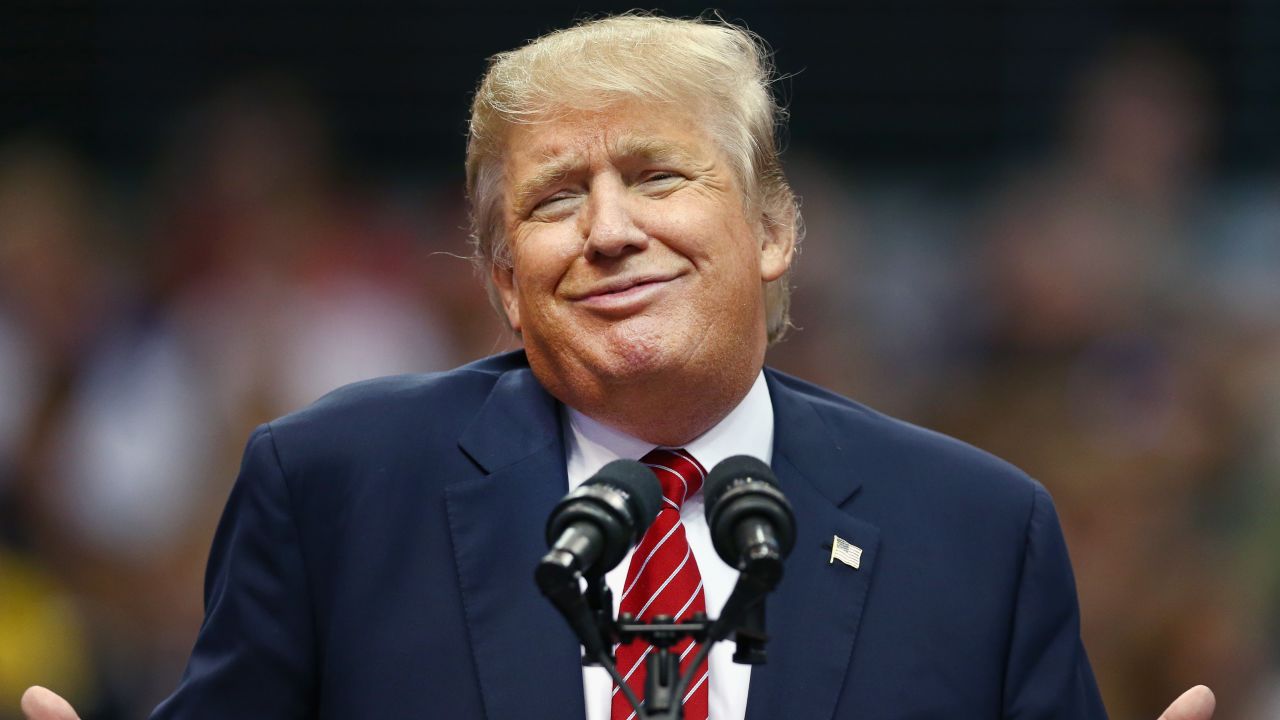
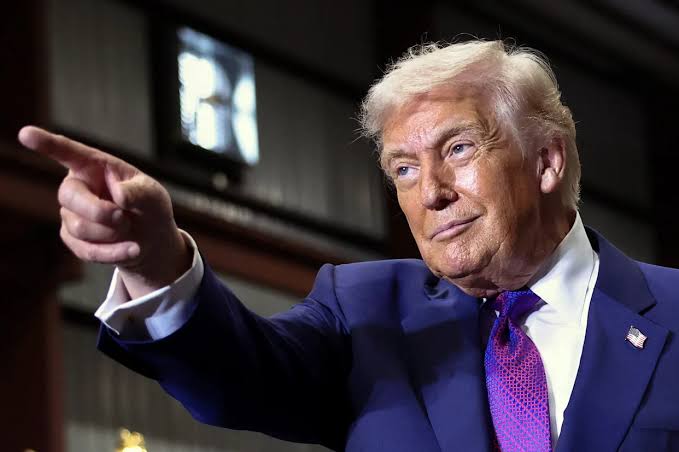
The United States military has launched an attack in the southern Caribbean, killing at least 11 people on board a Venezuelan vessel accused of transporting narcotics. Former President Donald Trump confirmed the strike on Tuesday.

Addressing reporters at the White House, Trump stated that American forces had “literally shot out a boat, a drug-carrying boat, a lot of drugs in that boat,” describing it as part of a broader push by his administration to confront cartels.

He later released a video on his Truth Social account showing a speedboat exploding in open waters.

According to him, those on board were members of Tren de Aragua, a Venezuelan criminal organization recently labeled a terrorist group by the U.S. Trump further alleged the group is “controlled by Nicolás Maduro’s regime” in Caracas.

“The strike resulted in 11 terrorists killed in action. No U.S. forces were harmed,” Trump announced.

Officials in Caracas quickly rejected Washington’s version of events.

Venezuela’s Communications Minister, Freddy Ñáñez, said the video posted by Trump appeared to have been produced using artificial intelligence.

Reuters reported that its initial review of the footage showed no indication of digital alteration, though the agency noted its verification process was still underway.

The Pentagon has not released specifics about the operation, including the quantity or type of drugs said to be on board.

This omission has drawn scrutiny from regional analysts. Adam Isacson, a security expert at the Washington Office on Latin America, cautioned, “This is highly unusual. Being suspected of carrying drugs doesn’t carry a death sentence,” pointing out that the operation resembled U.S. counterterrorism measures more than standard drug enforcement actions.

This was the first publicly acknowledged strike since Trump ordered seven American warships, a nuclear-powered submarine, and over 4,500 sailors and Marines into the Caribbean.

U.S. surveillance aircraft have also been active over the area in recent weeks.

Secretary of State Marco Rubio defended the strike, arguing that the narcotics “were probably headed to Trinidad or some other Caribbean country,” and pledged that the administration would continue targeting cartels.

The development has further strained relations with Venezuela, where officials accuse Washington of fabricating claims to justify military escalation.

Just last month, the U.S. doubled its reward for Maduro’s arrest to $50 million, alleging deep connections between his government and criminal organizations.

Caracas maintains that Tren de Aragua was dismantled during a 2023 prison raid and no longer operates in the country.

I can end Zamfara banditry in two weeks if given security control—Gov Lawal

By Uzair Adam

Governor Dauda Lawal of Zamfara State has accused political interference and lack of cooperation from security agencies of frustrating efforts to end the decade-long banditry crisis that has devastated the state.

Speaking during a media briefing with local journalists in Gusau on Monday, the governor lamented that despite deploying modern surveillance technology capable of tracking the movement of bandits, his government remains helpless because he lacks direct control over security operatives.

Governor Lawal said, “Sometimes, I can see the bandits moving around on my phone because of the technology we are using. I know where they are, where they go, and where they come from.

“But I cannot stop them because I have no power to command the security personnel. If I had that authority, I swear, within two weeks we would end this problem.”

Lawal disclosed that his administration has engaged more than 2,000 hunters and vigilantes from Yobe and Maiduguri, placing them on monthly salaries and equipping them with vehicles and weapons.

However, he expressed frustration that at one point, these recruits were barred from engaging bandits in Shinkafi after a directive was issued to halt their operations.

The governor noted, “This is our biggest challenge. We have men on the ground, well-motivated and ready to confront the bandits, but sometimes they are told not to act. What then do we do?”

Despite the setbacks, Lawal said his administration has spent heavily to support conventional security agencies, including the purchase of 150 new vehicles recently distributed to them.

He explained that he made the tough decision to provide such resources, even though accountability could expose his government to criticism, because he believes leadership is a trust from God.

Zamfara State has in recent years become the epicenter of banditry in northwestern Nigeria.

Armed groups kill, abduct, and displace villagers, often operating in broad daylight. The violence has left many women widowed and children orphaned, while farmers are prevented from cultivating their lands.

Kidnapping for ransom has become a routine source of funding for the armed gangs, worsening poverty and instability across the state.

The governor, visibly emotional, admitted that the situation sometimes moves him to tears, confessing, “There are moments I cry. I see where bandits should be stopped, but nothing happens because instructions have to come from Abuja.

“I have handed everything to God, but I will never stop doing what I can to restore peace to our people,” he added.

He also questioned the motives of the attackers, asking why they target poor villagers who can barely afford food. “What has the common man done to you?” Lawal asked.

He further pledged, “If you want schools, I will build schools. If you want hospitals, I will provide hospitals. If you want water, I will ensure you get water. All so that we can have peace.”

Governor Lawal accused political actors of exploiting insecurity for selfish interests, warning that such actions harm the entire state.

“Security has been politicized,” he said.

He declared, “Anyone enjoying this situation, or trying to use it for politics, may God disgrace them and expose their secrets. If they seek power, may God deny it to them. And if they already hold power, may God take it away, because the injustice has become too much.”

Despite the challenges, the governor reassured Zamfara residents of his determination to defeat banditry, vowing that his government would not relent until peace and stability are restored.

I have to create state police to tackle insecurity — Tinubu

By Uzair 

President Bola Tinubu has reiterated that the creation of state police is inevitable in addressing Nigeria’s worsening insecurity.

Speaking at the Presidential Villa in Abuja on Tuesday during a courtesy visit by prominent Katsina indigenes led by Governor Dikko Radda, Tinubu assured that his administration is determined to confront the menace of banditry and other security threats.

He directed security agencies to review their strategies in Katsina, which has recently witnessed a surge in banditry, and announced plans to deploy advanced military equipment and surveillance technology. 

The president also disclosed that newly recruited forest guards in the state would receive enhanced training and support.

Tinubu acknowledged Nigeria’s security challenges, including porous borders and long-standing weaknesses, but stressed that with determination and a strategic approach, they could be overcome.

“The security challenges we are facing are surmountable. Yes, we have porous borders. We inherited weaknesses that could have been addressed earlier. It is a challenge that we must fix, and we are facing it,” he said.

He revealed that the federal government had approved the acquisition of additional drones and instructed him to receive daily updates on security operations in Katsina.

“I am reviewing all aspects of security; I have to create a state police. We are looking at that holistically,” Tinubu added.

The president reassured Nigerians that insecurity would be defeated, emphasising the need to protect children, places of worship, and livelihoods from criminal intimidation.

He reminded the delegation that in February 2024, the federal government established a committee to develop a framework for state policing, which has since garnered widespread support. 

However, by March, 20 states were yet to submit their reports, according to Vice-President Kashim Shettima.

Tinubu also paid tribute to former President Muhammadu Buhari, praising him for leaving behind a legacy of success.

Governor Radda and other members of the delegation, including former Governor Aminu Masari and Ibrahim Ida, the Wazirin of Katsina, commended Tinubu for his commitment to security and infrastructural development in the state. 

Ida urged the federal government to prioritise upgrading the Umaru Musa Yar’Adua International Airport and bolstering security in southern Katsina.

Sanwo-Olu marks 2 years of Lagos Blue Line, announces 50% fare slash

By Hadiza Abdulkadir

Lagos State Governor, Babajide Sanwo-Olu, on Wednesday celebrated the second anniversary of the Lagos Rail Mass Transit Blue Line, highlighting its achievements and unveiling a special fare reduction.

According to the governor, the Blue Line has carried more than five million passengers safely in the past two years, without recording a single accident. He noted that trains now operate every 10 minutes, completing over 90 trips daily and easing travel across the state.

To mark the milestone, Sanwo-Olu announced a 50 per cent cut in fares on the Blue Line for Thursday, September 4, 2025, encouraging Lagosians who have not yet experienced the service to do so.

He expressed gratitude for the support and trust of residents, stressing that the success of the project reflects collective belief in “a greater Lagos.”

“Our journey is far from over,” the governor said. “Step by step, we are creating the Lagos we all desire—safer, faster, and easier to move around.”