Admin

Sokoto youth turn abandoned garage into unlikely goldmine

By Dahiru Kasimu Adamu

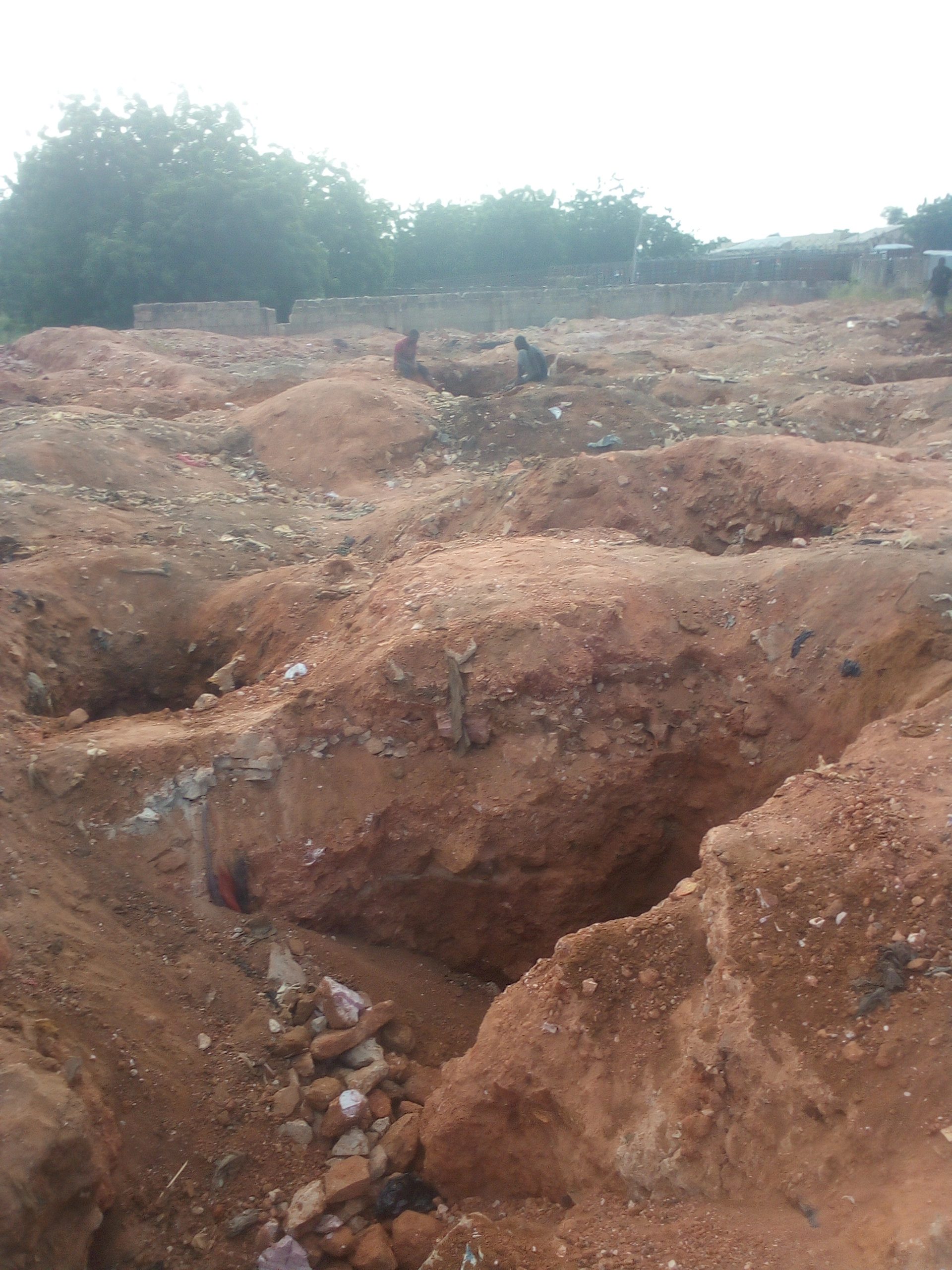
Every morning at Shantan Old Garage along Western Bypass, hundreds of young men armed with shovels and hoes descend into metre-deep pits, searching for buried treasure. But they are not hunting for gold or ancient artefacts, they are digging for scrap iron.

The abandoned garage, once a bustling hub for roadside mechanics, has become an unlikely source of livelihood for youth aged 15 to 40. As traditional labour opportunities have dwindled, these young scavengers have discovered that the ground beneath the old garage contains valuable iron scraps left behind when the site was operational.

“We thank Allah for this opportunity,” said Modi Sanusi, a scavenger in his late twenties. “Just this morning, scavenging materials worth over N125,000 were sold, all from this ground.”

The work is gruelling and dangerous, but profitable. Scavengers can earn between N20,000 and N40,000 daily, depending on their finds—a significant sum in an economy where formal employment remains scarce. Among those who have embraced this unconventional livelihood are former Tsangaya pupils who once begged for food.

Seventeen-year-old Kabiru explained how the earnings have transformed his life: “We earn income, buy food, give some to our parents, and save.”

The phenomenon is not confined to Shantan. Reports indicate that scrap metal collection has become one of Nigeria’s “millennium jobs,” with thousands of youth now reportedly earning substantial incomes from the trade.

But the work comes at a cost. Sharp objects buried in the soil cause frequent injuries, and landslides have resulted in fractures. Muhammad, another scavenger, recalled sustaining a leg fracture when earth collapsed on him. “After I recovered, I came back in the field as I can’t leave this work,” he said.

Health experts have raised alarm about additional risks. Buried iron from old vehicles could be contaminated with lead or other toxic chemicals. Open wounds from injuries risk infection, particularly given the lack of basic first aid facilities at the site.

Despite these hazards, the scavengers remain undeterred. Observers say the phenomenon highlights both the resilience of Nigerian youth and the urgent need for job creation and safety regulations. Advocates call for government intervention through new strategies and laws to regulate the business, as well as leadership within scavenging communities to organise safety campaigns.

For now, the digging continues at Shantan Old Garage. As unemployment persists and metal prices remain attractive, more youth are likely to join the ranks of those turning Sokoto’s buried past into their economic future—one shovelful at a time.

Gov. Yusuf quits NNPP amid escalating internal crisis in Kano

By Sabiu Abdullahi

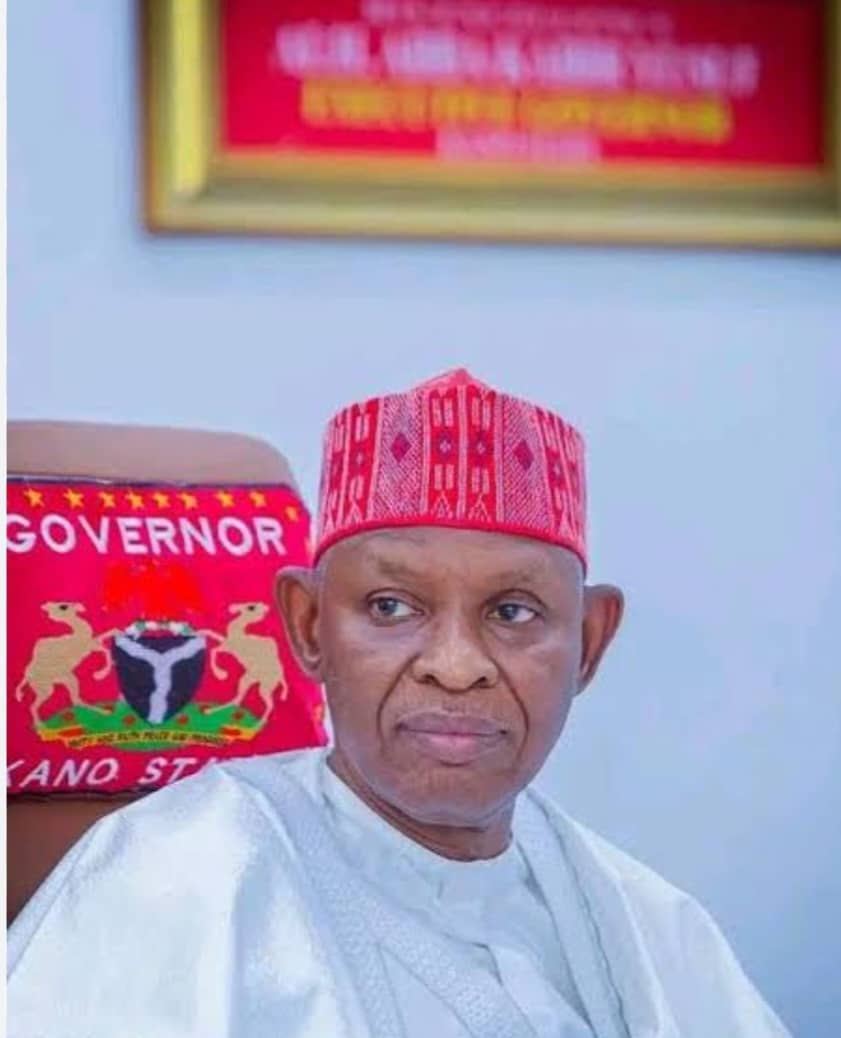
Kano State Governor, Alhaji Abba Kabir Yusuf, has resigned his membership of the New Nigeria People’s Party (NNPP), attributing his decision to worsening internal disputes and a resolve to protect the overall interest of the people of Kano State.

The development was disclosed in a press statement dated January 23, 2026, and signed by the governor’s spokesperson, Sunusi Bature Dawakin Tofa.

According to the statement, Governor Yusuf conveyed his decision in a letter addressed to the Chairman of Diso-Chiranchi Ward of the NNPP in Gwale Local Government Area, with the resignation taking effect from Friday, January 23, 2026.

In the letter, the governor stated, “I write with a deep sense of gratitude to formally notify the leadership of the New Nigeria People’s Party (NNPP) of my decision to resign my membership of the party, with effect from Friday, 23rd, January 2026.”

Governor Yusuf expressed appreciation to the party for the opportunity and support it offered him throughout his time as a member.

“I remain sincerely appreciative of the opportunity given to me by the party, its leadership, and members across Kano State to be part of its political journey since 2022, as well as the support, goodwill, and cooperation extended to me during my time in the party.”

He explained that persistent leadership disputes and legal battles had continued to destabilize the party at the national level.

“In recent times, the party has been confronted with persistent internal challenges arising from leadership disagreements and ongoing legal processes, many of which are presently before the courts for judicial determination.”

The governor noted that the situation had led to serious divisions and weakened unity within the party.

“The growing disenfranchisement among party members has created deep divisions within the party structure, resulting in cracks that appear increasingly irreconcilable and have generated uncertainty at both state and national levels.”Governor Yusuf said his resignation followed careful consideration and was based strictly on public interest.“

After careful reflection, and without prejudice to the party’s capacity to resolve its internal challenges, I have come to the conclusion that my resignation is in the best interest of the people of Kano State.”

He added that the move was made without animosity and with a continued commitment to peace and development.

“This decision is taken in good faith, without any ill will, and with a continued commitment to peace, unity, and the progress of Kano State.”

The statement disclosed that the governor’s resignation was accompanied by that of 21 members of the Kano State House of Assembly, eight members of the House of Representatives, and 44 local government chairmen across the state.

The NNPP acknowledged receipt of the resignation letter through the party’s Secretary in Diso-Chiranchi Ward, Hon. Kabiru Zubairu, who praised the governor’s achievements in governance.

“I wish to concur with His Excellency on the lingering crisis in our party, though we are trying our best to contain it, but we have no option than to accept the resignation of a one and most performing Governor of the NNPP.”

Woman reportedly dies at boyfriend’s house in Abuja

By Sabiu Abdullahi

A 27-year-old woman, Esther Akwaji, has died under unclear circumstances at her boyfriend’s residence in Dei-Dei, within the Bwari Area Council of the Federal Capital Territory.

Findings indicate that the boyfriend, whose identity is yet to be confirmed, left the scene shortly after the incident and has not been seen since.

Esther, who lived in Nasarawa State, was said to have travelled to Abuja to visit relatives. On January 21, she reportedly left her family home, telling them she was going to a bank in Dei-Dei. She did not return.

Later that day, relatives received a phone call from a man who introduced himself as her boyfriend. The call was placed from Esther’s phone.

He told the family that she had visited him and that he bought food for them.The man reportedly told the family that Esther suddenly started vomiting while they were eating.

He said he took her to Kubwa General Hospital, where medical personnel confirmed that she was dead on arrival.

Reports further revealed that the man left the hospital shortly after doctors made the confirmation. All efforts to reach him since then have failed.

The Federal Capital Territory Police Command has confirmed the incident. The Police Public Relations Officer, SP Josephine Adeh, said investigations had begun.

“The corpse has been deposited for autopsy to determine the actual cause of death, while efforts are ongoing to arrest the fleeing suspect,” Adeh said.

Police authorities say further updates will be made public as investigations continue.

Tinubu Tax Reform: Lessons for national health financing

By Oladoja M.O

Nigeria’s new tax law arrives at a moment when questions of domestic resource mobilisation have moved decisively from the margins of fiscal discourse to its centre. The reform is ambitious in both scope and intent. It consolidates previously fragmented statutes, modernises tax administration, strengthens compliance mechanisms, and expands the state’s technical capacity to mobilise revenue in an increasingly constrained macroeconomic environment. 

Read on its own terms, the law represents a serious effort to stabilise public finance and reduce long-standing inefficiencies in the tax system. But tax laws, particularly of this magnitude, should not be mere instruments of collection, but rather reflections of what a state understands taxation to be for. 

When examined from the perspective of national health financing, Nigeria’s new tax law reveals not hostility to health, nor ignorance of its importance, but striking institutional restraint, a deliberate decision to keep taxation largely neutral to the direct financing of public health.

This neutrality is especially significant because it runs counter to the evolving global understanding of domestic resource mobilisation. In contemporary public finance, DRM is no longer conceived simply as the ability of a state to raise revenue, but as its capacity to do so in a manner that deliberately underwrites social protection, safeguards human capital, and reduces long-term economic vulnerability, where health occupies a central place. 

Ill-health is not a random misfortune but a predictable social risk, one that drives household impoverishment, reduces labour productivity, and places sustained pressure on public finances. For this reason, many countries have increasingly integrated health financing into their tax systems, whether through general taxation, earmarked levies, or hybrid arrangements that link tax administration directly to social insurance and prevention financing.

It is against this backdrop that Nigeria’s new tax law must be read. 

The law unquestionably strengthens the means of mobilisation. A unified tax administration framework, enhanced enforcement powers, clearer compliance obligations, and improved data coordination substantially upgrade the state’s fiscal machinery. In theory, this expanded administrative capacity could support innovative approaches to financing social sectors, including health. In practice, however, the law exercises marked caution. Health appears within the tax framework, but only at the margins, and only in forms that preserve the traditional separation between revenue mobilisation and social sector financing.

This pattern becomes evident when examining how health-related elements are treated across the law. Contributions to the national health insurance scheme are recognised as allowable deductions for personal income tax purposes. This recognition is not insignificant; it affirms health insurance contributions as socially legitimate expenditures deserving of fiscal relief. Yet the logic remains passive. The tax system responds only after individuals have already contributed. It does not actively mobilise resources for health, nor does it deploy its collection infrastructure to expand coverage, pool risk, or subsidise access. The fiscal relationship ends at recognition, not generation.

A similar logic governs the treatment of consumption taxes. Essential medicines, pharmaceuticals, and certain medical equipment continue to benefit from favourable VAT treatment. These provisions are defensible on equity grounds, particularly in a system where out-of-pocket spending remains high. But from a financing perspective, their effect is limited. They shield households from additional burden, yet they do not generate fiscal space for the health system. Again, health is insulated from taxation, not financed through it.

The clearest illustration of this restrained approach lies in the treatment of excise duties on tobacco, alcohol, and sugar-sweetened beverages. These taxes are frequently framed as “sin taxes,” ostensibly justified by their potential to alter harmful consumption patterns. In principle, excise taxation is meant to operate through a behavioural channel: higher prices reduce consumption, lower consumption reduces disease burden, and reduced disease burden lowers long-term health expenditure. In Nigeria’s case, however, this logic remains largely theoretical.

First, the excise rates themselves are modest. The levy on sugar-sweetened beverages, for instance, is widely recognised as too low to produce a meaningful price shock that would alter consumption behaviour. Similar concerns apply to alcohol and tobacco, where cultural entrenchment, affordability, and illicit trade further blunt the intended deterrent effect. 

Second, there is no publicly available evidence demonstrating that consumption of these products has declined since the introduction or adjustment of excise duties. On the contrary, available market indicators and anecdotal trends suggest that consumption has increased. Crucially, the state does not appear perturbed by this outcome. Higher consumption translates into higher excise revenue, and excise duties, in practice, function as reliable inflows to the general federal pool.

This reveals a deeper truth about how sin taxes are governed in Nigeria. Despite their rhetorical association with public health, excise duties are not treated as health instruments. They are treated as revenue lines. There is no systematic effort to measure behavioural change, no routine publication of consumption data linked to tax policy, and no formal evaluation of health impact. In policy terms, a behavioural instrument that is not measured is indistinguishable from a revenue instrument. 

The absence of evidence of reduced consumption is not merely a data gap; it indicates that behavioural change is not being actively pursued as an objective.

From a health financing perspective, this has serious implications. Excise taxes generate revenue, yet none of that revenue is structurally linked to health financing. No portion is dedicated to prevention programmes, health insurance subsidies, or system strengthening. The public bears the health consequences of continued consumption, rising non-communicable diseases, increasing treatment costs, and productivity losses, while the fiscal gains accrue centrally, unconnected to the sector that absorbs the burden. In effect, Nigeria taxes harm, tolerates its persistence, and finances neither its prevention nor its consequences through the tax system.

This outcome is unlikely to be accidental. The new tax law is too carefully constructed for its silences to be incidental. Rather, it reflects a broader fiscal philosophy that prioritises flexibility, central discretion, and revenue pooling over sector-specific commitments. Earmarking, even in its softer forms, constrains the treasury’s freedom to allocate resources across competing priorities. From a public health financing standpoint, this caution is costly. It leaves health structurally dependent on discretionary budgets, weak insurance enforcement, donor support, and household spending, even as the state’s revenue-collection capacity improves.

The result is a growing asymmetry. Nigeria now possesses an increasingly sophisticated tax apparatus, but lacks a corresponding approach to financing social risk. Revenue mobilisation is advancing, but allocation logic remains largely unchanged. Health remains acknowledged but peripheral, recognised, accommodated, and indirectly supported, yet excluded from the core architecture of taxation.

None of this implies that the new tax law should have transformed itself into a health financing statute. No! Tax laws cannot, and should not, bear the full weight of social policy. But in an era where domestic resource mobilisation is increasingly framed as a means of financing development rather than merely sustaining government, the continued treatment of health as fiscally incidental is striking. The administrative infrastructure now exists to do more than collect revenue efficiently. What is missing is the institutional decision to deploy that capacity deliberately to protect households from the economic consequences of ill-health.

The most important lesson of Nigeria’s new tax law for national health financing, therefore, lies not in what it includes, but in what it leaves unresolved. The law strengthens the state’s ability to mobilise resources, yet remains silent on whether that capacity should be harnessed to address one of the most predictable and economically damaging social risks. As Nigeria deepens its commitment to domestic resource mobilisation, the critical question will not simply be how much revenue can be raised, but how intentionally that revenue is aligned with protecting human capital. A tax system that improves efficiency without strengthening social purpose risks becoming technically impressive but socially thin.

Oladoja M.O writes from Abuja and can be reached at: mayokunmark@gmail.com.
Tinubu assigns ambassadors to U.S., UK, France, Turkey, ahead of presidential trip

By Abdullahi Mukhtar Algasgaini

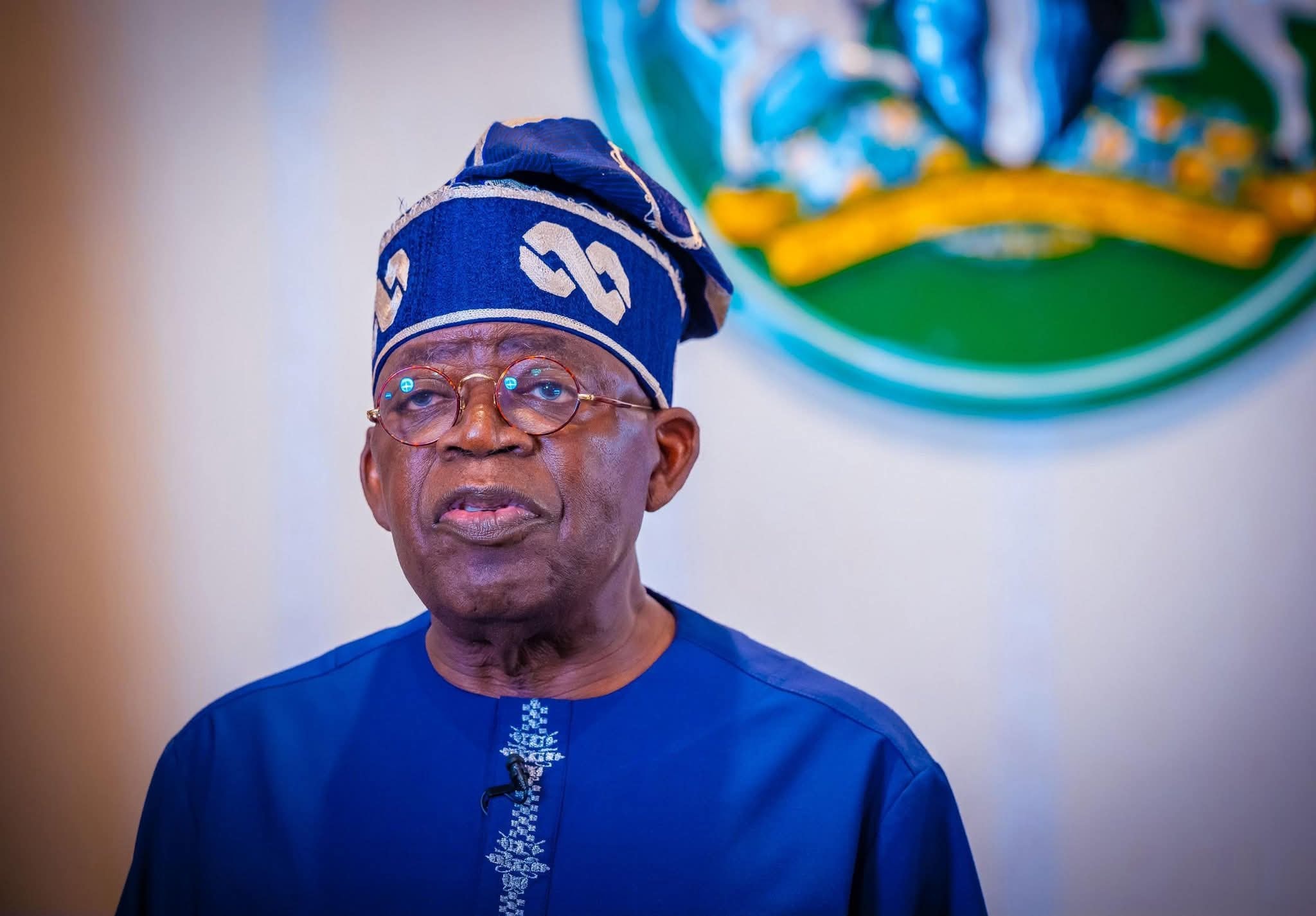
President Bola Tinubu has assigned four high-profile diplomats to strategic allied nations, including the United States, United Kingdom, France, and Turkey.

The postings come from a pool of 68 ambassador-designates confirmed by the Senate last December.

The assignments see Ambassador Ayodele Oke posted to France, while Colonel Lateef Are is designated for the United States. Ambassador Amin Dalhatu, previously Nigeria’s envoy to South Korea, will serve as High Commissioner to the United Kingdom.

Notably, former Kebbi State Governor Usman Isa Dakingari Suleiman is appointed ambassador-designate to Turkey. This posting precedes President Tinubu’s scheduled state visit to Ankara next week.

According to a presidential memo to the Ministry of Foreign Affairs, the ministry has been directed to formally notify the host governments of the designations in line with established diplomatic protocols.

The posting of the remaining confirmed envoys is expected to follow.

Kano court remands cleric over alleged land document forgery

By Sabiu Abdullahi

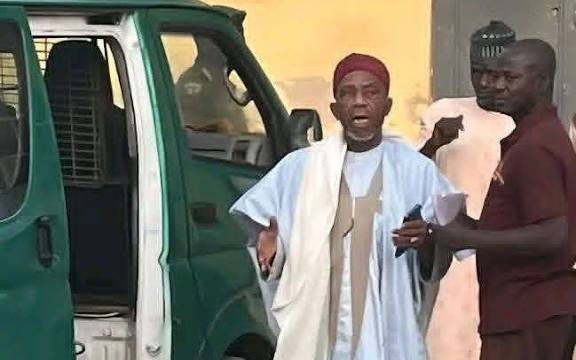
A Magistrate Court in Kano State has ordered the remand of a popular Islamic cleric, Ibrahim Makwarari, over allegations of forgery linked to land ownership documents.

Mr Makwarari appeared before Magistrate Court No. 53, sitting at Normansland, Kano, on Wednesday. He is facing charges bordering on illegal possession of land and forgery of land documents in connection with two properties located along Ahmadu Bello Way in the Kano metropolis.

The charges were filed by the police after a petition submitted by the Kano State Ministry of Land. The ministry alleged that the cleric forged title documents that were originally issued in the names of Kassim Usman Baba and Audu Yaro Fagge.

According to investigators, the disputed documents were recovered from the defendant. The police stated that Mr Makwarari failed to give a satisfactory explanation concerning the authenticity of the documents.

When the charges were read in court, the defendant pleaded not guilty.Counsel to the defendant, A. T. Shehu, applied for bail and assured the court that his client would be available for trial. The prosecution counsel, Nura Salisu, opposed the request.

Mr Salisu told the court that the defendant had previously ignored police invitations and was arrested only after a specific court order was issued.

In his ruling, the magistrate, Mustapha Datti, granted bail to the defendant in the sum of ₦20 million with two sureties. The court directed that the sureties must include a district head from any local government area in the state, supported by an official letter from the relevant Emirate Council, and a Kano-based businessman with verifiable property.

The magistrate also ordered the defendant to submit his international passport to the court. Both sureties are required to provide recent passport photographs.

Mr Datti further ruled that the defendant should be remanded in a correctional facility until all bail conditions are met.

The case was adjourned to 12 February for hearing.

2027 Guber Race: Can Senator Buba Shehu win Bauchi?

By Zayyad Mohammed 

As Nigeria inches closer to the 2027 general elections, the political temperature across the Northeast is steadily rising. Of the six states in the region, the All Progressives Congress (APC) currently governs four, Borno, Gombe, Taraba, and Yobe,while the People’s Democratic Party (PDP) controls Adamawa and Bauchi. For the APC, reclaiming Bauchi is not merely a state contest; it is a strategic necessity in consolidating dominance in the Northeast.

Political analysts often remind us that all politics is local. Nowhere is this truer than in Bauchi State, where history, identity, and grassroots connection frequently outweigh elite credentials and federal influence. As the race for 2027 gathers momentum, the central question is not just whether the APC can win Bauchi, but who within the party has the capacity to deliver that victory.

Within the Bauchi APC, the contest is shaping up as a high-stakes battleground involving heavyweight figures: Minister of Health, Professor Muhammad Ali Pate; Minister of Foreign Affairs, Ambassador Yusuf Maitama Tuggar; Senator Shehu Buba Umar of Bauchi South; and former NAPIMS Managing Director, Alhaji Bala Wunti. Each brings distinct strengths, yet Bauchi’s political history suggests that not all strengths translate into electoral success.

Bauchi’s politics is unique, even by Nigerian standards. Since 1999, power has changed hands regularly after eight years, as seen in the transitions from Adamu Mu’azu to Isa Yuguda, and later to Mohammed Abdullahi Abubakar. This swinging pattern reflects a politically conscious electorate shaped by the enduring NEPU legacy, the sensitive Katagum–Bauchi balance, and an unwavering demand for grassroots leadership.

While Professor Ali Pate boasts international exposure and technocratic depth, his political challenge lies at home. Among many Bauchi voters, he is perceived as distant from local political struggles, earning the nickname “Wakilin Turawa”, a subtle but powerful reflection of weak grassroots resonance. Similarly, Alhaji Bala Wunti is widely regarded as competent and capable, yet Bauchi APC’s recent history with political newcomers raises red flags. In 2023, Air Vice Marshal Saddique Abubakar emerged suddenly to clinch the party ticket, only to suffer a resounding defeat at the polls. A similar pattern played out in 2015 when M.A. Abubakar rode the Buhari wave to victory but failed to secure a second term in 2019.

Ambassador Yusuf Maitama Tuggar, though a seasoned political actor, faces another challenge which is common in Bauchi politics: perceived aloofness from the grassroots. In a state where political success depends on daily engagement with local realities, distance; real or imagined, can be costly.

Against this backdrop, Senator Shehu Buba Umar stands out as a politically grounded contender. Several critical factors tilt the scale in his favour. Notably, all Bauchi governors since 1999 have emerged from Bauchi South, aligning squarely with Senator Buba’s constituency. The enduring Katagum–Bauchi political factor further strengthens his position, as does his deep-rooted grassroots network across the state.

More importantly, Senator Buba is widely viewed as the only aspirant within the APC with the political reach and local acceptance required to confront and defeat an incumbent party. His long-standing engagement with party structures, traditional institutions, and grassroots actors has earned him the quiet support of many political stakeholders. In Bauchi, where elections are often won long before polling day through alliances and local trust, this advantage cannot be overstated.

It is therefore unsurprising that many observers believe the APC leadership, at state, national, and presidential levels, may ultimately rally around Senator Buba Shehu Umar. In a highly competitive state like Bauchi, emotion must give way to strategy, and strategy demands choosing a candidate who aligns with the state’s political realities.

For the APC, winning Bauchi in 2027 is part of a broader objective: securing all six Northeast states in both the gubernatorial and presidential elections. Achieving this requires a deliberate, state-by-state approach that prioritizes grassroots candidates and addresses genuine local agitations. In Bauchi, the choice of governorship candidate will not only determine the fate of the state election but could significantly influence the party’s presidential performance.

As history has repeatedly shown, Bauchi does not reward political experiments. It rewards familiarity, structure, and  grassroots connection. In that equation, Senator Shehu Buba Umar appears not just as a contender, but as the APC’s most viable pathway to victory in 2027.

Zayyad Mohammed writes from Abuja, 08036070980, zaymohd@yahoo.com

Major Al-Mustapha cleared as supreme court dismisses Lagos murder case

By Abdullahi Mukhtar Algasgaini

The Supreme Court has definitively ended the murder trial of former Chief Security Officer, Major Hamza Al-Mustapha (rtd), over the 1996 killing of Kudirat Abiola, wife of the acclaimed winner of the June 12, 1993 presidential election, MKO Abiola.

In a unanimous ruling on Friday, the apex court dismissed the case, citing Lagos State’s complete abandonment of the appeal.

Justice Uwani Aba-Aji, presiding, noted that the state had failed to take any legal steps for over nine years despite being granted permission in 2014 to challenge an appellate court’s decision.

Lagos State, which had sought to overturn Al-Mustapha’s 2013 acquittal by the Court of Appeal, was absent from the proceedings and had filed no documents since the Supreme Court’s 2014 order gave it a 30-day window to act.

Al-Mustapha’s counsel, Paul Daudu, successfully argued that the state had lost all interest, urging the court to dismiss the matter entirely.

“The appellant has abandoned the case,” Justice Aba-Aji declared, stating that nine years was more than sufficient for Lagos to pursue the appeal.

The court also expressed displeasure that the state offered no representation or explanation despite receiving hearing notices since 2020.

This ruling seals the legal saga that began with Al-Mustapha’s 2012 death sentence by a Lagos High Court for his alleged role in Kudirat Abiola’s murder, a sentence overturned on appeal in 2013 due to insufficient evidence.

The Supreme Court’s dismissal closes the final chapter, affirming Al-Mustapha’s acquittal.

NERDC debunks claims of religious exclusion in revised school curriculum

By Uzair Adam

The Nigerian Educational Research and Development Council (NERDC) has dismissed claims circulating on social media that the newly revised Basic and Senior Secondary Education Curriculum excludes religious subjects, describing the information as false and misleading.

In a statement signed by its Executive Secretary, Professor Salisu Shehu, the Council said it was responding to allegations by “some people” who claimed that the new curriculum made provision for Christian Religious Studies (CRS) alone, with no space for Islamic Studies (IS), while others alleged the reverse.

According to NERDC, both claims amount to disinformation and do not reflect the approved curriculum.

The Council clarified that the revised curriculum, developed under the Federal Ministry of Education’s National Education Sector Initiatives (NESRI), clearly provides for both CRS and Islamic Studies at all relevant levels of basic and senior secondary education.

It explained that the subjects are offered on the basis of pupils’ religious affiliation, with CRS designated for Christian pupils and Islamic Studies for Muslim pupils.

Contrary to previous practice where religious studies were largely optional, NERDC said the revised curriculum accords greater importance to religious education by making it a consistent component of learning from Primary One through Senior Secondary School Three.

“The claim that either CRS or Islamic Studies has been removed from the curriculum is completely false,” the Council said, noting that the approved subject offerings comprehensively accommodate both religions in line with Nigeria’s plural society.

According to the Council, the curriculum review was designed to streamline content, reduce overload and improve learning outcomes, while still ensuring balance across sciences, humanities, vocational studies and religious education.

It added that the Federal Ministry of Education has officially released the list of approved subjects for all levels, and that any other versions in circulation are unauthentic.

NERDC explained that at the basic education level, pupils are required to study a broad mix of core subjects alongside either CRS or Islamic Studies, while at the senior secondary level, both subjects are clearly listed among the humanities offerings.

However, science, technology and commercial students that are interested in offering CRS and IRS can pick them as elective.

This, it said, demonstrates that the curriculum council adopted an inclusive and comprehensive approach rather than favouring one religious subject over another.

Professor Shehu urged parents, teachers and other stakeholders to ignore “fake and unauthorised” subject lists circulating online, warning that such misinformation could cause unnecessary confusion and tension.

He said the Council is already planning nationwide sensitisation and teacher capacity-building programmes to support smooth implementation of the revised curriculum.

He further explained that implementation will begin at the start of each three-year education cycle—Primary One, Primary Four, JSS One and SS One—whenever the revised curriculum is introduced.

NERDC assured the public that the revised curriculum reflects national values, respects religious diversity and remains focused on improving the quality and relevance of education across the country.

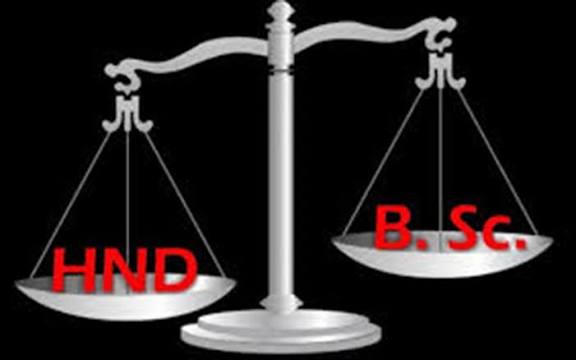
FG moves to end HND–B.Sc divide, grants polytechnics degree-awarding powers

By Uzair Adam

The Federal Government has announced plans to abolish the long-standing dichotomy between Higher National Diploma (HND) and university degrees by empowering polytechnics to award degrees, a reform aimed at repositioning technical and vocational education as a key driver of national development.

The Minister of Education, Dr. Tunji Alausa, disclosed this on Wednesday in Abuja while addressing a high-level retreat of council chairmen, commissioners of education, rectors, registrars and bursars of polytechnics across the country.

Describing the move as a landmark policy shift, the minister said the reform would end decades of discrimination against polytechnic graduates and reposition the institutions as centres of excellence within Nigeria’s higher education system.

He explained that the initiative would strengthen polytechnic education while preserving its core advantage of hands-on, industry-oriented training.

According to Dr. Alausa, Nigeria’s future competitiveness depends largely on a workforce capable of creating, building and solving real-world problems.

He added that the policy was in line with President Bola Ahmed Tinubu’s Renewed Hope Agenda, which prioritises job creation, industrial growth and human capital development.

With the new degree-awarding status, polytechnics are expected to attract stronger industry partnerships, improved funding opportunities and increased public confidence.

The minister assured stakeholders that the transition would be guided by clear standards, strong regulation and robust quality assurance mechanisms to ensure global competitiveness.

Speaking on the theme, “Transforming Polytechnic Education in Nigeria: Innovation, Good Governance and Sustainability for National Development,” Dr. Alausa noted that polytechnics remain critical to building a skills-driven economy.

He said the ministry had placed priority on Technical and Vocational Education and Training (TVET) to ensure graduates are industry-ready, innovative and capable of driving economic growth.

He urged polytechnic leaders to promote innovation through entrepreneurship centres, research hubs and strong industry linkages, identifying renewable energy, agri-technology, digital manufacturing and climate-resilient solutions as key priority areas.

On governance, the minister warned that transparency, accountability and ethical leadership must define the new era of polytechnic administration.

He called for fiscal discipline, timely audits, prudent management of resources and zero tolerance for corruption.

Dr. Alausa also emphasised sustainability, encouraging institutions to boost internally generated revenue through production and services, develop eco-friendly campuses and build resilient infrastructure.

Polytechnics, he said, should aim to produce what they consume and contribute to reducing Nigeria’s dependence on imports.While acknowledging challenges such as funding gaps, outdated facilities and societal bias in favour of university degrees, the minister maintained that the opportunities ahead were far greater.

He reaffirmed the federal government’s commitment to supporting polytechnics through policy reforms, infrastructure upgrades and strategic partnerships.

He further announced a special TETFund intervention this year to upgrade engineering schools in polytechnics with modern equipment, following a similar intervention for 12 medical colleges last year.

Charging participants to return to their institutions as agents of change, Dr. Alausa said, “The future of our youth, our economy and our nation depends on the transformation we ignite here today.”

Education experts at the retreat described the announcement as a turning point, noting that it would boost enrolment, motivate students and staff, and enhance the contribution of polytechnics to sectors such as manufacturing, technology, agriculture and renewable energy.