Admin

Gov. Yusuf pledges over N2b to rebuild, secure GSM market after inferno

By Uzair Adam

The Kano State Government is set to establish a dedicated management structure for the Farm Centre GSM Market to ensure transparency, efficiency, and long-term sustainability.

During a visit to the market, Governor Abba Kabir Yusuf called on traders and market users to cooperate with security agencies in addressing the growing incidents of phone snatching and petty crimes in the area.

The governor reiterated his administration’s commitment to youth empowerment, emphasizing that the state’s 26 vocational training institutes will continue to serve as platforms for skills development, job creation, and sustainable livelihoods.

In his welcome remarks, Comrade Jamilu Gama, Chairman of the GSM Market, expressed deep appreciation to the governor for the government’s swift intervention.

He noted that the prompt response brought hope and relief to traders affected by the recent fire outbreak.

Situated in the heart of Kano metropolis, the Farm Centre GSM Market spans 20 plazas and serves as a major hub for mobile phones, gadgets, and related services.

It provides direct employment to over 39,000 youth, making it one of the largest tech-related informal job markets in Northern Nigeria.

Stakeholders have described Governor Yusuf’s visit and the state’s support as a bold and strategic move to promote economic recovery, enhance infrastructure, and ensure greater youth inclusion.

Explosion kills five, injures 10 in Kano as police launch investigation

By Uzair Adam

A powerful explosion rocked a company located along the Eastern Bypass in Kano on Saturday morning, leaving five people dead and injuring 10 others.

The blast was reportedly triggered by a military mortar bomb suspected to be among items transported on a truck carrying carbine.

Kano State Commissioner of Police, CP Ibrahim Adamu Bakori, confirmed the incident, stating that investigations are ongoing to determine the exact cause and ownership of the explosive materials.

He disclosed that the vehicle involved came from Yobe State, though further details remain unclear.

“Preliminary findings suggest the explosive material was being transported by a trailer coming from Yobe, but it remains unclear whether the vehicle was carrying military personnel or civilians,” he said.

Bakori added that security agencies were still trying to confirm the exact cause of the explosion and whether the vehicle belonged to the military or private individuals.

He urged the public to remain calm as security operatives continue their investigation.

“The facts will be clearer once the investigation is completed,” he noted.

The injured victims were taken to Aminu Kano Teaching Hospital (AKTH), where five were confirmed dead, and 10 others are currently receiving treatment.

The Commissioner said it was still unknown whether any security personnel were among the casualties but assured that the police would conduct a thorough probe into the matter.

“The police are working to identify the cause of the explosion and determine the extent of the damage,” he said, promising to provide further updates as the investigation progresses.

We’ll go after Benue killers—COAS

By Anwar Usman

The Chief of Army Staff (COAS), Lt. Gen. Olufemi Oluyede, says the Nigerian Army will bring to justice the perpetrators of the recent killings in Benue, Plateau and other parts of the country.

Oluyede made this statement on Saturday in Akure during a second quarter 2025 media chat organised by the Department of Civil-Military Affairs, Nigerian Army Headquarters.

The media chat was themed “Military – Media Collaboration: Panacea for Enhanced National Security and Development.”The COAS, who was represented by Maj. Gen. Obinna Onubogu, General Officer Commanding (GOC) 2 Div., Nigerian Army, Ibadan, said the military is ready to ending the spate of violence, particularly in North-Central Nigeria.Oluyede, who said that the president had given very clear orders, explained that they would remain engaged in Plateau, Benue, Kwara and quite a number of states that were experiencing insecurity.

“We are out, fully deployed and tackling the menace head-on.“In Benue particularly, you will see in the coming weeks, very elaborate security arrangements to ensure that all that is going on there completely stops.

He further stated that, “The Army cannot be everywhere at once. Nigeria is a vast country but we are not as large in number as many people believe.

“We rely heavily on the support and cooperation of the local population to provide timely and credible information.

“In some cases, unfortunately, the people are not very helpful in terms of the information they give out, which delays our reaction time. That must change if we are to win this fight together,” he said.

NAN reports that, the COAS called on media personnel to verify facts before publication, and help in building national security and development to combat misinformation and sensational reporting.

According to him, the social media space, especially, is flooded with misinformation, disinformation and outright lies.“So, we are appealing to the media practitioners to reach out to us before putting out unverified stories.

“We are satisfied with the support we’ve received from the media so far and we hope to deepen that synergy to ensure national security is not undermined by sensational reporting,” he said.

Rethinking commercial surrogacy in Nigeria

By Arita Oluoma Alih

Medical science has evolved significantly over the centuries. One of the most remarkable breakthroughs in this journey is the art and science of surrogacy, a practice where a woman carries a child in utero (in the womb) on behalf of another woman or couple, whose egg and sperm are fertilised in a laboratory to form an embryo before being implanted into the surrogate mother.

The choice to become a surrogate mother is bestowed upon a woman who undergoes the implantation process, a complex journey that undoubtedly results in experiencing discomfort, physical and emotional pain.

Regardless of the outcome, these pains persist as the foetus develops during the nine-month gestation period, which comes with its own set of challenges, including hormonal imbalances and resultant body changes.

Becoming a surrogate mother is not a knee-jerk decision. Financial challenges, especially in developing societies like ours, and sympathy – a woman wanting to help another woman who has been struggling to conceive or whose womb has been certified unfit to carry a child by a medical professional – are often underlying motivations.

Intended parents also do not jump into surrogacy headfirst; they may have tried other means before settling for such a tedious process. Others, however, would opt for it due to tokophobia – the fear of childbirth. For this group, it is a case of better safe than sorry. 

Other phobias that make couples consider surrogacy include the fear of losing the baby inside the womb, medically known as stillbirth; fear of dying during childbirth; fear of excessive weight gain and other bodily and hormonal changes; fear of mom brain; and baby blues, among others. 

With all these factors in mind, it is mind-boggling that a woman should go the extra mile to carry and birth another person’s child, only to be left high and dry without any form of compensation!

On May 26, 2025, the House of Representatives initiated legislative action to prohibit commercial surrogacy in Nigeria and establish a framework to regulate the practice solely for non-commercial, altruistic purposes. This move follows the introduction of “A Bill for an Act to Protect the Health and Well-being of Women, Particularly in Relation to Surrogacy and for Related Matters”.

The provisions in the Bill that stipulate ‘explicit protection against coercion or forced surrogacy arrangements’ and ‘mandating counselling for both surrogate mothers and intended parents’ are highly commendable. This is particularly important given instances where intended parents reject babies based on gender preferences; counselling would help them understand that they must accept the child wholeheartedly, regardless of gender.

Another twist that underscores the importance of counselling is that, in some cases, surrogate mothers have fought for and claimed ownership of the child, despite prior agreements.

Secondly, the “endorsement of only altruistic surrogacy, where no financial profit is involved except for reimbursing medical and pregnancy-related matters” is a point of contention. Surrogate mothers should be fairly compensated financially for their role, based on mutually agreed-upon terms and conditions between both parties.

While the bill in itself may be altruistic, it should consider monetary compensation for women who render such a difficult and time-consuming service, thereby providing them with the necessary tools to maintain proper mental and physical well-being after childbirth.

Since the bill seeks to protect the rights of women involved in surrogacy and other parties, the legislators should consider several key factors: What happens if a surrogate mother loses her life? What if a stillbirth occurs? What provisions are made for aftercare? What if the pregnancy leaves the surrogate mother with long-lasting health issues, such as hypertension or diabetes? Addressing these questions will provide balance and add depth to the Bill.

The monetary compensation should be seen as a form of consolation for these surrogate mothers when all is said and done. However, Senator Uchenna Okonkwo, who represents the Idemili North/Idemili South Federal Constituency of Anambra State and sponsored the bill, may have his reasons, which I won’t speculate about. Nevertheless, the bill warrants a second look to make it more comprehensive.

Lastly, it is no news that baby farms are hotbeds for illicit activities, including human trafficking. Criminalising commercial surrogacy might inadvertently fuel these underground enterprises, whereas a more critical look at the bill to include compensating surrogate mothers could nip the problem in the bud.

Arita Oluoma Alih is a student of the International Institute of Journalism. She writes from Abuja and can be reached at aritaarit118@gmail.com.

OIC summit convenes amid Middle East turmoil, with little hope of influence

By Muhammad Abubakar

Leaders and foreign ministers from the 57 member states of the Organisation of Islamic Cooperation (OIC) are gathering in Istanbul this Saturday for a high-stakes summit overshadowed by escalating tensions in the Middle East, most notably Israel’s war with Iran and the ongoing devastation in Gaza.

Iranian Foreign Minister Abbas Araghchi is set to attend, as many of his counterparts are expected to call for an immediate ceasefire. Yet the OIC, long criticised for its limited political clout, is unlikely to shift the course of either conflict.

The situation in Gaza—now in its 21st month—remains dire. Humanitarian workers report that more Palestinians are killed by the Israeli army while trying to collect food than in actual combat. 

On June 17th, at least 59 people were killed when Israeli tanks reportedly opened fire near an aid distribution centre run by the Israel-backed Gaza Humanitarian Foundation. Israel’s military has pledged to investigate the incident.

Despite repeated condemnations and emergency meetings, the OIC has remained largely powerless in stemming the violence in Gaza. With tensions now spilling into a broader regional confrontation, the summit is expected to issue a familiar call for peace that few expect to alter the course of events.

Emirate dispute cast a shadow over Eid-el-Kabir prayers in Kano

By Fatima Ishaq Muhammad

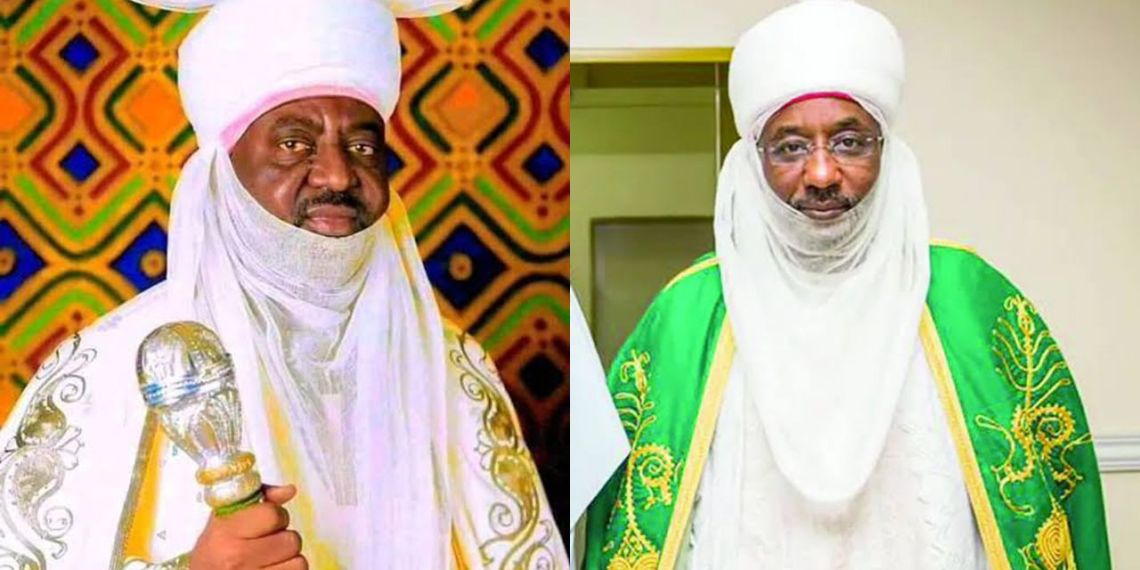
Kano, known for its deep Islamic practices and royal traditions, witnessed a historic and uneasy moment during the 2025 Eid-el-Kabir celebrations as two rival Emirs led separate congregational prayers in different parts of the city.

This development demonstrated the woeful crisis over the leadership of the Kano traditional Emirate, which, indeed, remained one of the most powerful traditional institutes in northern Nigeria.

Moreover, on one side was Emir Muhammadu Sanusi II, reinstated in May 2024 by the Kano State Government after being dethroned in 2020. Aminu Ado Bayero was installed as Emir on the other side after Sanusi’s removal. He still maintains that he remains the rightful occupant of the royal seat.

During the Eid celebrations, Emir Sanusi II led prayers at the Kofar Mata Eid Ground, traditionally recognized as the seat of the Emir’s religious leadership.

Meanwhile, Emir Aminu Bayero held his prayers at a different location, with loyalists gathered around him. For the first time in recent memory, Kano experienced two major Eid congregations, each holding up to a divided royal allegiance within the ancient city.

This unprecedented situation did not happen in isolation, but it resulted from the recurring tussle over the Kano Emirate, rooted in politics and personal rivalries.

Sanusi II’s removal in 2020 by the administration of former Governor Abdullahi Ganduje was widely termed as punishment for his massive outspoken criticism of the government.

His reinstatement by the current government of Governor Abba Kabir Yusuf has been challenged in court by Bayero’s supporters, creating legal and political uncertainty over who the legitimate Emir of Kano is.

The split Eid prayers skyrocketed across Kano and beyond, symbolizing the Emirate’s division and disunity of authority.

What should have been a day of religious unity became a visible sign of division in the state’s leadership. Thankfully, no major disturbances were reported, though tensions remain high.

Adding to the complexity of the situation, the traditional Durbar festival, which usually follows the Eid prayers, was banned by the police for security reasons.

The ban disappointed many residents, as the Durbar is integral to Kano’s cultural identity and economic life.

As the legal battles escalate, many residents and observers fear that the division within Kano’s traditional leadership could escalate unless a clear resolution is provided by the courts or through dialogue among key stakeholders.

For now, Kano remains a city with two Emirs, two congregations, and a divided loyalty, awaiting clarity on the future of one of northern Nigeria’s most important royal institutions.

Fatima Ishaq Muhammad via fatimaishaq021@gmail.com.

Lecturer commends Kano CP for increased security presence in areas notorious for phone snatching, thuggery

By Sabiu Abdullahi

A lecturer at the Kano State Polytechnic, Aisar Salihu Musa, has publicly praised the state’s Commissioner of Police, Ibrahim Adamu Bakori, for what he described as a massive improvement in security presence in areas previously known for phone snatching and violent gang activities.

In a Facebook post published on Friday, Musa expressed his appreciation. He said, “Honestly, we must thank the Commissioner of Police in Kano State, Ibrahim Adamu Bakori. May Allah reward him with goodness.”

He noted that several locations in Kano where residents had long complained about phone thefts and gang fights—especially during the evening hours—are now witnessing visible deployment of security personnel.

“Most places that were once hotspots for phone snatching or gang clashes in the evening now have two police patrol vehicles stationed there. You will also see the anti-thuggery squad supporting them,” the lecturer wrote.

He recalled that in just the last two days, he personally visited at least four neighborhoods and saw the new security arrangement in action.

These included Dorayi (both ‘Karshen Waya’ and the burnt fuel station area), Kabuga, Sharada, Kofar Mata, and Kofar Fanfo.

While expressing hope that other areas like Kurna, Rijiyar Lemo, Hotoro, and Gadan Kaya would also benefit from similar interventions, Musa urged that the initiative be sustained and that suspected miscreants continue to be arrested and hidden away from public harm.

Recounting a personal experience, he described how he once had to pick up a package at night in a location known for gang violence.

“As I approached, I remembered the stories about gang fights in that area. I felt very uneasy. I’ve made a vow never to go to any place at night if there’s no adequate security,” he wrote.“But then I saw two police vehicles at the location. I felt a huge sense of relief. It was at that moment that I truly understood the importance of security officers in our communities.”

He concluded with a moral reflection that says “Anyone who cannot appreciate people when they do good will find it difficult to thank God.”

Musa commended Commissioner Bakori once more and prayed for continued peace and protection in Kano and beyond.

Young man reportedly stabbed to death by supervisor at Kano agro company

By Sabiu Abdullahi

An incident was reported to have occurred at the premises of Mamuda Agro Company located in Challawa, Kano State, where a worker was allegedly stabbed to death by a supervisor.

The victim, whose identity has not yet been officially released, was described by Comrade Mukhtar Yunusa Lambu—who claims to be a relative of the deceased—as “a younger brother and a close family member.”

In a Facebook post published on Wednesday, Comrade Mukhtar wrote: “Innalillahi wa inna ilaihi raji’un. This servant of Allah was my younger brother and relative. He was killed at Mamuda Agro Company in Challawa where a supervisor stabbed him, which led to his death.”

According to Mukhtar, the company later transported the deceased’s body home using one of its vehicles. He also made an appeal to relevant authorities for justice.

“We are calling on the leadership, especially the Governor of Kano State, the Chairman of Kumbotso Local Government, and the Councillor of Panshekara Ward, to intervene and ensure justice is served,” he wrote.

He concluded with prayers for the deceased, asking God to forgive his shortcomings and grant him eternal rest in paradise.

Efforts to reach the management of Mamuda Agro Company for comment were unsuccessful as of the time of filing this report.

Authorities have not yet issued an official statement regarding the incident.

Tinubu yet to decide on 2027 running mate — Presidency

By Uzair Adam

President Bola Ahmed Tinubu will only announce his running mate for the 2027 presidential election after officially accepting the party’s nomination during the All Progressives Congress (APC) convention in 2026.

This clarification was made by Bayo Onanuga, Special Adviser to the President on Information and Strategy, in an exclusive interview with Daily Trust on Thursday.

Amid growing speculations over the absence of Vice President Kashim Shettima’s name in recent endorsements for Tinubu, Onanuga dismissed any insinuations of a planned replacement, describing the situation as “a non-issue.”

“In a presidential system, the candidate comes first, and then a running mate is picked. That’s what happened under Buhari—he was nominated first before selecting a running mate. The same process will apply here,” he said.

Onanuga stressed that a decision will only be made after the Independent National Electoral Commission (INEC) releases its timetable, prompting the party to hold its convention.

He also rejected the idea that Tinubu’s history of changing deputies during his tenure as Lagos State governor hints at plans to drop Shettima.

“Those were different political circumstances. In his first term, he and his deputy, Kofo, had issues and she had to leave. Femi Pedro replaced her, but later defected in the second term to pursue a governorship ambition. It’s wrong to frame this as a pattern of discarding deputies,” he explained.

Addressing the speculation of a strained relationship between Tinubu and Shettima, Onanuga dismissed such claims as baseless rumors.“From what I know, they have an excellent working relationship. The idea that there’s friction is just beer parlour gossip. Some even claim Seyi Tinubu is the vice president—it’s all nonsense,” he said.

When asked if the APC would repeat the controversial Muslim-Muslim ticket in 2027, Onanuga said the issue has lost relevance.

“There’s no Islamisation agenda. Christians are living freely, and the president even attended the Pope’s inauguration in Rome. Many of the speculated running mates are also Muslims—it’s not a matter of concern anymore,” he said.

Responding to criticisms over early endorsements before the official campaign season, Onanuga said it was a necessary reaction to opposition attacks.

“If the so-called coalition hadn’t started attacking the administration, we would’ve waited until next year. But we had to respond and show readiness. You can’t expect the president to stay silent while others plot openly,” he said.

He noted that the endorsements reflect public confidence in Tinubu’s leadership, even if the campaign has not yet formally begun.

Billboard in Tel Aviv urges Trump to join Israel’s fight against Iran

By Sabiu Abdullahi

A provocative billboard has appeared in Tel Aviv, calling on United States President Donald Trump to take military action in support of Israel amid rising tensions with Iran.

The sign boldly reads, “Mr President, finish the job!”

The call comes as pressure mounts for the United States to play a more active role in the escalating conflict between Israel and Iran.

Although President Trump has reportedly approved a series of military plans — including the potential use of bunker-buster bombs — officials say he has not yet made a final decision on whether American forces will be directly involved in the conflict.

The situation remains tense as Washington weighs its options while closely monitoring developments in the Middle East.