Admin

Billionaire entrepreneur, Elon Musk, says money cannot guarantee happiness, sparks heated debate

By Sabiu Abdullahi

Elon Musk has stirred debate across social media after declaring that wealth does not automatically bring happiness, despite his position as the richest man in the world.

The Tesla chief executive made the statement on Thursday in a post shared on X, the social media platform he owns.

“Whoever said ‘money can’t buy happiness’ really knew what they were talking about,” Musk wrote.

The post quickly gained traction online. As of the time this report was filed, it had recorded more than 51 million views, about 56,000 reposts and thousands of comments. Reactions remained divided.

Some users supported his view. They argued that financial success does not protect people from emotional struggles or personal difficulties. Others disagreed. They maintained that money improves living standards and creates access to opportunities that can enhance well-being.

Musk did not add details or clarification to his remark.

The billionaire entrepreneur has spoken in the past about the weight of leading global firms, the scrutiny that follows his public role and the demands of running multiple companies.

His fortune has experienced major swings in recent years. Much of the movement has been tied to Tesla’s stock performance and wider market trends.

Beyond Tesla, Musk heads SpaceX and several other ventures. His influence continues to expand across technology, regulatory debates and political discussions in the United States.

Data from the Bloomberg Billionaires Index shows that Musk became the first individual to attain a net worth of $638 billion on December 16, 2025. The index also indicated that his wealth rose by 42.7 per cent within one year from December 2024.

On October 28, Musk, who founded xAI, revealed the introduction of Grokipedia, an online encyclopedia connected to his artificial intelligence projects.

His latest comment has again placed him at the centre of conversations surrounding wealth, fulfilment and the true value of financial success.

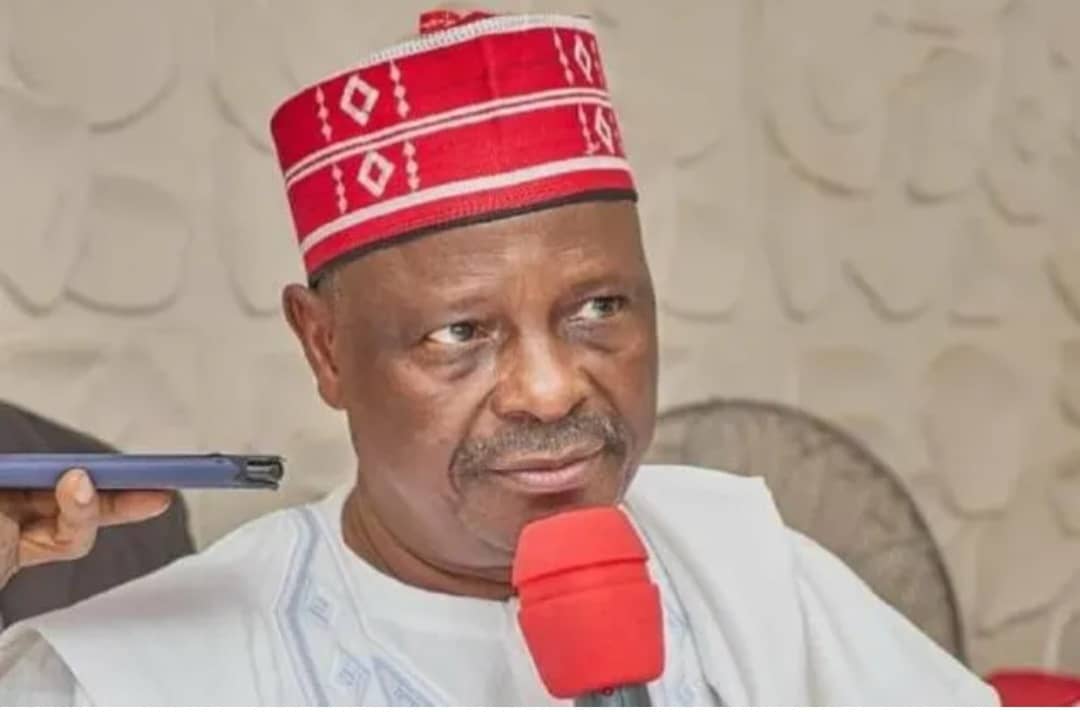
Steady hands, clear vision: why Abba Kabir Yusuf’s leadership is taking root in Kano

By Dr. Saifullahi Shehu Imam

In leadership, enduring influence is never accidental. It is earned through consistent performance, sustained public trust and the wisdom to navigate changing circumstances while remaining anchored to the people’s interests.

Gov. Abba Kabir Yusuf’s leadership trajectory increasingly reflects these qualities: steady hands, clear vision and a disciplined commitment to results over rhetoric. Taken together, these attributes point to a governance approach that closely aligns with Kano’s long-term needs and aspirations.

Beyond party affiliations and shifting political alignments, what distinguishes Gov. Yusuf is a leadership style rooted in purpose and institutional responsibility. His governance philosophy has emphasised stability, rebuilding public institutions and people-centred development. At a time when popularity is often mistaken for performance, the administration has demonstrated an understanding that sustainable leadership is anchored in tangible outcomes and policies that translate into visible improvements in everyday life.

This reality has again received a national acknowledgement. Gov. Yusuf’s recognition as The Sun Newspaper’s Governor of the Year 2025 is not merely a ceremonial distinction but a broader affirmation of a governance model defined by structure, resolve, and service delivery.

As noted by members of the award panel and national commentators, the honour reflects “good governance, courageous leadership, and effective service delivery.” Based on assessments by media professionals and independent observers, the award reinforces what many Kano residents have observed: measurable progress under a leadership style that prioritises substance over spectacle.

One of Gov. Yusuf’s most notable qualities is political maturity. Effective leadership is not defined by rigidity, but by the ability to adapt strategically without losing sight of core objectives. By consistently placing Kano’s strategic interests above transient political considerations, the governor has demonstrated a nuanced understanding of Nigeria’s federal system and the importance of constructive engagement within it.

This is not an inconsistency; it is political intelligence. Kano’s historic role as an economic and cultural hub demands a leader who can convert political access into concrete benefits for its people. The national recognition now accorded to Gov. Yusuf’s administration underscores a vital point: this strategic, mature approach is yielding tangible dividends and respect beyond Kano’s borders.

Equally significant is the governor’s inclusive posture. His public conduct and policy direction reflect a unifying outlook that transcends factional divides and appeals to shared civic aspirations. His measured response to criticism is particularly instructive. In an era dominated by reactive politics and constant public rebuttals, restraint has become an uncommon but valuable leadership asset. Rather than engage in prolonged exchanges, the administration has largely allowed policy outcomes and administrative action to speak on its behalf.

This approach signals confidence and reinforces a quiet but powerful message: performance remains the most credible response to doubt. From the standpoint of public trust, these qualities are indispensable. Confidence in governance is built on credibility, consistency, and visible results.

As the dividends of governance become more apparent and cooperation across levels of government deepens, public assurance grows organically. National recognition of this nature further strengthens that confidence, serving as an independent validation that cuts through partisan interpretation and situates Kano’s leadership within a broader narrative of effective governance.

Taken as a whole, the evidence increasingly points in one direction. Gov. Abba Kabir Yusuf’s leadership reflects steadiness, foresight, and an orientation toward lasting impact.

These are the hallmarks of an administration that is not merely responding to the demands of the moment but deliberately positioning Kano on a path of continuity, credibility, and progress. On that measure, one conclusion is becoming increasingly difficult to contest: the governor remains firmly on the right track.

Dr. Saifullahi Shehu Imam can be reached via: saifaz2005@gmail.com.

Kaduna church kidnap victims regain freedom after weeks in captivity

By Sabiu Abdullahi

Worshippers who were abducted from churches in Kurmin Wali community, along the Kufana axis of Kajuru Local Government Area in Kaduna State, have regained their freedom after spending weeks in captivity.

The incident occurred on January 18, 2026. Gunmen invaded the community during church service and took away many worshippers into a nearby forest.

Reports indicated that no fewer than 177 persons were kidnapped in the attack. The development triggered outrage and anxiety among residents and across the state.

Sources said the victims were released late Wednesday night. Heavy-duty vehicles were sighted moving in and out of a forest close to Maro town between 11 p.m. and 2 a.m., raising suspicion that the captives were being transported out of the area.

According to a report, community leaders disclosed that the abducted worshippers were brought out of the forest in the early hours of Friday. However, details surrounding their freedom remain uncertain. It is not clear who secured their release or if any ransom was paid.

The village head of Kurmin Wali, Ishaku Dan’azumi, confirmed the development. He said the victims, made up of children, women, and men, are now in government custody.

A security source also verified that the abducted persons had been freed.

The victims were subsequently moved to the Government House in Kaduna, where they are expected to undergo debriefing.

As of the time this report was filed, the Kaduna State Government had not released any official statement on the incident.

How various online platforms are undermining valuable news in Nigeria

By Usman Usman Garba

The rapid growth of online media, especially online newspapers, has significantly changed journalism in Nigeria. 

Today, news travels faster than ever before. With just a smartphone, Nigerians can access local, national and international news within seconds. This digital transformation has helped expose corruption, amplify citizens’ voices and bring government closer to the people.

However, these advantages have also created serious challenges. The unchecked rise of numerous online news platforms, many of which lack professional standards, is gradually eroding the quality, credibility, and value of credible news in Nigeria.

Opening an online news platform has become cheap and easy. Unlike traditional print media and broadcast stations, which require licences, physical offices, and trained professionals, many online platforms operate without clear structures or accountability. As a result, individuals with little or no journalism training now run platforms that publish news without proper editorial control.

Without professional gatekeeping, many stories are published without verification, balance or ethical consideration. Headlines are often poorly written, misleading or dotted with grammatical errors. This situation has weakened journalism standards and reduced public confidence in the media.

One of the biggest problems is the unhealthy competition to publish breaking news. Many online platforms rush to be the first to report incidents, especially during political events, security crises or court proceedings. In this race, accuracy is often sacrificed. Rumours, unverified social media posts and hearsays are turned into news.

Additionally, fake news and misinformation have become common online. False reports about elections, insecurity, government policies and public figures spread widely before they can be corrected. 

Unfortunately, corrections rarely receive the same attention as the original false stories. This has made it difficult for many Nigerians to know what to believe and which media organisations to trust.

Plagiarism is another serious challenge. Many online platforms copy stories from credible newspapers, television stations and news agencies without proper attribution. 

Some only change headlines or rearrange paragraphs. This unethical practice discourages investigative journalism and erodes originality.

Media organisations that invest time and resources in quality reporting often lose traffic and revenue to platforms that simply copy and paste content.

Sensationalism has also become widespread. Shocking headlines, exaggerated claims and emotional language are used to attract clicks.

Stories about scandals, rumours, insults and the private lives of public figures often receive more attention than reports on education, healthcare, insecurity, unemployment and the economy. As a result, serious national issues are pushed aside.

Social media has made this situation worse. Many online platforms now rely heavily on Facebook, X (formerly Twitter), WhatsApp and TikTok for traffic. 

To satisfy social media algorithms, content is designed to trend rather than to inform the public. News is judged by likes, shares and comments and not by accuracy or public interest. In this environment, truth is often sacrificed for popularity.

The impact on public trust is alarming. Many Nigerians now dismiss online reports as “fake news” or “social media stories.” Sadly, this growing distrust also affects credible media organisations that still uphold professional standards.

When trust in the media declines, accountability, transparency and good governance suffer.

Economic pressure also plays a role. Many online platforms struggle financially due to low advertising revenue. Some resort to paid news, political propaganda or sponsored stories disguised as journalism. This further blurs the line between news reporting and public relations, thereby misleading the public.

Despite these challenges, online journalism remains vital to Nigeria’s democracy. Digital platforms have helped expose corruption, promote citizen journalism and cover neglected communities. 

The problem is not online media itself, but the lack of professionalism, regulation and ethical commitment. To protect quality journalism, media owners must invest in training, robust editorial systems, and ethical standards.

Journalists must return to the core principles of their profession: truth, accuracy, balance and fairness. Regulatory bodies and professional organisations, such as the Nigerian Union of Journalists, must be more active in enforcing standards and disciplining offenders.

The government also has a role to play, as the Kano State government did with online media by allocating offices and registering them, but regulation must be handled carefully to avoid threatening press freedom. 

Efforts to fight fake news should focus on promoting professionalism, not silencing critical voices. The public is not exempt from responsibility. Nigerians must learn to verify information before sharing it, especially on Facebook, WhatsApp and other social media platforms. Supporting credible media organisations through readership and subscriptions will also help sustain quality journalism.

In conclusion, the state of news in Nigeria is at a crossroads. If the current trend of unprofessional online platforms continues unchecked, quality journalism will suffer greatly. But if journalists, media owners, regulators, and the public work together, Nigeria’s online media space can still become a powerful force for truth, development and democracy.

Usman Usman writes from Kano via usmangarba100@gmail.com.

Nigerian woman arrested for allegedly burning teenage domestic worker with hot iron


By Sabiu Abdullahi

The Anambra State Police Command has taken into custody a 29-year-old woman, Mrs. Edeh Osinachi, over the alleged physical abuse of a 17-year-old domestic worker in Awka, the state capital.

The Command’s Public Relations Officer, SP Tochukwu Ikenga, disclosed this in a statement issued on Wednesday. He said officials of the Anambra State Ministry of Education handed the suspect over to the police on February 4, 2026.

Ikenga explained that the transfer of Osinachi to the police formed part of measures aimed at protecting the welfare and safety of students and pupils across the state.

Police said the victim worked as a domestic help under the supervision of the suspect.

According to the statement, the case came to light after school authorities observed serious injuries on the girl’s body during a teaching session. The discovery raised concern among staff members, which prompted further inquiries.

Subsequent findings revealed that the injuries were allegedly inflicted at home.

Ikenga said the teenager accused the suspect of attacking her after alleging that she used a mobile phone without permission. She claimed the suspect became angry and subjected her to severe punishment.

“She alleged that Osinachi, enraged by her action, punished her by pressing a heated electric iron against parts of her body, inflicting serious injuries.”

“During interrogation by the Police, the suspect reportedly confessed to the act,” the statement read.

The Police Command praised the alertness and swift response of the school authorities. It noted that their intervention prevented further harm to the victim.

Ikenga assured the public that the matter would be thoroughly investigated and that the suspect would face prosecution in accordance with the law.

He also urged parents and guardians to accept only responsibilities they can properly manage.

While investigations continue, the police warned that negligence can expose children to abuse when they are placed in the care of others.

Bill Gates regrets ties with Jeffrey Epstein as new files renew scrutiny

By Sabiu Abdullahi

Microsoft co-founder Bill Gates has expressed regret over his past association with convicted sex offender Jeffrey Epstein, as renewed attention surrounding recently released Epstein files stirs fresh controversy.

The latest disclosures have revived public and political interest in Epstein’s network of high-profile contacts. Among those facing renewed scrutiny are former US President Bill Clinton and former Secretary of State Hillary Clinton, who have both been named in the documents and have agreed to testify before a House committee examining Epstein’s activities.

Gates addressed the issue publicly after allegations surfaced in newly released records. Reports claimed he concealed a sexually transmitted disease from his former wife, Melinda French Gates, following alleged encounters with “Russian girls.” Epstein was also alleged to have suggested that Gates attempted to secretly administer antibiotics to his wife.

Gates’ office rejected the accusations, describing them as “absolutely absurd and completely false.” Speaking during an interview with Australia’s Channel 9News, the billionaire dismissed the claims and accused Epstein of attempting to damage his reputation or pressure him.

“Apparently, Jeffrey wrote an email to himself. That email was never sent. The email is false,” Gates said.

“I don’t know what his thinking was there. Was he trying to attack me in some way? Every minute I spent with him, I regret, and I apologise that I did that.”

Melinda French Gates also spoke about the renewed attention during an appearance on NPR’s Wild Card podcast. She said the resurfacing details had reopened painful memories from their 27-year marriage, which ended in divorce in 2021.

“For me, it’s personally hard whenever those details come up, right? Because it brings back memories of some very, very painful times in my marriage,” French Gates told the radio network’s Wild.

She continued: “Whatever questions remain there of what – I can’t even begin to know all of it – those questions are for those people and for even my ex-husband. They need to answer to those things, not me.”

Gates confirmed that he met Epstein in 2011 and shared dinners with him on several occasions. He said the meetings centred on efforts to mobilise wealthy donors for global health projects. He denied visiting Epstein’s private Caribbean island and rejected claims of sexual relations with women linked to the financier.

“The focus was always, he knew a lot of very rich people, and he was saying he could get them to give money to global health. In retrospect, that was a dead end,” Gates said.

“I was foolish to spend time with him. I was one of many people who regret ever knowing him. The more that comes out, the more clear it will be that, although the time was a mistake, it has nothing to do with that kind of behaviour.”

Reflecting on the broader scandal, Melinda French Gates described the situation as a societal reckoning and lamented the trauma suffered by victims.

“No girl should ever be put in the situation they were put in by Epstein and whatever was going on with all of the various people around him. It’s beyond heartbreaking,” she said.

“I remember being those ages the girls were, I remember my daughters being those ages.”

She added that learning about allegations connected to her former husband left her with “just unbelievable sadness,” though she emphasised that her concern remains with those directly affected. “What they went through is unimaginable,” she said.

Political reaction has also emerged. Republican congresswoman Nancy Mace of South Carolina disclosed that she had requested House Oversight Committee chair James Comer to subpoena Gates.

“Mace wrote on X, that she has questions for Bill Gates about Epstein, saying she supported Melinda French Gates’s assertion that her ex-husband must answer lingering questions.

Epstein died by suicide in August 2019 while awaiting trial on federal sex trafficking charges. Despite his death, investigations and document releases tied to his activities continue to generate global attention and draw prominent figures back into public focus.

The return of naked power: What Africa must learn from today’s global conflicts

By Iranloye Sofiu Taiye

The world has entered a phase in which power no longer feels compelled to wear moral disguises. From Eastern Europe to the Middle East, from East Asia to Latin America, coercion has re-emerged as an acceptable instrument of statecraft, and sovereignty has become increasingly conditional, least respected when convenient and violated when costly restraint disappears.

The Russia–Ukraine war, China’s posture towards Taiwan, Israel’s war in Gaza, and the long-standing pressure campaign against Venezuela are not isolated crises. They are symptoms of a systemic transition: the erosion of post–Cold War restraint and the reassertion of raw power politics in a crowded, mistrustful, and increasingly multipolar international system.

For Africa, this moment is not abstract. It is existential. The same forces reshaping Europe, Asia, and Latin America are already present on the African continent through resource competition, security outsourcing, debt diplomacy, sanctions regimes, proxy alignments, and political conditionality. The difference is that Africa often confronts these forces without a unified strategy, relying instead on appeals to history, morality, or international goodwill. That approach is no longer sufficient.

Realist theory, as articulated by thinkers such as Hans Morgenthau and John Mearsheimer, offers a brutally honest diagnosis of the international system. It reminds us that global politics is characterised by anarchy, not law; that survival, not virtue, motivates states; and that power, not rhetoric, ultimately determines outcomes.

Recent conflicts confirm realism’s core claims: Russia acted in Ukraine not because of moral failure but because it perceived a narrowing window to secure its sphere of influence. China’s pressure on Taiwan is driven less by ideology than by long-term assessments of capability, timing, and strategic opportunity. Israel’s conduct in Gaza reflects the logic of overwhelming deterrence in an insecure regional environment. The United States’ treatment of Venezuela illustrates how economic warfare substitutes for direct military intervention in an era of reputational constraints.

In each case, capability trumped legality, and vulnerability invited pressure. Yet realism, while accurate in diagnosing power behaviour, becomes dangerous when treated as destiny. Taken to its logical extreme, it suggests that weaker states have only three options: submission, alignment, or destruction. This is analytically lazy and politically paralysing.

History and current global practice demonstrate that survival is not reserved for the strongest but for the most strategically positioned. The key distinction between states that withstand pressure and those that collapse is not moral standing but strategic architecture.

Ukraine did not survive Russia’s invasion because it matched Moscow militarily. It survived because it transformed a bilateral war into a multilateral stake. By embedding its security dilemma within NATO, the EU, and global norms, Ukraine increased the cost of Russian victory beyond the battlefield.

Taiwan’s resilience lies not only in its arms but also in its economy. Its centrality to global semiconductor supply chains converts any military action into a worldwide economic crisis. Invasion becomes irrational not because it is impossible, but because it is prohibitively disruptive.

Palestine commands unprecedented global sympathy yet remains structurally vulnerable. Without credible security guarantees, economic leverage, or institutional power, moral legitimacy alone has not translated into sovereignty.

Venezuela’s leadership adopted confrontational rhetoric without building defensive alliances, diversified economic networks, or institutional shields. The result has been isolation, sanctions, and internal fragility, confirming that outrage without insulation invites coercion. The lesson is stark: states do not survive because they are right; they survive because they are costly to dominate. Afghanistan’s resilience is a case study. 

Africa today occupies a paradoxical position. The continent is: Central to the global energy transition (critical minerals), demographically pivotal, geopolitically courted by rival powers, and numerically powerful in multilateral institutions; alas, Africa remains strategically fragmented. Most African states still approach global politics through the language of gratitude, alignment, or moral appeal rather than through calculated leverage. The continent’s diplomatic posture is often reactive rather than anticipatory.

This is dangerous in a world where: aid is weaponised, debt is politicised, sanctions are normalised, and security assistance comes with strategic strings. Africa risks becoming the quiet theatre of the next great-power contest, not because it is weak, but because it is insufficiently coordinated.

What Africa requires is neither idealism nor cynicism, but strategic realism with agency a doctrine that accepts power politics while refusing subjugation.

Such a doctrine would rest on five pillars.

1. Strategic Indispensability: Africa must move beyond raw resource exportation toward value-chain centrality. Countries that control processing, logistics, and industrial ecosystems are harder to coerce than those that merely supply inputs.

2. Networked Sovereignty: Sovereignty in the 21st century is not isolationist. It is embedded on favourable terms through regional blocs, trade regimes, and security compacts that dilute unilateral pressure.

3. Institutional Power, Not Institutional Faith: Africa must stop treating international institutions as moral referees and start using them as arenas of contestation. Voting blocs, agenda-setting, and procedural leverage matter.

4. Strategic Non-Alignment, Not Passivity: Non-alignment must evolve from rhetorical neutrality into active hedging, diversifying partnerships, avoiding dependency traps, and exploiting multipolar competition without becoming a proxy.

5. Continental Coordination: No African state, regardless of size, can negotiate effectively alone in a hardened global system. Continental coherence in economic, diplomatic, and security-related is no longer aspirational; it is existential.

Conclusively, power will not wait for Africa to be ready; the defining feature of the emerging world order is not chaos, but selective constraint. Power will be exercised where resistance is weak, fragmented, or sentimental and restrained where costs are high, and consequences diffuse. Africa cannot afford another century of learning this lesson too late. The continent must abandon the illusion that shared history, moral standing, or international sympathy will shield it from coercion. Those narratives did not protect Ukraine, Palestine, or Venezuela. They will not protect Africa.

What will protect Africa is a strategy: the ability to anticipate pressure, restructure vulnerability, and convert relevance into leverage. In a world where power has shed its disguises, survival belongs not to the loudest protester, but to the most strategically prepared.

Iranloye Sofiu Taiye is a policy analyst and wrote via iranloye100@gmail.com.

‘What is meant for you will not miss you’: Nigerian man returns ₦120,000 mistaken transfer

By Sabiu Abdullahi

A Nigerian man, identified as Abdulrashid Elsa, has returned ₦120,000 that was mistakenly transferred into his OPay account, an act that has drawn praise for honesty at a time when cases of online fraud remain widespread.

He took the story of all that transpired to his Facebook page today Wednesday.

The incident occurred around midnight when the money was sent from a company’s account. Several hours later, at about 3:00 p.m., a woman contacted the recipient, explaining calmly that she had mistakenly transferred the funds to his account and appealed for his understanding.

Initially, the recipient said he could not find any record of the transaction after checking his regular OPay account. Despite receiving a transfer receipt from the caller, the money was still not visible, which raised suspicion.

“I thought she might be a scammer and even warned her to stop contacting me,” he explained.

However, the situation became clearer when the caller mentioned the phone number used for the transfer. It was then discovered that the funds had been sent to another OPay account linked to his MTN line, not the account he regularly checks.

After confirming the error, the recipient requested the sender’s account details and immediately refunded the full ₦120,000.

The woman reportedly called back shortly after to express her gratitude, even before receiving the refund receipt. Moments later, one of her colleagues, identified as a Muslim, also took the phone to thank him repeatedly, expressing visible relief and happiness.

The recipient said the incident reminded him of the importance of integrity and faith, adding that what is destined for a person will never pass them by.

The story has since resonated with many Nigerians, highlighting honesty and empathy in an era marked by financial pressure and increasing digital transactions.

Nigerian Senate rejects bill to mandate electronic transmission of election results

By Sabiu Abdullahi

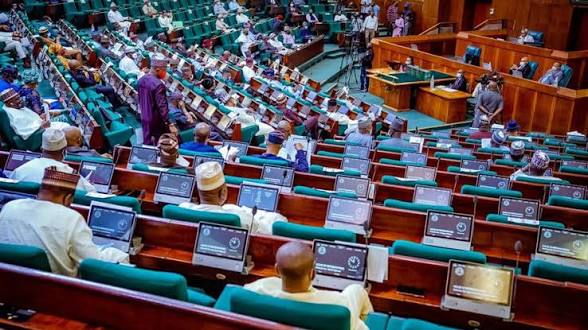
The Nigerian Senate has voted down a proposal seeking to amend the Electoral Act to make the electronic transmission of election results compulsory.

The decision was taken on Wednesday when lawmakers rejected an amendment to Clause 60, Subsection 3, of the Electoral Amendment Bill. The proposal aimed to remove the Independent National Electoral Commission’s (INEC) discretion over how election results are transmitted.

If approved, the amendment would have legally required INEC presiding officers to electronically upload results from every polling unit directly to the Result Viewing Portal (IREV) in real time. This process was to occur immediately after Form EC8A had been duly signed and stamped by the presiding officer, with party agents countersigning the document.

However, the Senate chose to maintain the existing and widely debated provision of the Electoral Act.

Under the current law, “the presiding officer shall transfer the results, including the total number of accredited voters and the results of the ballot, in a manner as prescribed by the Commission.”

By retaining this clause, lawmakers have allowed INEC to continue determining whether electronic transmission will be used. Critics insist that this flexibility created gaps that were allegedly exploited during the 2023 general elections.

The Senate’s decision has sparked strong reactions across the country, with many Nigerians and civil society organisations expressing disappointment. These groups had backed the amendment, describing it as a vital safeguard against manual manipulation of results at collation centres.

Analysts described the move as a setback for democratic development in Nigeria.

“We thought the National Assembly would learn from the failures of 2023 where the IREV portal became a source of national embarrassment,” Gerald Ede said. “By rejecting mandatory transmission, the Senate has essentially given a green light for the status quo of ‘manual miracles’ and result manipulation to continue.”

Supporters of the amendment had viewed mandatory real-time transmission as a crucial measure to rebuild public trust in elections.

The rejection comes at a time when calls for comprehensive electoral reforms are growing, particularly reforms designed to reduce human interference in the electoral process.

Opponents of the Senate’s position argue that leaving the “manner” of transmission to INEC’s discretion, especially given its past record of “technical glitches” during key stages of result collation, could fuel further electoral disputes and weaken the legitimacy of elected officials.

Despite his evil notoriety, Epstein was afraid of Nigerian scammers

By Ibrahym El-Caleel

Jeffery Epstein, despite being a MOSSAD agent who successfully lured high profile individuals and world leaders into his web to obtain their dirty secrets, was afraid of Nigerians scamming him in oil deal.

Epstein is afraid of Nigerians. Hehe.

Ladies and gentlemen, I want to officially tell you that I am also afraid of Nigerians from now going forward.

But jokes aside, Nigerians are a special breed. If a Nigerian decides to settle for anything, he ensures that he masters it to the best of his or her ability.

In the wake of the US’s disregard for Nigeria’s sovereignty in December last year, I read a post on X made by a security analyst. The handle is @GallantDaletian, and he opined that yes, the US military might have the tech, air power, and naval dominance, but when it comes to guerrilla and asymmetric warfare, the Nigerian military is a force to be reckoned with!

He said, the US may have advanced technology, drones, and aircraft carriers, but Nigeria’s military has mastered the art of unconventional warfare, leveraging local knowledge and intelligence to outmaneuver adversaries.

It’s not about comparing strengths, but acknowledging different areas of expertise. Nigeria’s focus on regional security, counter terrorism, and peacekeeping has earned it respect, while the US excels in global reach and high tech warfare.

Clearly Jeffery Epstein, despite his notoriety, believes that the fear of Nigerians is the beginning of wisdom. Sharp guy.