Month: April 2026

B’Haram Deploys Armed Drones In Attack On Army Convoy In Monguno

By Sabiu Abdullahi


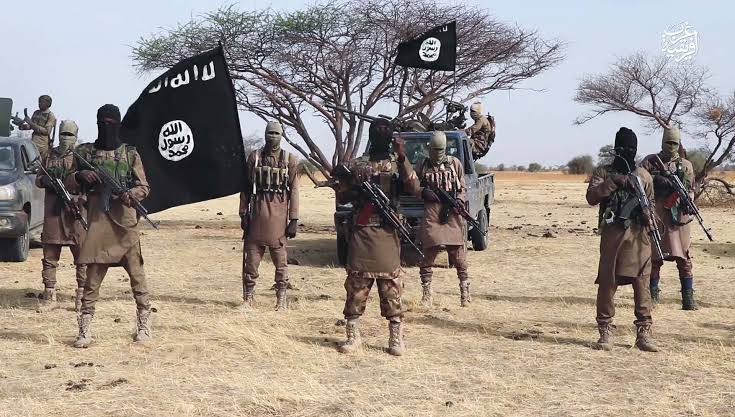
An attack by Boko Haram insurgents on Nigerian troops in Monguno, Borno State, involved the use of armed drones, a military source has revealed.

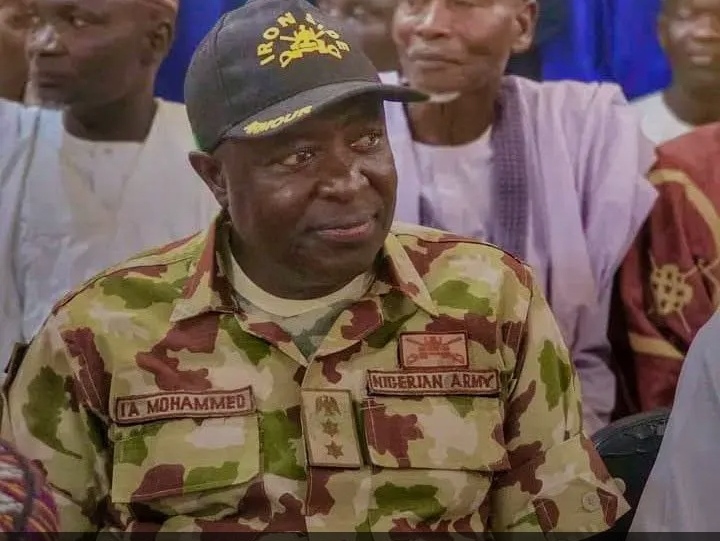
The assault targeted soldiers under Sector 3 of Operation Hadin Kai. It led to the death of several personnel, including Colonel I.A. Mohammed. The incident followed an earlier report that troops were ambushed by fighters linked to the Islamic State-backed faction of Boko Haram.

The soldiers had set out on a patrol mission to clear insurgents from the area after receiving intelligence reports. According to a serving Major, the attackers struck around 2 a.m. on Monday and deployed drones against the advancing convoy.

The officer explained that the drones used in the operation are similar to those seen in conflict zones such as Israel and Ukraine.

“The 242 Battalion Commander and soldiers were ambushed around 2 a.m. this morning by terrorists in Monguno Sector 3. The Commander was with some soldiers, and we don’t know the number of casualties yet,” the source said.

“They were going for reinforcement; it was drones that they used on them. The terrorists sent bombs with drones; those things shelled them. It’s very unfortunate.

“I could remember the Army explaining last year how these terrorists have been deploying weaponised drones, similar to those used in Israel and Ukraine. These drones are hard to detect with conventional radar.”

Earlier accounts had suggested that the senior officer died after an Improvised Explosive Device detonated along the route. Sources said the attack began on Sunday night and focused on a Forward Operating Base under the 242 Battalion in Monguno.

“One of our senior commanders, Colonel I.A. Muhammad, was killed last night when Boko Haram attacked Monguno. They also killed some soldiers during the attack,” a soldier on the front lines said.

Monguno serves as a key military location in the North-East. It hosts several units under the supervision of senior commanders. During the incident, insurgents reportedly concentrated their firepower on a smaller but vital position, which prompted a call for reinforcement.

“The Colonel got information that troops at the FOB were under heavy attack. As a committed commander, he mobilised to lead reinforcement to the location,” another source said.

According to the accounts, the Colonel did not reach the embattled troops. His convoy ran into an ambush along the way. Insurgents had planted a remotely controlled explosive device on the route.

“He did not die inside the camp. He was on his way to support his men when Boko Haram fighters ambushed them with a controlled landmine. It was not the type you step on; it was detonated remotely at the exact moment his vehicle approached,” the source added.

The explosion killed the Colonel on the spot. It also claimed the lives of an unspecified number of accompanying soldiers.

In 2025, a lawmaker from Borno State, Ahmed Jaha, raised concerns about the growing use of drones by insurgents. He claimed that Boko Haram fighters were deploying more advanced weapons than those available to Nigerian forces.

Nigeria has faced insurgency in the North-East for more than two decades. The latest attack highlights evolving tactics by militant groups in the region.

RenownedIslamicScholar, Dr Bashir Aliyu Umar Attains Rank of Full Professor at BUK

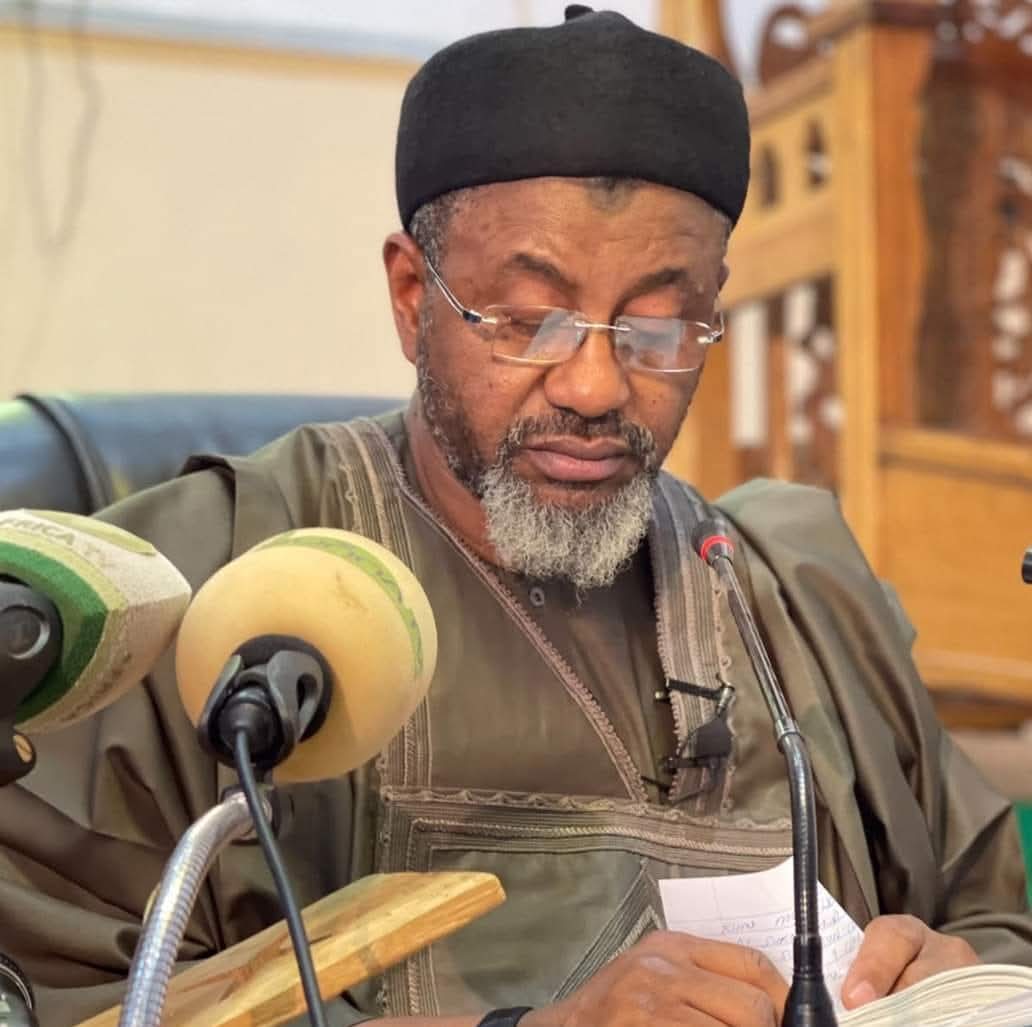
The academic and Islamic communities in Nigeria are celebrating a significant milestone as Dr. Bashir Aliyu Umar has been officially elevated to the rank of Full Professor of Hadith at Bayero University, Kano (BUK).

The promotion, recently ratified by the University Council, recognizes decades of rigorous scholarship, prolific research, and a profound commitment to the preservation and teaching of Prophetic traditions.

Professor Umar, a globally respected authority in Islamic jurisprudence and Hadith sciences, currently serves as the President of the Supreme Shari’ah Council of Nigeria (SSCN) and the Chief Imam of the landmark Al-Furqan Mosque in Kano.

Professor Umar, a scholar-statesman whose elevation to Full Professor of Hadith at Bayero University Kano marks a pinnacle of academic excellence in the service of faith and society.

Professor Bashir’s journey to the peak of the ivory tower is viewed by many as a natural progression of a career spent bridging the gap between classical Islamic scholarship and modern academic rigour.

At BUK, he has been a pillar of the Department of Islamic Studies and Shari’ah, mentoring hundreds of postgraduate students and producing seminal works that analyze the authenticity and application of Hadith in contemporary life.

As the President of the Supreme Shari’ah Council, he has been a vocal advocate for justice, social reform, and the peaceful coexistence of Nigeria’s diverse religious groups.

Through his sermons at Al-Furqan Mosque, he has translated complex theological concepts into actionable guidance for the people, focusing on ethics, family values, and civic responsibility.

The rank of Full Professor is the highest academic honor bestowed by a university, requiring a “contribution to knowledge” that is recognized internationally. In the field of Hadith studies, this involves not just memorization, but the critical analysis of chains of narration (Isnad) and the contextual application of the text (Matn).

Colleagues at Bayero University describe the promotion as timely, citing his influence on the national curriculum for Islamic studies and his role in various international Fatwa committees.

The elevation of its leader is expected to bolster the intellectual weight of the Supreme Shari’ah Council of Nigeria. By rooting the Council’s advocacy in the highest levels of academic discipline, Professor Umar provides a robust framework for Shari’ah-based solutions to Nigeria’s socio-economic challenges.

At Al-Furqan Mosque, congregants expressed joy at the news, noting that their Imam’s new title is a testament to the quality of “the University and the Pulpit” which the Sheikh has led for years.

Millions of Muslim faithfuls and even some non-Muslims are benefitting from the sermons, lessons and peace advocacy, especially on social justice as it relates to the vulnerable societies in Nigeria and beyond. His intellectual discourses were mainly on Islam, jurispuridence, peace, banking and finance as well as social justice.

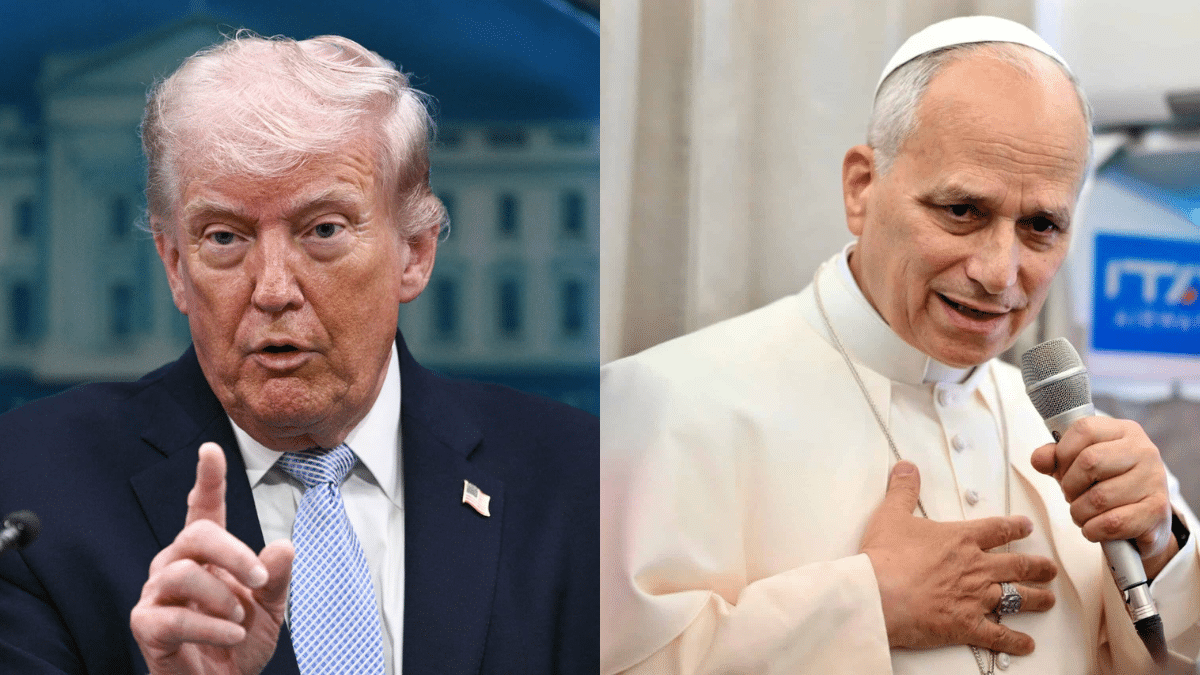
Pope Leo Says He Will Not Debate Trump, Reaffirms Commitment To Peace

By Sabiu Abdullahi


Pope Leo XIV has addressed recent criticism from United States President Donald Trump, stating that he will not be drawn into political arguments and will remain focused on his religious mission.

The pontiff spoke to journalists on Monday aboard the papal plane on his way to Algeria. He made it clear that he does not see himself as a political figure, despite rising tensions following remarks from the U.S. leader.

“I think that the people who read will be able to draw their own conclusions,” the Pope said. “I am not a politician, I have no intention of entering into a debate with him.”

He stressed that his role is rooted in faith and the teachings of the Gospel, not political confrontation.

“I speak about the Gospel, I am not a politician,” he said, adding that he would continue to speak against violence and advocate for peace.

“I will continue to speak out loudly against war, to try to promote peace, multilateral dialogue between states in order to seek the right solution to problems,” he stated.

Pope Leo also warned against the use of religion for political purposes. He said such actions distort the message of the Church.

“I do not think the message of the Gospel should be abused in the way some people are doing,” he said.

He reiterated that the Church’s message remains centred on peace and compassion.

“The message of the Church is the message of the Gospel, blessed are the peacemakers,” he added.

The Pope further stated that he is not intimidated by political pressure from Washington, even as he avoids direct confrontation with the U.S. president.

“I am not afraid of the Trump administration,” he said, while maintaining his stance against engaging in debate.

“I do not see my role as that of a politician, I do not want to enter into a debate with him. Too many people are suffering in the world,” he said.

His comments followed a recent attack by President Trump, who criticised the Pope’s leadership on issues such as crime and foreign policy. Trump also questioned the pontiff’s views on global conflicts and nuclear matters, and suggested that his emergence as Pope had political backing.

Despite the criticism, Pope Leo adopted a measured tone. He called on world leaders to prioritise dialogue and peaceful solutions over conflict.

The position aligns with his earlier message at St Peter’s Basilica in Vatican City, where he cautioned against rising global tensions and the misuse of religion to justify violence.

“To them we cry out: stop! It is time for peace!” the Pope had said, as he urged leaders to embrace negotiation instead of war.

Trump Posts AI-Generated Image Of Himself As Jesus Christ, Labels Pope Leo ‘Weak’ Over Peace Appeal

By Sabiu Abdullahi

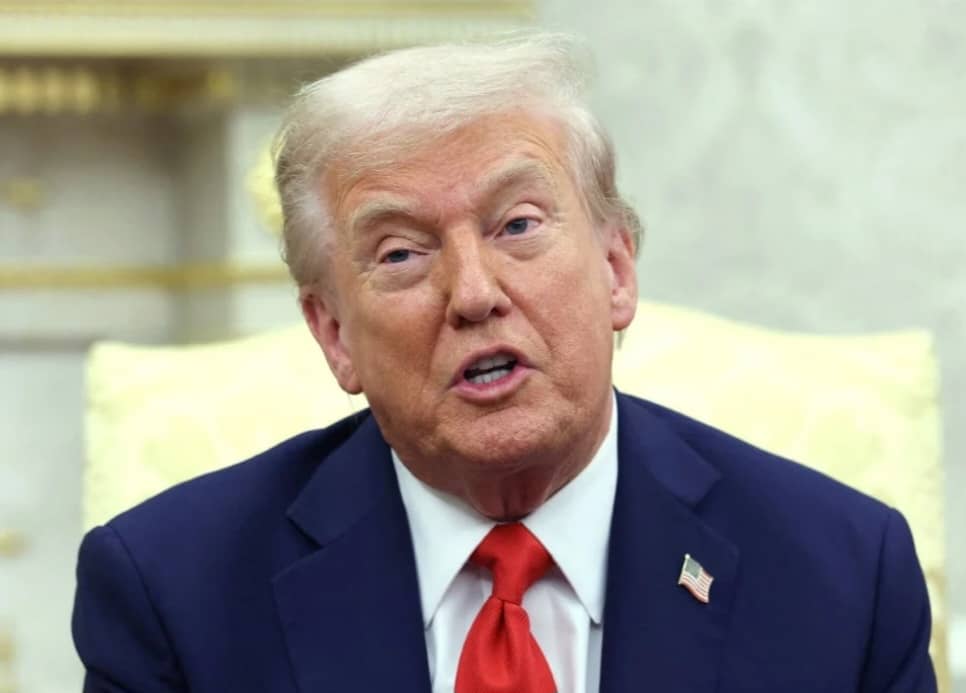
United States President Donald Trump has sparked fresh controversy after sharing an AI-generated image of himself depicted as Jesus Christ and launching a series of attacks on Pope Leo XIV over his recent calls for global peace.

The image, posted on Trump’s Truth Social account, shows him dressed in flowing robes with radiant light around him. It presents him in a healing pose, while figures resembling angels or soldiers appear to float nearby. The background includes fighter jets flying across the sky, fireworks, and the Statue of Liberty, combining religious imagery with symbols of American military strength and national identity.

The post came shortly after Trump reacted strongly to statements made by Pope Leo XIV, who has repeatedly called for an end to escalating global conflicts.

In his criticism, Trump described the pontiff in harsh terms over his position on crime and foreign policy.

“Pope Leo is WEAK on Crime, and terrible for Foreign Policy,” Trump wrote.

“He talks about ‘fear’ of the Trump Administration, but doesn’t mention the fear that the Catholic Church, and all other Christian organisations, had during COVID when they were arresting priests, ministers, and everybody else for holding church services.”

Trump also rejected the pope’s comments on international security issues, including nuclear weapons and recent military actions involving the United States.

He further questioned the legitimacy and background of Pope Leo’s election, suggesting political motivations behind his selection as the leader of the Catholic Church.

“I don’t want a Pope who thinks it’s OK for Iran to have a Nuclear Weapon. I don’t want a Pope who thinks it’s terrible that America attacked Venezuela, a Country that was sending massive amounts of Drugs into the United States,” he said.

“And I don’t want a Pope who criticizes the President of the United States because I’m doing exactly what I was elected, IN A LANDSLIDE, to do, setting Record Low Numbers in Crime, and creating the Greatest Stock Market in History.

“Leo should be thankful because, as everyone knows, he was a shocking surprise. He wasn’t on any list to be Pope, and was only put there by the Church because he was an American, and they thought that would be the best way to deal with President Donald J. Trump.

“If I wasn’t in the White House, Leo wouldn’t be in the Vatican. Unfortunately, Leo’s Weak on Crime, Weak on Nuclear Weapons, does not sit well with me.”

Trump later reinforced his criticism in remarks to journalists, where he made it clear he was unimpressed with the pope’s leadership.

“I don’t think he’s doing a very good job. He likes crime I guess. He’s a very liberal person,” he added.

The dispute escalated after Pope Leo delivered a message during evening prayers at St Peter’s Basilica in Vatican City, where he urged global leaders to pursue peace amid rising tensions across several regions.

The pope warned against what he called a dangerous mindset driving conflict worldwide.

“Enough of the idolatry of self and money! Enough of the display of power! Enough of war! True strength is shown in serving life,” he said.

In earlier comments shared on X, Pope Leo also appealed for an end to conflicts involving major global powers, including the United States, Israel, and Iran. He stressed that peace must be built through dialogue and coexistence rather than violence.

“God does not bless any conflict. Anyone who is a disciple of Christ, the Prince of Peace, is never on the side of those who once wielded the sword and today drop bombs,” the pope had written.

The disagreement between both leaders has continued to widen since Pope Leo’s election in 2025 as the first American pope. While Trump initially welcomed the development as a national honour, tensions later emerged over foreign policy, migration, and public statements on global conflicts.

The latest AI-generated image shared by Trump adds another layer to the growing dispute between the White House and the Vatican.

Air Strike Destroys ISWAP Logistics Hub in Borno, Dozens of Terrorists Killed

By Abdullahi Mukhtar Algasgaini

The Air Component of Operation HADIN KAI has destroyed a major terrorist logistics hub and enclave near the abandoned village of Jilli in Gubio Local Government Area of Borno State, following a precision air strike on April 11, 2026.

Military authorities said the operation was driven by sustained Intelligence, Surveillance, and Reconnaissance (ISR) missions over the Bindul–Jilli axis—a known corridor for Islamic State West Africa Province (ISWAP) terrorists and their collaborators.

The strike came after a series of deadly attacks linked to the same network. In January 2026, troops moving from Gubio toward Damasak suffered an Improvised Explosive Device (IED) attack at Bindul, killing eight soldiers and wounding several others. More recently, on April 9, coordinated attacks in Ngamdu and Benisheik were traced back to the same logistics cell.

On the day of the strike, surveillance spotted multiple gun trucks and motorcycles moving toward Jilli, with additional vehicles converging at the same point. Human intelligence sources confirmed the gathering included terrorists, logistics handlers, and collaborators. Following a rigorous targeting process, precision strikes were launched while surveillance aircraft monitored the scene in real time.

Post-strike assessment confirmed the enclave was destroyed with high accuracy. Scores of terrorists were neutralized, and their vehicles and technicals were wrecked. Survivors were seen fleeing in multiple directions. Intelligence later revealed the group was finalizing logistics for coordinated attacks on military positions in the Gubio axis.

In a related development, on April 12, a terrorist logistics courier named Turja Bulu was arrested at Ngamdu Town. During preliminary interrogation, he confessed to participating in the April 9 attack on 29 Brigade location at Benisheik. He also stated that ISWAP had dispatched him from Jilli—where many of his fellow terrorists were hiding—to deliver food to another terrorist group around the Magumeri-Gubio area.

The Theatre Command reiterated that the use of motorcycles remains strictly prohibited across the North East operational theatre, especially in Borno and Yobe States, due to their role in terrorist movement and attacks.

Lieutenant Colonel Sani Uba, Media Information Officer for the Joint Task Force (North East), assured residents that operations would continue with renewed intensity until all terrorist enclaves are dismantled and lasting peace is restored.

INEC Chairman Amupitan Faces Pressure As X Account Controversy Deepens

By Sabiu Abdullahi

A recent fact-check has linked the Chairman of the Independent National Electoral Commission (INEC), Prof. Joash Amupitan, to a controversial X (formerly Twitter) account, sparking fresh calls for his resignation.

The development follows allegations that the INEC boss expressed partisan views in 2023, with critics claiming he showed support for the All Progressives Congress (APC) and its presidential candidate at the time, Bola Ahmed Tinubu.

Several civil society organisations, political parties and concerned individuals argue that the alleged conduct undermines his neutrality. They insist that his continued stay in office could weaken public confidence in the electoral body ahead of future elections.

Findings from the investigation revealed that an X account previously bearing the handle @joashamupitan has a consistent digital history dating back to September 2022. The account was later renamed, restricted, and marked as a parody account amid the ongoing controversy.

Posts traced to the account include comments that appeared to favour the APC. On March 17, 2023, in response to a post involving Peter Obi supporters, the account wrote: “They are evil in the 24th century.”

A day later, while reacting to a tweet by APC National Youth Leader Dayo Israel, the account stated: “Victory is sure.”

On April 25, 2023, it responded “Asiwaju.” to a message celebrating Tinubu’s reception in Abuja.

Despite these findings, INEC dismissed the claims. In a statement issued by Chief Press Secretary Adedayo Oketola, the commission described the account as “fake,” noting that it had undergone several changes.

Further checks showed that while the account’s username changed recently, its unique user identification number remained constant. This suggests a continuous digital trail. However, claims linking the account to Amupitan through phone number verification and two-factor authentication could not be independently confirmed.

Reacting to the controversy, Prof. Amupitan, through his media aide, denied owning or operating any X account. He maintained that he has always upheld political neutrality both publicly and privately.

Meanwhile, opposition parties have intensified criticism. A faction of the Peoples Democratic Party (PDP) accused the INEC chairman of bias and urged him to step down.

The party’s National Publicity Secretary, Comrade Ini Ememobong, said, “The INEC chairman has been very unpretentious in his partisanship. We have said so severally and can reiterate same.”

The African Democratic Congress (ADC) also condemned the alleged actions, describing them as “a grave affront to the integrity of our electoral system.” The party warned it could escalate protests if the chairman fails to resign.

Civil society groups have joined the call. Comrade Umar Ibrahim Umar of War Against Injustice said the situation has reached a stage where stepping aside may be necessary to protect public trust. He noted that the issue goes beyond personal guilt and affects confidence in Nigeria’s electoral system.

Similarly, Zainab Nasir Ahmad of YOSPIS stressed that credibility in elections depends heavily on public perception. “The moment people begin to doubt the neutrality of the electoral umpire, the legitimacy of the outcome is already at risk, regardless of how well the process is conducted,” she said.

Other stakeholders expressed mixed views. While some insisted on resignation, others advised the INEC chairman to remain fair and transparent in dealing with all political parties.

Legal practitioner Kamilu Ahmad-Paki argued that any evidence of bias is enough to question Amupitan’s suitability for office. “INEC requires a leader of high integrity and neutrality. Once there is evidence of bias or compromise, as in his recent actions and past social media activities, that person does not deserve to hold the position,” he said.

As the debate continues, analysts say the controversy may have lasting implications for public trust in the electoral system if not properly addressed.

NERDC Begins Review of Accelerated Education Curriculum for Out-of-School Youths

By Uzair Adam

The Nigerian Educational Research and Development Council (NERDC), in collaboration with TaRL Africa Nigeria, has commenced the review of the Accelerated Basic Education Programme (ABEP) curriculum aimed at improving access to education for out-of-school children and youths.

The development was disclosed in a statement on Sunday following a national stakeholders’ dialogue held at Villa Park Hotel, Abuja, on April 8, 2026, where the review process was formally flagged off.

Speaking at the event, the Executive Secretary of NERDC, Prof. Salisu Shehu, said the review became necessary after several years of implementing the current curriculum approved by the National Council on Education in 2019.

Shehu explained that the ABEP was designed as a targeted intervention to cater for children and youths aged 10 to 18 who had their education disrupted and are now overage for the conventional school system.

According to him, the programme ensures that such learners are not denied access to quality education as provided for in national policy frameworks.

He added that accelerated education programmes are globally recognised as flexible systems that allow learners to catch up and transition into formal schooling.

“The need for ABEP arose from the demand for a standardised national framework that can be adapted across states facing similar educational challenges,” he said.

The NERDC boss further noted that the programme is structured into three levels covering primary and junior secondary education, each designed to run within a shorter timeframe using flexible and learner-friendly approaches.

In his presentation, the Head of the Curriculum Development Centre, Chima Egbujuo, said the primary objective of ABEP is to provide an alternative learning pathway for out-of-school children and youths.

He noted that the programme also supports their reintegration into formal education or transition into vocational training and other livelihood opportunities.

“ABEP is a condensed version of the nine-year basic education curriculum, with clearly defined minimum standards for teaching and learning,” Egbujuo said.

He added that the programme has already recorded significant impact, revealing that it has been piloted with over 10,000 learners, while more than 300,000 are currently benefiting from its implementation across the country.

The statement noted that goodwill messages were delivered by representatives of key education stakeholders, including the Federal Ministry of Education, Teachers’ Registration Council of Nigeria, Universal Basic Education Commission, and the National Commission for Mass Literacy, Adult and Non-Formal Education, among others.

Kano Honours Legendary Hajiya Mariya Galadanchi: Celebrating Six Decades of Impactful Broadcasting

By Khalid Imam 

Arguably, in Kano and beyond, if one is searching for one of the most consistent and dominant pioneering female Hausa Muslim broadcasters—whose eloquent voice has shaped and continues to shape generations through a myriad of captivating radio and TV programs—there is no doubt that such a singular, towering presence belongs to the revered and tireless Hajiya Mariya Galadanchi. She is an iconic, multi-talented veteran journalist who is retired but not tired. Hajiya Galadanchi, who spent six decades as a powerful influence and household name synonymous with Radio Kano, a station popularly known as Gidan Bello Dandago, is a popular figure known for her uncommon courage and unshakable faith in God.

An all-round journalist whose foray spans both print and broadcast media, the legendary Hajiya Mariya Galadanchi, popularly known as an anchor of Filin Zaɓi Son Ka, among other programs, began her career as a health worker. Out of a deep passion for the media, she metamorphosed into one of the most dedicated and accomplished radio and television personalities. A skilled radio dramatist, she began her journey into journalism by writing life-transformative articles, mostly addressing issues related to women and children, over half a dozen decades now in the pages of Gaskiya Ta Fi Kwabo. Hajiya Galadanchi ventured into public service in 1964 as a health worker at Marmara Hospital and was later posted to several other hospitals within the old Kano City, where she served with remarkable zeal and dedication.

After joining Radio Kano at the age of 35, initially not as a full-time staff member, she handled women’s programs on Thursdays and children’s programs on Fridays as her first assignments. Thereafter, she went on to anchor and contribute to several notable programs, including Ruguntsumin Salla. Through Zaɓen Sada Zumunci, she mentored many female broadcasters, including Mariya Ummakati. Hajiya Mariya Galadanchi is undoubtedly one of the pioneering Hausa Muslim female broadcasters and can rightly be described as a glass-ceiling breaker, having opened the floodgates for the rise and dominance of women in radio and TV broadcasting in Kano today, many of whom now occupy enviable positions as directors within the public and private media ecosystem in Kano and beyond.

No doubt, her persistent voice is a testimony to a living era, one well-defined by knowledge, brilliance, advocacy, and deep love for culture and the uniqueness of Kano’s traditional ways of life. She mentors the womenfolk on the complexities of managing the home: living with a husband and his relatives, navigating life with co-wives, and raising a successful family. She constantly discusses topics such as pregnancy, childcare, and parenting, while teaching women, especially the young, the best of Hausa traditional cookery, including dishes served during festive seasons and ceremonies.

Acknowledged for her honesty, courage, faith, patience, loyalty, dedication, and respect for time, she was also famously known as one of the first women to ride a bicycle and drive a car in Kano City, being among the few female pioneers to be educated in Western schools in the old Kano City. Hajiya Mariya was born at Kankarofi Ward 97 years ago, in Kano Municipal LGA.

Among the dignitaries who graced the special celebration of the life and times of Hajiya Mariya Galadanchi were the Honourable Commissioner of Information, Ibrahim Abdullahi Waiya; Prof. Abdalla Uba Adamu, former Vice-Chancellor of the National Open University of Nigeria; Prof. Abdulrashid Garba, Vice-Chancellor of Khalifa Isyaku Rabi’u University, Kano (KHAIRUN); and Malam Ibrahim Khalil, among other seasoned and distinguished media practitioners too numerous to mention.

During the event professionally curated by an erudite academic, seasoned broadcaster and popular columnist, Malam Bala Muhammad as a Master of the Ceremony, there was a special appeal to the Kano State Government to name the road between Diso and the junction of Hasiya Bayero—or any other notable monument in Kano—after the veteran broadcaster, Hajiya Mariya. Again, Prof. Abdalla Uba Adamu also called on the organisers to establish a fellowship in her name to promote young female journalists in Kano.

Alhaji Dr Aminu Ladan Abubakar (Alan Waƙa), Sarkin Adabin Harshen Hausa; Mudassir Ƙassim; and Hajiya Fati Nijer thrilled the audience with scintillating songs. Hajiya Rabi Tanko Yakasai, a close associate of the celebrant, also spoke on Hajiya Mariya Galadanchi’s political activism through Jam’iyyar Matan Arewa, urging young females from the North to emulate her.

The Commissioner of Information, Ibrahim Abdullahi Waiya, described Hajiya Mariya Galadanchi as a shining example of a female journalist of great substance and announced the Kano State Government’s donation of ₦10 million as a take-off fund for the proposed Hajiya Mariya Galadanchi Young Female Journalist Fellowship Fund.

The Kano community celebration of Hajiya Mariya Galadanchi at 97, which was attended in large numbers by media practitioners, academics, the ulama, the celebrant’s family and friends, and people from all walks of life, could best be described as a huge success. Dozens of goodwill messages were received, especially from notable female broadcasters in Kano, who expressed deep appreciation for the pioneering mentorship role Hajiya Mariya Galadanchi has tirelessly played.

Some of the major highlights among the series of fascinating activities that made the event memorably captivating were the keynote speech presented by Hajiya A’isha Sule; two separate audio and audiovisual documentaries were presented to the patient audience on the life and times of Hajiya Mariya Galadanchi; and special tributes from both senior and young female broadcasters by Hajiya Hafsah Iliyasu and Hajiya Zainab Sherif, respectively. 

There was also a stimulating panel discussion featuring Maryam Babayaro, Dr Fatima Damagun, A’isha Bello Mahmud, A’isha Sule, and A’isha Usman, moderated by Hajiya Mariya Bakori from Katsina State. To allow feedback from the massive audience, there was a Q&A session, the presentation of awards, and a plaque to the celebrant, led by Malam Sheikh Ibrahim Khalil and Malam Abubakar Darma. The event ended with an exhibition of Hajiya Mariya Galadanchi’s memorabilia, which included her photos, sound bites, broadcast archives, and merit awards.

Khalid Imam is a Kano-based writer, educator and President of Kano Literary Space. He can be reached via email: khalidimam2002@gmail.com.

NERDC, UNICEF Partner to Review Early Childhood Education Curriculum

By Uzair Adam

The Nigerian Educational Research and Development Council (NERDC), in partnership with the United Nations Children’s Fund (UNICEF), has commenced the review of the 0–5 years Early Childhood Education Curriculum as part of efforts to strengthen foundational learning in Nigeria.


This was disclosed in a statement on Sunday shared with The Daily Reality, which noted that the exercise is aimed at addressing gaps in the existing Early Childhood Care, Development and Education (ECCDE) curriculum first developed in 2007.

According to the statement, the review process follows a writing workshop held between March 19 and 24, 2025, where stakeholders worked on updating the curriculum to better support early childhood development and improve learning outcomes.

Speaking at the ongoing critique workshop held at the NERDC Conference Centre in Agidingbi, Lagos, the Executive Secretary of NERDC, Prof. Salisu Shehu, said the review is designed to align the curriculum with global best practices while making it responsive to the developmental needs of young learners.

Shehu noted that curriculum review is a vital process for maintaining the relevance of educational programmes in a rapidly changing world. He added that the exercise is expected to enhance the clarity and effectiveness of the curriculum.

“The review of the 0–5 years Early Childhood Education Curriculum is intended to align it with current global standards while ensuring its suitability for the developmental needs of young learners,” he said.

He also appreciated UNICEF for its continued support, describing the collaboration as crucial to strengthening early childhood education in Nigeria.

In his opening remarks, the Director of the Special Programmes Centre, Dr. Ugbalu Egbita, urged participants to approach the workshop with dedication and professionalism, noting that their input would significantly shape the outcome of the exercise.

“The quality of this curriculum will determine the kind of foundation we lay for our children,” Egbita said, stressing that participants’ expert contributions are key to its success.

The statement added that the curriculum provides guidance for teachers and caregivers in creating stimulating learning environments that encourage children to explore, think, communicate and imagine, while also easing their transition into formal education.

Participants at the workshop were drawn from NERDC, UNICEF, development partners, ministries, departments and agencies, as well as civil society organisations and other stakeholders.

UK Church Revival Momentum Vis-à-vis Nigeria

By Ugochukwu Ugwuanyi

It’s a striking oxymoron that while churches in Nigeria are acquiring old warehouses and event centres, revamping them into worship centres, Church buildings in the United Kingdom are being converted to flats, offices, restaurants, and bars. Hallelujah, the tide is about to turn in resemblance to what obtains in Nigeria. Here’s a case in point: In January this year, the Port Harcourt branch of a prominent Pentecostal church reportedly acquired Atrium Event Centre in a multi-billion-naira deal. They went ahead and invested a billion naira in renovating the facility within three months.

This has quietly been happening in major Nigerian cities as churches buy up disused properties without care for the cost. They don’t just lease the sprawling spaces but purchase them outright. When told in July 2025 that “some areas marked as industrial estates in some large cities in the country have been taken over by churches,” President of the Pentecostal Fellowship of Nigeria, Bishop Wale Oke, responded by saying: “It is a mark of a great revival in our nation. God has opened the heavens upon us graciously and has poured the Holy Spirit upon us, poured His word upon us, and many are turning to the Lord, and the Church is growing.”

If this is the case, it means a similar revival is brewing in the United Kingdom, with citizens and denizens not realising it yet. Apparently, some persons with a burden for that clime must have been mourning for a spiritual awakening. They have now got the attention of the Ruler of the Universe, who has stirred a property tycoon and millionaire by the name of Samuel Leeds, to act in a way that will ripen the revival. Words of faith and prophecy will always require a corresponding action to come to pass. This catalytic action doesn’t necessarily have to come from the prophet or the supplicant who proclaims the faith.

In 2 Kings 7, the effrontery of the four men with leprosy in storming the camp of the Aramean soldiers was all God needed to actualise the prophecy by Elisha that spells an end to the harrowing famine in Samaria of those days. Such requisite action is now being reenacted in the United Kingdom with the resolve of Samuel Leeds to buy up church buildings that are on the verge of packing up — in order to retain them as places of Christian worship.

With thousands of churches closing across Britain in recent years, Leeds says protecting them now could help prepare for what he sees as an impending revival of Christianity in the UK. In his words, “I believe we are seeing the beginning of a revival in this country. We need to keep our churches open and ready for when that happens.” Disclosing that property agents frequently offer him churches to redevelop, the real estate mogul would rather that church buildings dedicated to Christ be preserved to serve that purpose. After making an offer for Darlaston Methodist Church in Wednesbury – worth an estimated £250,000, Leeds wrote on Facebook, “To those asking how they can donate to the cause, I don’t want any money. I want you to attend Church on Sunday and donate to your local Church.”

Despite this consciousness of the need for congregations, netizens have continued to dwell on that point. Some mockingly challenge Leeds to go beyond buying up church buildings to attracting people who would worship there afterwards. For some others, a more appropriate use of the chapels and cathedrals would be to convert them into public pools and community centres. You can imagine the duplicity of commenters who lost their voices when the Church buildings were being turned into flats and business premises, to now recommend: “Make them sanctuary places for the homeless and ex-military, then let charities feed them.” For all their tantrums, the naysayers fail to see what Leeds is seeing – a revival that would cause Britons to enthusiastically return to Church without needing any persuasion to worship the Almighty in the Sanctuary.

Apart from making places of worship available, there are other tell-tale signs that affirm this inevitability. Recent polling by YouGov indicates an increase in belief in God among young adults, with faith among 18 to 24-year-olds rising significantly in recent years [Editor’s Note: While initial reports indicated a surge in faith among young adults, YouGov has since withdrawn the specific survey data due to methodology errors.]. The data firm NielsenIQ BookData reported last week that the number of Britons buying Bibles jumped by 19 per cent last year, taking the total to its highest level since 1998. This was corroborated by Christian publisher SPCK Group, which disclosed that Bible sales reached £6.3million in Britain last year – more than doubling since 2019. There is also the Make Great Britain Christian Again Conference coming up later in the year, which organisers say will be “Two full days of worship, preaching, teaching, music and prayer to revive the nation!”

Meanwhile, there is concern that this spiritual awakening in the UK may eclipse Nigeria’s season in the sun as the world’s Pentecostalism headquarters. Since the days of the late Archbishop Benson Idahosa, Nigerian clerics have taken the Gospel of Christ to various parts of the world, complete with healings and other signs and wonders. There is no Christian cleric of international acclaim who has not featured in programmes in this country or collaborated with leading Nigerian pastors in doing the Lord’s work. It is a testament to Nigeria’s global prominence in Christendom that the Head Church and the founders of local evangelical missions are designated as the Global Headquarters and Global Lead Pastor. Some others attach “Worldwide,” “… of All Nations,” “Global or International” to their brand name, not entirely for vainglory but out of mandate. If still not convinced, be mindful that Nigeria is home to the world’s most widely distributed daily devotional, published in over 7,000 languages and circulating billions of copies across 242 countries and territories.

But just like the sun radiates the brightness of day wherever it faces, causing dusk on its flipside, revival is usually asynchronous (Acts 2, Psalm 102:13, Ecclesiastes 9:11, Acts 1:8). The faithful in Nigeria must therefore make hay while the sun shines – if you don’t mind the cliche. There remain a lot more grounds to cover. Nigerian Fathers of Faith, with massive global reach and influence, must introspect to see whether God’s reason for shining His light from Nigeria has been realised, or whether He is shifting attention elsewhere as a result of our people’s dereliction or compromise. It will be a Woe if we as a nation do not recognise or miss our time of visitation (Luke 19:44).

Nigerian Christians must not be complacent on the basis of the 1986 prophecy by Pa S. G. Elton that: “Nigeria and Nigerians will be known all over the world for corruption. Your name, Nigeria, will stink for corruption, but after a while, a new phase will come, a phase of righteousness. Many shall take hold of him, that is a Nigerian saying; we will go with you, for we have heard that God is with you.” This prophecy may have run its course or remained perpetually hanging because the country hasn’t produced a Samuel Leeds who would take the corresponding action that would bring it to pass! For what it’s worth, the UK is deserving of the impending Glory as a country that, for over 1,500 years, was built on Christian values. These have shaped the British laws, morals, calendar, institutions, charities, and national character — from Magna Carta to modern human rights practices.

In the final analysis, the threat to Nigeria’s epicentre status in the Move of God should concern every Nigerian. As Bishop Oke told The Punch newspaper in the interview referenced above: “The spiritual controls everything; If our people are spiritually sound and healthy, they will impact this nation very positively. Nigeria would have been a hell but for the presence of Christians who are praying, living righteously, and living godly. And I tell people that all we need to do for Nigeria to collapse is for the saints of God to stop praying. If the Christians in this nation stop praying, the nation will collapse.” Need I say more?

VIS Ugochukwu is a Sage, Narrative Architect and Brand Strategist who can be reached @sylvesugwuanyi on X.