Month: February 2026

Gombe governor raises alarm over missing children, orders security action

By Sabiu Abdullahi

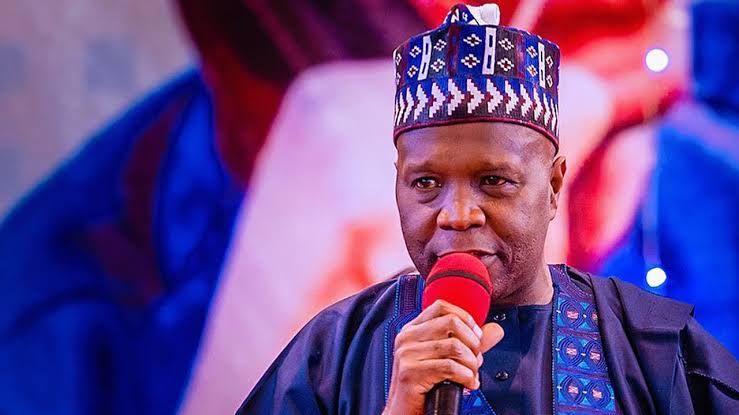
Governor Muhammadu Inuwa Yahaya has expressed concern over the safety of children in Gombe State, revealing that no fewer than 48 minors have gone missing under suspected cases of abduction and trafficking.

The governor made this known on Friday during the launch of the state’s Ramadan palliative distribution programme in Gombe.

He described the situation as a serious security and humanitarian issue that demands urgent attention from both authorities and residents.

According to him, official data gathered by the state government shows that the missing children are mostly between the ages of two and five. He added that the victims were allegedly taken to unknown locations, while their parents remain in the state.

“Available information before us shows that 48 children from Gombe State within the age bracket of two to five years have been taken away to unknown destinations,” the governor said.

“Their parents remain here, but we cannot say where the children are or whether they will be found.”

The governor did not give details about when the incidents occurred or the specific communities affected. However, he noted that the pattern of the disappearances points to organised criminal activity.

He also referred to a recent abduction in the Orji Estate area. He linked the incident to emerging security gaps following the partial easing of the state’s motorcycle restriction policy. Although the kidnapped child in that case was later rescued, he said the development highlights the risks children face.

Governor Yahaya called for collective efforts to tackle the threat. He urged residents to stay alert and provide useful information to security agencies.

“We must collectively confront these emerging threats if we want peace restored,” he said.

“There was a time Nigerians lived more peacefully. We must ask ourselves what has changed and take decisive steps, no matter how difficult.”

He further appealed to community leaders, parents, and residents to support ongoing government efforts aimed at safeguarding lives, especially those of vulnerable children.

The disclosure has heightened concerns among residents and civil society groups. Many have called for stronger child protection systems and more effective measures to combat human trafficking across the country.

Beware of social media scams targeting young footballers

By Hadiza Abdulkadir 

I am speaking out as a concerned sister after my younger brother from Kano, Nigeria, Ismail, was repeatedly contacted on TikTok by individuals claiming to be football agents.

They asked about his football journey and promised trials in another state where “European agents” would scout talented players. However, there was one condition: he had to pay for the registration form.

When I advised Ismail to ask what the form looked like, the so-called agent sent a blurry screenshot of a flashy, unprofessional document with no official logo, no verified organisation, and no connection to recognised bodies like the Nigeria Football Federation or FIFA. That was a big red flag.

According to people with deep knowledge about scouting, real agents do not randomly scout players on TikTok and demand upfront payments. Thankfully, Ismail asked questions before making any decision and did not send any money.

Many young footballers dream of playing professionally, and scammers are exploiting that dream. Parents and players must verify every claim, research every agent, and never pay fees without confirmed legitimacy.

Patience and due diligence can protect young talents from becoming victims. Beware.

Hadiza is Nigerian but writes from Cologne, Germany. She can be contacted via hadiza225@gmail.com.

On ‘Makiyan Kano’ slogan

By Umar Sani Adamu (Kawun Baba)

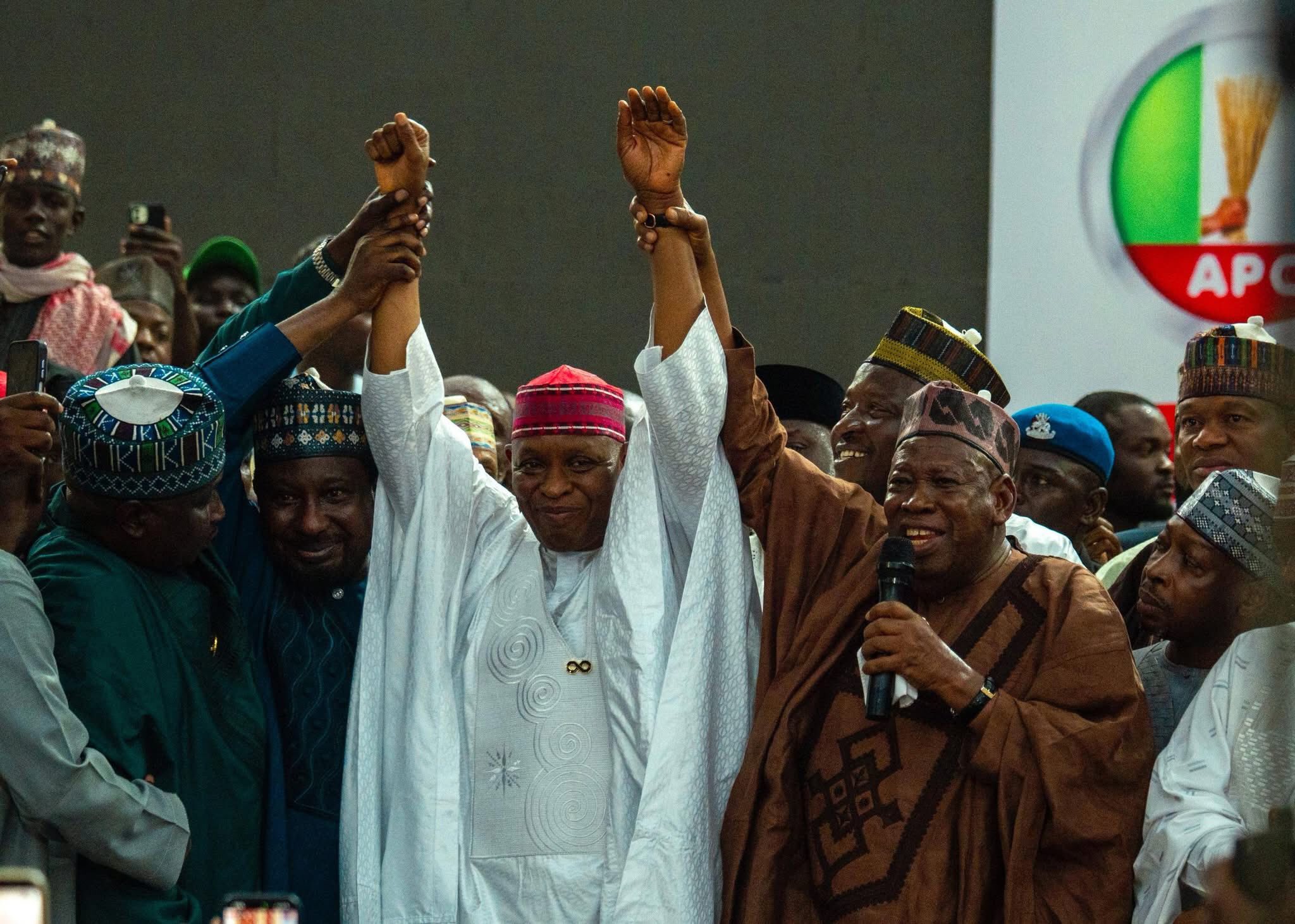
The defection of Kano State Governor Abba Kabir Yusuf from the New Nigeria Peoples Party, NNPP, to the All Progressives Congress, APC, has exposed more than a political shift. It has laid bare the fragility of slogans elevated above reason and the contradictions within Kano’s dominant political movement.

For years, the phrase “Mayiyan Kano” was used by followers of Senator Rabiu Musa Kwankwaso whenever events did not go their way. It served as a blanket response to court rulings, electoral outcomes, and opposing views. What began as a casual expression gradually hardened into a political shield used to dismiss criticism rather than engage it.

Ironically, Governor Yusuf was once celebrated as the ultimate proof of loyalty to the Kwankwasiyya structure. A report by The Daily Reality during the early phase of his administration went to remarkable lengths to present him as a devoted disciple of his mentor and political godfather. His actions, his rhetoric, and even his body language were framed as evidence of unquestionable allegiance. At the time, loyalty was portrayed as a virtue, and Yusuf was held up as its finest example.

That narrative has now collapsed under the weight of political reality. Following his defection, the same voices that once applauded his loyalty have rushed to brand him disloyal. The sudden moral outrage is striking not because politicians change camps but because of the selective memory at play. If loyalty were absolute, then it should have been defined beyond convenience. If it were conditional, then honesty demands admitting that politics is transactional, not sentimental.

The revival of Makiyan Kano, that’s “The enemy of Kano” or “One who works against the interests of Kano”. In this context reveals its emptiness. Rather than interrogate why a sitting governor would abandon the platform that brought him to power, some loyalists have retreated to slogans. It is easier to chant than to reflect. Easier to accuse than to accept that political authority ultimately rests with individuals, not movements.

What this moment exposes is a deeper problem within Kano politics: the attempt to freeze loyalty in time while ignoring changing realities. Governance is not sustained by personal allegiance to a mentor but by navigating power structures, resources, and national relevance. To pretend otherwise is to confuse political romance with political responsibility.

Supporters of the governor argue that his decision was informed by pragmatism and the pursuit of Kano’s broader interests. Whether one agrees or not, it is a position that deserves debate, not dismissal. Slogans do not govern states. Decisions do.

Makiyan Kano has returned to public discourse, but its meaning has shifted. It no longer signals confidence. It now sounds like frustration. In the end, movements that rely on chants instead of ideas often struggle when reality refuses to cooperate. Kano politics appears to be learning that lesson the hard way.

Umar Sani Adamu (Kawun Baba) wrote via umarhashidu1994@gmail.com.

PDP faction criticises Fintiri’s defection to APC as cowardice

By Anwar Usman

The Peoples Democratic Party has criticised Governor Ahmadu Fintiri’s defection to the All Progressives Congress, describing his exit as an act of cowardice that undermines the principles of multi-party system of government in Nigeria.

Tanimu Turaki (SAN)-led PDP National Working Committee, through its National Publicity Secretary, Ini Ememobong, on Friday reminded Fintiri that history and posterity serve as the ultimate and impartial judges of human actions, constantly recording both deeds and omissions.

After weeks of speculation, Fintiri formally left the PDP and joined the ruling All Progressives Congress on Friday.

In response, the Peoples Democratic Party stated that Fintiri’s decision to leave a platform that supported his political journey through multiple election cycles over minor inconveniences clearly shows unrestrained cowardice rather than the conduct of a principled politician.

The party stated that “We are aware of the official announcement of the long-speculated defection of His Excellency, Governor Ahmadu Fintiri, from our party to the All Progressives Congress, today via a broadcast in Adamawa State.

“This move, though long speculated, had attracted several rebuttals from the governor himself, even as recently as last week, after the presidential visit to Adamawa. By this announcement, the governor himself has confirmed what hitherto was a rumour, by aligning with the ruling party, a move he says is in the developmental interest of his state.

“While we acknowledge that this move is well within Fintiri’s legal rights, it is clearly against political principles and morality, a challenge to multi-party democracy and democratic consolidation.

The PDP urged its members in Adamawa State to accept what it described as a sad reality with composure.

The party further reiterated that “They should remain resolute in the hope that the rebirth movement of our party is on course and will certainly reposition our party back to winning ways”.

BREAKING: Governor Bala meets, briefs President Tinubu on rising bandit attacks in Bauchi State

By Sabiu Abdullahi

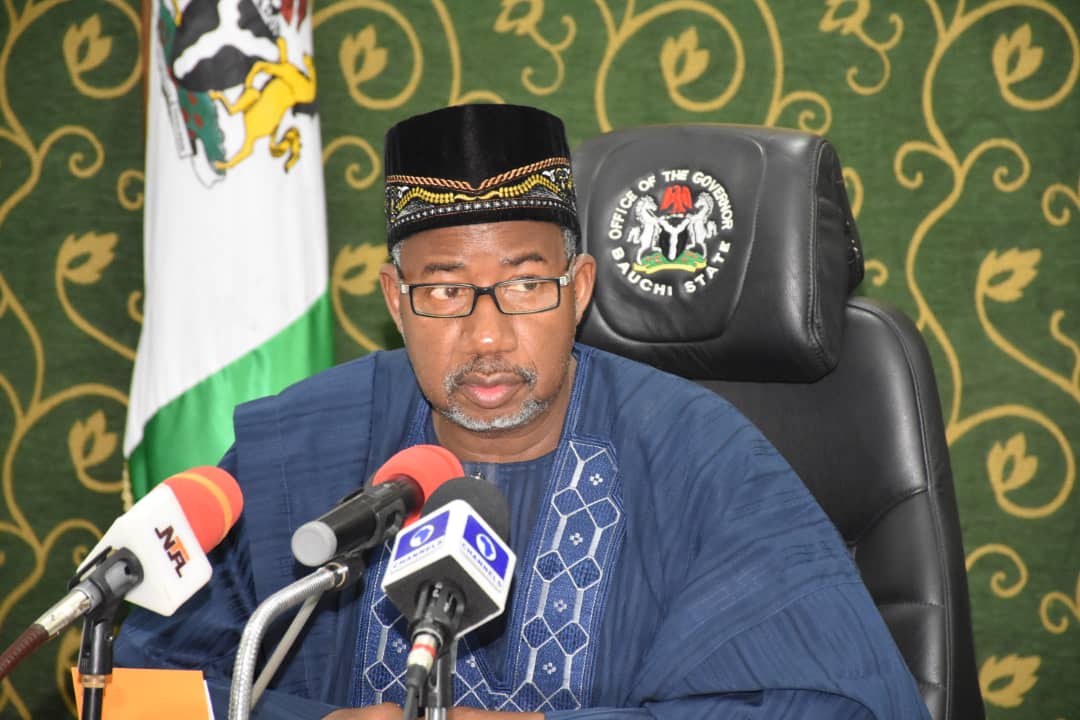
President Bola Ahmed Tinubu received Bauchi State Governor Bala Mohammed on Friday for a security briefing following renewed disturbances in parts of the state.

Governor Mohammed met with the President to provide updates on the security challenges facing several communities, particularly in Alkaleri Local Government Area.

Speaking after the meeting, the governor said he highlighted “the disturbing activities of bandits in Alkaleri local government area of Bauchi state, which requires a timely attention.” He emphasized that the situation demands urgent intervention to prevent further deterioration of security in affected communities.

The discussions also touched on recent political developments, including the wave of defections from the Peoples Democratic Party (PDP) to the ruling All Progressives Congress (APC). Governor Mohammed acknowledged that elected officials have the constitutional right to join any political party. He, however, affirmed his decision to remain in the PDP despite the shifting political landscape.

Media reports in recent months have documented repeated bandit attacks in parts of Bauchi State, especially in Alkaleri and other border communities. Villages have experienced killings, abductions, and mass displacement of residents.

Local populations have raised concerns over the frequency of these attacks and have called for a stronger security presence to protect lives and property. Security agencies have reportedly deployed personnel to affected areas as part of ongoing efforts to contain the violence and restore stability.

JUST IN: Nigeria’s GDP grows by 4.07% in Q4 2025, NBS reports

By Sabiu Abdullahi

Nigeria’s economy expanded by 4.07 percent in real terms during the fourth quarter of 2025, according to the latest report from the National Bureau of Statistics (NBS). This represents an increase from the 3.76 percent growth recorded in the same period of 2024.

“During the quarter under review, agriculture grew by 4.00%, an improvement from the 2.54% recorded in the corresponding quarter of 2024,” the NBS stated.

The report highlighted that the industrial sector also saw growth, rising to 3.88 percent from 2.49 percent in Q4 2024. The services sector, which contributes the largest share to the GDP, grew by 4.15 percent, slightly lower than the 4.75 percent recorded in the same quarter the previous year.

In terms of sector contribution to GDP, services led with 55.92 percent, compared with 55.87 percent in Q4 2024. On an annual basis, overall economic growth reached 3.87 percent in 2025, up from 3.38 percent in 2024.

The NBS also reported that nominal GDP in the quarter stood at N122.81 trillion, showing a year-on-year increase from N104.47 trillion in Q4 2024, reflecting a 17.55 percent growth.

Oil production and sector performance

The bureau disclosed that average daily oil production in Q4 2025 was 1.58 million barrels per day, slightly higher than 1.54 mbpd in Q4 2024, but lower than 1.64 mbpd in Q3 2025.

“The real growth of the oil sector was 6.79 (year-on-year) in Q4 2025, indicating an increase of 4.71 points relative to the rate recorded in the corresponding quarter of 2024 (2.08%),” the report said.

Compared to Q3 2025, the oil sector grew by 0.95 percentage points. However, the quarter-on-quarter performance showed a decline of 6.30 percent. The annual growth of oil rose to 8.50 percent, up from 5.54 percent in 2024.

The sector contributed 2.87 percent to real GDP in Q4 2025, an increase from 2.80 percent in Q4 2024, but a decrease from 3.44 percent in Q3 2025. Overall, the oil sector accounted for 3.53 percent of GDP in 2025, above the 3.38 percent reported in 2024.

Non-oil sector drives growth

The non-oil sector remained the major driver of economic growth, contributing 97.17 percent in Q4 2025.

“This rate was higher by 0.19 points compared to the rate recorded in the same quarter of 2024, which was 3.80%, and higher than the 3.91% recorded in the third quarter of 2025,” the NBS said.

In real terms, the non-oil sector accounted for 97.13 percent of GDP in Q4 2025, slightly lower than 97.20 percent in Q4 2024, but higher than 96.56 percent in Q3 2025. On an annual basis, the sector contributed 96.47 percent in 2025, slightly down from 96.62 percent in 2024.

The NBS identified agriculture (crop production), telecommunications, real estate, trade, financial and insurance services, construction, transportation, and manufacturing (food, beverages, and tobacco) as the key contributors to positive non-oil GDP growth.

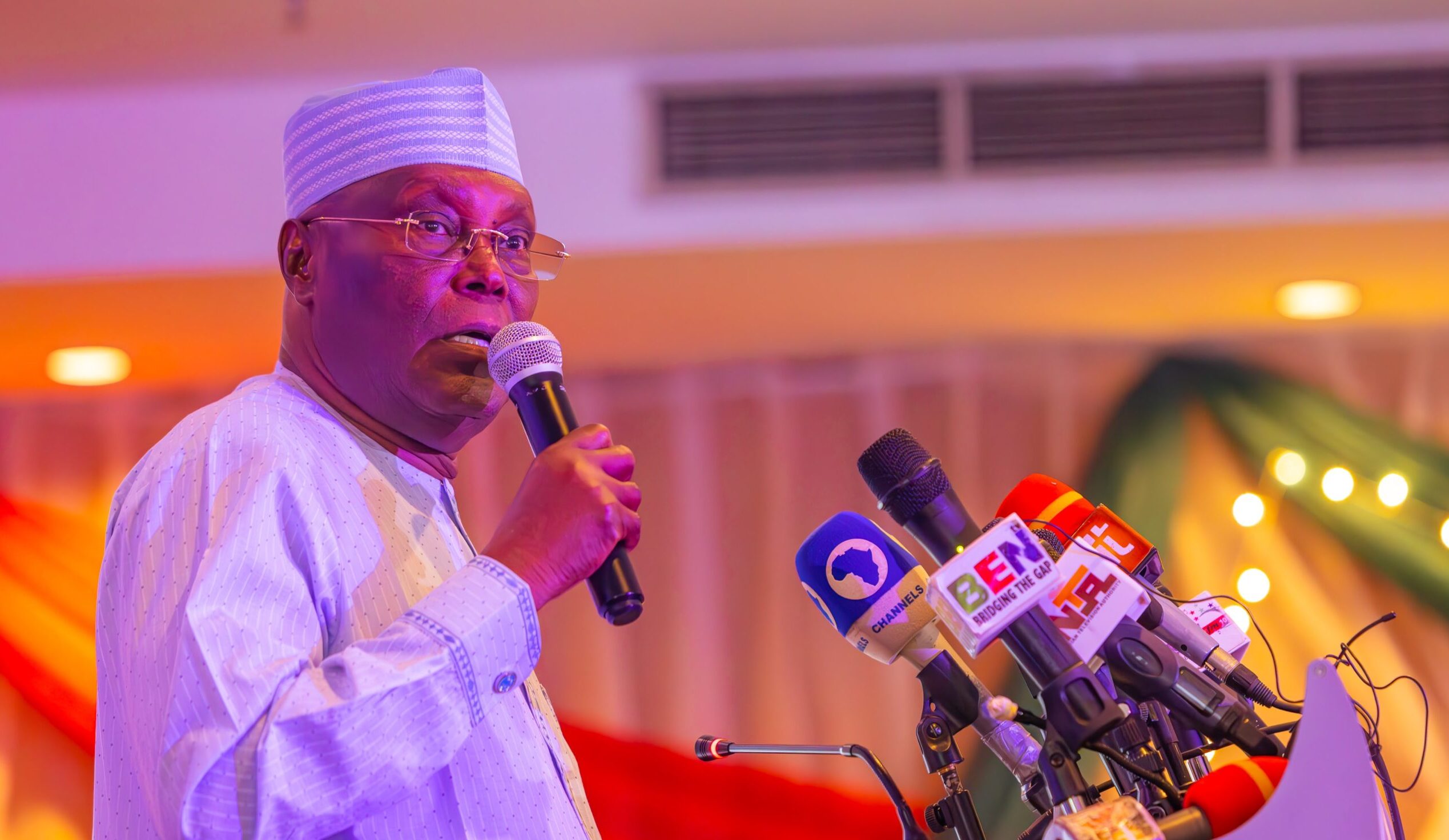
Atiku expresses regret over role in APC formation

By Sabiu Abdullahi

Former Vice President, Atiku Abubakar, has said he now regrets his role in the creation of the All Progressives Congress (APC) ahead of the 2015 general elections, noting that Nigeria’s situation has worsened compared to the period before the party emerged.

He made the statement on Thursday in Abuja during a press briefing attended by opposition figures who gathered to discuss the country’s condition and ongoing political consultations ahead of the 2027 elections.

Atiku recalled how opposition leaders came together in 2014 to form a united front under the APC to challenge the administration of former President Goodluck Jonathan. He explained that the move was driven by concerns over insecurity and economic difficulties at the time.

According to him, there were fears that democratic governance was under threat, which prompted the coalition to act in order to redirect the country’s path.

“We came together in 2014 because we believed democracy was faltering. The issues then were insecurity and the economy. But today, the situation has become even worse than what we set out to correct,” he said.

The former presidential candidate maintained that the current challenges facing the country have exceeded those that led to the formation of the APC. He stressed the need for political actors to learn from past alliances.

Atiku, who is a chieftain of the African Democratic Congress (ADC), cautioned that any new coalition or opposition arrangement must be carefully planned and focused on rebuilding democratic institutions as well as restoring public trust in governance.

“We must ensure that whatever steps we take now are aimed at restoring true democracy in Nigeria,” he stated.

The briefing drew several notable opposition leaders. Their presence points to ongoing discussions and possible political realignments ahead of the 2027 general elections.

EFCC asks Supreme Court to cancel Ajudua’s bail over alleged $1.043 million fraud

By Sabiu Abdullahi

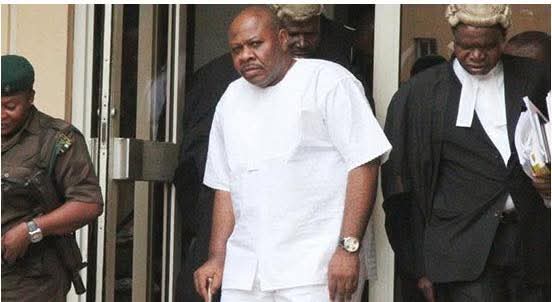
The Economic and Financial Crimes Commission (EFCC) has filed an appeal at the Supreme Court of Nigeria, seeking an order to set aside the bail granted to Lagos socialite, Fred Chijindu Ajudua.

The anti-graft agency lodged the appeal in Abuja on February 20, 2026. It is contesting the ruling of the Court of Appeal in Lagos, which admitted Ajudua to bail on January 30, 2026.

Through its lawyer, S.K. Atteh, the EFCC argued that the appellate court made a legal error when it dismissed its preliminary objection and proceeded to grant bail to the defendant.

The Commission maintained that the Court of Appeal did not properly interpret an earlier judgment of the Supreme Court delivered on May 9, 2025 in related matters involving Ajudua. It insisted that the apex court had already settled the issue of bail when it directed that the defendant remain in custody pending the speedy trial of the case.

The EFCC also faulted the appellate court’s position that the Supreme Court did not order Ajudua’s continued detention. It described that view as inconsistent with the principle of judicial hierarchy and the binding nature of Supreme Court decisions.

At the centre of the dispute is the interpretation of aspects of the Supreme Court ruling, especially on the link between jurisdiction and bail. The Commission argued that the Court of Appeal ignored key parts of the judgment which, in its view, had conclusively resolved the issue of bail.

It further stated that the decision to grant fresh bail breached Sections 235 and 275(1) of the 1999 Constitution (as amended), which establish that rulings of the Supreme Court are final and binding on all lower courts.

The EFCC also challenged the medical grounds relied upon by the appellate court in granting bail. It argued that the medical report dated November 19, 2025 did not present new circumstances.

According to the Commission, Ajudua has had kidney-related health issues since 1987 and has repeatedly relied on that condition to delay proceedings since the charge was filed in 2005. It also pointed to inconsistencies in medical reports issued by the same consultant and said the appellate court did not properly assess the evidence before granting bail.

The agency warned that allowing the defendant to remain on bail could undermine the Supreme Court’s directive for a speedy trial. It referred to a previous instance where only one prosecution witness testified over a long period despite the defendant being on bail.

The EFCC is asking the apex court to revoke the bail granted on January 30, 2026 and to restore the trial court’s decision of November 20, 2025, which denied bail.

No date has been fixed for the hearing of the appeal.

Ajudua is currently facing trial over allegations that he defrauded a Palestinian businessman, Zad Abu Zalaf, of $1.043 million.

EFCC asks Supreme Court to cancel Ajudua’s bail over alleged $1.043 million fraud

By Sabiu Abdullahi

The Economic and Financial Crimes Commission (EFCC) has filed an appeal at the Supreme Court of Nigeria, seeking an order to set aside the bail granted to Lagos socialite, Fred Chijindu Ajudua.

The anti-graft agency lodged the appeal in Abuja on February 20, 2026. It is contesting the ruling of the Court of Appeal in Lagos, which admitted Ajudua to bail on January 30, 2026.

Through its lawyer, S.K. Atteh, the EFCC argued that the appellate court made a legal error when it dismissed its preliminary objection and proceeded to grant bail to the defendant.

The Commission maintained that the Court of Appeal did not properly interpret an earlier judgment of the Supreme Court delivered on May 9, 2025 in related matters involving Ajudua. It insisted that the apex court had already settled the issue of bail when it directed that the defendant remain in custody pending the speedy trial of the case.

The EFCC also faulted the appellate court’s position that the Supreme Court did not order Ajudua’s continued detention. It described that view as inconsistent with the principle of judicial hierarchy and the binding nature of Supreme Court decisions.

At the centre of the dispute is the interpretation of aspects of the Supreme Court ruling, especially on the link between jurisdiction and bail. The Commission argued that the Court of Appeal ignored key parts of the judgment which, in its view, had conclusively resolved the issue of bail.

It further stated that the decision to grant fresh bail breached Sections 235 and 275(1) of the 1999 Constitution (as amended), which establish that rulings of the Supreme Court are final and binding on all lower courts.

The EFCC also challenged the medical grounds relied upon by the appellate court in granting bail. It argued that the medical report dated November 19, 2025 did not present new circumstances.

According to the Commission, Ajudua has had kidney-related health issues since 1987 and has repeatedly relied on that condition to delay proceedings since the charge was filed in 2005. It also pointed to inconsistencies in medical reports issued by the same consultant and said the appellate court did not properly assess the evidence before granting bail.

The agency warned that allowing the defendant to remain on bail could undermine the Supreme Court’s directive for a speedy trial. It referred to a previous instance where only one prosecution witness testified over a long period despite the defendant being on bail.

The EFCC is asking the apex court to revoke the bail granted on January 30, 2026 and to restore the trial court’s decision of November 20, 2025, which denied bail.

No date has been fixed for the hearing of the appeal.

Ajudua is currently facing trial over allegations that he defrauded a Palestinian businessman, Zad Abu Zalaf, of $1.043 million.

Court orders remand of Malami, wife, son over alleged N8.7bn money laundering

By Sabiu Abdullahi

A Federal High Court in Maitama, Abuja, has ordered the remand of former Attorney General of the Federation and Minister of Justice, Abubakar Malami (SAN), alongside his wife, Hajia Bashir Asabe, and their son, Abubakar Abdulaziz Malami, pending the hearing of their bail applications.

Justice Joyce Abdulmalik gave the order on Friday, February 27, 2026. She directed that Malami and his son be held at the Kuje Correctional Centre, while Asabe is to be kept at the Suleja Medium Correctional Centre.

The defendants were re-arraigned by the Economic and Financial Crimes Commission (EFCC) after the case was reassigned from Justice Emeka Nwite to Justice Abdulmalik.

They are facing an amended 16-count charge that borders on conspiracy, procurement, concealment, and laundering of alleged illicit funds totaling N8,713,923,759.49, contrary to the Money Laundering (Prevention and Prohibition) Act, 2022.

At the start of proceedings, prosecution counsel, Chief J.S. Okutepa (SAN), informed the court that the matter was appearing before Justice Abdulmalik for the first time. He sought permission for the amended charges to be read. He also pointed out corrections in Counts 11 and 12 to align the numerical figures with the amounts already written in words.

Defence counsel, J.B. Daudu (SAN), did not oppose the corrections but asked the prosecution to make a formal application. The court granted the request to amend the figures.

Count one of the charge reads: “That you Abubakar Malami, SAN, and Abubakar Abdulaziz Malami, between July 2022 and June 2025, in Abuja, procured Metropolitan Auto Tech Limited to conceal the unlawful origin of the sum of N1,014,848,500.00 (One Billion, Fourteen Million, Eight Hundred and Forty-Eight Thousand, Five Hundred Naira) in a Sterling Bank Plc account, when they reasonably ought to have known that the sum constituted proceeds of unlawful activities, thereby committing an offence contrary to Section 21(c) of the Money Laundering (Prevention and Prohibition) Act, 2022, and punishable under Section 18(3) of the same Act”.

Count five reads: “That you Abubakar Malami, SAN, Abubakar Abdulaziz Malami and Hajia Bashir Asabe, an employee of Rahamaniyya Properties Limited, sometime in September 2024, in Abuja, conspired to disguise the unlawful origin of the aggregate sum of N1,049,173,926.13 (One Billion, Forty-Nine Million, One Hundred and Seventy-Three Thousand, Nine Hundred and Twenty-Six Naira, Thirteen Kobo) paid through the Union Bank Plc account of Meethaq Hotels Limited, Jabi, between November 2022 and September 2024, contrary to Section 21 of the Money Laundering (Prevention and Prohibition) Act, 2022, and punishable under Sections 18(2)(a) and 18(3) of the same Act”.

Count six reads: “That you Abubakar Malami, SAN, and Abubakar Abdulaziz Malami, between November 2022 and October 2025, indirectly took control of the aggregate sum of N1,362,887,872.96 (One Billion, Three Hundred and Sixty-Two Million, Eight Hundred and Eighty-Seven Thousand, Eight Hundred and Seventy-Two Naira, Ninety-Six Kobo) paid through the Union Bank Plc savings account of Meethaq Hotels Limited, when they reasonably ought to have known that the funds constituted proceeds of unlawful activities, contrary to Section 18(2)(d) and punishable under Section 18(3) of the Money Laundering (Prevention and Prohibition) Act, 2022.

The three defendants pleaded “not guilty” to all charges. The prosecution then asked the court to fix a trial date and remand them in custody.

The defence told the court that the defendants had earlier been granted bail by Justice Nwite and had complied with all conditions. Counsel said, “My Lord, the defendants were granted bail when they were first arraigned before Justice Nwite and the conditions were perfected. They have not flouted any of the conditions. The Federal High Court is one. We pray that the existing bail should continue.”

In response, the prosecution acknowledged the earlier bail but argued that the court could either adopt the previous terms or impose new ones. He said, “Your lordship has the discretion to either adopt the terms earlier granted or subject them to fresh bail conditions to ensure their attendance in court. The conditions can be transferred to this court since it is the same Federal High Court.”

In her ruling, Justice Abdulmalik held that the earlier bail no longer stood following the reassignment of the case. She said, “I am of the view that the earlier bail has been terminated. In that wise, I order that fresh bail applications be filed before this court.”

The court rejected an oral bail request by the defence and directed that a formal application be submitted due to the nature of the allegations.

Justice Abdulmalik also ordered the prosecution to allow defence counsel access to the defendants to prepare for trial. The case was adjourned to March 6, 2026, for hearing of bail applications and the commencement of trial.