Month: December 2025

Sultan warns NIREC risks irrelevance without honest leadership

By Uzair Adam

The Sultan of Sokoto and Co-Chair of the Nigeria Inter-Religious Council (NIREC), HRH Abubakar Sa’ad III, on Wednesday warned that the Council risks losing relevance unless religious leaders embrace sincerity, accountability and genuine engagement.

His remarks came as the Christian Association of Nigeria (CAN) renewed calls for stronger government action on insecurity, while the Federal Government dismissed global claims of religious persecution in the country.

These exchanges took place at NIREC’s Second Tri-Annual Meeting in Abuja, where the Sultan, CAN President Archbishop Daniel Okoh, and Secretary to the Government of the Federation (SGF), Senator George Akume, delivered some of their most direct assessments of Nigeria’s security challenges and interfaith relations.

Speaking candidly, the Sultan said NIREC had drifted from its founding vision, stressing the need to confront internal contradictions that undermine its credibility.

He lamented that some religious leaders preach unity during meetings but make divisive statements outside, a pattern he said weakens interfaith harmony.

“We sit down and say good things to one another, knowing God owns everything. Yet when we leave this room, we begin to say negative things. Are we really honest with ourselves?” he asked.

He urged the Council to decide whether to continue with its current approach, undergo reforms, or return fully to its founding principles. He also commended Cardinal John Onaiyekan for his consistency and sincerity since NIREC’s early days.

The Sultan noted that many members fail to communicate NIREC’s resolutions to their communities, leaving the public unaware of decisions that could reduce tension.

He emphasised that dialogue—rather than force—remains the surest path to peace.

Turning to security, CAN President Archbishop Okoh warned that Nigeria faces a dangerous phase of violence marked by mass abductions, banditry and extremist attacks.

“The daily loss of innocent lives is alarming and heartbreaking. Communities are being deserted and citizens are fearful,” he said.

While acknowledging existing government efforts, he urged President Bola Ahmed Tinubu to strengthen responses proportionate to the scale of the crisis. He also stressed that faith institutions remain vital to peacebuilding due to their grassroots influence.

He insisted that justice must underpin peace: “Those who perpetrate or finance violence must be held accountable, and victims must be supported.”

In his remarks, SGF Senator George Akume rejected global claims that Nigeria is experiencing religious genocide, arguing that such narratives misrepresent the country’s complex security issues. He noted that both Christian and Muslim communities have suffered devastating attacks.

He announced plans for a US–Nigeria Joint Working Group on Security, where religious leaders will contribute to policy discussions.Akume urged delegates to speak frankly and work in unity, saying: “Let us collectively silence the merchants of hatred and disunity.”

The meeting ended with a consensus that Nigeria’s fragile peace requires renewed honesty, deeper collaboration and a united moral front between religious leaders and the government.

Tinubu reiterates plan to withdraw Police officers from VIPs

By Anwar Usman

President Bola Tinubu on Wednesday said the directive to redeploy police officers working with VIPs, VVIPs and ministers was not negotiable urging all ministers to ensure immediate compliance.

This was revealed in a statement issued by the Presidential spokesperson, Bayo Onanuga.The president while speaking at the opening of the Federal Executive in Abuja warned all relevant stakeholders against non-compliance.

He noted that, “Police officers were trained to protect the lives and properties of citizens, particularly the most vulnerable in society not the protection of VIPs” adding that, the NCDC are trained for VIP protection, and they are armed too.

He also ordered the minister of interior Olubunmi Tunji-Ojo, for the immediate replacement of police officers by the civil defense corps.

“We face security challenges of kidnapping, banditry and terrorism. We need all forces utilized. I know some people are exposed; we will make exceptions. The Civil defense is very much around,” the president stated.

Tinubu directed the National Security Adviser, Nuhu Ribadu, Minister of Police Affairs, Sen. Ibrahim Gaidam and the Inspector General of Police to follow up on the implementation of the order.

The President also urged the Vice President Kashim Shettima, who is the chairman of the National Economic Council (NEC) to further sensitise governors and other stakeholders on the implementation of the reforms on ranching.

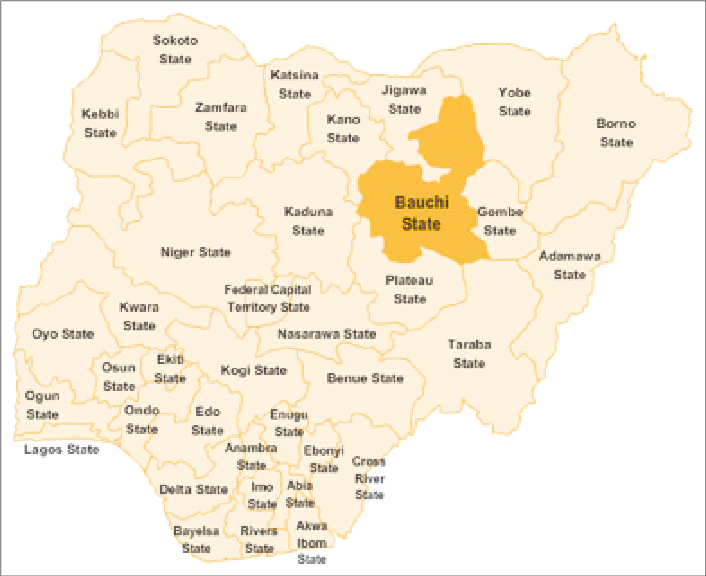
Bauchi State sets January 4 for full reopening of schools

By Sabiu Abdullahi

The Bauchi State Government has fixed Sunday, January 4, 2026, as the date for the resumption of all Basic, Senior Secondary and Tertiary Institutions across the state after an extended closure.

The announcement was contained in a statement issued by Jalaludeen Usman, ANIPR, Information and Public Relations Officer of the Ministry of Education.

He explained that the decision followed “extensive discussions with key stakeholders including School Principals, Managers of the Education Sector in the State and owners of Private Schools among others,” which led to a collective agreement.

Governor Bala Abdulkadir Mohammed subsequently approved the reopening.

The ministry said examinations that could not hold before the closure “will now be conducted within the first week of resumption,” while normal academic activities will continue afterwards.

The statement also revealed that “approval has been granted for the immediate re-opening of the three (3) Federal Government Unity Colleges as directed by the Federal Ministry of Education.”

Officials noted that the earlier shutdown was based on “advise received from security agencies relying on available information and following a spate of untoward incidences in schools across the country.”

However, the government said the situation has improved, which informed the decision to reopen all institutions.

Parents and guardians have been directed to return their children and wards to school without delay.

The government reassured the public that “additional security measures are being put in place to ensure the safety of students, teaching and non-teaching staff in the various schools and higher institutions in the state.”

Hausa butchers attacked at Enugu market following price dispute

By Muhammad Sulaiman

Tensions erupted at the Bariki Market in Enugu State when a group of Igbo butchers reportedly confronted and attacked their Hausa counterparts over a disagreement tied to meat prices.

According to eyewitnesses, the incident began when Hausa butchers allegedly sold their meat at lower prices, a move that some Igbo traders viewed as undercutting the market. The disagreement escalated into a physical altercation, resulting in injuries and disruption of business activities in the area.

Observers have noted that Igbo traders operate freely across markets in Kano and other parts of northern Nigeria, with no reports of similar incidents. Some commentators expressed concern that the Enugu clash had not received widespread media attention, suggesting that the coverage might have been more prominent had the situation been reversed. However, a video clip of the clashes has been widely shared on social media in Northern Nigeria.

There are also concerns that, in other contexts, such disputes risk being misrepresented as ethnic or communal violence, further heightening tensions.

Market authorities and local security agencies are yet to issue an official statement on the incident.

Sharenting and infant privacy: The hidden cost of sharing our children online

By: Abdulhameed Ridwanullah

On July 22, 2015, the then-spouse of Nigerian Afrobeats queen Tiwa Savage, Tunji “Tee Billz” Balogun, announced the birth of their son, Jamil, on social media with an image of the father and son’s hands. This, no doubt, was an intimate moment. But beneath that act was the normalization of what researchers described as “sharenting”. Sharenting is a pervasive practice of documenting every stage of a child’s life online. From the baby shower, scan pictures, delivery room and other “first” images in the life of the baby documented for public gaze, sharenting has become normalized to an extent that those calling for caution are regarded as old-school.

Sharenting is now recognized globally as a growing digital privacy concern because it exposes children to long-term data risks they cannot consent to. But in Nigeria, the consequences are amplified by our unique digital ecosystem.
What makes sharenting particularly risky in Nigeria is not only what online platforms do, but what we (users) do. On the users’ part, Nigerians’ platform usage has shown a pattern of resistance that outsmarts platforms’ regulations. In my research on platform resistance, I argued that Nigerians have developed what I call a digital okada culture: creative, evasive practices that bypass platform safeguards the same way commercial motorcycle riders bypass formal road rules. Screenshots, screen recording, parallel WhatsApp accounts, anonymous repost pages and third-party aggregators routinely move supposedly “private” content into the open, uncontrolled publics.

We have seen photos of the naming ceremonies privately shared on WhatsApp status, making their way anonymously to Instagram gossip pages like Instablog9ja and other similar gossip blogs. Simply put, a controlled WhatsApp status update can end up on strangers’ phones instantaneously. Our digital culture in Nigeria is a highly porous ecosystem where content easily escapes parents’ control, which complicates sharenting.
It is instinctive for proud parents to want to celebrate their joy with friends and family. Culturally and religiously speaking, giving birth is not a small feat. It is one of the memorable achievements in one’s life.

The magnitude and social significance of it alone are good reasons to celebrate and post children online. For diaspora families, social media posts also help them connect with grandchildren and relatives not seen physically. On the surface, this looks like a harmless practice. But once it is placed inside a digital okada culture, the comfort of “I only shared it with my contacts” becomes an illusion.

Even mainstream financial institutions have begun to warn that oversharing children’s information online can create future vulnerabilities. A 2018 BBC news report indicated that Barclays Bank forecasted that by 2030, sharenting could result in £670 million in online fraud. The bank added that parents might be “lulled into a false sense of security” without grasping the long-term implications of oversharing online. That warning is not just about money; it is about the long tail of our children’s data.


But financial fraud is only a small fragment of the risk. The bigger problem is how children’s data feeds an entire economic system. As I have written previously, the “paradox of social media is that a digital footprint is both transient and permanent”. It is transient because our post quickly disappears from most feeds, but the metadata is stored permanently in corporate databases. This is what Harvard professor Shoshana Zuboff calls surveillance capitalism.


Sharenting allows surveillance capitalism to thrive because parents voluntarily funnel massive intimate behavioural data about their children into algorithms. This behavioural data could be monetised by building a detailed, lifelong predictive profile of the children. According to privacy researchers, children’s photos that people share online are being used to train facial recognition algorithms and AI systems.

Think about that! Our children’s faces are being used to teach machines without our or their consent. Parents’ excitement often leads to the surrender of children’s data to platforms without their consent. Even celebrities who build careers on social media visibility, like Rihanna and Cardi B, are choosing to obscure their children’s faces to mitigate risk. Drake famously raps in the Emotionless track that “I wasn’t hiding my kid from the world; I was hiding the world from my kid”.


Many Nigerian parents take comfort in the illusion of privacy of End-to-End Encrypted messaging platforms. They assume that posting baby photos on WhatsApp Status, especially to a restricted contact list, is safer than throwing them on Instagram. Messages on WhatsApp are encrypted, no doubt; however, that alone does not mean data extraction isn’t taking place.

Metadata about what we share (e.g., baby photos), who we talk to, when, location, duration, and frequency are extractable and shareable data that the platforms can use to build a behavioural pattern.
In other words, even when images disappear, their informational shadows remain.

Beyond the momentary applause and privacy concern, what happens when these children grow up and do not appreciate their lives being displayed online and their privacy being taken away? Teenagers are already suing their parents in Europe for unconsented exposure. It is only a matter of time before a similar conflict emerges in Nigeria. I am not a technological Luddite. Far from it. I am just a concerned technology researcher who cares about the use and misuse of social media.


In a country shaped by digital okada culture, parents cannot assume that what they post about their children will stay where they intended. Sharenting is not just about cute photos; it is about handing our children’s futures to platforms, algorithms and a porous digital public they did not choose.

Nigeria needs greater digital literacy around children’s rights. There is also a need for more public awareness campaigns and discussion about consent beginning at home. Parents must think beyond the moment of joy and consider the digital futures they are constructing for their children.

Abdulhameed Ridwanullah is a researcher at Media for Empowerment and Impact Lab, Northeastern University, Boston, USA. He can be reached at olaitanrido@yahoo.com

Rector Cares Foundation wins Top Climate Award at AFFIF 2025

By Hadiza Abdulkadir

Rector Cares Foundation’s documentary “Dying for Water” has won the Award of Excellence for Best Film on Climate Change at the Africa Film for Impact Festival (AFFIF) 2025, earning widespread recognition for its powerful portrayal of water poverty in rural Nigeria. 

Screened at the festival’s 4th edition, held from October 29–31 at Silverbird Cinemas, Yar’Adua Centre in Abuja, the film tells the story of Fatsuma, a mother grieving the loss of her child who drowned in an unsafe community well, and highlights the daily struggles faced by women and children relying on hazardous water sources. 

Founder and executive producer Onyedikachi Erete described the honour as a validation of the Foundation’s mission. “This victory validates our mission to ignite conversations about water poverty and the crucial role of WASH in fostering sustainable development,” he said. 

Directed by Omoregie Osakpolor and co-produced by Stephanie Ohumu, the documentary forms part of Rector Cares Foundation’s ongoing efforts to raise awareness of climate-driven water crises and strengthen collaborations with organisations working in water provision and technology. 

MPAC accuses US delegation of sectarian bias during Nigeria visit

By Muhammad Abubakar

The Muslim Public Affairs Centre (MPAC) has condemned what it describes as the “sectarian and deeply troubling” conduct of a recent United States congressional delegation to Nigeria.

In a statement issued by its Executive Chairman, Disu Kamor, MPAC faulted the visit of Congressman Riley Moore, who publicly emphasised meetings with Christian and traditional leaders during the trip, including bishops in Benue State and a Tiv traditional ruler. Moore, a vocal proponent of the claim of a “Christian genocide” in Nigeria, said on his X account that he came “in the name of the Lord” and held discussions on alleged Fulani-led attacks.

MPAC argued that the delegation’s failure to engage the leadership of the Nigerian Muslim community—particularly the Nigerian Supreme Council for Islamic Affairs (NSCIA)—was a deliberate snub rather than a scheduling issue. It accused the U.S. team of avoiding Muslim victims and communities affected by violence and warned that such selective engagement risked reinforcing “extreme voices and anti-Muslim narratives” within U.S. policy circles.

The organisation said the pattern of “selective listening, selective engagement, and selective outrage” threatens Nigeria’s delicate interfaith balance. It called on international partners, especially the United States, to demonstrate neutrality and ensure that foreign policy on Nigeria is not shaped by religious lobbies or sectarian biases.

MPAC reaffirmed its commitment to justice and peaceful coexistence, urging Nigerians to question why key Muslim institutions and victims were excluded from the delegation’s itinerary.

Gov. Fubara dumps PDP, declares joining APC

By Sabiu Abdullahi

Rivers State Governor, Siminalayi Fubara, has announced his departure from the Peoples Democratic Party (PDP) and confirmed his decision to join the All Progressives Congress (APC).

Fubara made the declaration during a stakeholders’ meeting held at the Government House in Port Harcourt on Tuesday.While addressing attendees, the governor explained that his new political direction was tied to his relationship with the presidency.

“We can’t support President (Tinubu) if we don’t fully identify with him, not just backyard support.

“Our decision this evening is that we are moving to the APC,” Fubara said as he confirmed his defection.

His announcement comes at a time of heightened political tension in Rivers State, where disagreements within the PDP continue to raise concerns.

The move also follows a private meeting between President Bola Ahmed Tinubu and the governor on Monday.

Reports show that both men met behind closed doors at the State House in Abuja.

The discussion took place amid increasing uncertainty over Fubara’s future in the PDP and growing friction within the state’s political structure.

Fubara’s switch to the APC marks a significant shift in the political landscape of the oil-rich state, which has been grappling with internal disputes and power struggles in recent months.

Governor Adeleke formally declares joining Accord Party

By Sabiu Abdullahi

Osun State Governor, Ademola Adeleke, has officially announced that he will contest the 2026 governorship election under the Accord Party.

The declaration took place on Tuesday at the Banquet Hall of the Government House in Osogbo.

National and state leaders of the party were present at the event.

Adeleke disclosed that he joined the Accord Party on November 6, 2025, after holding extensive consultations with political stakeholders and community leaders across the state.

A statement issued by his spokesperson, Olawale Rasheed, noted that the governor had explained to stakeholders why the political shift became necessary.

According to Adeleke, he chose the Accord Party because its ideology reflects the priorities of his administration.

“We opted for the Accord Party because its mission of welfarism aligns with our passionate focus on citizens’ and workers’ welfare,” he said.

The governor welcomed party figures to the Government House and called for unity as political activities ahead of the 2026 election continue to build momentum.

“We are united in progress and good intentions for the good people of Osun State and Nigeria at large,” he stated.

Adeleke encouraged party members to remain focused and work together for success, stressing the importance of leadership that carries all groups along.

He added that his experience in the party so far has strengthened his belief in its values.

“The focus on people’s welfare should always be at the heart of public leadership. The primary essence of government is the welfare and well-being of the people,” he noted.

Adeleke reaffirmed that his government will continue to design programmes that improve the lives of residents and place citizens’ welfare at the centre of governance.

He described the Accord Party as the platform that will drive the state’s political direction ahead of next year’s election.

He also urged residents across Osun West, Osun East and Osun Central to support the party.

“From Igbomina to Ijeshaland, Ifeland, Osogbo, Iwoland, Modakeke, Gbongan, Igbajo, Ikire, Ikirun, Ede and beyond, this is our party, our new platform for victory come August next year,” he declared.

Adeleke ended his remarks by formally announcing his decision.“In accordance with the will of our stakeholders and in deep respect for the wishes of Osun people, I hereby declare for the Accord Party,” he announced.

NSCDC intercepts truck carrying 21 underage children in Kogi

By Anwar Usman

The Kogi State Government has said security operatives have intercepted a group of underage children trafficked into the state in what is suspected to be a covert recruitment attempt for banditry training.

This was revealed in a statement issued on Tuesday by the Commissioner for Information and Communication, Kingsley Fanwo.

“At about 1500hrs on December 5, 2025, eagle-eyed security operatives of the National Security and Civil Defence Corps (NSCDC) in Yagba Area Command, in collaboration with other security agencies in Isanlu, acting on credible intelligence from community hunters, intercepted a truck conveying 21 children aged between six and 17 years into Kogi State,” the commissioner stated.

The commissioner stated that investigations revealed that the children were trafficked from different northern states suspiciously by adults who could not provide legitimate justification for their movement.

“Several suspects linked to the trafficking operation have been arrested, including individuals who claimed they were transporting the children to establish an informal ‘Islamic school’ within Yagba East,” the statement further revealed.

Fanwo also added that, further arrests were carried out as security operatives intensified effort and surveillance in the area, uncovering additional persons allegedly connected to the movement of the minors.

“Some of the suspects were also found with items raising significant security concerns,” he said, adding that the rescued children had been transferred to the NSCDC State Command in Lokoja for detailed investigation and proper profiling of all persons involved.

He also assured that “upon completion of profiling and verification, the children will be handed over to their respective state governments for further investigation and eventual reintegration with their families.”

The commissioner, however, said all individuals found guilty in the trafficking operation would be prosecuted in accordance with Kogi State’s child trafficking and child rights protection laws.