Month: November 2025

Customs steps up crackdown on fuel smuggling in Adamawa

By Sabiu Abdullahi

The Nigeria Customs Service has intensified its campaign against the illicit movement of petroleum products. Its latest operation led to the interception of more than 108,000 litres of Premium Motor Spirit (PMS) on the River Benue, close to the border with Cameroon.

Officials described the seizure as one of the most significant breakthroughs recorded in Adamawa State in recent months.

The early-morning raid took place on Thursday, 6 November 2025, under the supervision of the National Coordinator of Operation Whirlwind, ACG Kolapo Oladeji.

According to him, the breakthrough followed days of intelligence gathering that focused on Ribadu Loading Bay, a route long associated with smuggling activities.

ACG Oladeji explained that a tactical team maintained a hidden position near the location until the suspected smugglers began loading the product onto a vessel.

“As the smugglers began transferring the products onto the vessel, the Customs team advanced and issued commands for them to halt,” the National Coordinator said.

He noted that officers had to act cautiously because of the difficult terrain.

He added, “Given the terrain and visibility challenges, operatives prioritised securing the contraband and preventing the boat from escaping across the international waterway.

”A wider search of the area, supported by the North-Eastern Marine Command, led to another discovery. A second wooden boat was found packed with drums and jerrycans filled with petrol.”

The two vessels were subsequently taken to the Jimeta waterside in Yola. Their contents were transferred into trucks and moved to a secured Customs location for proper documentation.

A full examination later confirmed the scale of the seizure: 485 drums of 220 litres each and 83 jerrycans of 25 litres each, which amounted to 108,775 litres of PMS.

“Given the volatile nature of the product, prompt conduct of a public auction in accordance with established guidelines was recommended to NCS, Headquarters,” he highlighted.

The National Coordinator stressed that the operation shows the Service’s strengthened determination to disrupt cross-border fuel smuggling, safeguard the economy, and enforce rules that control fuel movement in border communities.

He added that the illegal ferrying of PMS through Nigeria’s northern and eastern waterways continues to pose serious threats to national energy security because smugglers transport the product in huge volumes into neighbouring countries for profit.

Navy officer who clashed with Wike escapes suspected assassination attempt

By Uzair Adam

A Nigerian Navy officer on Sunday evening narrowly escaped what appeared to be an assassination attempt in Abuja after he was reportedly trailed by unidentified men dressed in black and riding in two unmarked Hilux vans.

Military sources said the incident occurred around 6:30 p.m. when the officer, who recently had a confrontation with the Minister of the Federal Capital Territory over a disputed land site in Gaduwa, noticed the vehicles following him from the NIPCO Filling Station off the Line Expressway to Gado Nasco Way.

He was said to have carried out a tactical maneuver that enabled him to evade the suspected assailants.

According to the source, the matter is being investigated with the “seriousness it deserves,” while further information is being withheld to avoid jeopardising the process.

The development follows a tense encounter earlier in the week involving Lt. A.M. Yerima and FCT Minister Nyesom Wike during a demolition exercise in Gaduwa District.

The clash, which was captured on video, triggered nationwide reactions and compelled the Presidency to halt the operation.

After the incident, military veterans condemned the minister’s verbal attack on the officer and rejected calls for disciplinary action against him.

Spokesman of the Coalition of Retired Veterans, Abiodun Durowaiye-Herberts, warned that ex-service members would occupy the minister’s office and residence if the officer was punished, stressing that military personnel owe allegiance to the nation and not to individual public officials.

He insisted that Wike must apologise for his remarks.

Minister of Defence Mohammad Badaru Abubakar has since reassured service members that no officer acting within the law will face sanctions over the confrontation, noting that the government remains committed to protecting personnel performing their duties responsibly.

Veterans had earlier vowed to mobilise and occupy the FCT Ministry should any action be taken against Lt. Yarima.

DSS apprehends suspected arms dealer in Plateau State

By Hadiza Abdulkadir

The Department of State Services (DSS) has announced the arrest of Musa Abubakar, believed to be a major supplier of arms to criminal groups in Plateau State and northern Nigeria. The operation was based on intelligence reports leading to his detention on November 12, 2025.

A DSS source confirmed that Abubakar admitted to producing and distributing high-calibre weapons and ammunition used in violent attacks across Plateau and neighbouring regions.

The arrest followed a targeted raid on his weapons manufacturing facility in Mista Ali, Bassa Local Government Area, Plateau State. Authorities reportedly found Abubakar with IED components, chemicals, and manufacturing equipment, all seized by DSS operatives.

This development comes days after the recapture of Abdulazeez Obadaki, alias Bomboy, a prison escapee linked to the Owo and Deeper Life Church attacks. DSS headlined recent successes in counterterrorism efforts, including the detention of nine high-profile suspects involved in incidents in Plateau and Benue states.

Among those detained is Timna Manjol, 46, who pleaded guilty to firearms charges related to the attacks, according to court documents. Manjol is affiliated with First Baptist Church in Mangu, Plateau.

Security analysts view these arrests as part of the DSS’s ongoing crackdown on violent extremism in the region.

Psychiatrist raises alarm over rising mental health crisis among journalists

By Uzair Adam

Stress and worsening mental health challenges have been identified as escalating threats to the journalism profession in Nigeria and beyond, a leading psychiatrist has warned.

A Consultant Psychiatrist at the Aminu Kano Teaching Hospital (AKTH), Dr Aminu Ibrahim Shehu, sounded the warning while presenting a paper titled “Pressure Amid Deadline: Psychiatric/Mental Health Precautions” during the 2025 Retreat of the Kano Correspondents’ Chapel of the Nigeria Union of Journalists (NUJ), held at Pyramid Hotel, Kaduna.

He explained that the fast-paced and pressure-filled nature of journalism has exposed many practitioners to chronic stress, trauma, depression and other psychological disorders.

“Journalists are stressed and always under pressure to meet deadlines and break the news. What can we do about it? Even though stress is always around us, the only place you stay without stress is the graveyard,” he stated.

Dr Shehu noted that journalists often witness tragic and disturbing events first-hand, which can gradually weaken their mental stability.

He observed that, like military personnel, reporters frequently find themselves at scenes of violence and tragedy, making them highly prone to trauma.

He warned that unless journalists begin to take mental health seriously, the profession may continue to lose members to depression, suicide and stress-related illnesses.

The psychiatrist advised journalists to seek medical and emotional support whenever they feel overwhelmed, develop healthier work routines, identify stress triggers early, and ensure adequate rest and sleep.

He also cited cases of journalists who died by suicide or from untreated depression, stressing that psychological wellbeing should be given the same level of attention as physical health.

From promises to politics: How Jigawa’s focus is slipping toward 2027

By Abba Marke

Across the length and breadth of Jigawa State, conversations are heating up. In tea joints, markets, and political circles, people are talking, and what they’re talking about is the sudden and somewhat surprising shift in tone from the administration of Governor Malam Umar Namadi Danmodi.

Barely halfway through its first tenure, the Jigawa State Government has begun sending strong signals that it intends to seek re-election in 2027. The governor’s close allies and political associates have, in recent weeks, made comments and gestures that clearly point toward a second-term ambition.

To many observers, this early campaign-like posture has come as a shock. The people of Jigawa expected that, at this midpoint in his administration, the governor’s main focus would be on governance, performance, and fulfilment of campaign promises made during the 2023 elections. Instead, they now see high-ranking officials raising eight fingers — a symbolic declaration of a “second term” agenda — while many of the promises that inspired the electorate’s trust remain unfulfilled.

This development has left the public asking some serious and legitimate questions:

1. Is it already time to begin campaigning for the 2027 elections?

2. Have all the commitments made to the people of Jigawa in 2023 been accomplished?

These questions are not born out of malice or opposition politics; they stem from a genuine concern among citizens who want to see their state move forward. The people yearn for progress — for improved infrastructure, better schools, reliable healthcare, job opportunities for the youth, and meaningful reforms that impact their daily lives.

However, they now worry that the government’s attention is shifting away from governance toward political preservation. Many fear that this early flirtation with the idea of a second term could become a major distraction, diverting energy and resources from the actual work of leadership.

History has shown that once a sitting government becomes preoccupied with re-election, governance often suffers. Projects slow down. Accountability weakens. Public servants often start aligning themselves with political interests rather than serving the public. The people of Jigawa, who have placed their hopes in this administration, fear that this could be the same path being taken once again.

What the public is calling for is simple: focus on the job at hand. Let the government channel its full strength into delivering on its promises — building roads, improving agriculture, empowering the youth, reforming education, and uplifting rural communities. Once visible progress is made and the people feel the impact of good governance, the question of a second term will naturally answer itself.

For now, the citizens of Jigawa are watching closely. They want results, not rallies. They want action, not ambition. And they want their leaders to remember that time spent seeking a second term could be better spent earning it.

Abba Marke wrote via abbayusufmarke@gmail.com.

Security situation in Kano should not be taken lightly, Kwankwaso tells FG

By Uzair Adam

Former Kano State Governor, Engr. Dr. Rabi’u Musa Kwankwaso, has warned the Federal Government to take the security situation in Kano seriously, emphasizing that recent attacks along the state’s borders should not be underestimated.

Kwankwaso made the statement on Saturday during the 4th convocation ceremony of Skyline University, held at the Amani Event Centre, Kano.

Addressing the audience, he said, “The security challenges in Kano, especially along the border with Katsina State, must not be taken lightly.

“Lives and properties are at risk, and the government must act decisively to protect the people,” he added.

He further added that Kano has historically been one of the more secure states in northern Nigeria.

“When I served as the governor, the state invested heavily in security infrastructure and training, successfully curbing threats from Boko Haram and other criminal groups.”

However, in recent years, he added, banditry has surged, particularly along local government borders with Katsina State. Areas such as Tsanyawa, Shanonu, Bagwai, Gwarzo, and Karaye have reportedly faced repeated attacks, with criminals crossing state lines, committing crimes, and returning to their bases.

Kwankwaso criticized local accords with bandits in neighbouring states, arguing that such arrangements create safe havens that allow criminal activities to spill into Kano.

He stressed that the federal government, as commander-in-chief, has the ultimate responsibility to secure the nation’s borders and protect citizens.

“The banditry started like a joke in Zamfara and has now spread to Sokoto, Kebbi, and parts of Kaduna. Kano and Jigawa were the only relatively safe areas in the northwest, but recent attacks from neighbouring Katsina show that the problem is growing,” Kwankwaso added.

He called on the government to implement more effective measures to curb banditry and safeguard lives and properties, warning that the ongoing security challenges should not be underestimated or ignored.

Only Sanusi II is recognised as Kano emir, not appointees from Abuja—Kwankwaso

By Uzair Adam

Former Kano State Governor, Engr. Dr. Rabi’u Musa Kwankwaso, on Saturday affirmed that Emir Muhammad Sanusi II is the only legitimate Emir of Kano, dismissing all other claims.

Speaking during the 4th convocation ceremony of Skyline University at Amani Event Centre, Kano, Kwankwaso said, “Muhammad Sanusi II is the only Emir recognised by the people and government of Kano State.

“Any other person claiming to be emir, whether appointed from Abuja or elsewhere, is not recognised and is therefore fake,” he added.

The Daily Reality reports that the remarks come amid a longstanding emirate dispute in Kano.

The crisis began in 2019 when the state government split the historic Kano Emirate into five, reducing the authority of Emir Sanusi II.

In 2020, Sanusi II was dethroned and replaced by Alhaji Aminu Ado Bayero as the 15th Emir.

The NNPP-led government in 2023 later reversed the changes, abolishing the new emirates and reinstating Sanusi II, sparking ongoing disagreements over the legitimacy of the emirship.

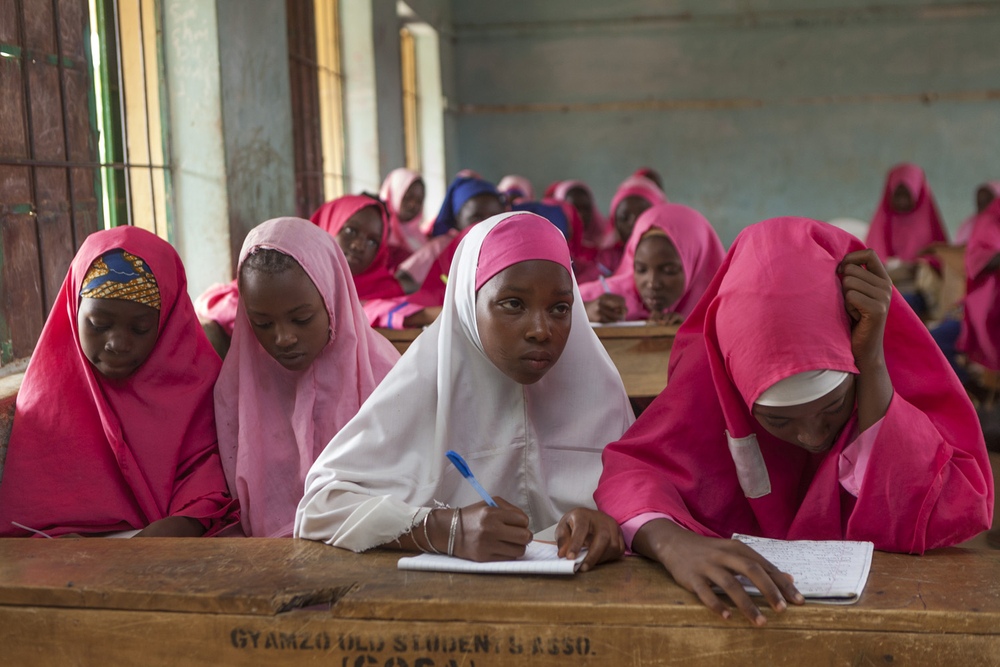
Breaking barriers: Why Arewa must invest in girls’ education

By Ibrahim Aisha 

Across much of Northern Nigeria, girls still face an invisible wall after secondary school. Parents’ fears, tight household budgets, and the pull of early marriage keep many daughters at home. Yet, data and role models reveal what is lost when the ambition of a female child is clipped.

For generations, education has been regarded as the key to progress and empowerment. Still, in conservative societies, the education of girls beyond the basics is often seen as unnecessary or even a threat to tradition despite government campaigns, NGO interventions, and success stories of women who have broken barriers.

The world has become a global village. Technology, digital communication, and international mobility have reshaped how we live and work. In this new reality, uneducated girls are left voiceless, powerless, and excluded from the spaces where contemporary women now thrive sitting in parliaments, leading global institutions, directing multinational companies, and innovating in science and technology.

Why, in 2025, do some communities still resist girls’ education?

The answer often lies in illiteracy. Parents who never had the privilege of education sometimes fail to see its value. Many fear what they do not understand. To them, sending a daughter to university feels like losing her to an unknown world.

Data from the National Bureau of Statistics as at 2017 defined literacy as the percentage of people aged 15 and above who can read, write, and understand simple expressions in any language. A Punch Editorial Board report from September 2023 highlighted Nigeria’s poor education outlook: although the government claimed a national literacy rate of 69%, this figure hides wide regional disparities. 

According to a UNICEF report on the state of Nigeria’s children, 10.2 million primary school-aged children and 8.1 million secondary school-aged children are out of school in the country.Reports indicate that between 2020 and 2025, Northern Nigeria consistently recorded between five and seven million out-of-school girls, with only minor fluctuations despite ongoing efforts.

Socio-Cultural Impediments 

Household-level constraints on access to education are not entirely economic. Studies and surveys identify several socio-cultural factors: erosion of extended family solidarity, weakening societal values, and gender-related issues such as teenage pregnancy, early marriage, and perceptions about the “proper role” of women.

Northern Nigeria is still shaped by cultural practices harmful to women’s emancipation, including early and forced marriage, wife-inheritance, widowhood practices, lack of access to education, low enrollment rates, poor funding, inadequate facilities for persons with disabilities, and frequent disruptions caused by conflict and seasonal migration.

Stories from the Ground

The experiences of girls and women across the North reveal both the struggles and the possibilities of education.

Rahama Dajuma, a graduate, said that education had done everything for her. She now works with an NGO and is about to get married. She relieved her father from the stress of buying furniture for her wedding, and her fiancé is allowing her to keep her job.

Zainab Abubakar, a student, mother and a resident of Sabuwar Gwammaja, argued that girls should be asked their opinions because “you can force a horse to the riverbank but you cannot force it to drink.” She added that many parents above 60 in her community do not want their sons to marry women educated beyond secondary school, fearing such women will not be submissive.

Zakiyyah Al-Hassan, a resident of Chiranchi, shared that she is not educated but wants her child to go beyond secondary school. According to her, the world is changing and women should not be stuck in the kitchen, as educated women contribute to the home even before bringing in their salaries.

Fatima Abubakar, a student of the School of Hygiene, explained that she is the only one schooling out of nine children. Her father could not afford fees for all, so her siblings sacrificed for her.

Iya Aminatu, a resident of Kurna Kwachiri, revealed that none of her seven daughters went beyond junior secondary school because her husband is completely against it, and she could not object to his decision.

Malam Rafa’i, a local Islamic teacher and resident of Tsakuwa, said during a telephone interview that it is a waste of time and resources to send a girl to school when she should stay home and learn how to cook so as to be a perfect wife to her husband.

Fatima Haruna, a secondary school graduate, recalled that her elder sister Khadijah finished with flying colours and was promised that she could continue schooling. After marriage, her husband refused, saying he had no intention of letting her further her education. He had only used that promise to lure her into marriage. Since then, their father insists that no daughter can further her education unless her husband agrees.

The Road Ahead

These stories show that the real question has shifted from “Should girls be educated?” to “How fast can Northern Nigeria catch up?” Education experts and stakeholders warn that if the situation does not improve, Northern Nigeria risks falling further behind, with dire consequences for national development. The region needs more investment in infrastructure, security, and teacher training. Cultural reorientation campaigns must also be intensified to promote the value of education, especially for girls.

The answer lies in stronger government commitment, sustained community awareness, and the courage to challenge harmful traditions. Education is no longer a privilege. It is a necessity for survival in the global age. 

Terrorists reportedly ambush Nigerian troops, abduct army general

By Abdullahi Mukhtar Algasgaini

Fighters from the Islamic State West Africa Province (ISWAP) ambushed a Nigerian Army convoy in Borno State on Friday night, reportedly kidnapping a serving brigadier general and killing several soldiers.

According to a report from HumAngle, a publication focused on conflict zones, the senior officer is a brigade commander who was leading the troops at the time of the attack.

Members of the Civilian Joint Task Force (CJTF) were also among the casualties.If verified, this incident would mark the first known instance of an extremist group in Nigeria capturing a serving general directly from the front lines.

While insurgents have killed high-ranking officers in the past, the abduction of one is exceptionally rare.

Nigerian military authorities have not yet issued an official statement on the ambush.

The number of soldiers killed remains unclear, and the Army spokesperson did not immediately respond to requests for comment.

Nigerians react as Corps member threatens to sleep with female students

By Ishaka Mohammed

A man serving under the National Youth Service Corps (NYSC) has come under fire for publicly threatening to sleep with his female secondary school students, whom he considered voluptuous.

According to a Nigerian Army officer and Facebook user, Kolawole Oludare Stephen, the Corps member, Oyaje Daniel (KD/25A/0494), currently serves at Judeen International School, Mando, Igabi Local Government Area, Kaduna State. The officer tagged the NYSC in a Facebook post for urgent action.

Another Facebook user, Ọluchi Eze, who tagged the NYSC in a post, mentioned Oyaje Daniel as a Corps member in a secondary school in Kaduna State.

Reacting to Ọluchi Ezeʼs post, the Corps member, with the Facebook name Comr Oyaje Daniel, confirmed his local government of national service and tendered an apology, but expressed shock at people’s judgment of his character.  “I am shocked by the news surrounding my character, and I want to assure everyone that I am not a rapist or a perpetrator of any form of abuse,” part of the post reads.


While some Facebook users considered him remorseful and deserving of forgiveness, others called for penalties. 


The Daily Reality gathered that Comr Oyaje Daniel had earlier commented on a Facebook post in which he had threatened to sleep with any SSS 3 female students who failed to “coordinate” themselves, stressing how their bodies were more voluptuous than those of 400 level undergraduates.


At the time of filing this report, the National Youth Service Corps has yet to comment on the matter.