Month: October 2025

Despite widespread Muslim casualties, Trump designates Nigeria as ‘country of particular concern’ over alleged Christian killings

By Sabiu Abdullahi

The President of the United States, Donald Trump, has designated Nigeria as a “country of particular concern” following allegations of widespread killings of Christians across the nation.

Trump made the announcement in a post shared on his Truth Social platform on Friday, which was later reposted on the White House’s X account.

This is coming at a time when the larger percentage of the victims the killings in Nigeria are Muslims.

According to the Family Research Council, such a designation is usually made by the US government—particularly by the Secretary of State—under American laws that identify countries violating human rights or engaging in actions that contradict US interests.

In his post, Trump wrote, “Christianity is facing an existential threat in Nigeria. Thousands of Christians are being killed. Radical Islamists are responsible for this mass slaughter. I am hereby making Nigeria a ‘country of particular concern.’

”He added, “But that is the least of it. When Christians, or any such group, are slaughtered like is happening in Nigeria (3,100 versus 4,476 Worldwide), something must be done! “I am asking Congressman Riley Moore, together with Chairman Tom Cole and the House Appropriations Committee, to immediately look into this matter and report back to me.”

Trump further declared that the United States would not remain passive in the face of such violence, saying, “The United States cannot stand by while such atrocities are happening in Nigeria and numerous other countries. We stand ready, willing, and able to save our Great Christian population around the World!”

FG Reacts

Reacting to the allegations, the Minister of Information and National Orientation, Mohammed Idris, dismissed the claims as “misleading and unreflective” of Nigeria’s complex security situation.

Speaking on CNN, Idris said some US lawmakers were relying on inaccurate and misleading data to accuse Nigeria of Christian genocide.

His media aide, Rabiu Ibrahim, released a statement reaffirming that the Nigerian government remained committed to religious freedom, human rights, and the rule of law.

Idris said, “Some of the claims made by officials of the United States are based on faulty data and the assumption that victims of violence are largely Christians. Yes, there are Christians being attacked, but these criminals do not target one religion; they attack both Christians and Muslims, especially in the northern part of the country.”

The minister also cautioned that spreading such narratives could embolden criminal groups that seek to ignite religious tension and animosity among Nigerians.

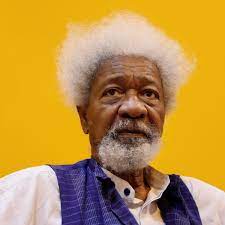
US Embassy clarifies Soyinka’s visa revocation, says visas are privileges, not rights

By Sabiu Abdullahi

The United States Embassy in Lagos has clarified that the issuance of visas to foreign nationals is a privilege granted by the country, not a right.

The statement came following reports that the US had revoked the B1/B2 visa of Nobel laureate, Prof. Wole Soyinka.

Responding to an inquiry from The PUNCH on Thursday, the US Consulate in Lagos explained that it could not provide details about Soyinka’s visa due to confidentiality laws.

“Under U.S. law, visa records are generally confidential. We will not discuss the details of this individual visa case,” the US Nigeria Mission spokesperson stated.

The Mission further noted that visas could be withdrawn at any time, depending on the circumstances.

“Visas are a privilege, not a right. Every country, including the United States, can determine who enters its borders. Visas may be revoked at any time, at the discretion of the U.S. government, whenever circumstances warrant,” it added.

Soyinka had revealed during a press briefing in Lagos on Tuesday that his visa had been cancelled by the US authorities.

Speaking at the event titled “Unending Saga: Idi Amin in Whiteface” at Kongi’s Harvest, Freedom Park, the 91-year-old writer announced that he currently had no valid visa to the United States.

“It is necessary for me to hold this press conference so that people in the United States who are expecting me for this event or that event do not waste their time. I have no visa; I am banned, obviously, from the United States. And if you want to see me, you know where to find me,” Soyinka told journalists.

The Nobel laureate said he received the revocation notice in a letter from the US Consulate General in Lagos, dated October 23, 2025. He expressed confusion about the reason behind the decision, noting that he had never committed any offence against the United States.

“I’ve started looking back—have I ever misbehaved towards the United States of America? Do I have a history? Have I been convicted? Have I gone against the law anywhere?” he wondered.

While reflecting, Soyinka recalled two incidents that occurred decades ago, though he doubted they were linked to the current situation.

“I remember pleading guilty at the airport one day. I was landing in Chicago. It was my first major production in the United States. … I had gone to an Indian restaurant in London … I forgot to declare those chilies. … I think I remember paying about $25 or so. So, that’s one possible crime that could have been dug up,” he explained.

He continued, “Two, the American Society of African Culture had an international conference some years ago … I had a confrontation with the police (over) some racist conduct by the receptionist, which led to the police being called. … So, I could be convicted, if you like, for, shall we say, disobeying orders from law officers of the US. This was at least 30 years ago.”

According to Soyinka, the revocation letter stated that his non-immigrant visa “has been revoked pursuant to the authority contained in the U.S. Department of State regulations 22 CFR 41.122 and is no longer valid for application for entry into the United States.”

It also mentioned that “additional information became available after the visa below was issued.”

The Consulate requested that Soyinka submit the document to the embassy for “physical cancellation,” a request he described humorously. “If you have plans to travel to the United States, you must apply again to re-establish your qualifications for a new non-immigrant visa,” the letter added.

Soyinka’s visa had been issued on April 2, 2024, in Lagos.

Renowned globally as a playwright and activist, Soyinka became Africa’s first Nobel Prize winner in Literature in 1986. He has taught at several American universities over the years.

The visa cancellation has stirred public debate about the tightening of US immigration policies, particularly regarding African visitors.

Trump admin cuts refugee admissions to 7,500, prioritises white South Africans

By Hassana Abdullahi

The Trump administration has announced a sharp reduction in the number of refugees allowed into the United States over the next year, slashing the annual cap to 7,500. Officials described the move as being “in the national interest,” marking a dramatic shift from the previous limit of 125,000 set under the Biden administration.

In a statement, government representatives said the new policy would prioritise white South Africans, commonly known as Afrikaners, citing what they described as “ongoing discrimination” against the group in their home country.

The decision has sparked criticism from human rights advocates, who argue that it politicises refugee admissions and undermines America’s long-standing commitment to offering protection based on humanitarian need rather than ethnicity or nationality.

Administration officials, however, defended the move, saying it reflects a “targeted and merit-based” approach to refugee resettlement aimed at protecting those “most aligned with American values.”

The new refugee ceiling marks one of the lowest in U.S. history and signals a broader reorientation of the country’s immigration and humanitarian policies.

PBT to new military chiefs: Deliver security, not excuses

By Abdullahi Mukhtar Algasgaini

President Bola Tinubu has issued a firm directive to Nigeria’s newly appointed service chiefs, demanding an end to terrorism and banditry and warning that “Nigerians expect results, not excuses.”

The President gave the charge on Thursday at the Presidential Villa in Abuja after decorating the top military brass with their new ranks.

He emphasized that the security crisis, which began in 2009, cannot be allowed to persist any longer.

“I charge you, as the heads of our nation’s armed forces, to carry out your duties with patriotic zeal,” Tinubu stated.

He urged the chiefs to be “innovative, pre-emptive, and courageous,” and to deploy technology to stay ahead of threats.

A key concern highlighted by the President is the emergence of new armed groups in the North-Central, North-West, and some parts of the South.

“We must not allow these new threats to fester. We must be decisive and proactive. Let us smash the new snakes right at the head,” he declared.

While commending the military’s past sacrifices and successes, Tinubu tasked the service chiefs with ensuring synergy and providing exemplary leadership.

“Work with other security agencies and defeat this enemy once and for all. We need to clean them up, clear them out,” he said, promising full government support.

In his response, the Chief of Defence Staff, General Olufemi Oluyede, thanked the President for the appointment and assured him of their determination to keep the country safe.

He also called on all Nigerians to support the military’s efforts.The event was attended by the Vice President, Senate President, Speaker of the House, several state governors, and other top government officials.

The service chiefs were accompanied by their spouses, whom they saluted in a gesture that drew applause from the audience.

Kano marks 100 years of Nigeria’s first aircraft landing

By Uzair Adam

Malam Aminu Kano International Airport (MAKIA) on Thursday marked a century since the first aircraft landed in Nigeria, highlighting Kano’s pivotal role in the country’s aviation history.

The three-day celebration, organised by the Caliphate Aviation Training Centre, kicked off with exhibitions, panel discussions, and an airshow designed to inspire the next generation of aviators.Okikiri Musa, Regional and Airport Manager of MAKIA, described the centenary as a proud moment for both Kano and the nation.

“This milestone is significant for all of us, especially Kano,” Musa said. “Being the site of Nigeria’s first aircraft landing is something to celebrate. “Aviation has grown immensely, and Kano continues to be a key hub in air transport. We pray that Allah continues to bless Kano and strengthen Nigeria’s aviation sector.”

Hassan Abdulhamid, Director of Administration at Caliphate Air Services, noted that the event not only commemorates history but also encourages young Nigerians to explore careers in aviation.

“Celebrating 100 years since the first aircraft landed in Nigeria, here in Kano, gives students a hands-on experience in aviation — from ticketing and boarding to meeting pilots and engineers. We hope this inspires a lifelong passion and guides them toward aviation careers,” Abdulhamid said.

He explained that the first two days of the event are focused on secondary school students, while university students and lecturers will later present research to address data gaps in the aviation sector.

“There is limited data on aviation in this region. By involving universities in research, we aim to generate insights that will benefit the industry,” he added.

Transport historian Dr. Yusuf Madugu of Bayero University, Kano (BUK), recalled that the first aircraft to land in Nigeria touched down in Kano on November 1, 1925.

“The flight, led by Lieutenant Arthur Cunningham, came from Egypt via Khartoum and N’Djamena. It landed at the Kano Racecourse, now the Polo Club, as there was no airport at the time. Smoke from a fire was used to guide the pilot,” Dr. Madugu explained.

He emphasized that Kano’s status as a commercial and religious hub made it the ideal destination for the historic flight.

“Kano was the commercial nerve centre of Northern Nigeria and Sub-Saharan Africa, which is why the colonial authorities chose it as the first point of air entry into the country,” he said.

The centenary celebration included a historical exhibition on aviation in Nigeria, discussions on the sector’s economic impact, and tributes to pioneers of the industry.

Other highlights featured a static airshow, kiting competitions for children, and live aerial demonstrations.

Organisers said the event aims to renew public interest in aviation and reaffirm Kano’s role as the cradle of Nigeria’s air transport history.

Kano marks 100 years of Nigeria’s first aircraft landing

By Uzair Adam

Malam Aminu Kano International Airport (MAKIA) on Thursday marked a century since the first aircraft landed in Nigeria, highlighting Kano’s pivotal role in the country’s aviation history.

The three-day celebration, organised by the Caliphate Aviation Training Centre, kicked off with exhibitions, panel discussions, and an airshow designed to inspire the next generation of aviators.

Okikiri Musa, Regional and Airport Manager of MAKIA, described the centenary as a proud moment for both Kano and the nation.

“This milestone is significant for all of us, especially Kano,” Musa said. “Being the site of Nigeria’s first aircraft landing is something to celebrate. 

“Aviation has grown immensely, and Kano continues to be a key hub in air transport. We pray that Allah continues to bless Kano and strengthen Nigeria’s aviation sector.”

Hassan Abdulhamid, Director of Administration at Caliphate Air Services, noted that the event not only commemorates history but also encourages young Nigerians to explore careers in the aviation industry.

Celebrating 100 years since the first aircraft landed in Nigeria, here in Kano, gives students hands-on experience in aviation — from ticketing and boarding to meeting pilots and engineers. We hope this inspires a lifelong passion and guides them toward aviation careers,” Abdulhamid said.

He explained that the first two days of the event are focused on secondary school students, while university students and lecturers will later present research to address data gaps in the aviation sector.

“There is limited data on aviation in this region. By involving universities in research, we aim to generate insights that will benefit the industry,” he added.

Transport historian Dr Yusuf Madugu of Bayero University, Kano (BUK), recalled that the first aircraft to land in Nigeria touched down in Kano on November 1, 1925.

“The flight, led by Lieutenant Arthur Cunningham, came from Egypt via Khartoum and N’Djamena. It landed at the Kano Racecourse, now the Polo Club, as there was no airport at the time. Smoke from a fire was used to guide the pilot,” Dr Madugu explained.

He emphasised that Kano’s status as a commercial and religious hub made it the ideal destination for the historic flight.

“Kano was the commercial nerve centre of Northern Nigeria and Sub-Saharan Africa, which is why the colonial authorities chose it as the first point of air entry into the country,” he said.

The centenary celebration included a historical exhibition on aviation in Nigeria, discussions on the sector’s economic impact, and tributes to pioneers of the industry. 

Other highlights featured a static airshow, kiting competitions for children, and live aerial demonstrations.

Organisers said the event aims to renew public interest in aviation and reaffirm Kano’s role as the cradle of Nigeria’s air transport history.

All Babies deepens collaboration to strengthen vaccine delivery across northern Nigeria

By Muhammad Abubakar

Efforts to strengthen vaccine delivery systems across northern Nigeria received a major boost as the All Babies program, implemented by New Incentives – All Babies Are Equal (NI-ABAE), convened a two-day Roundtable Meeting of Cold Chain Stakeholders in Kano.

Held at Tahir Guest Palace from October 24 to 25, the meeting brought together 35 participants from state and zonal cold chain offices, development partners, and the Kano State Primary Health Care Board. The focus was on improving coordination, data management, and logistics in vaccine distribution across 14 northern states.

During the technical session, program officials presented encouraging results from the third quarter of 2025. Katsina and Zamfara states recorded the sharpest declines in zero-dose infants, each achieving a 40-percentage-point reduction, while Kaduna saw a 15-point drop. So far, All Babies has enrolled over 5.6 million infants, supported 7,128 clinics, and facilitated more than 85 million vaccinations through conditional cash transfers to caregivers.

Stakeholders at the meeting resolved to improve real-time vaccine data reporting through Nigeria’s OpenLMIS platform, enhance coordination between state and local levels, and push for increased transportation funding via the Association of Local Governments of Nigeria (ALGON) to ease vaccine movement to remote areas.

Niger State’s Cold Chain Officer, Abubakar Hussaini, praised the program’s impact, saying, “All Babies has done a great job increasing vaccination awareness and turnout. We hope the program expands nationwide so every child benefits from these life-saving vaccines.

The roundtable ended with a joint communiqué reaffirming partners’ commitment to ensure that every child, regardless of location, receives timely and essential vaccines.

Halal economy in Nigeria: Today’s opportunity, tomorrow’s prosperity 

By Abdullahi Abubakar Lamido 

When Nigeria first introduced Islamic banking more than a decade ago, a section of the public, especially some Christian leaders, cried foul. They labelled it an attempt to Islamise the nation. The word Islamic became synonymous with suspicion. Yet, history has since given its verdict. The same Islamic banking and finance that was once denounced as a tool for religious expansion has now become one of the most credible components of Nigeria’s financial system. Today, the government of Nigeria, regardless of faith or political party, routinely issues Sukuk (Islamic bonds) to finance national infrastructure, build roads, and other developmental projects. 

If Islamic banking did not Islamise Nigeria, how on earth will the halal economy, a trade-based development initiative, suddenly do so?

Unfortunately, some commentators continue to see through the fog of prejudice rather than the lens of global economics. The recently developed Nigerian National Halal Economy Strategy is not a religious project. It is an economic vision. It seeks to position Nigeria within a rapidly expanding global market that respects ethics, transparency, environmental responsibility, and product integrity; values shared by all civilisations, not by Muslims alone.

Globally, the halal economy is estimated at USD 2.3 trillion, excluding Islamic finance. It is growing at an annual rate of around 20 per cent, making it one of the fastest-expanding consumer markets in the world, valued at about USD 560 billion each year. The halal industry, initially rooted in food and beverages, has long transcended its traditional boundaries. It now spans pharmaceuticals, cosmetics, health products, toiletries, medical devices, and even service sectors such as logistics, marketing, media, packaging, branding, and finance. With rising affluence and awareness among global consumers, it has further extended to halal tourism, hospitality, fashion, and lifestyle services.

This development is not driven by Muslims alone. Indeed, the modern halal market is non-exclusive. Increasingly, non-Muslim consumers associate halal with ethical consumerism, animal welfare, environmental stewardship, and quality assurance. The label “halal” has evolved into a global mark of trust, symbolising cleanliness, safety, and ethical production.

Countries far removed from Islam, such as the United States, the Netherlands, Russia, China, and South Africa, are already major players in the halal economy. In the United States, the halal market is worth USD 12 billion annually, with halal food sales growing by more than 70 per cent since 1995. Over 90 per cent of U.S. dry dairy ingredient manufacturers now produce halal products, primarily for export.

In the Netherlands, where Muslims are barely a tenth of the population, non-Muslim Dutch consumers spend approximately USD 3 billion annually on halal food. In the United Kingdom, six million people consume halal meat, three times the Muslim population. These figures prove one thing: halal has gone mainstream. Even Russia is experiencing explosive growth in its halal sector, with domestic demand rising by 30-40 per cent annually. The country now produces around 65,000 tonnes of halal meat each year and hosts major expos such as the Moscow Halal Expo and KazanHalal.

China, with its 23 million Muslims, records 10 per cent annual growth in its halal industry, with trade worth USD 2.1 billion and export products valued at USD 10 million annually from the Ningxia region alone.

Africa, too, is awakening to this opportunity. South Africa—with only two per cent of its population being Muslim—is now one of the five largest producers of halal products globally, thanks to a robust certification infrastructure. Kenya, with a fast-growing halal certification regime, already has more than 150 certified companies serving local and regional markets.

Nigeria, with its vast agricultural resources, strategic location, and large Muslim population, stands at the crossroads of opportunity. The halal economy offers three immediate advantages:

1. Export Expansion: By developing credible halal certification and production infrastructure, Nigeria can unlock access to markets worth over USD 2 trillion, exporting beef, poultry, processed foods, cosmetics, pharmaceuticals, and other halal-compliant goods. Nigerian products can enter Middle Eastern and Asian markets that strictly demand halal certification.

2. Job Creation and SME Growth: The halal economy stimulates employment across value chains—from farm to factory, logistics, certification, branding, and export marketing. It empowers micro and small enterprises while ensuring compliance with ethical standards that appeal to both local and international consumers.

3. National Image and Ethical Standards: Halal certification ensures higher hygiene, traceability, and environmental protection. It is compatible with international standards like ISO and HACCP, thereby enhancing Nigeria’s global competitiveness. In essence, promoting halal is promoting quality, sustainability, and integrity—values that no religion should reject.

The critics who fear the halal roadmap as a step toward Islamisation fail to recognise that halal is an economic term before it is a theological one in this context. It stands for what is wholesome, safe, clean, traceable, and socially responsible. These values are not confined to Islam. They are embedded in Christianity, Judaism, and secular ethics alike.

The halal economy represents a fusion of faith and fairness, ethics and enterprise. It provides a model for a more responsible economic system—precisely the kind of moral economy the world craves in the aftermath of global financial and environmental crises.

When the debate over Islamic banking first arose, the same fear-mongering dominated the headlines. Yet, today, Islamic finance has built roads, schools, and hospitals across Nigeria through Sukuk and other Shari’ah-compliant financing. Christian engineers, contractors, and civil servants have benefitted immensely. The country’s Christian-majority states have received as much as the Muslim ones. No mosque was built, no church destroyed, and no constitution rewritten.

If Islamic banking did not Islamise Nigeria, how will halal exports do so? On the contrary, the halal economy promises to diversify Nigeria’s trade, create jobs, enhance foreign exchange earnings, and promote industrial standards that protect all consumers, Muslims and non-Muslims alike.

Nigeria cannot afford to watch from the sidelines while other nations—Christian, secular, and atheist alike—harvest the fruits of the halal economy. The world is shifting toward ethical consumption, sustainability, and traceable production. The halal brand, far from being divisive, is a passport to global markets.

The Nigeria National Halal Economy Strategy is not about religion; it is about relevance. It is about integrating Nigeria into the trillion-dollar value chain that prizes quality, fairness, and responsibility. Those who see crisis where there is opportunity risk being on the wrong side of history, just as those who once opposed Islamic banking and finance, now benefit from Sukuk-financed roads.

The celebration of the halal economy is not the planting of tomorrow’s crisis; it is the harvest of tomorrow’s prosperity for every Nigerian, regardless of faith. It is time we remove the caps of emotion and prejudice and wear the lenses of reason, tolerance, and progress. Nigeria must embrace every opportunity that promises shared prosperity, job creation, and national development. The halal economy is not about division—it is about direction. It is about placing our nation on the map of global relevance, productivity, and ethical growth. So help us God. 

Amir Lamido wrote from Abuja via lamidomabudi@gmail.com.

New army chief takes command, vows to build on predecessor’s legacy

By Abdullahi Mukhtar Algasgaini

Major General Waidi Shaibu has formally taken over as Nigeria’s 25th Chief of Army Staff (COAS) in a ceremony at the Army Headquarters in Abuja.

The event on Thursday marked a transition of leadership from the former COAS, Lieutenant General Olufemi Oluyede, who is now the incoming Chief of Defence Staff (CDS).

In his inaugural address, Major General Shaibu commended his predecessor for his “outstanding leadership,” highlighting achievements in equipment procurement, infrastructure, and the “Soldier First” welfare initiative.

He pledged to sustain this legacy and enhance cooperation among security agencies to tackle national security challenges.

“I salute the courage, passion, resilience and discipline of our troops in the field. Their sacrifices remain the cornerstone of our collective success,” the new Army Chief stated.

Shaibu also thanked President Bola Ahmed Tinubu for the appointment and promised to carefully review the security situation to respond swiftly to emerging threats.

In his valedictory speech, Lieutenant General Oluyede thanked the President for the opportunity to serve and urged army personnel to extend the same loyalty and commitment to the new COAS.

“The mission remains the same — to ensure the security of lives and defend the territorial integrity of our nation,” he affirmed.

The ceremony featured the signing of handover notes, the decoration of the new Chief with the Army Headquarters insignia, and an inspection of the quarter guard.

Troops kill two BH members in Gwoza ambush, recover logistics supplies

By Sabiu Abdullahi

Troops of the Joint Task Force (North East), Operation Hadin Kai, have eliminated two Boko Haram/ISWAP fighters during an ambush around Hudugum village in the Hambagda area along the Gwoza–Limankara road in Borno State.

The operation, which occurred on Wednesday evening, was conducted under Operation Desert Sanity IV/Diligent Search by soldiers of the 192 Battalion (Main) in collaboration with the Civilian Joint Task Force (CJTF).

Security analyst Zagazola Makama disclosed the development in a post shared on X (formerly Twitter) on Thursday. He explained that the troops encountered the terrorists’ logistics team at about 6:30 p.m. and engaged them with superior firepower.

According to Makama, “two insurgents were neutralised while several others escaped with gunshot wounds towards the foothills of the Mandara Mountains.”

He quoted sources as saying, “There was no casualty on the side of the troops, and no equipment was lost during the encounter.”

After the gun battle, the soldiers recovered several items believed to belong to the fleeing terrorists.

These included three bicycles, clothing materials, mats, food seasoning, salt, and other personal belongings.

The troops reportedly returned to base safely around 7:50 p.m. after what was described as a “hitch-free” mission.

The report added that the army plans to conduct further search operations along the escape routes of the terrorists.

It also noted that while the general security situation in the area remains calm, it is still considered unpredictable.