Month: September 2025

The political identity crisis in a “horse” race for power

By Abdulrahman M. Abu-Yaman 

The title race is between two horses and a little horse that needs milk and needs to learn how to jump. –  Jose Mourinho

When the controversial Jose Mourinho made this statement above, it was about football and the race to the Premier League title in 2014, but we never knew a time would come when it would be more suitable to fit into the Nigerian political context as it relates to the switch and frequent change of allegiance from one political party to another.

THE FIRST HORSE

The first horse, being the All Progressives Congress (APC), is the current defending champion in political power and the acclaimed favourite to retain the presidential title going into 2027, based on the power and influence that come with being an incumbent leader in Nigeria. Only once has it occurred since the fourth republic that an incumbent was defeated, and even that took what some have tagged as a miracle when President Jonathan made the famous call to the late former President Muhammadu Buhari (of blessed memory) and conceded. 

This horse has taken on different forms over the years and has been given various names by the political power brokers who have bet on it to win. Part of its defunct origin was the All Nigeria Peoples Party (ANPP), formed in 1998, a year before the fourth republic general elections. However, its popularity was quite limited to the northern part of Nigeria, not as pronounced in other regions of the country. Former President Muhammadu Buhari had contested twice and lost under the ANPP in 2003 and 2007, respectively.

Another major segment of its primordial origins emerged from the Action Congress of Nigeria (ACN), which was formed in 2006. It was formerly known as the Action Congress, which in turn was formed from the merger of its factions with minor political parties, including the Alliance for Democracy (AD), the Justice Party (JP), and the Advanced Congress of Democrats (ACD), among others.

Then came the Congress for Progressive Change (CPC), founded in 2009. It gained significant influence due to the impact of late Muhammadu Buhari and his millions of supporters in the northern part of Nigeria, who contested under the party’s platform in the 2011 elections. 

In 2013, the progressives and congresses in some major political parties with these words present in their acronym merged into one; the Action Congress of Nigeria, Congress for Progressive Change (CPC), a faction of the All Progressive Grand Alliance and finally, the All Nigeria Peoples Party (ANPP) to form the All Progressives Congress (APC) – the most formidable opposition group as a party in Nigeria since the return to democracy in 1999 to unseat any incumbent President in power.

THE SECOND HORSE(S)

The second horse(s) in the race are obviously divided and sharing that position based on recent trajectories and events that had left one of the horses deemed as second favourite to crumble and hanging on a thin thread; speaking of the Peoples’ Democratic Party (PDP), as long as it still has time to regroup and put its house in order, it cannot be ruled out of the race based on its political structure long established that cuts across all states in Nigeria.

The PDP was formed in 1998, in the twilight leading up to the 1999 general elections, by a group of political bigwigs who adopted Chief Olusegun Obasanjo, a former military head of state and a prisoner released from the dungeon after the end of the Abacha era. Obasanjo, coming from the south-west region of the country, was seen by many as the best candidate to step into what would have been Chief MKO Abiola’s rightful position as winner of the annulled June 12 elections if he had lived up to 1999 but for his sad and shocking demise in 1998.

The PDP won the 1999 election by a majority of votes and held a majority of seats in the National Assembly. In 2003, the party continued to dominate the political space in Nigeria, growing in influence and power, albeit under some questionable electioneering processes in 2003, 2007 and 2011, respectively, having spent sixteen years in power as the ruling party. During that period, it became the largest party not only in Nigeria but also on the African continent.

However, unfortunately for the PDP, their dream of achieving the milestone of twenty years in power was cut short in 2015 when the APC, a new, formidable force energised and regrouped, ran them out of control. 

Since then, the PDP has contested twice as an opposition party and lost to the APC in 2019 and 2023, but edged them out in 2015. The PDP has also had to lose some of its members who have decamped to the APC and has since struggled to remain as firm and relevant as it once was. The only reason it occupies the second spot as a favourite is its longevity, structural base, and the influence of some stakeholders behind the corridors of power, who are still salvaging what is left to stand firm.

Moving away from the PDP, the other second favourite only came to fruition and gained traction a few months ago, orchestrated by one man, Mal. Nasir El-Rufai, who initiated the movement that led to the formation of a coalition that later evolved into the political party rebranded as the African Democratic Congress (ADC). The party had been in existence before its formation in 2005 as the Alliance for Democratic Change. 

The formation of the ADC elicited mixed reactions in the Nigerian political space. While some saw it as the long-awaited vibrant opposition to challenge the incumbent party in power, others viewed it as a selfish endeavour created by those who had been bruised and pushed out of the epicentre of power, seeking to make a comeback by any means necessary. This notion was proven to be more relevant when the ADC reached out to past or aggrieved members of the APC and PDP to form part of its board and core membership from the official flag-off. 

Nevertheless, it is still considered the second favourite in the race because if history is anything to go by, just as in the words of Jesse Jackson: 

“In politics, an organised minority is a political majority”

Just as in the case of the APC, which was formed two years short of the 2015 elections and later emerged as the winner, the regrouped ADC party and its influx of new members can’t be underestimated.  

Another reason the ADC could be frontrunners could be their ability to capitalise on the harsh economic realities in the country that have affected the masses and present the party as an alternative to better their welfare, just as the same members of the ADC did way back in 2015 when they were members of the APC, which they now want to substitute out of power. 

THE LITTLE HORSE IN THE RACE

The little horse that needs milk to learn how to jump is the Labour Party (LP). It was also driven and triggered to relevance in the 2023 general elections due to the influence of one man, specifically Peter Obi, who was spoken of as the party’s flag bearer. The LP not only defeated the APC in their own stronghold in Lagos but also defeated the ruling party in the Federal Capital Territory, Nigeria’s capital and centre of governance. It was unprecedented and sent a clear message that the LP did not just come to make up the numbers like some minority parties. 

But be that as it may, their numbers in Lagos and Abuja, coupled with the ones from the east and the Niger Delta region, were not enough to put them in second position in the race. This is why it needs to spread its wings to cover all political nooks and crannies in other regions, especially northern Nigeria, where it is yet to get a solid grip.

The recent involvement of Peter Obi with the ADC could lead to a compromise and weaken the party’s strength, as it revolves around him. One of the LP’s former spokesmen also lamented him for not doing enough as a leader and his inability to resolve the party’s internal crisis. He also raised concerns about his failure to build a strong party base to secure the mandate. 

Still, the only reason the LP is coming in third in the horse race is because of the unexpected stunt it pulled and its potential to do more if, and only if, it can capitalise on its momentum to leap ahead like other horses in the race.

THE EXODUS AND CONVENIENT SWITCH BETWEEN PARTIES 

Nigerian politics and politicians tend to switch sides to any political party that offers them a higher chance of winning. It occurred in 1999, when the PDP was formed and founded by members of various political parties. 

In 2003, as the PDP grew in strength and power, it received more members, and others had to decamp from their prior political platforms to join it. It was beginning to look like the only way to win an election was to join the party that was already winning. 

2007 and 2011 were no different as the PDP retained power in government. However, the only parties that managed to maintain some of their strongest and most popular members were the ANPP in 2003/2007, and the CPC in the 2011 general elections, when they fielded Muhammadu Buhari as their presidential candidate in the respective years.

In the buildup to the 2015 election, a massive exodus of politicians decamped from the ‘umbrella’ that had sheltered them in political office to the newly formed APC, which was gaining immense popularity, especially in the northern and western parts of Nigeria. The presidential flag bearer was a familiar figure who was contesting for the fourth and possibly his last attempt, having been persuaded to do so. The APC, like the PDP in the past, also welcomed all members from other parties, irrespective of their past reputation or allegations while in office. In the end, the party grew from being the strongest opposition to becoming the favourite to win the election, which they eventually did.

LOST OF POLITICAL IDEOLOGIES/IDENTITIES

When we start seeing political players decamping at will, it is time to question whether any of the political parties place a high premium on their criteria for membership in relation to their ideologies before accepting any candidate into their fold. Do politicians care any less if the party they join aligns with their manifestos and visionary blueprint for good governance and leadership?

It is beginning to look like a game of chess, with calculated moves aimed at checkmating the ultimate power in the political positions they crave. The only pawns in this game are the masses who have yet to figure out that changing their clothes to another has nothing to do with the real person behind those clothes. A stained reputation, especially in previous leadership positions, coupled with a proven track record of underperformance and incompetence, cannot be covered by new political platforms.

However, the interesting aspect of all this is the emergence of a solid opposition to keep the ruling parties on their toes. Previously, with the decline and crisis in the PDP, Nigeria was moving towards a single-party state due to the frequent switch of its members to joining the APC. It is well timed that the LED coalition, which has resolved to adopt the ADC as its political platform, includes big names like former Vice President Atiku Abubakar, who is also a former PDP presidential aspirant. Peter Obi, the Labour Party’s presidential candidate, has also been seen and involved in some of their meetings. And for the first time since the APC’s ascension to power, they seem concerned about the growing popularity of the ADC and the threat it may pose to their hold on power. Deja vu?

Conclusively, all the parties involved in the horse race have exhibited similar symptoms of identity and ideological crisis in their consistent switch of allegiance to suit their needs. The thin line between them is getting blurrier in their actions and adoptions. Everyone is welcome to any party at any time. No litmus test, exceptional integrity, or individual evaluation criteria needed. Once you are in, all sins are forgiven, and then you are baptised as a new member. 

The ADC is not only like the APC alphabetically, but also in the content of its members and its contextual existence. The primary concern here is whether some members of the ADC could potentially break away from the party in the future, particularly in the event of any unresolved disagreement or fallout within the party. Are we to brace ourselves for another hypothetical ‘ABC’ party if it comes to that? Time is the ultimate revealer. 

Kano police seize hard drugs worth N82.7m, arrest 19-year-old suspect

By Uzair Adam

The Kano State Police Command has seized illicit drugs valued at more than N82 million and arrested a teenage suspect during an operation in the state capital.

Police spokesperson, SP Abdullahi Haruna Kiyawa, confirmed the development in a statement issued on Saturday.

He said the operation was carried out on September 20, 2025, after intelligence reports indicated that a suspicious vehicle was conveying cartons of intoxicants to Rimin Auzinawa Quarters in Kano.

“Acting on the directive of the Commissioner of Police, our operatives cordoned off the premises where the vehicle was parked and arrested a 19-year-old suspect, Usman Umar,” Kiyawa explained.

He said a search of the house led to the recovery of 603 packets of suspected Tramadol tablets containing 60,300 pieces, estimated at N60.3 million, and 299 packets of suspected Pregabalin capsules with 44,850 pieces, valued at N22.4 million.

The total worth of the seized drugs, he noted, stood at N82.7 million.

Kiyawa added that the suspect is in custody and is assisting detectives with information to track down other members of the drug trafficking network.

The Commissioner of Police in Kano, CP Ibrahim Adamu Bakori, while reacting to the breakthrough, commended residents for their cooperation.

“This success would not have been possible without the vigilance and timely information from the good people of Kano,” he said.

Bakori assured that the Command will sustain the fight against drug abuse and trafficking, urging the public to continue sharing credible information.

He stressed that such intelligence would always be treated with confidentiality and prompt action.

BUK expels 57 students, rusticates 8, clears 2 over exam misconduct

By Anas Abbas

Bayero University, Kano (BUK), has expelled 57 students for their involvement in various forms of examination misconduct.

The decision was taken at the 427th meeting of the University Senate held on Wednesday, September 10, 2025.

In a statement signed by the Director of Examination, Admission and Records (DEAR), Aminu Wada Kurawa, the Senate also approved the rustication of eight students and the exoneration of two others after investigations.

Those expelled include Isaya Joseph Kazachan (AGR/23/AGR/02240), Adejoh Musa (AHS/19/MDL/00363), Amusan Tawakalit Omo Wunmi (AHS/23/PHY/00712), Rabi’u Muhammadu Shuaibu (BMS/19/PYS/00468), Agnes Onyebuchi (DBS/23/MBA/00045), Hadiza Wuye (DBS/23/MBA/00575), Musa Maniru (EDU/20/BSC/01579), Safiya Labaran (SCE/17/ADE/00011), Sunday Alhassan (FSS/19/MCR/00924), and Bello Adam Dajuma (FSS/22/POL/00961), among others, bringing 57.

The Senate also rusticated eight students: Zulaihat Ibrahim Oyiza (SPS/23/GPA/00002), Hamisu Abdullahi Jamilu (EDU/22/BSC/00138), Animu Umar Yakubu (ENG/22/CHE/00529), Aleam Barakat M. (ENG/20/COM/00356), Auwal Umar Ilyasu (ENG/19/ELE/00334), Asiya Ridwan Yusuf (ENG/22/TEL/00476), Etim Ebi Stanley (SPS/23/MAB/00014) and Auwal Abdullahi (SCE/21/PAD/00246).

Two students were cleared and exonerated: Sani Sani Aliyu (LSC/19/MCB/00622) and Saratu Bala Hussain (LSC/19/MCB/00564).

Meanwhile, the case of Yusuf Muhammad Sani (ENG/18/CIV/00065) was deferred pending further investigation by a committee set up by the School Board of Studies.

The university stressed that the disciplinary actions were taken in line with the General Examination and Academic Regulations (GEAR) to protect the integrity of its academic processes.

Nigeria to commence construction of Africa’s first underground tunnel in Lagos

By Abdullahi Mukhtar Algasgaini

The Federal Government has announced that work will soon begin on an ambitious project to construct what it describes as Africa’s first underground tunnel, connecting Victoria Island to Badagry in Lagos State.

The announcement was made by the Surveyor General of the Federation (SGOF), Surv. Abuduganiyu Adebomehin, during a visit from the Federal Capital Territory (FCT) chapter of the Nigerian Institution of Surveyors (NIS) in Abuja.

Adebomehin revealed that the project was discussed during a recent coastal tour with the Minister of Works, Engr. David Umahi.

He stated that the tunnel would represent a major milestone for infrastructure development in Nigeria and across the continent.

In a related development, the Surveyor General defended the recent move to place the Office of the Surveyor General of the Federation (OSGOF) under the direct supervision of the Presidency.

He advised those considering legal action against the decision to “perish the thought,” stating that challenging the move equates to “fighting presidential orders.”

He explained that President Bola Tinubu had shown keen interest in a national mapping project, noting that the last comprehensive survey of Nigeria was done in the 1970s.

Adebomehin believes the new administrative structure will improve funding and efficiency for the office.

The visiting surveyors from the NIS expressed support for the move, stating it would bring positive development to the surveying profession in Nigeria.

Netanyahu vows to block Palestinian state project, describes it as ‘national suicide’

By Abdullahi Mukhtar Algasgaini

In a fiery speech at the United Nations General Assembly, Israeli Prime Minister Benjamin Netanyahu pledged to prevent the establishment of a Palestinian state, accusing Western nations of rewarding terrorism and pushing Israel toward “national suicide.”

Addressing the assembly on Friday, Netanyahu sharply criticized recent decisions by Britain, France, and other powers to recognize a state of Palestine.

“Israel will not allow you to shove a terrorist state down our throats,” he declared, arguing that such moves send a message that “murdering Jews pays off.”

The speech came amid ongoing efforts by US President Donald Trump to secure a ceasefire in Gaza.

Trump, following Netanyahu’s address, stated, “I think we have a deal.” However, Netanyahu vowed to continue Israel’s military campaign against Hamas, promising to “finish the job.”

Netanyahu’s appearance at the UN was marked by controversy. Facing an International Criminal Court arrest warrant for alleged war crimes, he took an unusual route to New York.

As he spoke, several delegations walked out, and protesters gathered nearby calling for his arrest.

The Israeli leader aggressively defended his country’s actions in Gaza, challenging genocide allegations and stating that civilians were urged to flee.

The conflict, triggered by Hamas’s October 7, 2023, attack that killed 1,219 people in Israel, has resulted in over 65,549 Palestinian deaths, according to the Hamas-run health ministry.

Netanyahu also claimed parts of his speech were broadcast via loudspeakers in Gaza, aimed at both Hamas leaders and the remaining Israeli hostages, assuring them, “We have not forgotten you.”

Dr Bala Muhammad and the A Daidaita Sahu phenomenon

By Alhassan Hassan Salihu

Few men leave a mark on society without holding office, wearing a uniform, or carrying authority. Bala Muhammad is not just a media scholar; he is a guardian of culture, discipline, and an architect of greatness.

In the early 2000s, Kano’s streets were alive with sound and colour. Markets bustled, commercial tricycles darted through traffic, and the rhythm of daily life carried on as it had for generations. But beneath the energy, a different reality was taking shape, one of disorder.

Road signs were ignored. Tricycle drivers cut across lanes at will. Pedestrians crossed wherever they pleased. Public order, once a matter of pride, seemed to be slipping away.

A renowned but marked by growing disorder, congestion, and a fragile sense of control that hinted at deeper challenges ahead.

It was in this climate that a quiet movement began, not through the force of law or the threat of arrest, but through the power of a voice. That voice belonged to Bala Muhammad.

A respected media scholar, newspaper columnist, and familiar voice on the radio, Bala had built a reputation for delivering reasoned and honest commentary. People trusted him because he spoke plainly and honestly. He explained ideas without lecturing, and he criticised without insulting.

When Malam Ibrahim Shekarau-led Kano State Government launched a programme called A Daidaita Sahu, meaning “straighten the public order” in Hausa, it aimed to restore discipline and order in public life. Many regarded it as just another government slogan that would soon fade away.

Bala saw something else; to him, “A Daidaita Sahu” was not just a policy, but a chance to change the city’s mindset.

He took to the airwaves, writing and speaking about the programme in a way the public could connect with. His columns carried titles like “DISCIPLINE AS A WAY OF LIFE”, “THE ORDERLINESS WE LOST”, and “ADAIDAITA SAHU: OUR CULTURAL RETURN.”

But instead of listing rules, he told stories. He spoke of a time when people queued without being told, when elders were given seats on buses without being asked, and when the street belonged to everyone, not just to the loudest or most aggressive.

His message was clear: public order was not something foreign. It was part of Hausa culture and Islamic tradition. It was part of the city’s heritage.

Bala’s campaign was not limited to print and broadcast. He visited mosques, speaking after Friday prayers. He went to motor parks, markets, and universities. Everywhere he went, his refrain was the same: “A Daidaita Sahu is not politics. It is a mirror showing us what we are supposed to be.”

At first, some thought he was being idealistic. But slowly, change began to appear; Tricycle drivers started queueing properly at parks, and street vendors kept their stalls cleaner. 

Schools invited him to speak to students about discipline and respect. These changes were not the result of fines or enforcement. They came because people were reminded of their own values.

Bala’s approach was simple but powerful: it shows people that discipline is not an enemy of freedom, but the framework that makes freedom possible.

Over time, the city’s atmosphere began to shift. Kano remained vibrant, but there was less chaos. The A Daidaita Sahu movement grew into one of the most ambitious civic initiatives in the state’s history. Its real success, however, was not in official reports, but in the everyday behaviour of ordinary people!

Bala Muhammad had no power to arrest, fine, or shut down businesses. All he had was a pen, a microphone, and an unshakable belief that people could rise to a higher standard when reminded of their shared culture and faith.

That belief proved stronger than any law.

By the height of the movement, Bala was more than a commentator. He had become a trusted voice in Kano, a voice that seemed to walk alongside people on the streets, even when he was not physically there.

A Daidaita Sahu’s story is proof that lasting change does not always begin with authority or force. Sometimes, it starts with one person speaking to the hearts of the people, telling them that they already have what it takes to live better.

Years later, many still recall the movement. Some remember the radio programmes. Others remember hearing Dr Bala at their local mosque or market. Still others remember reading his words in the newspaper and feeling proud of their city again.

His legacy is a reminder that you can write laws, but without public belief, they remain words on paper. True order comes when people take ownership of it.

Kano in the early 2000s was a noisy, restless, and often chaotic place. The city’s energy was undeniable, but it lacked direction, with disorder slowly eroding its social fabric. It was during this period that Dr Bala, through patience, wisdom, and unwavering conviction, helped the city rediscover a sense of balance. He guided it back to a rhythm rooted in respect, discipline, and communal harmony, restoring hope and dignity to everyday life.

Not with force, not with fear, but with faith; faith that the people of Kano could remember who they were and live up to it.

Let’s do it again!!!

Bala Muhammad demonstrated that respect, patience, and order were not Western imports; they were Hausa and Islamic values, deeply rooted in our identity.

He’s not just a man of letters; he is a man of legacy, who turned words into movement, and movement into memory.

Dangote Refinery halts petrol sales in naira, sparks price hike fears

By Abdullahi Mukhtar Algasgaini

The Dangote Petroleum Refinery has suspended the sale of petrol in the local currency, effective Sunday, September 28, 2025.

The move has raised immediate concerns about potential fuel price increases and added pressure on the foreign exchange market.

In a Friday evening email to customers, the refinery attributed the decision to having exceeded its “Naira-Crude allocations,” making it unsustainable to continue domestic currency sales.

The notice, signed by the Group Commercial Operations, instructed customers with ongoing naira transactions to formally request refunds.

This is the second such suspension in six months, following a similar move in March 2025 that led to a significant spike in pump prices. Analysts warn of a repeat scenario.

“The latest move could again trigger volatility in the downstream sector, with fears of a potential hike in petrol prices if transactions are shifted predominantly to dollars,” warned Jeremiah Olatide, CEO of Petroleumprice.ng, suggesting prices could soar above N900 per litre.

The announcement coincides with a major labour dispute at the refinery.

The Petroleum and Natural Gas Senior Staff Association of Nigeria (PENGASSAN) has accused the company of anti-labour practices after it terminated the employment of over 800 Nigerian workers.

The dual crises of naira sales suspension and industrial unrest threaten to undermine the stability of Nigeria’s fuel market, casting a shadow over the government’s reform agenda.

NERDC dismisses false claims, clarifies new basic, secondary curricula

By Uzair Adam

The Nigerian Educational Research and Development Council (NERDC) has clarified details of the newly revised Basic Education Curriculum (BEC) and Senior Secondary Education Curriculum (SSEC), dismissing claims circulating on social media as “false, distorted, and misleading.”

In a statement signed by its Executive Secretary, Prof. Salisu Shehu, and made available to The Daily Reality, the Council explained that the reforms were approved by the Federal Ministry of Education (FME) and provide a clear framework for subject offerings and strategies for effective implementation.

Prof. Shehu noted that the revision was part of the National Education Sector Renewal Initiatives (NESRI) and in line with global best practices.

He stressed that the reforms were designed to meet Nigeria’s peculiar educational needs while reflecting evidence-based approaches.

“Curriculum is fundamental to the delivery of learning, acquisition of knowledge and competencies, and the attainment of national development,” he said.

He added that the new curricula were the outcome of extensive consultations with critical stakeholders and underwent rigorous technical processes.

According to him, the revised content incorporates 21st-century skills such as digital literacy, robotics, and artificial intelligence, alongside citizenship and sports education.

He explained that these additions were aimed at preparing students for future challenges while ensuring the production of a competent and productive workforce.

On concerns raised about religion and civic education, NERDC clarified that there was no derogatory or divisive content in the new curricula.

Prof. Shehu explained that learners at the senior secondary level would continue to study either Christian Religious Studies (CRS) or Islamic Studies (IS) in line with their faith.

He stated, “There is no composite subject called Religion and National Values (RNV). That curriculum was disarticulated over a decade ago.”

He further pointed out that subject offerings at all levels had been streamlined to avoid curriculum overload and to ensure learner-centred teaching.

For instance, pupils in Primary 1–3 will take between nine and ten subjects, while senior secondary students will be required to study five compulsory core subjects along with electives in science, humanities, or business.

The Council also introduced trade subjects such as solar photovoltaic installation, livestock farming, fashion design, and computer hardware repairs to improve employability and strengthen the link between education and industry.

In addition, Prof. Shehu revealed that provisions were made for inclusivity, particularly for learners with special needs.

He said subjects such as Braille reading and writing, independent living skills, and orientation and mobility had been developed for visually impaired learners to complement adapted mainstream subjects.

The Executive Secretary confirmed that implementation of the new curricula had already commenced at the beginning of each three-year learning cycle, including Primary 1, Primary 4, JSS 1 and SSS 1.

He added that the full curriculum could be accessed on the Council’s website, http://www.nerdc.gov.ng, while further nationwide sensitisation, teacher training, and engagements with publishers were underway.

Prof. Shehu concluded by appealing to Nigerians to disregard unverified lists of subjects or purported schemes of work being circulated online.

“We profoundly appreciate stakeholders for their responsiveness and positive disposition toward correct information,” he said.

He also urged Nigerians to “ignore any sensational or unauthentic claims regarding the revised curricula” and instead rely on official sources for accurate details.

Kwankwaso denies defection rumours to APC

By Anwar Usman

Former presidential candidate and the national leader of the New Nigeria People’s Party (NNPP), Senator Rabiu Kwankwaso, has firmly denied claims that he submitted a letter of intent to join the ruling All Progressives Congress.

He made this statement in response to reports of his imminent defection to the APC.

This comes amidst rising political chatter early Friday morning, suggesting that the former Defence Minister had made formal overtures to the APC and had already begun talks with the party’s National Chairman behind closed doors.

In a statement personally signed and released through his media team on Friday, Kwankwaso refuted the claims, describing them as “online statements” lacking credibility or foundation.

The statement in part reads “we have been alerted to some online statements suggesting that we have submitted a letter of intent to join a political party in the country”.

“We would like to clarify that we have not made any such submission to any party. The public is therefore advised to stay informed of any further information regarding our matter through the established official channels”.

The speculation has triggered fresh speculation within political circles, especially as the 2027 general elections begin to cast long shadows across the country’s volatile political landscape.

Earlier on Friday, reports from political sources within the APC said that Senator Kwankwaso had allegedly sent a “discreet” letter to the party’s national secretariat indicating interest in joining the party.

The reports also hinted at ongoing discussions between Kwankwaso and the APC National Chairman, sparking a flurry of reactions across social media platforms and party caucuses.

With 2027 elections coming closer and the APC reportedly eyeing a broader northern consolidation, insiders believe both sides may be keeping lines of communication open — even if no formal letter has yet changed hands.

For now, Kwankwaso maintains that no move has been made — but in Nigerian politics, silence and denial are often the calm before a calculated storm.

The Almajiri System: A broken legacy we must bury

By Umar Sani Adamu

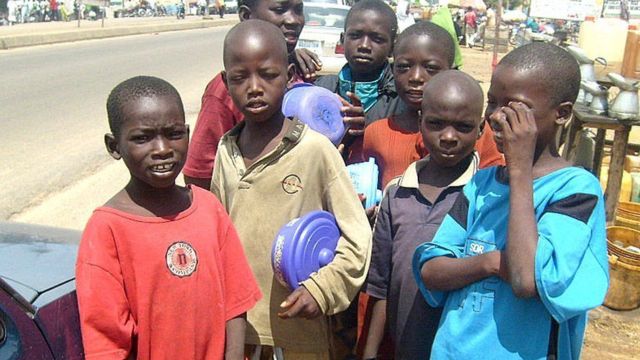
The Almajiri system, once a noble pursuit of Islamic knowledge, has degenerated into a humanitarian disaster spread across Northern Nigeria. From the streets of Kano to the slums of Sokoto, thousands of children wander barefoot, hungry, and hopeless victims of a tradition that has outlived its purpose.

The idea behind Almajiranci was simple: young boys, mostly from rural or poor families, would be sent to Islamic scholars for religious education. But over time, what began as a pathway to learning became a pipeline to poverty, abuse, and neglect. Today, these children beg for survival, live in unhygienic conditions, and face constant exposure to criminality and exploitation.

Every year, thousands more are pushed into this cycle. With no formal curriculum, no sanitation, no feeding structure, and no monitoring, the system violates every principle of child welfare and human dignity. Many of these almajiris live in overcrowded, unventilated rooms, sometimes as many as 18 children in a single space, with no access to health care, no protection, and no future.

While governments talk reform, very little action meets the urgency. Integration programs are underfunded, religious institutions are left unchecked, and families often forced by poverty continue to submit their children to this outdated system. Meanwhile, the streets of Northern Nigeria grow more unsafe as vulnerable children are manipulated by extremist groups and criminal syndicates.

Let’s be clear: the Almajiri system, in its current form, is not education. It is abandonment. It is state-sanctioned child endangerment masquerading as religion. Any society that claims moral or spiritual uprightness cannot continue to tolerate this level of systemic neglect.

What Northern Nigeria needs is not a patchwork of reforms, but a complete overhaul. Islamic education should be formalised, monitored, and integrated into the broader national curriculum. Children should learn in safe environments where Qur’anic knowledge is integrated with literacy, numeracy, hygiene, and vocational training. Religious scholars must be trained, certified, and held accountable.

Above all, we must shift the responsibility from children back to adults. Governments, communities, parents, and religious leaders must admit the system has failed and work together to end it. The Almajiri child deserves more than survival. He deserves dignity, opportunity, and a future.

This is not just a social concern. It is a national emergency.

Umar Sani Adamu can be reached via umarhashidu1994@gmail.com