Month: September 2025

Jigawa at 34: Building a legacy of growth and stability

By Muhammad Abubakar Tahir

Jigawa State was created on August 27, 1991, by the administration of General Ibrahim Badamasi Babangida. Since then, the state — with its 27 local government areas and Dutse as its capital — has grown remarkably in almost every sector, living up to its nickname: “The New World.”

Anyone familiar with Jigawa today will agree that, among the states created at the same time, it has made more than commendable progress. Its story has been one of consistent development, particularly in modern agriculture, healthcare, environmental sanitation, good governance, and infrastructure.

Over the years, each governor who served the state has left a footprint of meaningful projects. Their efforts deserve gratitude and prayers from the citizens, for together they have turned Jigawa into one of Nigeria’s quiet models of growth.

One of the most visible achievements is in road construction. According to surveys, Jigawa ranks among the top three states with the best road networks in the country. Travelling from Birniwa to Gwaram, one will see how successive governments have invested in quality roads that connect communities, ease transportation, and improve livelihoods.

In agriculture, Jigawa stands tall as a national pillar. About 75 per cent of Nigeria’s exported food products originate from the state — a feat that underscores its central role in sustaining the nation’s economy.

Governor Umar Namadi’s administration, in particular, has deepened support for farmers. By making fertiliser affordable, offering loans, and providing milling machines and rice processing equipment, his government has empowered rural farmers and strengthened food security.

In Hadejia, the rice business has transformed lives. Buyers now flock in from across the country, increasing state revenue and creating employment opportunities. Many youths have become millionaires through rice farming and processing. And it is not just rice — Jigawa also thrives in sesame, hibiscus, millet, and maize, with many of these products being exported internationally.

The state’s lesser-talked-about sectors are also booming. Fish and frog farming, for instance, are creating jobs for youths from both North and South, while contributing to local revenue. My recent investigative work with WikkiTimes highlighted this silent but powerful transformation.

Education has also advanced. The sons and daughters of Jigawa continue to make their mark both nationally and internationally. Governments past and present have invested in schools and supported talented youths to acquire modern skills abroad — laying a foundation of knowledge for future generations.

Governor Namadi has shown particular resolve by announcing plans to recruit 10,000 teachers — a bold initiative that will strengthen the education system.

Progress is also visible in other areas, including electricity, water supply, and street lighting. Towns and villages that were once engulfed in darkness are now well illuminated, symbolising infrastructural renewal.

Jigawa has also remained at the forefront in welfare policies. It was one of the first states to implement the national minimum wage, long before it became mandatory across Nigeria. This pro-worker stance has relieved hardship for civil servants and enhanced productivity.

The state’s reputation for peace and security is not to be overstated. Jigawa remains one of the safest states in the country — a fact that allows visitors to move freely without fear. Governor Namadi has further strengthened this by addressing farmer-herder conflicts, ensuring lasting harmony among communities.

Tourism is another rising potential. The serenity, natural beauty, and hospitality of Jigawa are gradually attracting visitors, opening new doors for cultural and economic growth.

Truly, Jigawa has fulfilled its promise as the “New World.” From humble beginnings, it has become a source of pride not only for its people but also for Nigeria.

May Allah continue to bless Jigawa with peace, progress, and prosperity. Ameen.

Muhammad Abubakar Tahir wrote in from Hadejia, Jigawa State, via abubakarmtahir81@gmail.com.

Kano police arrest 107 suspects, recover weapons in new operation

By Uzair Adam

The Kano State Police Command has rolled out a fresh security initiative tagged “Operation Kukan Kura” to strengthen community policing and intensify the fight against crime using both kinetic and non-kinetic strategies.

The Commissioner of Police, Ibrahim Adamu Bakori, disclosed this during a press briefing on Monday, noting that the operation aligns with the directive of the Inspector General of Police, Kayode Egbetokun, to entrench community-centered policing.

He explained that the initiative is designed to boost public participation and encourage collaboration with security agencies, stressing the crucial role of residents as the “eyes and ears of the Police” across the state.

He recalled that similar strategies had earlier produced positive outcomes, particularly in tackling thuggery, locally called Fadan Daba.

Bakori also highlighted the Command’s recent breakthroughs, revealing that 107 suspects were apprehended in August for offences such as armed robbery, kidnapping, human trafficking, drug trafficking, and theft.

Items recovered during the operations include an AK-47 rifle, seven fabricated guns, 11 live rounds of ammunition, motor vehicles, motorcycles, cows, cutlasses, knives, and large quantities of illicit drugs.

He added that in 2025 alone, the Command had recovered hundreds of weapons and significant quantities of narcotics.

While commending officers for their resilience, he pointed out that the adoption of digital tools and technological innovations had further enhanced police operations.

The Commissioner assured that the Command would continue to adopt fresh strategies to outpace criminal elements and sustain peace in the state.

He expressed appreciation to residents and the media for their vigilance and support.

“The willingness of our people to share information has greatly enhanced our operations and strengthened our capacity to safeguard the state,” he said.

Bakori urged the public to promptly report crimes or suspicious activities to the nearest police station or through the Command’s emergency hotlines.

Israel is committing genocide in Gaza, scholars say

By Muhammad Abubakar

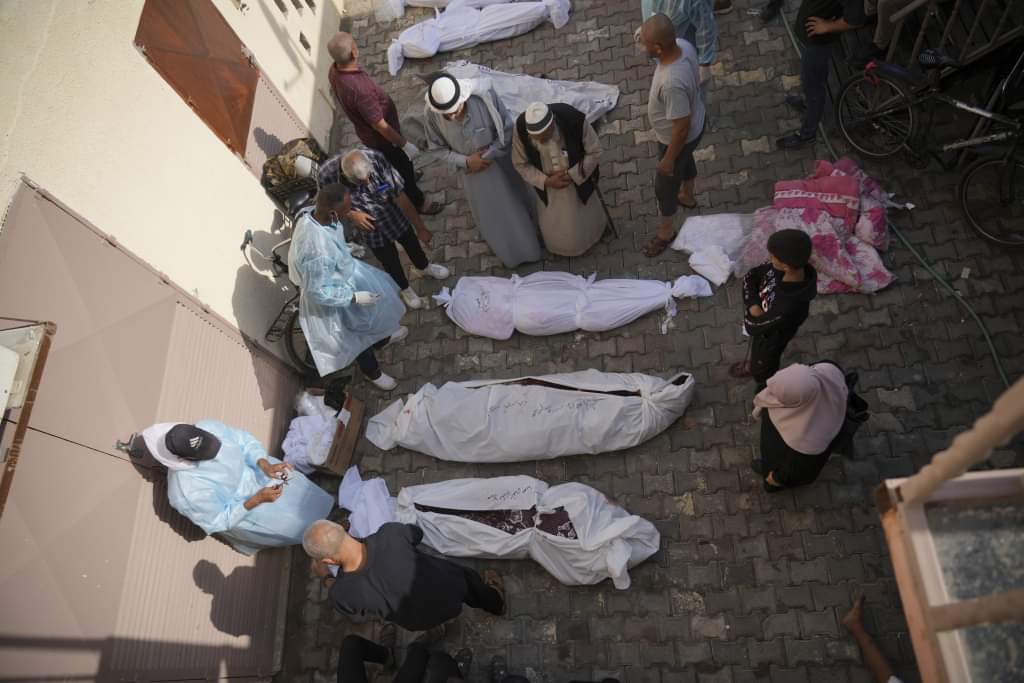
The world’s foremost body of genocide experts has declared that Israel’s military campaign in Gaza meets the legal definition of genocide.

In a resolution issued this week, the International Association of Genocide Scholars (IAGS) urged Israel to “immediately cease all acts that constitute genocide, war crimes and crimes against humanity against Palestinians in Gaza.”

The association cited starvation, the blocking of humanitarian aid, and forced displacement among the practices that, in its view, fulfill the criteria set out under international law.

The resolution adds to growing international pressure as civilian casualties and a deepening humanitarian crisis continue to draw condemnation from human rights groups and global leaders.

ONSA slams El-Rufai over ‘baseless’ ransom claims

By Abdullahi Mukhtar Algasgaini

The Office of the National Security Adviser (ONSA) has issued a stern rebuke to former Kaduna State Governor, Nasir El-Rufai, dismissing his claims that the government pays ransoms to bandits as “baseless” and “false.”

The statement, released on Monday, comes in response to an interview El-Rufai gave on Sunday where he alleged that ONSA coordinates a policy of payments and incentives for criminals.

“The attention of the Office of the National Security Adviser (ONSA) has been drawn to comments made by the former Governor… he alleged, falsely, that the ONSA coordinates a policy of payments and offers incentives to bandits. This claim is baseless,” the statement read.

ONSA firmly stated that at no time has it or any government arm under the current administration engaged in such practices, adding that it has consistently warned citizens against paying ransoms.

The security office outlined the government’s dual strategy of “decisive kinetic operations alongside community engagements,” crediting this approach for the improved security and “relative peace” now experienced in previously terrorized parts of Kaduna like Igabi, Birnin Gwari, and Giwa.

The statement highlighted the elimination of notorious bandit kingpins such as Boderi, Baleri, and others in Kaduna, as well as the recent apprehension of leaders from the terrorist group, Ansaru.

In a strongly worded conclusion, ONSA described El-Rufai’s denial of these security gains as “unfair and deeply insulting” to the memories of fallen security personnel.

It urged the former governor and all political actors to “desist from dragging national security institutions into partisan battles,” emphasizing that the fight against banditry is a “collective struggle, not a platform for political point-scoring.”