Month: August 2025

Diphtheria and the challenge to health educators out there

By Anna Gabriel Yarima

I write to and call and throw a challenge at all graduated health educators and the potential ones concerning the deadly diphtheria disease that annually claims the huge number of lives of infected Nigerians, which, according to reports, is more than 1,376 deaths being recorded in the high-burden states infected with the cases: Kano, Yobe, Katsina, Bauchi, Borno, and Kaduna states. And, from around 2022 to 2023, WHO reported that over 600 deaths were recorded with a case fatality ratio of 13% among confirmed cases in the past.

Instead of the cases significantly dropping annually, on 14th January 2024, according to the WHO African Region Health Emergency Situation Report, “A cumulative total of 27,991 suspected cases of diphtheria resulting in 828 fatalities have been reported across Nigeria, Guinea, Niger, Mauritania, and South Africa. Nigeria is the most severely affected, accounting for 80.1% of cases and 72% of deaths.” Even though the cases in Nigeria are underreported.

The deadly diphtheria that is caused by exotoxin-producing Corynebacterium diphtheriae is spread between people mainly by direct contact or through the air via viral respiratory droplets. The disease can affect all age groups; however, unimmunized children are particularly at risk.

Therefore, avenues for an awareness have to be created by the health educators in our communities so as to make parents ’fully informed of the signs and symptoms of the disease as well as the dangers of being infected and how easily uninfected children could be infected. Though vaccine-preventable it is!

The government at all levels has to be very cautious in attacking the deadly diphtheria that consumes lives annually. I therefore suggest the federal government collaborate with primary health care centres across the nation so as to have unimmunised children who are at risk immunised.

I hope the Coordinating Minister of Health and Social Welfare will put more effort into making sure that the number of cases and deaths that are recorded annually are reduced or totally diminished.

Anna Gabriel Yarima writes from the Department of Mass Communication, University of Maiduguri.

Why Nigerian journalism schools must teach AI ethics skills

By Anna Gabriel Yarima

When the internet and digital platforms emerged from the rapid growth of information and communication technology, journalism experienced a fundamental transformation. Traditional newspapers and mainstream media organisations around the world embraced these tools, prompting universities and journalism schools to introduce online journalism courses. The goal was clear — to equip students with the skills to navigate and manage digital media while preserving the profession’s core principles and ethics in a new online environment.

Today, another major technological shift is underway: the rise of Artificial Intelligence (AI). From established newspapers to online-only platforms, media organisations are experimenting with AI in reporting and content creation. But this raises important questions: Do all journalists possess the skills to use AI effectively and responsibly? At what point in the reporting process should AI be applied — and in what ways? For example, should it be used to create images for advertisements or event coverage? And if so, how do we reconcile that with journalism’s commitment to accuracy and objectivity?

If AI is here to stay in the newsroom, the profession must find ways to use it without eroding the ethical foundations of journalism. This makes it imperative for journalism educators, researchers, and training institutions to include AI literacy in curricula at universities, polytechnics, and media schools.

Professor Farooq Kperogi has written extensively on the potential dangers of AI in journalism and academia. In his commentaries, he has pointed out how misuse of AI can undermine truth and credibility, warning of ethical lapses and factual distortions if its use is left unchecked. His examples are sobering reminders of the stakes involved.

Integrating AI instruction into journalism training is no longer optional — it is essential. Without it, journalists risk damaging the profession’s reputation and eroding public trust. The benefits of such training are clear, especially when we consider recent cases that have attracted global attention.

A lack of AI literacy is already causing problems. Many journalists remain either unfamiliar with AI or unaware of the ethical implications of its misuse. For instance, The Guardian US reported on an experienced reporter who used ChatGPT to produce news stories, adding fabricated quotes that were later denied by the supposed sources. This journalist had 15 years of professional experience — a fact that raises serious concerns about what could happen when inexperienced or student reporters misuse such tools.

In another case, The Guardian exposed how the Chicago Sun-Times published a summer reading list generated by AI. While the authors named in the list were real, the books themselves did not exist. Titles such as Hurricane Season by Brit Bennett and Nightshade Market by Min Jin Lee were entirely fabricated. The paper later admitted the content had come from a syndicated partner, not its own newsroom, but still apologised and pledged to investigate. “This should be a learning moment for all of journalism,” the paper said, emphasising the unique value of human reporters and editors.

The fallout spread beyond Chicago. On Threads, AngelaReadsBooks accused the Philadelphia Inquirer of publishing the same AI-generated list, prompting outrage from library advocates who viewed it as a betrayal of journalistic integrity at a time when libraries are under constant pressure.

In Nigeria, the Nigerian Guild of Editors has recognised the risks and announced the creation of a dedicated fact-checking desk to address AI misuse and protect the credibility of the media.

Professor Umar Pate, a respected communication scholar, has also warned of the broader implications of AI in education and employment. Speaking at the University of Maiduguri, he noted that 92 million jobs could disappear in the coming years, even as over 100 new job categories emerge. As Vice Chancellor of the Federal University, Kashere, he confirmed that the institution is already preparing to teach students about the responsible and ethical use of AI. Extending such measures to journalism education nationwide would greatly strengthen the profession’s resilience in the face of technological change.

Anna Gabriel Yarima writes from the Department of Mass Communication, University of Maiduguri.

Kano assembly suspends Rano LG chair over alledged misconduct

By Uzair Adam

The Kano State House of Assembly has suspended the Chairman of Rano Local Government Council, Alhaji Muhammad Naziru Ya’u, for three months over alleged misconduct.

The decision followed Tuesday’s plenary presided over by Speaker Alhaji Jibril Isma’il Falgore, after the House Committee on Public Petition presented its investigative report.

According to the committee’s chairman and Majority Leader, Alhaji Lawan Hussaini Dala, the probe was triggered by a petition signed by nine of the ten councillors in Rano.

The petition accused the chairman of financial recklessness, sale of shops, and diversion of fertilizer meant for the council, among other allegations.

Although the chairman denied the claims, the lawmakers, citing Section 128 of the Nigerian Constitution and Section 55 (1–6) of the Kano State Local Government Law 2006, recommended his suspension to allow for further investigation.

The House also directed the immediate submission of Rano LGA’s 2025 financial statement and ordered that the vice chairman take over in an acting capacity during the suspension period.

After deliberations, the recommendations were unanimously adopted, placing the council under temporary legislative oversight.

NDLEA arrests 49 suspects in Kano during two-day drug raids

By Uzair Adam

The National Drug Law Enforcement Agency (NDLEA), Kano Strategic Command, says it has arrested 49 suspects for various drug-related offences involving different quantities of illicit substances in the state.

Sadiq Muhammad-Maigatari, the Command’s Public Relations Officer, disclosed this in a statement on Wednesday in Kano.

He said the suspects were apprehended during coordinated raids on August 7 and August 8, as part of intensified efforts to curb drug crimes.

“On August 7 and 8, the agency dislodged several key locations known for drug-related activities, arresting 34 suspects at Massallacin Idi, Fagge Plaza, Kofar Mata, Kofar Wambai, Kofar Dan’agundi, Makabartar Dan’agundi, Ladanai, Zage, and Tashar Rimi at Rimi Market,” he said.

He added that NDLEA operatives also raided Kano Line Motor Park and Tashar Rami Motor Park in Na’ibawa, where 15 additional suspects were arrested.Items recovered from the suspects included cannabis sativa, Pregabalin, diazepam, codeine syrup, Rohypnol, “suck and die,” rubber solution, and locally made weapons.

The NDLEA State Commander, Abubakar Idris-Ahmad, said the operation was part of ongoing measures to dismantle drug joints and disrupt dealers’ networks in the state.

“Since the elevation of the NDLEA’s operations to a strategic command level, there has been a notable increase in the effectiveness and scope of our work,” Idris-Ahmad stated.

He commended the agency’s Chairman and Chief Executive Officer, Retired Brig.-Gen. Mohamed Buba-Marwa, for his unwavering support and leadership, noting that his commitment to a drug-free society had strengthened the resolve of the Kano Command.

Idris-Ahmad urged those involved in drug trafficking to desist, warning that the NDLEA would not relent in its mission to protect the public from the dangers of drug abuse and trafficking.

He said investigations were ongoing, and the suspects would be charged in court upon completion.

AZAWON empowers 500 Islah graduates with N50,000 capital each

By Uzair Adam

A total of 1,000 youths, women and less privileged persons have completed a six-week skills acquisition training in Kano, organised by Islah Consult and Training Limited in collaboration with Ar-Riddoh Islamic International Foundation and the Islamic Forum of Nigeria.

The training covered seven areas – solar installation and repair, tailoring, phone repairs, ICT, bedsheet production and catering – and was designed to give participants practical skills for self-reliance.

The Daily Reality reports that in an event on Tuesday in Kano, the Association of Zakat and Waqf Operators in Nigeria (AZAWON) distributed financial support to some of the graduates.

Speaking during the exercise, Prof. Dahiru Muhammad, Chairman of Islah Consult and Training Limited and National Secretary of AZAWON, said 500 graduates each received N50,000 as start-up capital.

“We wanted to ensure this support went only to those who were serious about the training. That is why we required them to present their certificates before receiving the money. It’s our way of encouraging commitment and accountability.”

He explained that the funds came from zakat contributions, notably from businessman Alhaji Ibrahim Sabi’u of Kantin Kwari market, as well as from AZAWON’s national body and Ja’iz Bank.

“Zakat is not just charity; it is a right ordained by Allah. We must use it strategically to lift people out of poverty,” Prof. Muhammad added.

According to him, 20 less privileged persons also received N30,000 each, while more than 45 others – including new converts to Islam – from Rano, Gaya and Karaye benefited from similar support.

He further urged beneficiaries to use the money wisely, saying, “We will follow up. We want to see success stories, not wasted opportunities.”

Prof. Muhammad also called on the government to promote zakat and waqf in the same way it handles tax collection, saying, “It is a duty from Allah, mentioned in the Qur’an. If properly managed, zakat can address many of our social challenges.”

Alhaji Ibrahim Sabi’u Linda, who contributed to the fund, said giving zakat brought him fulfilment.

“I am happier than the recipients because I know I have done what Allah commanded,” he said.

He further noted that, “if the government can bring together wealthy traders from markets like Kantin Kwari, Singer, Wambai and Dawanau, and direct their zakat towards youth empowerment, I believe crimes like phone snatching will drastically reduce.”

One of the beneficiaries, Nafi’u Isa, who trained in ICT, expressed gratitude for both the skills and the financial support.

“This has opened a new chapter in my life. We pray Allah blesses our businesses so that one day, we can also give back,” he said.

Another beneficiary, Nafisa Tahir, who learned tailoring, said she never imagined she would receive such assistance.

“When I came here, I didn’t even know how to use a sewing machine. Now, Alhamdulillah, I can sew bedsheets that will impress you,” she said with a smile.

Iranian security chief promises continued support for Lebanon

By Anwar Usman

The top security chief of Iran, Ali Larijani, vowed in Lebanon on Wednesday that his government would continue to provide support, after the Lebanese government ordered the army to devise a plan to disarm Tehran-backed militant group Hezbollah.

Ali Larijani’s trip to Lebanon comes after Iran expressed opposition to a government plan to disarm Hezbollah, which, before a war with Israel last year, was believed to be better armed than the Lebanese military.

“If the Lebanese people are suffering, we in Iran will also feel this pain and we will stand by the dear people of Lebanon in all circumstances,” Larijani, the head of the National Security Council, told reporters after landing in BeirutDozens of Hezbollah supporters gathered along the airport road to welcome Larijani.

He briefly stepped out of his car to greet them as they chanted slogans of support.

In Lebanon, the security chief is expected to meet with President Joseph Aoun, Prime Minister Nawaf Salam, and Parliament Speaker Nabih Berri, who is close to Hezbollah.

Iran has suffered a series of blows in its long-running rivalry with Israel, including during 12 days of open war between the two countries in June.

Reports show that, Hezbollah is part of Iran’s so-called “axis of resistance” — a network of armed groups in the region, including Hamas in Gaza and Yemen’s Huthi rebels, united in their opposition to Israel.

The ouster in December of Bashar al-Assad in Syria, which long served as a conduit for weapons deliveries between Iran and Hezbollah, cut off the supply route to Lebanon.

Iran has declared its firm opposition to the Lebanese government’s bid to disarm Hezbollah, while the movement itself has slammed the decision as a “grave sin”.

National Emergency: Is the solution to the flood crisis 

By Sale Rusulana Yanguruza 

Thousands of lives, homes, government properties, and businesses in Nigeria and Africa are lost or submerged due to ongoing floods. The crucial questions are: what measures can end this crisis? Will we continue to watch houses and people suffer? What has the government done so far, and has it been effective? If not, citizens, residents, and the government must re-strategise their flood response plans to address the issue permanently.

The government needs to give special attention to addressing these flood-related matters, especially since the country has been facing this disaster since the beginning of the rainy season. The 2025 Annual Flood Outlook (AFO) indicates that 1,249 communities in 176 local government areas across 30 states and the Federal Capital Territory (FCT) fall within high flood risk areas.

The statement added that High-flood-risk states are Abia, Adamawa, Akwa Ibom, Anambra, Bauchi, Bayelsa, Benue, Borno, Cross-River, Delta, Ebonyi, Edo, Gombe, Imo, Jigawa, Kebbi, Kogi, Kwara, Lagos, Nasarawa, Niger, Ogun, Ondo, Osun, Oyo, Rivers, Sokoto, Taraba, Yobe, Zamfara and the FCT.

Unfortunately, some of the aforementioned areas have started experiencing floods this year; for instance, Oyo State, Kano State, Edo State, and Borno State. According to the State Emergency Management Agency’s assessment, after the flood hit some communities in two local governments in Borno State, comprising Chibok and Damboa, the Acting Manager, Ali Abdullahi Isa, of the Borno State Emergency Management Agency (BOSEMA), stated, as I quoted him.

 “As directed by His Excellency, the Executive Governor of Borno State, Prof. Babagana Umara Zulum, we have carried out an on-the-spot assessment of all the areas affected by the flash flood in the two local governments. A total of 1,103 houses in Gumsuri, Wovi, and Garjang in Damboa LGA have been severely affected, while 106 houses in Mboa, Whuntaku, and Yarchida villages of Chibok Local Government were also affected”.

Even though floods this year have become a global concern, with incidents reported in the USA, including Texas, where about 51 lives were lost, and some are still missing. The government in Nigeria must take precautions and measures to tackle them.

However, we all had the most painful and unforgettable experiences of the disaster in Nigeria, specifically the Maiduguri flood and Makwa flood, which have taught us lessons that the government, citizens, and stakeholders must learn from to avoid and prevent further occurrences. We must use these bad memories to avert the recurrence of such disasters, which claimed over 300 and 200 lives and affected many souls.

It’s for these reasons that I’m calling on the federal government to declare a total national emergency on floods. This will enable the government to respond effectively to the crisis. Resources should be allocated for this disaster, allowing the government to support those displaced as a result of the flood. 

Undoubtedly, declaring a national emergency on flood would allow the government to focus on fixing the bridges and dams that have broken or collapsed in the past, which are capable of causing water to wash over communities and lead to flash floods across the country.

Furthermore, the number of victims affected by the flood is increasing, with no specific measures in place to mitigate the situation permanently; hence, declaring a state of emergency is necessary to address these flood-related issues. 

According to the United Nations Office for the Coordination of Humanitarian Affairs (OCHA), over 1,000 people were killed and 740,000 displaced by floods affecting 5 million in Africa, as reported last year. 

While declaring a national emergency, a high-powered committee needs to be inaugurated by the federal government in collaboration with the National Emergency Management Agency (NEMA) and State Emergency Management Agencies in all 36 states to discuss ways to address the issue extensively. The committee should comprise the Nigerian Meteorological Agency (NiMet), NiMet traditional rulers, community leaders, and government officials to deliberate on the problem permanently.

Additionally, the committee’s responsibilities should include providing a comprehensive list of all dams and bridges in the country that may cause flooding and reporting it to the federal government. After submitting the report, the government should expedite repairs to these structures within a short period to prevent further escalation of floods in the country.

If   global concerns like the coronavirus and the Ebola virus can be addressed within a short period, then flood concerns can also be tackled to protect citizens. While I’m fully aware that it’s not easy to address due to a lack of preparedness and in some states, houses have been built in waterways, the government shouldn’t fold its hands. Actions are necessary, and the government should ensure that no houses or markets are built in waterways going forward.

Sale Rusulana Yanguruza 

Atiku accuses Tinubu of using EFCC to intimidate opposition over Tambuwal’s detention

By Uzair Adam

Former Vice President Atiku Abubakar has alleged that the administration of President Bola Ahmed Tinubu is weaponizing the Economic and Financial Crimes Commission (EFCC) to target political opponents.

Atiku made the claim while reacting to the detention of former Sokoto State Governor and Senator, Aminu Waziri Tambuwal, describing it as part of a broader plan to “harass, intimidate, and decimate” members of the opposition coalition.

He stated that, “The only reason the EFCC has detained the former Governor of Sokoto State, Senator Aminu Waziri Tambuwal, is because he is a member of the opposition Coalition. It is a continuation of the Tinubu-led administration’s agenda to intimidate the opposition.”

The former Vice President, who played a key role in establishing the EFCC during his tenure, accused the commission of abandoning its core anti-corruption mandate to serve political purposes.

He alleged that opposition leaders were being targeted with “phantom” corruption allegations, only to be absolved once they defect to the ruling party.

Atiku warned that such practices undermine institutional integrity and fuel corruption, pointing to what he called a “growing trend” of using anti-corruption agencies to pressure governors and political leaders into joining the ruling party.

While expressing support for a genuine anti-corruption fight, Atiku urged Nigerians, civil society groups, and the international community to resist “anti-democratic machinations” aimed at creating a one-party state.

“We will never succumb to these tactics. The use of anti-corruption agencies as a political agenda must be roundly condemned,” he added.

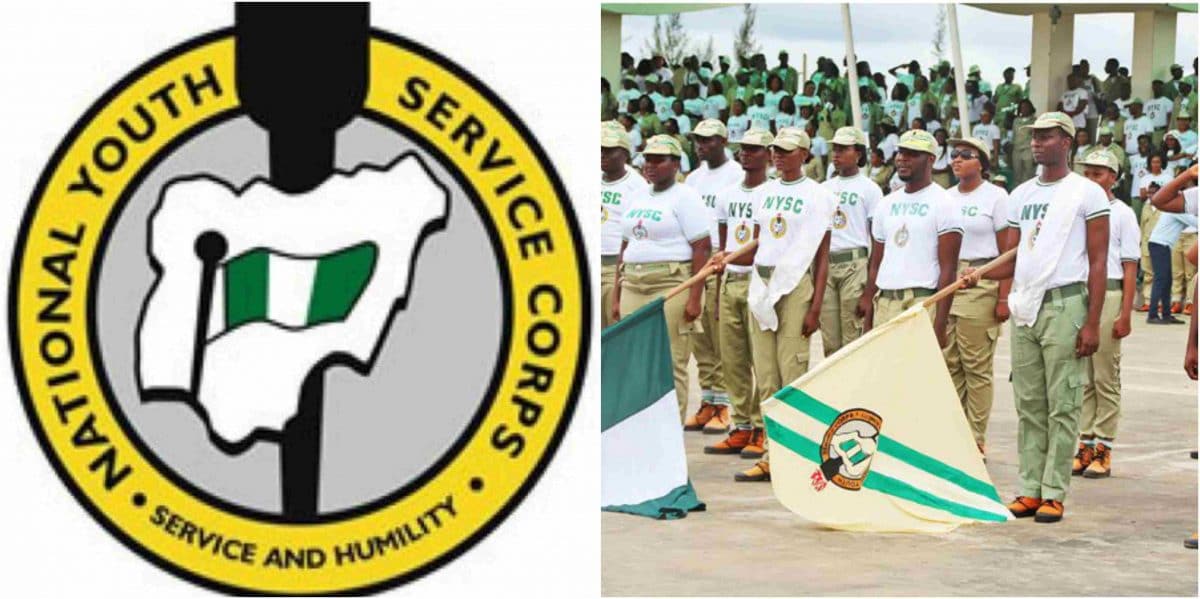
Police investigate death of NYSC member in Bauchi lodge

By Sabiu Abdullahi

The Bauchi State Police Command has begun probing the sudden death of a serving National Youth Service Corps (NYSC) member in Dambam Local Government Area of the state.

The deceased, identified as 28-year-old Nwokedi Chukwuebuka, was reportedly found unconscious in the early hours of Sunday in an apartment provided for corps members in the community.

The accommodation was arranged by his colleagues and the Corps Liaison Officer (CLO).

Police Public Relations Officer in the state, Ahmed Waziri, confirmed the incident during a telephone interview on Monday.

He said the Commissioner of Police had ordered a preliminary investigation into the matter.

“The command received a complaint of sudden and natural death on August 10, 2025, at about 9:20am.

“The Dambam LGA Corps Liaison Officer came to the Dambam Divisional Police Headquarters and reported that on the same date at about 8:30am, all corps members who were Christians serving in the LGA were preparing for Sunday church services when they noticed that Nwokedi Chukwuebuka, with state code number BA/25A/2069, did not wake up,” Waziri stated.

According to him, “The CLO went to wake him up but discovered that he was not breathing. He reported the matter to the police station. The CP, Sani Aliu, directed the DPO to visit the scene.

“The corps member was taken to the hospital, where a medical doctor certified him dead, as enshrined in international best practices. The body was later deposited at the Federal Medical Centre, Azare, mortuary.”

Waziri further noted that the CP had instructed a thorough preliminary investigation, which is still in progress.

A similar case occurred in Adamawa State in 2023 when a corps member named Samuel reportedly slumped and died while watching a football match between Nigeria’s Super Eagles and South Africa’s Bafana Bafana.

Kano police ban underage tricycle riding, cite surge in road accidents

By Uzair Adam 

The Kano State Police Command has announced a ban on the operation of tricycles, popularly known as Keke Napep, by underage individuals within the Kano metropolis.

Spokesperson of the Command, SP Abdullahi Haruna Kiyawa, in a video he posted on his verified Facebook page on Monday, said the decision followed a disturbing increase in accidents linked to underage riders. 

He added that the practice was responsible for 16 serious but preventable crashes, resulting in injuries and damage to property.

Kiyawa further noted that the Command has observed a growing trend of road users disregarding traffic lights and other regulations, a development he described as a major cause of avoidable accidents and traffic gridlock in the state.

He warned that riding tricycles by underage persons remains prohibited under the law and poses serious risks to both the riders and other road users. 

Parents and guardians, he stressed, must stop allowing their children to operate tricycles, as offenders—both the riders and the owners—will face severe penalties.

“All road users must obey traffic lights and other traffic regulations. The Command will not hesitate to arrest and prosecute anyone found violating traffic laws to ensure the safety and security of road users,” the statement added. 

He noted that the Commissioner of Police, CP Ibrahim Adamu Bakori, assured residents of the Command’s commitment to safeguarding lives and property. 

He said enforcement teams have been deployed and urged members of the public to report underage tricycle riding, reckless driving, or other traffic offences to the nearest police station or via 08032419754, 08123821575, and 09029292926.