Month: August 2025

NEMA and the battle for Nigeria’s food security

By Abdulhamid Abdullahi Aliyu

The fight against hunger in Nigeria has entered a critical phase. With rising food prices, climate-induced disasters, and conflicts crippling agricultural production, food security is no longer a distant policy concern but an everyday reality for millions of households. What was once viewed as a seasonal challenge has now become a national emergency, demanding a shift from reactive relief to proactive preparedness.

At the forefront of this shift is the National Emergency Management Agency (NEMA), which is redefining its role beyond post-disaster interventions. Through the newly unveiled Food and Nutrition Security Crisis Preparedness Plan (FNSCPP), NEMA is laying the groundwork for a coordinated, data-driven framework designed to detect and respond to food security threats before they spiral into full-blown crises.

For NEMA’s Director-General, Mrs. Zubaida Umar, the stakes could not be higher. “Nigeria is at a critical juncture in its food security landscape,” she observed during a recent consultative session. “We must transition from reactive to anticipatory response models. This collaboration presents a pathway toward a more structured, timely, and impactful system of intervention.”

The new preparedness plan signals a significant departure from the traditional cycle of emergency relief. It recognises that food insecurity is not an isolated problem but a complex challenge worsened by flooding, drought, armed conflicts, and economic shocks. Seasonal floods, for example, continue to devastate farmlands in states like Anambra, Benue, and Niger, erasing months of hard work and leaving rural communities vulnerable to hunger.

The FNSCPP seeks to address this challenge by integrating early warning systems with national emergency operations, setting up clear crisis escalation protocols, and ensuring that federal, state, and community-level agencies respond in unison. This aligns with NEMA’s broader strategy, which has included launching the 2025 National Preparedness and Response Campaign (NPRC) and conducting large-scale flood simulation exercises in high-risk zones such as the South East.

Experts agree that timely action is the difference between a manageable disruption and a nationwide crisis. Dr. Ritgak Tilley-Gyado, Senior Health Specialist at the World Bank and one of the key technical leads behind the FNSCPP, highlighted this during a consultative visit to NEMA’s headquarters. “This is more than just an emergency response plan,” she explained. “It is a long-term preparedness blueprint. Once indicators are triggered, every institution must understand its role and act without delay.”

The stakes are particularly high for vulnerable populations, where food crises often translate into chronic malnutrition, displacement, and loss of livelihoods. Nigeria’s recent qualification for crisis response financing underlines the urgency of establishing a clear and unified response framework. Without it, resources risk being delayed, duplicated, or mismanaged — leaving those most affected to bear the brunt of avoidable suffering.

To counter this, NEMA is also championing community-level sensitisation, ensuring that disaster preparedness is not merely a top-down directive but a collective effort. By engaging local leaders, grassroots organisations, and youth groups, the agency aims to bridge the gap between policy design and on-the-ground realities.

Yet, significant challenges remain. Adequate funding, political will, and inter-agency coordination will determine whether this bold plan succeeds or falters. Beyond the federal effort, state and local governments must embrace their roles in creating food-resilient communities. Environmentalist Mayokun Iyaomolere captured this sentiment aptly when he remarked, “Preparedness is not just about government plans. Communities must also take ownership of the process, particularly in areas where local action can prevent disasters from escalating.”

As Nigeria faces a future marked by unpredictable weather patterns and growing food demands, the real question is not whether crises will occur but how effectively the country can respond. With the FNSCPP, anchored by NEMA’s leadership and supported by multi-sector partnerships, Nigeria has an opportunity to shift from a culture of reaction to one of anticipation and prevention.

The blueprint has been laid out. What comes next is the test of execution, coordination, and the political courage to ensure that no Nigerian is left to go hungry simply because the warning signs were ignored.

Abdulhamid Abdullahi Aliyu writes on disaster management, humanitarian response, and national development.

My daughter Rahma, cerebral palsy, and death

By Abubakar Suleiman

“I am sorry, the brain of your child has been insulted.” Those were the words of a friend who is also a medical doctor after reviewing the EEG result of my late daughter, Rahma, three years ago. He continued, “Abubakar, you have a case in your hands, Allah Ya baka ikon cin jarabawa.”

The phrase “brain being insulted” was unfamiliar to me then. I had to start browsing to be sure that the words weren’t what I feared. Alas, it turned out to be what I thought.

Being a twin, Rahma came into the world weak after her twin sister, Rayhana. And she was put in an incubator to resuscitate her. Before the EEG investigation, Rahma had jaundice that was detected when she was just seven days old.

Upon arrival at the pediatric clinic, after her vitals were taken and a series of tests conducted, she was hospitalised. Phototherapy and an exchange blood transfusion were carried out. And that marked the beginning of a pilgrimage, ranging from one consultant paediatrician to another neurologist, then a physiotherapist throughout her 3 years, 2 months and 1 week of existence.

“Hypertonia.” The word a doctor muttered after we were discharged from the hospital drove me to the internet. Slowly, I became an overnight ‘neurologist’ so much so that whenever we find ourselves in the hospital, the doctors were so surprised by how well I understood some medical concepts. Knowing that hypertonia is a form of cerebral palsy sent chills down my spine. What could have led to this? Loss of oxygen during birth? The jaundice that led to the exchange blood transfusion? Abi na all join? إلى الله المشتكى 

Cerebral palsy rendered Rahma almost helpless. She could not sit, talk, walk or fall asleep with ease all her life. She doesn’t eat any kind of food. Feeding her required tact. Nutritionists’ aid was sought. Her neck control was only partial. We could only try to improve her quality of life with therapeutic interventions and the support of a caregiver. 

While her twin sister, Rayhana, was energetic and quickly enrolled in school, Rahma was mostly on controlled drugs to help her sleep. From phenobarbital, clonazepam, phenytoin, diazepam, to all sorts of medications depending on her weight and other medical variables, as noticed by the doctor. Zamzam water and ruqya weren’t exempted.

Her smile and laughter were expensive. But whenever it appeared, it melted hearts. She shared many features of my late Dad. She is hairy and, in many ways, more uniquely beautiful than her siblings. Her ill health exposed me to the limitations of modern medicine, the high level of professionalism of some doctors and nurses, and, of course, the unruly and unprofessional attitude of others. It also made me renegotiate many priorities in life.

Sicknesses like cerebral palsy drain one psychologically and financially. It pushes one to the boundaries of imaan. In the mix of all these were suggestions, positive and negative. I heard whispers that my ‘Izala’ is becoming too much since I am not willing to try some traditional concoctions or so-called Islamic medicine (whatever that means). Again, I am also not given to superstitions. But alhamdulillah for a strong wife who never wavered in giving her best for Rahma and her siblings. Her imaan was unshaken. It was exhausting, but her resolve was steel-like.

To helplessly watch your child in pain or a medical crisis hits differently. It requires imaan, admonition and strong mental stamina. Whenever Rahma convulsed or cried out due to exhilarating pains, aside from Hasbunallahu wa ni’imal wakeel, all I could tell her was: 

‎اصبري يا رحمة فإن موعدك الجنة إن شاء الله. 

“Be patient, Rahma, your final abode is paradise, InshaAllah.” Even though she doesn’t hear me, I find solace in uttering those words.

My family and friends did everything they could to make things easy for me. Not to mention that the emotional, moral,and even financial support from them would amount to being economical with the situation. I was showered with love and admonition during Rahma’s trial and after her death. 

Death. When your time is not up, you will not die. Rahma was hospitalised countless times, so I no longer informed relatives, friends or family. It became a routine. Her medical conditions were sometimes complicated and severe, so I often prepared myself for the announcement of her death when receiving some phone calls. But she bounced back. However, when it was time to depart the world, she bade us farewell peacefully in her sleep. It was indeed a bumpy ride and a heavy trail. Alhamdulillaah.

I am optimistic that Rahma has found peace inshaAllah. I pray Allah grants her Jannatul Firdaus. May Allah comfort all parents with children having special needs.

Kemi Badenoch expresses concern over increased racist abuse as ‘conservative leader’

By Anas Abbas

Conservative Party leader Kemi Badenoch has spoken of the racist abuse she has faced since becoming the first Black woman to head the party, describing the hostility as “Kemi derangement syndrome.”

In an interview with The Sunday Times, Badenoch said the attacks came not only from anonymous users online but also from a small number of MPs.

She explained: “There’s a certain cadre of people who clearly can’t cope with the fact that I won this, and I’m doing it. The level of personal attacks from anonymous people is hysterical. Not even just from MPs. I actually don’t think it’s that many MPs. I think it’s two to three people out of 120. That’s nothing. But online as well. People used to talk about Trump derangement syndrome. I think there’s a Kemi derangement syndrome: ‘How could she possibly have done this?’”

She pointed to a rise in ethno-nationalist rhetoric on social media, where critics sought to undermine her achievements because of her background.

“There’s a lot of ethno-nationalism creeping up, lots of stuff about my race and my ethnicity and the tropes around, ‘well, she couldn’t possibly have done this all by herself,’” she said.

Born in Wimbledon and raised partly in Nigeria before returning to the UK at 16, Badenoch has often resisted attempts to define her by race.

“I always try to think of every possible explanation before I go to race and racism. I think that is a healthy way to run a society,” she said.

“I remember when I stood up a few years ago and said Britain is not a racist country,ethnic minorities do very well here, it is white working-class boys who are actually struggling on a lot of metrics and I got pilloried for that.

“My view is that there are people out there who will say whatever it is, they will throw whatever kind of mud at you, and they will hope that it sticks.”

As she prepares for her first party conference speech, Badenoch faces questions about her leadership amid speculation of a potential challenge from shadow justice secretary Robert Jenrick, with the Conservatives polling at just 17 percent.

She dismissed the rumours, however, calling them “wishful thinking” and “sour grapes.”

“When I hear those things, I can tell those people are not focused on the country at all. Many of those people having those conversations think this is a game. But the lives of people in this country aren’t a game,” she said.

Nine Dutch ministers resign in solidarity with Gaza

By Muhammad Abubakar

In a stunning act of political defiance, nine Dutch ministers have resigned en masse, declaring they could not be complicit in what they described as the “silent endorsement of a humanitarian catastrophe” in Gaza.

The resignations have sent shockwaves through the Netherlands’ political establishment, shaking the foundations of the coalition government and igniting fierce debate across Europe. In their fiery joint statement, the departing ministers condemned the West’s “selective morality” and accused their own government of “turning a blind eye to mass suffering.”

Crowds gathered outside parliament in The Hague to applaud the move, with activists hailing it as an unprecedented moral stand in modern European politics. Critics, however, warned the resignations could plunge the government into chaos at a time of deepening international tensions.

“This is not about politics; it is about conscience,” one of the resigning ministers declared. “History will not forgive silence in the face of Gaza’s devastation.”

Analysts say the mass resignation marks a rare moment where political survival has been sacrificed for principle—an act many believe will reverberate far beyond Dutch borders.

Between Senator Sumaila and Senator Kwankwaso

By Kamal  Alkasim

When Kawu Sumaila decamped from NNPP to APC, it showed that the issue isn’t about party loyalty but about choosing the best leader. Blind loyalty can hinder good governance in Nigerian politics. What matters most is effective representation, not party allegiance. Let’s prioritise good leadership over partisan loyalty and choose the best candidate for the benefit of Kano South.

When choosing between Rabiu Musa Kwankwaso, a prominent figure in Kano politics known for influencing political dynamics, and Kawu Sumaila, the decision leans towards Kawu due to his genuine service to the people of Kano South. Regardless of the political party Kawu affiliates with—whether APC, PDP, or ADC—his actions demonstrate a commitment to his constituents. 

People recognise Kawu’s efforts and intentions, making party affiliations secondary to his impact. Let’s prioritise choosing the best candidate based on their service and dedication, rather than party loyalty.”

Kwankwaso’s impact will be remembered. Let’s choose leaders based on merit, not loyalty to individuals. In politics, those who deliver tangible benefits to the people should be preferred over those who seek dominance. 

After 16 years of Kabiru Gaya’s tenure, which saw the Kano senatorial district abandoned for personal interests, it’s time for a change. Kawu Sumaila has emerged as a rescuer for our region, and let’s give him the support he deserves.

Let’s choose a leader who creates jobs, empowers youth, provides scholarships, and advocates for our interests in the Nigerian Senate. Prioritise your senatorial district’s needs and be vigilant. A leader who brings in multi-million dollar projects, generates employment opportunities for youth, and develops feeder roads in our communities deserves our support. 

Both Kwankwaso and Kawu Sumaila have legacies that will be remembered, but let’s focus on the one who delivers tangible benefits to our region.

Kamal Alkasim wrote via kamalalkasim17@gmail.com.

Why firewood remains in Nigerian kitchens 

By Khadija Hamisu Daninna 

Across Nigeria, kitchens are changing. Gas cylinders stand neatly in urban homes, while charcoal bags fill market stalls. Yet, despite these alternatives, firewood still burns in countless households. Its smoky flames carry taste, memory, and tradition that neither gas nor charcoal can fully replace. For some families, it is also the more affordable choice.

Zainab, a 31-year-old resident of Daura, has never known another way of cooking. “I have never cooked with gas before. All my life, I have been using firewood. I don’t even know how food tastes on gas, but I prefer my firewood. Maybe it is because I grew up with it. I use charcoal sometimes, but firewood is easier for me. Firewood is what I know.”

For Mariam, a 39-year-old housewife, firewood is tied to her husband’s nostalgia. “My husband always says the fried eggs his mother made tasted better on firewood. So I fry eggs on firewood, just to remind him of his childhood.”

Hajara, a 26-year-old food vendor, said firewood gives food a flavour no other fuel can provide. “When I cook jollof rice for parties, I always use firewood. It brings out a special flavour. Gas and charcoal cannot give you that same smoky taste. My customers expect it.”

But even warnings from doctors cannot keep some people away. Amina, a 37-year-old married woman, recalled: “There was a time I was sick, and the doctor told me to avoid smoky areas because of my eyes. But how can I stop? Firewood is what I grew up with. It is not just about cooking. It is about sitting together as a family, sharing stories, and working around the fire. That memory cannot be replaced.”

Cost is another factor. Mallam Usman, a 42-year-old man, explained: “I use both charcoal and firewood. The least charcoal I can buy is ₦200, while firewood is more expensive, up to ₦500. But I prefer firewood. My wife is already used to it. Sometimes I buy charcoal to ease the work, but mostly we use firewood because that is what we have always been using.”

Abdulmumin, a firewood seller in Rumfar Shehu who is over 40, said many people still depend on his trade. “People still come to buy firewood every day. Even though the price is high, food vendors, households, and event caterers still buy it. Firewood is something people cannot abandon. We have been using it since the time of our grandparents, and it still holds memories.”

But experts warn that firewood comes at a cost. According to a 2024 report from the National Bureau of Statistics published in Punch newspaper, 67.8 per cent of Nigerian households still cook with firewood. In Bauchi State, the figure is as high as 91 per cent. Doctors interviewed by Punch Healthwise have cautioned that prolonged exposure to smoke can lead to lung disease, eye problems, and respiratory infections. They noted that women and children, who spend long hours near smoky kitchens, are especially at risk. One pulmonologist, Dr. Abiona Odeyemi of Osun State University Teaching Hospital, explained that smoke from firewood damages the lungs over time, leading to serious health conditions.

Experts have also raised concerns about the environmental impact. Firewood use contributes to deforestation, worsens climate change, and adds to indoor air pollution.

Still, the flames continue to glow. For some, firewood carries memory and tradition. For others, it remains the more affordable choice. And for many, it is simply the way they were raised. Gas may be quicker and charcoal less smoky, but in countless Nigerian homes, firewood still burns, not just as fuel, but as a link between the past and the present.

Khadija Hamisu Daninna wrote via khadijahamisu2003@gmail.com.

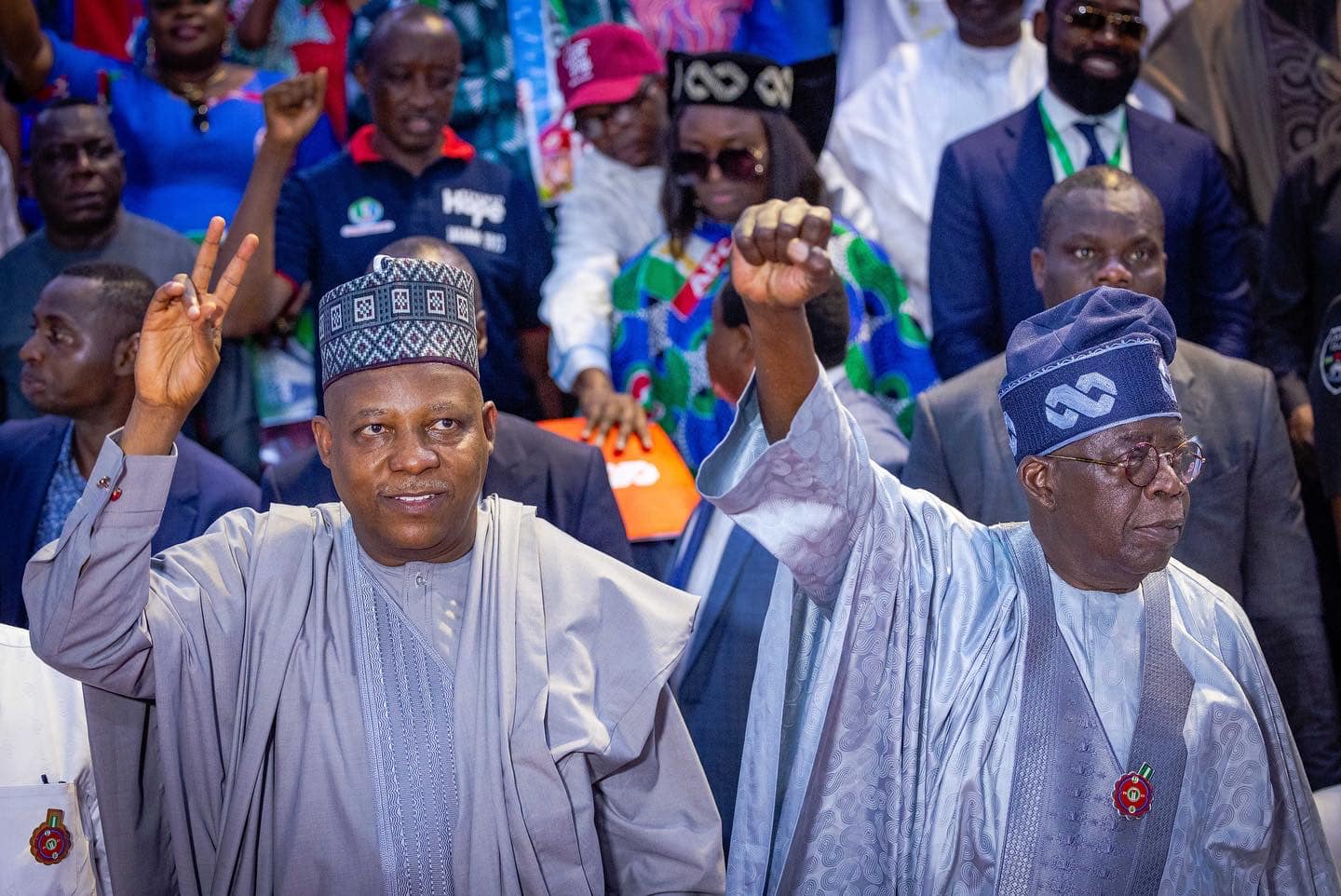
APC North-Central urges Tinubu to retain Shettima as VP

By Anwar Usman

The All Progressive Congress Forum North-Central has advised President Bola Tinubu to retain Vice President Kashim Shettima as his running mate for the 2027 presidential election.

The statement was made by the forum’s Chairman, Alhaji Saleh Zazzaga, in Abuja on Saturday.

In a recent appearance on Channels Television’s Politics Today, the Northern Ethnic Nationality Forum, led by Dominic Alancha, warned Tinubu against a repeat of the Muslim-Muslim ticket, noting that it cost the APC several northern states like Nasarawa, Plateau and the Federal Capital Territory in the 2023 presidential poll.

Alancha further warned that the APC would lose more ground in the North, particularly in the Middle Belt, if the party repeats the Muslim-Muslim ticket in the next presidential election.

However, according to the group, calls for the President to drop the Muslim-Muslim ticket in the next election are unnecessary, insisting that the combination worked for the APC in 2023.

Zazzaga explained that the choice of running mate was a political strategy aimed at ensuring victory for the party and should not be seen as an attempt to sideline any religious group.

He further argued that with key positions in government already occupied by prominent Christians from the Middle Belt, including the APC National Chairman, Prof. Nentawe Yilwatda, and the Secretary to the Government of the Federation, Senator George Akume, the region remains well represented.

 The statement in part read, “The Muslim-Muslim ticket will not affect President Bola Tinubu’s chances in the Middle Belt, which is part of the North-Central, and this is because of the key positions held by Middle Belt Christians in the APC government.

“We can guarantee that Tinubu will get 90 per cent of the votes from the North-Central. Tinubu’s achievements in office will guarantee his reelection, and as a result, there is no need to take the needless risk of changing a winning team.

“Those who are calling on President Bola Tinubu to change Vice President Kashim Shettima, basing their agitation on the Muslim-Muslim ticket, if you check, you will notice that in 2023, most of their communities voted for Peter Obi of the Labour Party.

“Now, if Peter Obi is to come out again in 2027, as expected, what is the guarantee that they will vote for Tinubu even if he drops Shettima and replaces him with a Christian? Does it mean that these people will now leave Peter Obi and vote for Tinubu?”

The Forum maintained that Tinubu’s performance in office would play a decisive role in determining his chances of re-election, adding that the President should focus on consolidating his achievements rather than altering the political structure that brought him victory in 2023.

 The statement concluded, “We advise Mr President not to change what worked in the last election. Maintaining the same team will further strengthen the chances of the APC in 2027″.

NDLEA arrests 27-year-old with cannabis worth over N10m in Kano

By Uzair Adam 

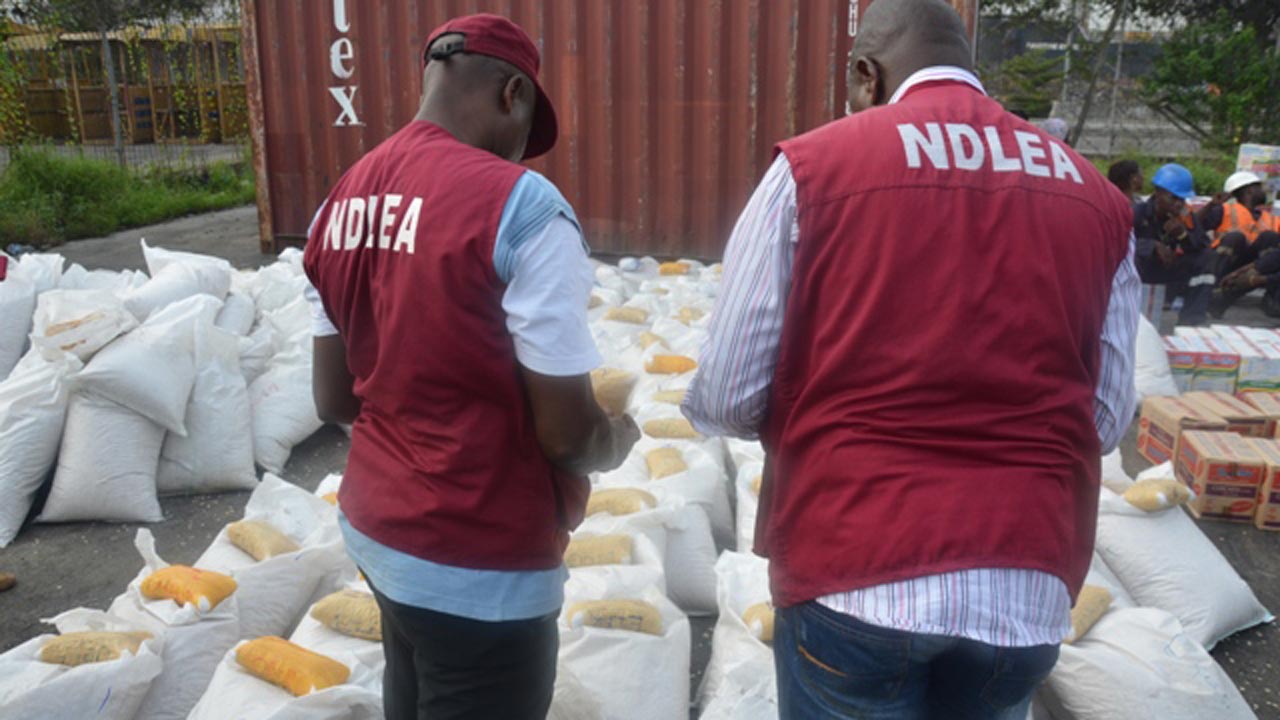
The National Drug Law Enforcement Agency (NDLEA), Kano Strategic Command, says it has arrested a 27-year-old man in possession of nine kilograms of Cannabis Sativa (Colorado) valued at more than N10 million.

This was disclosed in a statement issued on Saturday in Kano by the command’s Public Relations Officer, Sadiq Muhammad-Maigatari.

He explained that the suspect, a resident of Fagge Local Government Area of Kano State, was arrested on August 6 along the Zaria–Kano Road by operatives of the Kiru Area Command while transporting 19 parcels of the substance from Lagos to Kano.

According to Muhammad-Maigatari, the suspect confessed to his involvement in the illicit trade and had been on the command’s watchlist before his arrest.

He noted that the seizure inflicted a major financial loss on the drug network, disrupting their supply chain and denying them revenue for further criminal activities.

“Removing this quantity from circulation also helps protect vulnerable communities from the social and economic harms associated with the trade in narcotics,” he said.

The spokesperson added that under the leadership of Abubakar Idris-Ahmad, the Kano Strategic Command will continue to strengthen patrols and intelligence-driven operations to curb drug trafficking in the state.

AKTH, Saudi partners offer free open-heart surgeries in Kano

By Uzair Adam 

The Aminu Kano Teaching Hospital (AKTH), in collaboration with the King Salman Humanitarian Aid and Relief Centre and the Al-Balsam Association from Saudi Arabia, has successfully conducted free open-heart surgeries for patients in Kano.

Speaking to journalists about the development, the Head of the Cardiothoracic Surgery Unit at AKTH and team lead for the local medical team, Dr. Jamil Ismail Ahmad, said the initiative has brought relief to many patients who cannot afford treatment abroad.

“Normally, open-heart surgery costs between eight to ten million naira in Nigeria. But here, patients are getting it almost free of charge. 

“Outside the country, it would cost between 25 to 30 million naira, including logistics. This partnership is therefore very important,” Dr. Ahmad explained.

He noted that patients with heart diseases who require surgery but have no high-risk complications are usually considered for the program, stressing that safety remains a top priority.

“Some patients are excluded because their cases were neglected for too long, and operating on them would be too risky. Our key watchword is safety — we want to ensure that after surgery, patients are in much better condition than before,” he said.

Dr. Ahmad commended the partnership with the King Salman Humanitarian Aid and Relief Centre, describing it as highly supportive in both service delivery and local capacity building.

“Such collaborations are important globally, not only for providing services but also for building local capacity. The visiting team shares its expertise, which enhances our training and helps us sustain these services,” he added.

On patient outcomes, he revealed that survival rates in previous missions with the same team ranged between 80 and 90 per cent, and similar results are expected this time.

Dr. Ahmad also called on the government, philanthropists, and the private sector to support such initiatives, noting that investment in infrastructure, human resource training, and collaboration would strengthen healthcare delivery.

On his part, Dr. Abdullah, the team leader of the King Salman Humanitarian Aid and Relief Centre, emphasised the challenges of delivering such care in underserved regions like Nigeria, Sudan, and Yemen.

“Patients often present late because they were neglected for years. Some should have undergone surgery 10 or 20 years ago before developing complications that now make operations riskier. 

The best approach is continuous local services and proper screening. This saves lives and is more cost-effective than patients spending millions abroad in Europe, India, or North Africa,” he said.

He disclosed that so far, five patients had undergone surgery in Kano, with plans for six more cases in the following days. 

Dr. Abdullah praised the dedication of AKTH staff, including doctors, nurses, technicians, blood bank staff, and even cleaners, saying their support was crucial to the success of the program.

One of the beneficiaries’ relatives, Fatima Muhammad, expressed gratitude, saying her family could not have afforded the surgery if they had been asked to pay.

Tribute to Malam Mu’azu Muhammad Yusif

By Ibrahim Lawal Ahmed

On September 9th, 2023, friends, colleagues and students of Malam Mu’azu Muhammad Yusif, more popularly called M.M. Yusif, gathered to honour and celebrate his long academic service at the Centre for Information Technology and Development (CITAD), Kano, by remembering the old days and reflecting on the transformation the academia has been going through in Nigeria. Malam M.M. Yusif recently retired from the Department of Political Science, Bayero University, Kano, and the occasion was a kind of send-off party.

It was indeed a robust discussion that involved personalities such as Mal. Ibrahim Mu’azzam, Dr. Y.Z. Ya’u, Dr. Nasir Fagge, Prof. Ibrahim Bello-Kano (IBK), among others. As expected, the debate spiralled from eulogising the celebrant to discussion on the character of students and teachers in the universities in Nigeria, the current system of running the university, the struggles of and in the Academic Staff Union of Universities (ASUU), and the neoliberal world order and its effects in Nigeria, particularly on the universities. 

In short, the discussion is a dialectical cross-examination of factors within the university and how their interrelationship is influencing the university education in Nigeria; the relationship between the university and the society (town and gown relationship); and the relationship between the university and the state. The relationship between the university and the state is at the centre of the ASUU issue.

University has been the life of Malam, and as one of the longest-serving chairmen of ASUU, BUK Chapter, ASUU is a union very close to Malam. Therefore, I can imagine his feelings as he witnesses and reflects on the last two battles between ASUU and the government (2020 and 2022) that almost destroyed the public universities in Nigeria. The fundamental issue of ASUU-FGN conflict, in my view, is not the non-payment of allowances but the reductionist approach to governance by the government, which entails decreasing concern for the institutions that provide welfare to the people and total neglect of the idea of ‘public good.’ The result is the systematic collapse of the social contract (and compact) and rising political cleavages, a pre-bendel form of primitive accumulation and rentierism (or sycophancy) which results in the concentration of wealth in the hands of a few. 

Consequently, as the rich get richer and the poor get poorer in Nigeria, commodity fetishism becomes the defining feature of the social relations in Nigeria. In other words, money is now the moral compass in Nigeria. The needs and wants of the average Nigerian are reduced to his stomach – you have to eat for you to think, for when you speak to a hungry man, he answers you with his stomach – as such, ASUU is faced with an enormous challenge of mobilising the society to back its course on its battles with the state. 

Moreover, people are tired of the classical tactics of strikes always taken by ASUU, which, in the last two years, have hurt the university education system more than they have salvaged it. Thus, one key takeaway from the gathering is that ASUU needs to reinvent itself. While remaining steadfast to its goals that are of public interest, it has to change tactics.

Similarly, government at all levels has to pay more attention to the educational sector. To improve education, efforts should focus more on qualitative development rather than the current quantitative development, which prioritises establishing tertiary institutions in remote areas primarily due to trivial political reasons. This is not right. Situating schools and tertiary institutions has to take comprehensive cognisance of the environment. The questions such as how the town will support the gown at its embryonic stage and how the gown will support the city at maturity have to be asked. Answering these kinds of questions requires a comprehensive analysis of the infrastructure (both hard and soft), human and physical factors in the environment where the school or tertiary institution is to be situated. The late Sir Ahmadu Bello set a notable example in establishing Ahmadu Bello University in Zaria. He could have stayed in Sokoto or Maiduguri. However, considering several factors, Zaria is strategically better suited to host the university. Such was a good leader who has vision that transcends personal and primordial interest.

Indeed, the issue of education in Nigeria cannot be left to the government alone. It is a social issue; therefore, it requires an All-of-Society-Approach – from parents, to community leaders, traditional rulers, commercial and industrial enterprises, all have to be involved, especially regarding financing the education. The policy of student loans will not work because the socioeconomic condition of Nigeria is not prosperous enough to favour such a policy. In fact, in some advanced countries, the policy is problematic and an obstacle to social mobility, thereby facing harsh criticisms. The students need grants, not loans. And the wealthy Nigerians have to be philanthropic towards our educational institutions, especially the tertiary institutions. There is no more rewarding investment than investment in education,though it takes time to ripen. There is no better way to empower the youth in Nigeria than through education. The proper education enhances the ability of citizens to think. And unless one can think and understand the complexity of the present world, one can not address one’s personal problems, let alone those of society.

The courses taught by Malam M.M. Yusif aim to help students understand this complex world by interrogating the institutions that hold it up. To teach such courses requires a special personality. Therefore, as his recent student, the gathering was an opportunity for me to know more about my teacher. I listened attentively as his friends and colleagues kept mentioning his academic contribution to social issues that include gender studies, labour studies, and military studies, among many. But one standing quality and lasting legacy of Malam is mentorship. Malam put a lot of his energy into guiding his students. 

He utilised his resources to acquire high-quality materials and provide practical work for his students. He is a teacher who loves questioning and never penalises you for your inability to answer a question. For him, the most important thing is for the students to attempt to answer the question brilliantly. He always has time for his students. 

One day, I visited his office to discuss some concepts I didn’t understand. After explaining the concepts to him, I complained, “Sir, I am confused.” He responded, “Do not worry, Ibrahim. This means you are learning.” It was on that day that I learnt that learning is full of confusion. If you are finding learning easy, then you are probably not learning anything new.

It will take time to fill the gap that Malam M.M. Yusif is leaving in the academia, particularly in the Department of Political Science at Bayero University. I am glad and proud that he has had an accomplished academic career. We, his students, cherish the memory and are thankful for the way he has taught and mentored us. May it please Allah that Malam has a peaceful and happy retired life.