Month: August 2025

The Price of a Nigerian Passport and the Cost of Being Nigerian

BY Nazeer Baba Abdullahi

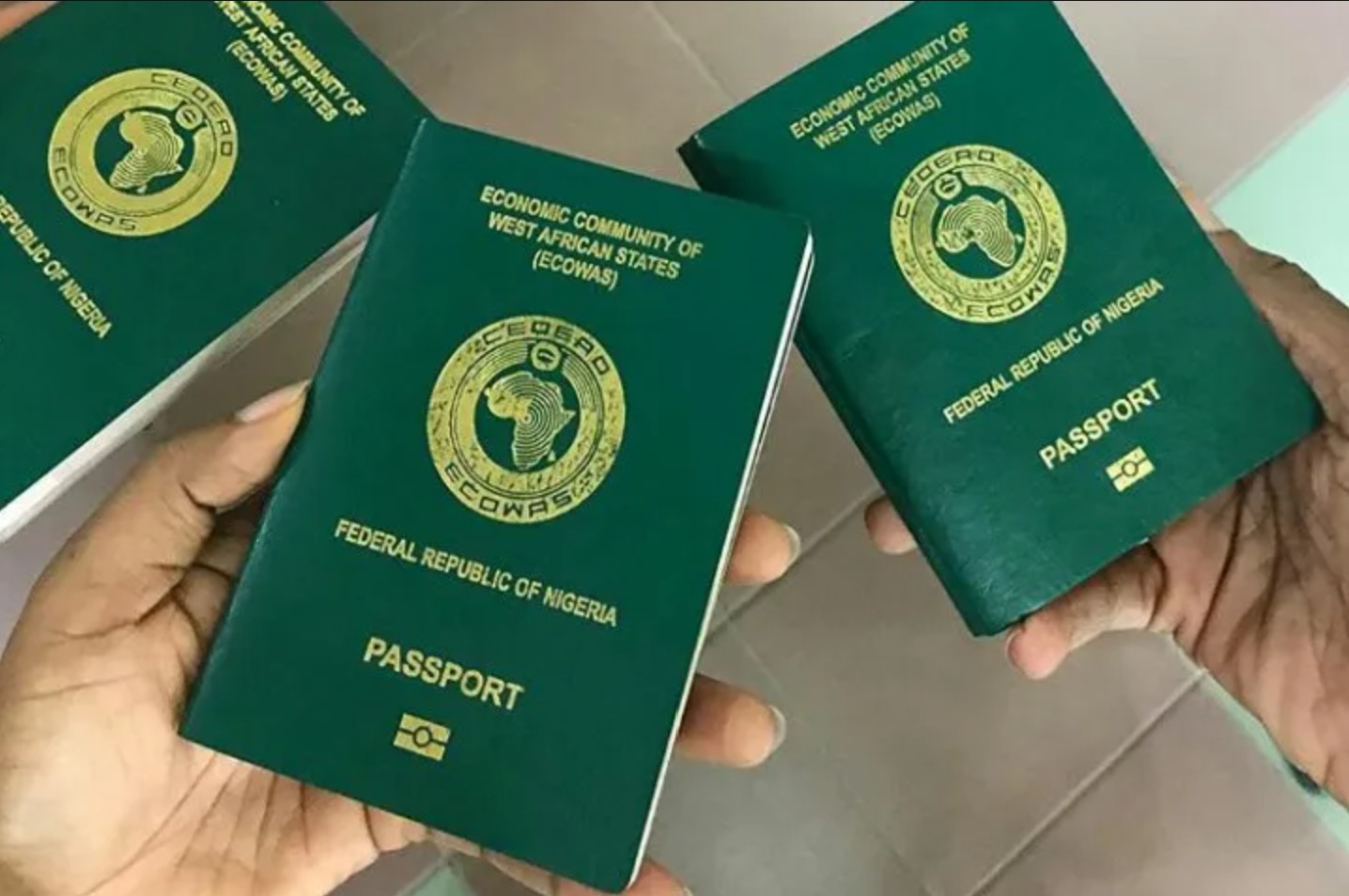
Imagine holding a Nigerian passport, symbolising pride, identity, and opportunity. However, effective September 1, 2025, the fee doubles from ₦50,000 to ₦100,000 for the 32-page version and from ₦200,000 to ₦ 400,000 for the 64-page version. This isn’t just an administrative change; it breaches the social contract.

Converting a basic identity document into an expensive luxury creates a two-tiered citizenship system, penalising ordinary Nigerians and restricting access to opportunities. A passport is a right of citizenship, like the free National ID and voter’s card, not a privilege for the wealthy. Why should a global identity extend to a commodity? 

The typical justification of ‘cost recovery’ is invalid. Essential state services should be subsidised to ensure equal access, not turned into profit centres at the people’s expense. This is especially true amid Nigeria’s economic struggles with inflation, unemployment, and rising costs. The new ₦100,000 passport costs more than the ₦70,000 minimum wage, making it unaffordable for a civil servant’s monthly salary. When a passport exceeds one month’s earnings, citizenship access is effectively priced out. This isn’t governance, but punishment. Officials say the hike maintains quality and integrity, but Nigerians only want access to a valid ID, not luxury features. Raising fees without service improvements monetises desperation. Nigeria ranks 91st globally in terms of passports, highlighting the need to improve its international standing.

The irony becomes even more glaring when compared with the voter’s card. That document is distributed free of charge, delivered to electoral wards, and made as accessible as possible. The reason is simple: it benefits the political elite by ensuring mass participation in elections. The passport, however, offers no direct political benefit. Instead, it empowers citizens to seek opportunity abroad, to level themselves in mobility and access with the very elite who govern them. Empowerment is seen not as a service to the state, but as a threat. Your vote is free because they need you. Your passport is expensive because they fear you. This is not an accident of policy; it is a deliberate strategy of control. It reveals a government more concerned with revenue extraction than with service to its people. 

A recent pattern shows the government increasing passport fees again after the August 2024 hike, indicating a trend of using vital documents for quick revenue rather than rights. Compared to neighbouring countries, Nigeria’s fees are disproportionately high. For example, a 34-page passport costs approximately ₦80,000 in Kenya, equivalent to a minimum wage of ₦ 15,000, and around ₦46,900 in Nigeria, both of which are less than the Nigerian cost. While Kenyans and Ghanaians with minimum wages can obtain passports in days or weeks, Nigerians face fees that exceed their monthly income, creating a severe financial burden.

The Nigerian passport should never be treated as a luxury item. It is a necessity in a globalised world and a symbol of national identity. To price it beyond the reach of ordinary citizens is to betray the very essence of governance, which is service, dignity, and protection of rights. What kind of nation are we building when we put a price tag on our citizens’ ability to seek a better life? What does patriotism mean if leaders measure it not by how they serve the vulnerable but by how much they can extract from them? Proper governance is not about profit; it is about fairness, opportunity, and respect for citizens.

Nazeer Baba Abdullahi wrote via babanazeer29@gmail.com.

Kano DG Protocol sues Jaafar Jaafar over “Thieving Aide” tag

By Muhammad Abubakar

The Chief Magistrate Court No. 15 in Kano has ordered police to investigate Daily Nigerian publisher, Jafar Jafar, and a staff of the newspaper, Audu Umar, over allegations of criminal defamation against the Director General of Protocol, Government House, Hon. Abdullahi Ibrahim Rogo.

Rogo filed the case, accusing the duo of maliciously describing him as a “thieving aide” to Governor Abba Kabir Yusuf in two reports published on August 22 and 25, 2025. He argued that the stories, carried by Daily Nigerian, were deliberately crafted to tarnish his reputation and portray him as corrupt.

One of the reports, titled “Gov. Yusuf Defends Thieving Aide, Says Protocol Directorate Under Ganduje Spent N20 Billion in 3 Months”, and another alleging that anti-graft agencies traced ₦6.5 billion to his office, were cited as damaging to his image.

The complaint, filed under Sections 106 and 107 of the Administration of Criminal Justice Law 2019, and Sections 114 and 393 of the Penal Code, seeks prosecution for defamation and breach of public peace.

Chief Magistrate Abdul’aziz M. Habib subsequently directed the Assistant Inspector General of Police, Zone One, to launch a full-scale investigation.

Meanwhile, Rogo has also filed a civil suit at the Kano State High Court demanding damages for defamation.

Kebbi governor appoints Sanusi Mika’ilu Sami as new Emir of Zuru

By Abdullahi Mukhtar Algasgaini

The Kebbi State Government has officially appointed Alhaji Sanusi Mika’ilu Sami as the new Emir of Zuru.

The appointment was confirmed on Thursday in Zuru when the State Commissioner for Local Government and Chieftaincy Affairs, Hon. Garba Umar Dutsin-Mari, presented the letter of appointment to the new monarch.

Dutsin-Mari stated that the appointment, approved by Governor Comrade Dr. Nasir Idris, followed the recommendation of the Zuru Emirate’s election committee. The committee screened three candidates for the revered throne, with Alhaji Sanusi Mika’ilu Sami emerging victorious by securing the highest number of votes.

The stool became vacant following the passing of the former Emir, His Royal Highness Alhaji Muhammad Sani Sami Gomo II, who died on August 16, 2025, in a hospital in London.

The commissioner congratulated the new Emir and urged him to justify the confidence reposed in him by the government and the people of the emirate. He advised the monarch to discharge his duties diligently and with the fear of God.

Alhaji Sanusi Mika’ilu Sami now assumes the leadership of the Zuru Emirate, succeeding his late predecessor.

BBC suspends Hausa Service editor Aliyu Tanko, rejects his resignation amid probe

By Muhammad Abubakar

The BBC has suspended Aliyu Tanko, the editor of its Hausa Service, due to bullying allegations, and has refused his resignation attempt.

Tanko, who took charge of the service in 2020, was handed a three-month suspension after former staffer Halima Umar Saleh accused him of mistreatment. The BBC has now launched a full investigation, with a team flown in from London to Abuja.

Sources say Tanko tried to resign a day after his suspension, but the corporation refused, insisting he must follow due process — either serve a two-month notice period or pay in lieu.

In an interview with Daily Nigerian, Tanko confirmed that he had resigned but declined to comment on the allegations. Attempts to reach him directly were unsuccessful.

Halima Umar, now a Senior Digital Editor at TRT Africa, had earlier spoken out in an interview with Arewa24, alleging Tanko maltreated her during her BBC days. The clip was later pulled down, sparking debate on social media.

BBC Hausa, with more than 40 staff across Nigeria and beyond, is the corporation’s biggest African language service. It reaches over 23 million weekly radio listeners and drives 10 million website visits. 

Under Tanko’s leadership, the service rolled out hit shows like Daga Bakin Mai ItaKu San Malamanku, and Mahangar Zamani.

Immigration raises passport fees

By Hadiza Abdulkadir

The Federal Government has approved an upward review of passport fees for Nigerians, effective September 1, 2025.

This was announced in a statement issued on Thursday by A.S Akinlabi, the spokesman for the Nigeria Immigration Service.

He said the increment aims to ensure the quality and integrity of the Nigerian Standard Passport, set to take effect from September.

“The review which only affect Passport Application fees made in Nigeria, now set a new fee thresholds for 32-page with 5-year validity at ₦100,000 and 64-page with 10-year validity at ₦200,000.

“Meanwhile, Nigerian Passport Application fees made by Nigerians in diaspora remain unchanged at $150 for 32-page with 5-year validity and $230 for 64-page with 10-year validity”, he said

The Service reaffirms its commitment to balancing high-quality service delivery with the necessity of ensuring Passport services are accessible to all Nigerians.

Governor Nasir Idris’ mixed approach to governance

By Zayyad I. Muhammad 

Kebbi State is no stranger to complex and sophisticated politics. To govern this dynamic state requires more than charisma; it demands deep sociopolitical mastery and a pragmatic grasp of socioeconomic realities. Governor Comrade Dr. Nasir Idris, Kauran Gwandu, has emerged as a leader who embodies both politics and development, weaving them into a single, effective strategy that is rapidly reshaping Kebbi’s political landscape and developmental trajectory.

In a state once defined by fragmented interests and rivalries, Governor Nasir Idris has achieved what many thought impossible: unity. Today, all Kebbi senators, legislators, and major political stakeholders are firmly in the All Progressives Congress (APC). Former governors who once stood on different political lines now speak with one voice. Elections that once tested the party’s strength are now won seamlessly, reflecting a politics of representation, inclusiveness, and acceptability.

This new sense of belonging has left no major stakeholder uninvolved. As one political observer put it: “In Kebbi today, everyone that matters has a seat at the table of decision-making that transforms the lives of the common man.”

That is why analysts argue that the once-ambitious former Minister of Justice and Attorney General of the Federation, Abubakar Malami, may have lost political relevance, with 2027 looking like a closed road for him.

However, politics is only one aspect of Governor Nasir Idris’ multifaceted approach. On the other hand, there is a clear, tangible commitment to socioeconomic transformation that cuts across all 21 local government areas of Kebbi, both rural and urban.

The results in just 20 months are staggering. In education: 1,954 schools have either been built or renovated, with 336 new schools constructed and 1,618 renovated. Teachers now earn wages aligned with national benchmarks, with the state implementing the ₦70,000 minimum wage categories.

On infrastructure, the administration has embarked on massive projects, including the dualization of the Birnin Kebbi–Ambursa Road, the construction of the Birnin Kebbi Ultra-Modern Motor Park, the rehabilitation of Birnin Kebbi city roads and Yauri township roads, the Koko-Mahuta-Dabai Road linking seven LGAs in Kebbi South, bridge repairs on Bunza–Dakingari Road, and culverts along Birnin Kebbi–Makera Road.

Healthcare delivery has seen the renovation of Argungu General Hospital, the rehabilitation of health centres, and the expansion of medical facilities across the state. In public institutions, the government has overseen the construction of the State Ultra-Modern Secretariat in Gwadangaji, the remodelling and furnishing of the Government House, and the expansion of the Pilgrims Welfare Agency. Other key projects include the construction of a fuel dump at Sir Ahmadu Bello International Airport and the dualization of Argungu’s Old Bypass Road.

Governor Nasir Idris has also prioritised building strategic international partnerships. By engaging with donor agencies and development partners, Kebbi is not only attracting new funding but also becoming an integral part of global development conversations.

The “Nasir Idris formula” is clear: politics without rancour, governance without neglect, and development without bias. His administration has combined inclusiveness in politics with an aggressive rollout of life-changing projects, creating a blend of stability and growth.

In Kebbi today, the once-elusive dream of a government that unites political forces while delivering practical, people-centred development is now a reality. With this trajectory, Governor Nasir Idris has not just set the pace for his state; he is redefining what effective governance looks like in Northern Nigeria.

Zayyad I. Muhammad writes from Abuja via zaymohd@yahoo.com.

Mother, three children die in Zaria building collapse

By Abdullahi Mukhtar Algasgaini

A tragic building collapse, triggered by heavy rainfall, claimed the lives of a mother and three of her young children in the early hours of Wednesday in the Karauka area of Zaria.

The victims have been identified as Mallama Habiba Nuhu, her two daughters, Hauwa’u Nuhu and Aina’u Nuhu, and her granddaughter, Za’uma.

According to a relative, Mallam Ahmed Ibrahim, the disaster occurred between 3:30 a.m. and 4 a.m. when a mud wall from a neighbouring house gave way and collapsed onto the family’s room.

“The victims died on the spot because they were covered by rubble,” Ibrahim stated.

The husband and father, Mallam Nuhu Dogara, was the sole survivor. He was recovered alive from the debris and rushed to a hospital for medical attention.

He was later discharged just in time to attend the funeral prayers for his family.

Local authorities attribute the collapse to the ceaseless rainfall that has been battering the Zaria area, which weakened the structure of the adjacent building.

Tinubu concludes Brazil state visit, signs key agreements

By Abdullahi Mukhtar Algasgaini

President Bola Ahmed Tinubu has departed Brasília for Abuja after a state visit to Brazil aimed at deepening bilateral ties between the two nations.

The presidential jet departed the Brasília International Airport Air Force Base at 12:57 pm local time on Wednesday.

The brief departure ceremony was attended by senior Brazilian diplomats, including Secretary for Africa and the Middle East Amb.

Carlos Sérgio Sobral Duarte, and featured a guard of honour.

The visit, which began on Monday, August 25, was marked by a formal welcome ceremony at the Palácio do Planalto, where President Tinubu was received with full military honours by his Brazilian counterpart, President Luiz Inácio Lula da Silva.

The core of the diplomatic engagement was a meeting between the two leaders, who oversaw the signing of five Memoranda of Understanding.

The agreements cover critical sectors for Nigeria’s development, including aviation, foreign affairs, science and technology, and agriculture.

The Nigerian delegation included the Minister of State for Foreign Affairs, Bianca Odumegwu-Ojukwu, who was present at the airport for the President’s departure.

Hisbah enforces restrictions on DJs, women in Bauchi Social Gatherings

By Anas Abbas

The Bauchi State Hisbah Command has introduced a set of new regulations governing weddings, birthdays, and other social gatherings across the state.

In a statement signed by the Permanent Commissioner of Hisbah, Barrister Aminu Balarabe Isah, the Sharia enforcement agency said the guidelines were prompted by rising public complaints over social vices and breaches of peace at events.

Titled “Guidelines Governing the Conduct of Marriage Ceremonies and Other Festivals in Bauchi State,” the document outlines several restrictions.

These include prohibition of male and female mingling, as well as opposite-sex, dancing in the presence of children, ban on the sale or consumption of alcohol and other intoxicants disallowing entry of individuals carrying weapons into event venues, gender-based seating arrangements and suspension of activities during prayer times, compulsory adherence to traditional dress codes.

The circular further prohibits DJs and musical entertainment at events, as well as cultural festivals such as Sharo, Shadi, Garaya, Kauyawa Day, Gala, and Aloba.

It also forbids the use of abusive or blasphemous language, gambling, prostitution, pornography, and birthday parties considered “immoral.”

Hisbah directed that all recreational centers, clubs, and cultural organizations comply with the order or face sanctions.

Tribute to my father

By Sulaiman Maijama’a

My elder brother’s call – Bello, requesting that I show up at our family house on Sunday morning, August 10th, 2025 – is the most difficult phone call I have ever answered in my life. Immediately, I overheard crying in chorus from the background; I knew what it meant and told my wife that the inevitable we have all been waiting for is here: Baba is no more.

Our father, Alhaji Maijama’a Iliyasu, first fell sick on August 5th, 2023, but later recovered and was taken to go about his business by us (his children). His illness resurfaced on November 24th, 2024; he was bedridden for some weeks at ATBUTH, later discharged and has remained home since then. Seeing his body was not recuperating, yet he was discharged from the hospital, we understood the doctors’ body language and got to a point where we believed that it was terminal. Consequently, whenever I received a phone call from any of my siblings, I picked up with a nervous disposition, fearing what they had to tell me.

On the fateful day, I went home. I found the dead body of our dear father surrounded by my brothers and sisters, uttering “Inna Lillahi Wa Inna Ilaihi Raji’un,” submitting to the will of Allah and crying profusely. I felt that my imagination of how it feels when one loses a father failed me, as I never thought the magnitude of the pain and sense of despair it creates is to that extent. The feeling defies expression. But the crowd of sympathisers trooping to the house and visitors making speeches of eulogy and testimonies of the person our father was were what consoled us the most.

Testimonies of people on earth about the good reputation of a deceased can be a means of his entry into Jannah, as reported in an authentic Hadith, where our beloved Prophet says, “…the believers are the witnesses of Allah on the earth…” That is why it is Islamically encouraged to amplify the virtues of a dead person, but judgment belongs to the Merciful.

An old man who came to sympathise with us stated and emphasised our father’s respect for his parents and elders. The man said he was a living witness that when our father was in active business in Central Market before he relocated his mother to our house, he used to go and check on her three times every single day: in the morning before he went to the market, in the afternoon after Zuhr prayer, and in the evening when he closed. I’m not surprised because my mother always tells me that, in the years he had lived with his mother Innah, his goodness for her could fill the earth.

I personally did not grow up seeing his mother, but I mistook his elder sister for his mother because of the respect he had for her. Even his granddaughters, named after his mother, and his daughters-in-law bearing the name were called “Innah” or “Mamana” and enjoyed special treatment from him.

His closest childhood friend, Alhaji Sule Sarkin Kasuwa, told us that one day in the 1980s, Innah directed our father to go to Kaduna and apprehend a relative who ran away and refused to return home. There was no intelligence report of the man’s whereabouts, no telephone to call, and the man was of no fixed location. However, Baba, out of obedience to his late mother, requested Alhaji Sule to escort him to Kaduna, and they searched all over but could not find him. Our father became deeply concerned that his mother would not be comfortable, but Alhaji Sule assured him that God knows he had complied.

I grew up seeing my father as a very disciplined man with a strict daily schedule. After the dawn prayer, he recited his Warsh copy of the Glorious Qur’an until around 8 a.m., took breakfast, and went shopping in Central Market. Returned home around 6 p.m., went to Bauchi Central Mosque to pray Magrib and waited for Isha, returned home, ate dinner, and listened to the radio before he slept. His philosophy on the education of his children is “Qur’an first.” All of his eighteen children were never enrolled in a Western school until we learned to read the Qur’an alphabetically and possessed reasonable proficiency in reciting the Qur’an when we were around seven years old. I can still see in my mind’s eye the day I was enrolled in primary school in 2004, when I was 8 years old, meeting Malama Safiya and Mrs. Roda as my first primary female teachers.

By Allah, I cannot remember a day that passed without him reciting his Warsh copy of the Qur’an. I never saw him sitting by the roadside, talking ill of others. As strict as his schedule was, he ensured that his children followed suit, never allowing us to enjoy leisure time since childhood. We would be woken up at dawn, sent to “Makarantar Allo“, and returned around 7 a.m. We would then be sent to primary school, returned in the afternoon, and sent to Ismiyya until around Magrib. By the time we finished primary school, we would be sent to learn different skills, and that is why we realised the realities of life early and were relieved of many responsibilities.

Our father exemplified a firm belief in the power of the Qur’an and Dua. Whenever he or any of his children had something profound to pursue, he would sit on his mat, spread out in a slight angle in his room, and spend hours reciting and praying for us. Any act of goodness we did, he prayed for us, all the goodness of this world and the hereafter, until you got tired of answering “ameen”. Until he fell sick, when any of his daughters was about to deliver in her matrimonial home, he would personally inscribe Qur’an verses and send them to wash and consume the water. Regardless of our age, if he gave any of us a certain Qur’an verse or dua as a “lakani” and then asked us to recite it back the next time, and we failed, we would be scolded accordingly. I still have small papers containing his inscriptions.

Now that the crowd of sympathisers has dispersed, my recollection of his prayerful and caring nature sparks a sense of nostalgia in my subconscious mind. I remember that whenever I was late at work, Baba would call to ask why, and whenever I was on the road at night, he would call several times to check on my safety and would never retire to bed until I was home. We will forever miss this. Standing on truthfulness and imposing strict rules on his family were some of the qualities Allah blessed him with. In the house, none of us could dare tell lies on phone calls in his presence, gossip, or insult. If you talked ill of others, he would ask, “Can you say the same if the other person were here?” His family setting was highly regimented and fully localised.

Our father departed this world without owing anybody a Kobo on earth. To us, it is no surprise because we know his philosophy of living within one’s means and never taking credit, no matter how little. When he fell sick, he sent someone to the market to buy him something. When I told the man of his illness, he said, “Allah sarki, baban nan da ba ya cin bashi.” No matter how close to him you were or how many years he spent buying from you, he would never agree to take credit for a single penny. A certain government official once approached him with a form for a loan scheme the government had designed to disburse funds to support businesses. Still, Baba rejected it, saying he preferred to live and die well without a burden. When the news reached us, we tried our best to convince him, telling him, “Irin bashin gwamnati ne da su ke yafewa,” but he insisted on his stance.

Indeed, Allah fulfilled his wish: he lived well, built a solid foundation of discipline for his family, mentored his children to understand life early, stood for righteousness, and, in fervent service to his Creator, eschewed taking any burden of his fellow human beings. Baba passed away peacefully, leaving us full of nostalgia. May Allah be merciful to our beloved father, forgive his shortcomings, shower illumination into his grave, accept his good deeds, and admit him into Jannatul-Firdaus. I’m grateful to all the people who prayed for him, visited us, sent a text message, or called to sympathise with us. I acknowledge and thank you gratefully, once again.

Sulaiman Maijama’a

Manager, Admin & Commercials

Eagle Radio Bauchi.